Cat Paw Yeast Infection: Signs, Causes, and Treatment
By Dr. Zubair Khalid, DVM, MS, PhD ·
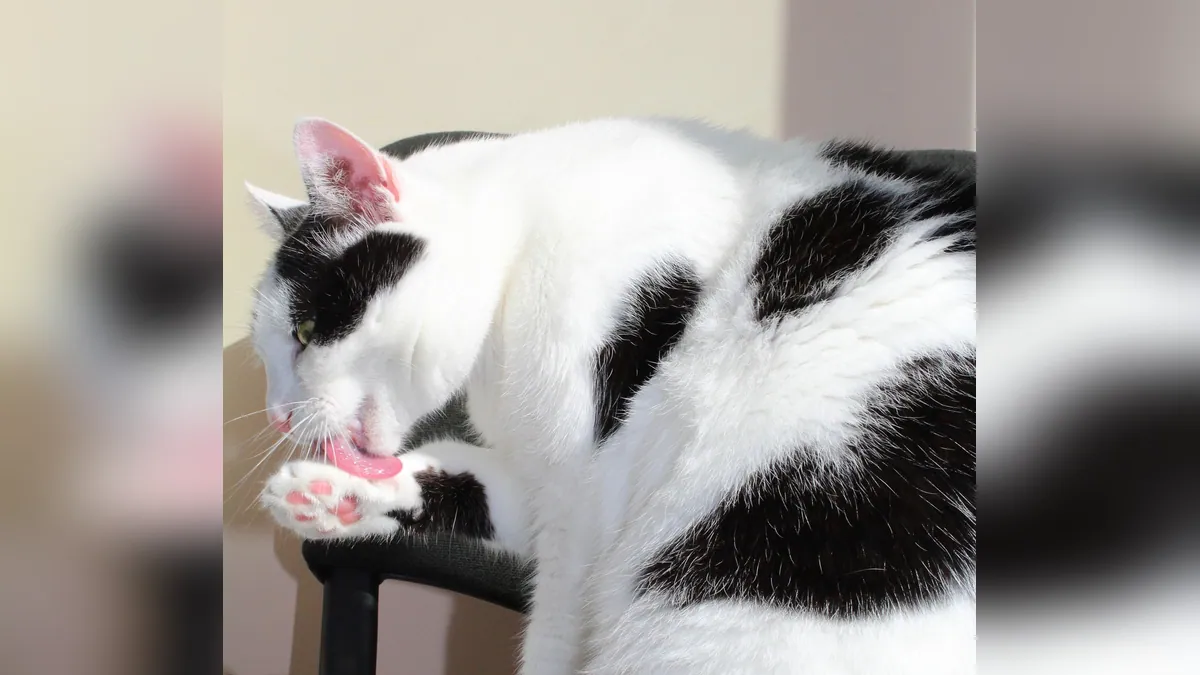
Yeast overgrowth on a cat's paw is a secondary problem, not a primary one. The yeast itself is a normal skin resident, and it only flares when something else disrupts the skin barrier, the immune system, or the paw's normal environment. That means treating the yeast without finding the trigger usually leads to a relapse. This article is educational and is not a substitute for veterinary diagnosis or treatment.
Quick Answer
- Yeast on cat paws usually means Malassezia pachydermatis, a lipophilic yeast that is part of the normal skin mycobiome and proliferates when an underlying disease is present [1].
- The classic signs are brown waxy debris in the claw folds, reddish-brown staining between the toes, swollen or painful paw pads, and constant licking or chewing.
- Diagnosis is quick and inexpensive in most cases, using direct cytology from the affected skin or ear canal to look for "peanut-shaped" budding yeasts [1].
- Topical antiseptic and azole-based products are the first line of treatment, and oral antifungals are reserved for severe or refractory disease [1].
- Finding and treating the underlying cause (allergy, infection, immune suppression) matters more than the antifungal choice itself [1].
What Is a Cat Paw Yeast Infection?
A cat paw yeast problem is a localized overgrowth of Malassezia yeast on the skin of the paw. These organisms are lipophilic, meaning they depend on skin oils for growth, and they normally live on cats without causing any trouble [2]. When the skin environment changes, the yeast multiplies beyond its usual numbers and triggers inflammation.
The result is a form of dermatitis, which is simply the general term for skin inflammation. Dermatitis can come from external irritants, burns, allergens, trauma, or infection, and it can also result from internal or body-wide disorders [3]. Yeast dermatitis is one specific type within that larger group.
Malassezia can also cause otitis externa (outer ear infection) and paronychia (infection around the claw) in cats, not only skin lesions [1]. That is why a cat with yeasty paws often has yeasty ears too. If your cat also has head shaking or ear debris, see Cat Ear Yeast Infection.
Candidiasis is a different yeast problem. It is caused most often by Candida albicans and is rare in cats, though it has been linked to oral, respiratory, eye, intestinal, and bladder disease [4]. It is not the usual culprit behind a yeasty paw.
Signs of Cat Paw Yeast Infection
Owners often notice the feet before they notice anything else. The signs build gradually.
What you will see on the paw
- Brown, waxy, or greasy debris in the claw folds and between the toes
- Reddish-brown staining of the fur around the paw, sometimes called rusty feet
- Thickened, scaly, or darkened skin on the pads and digits
- Swelling around a claw, which points to paronychia [1]
- A musty or yeasty odor from the paw
- Hair loss on the affected foot
What you will see in your cat's behavior
- Constant licking or chewing at one or more paws
- Limping or reluctance to jump
- Pulling the paw away when you touch it
- Irritability or hiding
Itching is a hallmark. Malassezia dermatitis in cats is chronic, relapsing, and pruritic, meaning it itches and it tends to come back [1]. Dermatitis in general can also cause scaling, redness, thickening of the skin, increased pigmentation, oil accumulation, abnormal odor, and hair loss [3]. A yeasty paw often shows several of these at once.
Signs that the problem is not limited to the paws
If the yeast has spread, you may see greasy, yellowish-brown patches in the armpits, groin, neck folds, or under the chin. Generalized Malassezia dermatitis in cats usually points to a more serious underlying problem, and your veterinarian will want to look harder for the cause [1]. For a broader look at skin infections in cats, see Cat Skin Infection: Signs and Treatment Options.
Causes and Risk Factors for Cat Skin Yeast
Yeast does not overgrow on healthy, balanced skin for no reason. Something has to shift the local environment.
The most common trigger: allergic skin disease
Allergic dermatitis is one of the most common underlying causes of Malassezia overgrowth in cats and dogs [1]. When a cat is allergic to something in the environment, in food, or on its own skin, the resulting inflammation changes the skin surface. Oil production rises, the barrier weakens, and yeast flourishes. This is why allergy testing is often part of the workup [1].
Other underlying conditions
- Bacterial skin infections, which frequently occur alongside yeast
- Endocrine or metabolic disease
- Immune suppression from another illness
- Anatomical problems such as skin folds that trap moisture
- Excessive licking from pain or stress, which keeps the paw damp
Cats that are already stressed by disease or immunosuppressed may be more likely to develop fungal infections in general [4]. That principle applies to yeast overgrowth as well.
What the research shows about yeast on cats
A study of feline facial hair found a range of yeast species living on cats. Malassezia pachydermatis was the most common, present in 45.8% of the cat samples tested [5]. That same study found no significant correlation between the yeast species on cats and those on their owners living in the same household [5]. So you are unlikely to be passing yeast back and forth with your cat.
Yeast species including Malassezia and Candida are recognized as commensal organisms, meaning they normally live on the skin, and they can become clinically relevant when conditions allow [6]. Antifungal susceptibility testing has shown that different yeast isolates respond differently to different drugs, which is one reason treatment sometimes needs adjusting [6].
Is it contagious?
Cat-to-cat spread of Malassezia overgrowth is not the main concern. The underlying trigger is. Two cats in the same home can both have yeasty skin because they share an environment or a genetic tendency toward allergies, not because the yeast itself is highly contagious.
How Veterinarians Diagnose Yeast on Cat Paws
Diagnosis is usually straightforward and does not require expensive testing.
Cytology
Direct cytology from the skin lesion or ear canal is the fastest and most reliable method. A veterinarian presses a slide or tape against the affected skin, stains it, and looks under the microscope for the characteristic "peanut-shaped" budding yeasts [1]. This takes minutes and gives an immediate answer.
Skin scrapings and fungal culture
If the diagnosis is unclear, your veterinarian may take scrapings or pluck hairs for culture. Fungal culture can identify the specific organism and, in some cases, guide drug selection [6]. Culture takes longer and is usually reserved for cases that do not respond to first-line treatment.
Ruling out the underlying cause
This is the part that matters most for long-term success. Your veterinarian will ask about diet, seasonality of symptoms, flea control, and any other itching. Allergy investigation is often indicated when Malassezia dermatitis is diagnosed [1]. In generalized cases, especially in cats, a broader search for underlying disease is warranted [1].
What it is not
Ringworm (dermatophytosis) is a fungal infection too, but it is caused by different organisms and looks different. Your veterinarian can tell them apart with a Wood's lamp, culture, or microscopy. Do not assume a crusty paw is yeast.
Treatment Options That Actually Work
Treatment has two halves. You treat the yeast, and you treat the reason it grew.
Topical treatment
Topical antiseptic and antifungal azole-based products are the mainstay for Malassezia dermatitis [1]. These come as shampoos, medicated pads, sprays, and mousses.
A clinical study evaluated a topical product containing Ophytrium and chlorhexidine digluconate in cats with local bacterial or Malassezia pachydermatis overgrowth. Cats were washed with shampoo when the location and their cooperation allowed, or treated with topical pads on day 0 followed by daily pad applications for 2 to 3 weeks. Cytological resolution was defined as a mean of 2 or fewer bacteria per oil immersion field or 1 or fewer yeasts per oil immersion field [7]. This gives you a sense of what "improvement" looks like on a microscope slide, not just on the surface of the paw.
Pads are often easier than shampoo for paws. Many cats tolerate a medicated pad wiped over the toes far better than a full bath.
Oral antifungal medication
Systemic treatment with oral antifungals is indicated only in severe or refractory disease [1]. If your cat's yeast problem is widespread, deeply affecting the claw beds, or not responding to weeks of topical therapy, your veterinarian may prescribe an oral drug. The dose is calculated from your cat's weight and health status, and your veterinarian sets it. Never use a leftover antifungal from a previous pet or a human prescription.
Which drugs work best
Antifungal susceptibility varies by isolate. In one study of Malassezia pachydermatis from companion animals, ketoconazole, itraconazole, and terbinafine showed the highest efficacy, while miconazole and clotrimazole showed reduced activity [8]. Another study found miconazole had the highest minimum inhibitory concentrations against Malassezia pachydermatis and Malassezia furfur from cats and humans, meaning it was less potent against those organisms [5]. This does not mean miconazole never works, but it helps explain why some over-the-counter products underperform.
Resistance is a real concern with repeated or prolonged antifungal use. Whole genome sequencing of Malassezia pachydermatis isolates has revealed changes in genes involved in the ergosterol biosynthesis pathway, particularly ERG11 and ERG1, in isolates with reduced susceptibility [8]. The practical takeaway is simple: use antifungals for the full course your veterinarian prescribes, and do not reach for them casually.
Treating the underlying cause
This is where most relapses are prevented. If allergies are driving the yeast, the yeast will keep returning until the allergy is managed. If a bacterial infection is present, it needs treatment too. Identification and treatment of the underlying cause is essential for an optimal response [1].
A quick comparison
| Treatment approach | Best for | Notes |
|---|---|---|
| Medicated pads or wipes | Localized paw yeast | Easiest for most cats, applied daily |
| Medicated shampoo | Widespread skin involvement | Requires bathing, which some cats resist |
| Topical azole sprays or mousses | Small areas, maintenance | Good for between-bath control |
| Oral antifungals | Severe or refractory disease | Prescription only, dose set by your veterinarian [1] |
| Allergy management | Recurrent cases | Addresses the root trigger [1] |
Recovery, Outlook, and Long-Term Management
Most cats improve with consistent topical therapy, but the timeline depends on how long the problem has been present and whether the trigger is controlled.
Expect to treat for weeks, not days. The study of the Ophytrium and chlorhexidine product followed cats for 14 to 21 days and measured resolution by cytology at those points [7]. Your veterinarian will likely recheck cytology instead of rely on appearance alone, because yeast can persist on the skin after the surface looks normal.
Malassezia dermatitis in cats is described as chronic and relapsing [1]. That word "relapsing" is the honest one. Many cats need ongoing maintenance therapy, such as periodic medicated wipes or baths, especially during allergy season.
Long-term management usually includes:
- Continued allergy control if allergy is the trigger
- Regular paw checks at home so you catch flare-ups early
- Keeping the paws dry, since moisture favors yeast
- Routine veterinary rechecks, especially in the first few months
If your cat's itching is severe and widespread, or if there is also ear odor, those are signs the problem is not confined to one paw. See Cat Ear Infection with Odor: Causes and Treatment for what ear involvement can look like.
Prevention
You cannot prevent yeast from living on your cat's skin. You can make overgrowth less likely.
- Control allergies aggressively. This is the single most effective prevention step for recurrent yeast [1].
- Keep paws clean and dry. Wipe muddy or wet feet after outdoor time.
- Use the maintenance products your veterinarian recommends, even when the paw looks normal.
- Do not stop topical therapy early just because the brown staining faded.
- Address any bacterial skin infection promptly, since the two often travel together.
- Keep up with routine wellness visits so underlying disease is caught early.
Limitations and When to Contact a Veterinarian
No article can tell you what is happening on your specific cat's paw. Individual cases need a veterinarian who can examine the skin, run cytology, and look for the underlying cause.
Contact your veterinarian the same day if:
- A claw is loose, broken, or the toe is visibly swollen
- Your cat is limping and will not bear weight
- The paw is bleeding, has an open wound, or smells foul
- Your cat is licking one paw raw and continuously
Seek emergency care now if:
- Your cat is lethargic, not eating, or running a fever
- There is swelling that is spreading up the leg
- Your cat is crying out in pain when the paw is touched
- You see discharge that is thick, green, or bloody
Schedule a routine visit if:
- Brown staining or waxy debris has been present for more than a week
- Over-the-counter products have not helped after several days
- The problem keeps coming back after treatment
- Your cat has other itchy areas, ear debris, or hair loss
For cats with urinary signs alongside skin problems, note that these are usually unrelated, but Cat Urinary Infection Symptoms covers what to watch for if you are unsure.
Frequently Asked Questions
Can I treat my cat's paw yeast at home?
Mild, surface-level yeast overgrowth sometimes responds to medicated pads or shampoos your veterinarian recommends, but you should not guess at the diagnosis. Many paw problems look alike, and treating the wrong one wastes time and can worsen the skin. Have your cat examined first.
Is cat paw yeast contagious to people or other pets?
Household transmission is not a major concern based on current research. A study of cats and their owners found no significant correlation between the yeast species identified in cats and those in people living in the same home [5]. The underlying trigger, such as an allergy, is what tends to run in a household.
How long does treatment take?
Most treatment courses run at least two to three weeks, and recheck cytology is often done at the end of that period [7]. Chronic cases may need longer or ongoing maintenance. Your veterinarian will set the schedule based on how your cat responds.
Will my cat need oral antifungal pills?
Usually not. Oral antifungals are reserved for severe or refractory disease, while topical antiseptic and antifungal products handle most cases [1]. If your cat does need oral medication, the dose is calculated from weight and health status by your veterinarian.
Can yeast on the paws be cured completely?
The yeast itself is a normal skin resident, so the goal is control, not elimination. Malassezia dermatitis in cats is chronic and relapsing, so many cats need ongoing management of the underlying cause [1]. With good trigger control and consistent topical care, most cats do well long term.
Related Articles
- Cat Ear Yeast Infection
- Cat Skin Infection: Signs and Treatment Options
- Cat Ear Infection with Odor: Causes and Treatment
- Cat Urinary Infection Symptoms
- Why Is My Dog Licking paws raw? Allergies, Yeast & Pain Triggers
- Dog Paw Allergies: Signs, Causes, and Treatment
- Cat Yeast Infection: Skin and Ear Treatment Guide
- Fungal Skin Infections in Cats: Signs and Treatment
- Cat Lump on Paw: Pododermatitis and Other Causes
References
- Malassezia dermatitis in dogs and cats. Veterinary journal (London, England : 1997), 2024.
- Yeast-associated skin disease in captive king penguins (Aptenodytes patagonicus) caused by an undescribed Malassezia species in a Swiss zoological garden. BMC veterinary research, 2025.
- Dermatitis and Dermatologic Problems in Cats - Cat Owners. Merck Veterinary Manual.
- Fungal Infections in Cats - Cat Owners. Merck Veterinary Manual.
- Comparative analysis of the distribution and antifungal susceptibility of yeast species in cat facial hair and human nails. Scientific reports, 2024.
- Fungal Pathogens in Pet Dogs and Cats in Grenada: Identification and Antifungal Susceptibility. Journal of fungi (Basel, Switzerland), 2025.
- Evaluation of the performance of topical products containing Ophytrium and chlorhexidine digluconate in cats with local cutaneous bacterial and/or Malassezia pachydermatis overgrowth. Journal of feline medicine and surgery, 2025.
- Antifungal Susceptibility of Malassezia pachydermatis Isolates from Companion Animals and Genomic Insights into Resistance Mechanisms. Antibiotics (Basel, Switzerland), 2025.