Cat Ear Gunk: What the Discharge Means and How to Clean It
By Dr. Zubair Khalid, DVM, MS, PhD ·
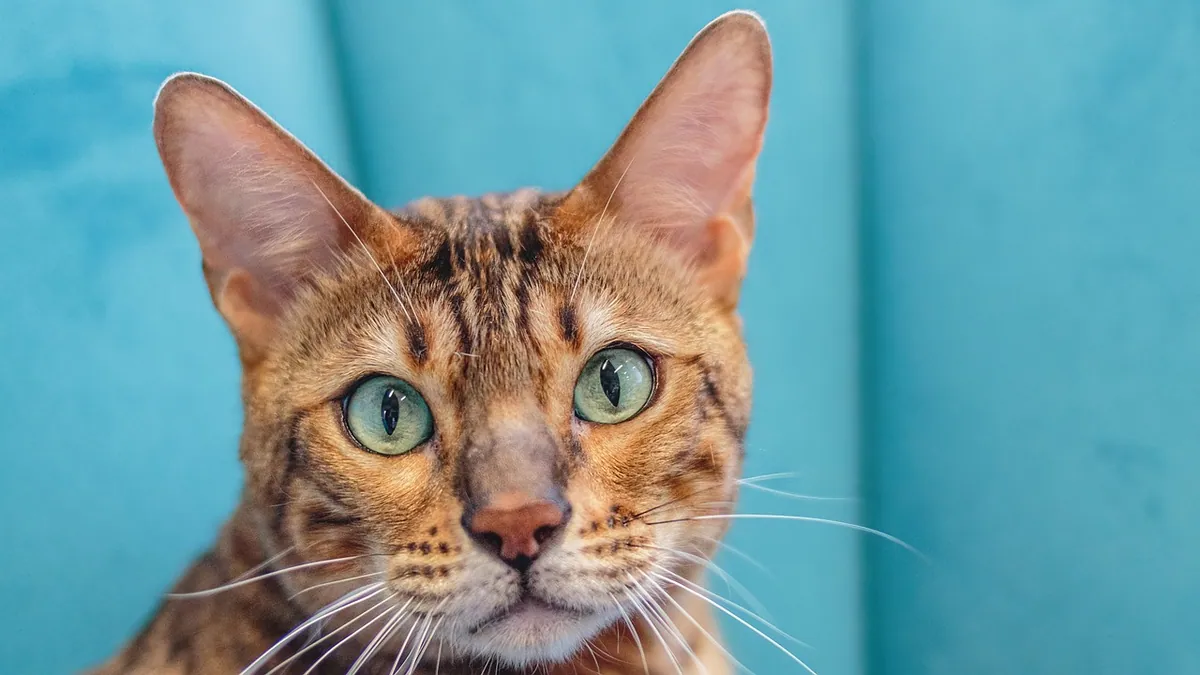
Cat ear gunk is the wax, debris, or discharge you find in the ear canal or on the ear flap. A small amount of light brown wax is normal, but color, smell, itchiness, and how much you see all help point to what is going on. This article is educational and is not a substitute for veterinary diagnosis or treatment.
Quick Answer
- Light brown wax in small amounts is normal and usually needs no treatment.
- Black, crumbly debris that looks like coffee grounds often points to ear mites, especially in young cats [1].
- A musty or yeasty smell with brown discharge is a common sign of Malassezia yeast, which was found in about 38% of cats in one ear study [2].
- Never push a cotton swab into the ear canal. You can pack debris deeper and injure the eardrum.
- See a veterinarian if you notice pain, head tilt, odor, redness, swelling, or discharge that keeps coming back.
What Cat Ear Gunk Looks Like and What Is Normal
A healthy cat ear canal makes a little cerumen, which is the medical word for ear wax. Normal wax is a thin, light brown to amber color. It may look slightly waxy or flaky. You should not see a lot of it, and it should not smell bad.
The ear canal itself is shaped like a loose L. It goes down and then turns toward the eardrum. This shape means debris can sit in the lower curve and be hard to see without a scope. In one study of 332 cats, examiners used otoscopy to look inside the canals, and they also collected wax samples for testing [2]. That is the same approach your veterinarian will use.
Some cats simply make more wax than others. A little buildup you can wipe away from the outer flap is not usually a problem. The trouble starts when gunk keeps returning, smells, or comes with scratching and head shaking.
Main Causes of Cat Ear Gunk
Different causes leave different clues. The table below groups the most common ones by what you are likely to see at home.
| Cause | Typical clues | How urgent |
|---|---|---|
| Normal wax | Light brown, mild odor or none, no scratching, small amount | Not urgent, monitor |
| Ear mites (Otodectes cynotis) | Black crumbly debris like coffee grounds, intense itching, young cat, other pets scratching | See a vet soon |
| Demodex cati mites | Heavy waxy discharge, scratching, often one ear | See a vet soon |
| Yeast (Malassezia) | Brown to reddish-brown discharge, musty or yeasty smell, head shaking | See a vet soon |
| Bacteria | Yellow, green, or pus-like discharge, foul smell, pain when touched | See a vet soon |
| Ceruminolith | Hard, dark plug of wax blocking the canal, hearing seems reduced | See a vet soon |
Ear Mites
Ear mites are the most common cause of outer ear inflammation in cats [1]. They are especially common in kittens between 3 and 6 months old and spread easily between cats in the same home [1]. The classic sign is dark, dry, crumbly debris that looks like coffee grounds. Cats with mites often scratch hard and shake their heads.
Mites are not the only possibility, though. In a large group of rescue and referral cats, Otodectes mites were found in fewer than 1% of the cats tested [2]. That does not mean mites are rare in pet cats. It means the cats in that particular group were mostly free of them, so a veterinarian should confirm what is actually living in your cat's ear before treating.
Demodex cati is a different mite that can also cause ear problems. One report described a cat with three months of heavy discharge and scratching in one ear, and the diagnosis came from finding many Demodex cati mites in the wax [3]. This kind of mite problem can look like a stubborn infection that never clears.
Yeast
Malassezia is a yeast that lives on normal cat skin in small numbers. When the ear canal gets warm, moist, or inflamed, it can overgrow. In the same study of 332 cats, 37.8% had Malassezia in one or both ears, and older cats were more likely to have it [2]. Yeast discharge is often brown and has a musty, bread-like, or yeasty smell. Cats with yeast infections usually shake their heads and scratch.
Bacteria
Bacterial infections often follow another problem, such as mites, allergies, or a wax plug that traps moisture. The discharge may be yellow, green, or pus-like, and the smell can be strong and foul. If you see green discharge, that is a good reason to have your cat checked. You can read more about that pattern in Cat Ear Infection with Green Discharge: When to See a Vet.
Ceruminoliths
A ceruminolith is a hard plug of wax and dead skin cells that can block the deep part of the ear canal near the eardrum [4]. In a review of 31 cats with ceruminoliths, most were treated with an ear flush under general anesthesia plus medication, and eardrum damage was common, including perforation in 10 cats [4]. This is not something you can safely remove at home. If your cat's ear looks blocked or your cat seems to hear poorly, that needs a veterinary exam.
Red Flags That Mean Emergency Care
Most ear gunk can wait for a regular appointment. Some signs cannot. Get emergency care right away if you see any of these:
- Your cat is in severe pain, cries when the ear is touched, or will not let you near the head.
- The ear flap is swollen, hot, or filled with fluid.
- There is sudden loss of balance, circling, or a strong head tilt.
- Your cat is vomiting, not eating, or seems dull and weak.
- There is bleeding from the ear canal or a large amount of pus.
- You know or suspect your cat got into a toxin or swallowed a medication. Call the ASPCA Animal Poison Control Center at (888) 426-4435 or the Pet Poison Helpline at (855) 764-7661.
Head tilt and balance problems can mean the problem has moved past the outer ear. That is not a wait-and-see situation.
Safe Things You Can Do at Home While You Wait
You can keep your cat comfortable and keep the outer ear clean without risking harm. The goal is to remove debris you can see, never to dig for it.
Gather the Right Supplies
Use a soft cotton ball or gauze pad, a pet-safe ear cleaner recommended by your veterinarian, and a towel. Do not use hydrogen peroxide, alcohol, vinegar, or homemade mixes unless your veterinarian tells you to. Do not use cotton swabs inside the canal.
Clean Only What You Can See
Wrap your cat in a towel if needed so you both stay safe. Lift the ear flap and look at the outer canal opening. Moisten a cotton ball with cleaner and wipe the visible folds and the flap. If the ear is painful, swollen, or bleeding, stop and call your vet. A step-by-step method is covered in How to Clean Cat Ears Safely at Home.
Do Not Flush a Blocked Ear
If the canal looks packed with hard dark material, do not pour liquid in and massage it. A ceruminolith can trap fluid against the eardrum, and if the eardrum is already damaged, that fluid can cause more problems [4]. Let your veterinarian handle a blocked canal.
Watch for Worsening
Take a photo of the discharge each day. Note the color, smell, and how much you see. This helps your vet see whether things are improving or getting worse. If your cat starts scratching more, shaking the head, or holding the ear down, call for an appointment.
What Your Veterinarian Will Check and Test
Your veterinarian will start with the history and a full exam. They will look at both ears, even if only one seems affected. In the cat study, Malassezia was often found in both ears when it was found in one [2]. Checking only the "bad" ear can miss the other side.
Next comes otoscopy. This means looking into the canal with a scope. A study in southern tiger cats compared plain otoscopy with video otoscopy and found that video otoscopy gave much better magnification, which helped identify structures like the blood vessels on the eardrum [5]. Many veterinary clinics now use video otoscopy for the same reason. It lets the vet see the eardrum, check for a wax plug, and avoid pushing debris deeper.
Your vet will also collect a sample of the wax. This sample goes on a slide and gets examined under a microscope, which is called cytology. Cytology can show yeast, bacteria, skin cells, and sometimes mites [2]. If a large amount of discharge is present, your vet may also make a smear to look for Otodectes mites [2]. In some cases, a sample is sent for culture to identify the exact bacteria.
Treatment depends on what is found. Ear mites are treated with systemic products. A review of treatments for otodectic mange found that isoxazolines (sarolaner, fluralaner, or esafoxolaner), tigolaner, and macrocyclic lactones (selamectin, eprinomectin, or moxidectin) can all cure the infestation and improve signs, with rare and mostly mild skin side effects [1]. For Demodex cati, one cat was treated with a monthly topical sarolaner/selamectin product and improved after a single dose, with full resolution after four doses [3]. Your veterinarian will choose the product and calculate the dose based on your cat's weight and health.
If a ceruminolith is present, your vet may use ceruminolytic cleaners or an ear flush under general anesthesia [4]. In the review of 31 cats, 26 had an otoendoscopy-guided flush under anesthesia along with medication, and five were treated with medication alone [4]. Short courses of systemic steroids were often used for a few days [4]. Your vet will decide what is safe for your cat.
How to Prevent Buildup and Monitor at Home
Prevention starts with knowing your cat's normal. Check the ears once a week. Look at the flap and the opening of the canal. Smell gently. A healthy ear should have little odor.
If your cat has a history of wax buildup, your veterinarian may suggest a cleaning schedule. How often depends on the cat, the cleaner, and the underlying cause, so ask your vet for a plan. General guidance on timing is covered in How Often To Clean Cat Ears.
Keep up with flea and mite prevention as directed by your vet. Mites spread easily between cats, so if one cat in the home is treated, ask whether the others need treatment too [1]. Wash bedding and vacuum areas where your cats rest.
If your cat has allergies, food sensitivities, or a history of yeast infections, treat the underlying problem. Ear gunk often returns because the original trigger was never fixed. If you notice black discharge returning, see Cat Ear Infection with Black Discharge: Causes and Treatment.
Finally, keep a simple log. Write down the date, what you saw, and any scratching or head shaking. Bring it to your appointment. Patterns over weeks are often more useful than a single snapshot.
Limitations and When to Contact a Veterinarian
No article can tell you what is growing in your cat's ear. That takes an exam and often a sample under a microscope. Individual cases need a veterinarian who can see your cat, check the eardrum, and test the discharge.
Contact your veterinarian the same day if you see:
- Discharge that is yellow, green, or pus-like.
- A foul or musty smell that does not go away after cleaning.
- Redness, swelling, or pain when the ear is touched.
- Scratching or head shaking that is getting worse.
- Gunk that keeps coming back within days of cleaning.
Go to an emergency clinic now if your cat has a sudden head tilt, loss of balance, circling, vomiting, severe pain, bleeding from the ear, or a swollen ear flap. These signs suggest the problem is deeper than the outer canal.
Call your vet for a routine visit if the discharge is mild but has lasted more than a few days, or if you are unsure whether what you see is normal wax. It is fine to ask. Catching an ear problem early is usually easier on your cat and on your wallet.
Frequently Asked Questions
Is brown discharge in my cat's ear always an infection?
No, light brown wax can be completely normal. Brown discharge becomes a concern when it is heavy, smelly, or comes with scratching, head shaking, or redness. A veterinarian can test a sample to tell the difference.
Can I use a cotton swab to clean my cat's ears?
No, you should not put a cotton swab into the ear canal. Swabs push debris deeper toward the eardrum and can injure the canal. Wipe only the parts you can see with a cotton ball or gauze.
Are ear mites the most common cause of ear problems in cats?
Ear mites are the most common cause of outer ear inflammation in cats, and they are especially common in kittens and in cats from crowded settings. Still, mites are not the only cause, and yeast or bacteria may be involved at the same time. Testing confirms what is actually there.
Does my cat need anesthesia to have its ears cleaned?
Most routine ear cleaning does not need anesthesia. A deep flush for a hard wax plug often does, because the vet needs to work near the eardrum safely. Your veterinarian will explain what is needed for your cat.
Can ear gunk cause permanent hearing loss?
Mild wax or a simple infection usually does not cause lasting hearing loss if treated. Damage to the eardrum or the middle ear is more serious and can affect hearing. This is why a head tilt, balance problems, or a blocked canal should be checked promptly.
Related Articles
- How To Clean Cat Ears Pdsa
- Cat Ear Infection with Black Discharge: Causes and Treatment
- How Often To Clean Cat Ears
- Cat Ear Infection with Green Discharge: When to See a Vet
- How to Clean Cat Ears Safely at Home
- Cat Eye Discharge: Normal or Infection?
- Yellow Discharge From a Cat's Ear: Causes and Care
- Cat Ear Oozing: Causes, When to Worry, and What to Do
- Fluid Leaking From Your Cat's Ear: Causes and What to Do
References
- The most effective systemic treatment in cats with otodectic mange: A critically appraised topic. The Canadian veterinary journal = La revue veterinaire canadienne, 2025.
- Otoscopy and aural cytological findings in a population of rescue cats and cases in a referral small animal hospital in England and Wales. Journal of feline medicine and surgery, 2020.
- Successful treatment of otodemodicosis due to Demodex cati with sarolaner/selamectin topical solution in a cat. JFMS open reports, 2021.
- Management and Clinical Outcomes of Cats With Ceruminoliths: A Retrospective Study of 31 Cases. Veterinary dermatology, 2026.
- Comparative evaluation of otological examination techniques in captive Leopardus guttulus. Research in veterinary science, 2026.