Senior Dog Incontinence While Sleeping: Causes and Help
By Dr. Zubair Khalid, DVM, MS, PhD ·
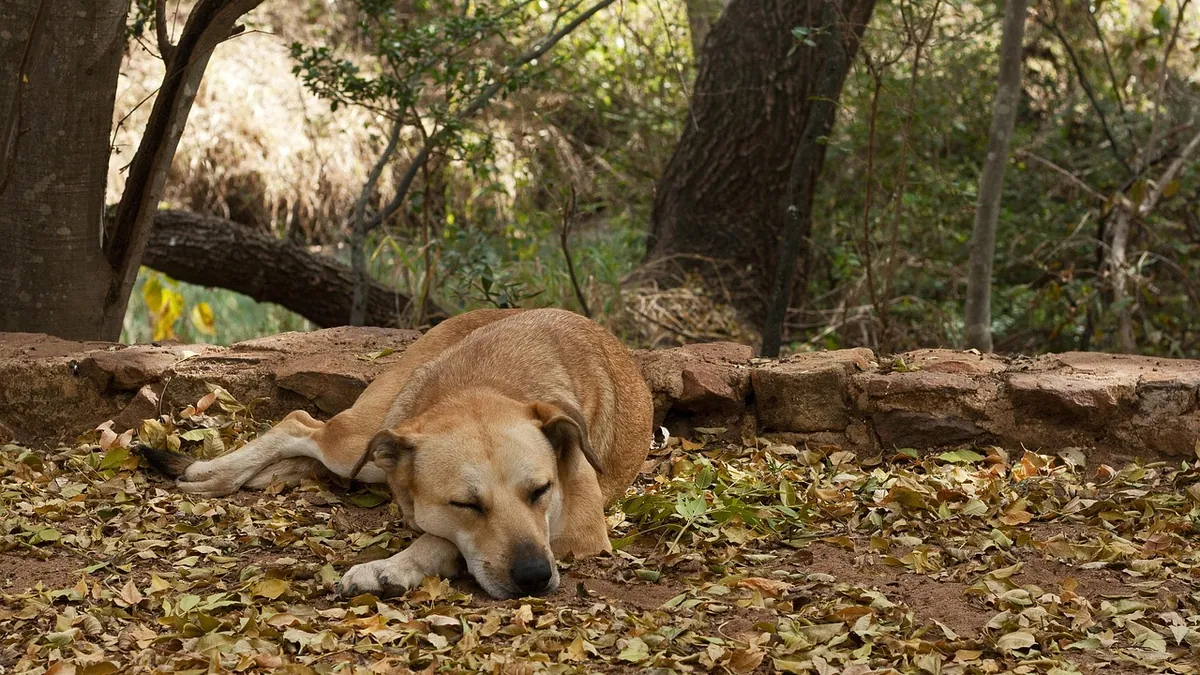
Senior dog incontinence while sleeping means urine leaks out during the storage phase of urination, when your dog is relaxed or asleep and not trying to pee [1]. The most common reason in older dogs is a weak urethral sphincter, the muscle that holds urine in, but infections, hormone changes, and canine cognitive decline can look similar. This article is educational and is not a substitute for veterinary diagnosis or treatment.
Quick Answer
- A weak urethral sphincter (called urethral sphincter mechanism incompetence, or USMI) is the most common cause of leaking in older dogs, especially spayed females [2].
- It is most common in large-breed spayed female dogs, with an incidence of 11% to 20%, and signs often appear 3 to 6 months after spaying as estrogen levels drop [2].
- Collect a fresh urine sample before your vet visit. A urinalysis and urine culture rule out infection, which is treatable and common in seniors [1][3].
- Most vets diagnose USMI with history, blood work, urinalysis, and ultrasound, and many start a medication trial when sphincter weakness is suspected [1].
- Waterproof bedding, belly bands, and scheduled potty breaks reduce mess and skin irritation while you and your vet work out the cause.
What Senior Dog Incontinence While Sleeping Actually Is
Urinary incontinence is the involuntary leakage of urine during the storage phase of urination [1]. In plain words, the bladder is holding urine normally, but the valve that keeps it closed is not doing its job. Your dog is not being lazy, stubborn, or badly trained. Leaking during sleep happens because relaxed muscles cannot compensate for a weak sphincter.
This is different from a dog who squats and pees in the house on purpose. It is also different from a dog who strains to urinate or dribbles constantly. Those patterns point to other problems, including bladder stones, infection, or a blockage. If your dog is straining or producing no urine, that is an emergency.
Many owners first notice a wet spot on the bed in the morning. Others see a small urine trail after their dog stands up from a nap. The pattern matters, and your vet will ask about it.
Signs Owners Notice
The classic picture is a dog who leaks while sleeping or resting and seems unaware of it. You may notice:
- A wet patch on bedding, a dog bed, or furniture after naps or overnight
- Urine smell on your dog's hind end, tail, or back legs
- Licking at the vulva or penis more than usual
- Damp fur on the inner thighs
- Leaking when your dog relaxes, gets up, or is picked up
- Normal urination outdoors, with accidents happening only at rest
Some dogs leak a few drops. Others leave a puddle. The amount does not always match how serious the cause is. A small leak from an infection deserves the same attention as a large leak from a weak sphincter.
If your dog also seems confused, paces at night, or stares at walls, cognitive decline may be part of the picture. One study of aging dogs found that soiling behavior is associated with urinalysis abnormalities and cognitive performance, and that urine specific gravity decreased significantly with age [3]. That means house soiling in an old dog often has more than one driver, and both need attention.
Causes and Risk Factors
Urethral Sphincter Mechanism Incompetence (USMI)
USMI is the most common cause of incontinence in dogs, and it is most common in large-breed spayed females [2]. After spaying, concentrations of 17-beta-estradiol drop, and urethral closure deteriorates within 3 to 6 months [2]. That timing is why many owners see the first leak months after surgery, not days.
USMI can also occur in sexually intact females, male dogs, and cats [2]. It is not only a spayed female problem. Some dogs have a congenital form, meaning they were born with a weak sphincter. In one study of young bitches with congenital USMI, continence scores did not differ significantly between neutered and non-neutered dogs at diagnosis [4].
Urinary Tract Infection
Bacteria in the bladder cause urgency, irritation, and sometimes leaking. Older dogs are more prone to infection, and infection can worsen an already weak sphincter. In a study of aging dogs, 231 urine samples showed pyuria in 19, hematuria in 14, and bacteriuria in 11 [3]. Infection is treatable, so it should always be ruled out before assuming the problem is only hormonal.
Cognitive Decline and Dementia
Canine cognitive dysfunction affects sleep-wake cycles, house training, and awareness. A dog who used to sleep through the night may wake, pace, and urinate indoors. The study above linked soiling to both urinalysis abnormalities and cognitive test performance, so a urine check and a cognitive assessment belong together in older dogs [3].
Hormonal and Anatomic Causes
Estrogen loss after spaying is the best-known hormonal trigger [2]. Less common causes include ectopic ureters, which are congenital abnormalities where the ureter empties in the wrong place. Female dogs are affected more often than males, and surgical correction is required [5]. These dogs often leak continuously from a young age, not only at night.
Pain and Mobility Problems
Arthritis, lower back pain, and hind end weakness make it hard for a dog to get up and out in time. One case report described a dog with sphincter incompetence that did not respond to standard drugs, and the dog became continent within 2 days of treatment for lower back pain [6]. That is a single case, so it is not proof that back pain causes most incontinence, but it is a reminder that comfort and mobility matter.
Other Risk Factors
- Being female and spayed [2]
- Large breed size [2]
- Increasing age
- Obesity and reduced activity
- Concurrent disease such as kidney disease or diabetes, which increases urine volume
If your dog is also drinking and urinating more than usual, that changes the list of likely causes. Your vet will want to check blood work and urine concentration.
How It Is Diagnosed
Your vet starts with history and a physical exam. Bring notes on when leaking happens, how much, and whether your dog seems aware of it. A fresh urine sample is the single most useful thing you can bring.
Typical testing includes:
- Urinalysis to look for infection, crystals, blood, and urine concentration [1][3]
- Urine culture and sensitivity when infection is suspected
- Blood work to check kidney values, blood sugar, and general health
- Abdominal ultrasound to look at the bladder, kidneys, and stones
In an international survey, most veterinarians based their diagnosis on a diagnostic algorithm using patient report and history, blood work, urinalysis, and abdominal ultrasound [1]. More advanced testing such as urethral pressure measurement was uncommon, used by 0.2% of vets in Spain and 2.4% in Italy [1]. Contrast radiology and CT urography were used more often in Spain than Italy (26.3% and 34.4% versus 11.6% and 22.7%) [1].
When sphincter weakness is suspected, many vets skip straight to a medication trial. In the same survey, 93.2% of Spanish vets and 78.9% of Italian vets used a pharmacological trial when suspecting urethral sphincter mechanism incompetence, and the first-choice medical treatment was phenylpropanolamine [1]. A response to treatment supports the diagnosis.
If your dog has a bladder infection, your vet may treat that first and recheck. If leaking continues after the infection clears, the next step is usually evaluating for USMI.
Treatment Options
Treatment depends on the cause. Infection needs antibiotics. Cognitive decline needs a different plan. USMI is usually managed with medication, and most dogs improve.
Medications for Sphincter Weakness
Phenylpropanolamine is an alpha-adrenergic agonist and is commonly the first-choice drug for USMI [1]. It tightens the urethral sphincter. In a study of young bitches with congenital sphincter incompetence, all received phenylpropanolamine at 1.5 mg/kg orally once daily for at least one month, and response was tracked with continence scores [4]. Your vet calculates the dose from your dog's weight and health, and doses differ for acquired USMI.
Estrogens are another option. Estriol is a natural estrogen with high affinity for receptors in the lower urogenital tract, and it increases urethral resting tone in females [2]. It is approved for estrogen-responsive urinary incontinence in spayed female dogs in the US, Australia, and the UK [2]. Your vet sets the dose.
No drugs are currently approved to treat incontinence in animals, and most human products historically used have been removed from the market because of toxicity concerns [2]. Some estrogen compounds and alpha-adrenergic receptor agonists may still be available through compounding pharmacies [2]. This is one reason your vet's specific plan matters more than any general advice online.
A small randomized trial compared amitriptyline, a tricyclic antidepressant, with estriol in 15 bitches with post-spaying incontinence. The amitriptyline group received 1 mg/kg every 12 hours, and the estriol group received 1 mg per dog every 24 hours, with evaluations at 7, 21, and 60 days [7]. This is a pilot study, so amitriptyline is not a standard first choice, but it shows that vets have more than one tool.
Treating Pain and Mobility
If your dog has lower back pain or arthritis, treating that pain may improve continence. In one reported case, a dog with sphincter incompetence that did not respond to maximal phenylpropanolamine and estriol became continent within 2 days of manual therapy, acupuncture, and photobiomodulation for lower back pain [6]. This is a single case and not a general rule, but it supports a full-body exam in dogs who do not respond to standard treatment.
Surgery and Devices
Surgical options exist for specific causes. Ectopic ureters require surgical correction, and minimally invasive techniques such as laparoscopic ureteroneocystostomy and cystoscopically guided laser ablation have been used successfully in dogs [5]. For refractory USMI, a urethral hydraulic occluder is a salvage option. One case report described a hydraulic occluder used to control incontinence in a cat after urethrostomy, with gradual inflation over about 13 weeks [8]. This is not a first-line treatment for typical senior dog leaking, but it exists for tough cases.
Practical Management at Home
- Waterproof mattress pads and washable pee pads on the bed
- Belly bands for male dogs and diapers for females, changed often
- A bedtime potty break, plus one more if your dog wakes at night
- Easy outdoor access, with ramps or a closer door for arthritic dogs
- Rinse and dry the skin daily to prevent urine scald
- Keep the hind end clipped short to reduce odor and matting
For a deeper list of products and routines, see How to Care for a Senior Dog with Incontinence: Tips and Products.
A Quick Comparison
| Cause | Typical pattern | First step |
|---|---|---|
| Weak sphincter (USMI) | Leaks at rest or sleep, normal peeing outdoors | Urinalysis, then medication trial [2][1] |
| Bladder infection | Frequent small pees, odor, possible blood | Urine culture and antibiotics [3] |
| Cognitive decline | Night pacing, confusion, indoor accidents | Urine check plus cognitive assessment [3] |
| Ectopic ureter | Continuous leaking from a young age | Imaging and surgical referral [5] |
| Pain or arthritis | Stiffness, slow to rise, accidents near the door | Pain management and mobility support [6] |
Recovery, Outlook, and Long-Term Management
Most dogs with USMI improve with medication, though some need dose adjustments over time. Your vet will likely recheck in a few weeks and adjust based on how dry your dog stays. Some dogs become fully continent. Others leak only occasionally, which is often acceptable with good bedding and skin care.
If infection was the cause, expect improvement within days of starting antibiotics, but finish the full course and recheck if signs return. If cognitive decline is part of the picture, management is ongoing and focuses on routine, nighttime guidance, and sometimes medication.
Long-term, plan for:
- Regular urine checks, since seniors get infections more easily [3]
- Weight management to reduce strain on the bladder and joints
- Consistent potty schedules, especially before bed
- Skin checks for redness, rash, or odor
- Rechecks if leaking suddenly gets worse
If your dog's leaking started suddenly, changed character, or came with straining, blood, or vomiting, that is a different problem. See Dog Incontinence: How to Tell If It's a Bladder Infection or Weak Sphincter for how those two compare.
Prevention
You cannot prevent every cause of senior dog incontinence, but you can lower the odds and catch problems early.
- Keep your dog at a healthy weight. Extra pounds press on the bladder and worsen arthritis.
- Schedule regular wellness visits with urinalysis as your dog ages. Early infection detection is simple and cheap.
- Treat arthritis and back pain promptly. Comfortable dogs get outside faster [6].
- Keep a consistent routine for meals, walks, and bedtime. This helps dogs with early cognitive changes.
- Ask your vet about spay timing and incontinence risk if you have a young female dog. Estrogen loss after spaying is linked to sphincter weakness within 3 to 6 months [2].
- Watch for changes in drinking and urination. Increased thirst can signal other diseases.
If your dog is peeing in sleep and you are not sure why, this article on hormone deficiency and sleep leaking may help: Why Is My Dog peeing in sleep? Urinary Incontinence and Hormone Deficiency.
Limitations and When to Contact a Veterinarian
No article can tell you what is causing your dog's leaking. Your veterinarian needs to examine your dog, test the urine, and set a treatment plan for your pet's specific case.
Contact your vet the same day if you see:
- Blood in the urine
- Strong odor or cloudy urine
- Your dog licking the genital area constantly
- Leaking that started suddenly in a dog who was previously dry
- Skin redness, rash, or open sores from urine contact
- Increased drinking and urination
Go to an emergency clinic now if:
- Your dog is straining to urinate and producing little or no urine
- Your dog is crying, pacing, or unable to settle
- Your dog is vomiting, weak, or collapsed
- Your dog's belly looks swollen or feels hard
For straining specifically, see Dog Straining to Urinate: Causes and When It's an Emergency. If your senior dog also has bad breath or dental problems, those can affect overall health and appetite, so ask about them at the same visit. See Senior Dog Bad Breath Causes.
Schedule a routine visit soon if leaking is mild, happens only at night, and your dog otherwise seems well. Bring a fresh urine sample in a clean container if you can.
Frequently Asked Questions
Is it normal for an old dog to leak urine at night?
It is common but not a normal part of aging that you have to accept. A weak urethral sphincter is the most likely cause in spayed females, and it usually responds to medication. Your vet should still check for infection and other diseases first.
Will my dog's incontinence get worse over time?
It depends on the cause. Sphincter weakness may stay stable or slowly worsen, and medication often controls it well. Cognitive decline tends to progress, so early planning helps. Infections resolve with treatment but can return.
Can I just use diapers and skip the vet visit?
Diapers help with cleanup but do not treat the cause. An untreated infection can spread to the kidneys, and untreated sphincter weakness often improves easily with medication. A single vet visit with a urine sample answers most of the important questions.
Does spaying cause incontinence in every dog?
No. Most spayed females never develop incontinence. The risk is higher in large breeds, and signs often appear months after surgery as estrogen levels fall. If your dog is already spayed and leaking, that history is useful but does not mean the surgery was a mistake.
Can diet or supplements fix nighttime leaking?
There is no well-established diet or supplement that corrects a weak urethral sphincter. Weight management and good hydration support bladder health, but they do not replace diagnosis and medication when sphincter weakness is the cause. Ask your vet before adding any supplement.
Related Articles
- How to Care for a Senior Dog with Incontinence: Tips and Products
- Why Is My Dog peeing in sleep? Urinary Incontinence and Hormone Deficiency
- Senior Dog Bad Breath Causes
- Dog Incontinence: How to Tell If It's a Bladder Infection or Weak Sphincter
- Dog Straining to Urinate: Causes and When It's an Emergency
- Spay Incontinence in Female Dogs: Estrogen Deficiency and Propalin Dosing
- Incontinence in Dogs: Causes, Symptoms, and What to Do
- Why Is My Senior Dog Peeing Less Often? Causes and When to Worry
- Dog Pooping Uncontrollably: Causes of Fecal Incontinence
References
- An international survey on canine urinary incontinence: case frequency, diagnosis, treatment and follow-up. Frontiers in veterinary science, 2024.
- Pharmacotherapeutics in Urinary Incontinence in Dogs and Cats - Pharmacology. Merck Veterinary Manual.
- The relationship between urinalysis abnormalities, soiling behavior, and cognitive decline in aging dogs. Journal of veterinary internal medicine, 2026.
- Congenital urethral sphincter mechanism incompetence: observational clinical findings and treatment outcomes-a small retrospective study in 19 bitches. Acta veterinaria Scandinavica, 2026.
- Minimally Invasive Surgical Techniques for the Treatment of Dogs with Urinary Incontinence Due to Ureteral Ectopia. Life (Basel, Switzerland), 2025.
- Treatment of lower back pain to resolve symptoms of canine urethral sphincter mechanism incontinence. Open veterinary journal, 2025.
- Applying children's enuresis treatment with amitriptyline for canine post-spaying urinary incontinence: A pilot estriol-controlled randomized clinical trial. Research in veterinary science, 2024.
- Use of a hydraulic occluder to control urinary incontinence in a cat after prepubic urethrostomy for post-trauma urethral injury. JFMS open reports, 2025.