Can Tortoises Eat Onions? Why Alliums Are Unsafe
By Dr. Zubair Khalid, DVM, MS, PhD ·
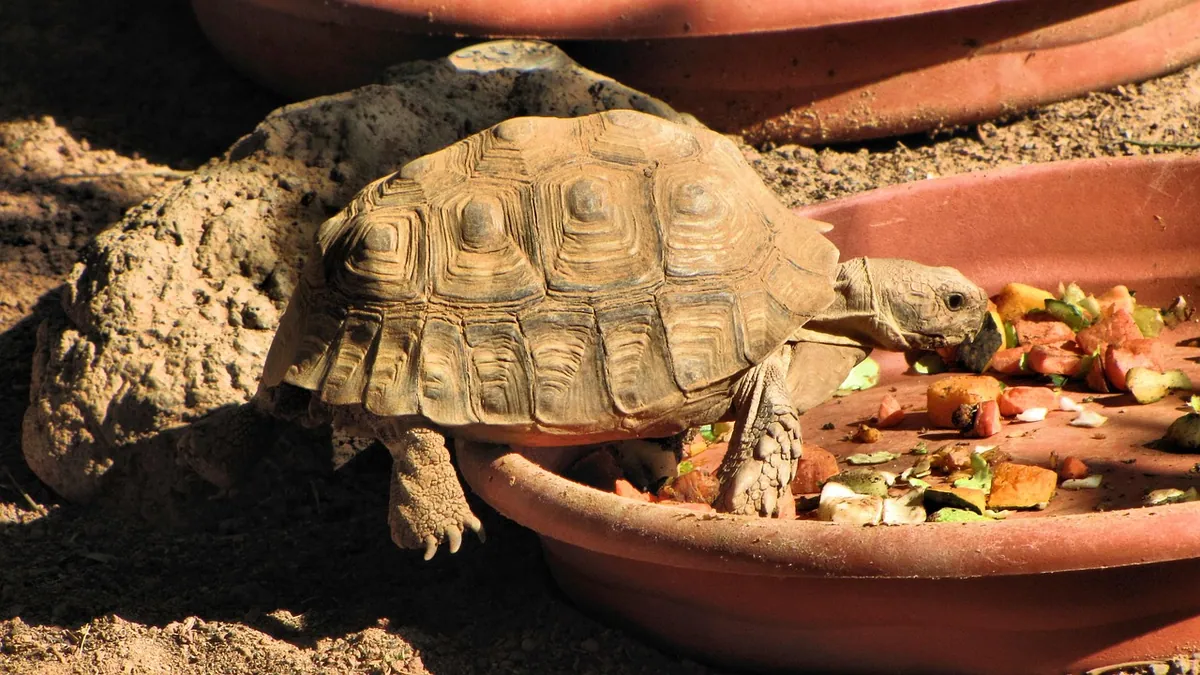
No, tortoises should not eat onions. Onions, garlic, chives, leeks, and other alliums can damage red blood cells and cause life-threatening anemia in pets, and reptiles are not exempt from that risk [1]. If your tortoise ate onion, treat it as a poisoning concern and call a veterinarian or animal poison control right away.
This article is educational and is not a substitute for veterinary diagnosis or treatment.
Quick Answer
- Onions and all other alliums (garlic, chives, leeks, green onions, shallots) are unsafe for tortoises and turtles. Garlic is 3 to 5 times more toxic than onion [1].
- The danger comes from sulfur compounds that rupture red blood cells, leading to hemolytic anemia. Signs often appear several days after ingestion [1].
- Every form counts: raw, cooked, dehydrated, granulated, powdered, and onion soup mix have all caused toxicosis in animals [1].
- If your tortoise ate onion, call your veterinarian, the ASPCA Animal Poison Control Center at (888) 426-4435, or Pet Poison Helpline at (855) 764-7661 immediately.
- Do not make your tortoise vomit unless a veterinarian specifically tells you to. Reptiles have different anatomy than dogs and cats, and home decontamination attempts can cause harm.
Are Onions Toxic to Tortoises?
Yes. Allium species are recognized animal toxins, and toxicosis has been documented after animals ate raw, cooked, dehydrated, or granulated onions and garlic [1]. The allium family includes garlic, onions, chives, and leeks, with garlic and onions most often linked to poisoning [1].
Tortoises are herbivores that eat plant material, so owners often assume any vegetable is fair game [2]. That logic fails with alliums. The plant is edible to humans. It is still a toxin to your tortoise.
Can Turtles Eat Onions?
No. Turtles face the same allium hazard as tortoises. The toxic compounds attack red blood cells across species, and there is no reason to think a turtle's blood cells are immune. If you keep aquatic turtles, keep onions and every other allium out of their tank and off their feeding schedule.
Can Tortoises Eat Green Onions?
No. Green onions (scallions) are alliums. They contain the same class of sulfur compounds as bulb onions, just in different concentrations across the plant. The Merck Veterinary Manual lists chives and leeks alongside garlic and onions as alliums associated with toxicosis, and green onions belong to that same family [1]. A small amount is still a real exposure, especially for a small tortoise.
Which Parts and Products Are Dangerous?
All parts of the plant carry risk, including the bulb, the green tops, and any dried or processed form. Concentrated products are the biggest concern in dogs and cats, where poisoning is most often tied to dehydrated flakes, powders, or dry onion soup mixes [1]. The same principle applies to your tortoise. A pinch of onion powder is a more concentrated dose than a bite of raw onion.
Watch for hidden sources too. Some commercial salad mixes, leftover human meals, and seasoned vegetable blends contain onion or garlic powder. Read labels before you offer any new food.
What Onion Does Inside a Tortoise's Body
The toxic principle in alliums is a group of sulfur-containing compounds that damage red blood cells. The result is hemolytic anemia, meaning the red blood cells are destroyed faster than the body can replace them [1].
This matters because red blood cells carry oxygen. When enough of them rupture, the tortoise becomes weak, pale, and unable to oxygenate its tissues properly. In documented allium toxicosis, clinical signs of acute hemolytic anemia develop several days after ingestion and include weakness, pallor, icterus (yellowing), and collapse [1].
The delayed timeline is the trap. Your tortoise may look completely normal for the first day or two. By the time signs appear, the anemia is already underway, which is why early veterinary contact matters even when your pet seems fine.
How Much Onion Is Dangerous?
In dogs, eating 15 to 30 g/kg of raw onion has produced clinical signs, and cats have shown toxicosis after less than a teaspoon of cooked onions or 5 g/kg of raw onion [1]. No equivalent dose has been established for tortoises. That gap is exactly why no safe amount can be recommended. A veterinarian will assess your tortoise based on its species, body weight, the amount and form of onion eaten, and how long ago the exposure happened.
Signs of Onion Poisoning in Tortoises
Signs reflect anemia and usually appear several days after the onion was eaten [1]. Watch for:
- Weakness or unusual sluggishness
- Pale mucous membranes (check inside the mouth)
- Yellowing of the skin, mouth, or eyes (icterus)
- Collapse or inability to right itself
- Reduced appetite or refusal to eat
- Labored breathing
Any of these signs after a known or suspected onion exposure is an emergency. Do not wait to see if your tortoise "walks it off."
If you also have dogs at home, the same toxin behaves differently in them, and the timeline and thresholds are better studied. For a full picture of allium risk in dogs, see Can Dogs Eat Onions or Garlic? and Can Dogs Eat Chives? Allium Toxicosis and RBC Damage.
What to Do Right Now If Your Tortoise Ate Onion
Act the same day, even if your tortoise looks normal.
- Remove the remaining onion or onion-containing food from the enclosure.
- Call your veterinarian, an emergency exotic animal clinic, the ASPCA Animal Poison Control Center at (888) 426-4435, or Pet Poison Helpline at (855) 764-7661.
- Have details ready: your tortoise's species, weight, what form of onion it ate, roughly how much, and when.
- Do not induce vomiting unless a veterinarian tells you to. Reptiles are not dogs, and forcing vomiting at home can cause injury or aspiration.
- Do not offer "detox" foods, oils, or home remedies. None of these are supported, and they can complicate treatment.
If you are unsure whether the exposure was large enough to matter, call anyway. Poison control professionals are trained to weigh exposure details and tell you whether you need to be seen. The same decision framework applies to dogs, and you can read more about it in My Dog Ate Onions or Garlic: What Should I Do?.
How Veterinarians Treat Allium Toxicosis
Treatment centers on two goals: limiting further absorption and supporting the tortoise through the anemia.
Early gastrointestinal decontamination is part of the standard approach to allium toxicosis, followed by management of acute hemolytic anemia [1]. In practice, that can mean activated charcoal or other decontamination measures if the exposure was recent, plus fluid therapy, warmth, oxygen support if needed, and repeated blood work to track red blood cell counts.
Your veterinarian will calculate any drug doses from your tortoise's weight and current health status. There is no home dose you can safely give.
Severe anemia may require more intensive care, including blood transfusion in extreme cases. Reptile transfusion medicine is specialized, so an exotics-experienced veterinarian is your best resource. If your regular vet does not treat reptiles, ask for a referral immediately instead of waiting.
Outlook After Onion Ingestion
The outlook depends on how much was eaten, the form (concentrated powders are worse), how quickly treatment started, and your tortoise's baseline health.
Small exposures caught early generally carry a better prognosis. Large exposures or any tortoise already showing weakness, pallor, or collapse face a much more serious situation, because hemolytic anemia can progress quickly once signs appear [1]. Recovery, when it happens, takes time. Red blood cell regeneration in reptiles is slow compared with mammals, so expect a prolonged monitoring period with repeat blood work.
There is no way to predict your individual tortoise's outcome from a web article. Only a veterinarian who examines your pet and reviews blood work can give you a realistic prognosis.
Prevention and Safer Alternatives
The simplest prevention is a strict rule: no alliums, ever, in any form.
- Keep onions, garlic, chives, leeks, green onions, and shallots out of your tortoise's enclosure and feeding area.
- Never offer table scraps, seasoned vegetables, or human leftovers.
- Check labels on any commercial mix for onion or garlic powder.
- Store onions where a roaming tortoise cannot reach them. Tortoises are persistent grazers.
- Wash your hands and any cutting boards after handling onions before preparing tortoise food.
For everyday feeding, build the diet around appropriate plant material and formulated diets. Tortoises are herbivores that rely on plant fiber, and microbial fermentation of that fiber can be a major nutrient source for them [2]. Appropriately formulated extruded, pelleted, or coarsely ground tortoise diets can maintain both small and large tortoises, and small tortoises on pelleted diets should be fed more frequently than larger animals [2].
If you want to offer fresh greens, stick to tortoise-safe options your veterinarian approves, such as dark leafy greens appropriate for your species. Variety within safe foods is fine. Variety that includes alliums is not.
Limitations and When to Contact a Veterinarian
This article cannot tell you whether your specific tortoise will get sick. Individual cases need a veterinarian who can examine your pet, run blood work, and factor in species, weight, and exposure details.
Call an emergency exotic animal clinic or poison control immediately if your tortoise:
- Is weak, limp, or unable to right itself
- Has pale or yellow mucous membranes
- Is breathing hard or open-mouth breathing
- Has collapsed
- Ate a concentrated form such as onion powder or soup mix
Call your veterinarian the same day if your tortoise ate any amount of onion, even if it looks normal right now. The several-day delay before signs appear is the reason same-day contact matters [1].
Schedule a routine visit if you are unsure what your tortoise actually ate, if you want a diet review, or if you need help building a safe feeding plan. Bring a photo or sample of what was eaten if you have one.
Frequently Asked Questions
Can tortoises eat onions?
No. Onions are toxic to tortoises and can cause hemolytic anemia by destroying red blood cells. All parts of the plant and all forms (raw, cooked, dried, powdered) carry risk, so onions should never be part of a tortoise diet.
Can turtles eat onions?
No. Turtles face the same allium hazard as tortoises. Keep onions, garlic, chives, leeks, and green onions away from all pet reptiles, including aquatic turtles.
Can tortoises eat green onions?
No. Green onions are alliums and contain the same class of toxic sulfur compounds as bulb onions. Even a small amount counts as an exposure, especially for a small tortoise.
How long after eating onion would a tortoise get sick?
Signs of hemolytic anemia typically develop several days after ingestion. That delay means a tortoise can look completely normal for a day or two while red blood cell damage is already happening, so call a veterinarian right away instead of waiting for symptoms.
What should I do if my tortoise ate onion?
Call your veterinarian, the ASPCA Animal Poison Control Center at (888) 426-4435, or Pet Poison Helpline at (855) 764-7661 immediately. Do not induce vomiting unless a veterinarian instructs you to, and do not try home remedies. Early veterinary care gives your tortoise the best chance.
Related Articles
References
- Garlic and Onion (Allium spp) Toxicosis in Animals - Toxicology. Merck Veterinary Manual.
- Nutrition in Tortoises - Management and Nutrition. Merck Veterinary Manual.