How Big Do Bearded Dragons Get? Size and Growth
By Dr. Zubair Khalid, DVM, MS, PhD ·
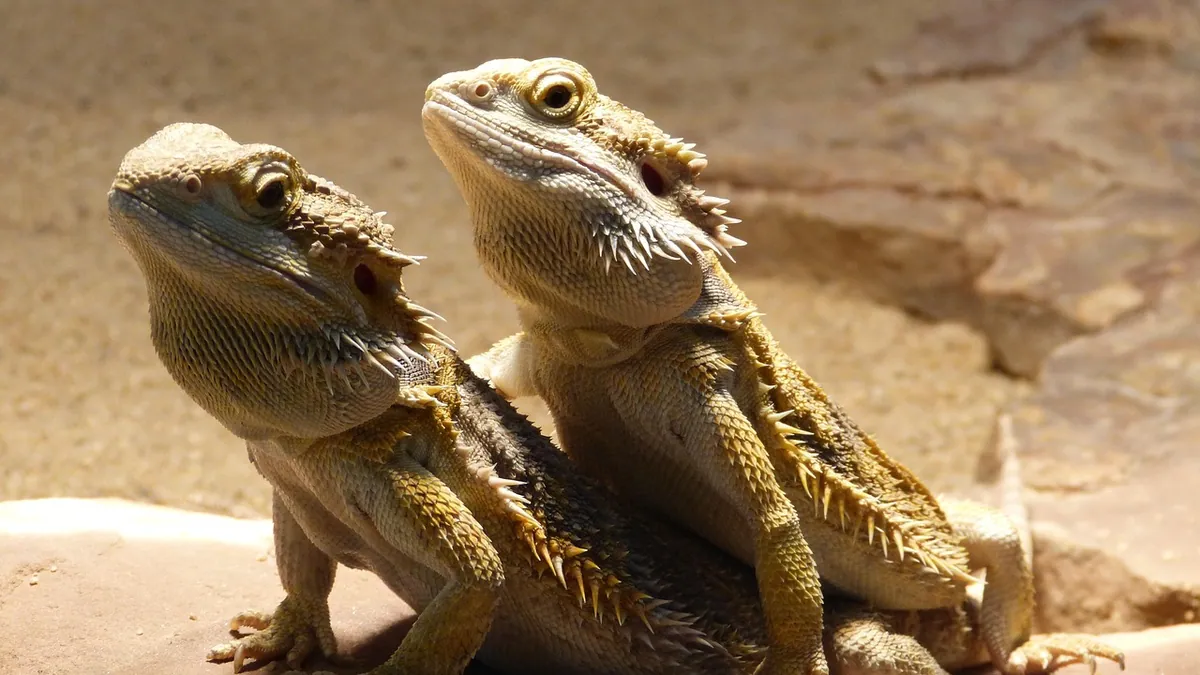
Bearded dragons are medium-sized lizards, and most adults reach about 16 to 24 inches from nose to tail tip. That total includes the tail, which makes up roughly half of the animal's length. How long do bearded dragons get depends on genetics, sex, diet, and the quality of their lighting and heating, so two dragons raised the same way can still end up different sizes.
This article is educational and is not a substitute for veterinary diagnosis or treatment.
Quick Answer
- Most adult bearded dragons measure 16 to 24 inches in total length, nose to tail tip.
- The tail alone is often close to half of total length, so a 20-inch dragon may have a 9 to 10-inch tail.
- Growth is fastest in the first year, and most dragons reach near-adult size by 12 to 18 months.
- Adult weight commonly falls between 300 and 550 grams, with males usually longer and heavier than females.
- Proper UVB lighting and calcium support healthy bone growth, and UVB exposure raises blood calcium levels in growing dragons [1].
How Long Do Bearded Dragons Get? Length, Tail, and Weight
Total length versus snout-vent length
Herpetologists often measure lizards by snout-vent length (SVL), which is the distance from the tip of the snout to the vent, excluding the tail [2]. Total length (TL) includes the tail and is the number most owners mean when they ask how long a bearded dragon gets [2]. For bearded dragons, SVL is usually about half of total length. A dragon with a 9-inch SVL typically measures around 18 inches overall.
How long do bearded dragons tails get?
The tail is a big part of the answer. In a healthy adult, the tail runs about 45 to 55 percent of total length. So if your dragon is 18 inches long, expect the tail to be roughly 8 to 10 inches. Tail length varies with genetics and body condition, and a tail that looks short or kinked compared with the rest of the body is worth mentioning to your veterinarian. Never pick a bearded dragon up by the tail, since the tail can be damaged and does not regrow the way some lizard tails do.
Weight ranges
Weight is harder to pin down than length because body condition varies. A healthy adult bearded dragon commonly weighs between 300 and 550 grams. Males tend to be longer and heavier, with broader heads and a wider base to the tail. Females are usually shorter and lighter. Body size matters for more than looks. In reptiles, size is tied to metabolism, reproduction, and overall health [2]. Larger females in some lizard species invest more in the mass of their offspring, which shows how closely body size and reproduction are linked [3].
Bearded Dragon Growth Timeline
Growth happens in stages, and the pace slows as the dragon matures. The table below gives typical ranges for a well-cared-for dragon. Individual animals vary, so treat these as guides, not guarantees.
| Age | Typical total length | Typical weight | Notes |
|---|---|---|---|
| Hatchling (0 to 1 month) | 3 to 5 inches | 4 to 10 grams | Fragile, needs small prey and careful heat |
| Juvenile (1 to 4 months) | 5 to 12 inches | 10 to 90 grams | Fast growth, frequent feeding |
| Subadult (4 to 12 months) | 12 to 18 inches | 90 to 350 grams | Growth rate starts to slow |
| Young adult (12 to 18 months) | 16 to 22 inches | 300 to 500 grams | Near final size |
| Adult (18 months and older) | 16 to 24 inches | 300 to 550 grams | Length stable, weight can shift with diet |
Growth is not perfectly linear. A dragon may add several inches in one month and then slow down. Individual heterogeneity in growth rates is well documented in long-lived reptiles, and small differences in growth can add up over a lifetime [4]. That is one reason two clutchmates can end up noticeably different in size.
If you want a closer way to track progress, a bearded dragon growth chart can help you log length and weight over time.
Step-by-Step: Measuring and Tracking Your Dragon's Growth
- Weigh your dragon weekly on a digital kitchen scale that reads in grams. Weigh at the same time of day, ideally before the first feeding.
- Measure total length with a soft tape measure or a ruler. Place the dragon on a flat surface, extend the body gently, and measure from snout tip to tail tip. Do not pull or stretch the tail.
- Measure snout-vent length separately if you want to compare with published data, since SVL is the standard lizard measure [2].
- Record both numbers in a notebook or phone app so you can see trends, not just single readings.
- Check body condition by looking at the tail base and the fat pads on top of the head. A healthy dragon has a slightly rounded tail base, not a bony one and not an overly thick one.
- Review your lighting and supplement routine monthly. UVB output drops over time even when the bulb still glows.
What Affects Final Size
Genetics and sex
Genetics set the ceiling. A dragon from large parents tends to grow larger. Sex matters too. Males usually end up longer and heavier than females.
Diet and feeding frequency
Young dragons need more protein and more frequent meals than adults. A growing dragon fed too little, or fed mostly low-quality food, may grow slowly and stay small. Overfeeding an adult leads to obesity, which is a health problem, not extra length.
UVB, calcium, and bone health
This is where lighting becomes a size issue. Metabolic bone disease from calcium and vitamin D3 deficiency is common in pet reptiles. In a study of young bearded dragons, UVB exposure significantly raised both total calcium and ionized calcium levels in the blood [1]. Calcium and UVB work together, so a dragon with weak UVB may not build strong bones and may not reach its genetic potential. Blood protein levels also shift with age, with lower values in juveniles, which shows how much the body is changing during growth [1].
Temperature and enclosure size
A dragon that cannot reach its preferred body temperature will not digest food well or grow well. Enclosure size and heating setup matter for health and activity. For details, see bearded dragon enclosure setup, sizing, and heating and comprehensive bearded dragon enclosure sizing.
Species and body plan
Bearded dragons are stocky lizards with a moderate number of vertebrae compared with highly elongated reptiles. Vertebral number varies widely across lizards and snakes, from 14 to nearly 400 in some groups, and much of that variation follows evolutionary relationships [5]. Bearded dragons sit in the shorter, stouter part of that range, which is part of why they look thick-bodied instead of snake-like.
Signs Something Is Wrong
Watch for these warning signs and act on them.
- Stunted growth. A dragon that is far below the ranges in the table at 12 months may have a husbandry or health problem.
- Soft or bent jaw, spine, or limbs. These can signal metabolic bone disease linked to calcium and vitamin D3 deficiency.
- Tremors or twitching. Muscle twitching can point to low blood calcium.
- Refusing food for more than a few days. Appetite loss in a growing dragon needs attention.
- Weight loss despite eating. This can mean parasites or another medical issue.
- Swollen limbs or a swollen jaw. Swelling can be a sign of bone or metabolic disease.
- Lethargy and not basking. A dragon that stops thermoregulating is often sick.
- Tail kinks or a shortened tail. These can be congenital, from injury, or from poor bone health.
Common Mistakes That Limit Growth
- Skipping or under-dosing calcium. Growing dragons have high calcium needs. Your veterinarian calculates the right supplement and dose from your pet's weight and health, so ask instead of guessing.
- Using old UVB bulbs. UVB output fades with use. Replace bulbs on the schedule the manufacturer gives.
- No temperature gradient. A dragon needs a warm basking zone and a cooler end so it can regulate its own temperature.
- Feeding adults like juveniles. Growth slows after the first year, and continued heavy feeding leads to obesity.
- Measuring only length. Weight and body condition tell you more about health than length alone.
- Handling by the tail. This risks injury to a body part that does not grow back normally.
- Assuming a small dragon is just a "runt." Slow growth can be the first sign of a husbandry or medical problem.
Supplies and Setup That Support Healthy Growth
- UVB bulb sized for your enclosure, replaced on schedule. UVB supports calcium metabolism in young dragons [1].
- Calcium supplement with and without vitamin D3, used as your veterinarian directs.
- Heat lamp and thermostat to create a proper basking gradient.
- Digital kitchen scale for weekly weights in grams.
- Soft tape measure for total length and SVL [2].
- Thermometer and hygrometer to track temperature and humidity.
- Enclosure large enough for an adult. A dragon that will reach 24 inches needs space to move, turn, and bask.
- Shallow water dish and a clean feeding area.
For more on keeping your dragon healthy across its life, see bearded dragon lifespan and common health problems and bearded dragon lifespan: what to expect and how to maximize it.
Limitations and When to Contact a Veterinarian
Size ranges are guides, not rules. Individual bearded dragons vary, and a dragon at the low end of normal can still be perfectly healthy. Only a veterinarian who examines your pet can judge its growth and health.
Contact a veterinarian the same day if your dragon has tremors, twitching, a soft jaw, sudden swelling, or has stopped eating. Treat these as an emergency if your dragon is unresponsive, gasping, or having trouble moving. Book a routine visit if growth has stalled for a month, if you see a new kink in the tail or spine, or if you are unsure whether your lighting and supplements are correct. Bring your weight and length records to the appointment, since trends help your veterinarian spot problems early.
Frequently Asked Questions
How long does a bearded dragon get from nose to tail tip?
Most adults reach 16 to 24 inches in total length. The tail accounts for roughly half of that measurement. Genetics, sex, and care during the first year all influence the final number.
Do male bearded dragons get bigger than females?
Yes, males are usually longer and heavier than females. They also tend to have broader heads and a wider tail base. The difference is often a few inches and a hundred grams or more.
At what age does a bearded dragon stop growing?
Most bearded dragons reach near-adult size between 12 and 18 months. Growth slows sharply after the first year. Some dragons continue adding small amounts of length and weight into their second year.
Can poor care make a bearded dragon stay small?
Yes, poor care can stunt growth. Weak UVB, missing calcium, wrong temperatures, and underfeeding all limit how large a dragon becomes. Fixing these problems early gives the best chance of normal growth.
Is a short tail a health problem?
Sometimes. A short tail can be congenital, the result of an old injury, or linked to poor bone health. If the tail looks kinked, bent, or newly shortened, have a veterinarian check your dragon.
Related Articles
- Bearded Dragon Lifespan: What to Expect and How to Maximize It
- Bearded Dragon Lifespan and Common Health Problems
- Bearded Dragon Growth Chart: Tracking Development from Hatchling to Adult
- Bearded Dragon Enclosure Setup, Sizing, and Heating
- Comprehensive Bearded Dragon Enclosure Sizing: Substrates, Basking Platforms, and Lighting Rigging
- Understanding the Wild Bearded Dragon: Natural Habitat and Behavioral Insights
- How Long Do Bearded Dragons Stay Juvenile? Age and Size Guide
- Why Is My Bearded Dragon Not Growing? Growth Timeline
- Bearded Dragon Weight Loss or Gain: What to Do
References
- Effect of different dietary supplements on the growth and blood parameters of bearded dragons (Pogona vitticeps). Acta veterinaria Hungarica, 2026.
- Reporting both length and mass values to quantify body size for amphibians and reptiles. Zootaxa, 2022.
- Correlation of Morphology and Metabolism of Reproductive Traits in the Genus Phrynocephalus Around the Qinghai-Tibetan Plateau. Ecology and evolution, 2025.
- Is individual heterogeneity in growth rates relevant to population dynamics of long-lived reptiles?. Ecology, 2025.
- Clade-specific drivers of rapid vertebral evolution in squamate reptiles. Evolution; international journal of organic evolution, 2026.