Vaseline on Dog Paws in Winter: Does It Help?
By Dr. Zubair Khalid, DVM, MS, PhD ·
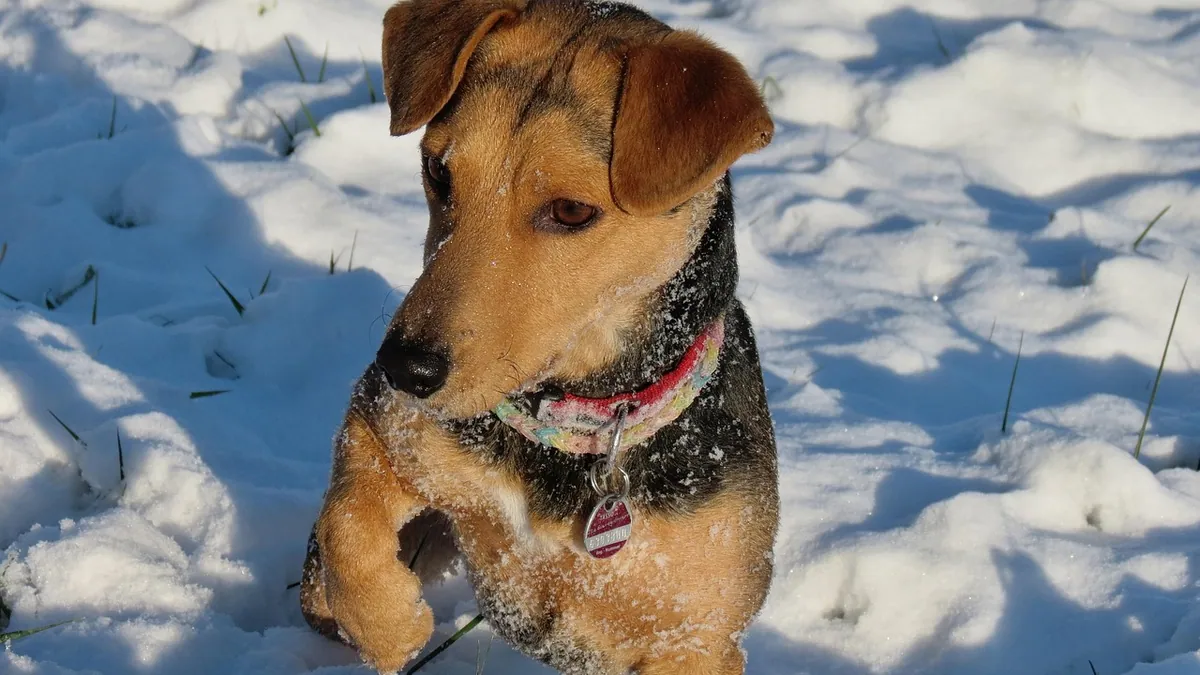
Vaseline for dogs paws in winter can act as a barrier against ice, snow, and road salt, but it is not a treatment for damaged pads and it does not replace boots or a proper rinse routine. Plain petroleum jelly is safe if your dog licks a little off, yet it stays greasy, wipes off fast, and does nothing to repair skin that is already cracked or bleeding. Think of it as a short-term shield, not a cure.
This article is educational and is not a substitute for veterinary diagnosis or treatment.
Quick Answer
- Vaseline can reduce direct contact between paw pads and ice melt, but it rubs off quickly and needs to be reapplied often.
- Ice melts contain large amounts of sodium salts that can stick in the paws and cause redness, cracking, or chapping, and eating them can cause vomiting or neurologic signs [1].
- Booties and a warm jacket do more for comfort in cold weather than any balm, and paw pads can still get dry, crack, and bleed even with protection [2].
- Wash your dog's paws with plain warm water when you come inside to remove salt and chemical residue [1].
- A petroleum jelly ointment supported wound healing in one dog study, but it was tested on created skin wounds, not on winter paw wear [3].
How to Protect Paw Pads in Winter: A Step-by-Step Routine
Before You Go Out
Check the weather and the ground. If the temperature is low enough for frostbite risk, keep outdoor time short. In extreme cold, the body pulls blood away from the ears, tail, and paws to protect internal organs, which leaves those tissues exposed to damage. Short-coated, small, and senior dogs are at greater risk [1].
Trim the hair between the pads if it is long enough to collect snow balls. Packed snow and ice between the toes cause pain and can lead to small cuts.
Apply a thin layer of balm or Vaseline to the paw pads only if you plan to be out briefly. Do not slather it on. A heavy layer picks up grit and makes the floor slippery when you get home.
Fit boots if your dog will tolerate them. An appropriately sized set of booties on each foot helps keep your dog comfortable in cold weather [2]. Boots also block salt and ice melt from touching the pads at all, which is the most reliable protection.
During the Walk
Stay off treated sidewalks and driveways when you can. Salt and chemical ice melters are the main paw hazard in urban and suburban winter walking.
Watch your dog for lifting paws, stopping, whining, or refusing to walk. Those are signs the ground is hurting the feet, not stubbornness.
Keep the walk shorter than usual on very cold days. Frostbite and hypothermia can develop quickly in extreme cold [1].
When You Get Home
Rinse or wipe each paw with warm water. Washing your pet's paws after coming in from outside removes ice melt residue [1].
Dry the paws well, including between the toes. Moisture left in the webbing can soften skin and set up irritation.
Look at each pad. Check for redness, cracks, peeling, or bleeding. Paw pads can get dry, crack, and cause bleeding in cold weather [2].
Reapply balm only if the pads look dry. If they look raw or open, skip the balm and call your veterinarian.
If Your Dog Chews at the Paws
Licking and chewing after a winter walk often means irritation from salt, dryness, or pain. If the behavior continues after rinsing, it may be worth reading about Dog Licking Paws Cold Weather and Dog Licking Paws Help to sort out the cause.
Winter Paw Care Schedule and Product Comparison
| Situation | What to use | How often | Notes |
|---|---|---|---|
| Short walk on untreated snow | Thin layer of Vaseline or paw balm | Before each walk | Reapply if your dog walks through wet snow |
| Sidewalks with ice melt | Boots plus a rinse afterward | Every walk | Rinse removes sodium salts that stick to pads [1] |
| Dry, rough pads with no cracks | Emollient paw balm | Twice daily until improved | A topical emollient balm reduced dryness and crusting scores in dogs with nasal hyperkeratosis over 60 days [4] |
| Cracked or bleeding pads | Veterinary exam first | Same day | Balm will not close a fissure or stop bleeding |
| Dog licks paws constantly | Rinse, dry, then assess | After every walk | Persistent licking needs a vet visit |
A quick note on balm choice. A dog paw balm made for winter use is designed to be less greasy and longer lasting than plain Vaseline. If you want more detail on picking and applying one, see Dog Paw Balm: When and How to Use It for Dry or Irritated Paws.
What Vaseline Does and Does Not Do
Vaseline is petroleum jelly. It sits on top of the skin and slows water loss. That is a real effect, and it is why a petroleum jelly based ointment performed well in a dog wound study. In that study, wounds treated with petroleum jelly and beeswax showed a significantly higher percentage of epithelialization on day 20 compared with the other ointment tested [3]. That finding is about created surgical-type wounds, not about winter paw pads, so do not read it as proof that Vaseline heals cracked paws.
What Vaseline does well in winter is block contact. A thin film keeps salt crystals and ice melt from sitting directly on the pad surface for the length of a short walk.
What it does not do is repair skin. If the pad is already split, Vaseline will trap debris in the crack and can slow healing. It also does not stay put. It transfers to floors, car seats, and dog beds, and it comes off in wet snow.
Some owners ask about other home products. Glycerine and Vaseline were tested against hookworm larvae in a lab setting, and Vaseline alone did not differ from the control group [5]. That study has nothing to do with paw care, so it should not guide your winter routine.
If your dog's paw problem is actually yeast related, meaning greasy, musty smelling, brownish paws with licking, a barrier balm is the wrong tool. Read What To Use For Yeast Infection On Dogs Paws before you buy anything.
Ice Salt and Dog Paws: What Actually Harms Them
Ice melt is the biggest winter paw threat for most dogs. Most ice melts contain large amounts of sodium salts. When a dog steps on them, the crystals can lodge in the paw and cause redness, cracking, or chapping [1].
The danger does not stop at the skin. If your dog licks the salt off, ingestion can cause mild to severe toxicity with upset stomach, vomiting, and neurologic signs such as trouble walking, muscle tremors, or seizures [1].
Pet-friendly ice melts may reduce the chance of injury or toxicity, but they are not risk free [1]. Rinsing the paws when you come inside is still the simplest protection.
If you think your dog swallowed a significant amount of ice melt, call for help right away. The Pet Poison Helpline and the ASPCA Animal Poison Control Center are the two numbers most veterinarians give owners. Have the product label ready.
Frostbite is the other hazard. In extreme cold, blood is shunted away from the extremities, and the ears, tail, and paws are the tissues most likely to be damaged [1]. Keep outdoor time to a minimum and use sweaters, coats, or booties to keep your dog warm [1].
Signs Something Is Wrong
Mild irritation looks like pink or red pad edges, slight dryness, and a dog who pauses on cold ground.
Moderate problems look like visible cracks, flaking, or a dog who limps after a walk but walks normally indoors.
Serious problems look like open sores, bleeding, swollen paws, discharge, a bad smell, or a dog who will not put a foot down at all.
Licking is a signal worth tracking. Occasional licking after a salty walk is normal. Licking that continues for hours, happens at night, or turns into chewing needs a closer look. If it has become a habit, see Dog Licking Paws Cure for the difference between habit and disease.
Common Mistakes Owners Make
Using Vaseline as a substitute for boots on long walks. It wears off, and your dog still steps in salt.
Applying balm to broken skin. This traps bacteria and debris in the crack.
Skipping the rinse. Salt left on the pads keeps working on the skin after you are back inside [1].
Letting a dog with a limp keep walking. Pain in a paw can come from a cut, a foreign body, or frostbite, and continued walking makes all three worse.
Assuming a pet-safe ice melt means no precautions. Pet-friendly melts may lower the risk of injury or toxicity, but they do not remove it [1].
Using human lotions, essential oils, or medicated creams meant for people. Dogs lick their paws, and many human products are not meant to be swallowed.
Ignoring the rest of the body. Cold weather care is not only about feet. A coat or sweater helps short-haired, small, and older dogs stay warm on winter walks [2].
Supplies and Setup That Matter
A shallow bowl or a small tub for paw rinsing. Warm water only, no soap unless your veterinarian recommends it.
A stack of dedicated paw towels. Dry between the toes every time.
A paw balm made for dogs. Look for a simple emollient formula. A topical emollient balm improved dryness, lichenification, and crusting scores in dogs with nasal hyperkeratosis over 60 days in one study [4]. That is a different condition, but it supports the general idea that a plain emollient balm can improve dry, rough skin with consistent use.
Well-fitted boots. Fit matters more than brand. A boot that slips off is a boot your dog will fight.
Pet-safe ice melt for your own driveway. It may reduce the chance of injury or toxicity compared with standard sodium-based products [1].
A dog coat for short-haired, small, or senior dogs [2].
A note on bathing. If your dog's paws are irritated and you are washing them often, use a gentle emollient product. Emollient bathing has been studied in dogs with skin disease, and it can affect the skin barrier, so ask your veterinarian before switching shampoos mid-winter [6].
Limitations and When to Contact a Veterinarian
Vaseline is a barrier, not a medicine. It cannot close a fissure, treat an infection, or reverse frostbite. If your dog's paws are damaged, the balm is not the answer.
Contact your veterinarian the same day if you see a cut that is deeper than a surface scrape, bleeding that does not stop with gentle pressure, a swollen or hot paw, limping that lasts more than a few minutes after coming inside, or a dog who will not let you touch a foot.
Go to an emergency clinic now if your dog swallowed ice melt and is vomiting, wobbly, trembling, or having a seizure [1]. Also go now if a paw looks white, gray, or hard, which can suggest frostbite, or if your dog collapses or seems weak after cold exposure [1].
Schedule a routine visit if the pads stay dry and rough despite daily balm, if licking has become a daily habit, or if you notice a musty smell and brown staining on the paws, which can point to a yeast problem.
Every dog is different. Your veterinarian can examine the paws, decide whether the problem is dryness, salt burn, infection, allergy, or something else, and set the right treatment for your dog.
Frequently Asked Questions
Is Vaseline safe if my dog licks it off?
Yes, a small amount of plain petroleum jelly is generally considered low risk when licked off the paws. The bigger concern is what the licking means. If your dog is licking constantly, the paws are irritated, and the cause needs to be found.
Can I use Vaseline every day in winter?
You can use a thin layer daily on healthy pads during cold snaps. If you need it every day for weeks, switch to a dog paw balm designed for repeated use, and have your veterinarian look at the pads if they are not improving.
Do dog boots work better than Vaseline?
Yes, for salt and ice protection. Boots block contact completely, while Vaseline only reduces it and rubs off. Many dogs need a slow introduction period before they will walk in boots.
What should I do if my dog's paws are already cracked?
Stop applying balm to open cracks and call your veterinarian. Cracked pads can become infected, and a split pad can take weeks to heal. Your veterinarian will decide whether the paw needs cleaning, bandaging, or medication.
How do I know if it is salt burn or frostbite?
Salt burn usually shows up as redness, chapping, and soreness after walking on treated ground [1]. Frostbite affects the ears, tail, and paws after extreme cold exposure and can make tissue look pale or hard [1]. Both need veterinary attention if signs are more than mild.
Related Articles
- Dog Licking Paws Cold Weather
- Dog Licking Paws Help
- Dog Paw Balm: When and How to Use It for Dry or Irritated Paws
- What To Use For Yeast Infection On Dogs Paws
- Dog Licking Paws Cure
- Dog Licking Paws Ointment
- Is Vaseline Safe for Dogs? Nose, Paws, Ears, and Eyes
- Cracked Paw Pads in Dogs: Treatment and Home Remedies
- Paw Balm and Lotion for Dogs: Safe Use and Licking Risks
References
- Winter Hazards For Your Dog. Pet Poison Helpline.
- Cold Weather Tips to Keep Your Pet. Pet Poison Helpline.
- Naturally occurring isohexenylnaphthazarins and wound healing: experimental study in dogs. Journal of cutaneous medicine and surgery, 2010.
- Evaluation of the Interest in and Tolerance of a Topical Emollient in the Management of Canine Nasal Hyperkeratosis: An Open-Label, Prospective, Uncontrolled Pilot Study. Veterinary sciences, 2025.
- Combined use of chemical and biological compounds to control hookworm. Journal of helminthology, 2020.
- Preliminary evaluation of two bathing methods for the management of Malassezia overgrowth in dogs with atopic dermatitis. Veterinary dermatology, 2021.