Dog Lethargic After Vaccines: Normal or a Warning Sign?
By Dr. Zubair Khalid, DVM, MS, PhD ·
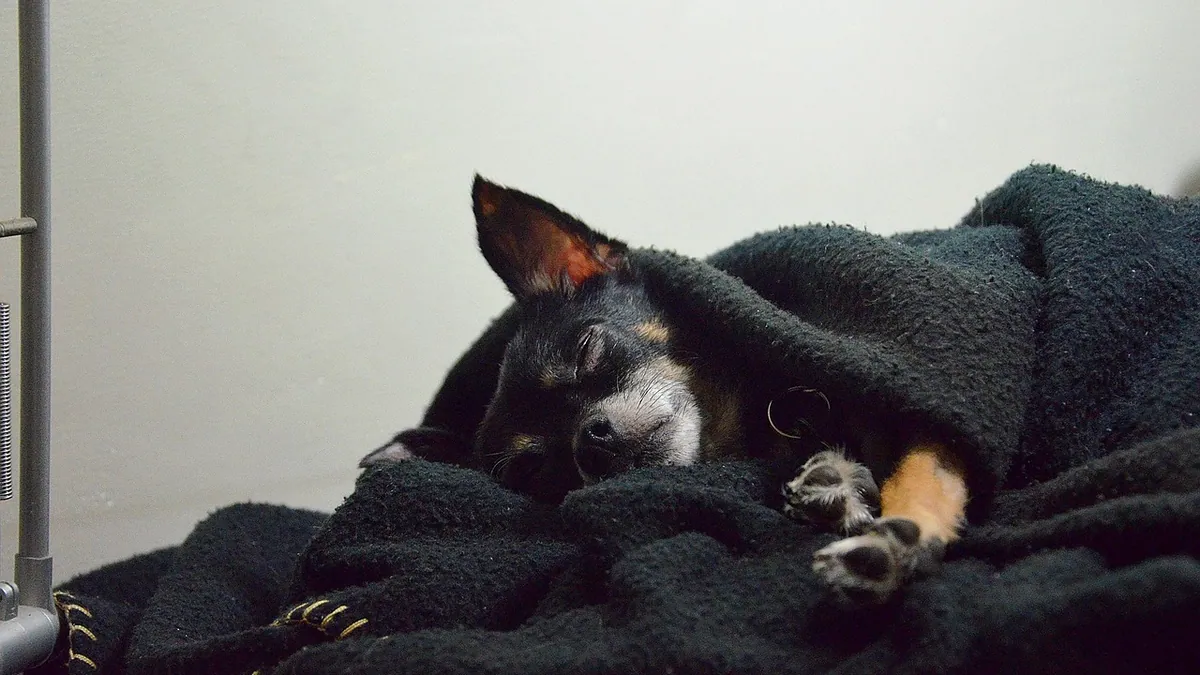
Most dogs are a little sleepy for a day or two after vaccination, and that is a normal immune response. True emergencies like anaphylaxis usually show up within minutes to hours and involve more than just tiredness. This article is educational and is not a substitute for veterinary diagnosis or treatment.
Quick Answer
- Mild lethargy in dogs after vaccination is common and typically lasts 24 to 48 hours.
- Signs of a serious allergic reaction appear quickly, often within minutes to hours, and the faster they start, the more severe they tend to be [1].
- Watch for vomiting, facial swelling, hives, trouble breathing, or collapse. These need emergency care right away.
- A tired puppy still needs water, a quiet place to rest, and a light meal. Do not force play or exercise.
- Call your veterinarian if tiredness lasts more than 2 days, gets worse, or comes with other symptoms.
What Post-Vaccine Tiredness Looks Like and What Is Normal
A normal vaccine response is dull. Your dog may sleep more, move slower, skip a meal, or seem less interested in toys. Some dogs run a mild fever or feel tender at the injection site. These signs usually start within the first day and fade on their own.
The key word is mild. A normally bouncy dog who naps extra but still gets up for a treat is likely fine. A dog who will not stand, will not lift her head, or seems unaware of you is not showing normal tiredness.
Timing matters too. Normal vaccine sleepiness tends to build over several hours and then improve. A reaction that hits like a switch, especially within the first 30 minutes after the shot, is a different problem [1].
Is It Normal for Puppies to Be Lethargic After Vaccines?
Yes, puppies often sleep more after their shots. Their immune systems are meeting these antigens for the first time, and their bodies are small. A puppy who is sleepy but still nurses, drinks, and responds to your voice is usually having a normal response.
Puppies can also pick up other problems around the same age. A puppy who looks very sick after a shot deserves a real exam, because the timing can be a coincidence.
Is It Normal for Dogs to Be Lethargic After the Kennel Cough Vaccine?
The kennel cough vaccine, given by nose or by injection, can cause the same mild sleepiness as other vaccines. Some dogs also get a mild cough or sneeze for a few days after the intranasal form. That is expected and not a sign of illness.
If your dog is tired after the kennel cough vaccine but otherwise bright, eating, and drinking, watch and wait. If the tiredness is paired with a wet cough, fever, or trouble breathing, call your vet.
Main Causes of Lethargy in Dogs After Vaccination
Not every sleepy dog is having a vaccine reaction. Here are the common causes and how to tell them apart.
| Cause | Typical clues | How urgent |
|---|---|---|
| Normal immune response | Mild sleepiness, starts within a day, improves in 24 to 48 hours | Not urgent, monitor at home |
| Mild allergic reaction | Hives, itchy skin, swollen face, vomiting, still alert | Call your vet the same day |
| Anaphylaxis | Sudden collapse, trouble breathing, pale gums, vomiting, diarrhea, starts within minutes to hours | Emergency now |
| Unrelated illness | Fever, ongoing vomiting, diarrhea, pale gums, no improvement | See a vet |
| Pain or stress from the visit | Sore leg, clingy behavior, settles within a day | Not urgent |
Anaphylaxis can involve the skin, breathing, heart, stomach, liver, or nervous system, and it can affect more than one of these at once [1]. That is why a dog who is vomiting and has a swollen face is more concerning than a dog who is only sleepy.
Some problems that show up after a vaccine are not reactions at all. A young dog can have a hidden infection or an immune response that happens to surface at the same time. One report described a puppy with a 10-day history of vomiting, vocalizing, and belly pain after vaccination. Blood tests showed changes that looked alarming but resolved on their own within 30 days [2]. The lesson is that timing alone does not prove cause.
If your dog also has loose stool, read Dog Diarrhea After Vaccination: Normal or a Concern?. If the tiredness is your main worry and there was no recent vaccine, Dog Lethargy: When Is It Serious? walks through the general warning signs.
Red Flags That Mean Emergency Care
Call an emergency clinic or poison control right away if you see any of these after a vaccine:
- Collapse, weakness, or inability to stand
- Trouble breathing, noisy breathing, or blue gums
- Swelling of the face, muzzle, eyelids, or throat
- Hives or raised welts on the skin
- Repeated vomiting or diarrhea, especially with blood
- Pale or white gums
- Tremors, seizures, or confusion
- A body that feels cold or a heart rate that seems very fast or very weak
These signs point to anaphylaxis, which is a medical emergency. The faster the signs appear, the more severe they tend to be [1]. Do not wait to see if your dog improves on her own.
For suspected poisoning or a reaction you are unsure about, the Pet Poison Helpline is available at 855-764-7661. If your dog is struggling to breathe or has collapsed, drive to the nearest emergency hospital instead of calling first.
If your dog is itchy or licking at her paws after a shot, Dog Licking Paws After Vaccine covers that specific sign. For a full triage guide, see Vaccine Reactions in Dogs and Cats: Anaphylaxis vs Mild Lethargy Triage.
How to Keep a Lethargic Puppy Comfortable at Home
Home care is simple. The goal is rest, fluids, and close watching.
Set up a quiet spot. Put a bed in a low-traffic room. Keep kids and other pets calm around your puppy. Skip the dog park, long walks, and training sessions for a day or two.
Offer water often. Dehydration makes lethargy worse. Offer small amounts of water every hour or so. If your puppy will not drink at all, call your vet.
Feed a light, normal meal. Do not switch foods or add new treats. A bland, familiar meal is easier on the stomach. If your puppy refuses food for more than 24 hours, that is a reason to call.
Check the injection site. A small, firm bump or mild soreness is common. Warm compresses can help if your vet approves. Do not massage a swollen area hard.
Take a temperature if you can. A normal dog temperature is roughly 101 to 102.5°F. A fever above 103°F or a temperature below 99°F needs veterinary attention. If you do not have a rectal thermometer or do not feel comfortable, skip it and let your vet check.
Keep a simple log. Write down the time of the vaccine, when the tiredness started, what your dog ate and drank, and any other signs. This helps your vet decide what is going on.
Do not give human medications. Never give ibuprofen, acetaminophen, or aspirin to a dog. Your veterinarian will calculate any safe medication dose from your dog's weight and health.
What Your Veterinarian Will Check and Test
Your vet will start with a full physical exam. They will check gum color, hydration, heart rate, breathing, temperature, and the injection site. They will ask about the timing of the vaccine and any other signs.
If the picture is mild, your vet may send you home to monitor. If signs are stronger or unclear, they may run tests. Common ones include:
- Blood work to check red cells, white cells, and platelets
- A chemistry panel to look at liver, kidney, and electrolyte values
- A stool or blood test if an infection is possible
- Imaging if there is vomiting, pain, or a swollen belly
Treatment depends on what is found. A mild allergic reaction may need an antihistamine or a steroid. Anaphylaxis needs emergency drugs, fluids, and oxygen. Your vet will choose the drug and the dose based on your dog's weight and condition.
If your dog has had a reaction before, tell every veterinary team member before the next vaccine. Your vet can discuss options, which may include pre-medication, a different vaccine, or titer testing [1]. Titer testing is used by some owners before boosters, though it is not right for every situation [3].
Prevention and Monitoring After Future Vaccines
You cannot prevent every reaction, but you can lower the risk and catch problems early.
Stay for 20 to 30 minutes after the shot. Most serious reactions start within minutes to hours [1]. Waiting in the lobby lets the staff treat your dog fast if something goes wrong.
Schedule shots for a day you are home. Do not vaccinate right before a trip, a boarding stay, or a busy workday. You want to be there to watch your dog.
Keep a vaccine record. Note the date, the product, and any signs that followed. Bring it to every visit.
Ask about timing for puppies. Puppies get a series of shots, and spacing matters. Maternal antibodies from the mother can block a vaccine from working, which is one reason the series is spread out [4]. Your vet sets the schedule for your puppy.
Know that no vaccine is 100 percent protective. Some animals do not respond fully to vaccination, and the size of that group varies by vaccine [4]. Vaccination is still one of the best ways to prevent serious disease [3].
Talk through your concerns. Owners weigh the risk of vaccination against the risk of disease, and those views are shaped by many sources [5]. A good conversation with your vet beats a rumor from the dog park.
Limitations and When to Contact a Veterinarian
This article cannot tell you what is happening with your dog. Only an exam and, sometimes, testing can do that. Individual cases need a veterinarian.
Call an emergency hospital now if your dog has collapsed, is struggling to breathe, has swollen face or throat, has pale gums, is having seizures, or has repeated vomiting or diarrhea within hours of a vaccine.
Call your vet the same day if your dog is very sleepy and not improving, has a fever, is vomiting once or twice, has hives, or will not eat or drink.
Schedule a routine visit if mild tiredness lasts more than 2 days, keeps coming back after each vaccine, or you want to discuss the next booster.
When in doubt, call. Veterinary teams would rather answer a question than treat a crisis.
Frequently Asked Questions
How long does lethargy in dogs after vaccination usually last?
Mild tiredness usually fades within 24 to 48 hours. Your dog should be back to normal energy after that. If she is still flat after 2 days, or if she gets worse instead of better, call your veterinarian.
Can a dog be lethargic after vaccines and still be fine?
Yes. Sleepiness alone, with normal gum color, normal breathing, and a willingness to eat or drink, is usually a normal immune response. Watch for other signs and keep your dog quiet and hydrated.
Should I worry if my puppy is sleepy after her first shots?
A sleepy puppy after her first shots is common. Puppies have small bodies and brand new immune systems. Call your vet if she will not wake up, will not eat or drink, has pale gums, or has vomiting or diarrhea.
Can I give my dog anything at home for post-vaccine tiredness?
No. Do not give human pain relievers or leftover pet medications. Offer water, rest, and a normal meal. If your dog seems uncomfortable, ask your vet what is safe, since they will calculate any dose from your dog's weight and health.
What if my dog has reacted badly to a vaccine before?
Tell your veterinarian and the staff before the next appointment. They can plan ahead with pre-medication, a different vaccine, or titer testing [1]. A known reaction history changes how the next visit is handled.
Related Articles
- Dog Diarrhea After Vaccination: Normal or a Concern?
- Dog Lethargy: When Is It Serious?
- Dog Lethargy: How to Tell If It's Serious
- Vaccine Reactions in Dogs and Cats: Anaphylaxis vs Mild Lethargy Triage
- Dog Licking Paws After Vaccine
- Dog Lethargy: When Is It an Emergency?
- Dog Vomiting After Vaccines: Normal Reaction or Not?
- Puppy Not Feeling Well After Shots: Normal or a Concern?
- Dog After Rabies Shot: Tiredness and Normal Reactions
References
- Vaccine Reactions. Pet Poison Helpline.
- Transient marked reactive lymphocytosis in a puppy suspected to be secondary to recent vaccination. The Journal of small animal practice, 2026.
- Canine Vaccination-A Survey of Owner Attitudes and Adherence to Vaccination Protocols. Pathogens (Basel, Switzerland), 2026.
- Vaccine Failure and Other Adverse Events in Animals - Pharmacology. Merck Veterinary Manual.
- A qualitative study of factors that shape owners' attitudes towards the vaccination of dogs and cats. Preventive veterinary medicine, 2026.