Are Bubbles Safe for Cats to Play With? What to Know
By Dr. Zubair Khalid, DVM, MS, PhD ·
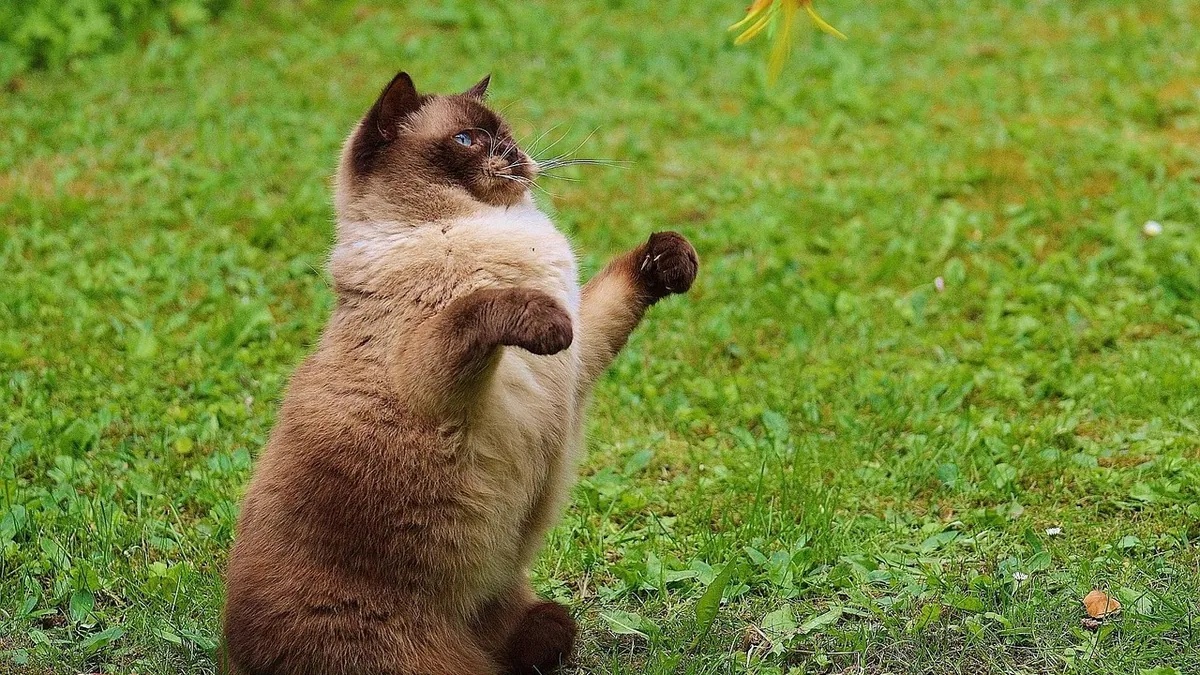
Is it safe for cats to play with bubbles? Yes, with the right solution. Plain soap bubbles made for children are usually harmless in tiny amounts, but some formulas contain ingredients that can irritate a cat's mouth, eyes, or stomach. The safest choice is a pet-safe bubble product or a homemade solution made from cat-safe ingredients.
This article is educational and is not a substitute for veterinary diagnosis or treatment.
Quick Answer
- Most cats can safely chase and pop bubbles as long as the solution is non-toxic and used in small amounts.
- Avoid bubbles made with essential oils, especially citrus, tea tree, eucalyptus, peppermint, and wintergreen. These can be toxic to cats.
- Never use antifreeze-based or industrial bubble products. They are dangerous even in small amounts.
- Offer fresh water right after play so your cat can rinse its mouth if it wants to.
- Stop play and call your veterinarian if your cat vomits, drools heavily, or seems wobbly after licking bubbles.
What Is Actually in Bubble Solution?
Standard bubble solutions are mostly water and a surfactant, which is a soap-like compound that lowers surface tension so bubbles can form. Many also contain glycerin or a similar ingredient to make bubbles last longer, plus a small amount of preservative.
For cats, the concern is not the bubbles themselves. It is what your cat swallows when it catches and pops them. A cat that pops a few bubbles may take in a tiny amount of soap film. That small amount is usually not a problem. A cat that drinks from the bottle or laps a puddle of solution is a different story.
Some bubble products add fragrance, color, or essential oils. Essential oils are the biggest red flag. Cats have a limited ability to metabolize many plant compounds, and some oils can cause drooling, vomiting, tremors, or worse. Citrus, tea tree, eucalyptus, peppermint, and wintergreen are common in scented products and are not safe for cats.
If you are unsure what is in a bottle, do not use it. The label may say "non-toxic" because it is safe for children to swallow a small amount. That label does not mean it was tested for cats.
How to Choose Safe Bubbles for Your Cat
Read the ingredient list, not the front label
Look for products that list water, glycerin, and a mild surfactant. Skip anything with essential oils, alcohol, or a long list of unpronounceable fragrances. If the bottle does not list ingredients, leave it on the shelf.
Look for pet-specific bubble products
Pet-safe bubble solutions are made for dogs and cats and are sold at pet stores and online. They are formulated to be low-risk if a pet licks them. They still are not food, so you should not let your cat drink the solution.
Make your own with cat-safe ingredients
A simple homemade option is one part plain liquid dish soap to four to six parts water, with a spoonful of glycerin if you want stronger bubbles. Use unscented, dye-free soap. Do not add essential oils, vinegar, or sweeteners. Even homemade solution should be used in small amounts and stored out of reach.
Keep the bottle away from your cat
The bottle is more dangerous than the bubbles. Cats can knock over a bottle and drink from the puddle. Cap the bottle, put it in a cabinet, and wipe up spills right away.
Step-by-Step: Safe Bubble Play With Your Cat
- Pick a safe solution. Use a pet-safe product or your homemade mix. Check the label every time, because formulas change.
- Choose a safe space. Play on a hard floor or a washable surface. Avoid carpet where solution can soak in and stay available for licking.
- Start small. Blow a few bubbles and see how your cat responds. Some cats ignore bubbles completely, and that is fine.
- Keep the wand away from your cat's face. Do not let your cat bite the wand or the bottle.
- Watch for licking. A few licks of bubble film are usually not a concern. Repeated licking of the solution is a reason to stop.
- Offer fresh water. After play, give your cat a clean bowl of water so it can rinse its mouth.
- Wipe paws and chin. A damp cloth removes soap residue from fur and paws.
- Put everything away. Cap the bottle, rinse the wand, and store it out of reach.
Play is a normal part of a cat's behavioral needs. In one study of 3,083 cat owners, play interaction was the most commonly offered form of enrichment, reported by 77.4% of guardians [1]. Bubbles can be one small piece of that play routine, as long as the solution is safe.
Comparison Table: Bubble Options for Cats
| Option | Safe if licked in small amounts? | Notes |
|---|---|---|
| Pet-safe bubble solution | Usually yes | Made for pets, still not food |
| Plain unscented dish soap and water | Usually yes | No dyes, no fragrance, no oils |
| Children's bubbles with glycerin | Usually yes | Check for essential oils and fragrance |
| Scented or essential oil bubbles | No | Citrus, tea tree, eucalyptus, peppermint, wintergreen are unsafe |
| Antifreeze or industrial bubbles | No | Extremely dangerous, call poison control or a vet right away |
| Homemade with added oils or vinegar | No | Skip all additives except glycerin |
A Simple Weekly Play Checklist
- Check the bubble bottle for cracks or leaks.
- Confirm the label still lists safe ingredients.
- Set out a fresh bowl of water before play.
- Choose a washable floor area.
- Limit play to 5 to 10 minutes at a time.
- Wipe your cat's paws and chin after play.
- Store the bottle in a closed cabinet.
- Watch for drooling, vomiting, or wobbliness for a few hours after play.
Is It Safe for Cats to Play With Bubbles if They Lick Them?
This is the question most owners ask, and the answer depends on how much and what kind. A cat that pops a bubble and swallows the film takes in a very small amount of soap. That amount is generally not enough to cause problems.
A cat that licks a puddle of solution or chews the bottle can swallow much more. Soap in larger amounts can cause drooling, vomiting, and diarrhea. Essential oils can cause more serious signs, including wobbliness, tremors, and low body temperature.
If your cat licks a small amount of plain soap solution, wipe its mouth, offer water, and watch for a few hours. If your cat drank a large amount, or if the solution contained essential oils or unknown ingredients, call your veterinarian or a pet poison control hotline right away.
Signs Something Is Wrong
Watch your cat closely for the rest of the day after bubble play. Call your veterinarian if you see any of these signs.
- Drooling more than usual
- Vomiting or retching
- Diarrhea
- Pawing at the mouth
- Head shaking or lip smacking
- Wobbliness or trouble walking
- Tremors or muscle twitching
- Squinting, redness, or swelling around the eyes
- Coughing, gagging, or trouble breathing
- Hiding, weakness, or unusual sleepiness
Eye contact with soap solution can cause irritation. If solution gets in your cat's eye, flush it with plain water or saline for several minutes and call your veterinarian. If your cat is choking or struggling to breathe, treat it as an emergency and go to the nearest veterinary hospital. Our guide on how to know if your cat is choking walks through the signs.
Common Mistakes Owners Make
Assuming "non-toxic" means cat-safe
Non-toxic labels are usually based on child safety, not cat safety. Cats are not small children. Their liver handles many chemicals differently.
Using scented or "natural" bubbles
Natural does not mean safe. Essential oils are natural and can be toxic to cats. Skip anything with a strong scent.
Letting the cat drink from the bottle
The bottle holds concentrated solution. A cat that drinks from it can swallow far more than it would from popping bubbles.
Playing on carpet
Carpet traps soap and moisture. Your cat can keep licking the spot long after play ends. Use a hard floor or a washable mat.
Leaving the bottle out
Cats knock things over. A spilled bottle becomes a puddle your cat may drink. Store it in a closed cabinet.
Ignoring signs after play
Signs can take a few hours to appear. If your cat seems off after bubble play, do not wait until morning to call.
Supplies and Setup That Matter
- A pet-safe bubble solution or plain unscented dish soap
- Glycerin (optional, for stronger bubbles)
- A clean water bowl
- A damp cloth for wiping paws and chin
- A washable floor mat or hard floor area
- A closed cabinet for storage
If your cat has a skin condition, soap residue on the paws or chin can add irritation. Our article on cat hot spots and other skin problems explains what to watch for. If your cat gets solution on its coat and you need to clean it off, our guide on how to safely bathe your cat at home can help you do it with less stress.
Bubbles are not the only toy to check. If you are considering other novelty toys, our guide on whether Jelly Cats are safe for pets covers similar questions about materials and licking.
Play is one part of a good enrichment plan. In one study, indoor cats with more intentional enrichment, including hiding places, vertical spaces, and predatory play, showed low physiological stress levels [2]. Another study found that play and feeding are both highly motivating contexts for cats, and cats meowed more when they could see but not reach a food or toy item [3]. That tells you play matters to cats. It also tells you that a frustrated cat may try harder to reach the toy, so keep the bottle and wand out of reach when play ends.
Owners often follow enrichment advice well when their veterinarian explains it. In one survey of 167 cat owners, compliance with environmental enrichment recommendations ranged from 88.9% to 97.6%, and veterinarians were the main source of that advice [4]. If you are unsure whether bubble play fits your cat's routine, ask your veterinarian. They can help you build a plan that matches your cat's personality and home.
Limitations and When to Contact a Veterinarian
No bubble product is completely risk-free. Even pet-safe solutions are not meant to be eaten. The safest approach is to limit how much solution your cat can reach and to watch closely during and after play.
Call your veterinarian the same day if your cat vomits, drools heavily, has diarrhea, or seems mildly off after licking bubbles.
Go to an emergency clinic now if your cat is wobbling, having tremors, breathing hard, collapsing, or cannot stand. If you know or suspect the solution contained essential oils, treat it as an emergency even if your cat seems fine at first.
Call a pet poison control hotline if you are unsure how much your cat swallowed or what was in the solution. Have the bottle with you so you can read the ingredients to the veterinarian.
Schedule a routine visit if your cat has repeated stomach upset after play, or if you want help choosing safe toys and enrichment for your cat. Individual cases need a veterinarian who can examine your cat and ask about its health history.
Frequently Asked Questions
Can my cat get sick from licking a few bubbles?
Usually no. A small amount of plain soap film is unlikely to cause problems. Larger amounts or solutions with essential oils are more concerning.
Are homemade bubbles safer than store-bought ones?
They can be, because you control the ingredients. Use plain unscented soap and water, and skip oils, dyes, and fragrances.
What should I do if my cat drinks the bubble solution?
Call your veterinarian or a pet poison control hotline right away. Bring the bottle so you can share the ingredient list.
Can bubbles hurt my cat's eyes?
Soap can irritate the eyes. Flush with plain water or saline for several minutes and call your veterinarian if the eye stays red or your cat keeps squinting.
Do all cats enjoy bubbles?
No. Some cats chase them, and some ignore them completely. If your cat is not interested, try other forms of play that match its hunting style.
Related Articles
- Are Jelly Cats Safe for Pets? A Complete Safety Guide
- How to Safely Bathe Your Cat at Home: Tips for a Stress-Free Experience
- How To Know If Your Cats Choking
- Cat Hot Spot or Something Else? How to Tell and What to Do
- How To Brush a Cat's Teeth Safely
- Fleas on Cats: Safe Flea Treatments and What to Avoid
- Are Laser Pointers Safe for Cats? Play Tips and Risks
- Are Hair Ties, Yarn, and Zip Ties Safe Cat Toys?
- How Do Cats Play? Reading Feline Play Behavior
References
- Types of Environmental Enrichments Offered for Cats and their Association with Housing Features and Cat Personality. Journal of applied animal welfare science : JAAWS, 2026.
- Stress in Indoor and Outdoor Cats: Association between Hair Cortisol Levels, Housing Style, and Guardians' Perceptions of Behavior. Journal of applied animal welfare science : JAAWS, 2026.
- Vocal signals produced by the domestic cat (Felis silvestris catus) in highly motivating contexts. Journal of comparative psychology (Washington, D.C. : 1983), 2026.
- Cat owners' perceptions of multimodal environmental modification advice for obstructive feline idiopathic cystitis. Journal of feline medicine and surgery, 2025.