When Do Puppies Quit Teething and Chewing?
By Dr. Zubair Khalid, DVM, MS, PhD ·
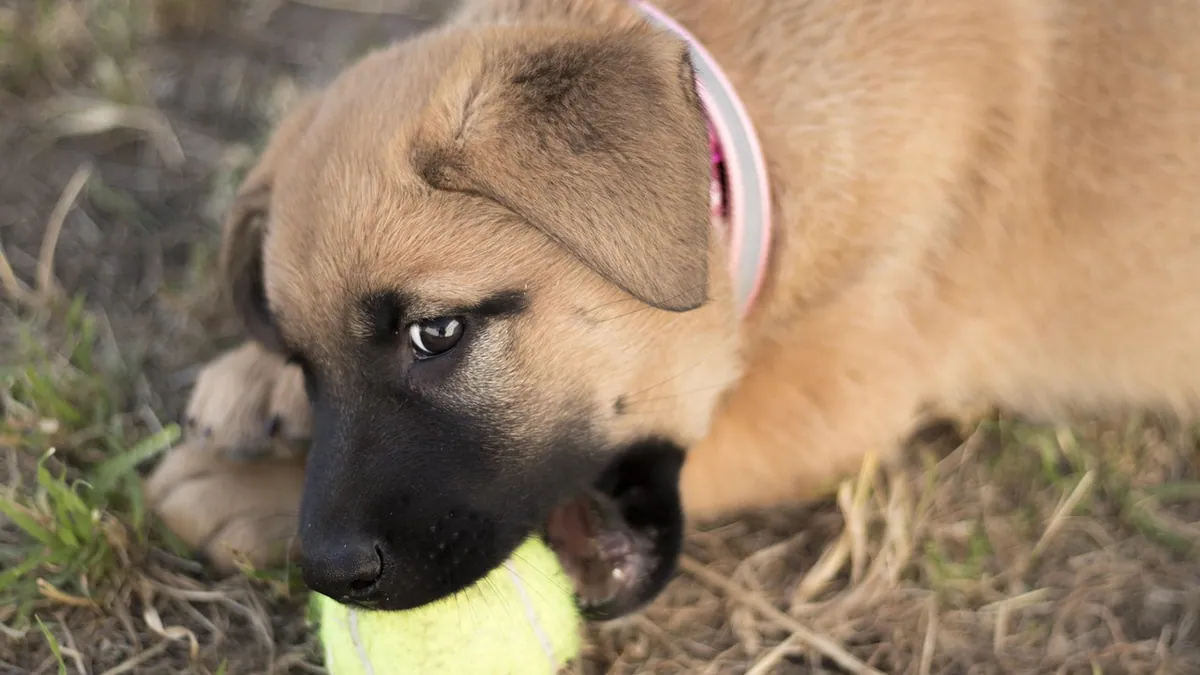
Most puppies finish teething between 6 and 8 months of age, and the intense chewing and biting that comes with it usually settles by about 6 months [1]. If you are wondering when do puppies quit teething, the short answer is that the worst of it passes in the second half of the first year, but the mouthy habits can linger a little longer without guidance.
This article is educational and is not a substitute for veterinary diagnosis or treatment.
Quick Answer
- Puppies lose baby teeth and grow adult teeth over several months, and the heaviest chewing phase typically ends by 6 months of age [1].
- Teething pain is a real driver of chewing, so frozen toys, ice cubes, or frozen wet washcloths can help numb the gums [1].
- Mouthing and biting people peak during play and investigation, and they need training, not just time, to stop [2].
- Chewing is normal at every age, so the goal is to redirect it to appropriate items like hard rubber toys or edible chews [3].
- Small and flat-faced breeds tend to get their baby teeth later and with more variation than larger breeds [4].
The Puppy Teething Timeline
Puppies are born without teeth. Their baby teeth, also called deciduous teeth, start coming in during the first weeks of life. A large study of over 1,000 puppies across 53 breeds found that the timing of baby tooth emergence varies with breed size and skull shape, with small and brachycephalic (flat-faced) breeds showing later emergence and more individual variation [4]. That means two puppies of the same age can be at very different points in the process.
The transition from nursing to chewing is its own milestone. Research in puppies shows that the start of rhythmical chewing is tied to signals from the periodontal receptors, the sensors around the tooth roots, and that this chewing rhythm is delayed when those signals are missing [5]. In plain terms, the mouth has to mature before chewing becomes coordinated.
By roughly 4 to 6 months, puppies begin losing baby teeth as adult teeth push through. This is when many owners notice the most chewing, because the gums are sore and the puppy is looking for relief [1]. The intensified chewing phase usually ends by 6 months of age [1]. Adult teeth continue settling into place after that, and most puppies are done teething by 6 to 8 months.
When Do Puppies Quit Biting and Chewing on Things?
Biting and chewing are two related but different behaviors. Chewing is an oral activity that dogs do for many reasons, including boredom, comfort, jaw exercise, and teeth cleaning [3]. Puppies also chew to relieve discomfort from incoming teeth and to explore the world around them [3]. Biting and mouthing, on the other hand, are social behaviors that show up most during play with people [2].
Mouthing on hands, limbs, and clothing may look cute at 7 weeks old, but it is much less endearing at 3 or 4 months when the puppy is bigger and the teeth are sharper [2]. The goal is not to wait it out. The goal is to teach your puppy that people have sensitive skin and that mouths must be gentle [2].
Most puppies stop mouthing people once they learn what is acceptable, and the chewing urge fades as teething ends around 6 months [1]. Some dogs keep chewing for life, which is normal, but they can learn to chew only their own items [3].
Step-by-Step: Managing Teething and Chewing
Step 1: Puppy-proof the space
Put away shoes, cords, remotes, and anything else your puppy can fit in their mouth. Dogs treat any object they can fit their mouths around as fair game to chew [3]. If you do not want your new shoes chewed, do not offer old shoes as toys, because your puppy cannot tell the difference [3].
Step 2: Offer appropriate chews
Provide hard rubber toys, marrow bones, knuckle bones, or bully sticks [3]. Keep a few options available so your puppy always has something legal to chew. Easy access to appropriate items reduces the urge to chew on things they should not [3].
Step 3: Use cold for teething pain
Ice cubes, freeze-friendly dog toys, or frozen wet washcloths can help numb sore gums [1]. This is especially useful during the peak teething months. For more on matching the right chew to your puppy's needs, see Dental Chews for Dogs: Efficacy, Safety, and Selection Criteria.
Step 4: Interrupt and redirect
When you catch your puppy chewing something off-limits, interrupt them and hand over an appropriate option. Then put the confiscated item away, out of reach, so they cannot return to it [3]. Do this every time, and be clear and consistent about what is allowed [3].
Step 5: Teach gentle mouth
When your puppy mouths you, pause the play and redirect to a toy. The first objective is to teach gentleness, and the ultimate goal is to stop mouthing and biting people altogether [2]. Puppies spend a lot of time playing, chewing, and investigating with their mouths, so this takes repetition [2].
Step 6: Add enrichment
Boredom drives chewing, so give your puppy things to do [3]. Scented chew toys may help hold attention during chewing sessions, and a recent study looked at how puppies engaged with scented versus unscented rubber toys [6]. Rotate toys to keep them interesting.
If your puppy's chewing is intense and happens mainly when you leave, the cause may be anxiety instead of teething. See Destructive Chewing in Puppies: Teething Relief vs Separation Anxiety and Dog Separation Anxiety: How to Stop Destructive Chewing.
Puppy Teething and Chewing Schedule
| Age | What is happening | What to do |
|---|---|---|
| 0 to 3 weeks | No teeth yet, nursing | Keep puppies with the mother, monitor weight |
| 3 to 8 weeks | Baby teeth emerge, timing varies by breed [4] | Begin gentle handling, introduce safe chew textures |
| 8 to 12 weeks | Full baby dentition, mouthing peaks | Redirect biting, offer soft chews, start training |
| 3 to 4 months | Mouthing is less cute and more painful [2] | Stay consistent with redirection and gentle-mouth training |
| 4 to 6 months | Baby teeth fall out, adult teeth come in, heaviest chewing [1] | Frozen toys, ice cubes, appropriate chews [1] |
| 6 to 8 months | Teething winds down, chewing urge fades [1] | Keep appropriate chews available, maintain training |
| 8 months and older | Adult teeth in place | Chewing continues for life, direct it to safe items [3] |
Signs Something Is Wrong
Teething is normal, but some mouth problems are not. Watch for these signs and contact your veterinarian if you see them.
- Baby teeth that do not fall out on schedule, which can crowd adult teeth.
- A persistent double row of teeth.
- Bad breath that does not improve.
- Drooling more than usual, or dropping food while eating.
- Red, swollen, or bleeding gums.
- Reluctance to chew or eat hard food.
- Chewing only on one side of the mouth.
- Broken or discolored teeth.
Dental alignment problems can show up early. A study of 297 puppies between 8 and 12 weeks old found that 26 percent had some form of malocclusion, and purebred single dogs had a higher rate than mixed breeds (33.8 percent versus 20 percent) [7]. That is why an early mouth check matters. Gum health also changes with teething. Research in dogs shows that the gingiva responds to plaque buildup in both baby and adult dentitions, so keeping the mouth clean during teething helps [8].
Common Mistakes Owners Make
- Waiting for the puppy to grow out of biting. Mouthing needs training, not just time [2].
- Giving old shoes or socks as toys. Your puppy cannot tell your old shoe from your new one [3].
- Leaving inappropriate items within reach. If you see your puppy chewing something off-limits, interrupt, redirect, and put the item away [3].
- Offering only one chew toy. Variety and easy access reduce unwanted chewing [3].
- Ignoring pain signs. Sore gums need cold chews and sometimes a vet visit [1].
- Assuming all chewing is teething. Boredom, anxiety, and frustration also drive chewing at any age [3].
Supplies and Setup That Matter
A few simple items make the teething months easier.
- Hard rubber toys, such as Kongs [3].
- Edible chews like marrow bones, knuckle bones, or bully sticks [3].
- Freezable dog toys and ice cubes for gum relief [1].
- Frozen wet washcloths for puppies who like fabric textures [1].
- A toy rotation bin so chews stay novel.
- A safe, puppy-proofed area for unsupervised time.
- A toothbrush and dog-safe toothpaste for early dental care.
If your puppy was recently weaned, the transition from nursing to solid food overlaps with early chewing development. For more on that stage, see Weaning Puppies 3-8 Weeks: Gruel Transition and Socialization Window.
Limitations and When to Contact a Veterinarian
This article covers general teething and chewing patterns. Every puppy is different, and individual cases need a veterinarian who can examine your dog in person.
Contact your veterinarian the same day if you notice:
- A tooth that is broken, loose, or discolored.
- Bleeding from the mouth that does not stop.
- Sudden refusal to eat or drink.
- Swelling around the face or jaw.
- A puppy that seems painful when the mouth is touched.
Go to an emergency clinic now if you see:
- Difficulty breathing.
- A swollen, blocked airway.
- A chewed electrical cord with burns or collapse.
- Suspected poisoning from a chewed plant, medication, or household product.
For poison emergencies, call the ASPCA Animal Poison Control Center at (888) 426-4435. A consultation fee may apply. You can also call the Pet Poison Helpline at (855) 764-7661.
Schedule a routine visit if:
- Baby teeth have not fallen out by 6 to 8 months.
- You see a double row of teeth.
- Your puppy has persistent bad breath or gum redness.
- Mouthing and biting are not improving with training.
Frequently Asked Questions
Do all puppies stop chewing when teething ends?
No, chewing is a natural behavior that continues throughout a dog's life for jaw exercise, teeth cleaning, boredom relief, and comfort [3]. What changes after teething is the intensity and the reason. Adult dogs still need appropriate chew items, but they can learn to leave your belongings alone [3].
Is it normal for my puppy to bite during play?
Yes, puppies use their mouths constantly during play, chewing, and investigation, so biting people is common [2]. It is not something to ignore, though. Start teaching gentleness early, because the behavior becomes harder to manage as your puppy grows [2].
Can teething cause loose stools or appetite changes?
Teething itself is mainly a mouth issue, but sore gums can make a puppy eat more slowly or avoid hard food. If your puppy has vomiting, diarrhea, or refuses food for more than a day, that points to something other than teething, so call your veterinarian.
Should I pull out a loose baby tooth?
No. Let baby teeth fall out on their own unless your veterinarian advises otherwise. Pulling a tooth that is not ready can cause pain, bleeding, or damage to the gum and the adult tooth underneath. If a tooth stays loose or a double row forms, have your vet check it.
Does breed affect when teething ends?
Yes, breed size and skull shape affect the timing of baby tooth emergence. Small and brachycephalic breeds tend to have later emergence and more variation than larger breeds [4]. That means a Chihuahua and a Labrador of the same age may be at different stages, so judge by your puppy's mouth, not just the calendar.
Related Articles
- Destructive Chewing in Puppies: Teething Relief vs Separation Anxiety
- Weaning Puppies 3-8 Weeks: Gruel Transition and Socialization Window
- Dental Chews for Dogs: Efficacy, Safety, and Selection Criteria
- Dog Chewing Paws Gut Health
- Dog Separation Anxiety: How to Stop Destructive Chewing
- Dog Chewing Paws: Allergies, Anxiety, or Boredom?
- Dog Teething Age: When Puppies Start and Stop
- How Long Do Puppies Chew Everything? Teething Stage
- Do Puppies Lose Teeth? Teething Timeline and What to Expect
References
- Destructive Chewing. ASPCA Animal Poison Control Center.
- Mouthing, Nipping and Biting in Puppies. ASPCA Animal Poison Control Center.
- Chewing and Destructive Behavior in Dogs. ASPCA Animal Poison Control Center.
- Time and sequence of emergence of the deciduous dentition in dogs and its applicability for age estimation. Anatomia, histologia, embryologia, 2022.
- A role of periodontal sensation in development of rhythmical chewing in dogs. Comparative biochemistry and physiology. Comparative physiology, 1994.
- To chew or not to chew? Exploring the influence of scented chew toys on puppy chewing. Frontiers in behavioral neuroscience, 2025.
- Prevalence of Malocclusion of Deciduous Dentition in Dogs: An Evaluation of 297 Puppies. Journal of veterinary dentistry, 2019.
- Gingivitis in the deciduous and permanent dentition. An experimental study in the dog. Journal of clinical periodontology, 1989.