How Long Do Puppies Chew Everything? Teething Stage
By Dr. Zubair Khalid, DVM, MS, PhD ·
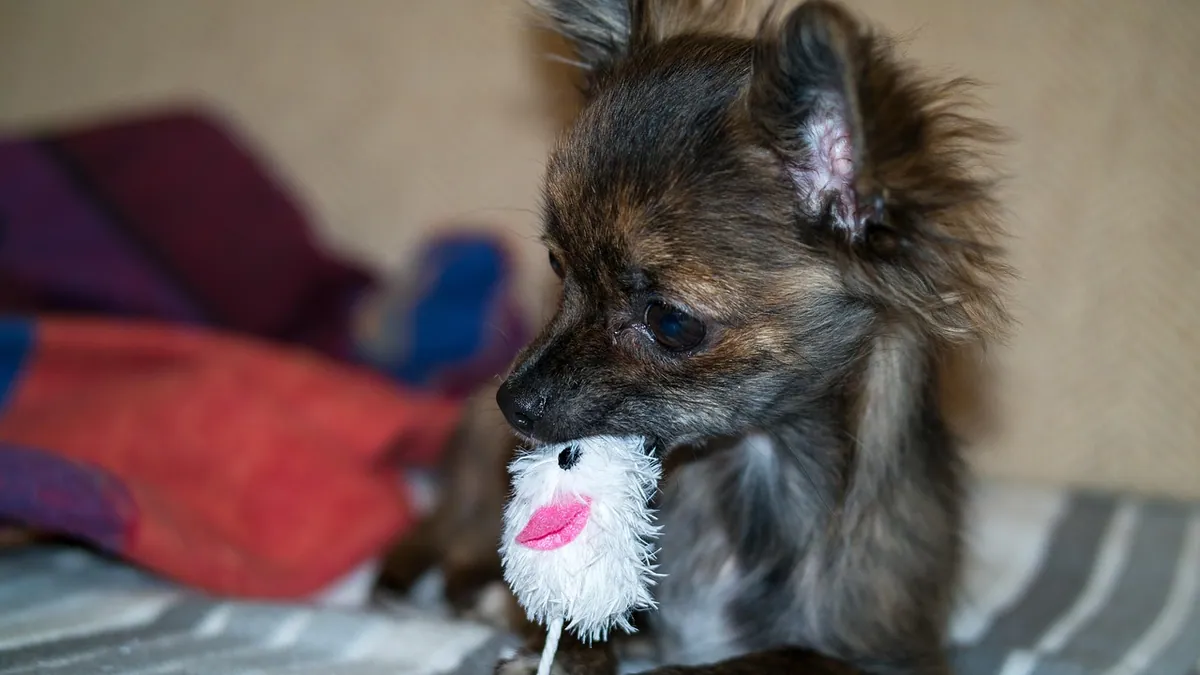
Most puppies chew everything because they are teething, exploring, or bored, and the intense phase usually fades between 6 and 12 months of age as adult teeth come in and training improves. Some dogs keep chewing for life, but the frantic puppy stage is temporary. This article is educational and is not a substitute for veterinary diagnosis or treatment.
Quick Answer
- Puppies chew hardest from about 3 to 6 months, when baby teeth fall out and adult teeth push through.
- The behavior usually drops off sharply by 6 to 12 months, though mouthing and casual chewing can continue longer in some dogs.
- Chewing is normal and healthy. It helps clean teeth, exercises the jaw, and can reduce stress [1][2].
- You cannot train the urge away. You can redirect it to safe items and manage the environment.
- Punishment makes chewing worse. It teaches a dog to chew when you are not watching.
Why Puppies Chew Everything
Chewing is a natural behavior, not a bad habit. Dogs chew for many reasons, including boredom, comfort, jaw exercise, and dental cleaning [1]. Puppies have an extra reason on top of that: their mouths hurt.
Teething drives the worst of it
Baby teeth start emerging in the first weeks of life, and the full set is usually in place by around 6 to 8 weeks. Those teeth then fall out and adult teeth erupt, which is when the chewing peaks. The timing of tooth emergence varies by breed size and skull shape, with small and flat-faced breeds showing later emergence and more individual variation [3]. That means a Chihuahua and a Great Dane may not hit the same chewing peak on the same schedule.
Exploration and boredom
Puppies learn about the world with their mouths. Any object they can fit in their mouths looks like a chew toy to them, which is why shoes, remote controls, and baseboards all get tested [1]. When puppies are under-exercised or left alone with nothing to do, chewing becomes the default activity.
Chewing is good for dogs
Chewing appears to support dental and oral hygiene, digestive health, bone strength, and stress management [2]. You are not trying to stop chewing. You are trying to move it onto the right objects.
Medical Causes to Rule Out Before You Blame Training
Sometimes chewing is not behavioral at all. If your puppy suddenly chews far more than usual, or chews in a frantic, obsessive way, your veterinarian should look for a physical cause first.
- Dental pain or a broken tooth
- Retained baby teeth that never fell out
- Gum disease or oral infection
- Gastrointestinal upset, which can drive pica (eating non-food items)
- Nutritional gaps from an unbalanced diet
- Skin allergies or parasites, if the chewing is aimed at paws or flanks
Chewing that targets paws, legs, or the body is a different problem from chewing furniture. It often points to allergies, anxiety, or boredom, and it needs its own workup. See Dog Chewing Paws: Allergies, Anxiety, or Boredom? for that pattern.
When Puppy Chewing Becomes a Problem
Normal chewing becomes a problem when it damages property, risks your puppy's health, or happens constantly even when you are home.
Watch for these patterns:
- Chewing drywall, electrical cords, or anything that can be swallowed
- Swallowing pieces of fabric, plastic, or wood
- Chewing only when left alone, which can signal separation anxiety
- Chewing that continues past the first year at the same intensity
- Chewing that leaves bleeding gums, broken teeth, or vomiting
The distinction matters. Teething relief and separation anxiety look similar on the surface but need different plans. Destructive Chewing in Puppies: Teething Relief vs Separation Anxiety walks through how to tell them apart.
How Long Do Puppies Chew Everything? A Realistic Timeline
There is no single switch that flips off. Most owners notice the worst period between 3 and 6 months, a gradual decline from 6 to 12 months, and occasional relapses after that.
Permanent canine teeth are a useful marker of maturity. In male dogs, permanent canine eruption correlates with rising testosterone and testicular maturation, and it predicts pubertal status better than age alone [4]. In plain terms, once the adult canines are fully in, your puppy is physically past the teething drive.
That does not mean chewing stops. Adult dogs still chew for enjoyment and stress relief [2]. What changes is the urgency and the frequency.
What to Do: Step by Step
1. Give your puppy legal things to chew at all times
Dogs need easy access to appropriate chew items. That access reduces the urge to chew on things they should not [1]. Good options include hard rubber toys and edible chews such as marrow bones, knuckle bones, or bully sticks [1].
Rotate three or four items so they stay interesting. Match the size to your puppy's mouth so nothing can be swallowed whole.
2. Be consistent about what is off limits
Decide from day one what is fair game and stick to it. Do not give your puppy old running shoes to chew if you do not want your new shoes chewed, because dogs cannot tell the difference [1]. This is one of the most common mistakes owners make.
3. Interrupt and redirect
When you catch your puppy chewing something off limits, interrupt calmly, hand over an appropriate item, and put the forbidden object out of reach so your puppy cannot return to it [1]. Do this every time. Repetition is what teaches the rule.
4. Build a routine that prevents boredom
A tired, mentally worked puppy chews less. Feed part of the daily ration from a food-stuffed rubber toy. Add short training sessions. Rotate toys instead of leaving all of them out.
5. Manage the environment
Puppy-proof like you would for a toddler. Block off rooms, use baby gates, secure trash cans, and cover or hide electrical cords. Management is not cheating. It is how you prevent a swallowed object and a surgery.
6. Consider scent to boost interest
Scented chew toys may increase engagement in some puppies, though the research on how much they change chewing and mouthing at home is still developing [5]. If your puppy ignores plain rubber, a scented version is a reasonable experiment.
7. Keep nutrition appropriate for the stage
Puppies have different nutritional needs than adults, and diet changes should follow your veterinarian's guidance. If you are unsure when to transition, see How Long Should A Puppy Eat Puppy Food and How Long Should Dog Eat Puppy Food.
What Not to Do
Do not punish
Yelling, hitting, or rubbing your puppy's nose in a chewed item does not teach the right behavior. It teaches fear and hiding. A puppy who learns to chew only when you are gone is harder to fix than one who chews in front of you.
Do not use old shoes or clothing as decoys
This blurs the rule and backfires [1].
Do not give bones that can splinter or break teeth
Veterinarians often advise against feeding certain bones because of the risk of dental fractures and other injuries [2]. Ask your veterinarian which chews are safe for your dog's size and bite force.
Do not assume all chewing is behavioral
Sudden, intense, or self-directed chewing needs a medical check first.
Do not rely on aversive sprays alone
Taste deterrents can help in the short term, but they do not teach an alternative behavior. Pair them with redirection and enrichment.
When to Get Professional Help
Call your veterinarian or a certified behavior professional if:
- Your puppy is older than 12 to 18 months and still destroying items daily
- Chewing happens only when you leave, along with whining, pacing, or accidents
- Your puppy injures themselves, breaks teeth, or bleeds from the gums
- You have tried redirection and management for several weeks with no improvement
- You feel frustrated or angry enough that punishment is tempting
Separation-related chewing is a welfare issue, not a discipline issue. It responds to a structured behavior plan, sometimes with medication prescribed by your veterinarian.
Limitations and When to Contact a Veterinarian
This article covers the typical puppy chewing phase. It cannot tell you what is happening in your individual dog, and every case needs a veterinarian who can examine your pet.
Contact your veterinarian the same day if your puppy:
- Vomits, drools heavily, or refuses food after chewing an object
- Has a swollen or painful abdomen
- Has bleeding gums or a visibly broken tooth
- Chews at one spot on the body until the skin is raw
Go to an emergency clinic now if your puppy:
- Swallows string, fabric, or a large piece of a toy
- Chokes, gags, or has trouble breathing
- Collapses or seems suddenly weak
- Shows repeated unproductive retching
For suspected poisoning from a chewed plant, medication, or household product, call your veterinarian or a pet poison hotline right away. Do not wait for symptoms.
Schedule a routine visit for a full oral exam if your puppy still has baby teeth at 6 to 7 months, if chewing seems painful, or if you want help choosing safe chew items for your dog's size and jaw strength.
Frequently Asked Questions
When do puppies quit chewing on everything?
Most puppies ease off between 6 and 12 months as adult teeth finish coming in. Some continue light chewing for life, which is normal. If intense destruction continues past 18 months, it is usually behavioral and worth a professional evaluation.
How long do puppies go through the chewing stage?
The heaviest chewing typically runs from about 3 to 6 months, when baby teeth are falling out and adult teeth are erupting. Breed size and skull shape shift that window, since small and flat-faced breeds tend to erupt teeth later [3]. Expect a gradual decline after the peak instead of a sudden stop.
How long do puppies want to chew everything?
The urge to mouth and test objects fades as your puppy matures and as training takes hold. Chewing itself never fully disappears because it is a natural, beneficial behavior [1][2]. Your goal is to shape where that chewing happens.
Does punishment stop puppy chewing?
No. Punishment suppresses the behavior only when you are present and can increase anxiety-driven chewing when you are gone. Interrupting, redirecting to an appropriate item, and removing the forbidden object works better and does not damage your relationship [1].
Can I just wait for my puppy to grow out of it?
Waiting alone risks a swallowed object, an intestinal blockage, or a lifelong habit. Pair patience with management, enrichment, and consistent redirection from the start. If you are unsure whether the chewing is teething or anxiety, ask your veterinarian.
Related Articles
- How Long Should A Puppy Eat Puppy Food
- Destructive Chewing in Puppies: Teething Relief vs Separation Anxiety
- How Long Should Dog Eat Puppy Food
- How Long Does A Dog Period Last
- Dog Chewing Paws: Allergies, Anxiety, or Boredom?
- How Long Can A Dog Go Without Eating And Be Ok
- Why Do Puppies Chew Everything? Normal Chewing Explained
- Puppy Teething Stages: What to Expect Each Month
- Do Puppies Lose Teeth? Teething Timeline and What to Expect
References
- Chewing and Destructive Behavior in Dogs. ASPCA Animal Poison Control Center.
- Functional significance and welfare implications of chewing in dogs (Canis familiaris). Frontiers in veterinary science, 2025.
- Time and sequence of emergence of the deciduous dentition in dogs and its applicability for age estimation. Anatomia, histologia, embryologia, 2022.
- Linking Canine Teeth Eruption, Testicular Histology and Testosterone Levels as Indicators of Pubertal Maturation in Male Dogs. Anatomia, histologia, embryologia, 2026.
- To chew or not to chew? Exploring the influence of scented chew toys on puppy chewing. Frontiers in behavioral neuroscience, 2025.