How to Tell If Your Kitten Will Be Fluffy
By Dr. Zubair Khalid, DVM, MS, PhD ·
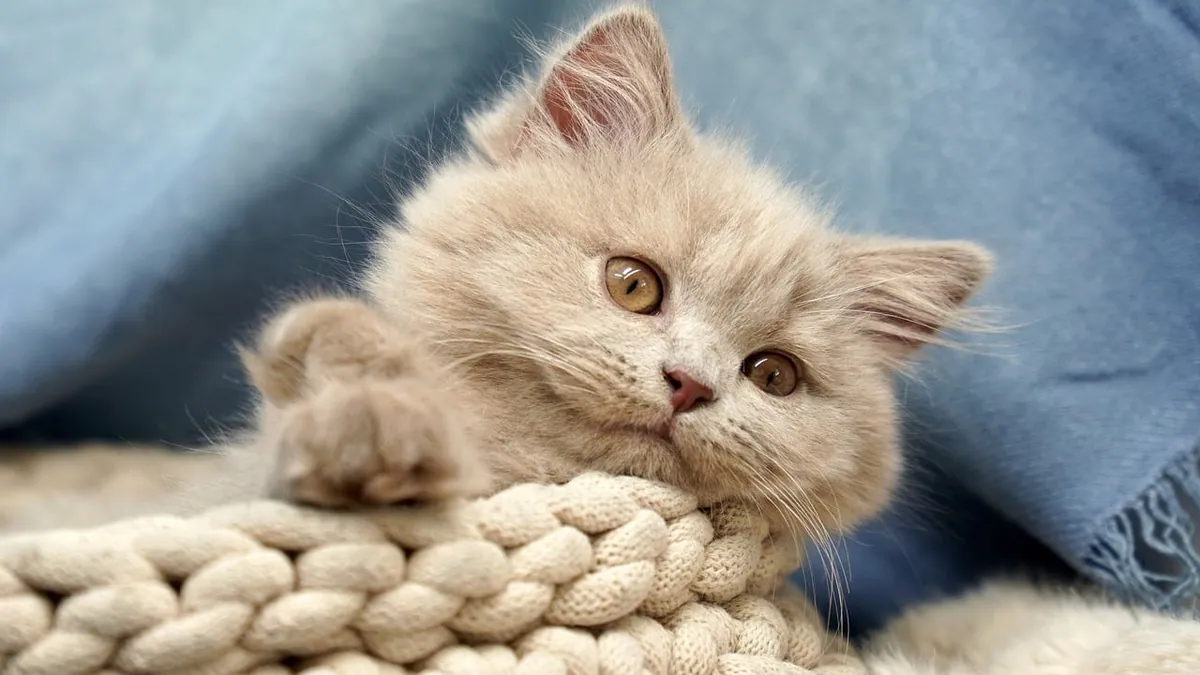
How to tell if my kitten will be fluffy comes down to a few visible clues: the length of the hair on the tail, ear tufts, toe tufts, and the texture of the coat around the neck and belly. Genetics decide most of it, and a kitten's coat keeps changing until roughly one year of age. This article is educational and is not a substitute for veterinary diagnosis or treatment.
Quick Answer
- Look at the tail first. A kitten with a short, thin, tapered tail is almost always a shorthair. A tail that looks like a bottlebrush, even at 8 to 12 weeks, points toward a longhair adult coat.
- Check the ears and toes. Longhair kittens often grow wispy tufts inside the ears and between the toes before the body coat fills in.
- Feel the neck ruff and belly. A kitten developing a thicker collar of fur and a softer, denser belly coat is likely to be fluffy.
- Ask about the parents. Coat length is inherited, and longhair is a recessive trait, so a fluffy kitten usually has at least one longhair parent or two shorthair parents that each carry the gene.
- Accept the timeline. Kitten coats change through the first year, so a definitive answer often comes only when the adult coat grows in.
What Determines Kitten Fur Length?
Coat length in cats is controlled mainly by genetics. The longhair trait is recessive, which means a kitten needs to inherit the longhair gene from both parents to grow a long coat. If both parents are shorthairs but each carries one copy of the gene, some kittens in the litter can still be longhaired. This is why two short-haired cats can produce a fluffy kitten.
Breed matters too. Most cats in the United States are not purebred. In one large survey of cat guardians, only 6 percent of cats were purebred, and among non-purebred cats, shorthairs made up 79 percent of the population [1]. That means most kittens you meet will grow up to be shorthairs, and a truly fluffy adult coat is less common than a short one.
Fur development genes have been studied in wild cats as well. Research on Pallas's cat and related species found that genes tied to fur development were enriched in regions shaped by natural selection, which shows how strongly coat traits are written into feline DNA [2]. Your kitten's fluffiness is following the same kind of inherited blueprint.
Sex and body condition do not change coat length, but they can change how the coat looks. A cat with a higher body condition score can appear rounder and fluffier, and hair coat length can even affect how accurately a veterinarian estimates weight in an emergency setting [3]. So a fluffy coat can sometimes hide a thin or overweight body underneath.
How to Tell If Your Cat Will Be Fluffy: Step-by-Step
Step 1: Look at the tail at 8 to 12 weeks
The tail is the most reliable early clue. Shorthair kittens have tails that stay slim and taper to a point. Longhair kittens start to show a fuller, bushier tail early, sometimes called a bottlebrush tail. If the tail fur is noticeably longer than the fur on the back, that is a strong sign.
Step 2: Check the ears and paws
Run your finger along the inside edge of the ear. Longhair kittens often develop fine tufts there. Turn the paw over and look between the toes. Toe tufts, sometimes called snowshoes, are another longhair clue. These tufts appear before the main body coat lengthens.
Step 3: Feel the neck and belly
Gently feel the fur around the neck and along the belly. A kitten that will be fluffy usually has a softer, denser, slightly longer coat in these areas. The neck ruff is one of the last places to fill in, so a thick ruff at 4 to 6 months is a good sign.
Step 4: Compare the kitten to its littermates
If you can see the whole litter, compare them side by side. Longhair kittens often stand out because their coats look softer and less slick than their siblings. This is one of the easiest fluffy kitten signs to spot.
Step 5: Ask about the parents
If you know the mother or father, look at their coats. A longhaired parent makes a longhaired kitten much more likely. If both parents are shorthairs, ask whether either has produced longhaired kittens before, which tells you they carry the gene.
Step 6: Wait for the adult coat
Most kittens shed their kitten coat and grow the adult coat between 6 and 12 months of age. Some longhairs do not reach full coat length until 12 to 18 months. If you are still unsure at 6 months, the answer usually becomes clear by the first birthday.
Kitten Coat Prediction Timeline
| Age | What to look at | What it means |
|---|---|---|
| Birth to 4 weeks | Coat is short and close to the body | Too early to predict |
| 6 to 8 weeks | Tail shape, ear tufts, toe tufts | First real clues appear |
| 8 to 12 weeks | Tail fullness, neck ruff starting | Bottlebrush tail suggests longhair |
| 3 to 6 months | Belly and neck coat texture | Denser, softer coat suggests longhair |
| 6 to 12 months | Adult coat growing in | Coat length becomes clear |
| 12 to 18 months | Full adult coat | Final answer for most cats |
Fluffy Kitten Signs You Can Spot at Home
- A tail that looks fuller than the rest of the body
- Fine hair inside the ears
- Tufts between the toes
- A soft, dense belly coat
- A neck ruff that thickens over time
- A coat that mats easily, even with light brushing
- Shed fur that forms soft clumps instead of short, stiff hairs
If your kitten shows several of these signs, plan for a fluffy adult. That means more grooming, more shedding, and a higher chance of hairballs.
Grooming Needs for Fluffy Cats
Longhaired cats need more help with grooming than shorthairs. Grooming is a normal maintenance behavior that takes up about 4 percent of a cat's daily activity budget, and it happens in short bouts throughout the day [4]. A fluffy cat cannot keep up with a long coat on its own, so you need to help.
Brush your longhaired kitten every day or every other day. Start when the kitten is young so it learns to accept handling. Use a metal comb for the body and a soft brush for the face and legs. Pay extra attention to the armpits, belly, and behind the ears, where mats form first.
Bathing is rarely needed for cats, but longhairs may need a bath if they get into something sticky or soiled. Frequent bathing and certain lifestyle factors have been linked to ear issues in cats, so keep baths occasional and dry the ears well afterward [5]. If your cat grooms much more than usual, or much less, that can be a sign of a skin or behavioral problem, and it is worth reading about why your cat may be grooming so much.
Shorthair cats still shed and still benefit from weekly brushing. Even a short coat can mat if a cat stops grooming because of pain, illness, or obesity.
Signs Something Is Wrong
A change in coat quality can be an early sign of a health problem. Watch for these:
- Sudden dull, dry, or greasy coat
- Bald patches or thinning fur
- Mats that form faster than usual
- Constant scratching, biting, or licking
- Red, crusty, or scabby skin
- A coat that smells bad
- Your cat stops grooming or grooms far more than before
Ear problems are also more common in some cats. One study found that Malassezia pachydermatis, a yeast, was the most common yeast in the external ear canal, with a prevalence of about 51 percent [5]. Hair length, ear cleaning frequency, and bathing habits may play a role in these infections [5]. If your fluffy cat shakes its head or has dirty, waxy ears, have a veterinarian check them.
Common Mistakes Owners Make
Assuming a fluffy kitten is a longhair
Some kittens have a thick kitten coat that thins out by 6 months. A kitten that looks fluffy at 8 weeks can grow into a shorthair adult. Wait until the adult coat comes in before you decide.
Assuming a sleek kitten will stay sleek
The opposite happens too. A kitten with a short, tight coat at 8 weeks can still grow a longer adult coat if it carries the longhair gene. The tail and ear tufts are better clues than the body coat.
Skipping early brushing
Kittens that are not brushed young often resist grooming as adults. Start handling the paws, ears, and belly early, even if the coat is short.
Ignoring mats
Mats pull on the skin and can cause pain, skin infections, and hidden wounds. Never cut mats out with scissors near the skin. Ask a veterinarian or groomer for help.
Forgetting the first vet visit
A new kitten needs a health check, vaccines, parasite treatment, and a weight record. If you are bringing home a new cat, plan ahead and read about what to expect at a kitten's first vet visit. If you already have a cat at home, learn how to manage the introduction, including how long hissing at a new kitten may last.
Supplies and Setup That Matter for Health
- A metal comb and a soft slicker brush for daily coat care
- Kitten-safe nail trimmers, since longhaired cats often have tufts that hide the nails
- A litter box with low sides for young kittens, kept clean daily
- A scratching post to redirect scratching away from furniture
- A carrier for vet visits, kept out so the kitten gets used to it
- A soft bed that is easy to wash, since fluffy coats pick up debris
- A vacuum or lint roller, because longhaired cats shed more visible hair
If you are curious about the fluffiest wild cat of all, the Pallas cat is a fascinating example of a naturally fluffy feline. Its dense coat is built for cold climates, and it shows how much coat type is tied to environment and genetics.
Limitations and When to Contact a Veterinarian
No one can predict a kitten's adult coat with 100 percent certainty. Genetics, breed, and age all play a role, and the coat keeps changing through the first year. Individual cases need a veterinarian who can examine your kitten in person.
Contact a veterinarian the same day if your kitten has a sudden bald patch, a hot spot, a foul smell from the coat or ears, or a mat that is pulling the skin. Go to an emergency clinic right away if your kitten is open-mouth breathing, collapsed, having a seizure, or bleeding. Schedule a routine visit if your kitten is scratching often, has a dull coat, is losing weight, or has not had a first wellness exam. A veterinarian can check for parasites, skin infections, and nutritional problems that affect the coat.
Frequently Asked Questions
Can you tell if a kitten will be fluffy at 8 weeks?
Yes, you can often see early clues at 8 weeks, especially in the tail, ears, and toes. A bottlebrush tail and ear tufts are strong signs of a longhair adult. The body coat alone is less reliable at this age.
Do fluffy kittens stay fluffy?
Most longhaired kittens stay longhaired, but the coat can change texture and thickness as the adult coat grows in. Some kittens look fluffier at 3 months than they do at 12 months. The final coat is usually clear by the first birthday.
Is a fluffy kitten always a longhair?
No. Some kittens have a dense kitten coat that thins out later. A kitten can look fluffy at 8 weeks and grow into a shorthair adult. The tail shape and ear tufts are better predictors than overall fluffiness.
How can I tell if my cat will be fluffy if I do not know the parents?
Look at the tail, ear tufts, toe tufts, and neck ruff. If several of these are present, a long coat is likely. You can also ask a veterinarian to assess the coat at a wellness visit.
Do fluffy cats need more grooming?
Yes. Longhaired cats need brushing every day or every other day to prevent mats and hairballs. Shorthairs still benefit from weekly brushing. Start grooming when your kitten is young so it accepts handling.
Related Articles
- Introducing New Kitten
- Pallas Cat: The Fluffy Wild Feline You Need to Know About
- Why Is My Cat Grooming So Much?
- Cat Hissing at New Kitten: How Long Will It Last?
- Kitten First Vet Visit: What Should You Expect?
- How To Know If Your Cats Choking
- Will My Kitten Have Long or Short Hair?
- Is My Kitten a Maine Coon? Traits and Care
- Do Kittens Shed? What to Expect and How to Manage It
References
- Characterization of the Domestic Cat Population of Uruguay: Breeds, Coat Colors, Hair Length, Lifestyle, Sex and Spay/Neuter Status According to Guardian Report. Animals : an open access journal from MDPI, 2023.
- Phylogenomic discordance and ancestral variation in rapidly radiating felids. Current biology : CB, 2026.
- Body condition and hair coat length impact weight estimation in dogs and cats presented to an emergency department. Journal of the American Veterinary Medical Association, 2022.
- Exploring Normal to Abnormal Variations of Grooming Behaviours in Cats. Veterinary dermatology, 2026.
- Prevalence and in vitro antifungal susceptibility of commensal yeasts in the external ear canal of cats. BMC veterinary research, 2021.