Kitten Care by Age: 2 Weeks, 2 Months, and 4 Months Old
By Dr. Zubair Khalid, DVM, MS, PhD ·
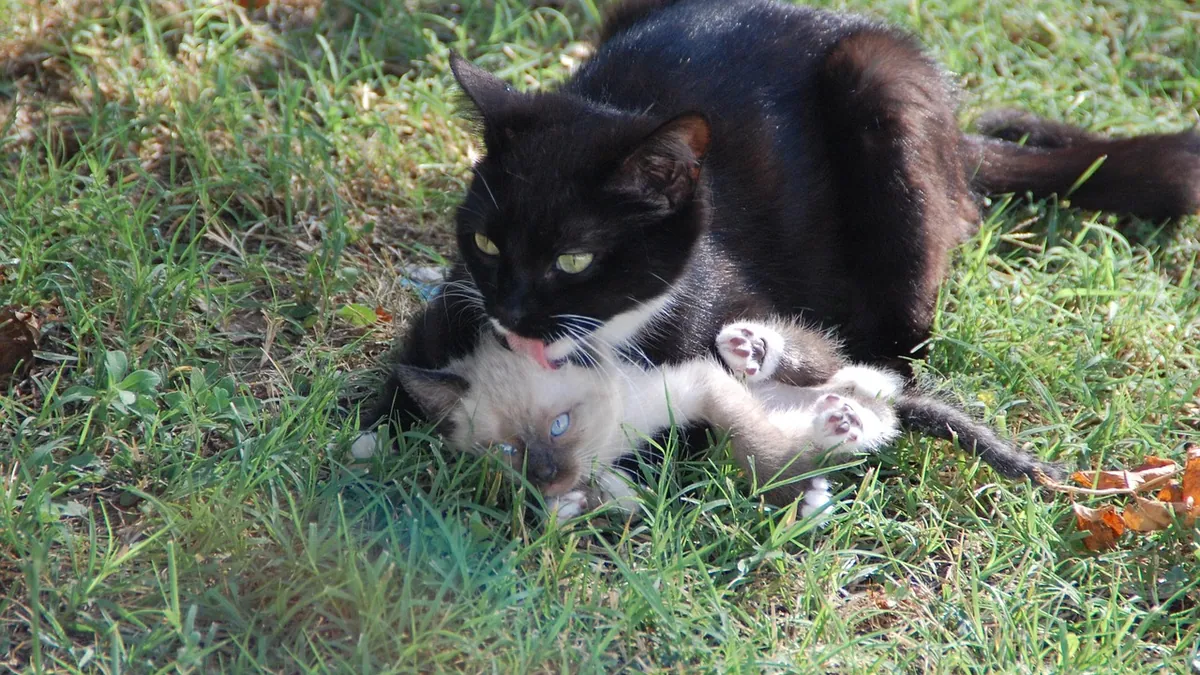
Kitten care changes fast in the first months of life. A 2-week-old kitten needs warmth and bottle feeding, a 2-month-old kitten needs vaccines and litter training, and a 4-month-old kitten needs play, socialization, and a neuter plan. This guide walks you through how to care for a kitten 2 months old and what comes before and after that stage.
This article is educational and is not a substitute for veterinary diagnosis or treatment.
Quick Answer
- 2 weeks old: Keep the kitten warm, feed kitten milk replacer every few hours, and stimulate urination and defecation after each feeding. Commercial kitten milk replacers are made to copy the mother cat's milk [1].
- 1 month old (4 weeks): The kitten is still nursing or bottle feeding but can start tasting soft food. Weaning usually begins around 6 to 7 weeks [2].
- 2 months old (8 weeks): Most kittens are weaned or nearly weaned. Start the vaccine series, keep the kitten away from unvaccinated cats, and begin litter box training in earnest [2].
- 4 months old: Vaccines should be complete or close to it, play and socialization matter a lot, and you can plan the spay or neuter with your veterinarian.
- Vet visits: Kittens need a vet visit every 3 to 4 weeks until about 6 months of age for shots and parasite treatment [2].
How to Care for a Kitten 2 Months Old: Step by Step
At 8 weeks, your kitten is leaving the fragile newborn stage. The eyes and ears are open, walking is steady, and personality is starting to show. Weaning-age kittens show consistent individual differences in behavior, so two kittens from the same litter can act very differently [3].
Feeding a 2-month-old kitten
By 8 weeks, most kittens have stopped nursing or are close to it. Kittens can generally leave their mother and littermates once they are weaned, beginning at 6 to 7 weeks old [2]. Feed a commercial kitten food, either canned or dry softened with water. Offer small meals several times a day instead of one large bowl.
Watch the stool. Weaning is a common challenge for young mammals and often leads to diarrhea, poor growth, and in severe cases even death [4]. If diarrhea starts after a food change, slow the transition and call your veterinarian.
Do not give cow's milk. It does not match a kitten's needs and often causes digestive upset.
Litter training
Most 8-week-old kittens take to litter quickly. Use a shallow pan with low sides so the kitten can climb in easily. Keep it away from food and water. Place the kitten in the box after meals, after naps, and after play. Clean accidents with an enzymatic cleaner so the spot does not keep attracting the kitten back.
Avoid clumping litter for very young kittens. They may eat it, and it can clump in the stomach.
Vaccines and parasite treatment
Kittens should be vaccinated on a regular schedule beginning at 2 to 3 months old, because maternal immunity fades slowly over time [2]. Starting then helps the kitten get an effective dose of vaccine soon after the mother's protection is gone [2].
Keep your kitten away from unvaccinated cats until the full vaccine series is complete [2]. That means no trips to the pet store, no dog park, and no meeting unknown cats. A kitten carrier visit to the vet is fine.
Your veterinarian will also set up deworming and flea prevention. The dose depends on your kitten's weight and health, so your veterinarian calculates it for your pet.
Warmth and sleep
A healthy 8-week-old kitten can regulate body temperature, so you do not need a heating pad. Give a warm, draft-free bed and let the kitten sleep as much as it wants. Play hard, then sleep hard is normal at this age.
Play and socialization
Kittens need toys and people to play with [2]. Play builds coordination and burns energy. Use wand toys, soft balls, and paper bags. Avoid hands as toys, because that teaches biting.
Invite different people to handle the kitten gently. This is the age when positive human contact shapes how the cat acts for life.
For the newborn stage before this, see Newborn Kitten Care 0-4 Weeks: Warmth Colostrum and Stimulation Protocol.
How to Care for a Kitten 2 Weeks Old
A 2-week-old kitten is still in the newborn period. This is a critical time when the kitten is adapting to life outside the womb [1]. If the mother cat is present and healthy, she does most of the work. If you are hand raising the kitten, you are the mother now.
Warmth first
Warmth comes before feeding. A cold kitten cannot digest food well. Keep the kitten in a box or carrier with a soft blanket and a heat source that the kitten can move away from. Never leave a heating pad on high without a barrier.
Feeding
Feed a commercial kitten milk replacer. These products are made to copy the mother cat's milk [1]. Bottle feeding a newborn takes careful attention to technique, timing, and the kitten's body needs [1].
Feed small amounts often, around the clock at this age. Your veterinarian will tell you the exact volume for your kitten's weight, because the amount depends on the kitten's size and condition.
Hold the bottle at an angle so the kitten does not swallow air. Let the kitten set the pace. Stop if milk comes out of the nose.
Stimulation
Newborn kittens cannot urinate or defecate on their own. After each feeding, wipe the genital and anal area with a warm, damp cotton ball until the kitten goes. This mimics what the mother cat does with her tongue.
Colostrum
Colostrum is the first milk, produced in the first 24 hours after birth, and it supports the kitten's immune system [1]. If a kitten did not nurse during that window, talk to your veterinarian about options.
When to call the vet
Call right away if the kitten feels cold, will not eat, cries constantly, or has diarrhea. Newborns can decline quickly.
How to Care for a Month Old Kitten (4 Weeks)
At 4 weeks, the kitten is still nursing or bottle feeding but is starting to explore. This is a bridge stage.
- Keep milk replacer or mother's milk as the main food.
- Offer a shallow dish of kitten food mixed with milk replacer. Let the kitten walk through it and taste it.
- Expect a mess. That is normal.
- Start offering a very shallow litter pan.
- Keep the kitten warm and away from other animals.
- Watch for diarrhea, which is common around weaning [4].
Kittens at this age can tell the difference between larger and smaller amounts of food and tend to choose the bigger portion [5]. That does not mean they can manage their own nutrition. You still control the portions.
How to Care for a Kitten 4 Months Old
At 4 months, your kitten is a small cat with big energy. The vaccine series should be complete or nearly complete. Your veterinarian will confirm what is still needed.
Feeding
Feed a growth-formula kitten food until about 1 year of age, unless your veterinarian says otherwise. Free feeding dry food works for some kittens, but measured meals help you track appetite. A sudden drop in appetite is a warning sign.
Play and enrichment
Four-month-old kittens need real play sessions, not just toys on the floor. Two or three short sessions a day with a wand toy work well. Rotate toys so the kitten does not get bored.
Kittens this age also need scratching posts, climbing spots, and a window perch. Bored kittens find their own entertainment, and that usually means your curtains.
Spay or neuter planning
Talk to your veterinarian about timing. Many clinics spay or neuter around this age. See Cat Neuter Age for more detail.
Microchipping
If your kitten is not microchipped yet, ask at your next visit. See Age To Microchip Kitten.
Dental and grooming habits
Start brushing teeth with kitten-safe toothpaste. Get your kitten used to nail trims and gentle brushing. These habits get much harder to start later.
Kitten Care Schedule by Age
| Age | Feeding | Warmth | Litter | Vaccines and Vet | Play |
|---|---|---|---|---|---|
| 2 weeks | Kitten milk replacer, small amounts often | Needed, with a safe heat source | Not yet | Vet if orphaned or unwell | None, sleep and eat |
| 4 weeks (1 month) | Milk plus soft food tastes | Still needed | Shallow pan, introduce | First vet visit window | Gentle handling |
| 8 weeks (2 months) | Mostly weaned kitten food | Can self-regulate | Full litter training | Vaccine series starts at 2 to 3 months [2] | Wand toys, people time |
| 4 months | Kitten growth food, measured meals | Normal room temp | Reliable | Series complete or near complete | Daily active play |
Vet visits every 3 to 4 weeks until about 6 months are the standard for shots and parasite treatment [2].
Signs Something Is Wrong
Call your veterinarian if you see any of these:
- Refusing to eat for more than a few hours in a young kitten
- Diarrhea that lasts more than a day, or any diarrhea in a 2-week-old
- Vomiting repeatedly
- Cold body temperature or constant crying
- Trouble breathing, coughing, or sneezing with discharge
- Eyes stuck shut or cloudy
- Limping or reluctance to move
- Sudden behavior change, hiding, or weakness
- Weight loss or failure to gain
Weaning is a high-risk window for gut problems, and diarrhea after weaning can become serious [4]. Do not wait it out in a very young kitten.
Common Mistakes
Feeding cow's milk. It does not match kitten milk replacer and often causes diarrhea [1].
Skipping the warm-up before feeding a newborn. A cold kitten cannot digest well.
Letting the kitten meet unknown cats too early. Keep kittens away from unvaccinated cats until the full vaccine series is done [2].
Starting vaccines too late. The schedule begins at 2 to 3 months because maternal immunity fades over time [2].
Using hands as toys. This creates a biting habit that is hard to break.
Ignoring litter box setup. A pan that is too tall or too dirty leads to accidents.
Skipping play. Kittens need toys and people to play with [2].
Changing food suddenly. Slow transitions protect the gut, especially around weaning [4].
Supplies and Setup That Matter for Health
- Kitten milk replacer for orphans and young kittens [1]
- Bottles and nipples sized for kittens
- A safe heat source with room to move away
- A shallow litter pan and non-clumping litter
- Kitten growth food, canned or dry
- Food and water bowls that are shallow and easy to reach
- A carrier for vet visits
- Wand toys, balls, and a scratching post [2]
- A scale to track weight at home
- A quiet room away from dogs and busy areas
Set up one safe room first. Let the kitten master that space before opening the whole house.
For the full preventive picture, see Preventive Care For Kittens. If you are caring for a pregnant cat, see How Long Are Cats Pregnant? Gestation, Care, and When to Call a Veterinarian.
Limitations and When to Contact a Veterinarian
This guide covers general stages. Your kitten's exact feeding amount, vaccine timing, and parasite treatment depend on weight, health, and history. Individual cases need a veterinarian who can examine your pet.
Call now (emergency):
- The kitten is limp, cold, or unresponsive
- Breathing is labored or the gums are pale or blue
- Repeated vomiting or severe diarrhea with weakness
- A newborn kitten has not eaten in several hours
- Suspected poisoning or trauma
Call the same day:
- Diarrhea lasting more than 24 hours
- Refusing food for more than one feeding
- Eye or nose discharge with sneezing
- Sudden hiding, crying, or pain
- Any concern in a kitten under 4 weeks
Routine visit:
- Vaccine series, every 3 to 4 weeks until about 6 months [2]
- Deworming and flea prevention
- Spay or neuter planning
- Microchipping
- Weight and growth checks
Frequently Asked Questions
Can an 8-week-old kitten be left alone during the day?
Short periods are fine if the kitten has food, water, a litter box, and a safe room. Long stretches alone are hard on a young kitten that still needs social contact and play. Ask a friend or pet sitter to check in if you work long hours.
What should a 2-month-old kitten eat?
Feed a commercial kitten food, either canned or dry softened with warm water. The kitten should be fully weaned or nearly so by this age. Your veterinarian can help you pick a growth formula and set meal portions.
How do I stop my kitten from biting?
Stop the game the moment teeth touch skin, and walk away for a minute. Redirect the kitten to a wand toy or soft ball instead. Never use your hands as toys, because that teaches biting is play.
When can my kitten meet other cats?
Wait until the full vaccine series is complete, and keep the kitten away from unvaccinated cats until then [2]. If you have other cats at home, ask your veterinarian about a safe introduction plan. A slow, supervised introduction works better than a sudden meeting.
Do 4-month-old kittens still need kitten food?
Yes, most kittens stay on a growth formula until about 1 year of age. Kitten food has the extra calories and nutrients a growing cat needs. Your veterinarian can tell you when to switch based on your cat's size and body condition.
Related Articles
- Newborn Kitten Care 0-4 Weeks: Warmth Colostrum and Stimulation Protocol
- Preventive Care For Kittens
- How Long Are Cats Pregnant? Gestation, Care, and When to Call a Veterinarian
- Age To Microchip Kitten
- Cat Neuter Age
- How To Care For Senior Cats
- Kitten Care by Age: 1 Week to 3 Months Explained
- 8-Week-Old Kitten Care: Feeding, Vaccines, and Play
- 6-Week-Old Kitten Care: Needs, Milestones, and Feeding
References
- Feline Neonatal Care. The Veterinary clinics of North America. Small animal practice, 2025.
- Kitten Care - Cat Owners. Merck Veterinary Manual.
- Emergence of personality in weaning-age kittens of the domestic cat?. Developmental psychobiology, 2022.
- Dynamic development of gut microbiota and metabolism during and after weaning of kittens. Animal microbiome, 2025.
- Quantity discrimination by kittens of the domestic cat (Felis silvestris catus). Animal cognition, 2023.