Are Tennis Balls Safe for Dogs to Chew?
By Dr. Zubair Khalid, DVM, MS, PhD ·
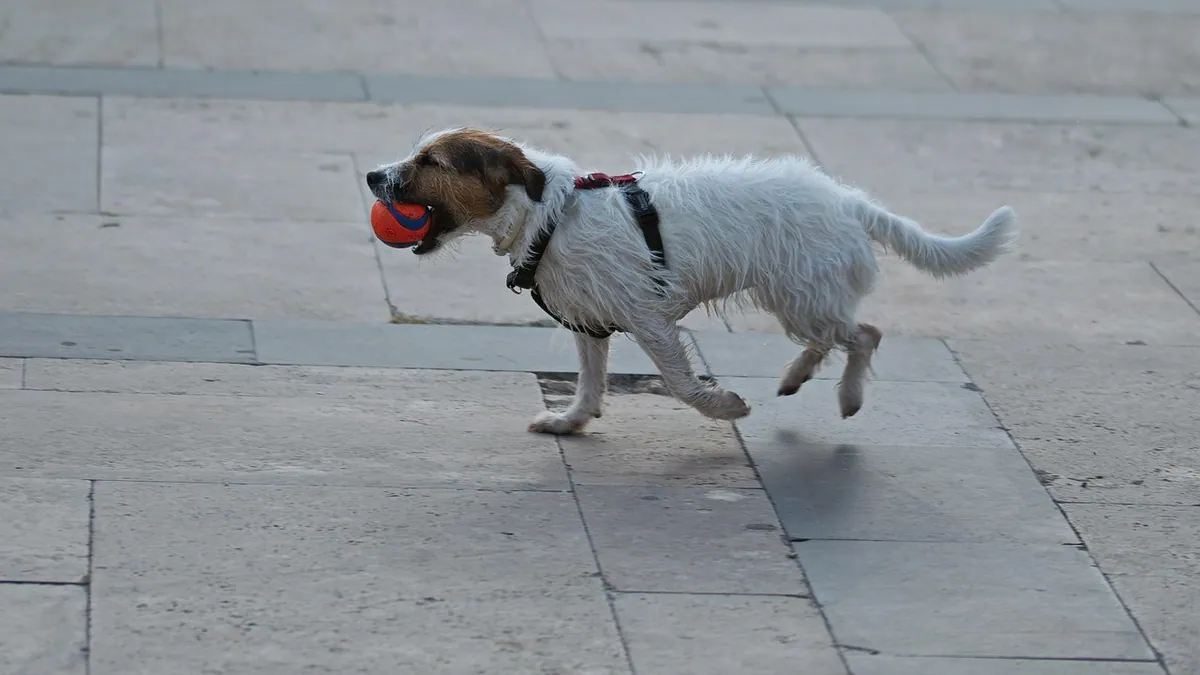
Is it safe for dogs to play with tennis balls? For a game of fetch, yes. For a dog that settles down and gnaws on one for hours, no. The fuzzy yellow felt that makes a tennis ball fly well also grinds down tooth enamel, and a ball swallowed whole can block the airway or the gut.
This article is educational and is not a substitute for veterinary diagnosis or treatment.
Quick Answer
- Fetch is fine. Chewing is not. Tennis ball felt acts like sandpaper on teeth over months of daily chewing.
- Size matters. A ball small enough to fit fully behind the molars can be swallowed or lodged in the throat.
- Watch for wear. Flat, shiny, or shortened teeth mean the ball is doing damage.
- Never let a dog chew a ball unsupervised, and take it away the moment fetch ends.
- Swap chew sessions for a purpose-made chew toy that gives under pressure and cannot be swallowed.
How to Use Tennis Balls Safely: Step by Step
Step 1: Pick the Right Size
A tennis ball should be too large to sit fully behind your dog's last molars. For most medium and large dogs, a standard tennis ball is fine for fetch. For small breeds, a standard ball may be large enough to be safe but too heavy to carry comfortably, and a ball small enough to carry easily may be small enough to swallow. If you can push the ball past the back teeth with light finger pressure, it is a choking risk.
Step 2: Set a Hard Stop on Chewing
Give the ball, throw it, retrieve it, put it away. That is the whole interaction. A dog left alone with a tennis ball will often lie down and work the felt against the back teeth, which is where most abrasive wear shows up first. Dogs in high-drive working roles show far more tooth wear than pet dogs, with one study finding an average of 12.7 worn teeth per working dog compared with 1.9 in non-working dogs [1]. Chewing a gritty felt ball every day pushes a pet dog in the same direction.
Step 3: Inspect the Ball Before Every Session
Squeeze it. If it is cracked, split, or missing chunks of felt, throw it out. A split ball can compress around the tongue and create suction. Two documented cases of tongue entrapment in dogs involved chew toys that trapped oral tissue under negative pressure, causing severe swelling and loss of blood supply. One dog needed the toy removed under general anesthesia and recovered. In the other, the owner pulled the toy free by force, and the tongue tissue died and required partial amputation [2]. That is the mechanism to avoid: a compressible toy plus a vacuum seal plus a panicked pull.
Step 4: Control the Environment
Fetch on grass or soft ground when you can. A hard-hit ball to the face can cause real injury. A French Bulldog developed a fluid-filled cyst behind the eye after blunt trauma from a tennis ball impact, with the cyst displacing the optic nerve and distorting the back of the globe. It was surgically removed and had not recurred seven months later [3]. This is uncommon, but it is a reminder that a ball thrown hard at close range is a projectile.
Step 5: Choose Better Chews
If your dog loves to gnaw, give something designed for it. Rubber toys that flex, sized so they cannot be swallowed, are the standard choice. For a full rundown of safe options, see Dog Chew Toys and 10 Best Dog Chew Toys for Aggressive Chewers: Durable & Safe Picks. If you are using chews mainly for breath and plaque control, Dental Chews for Dogs: Efficacy, Safety, and Selection Criteria covers how to judge them.
Step 6: Supervise Every Session
Stay in the room. Most tennis ball emergencies happen in the minutes after you stop paying attention. If your dog is a gulper, a ball thief, or a resource guarder, keep tennis balls out of the house entirely and use them only in structured fetch.
Tennis Ball Wear on Dog Teeth: What the Damage Looks Like
Tennis ball felt holds grit. Every chew drags that grit across enamel. Over time you see:
| Sign | What it means | What to do |
|---|---|---|
| Flat, shiny tops on back teeth | Abrasive wear from felt and grit | Stop ball chewing, book a dental exam |
| Shortened incisors | Wear from repeated grabbing and grinding | Have a vet assess for exposed pulp |
| Brown or gray discoloration | Possible pulp exposure or dead tooth | Same-week veterinary visit |
| Broken cusp or chipped edge | Fracture, often painful | Veterinary visit, do not wait |
| Bad breath plus red gumline | Periodontal disease | Dental cleaning assessment |
Tooth wear is more common than fractures in dogs with heavy chewing and working lives, and it climbs with age [4]. Wear is not cosmetic. Once enamel is gone, the softer dentin underneath wears faster, and the pulp chamber can be exposed. That hurts, and it invites infection.
Signs Something Is Wrong
Choking or Airway Signs (Emergency Now)
- Pawing at the mouth, gagging, or retching with nothing coming up
- Loud, strained breathing or no air movement
- Blue or gray gums
- Collapse
Swallowed Ball Signs (Emergency Now)
A ball that passes into the stomach may sit there or move into the intestine and block it. Signs include repeated vomiting, a hard or painful belly, drooling, and refusing food. A ball lodged in the esophagus can also cause regurgitation and drooling. Do not wait to see if it passes. Go now.
Dental Pain Signs (Same-Day or Next-Day Visit)
- Chewing on one side only
- Dropping food or chewing gingerly
- Drooling more than usual
- Flinching when you touch the muzzle
- Reluctance to pick up hard toys
Wear You Can See (Routine Visit)
- Teeth look shorter than they did a year ago
- Yellow-brown spots at the gumline
- A tooth that has changed color
Common Mistakes Owners Make
Leaving the ball in the yard or crate. A ball on the floor becomes a chew toy by default. Pick them up.
Using a tennis ball as a pacifier. If your dog is anxious and you hand over a ball to settle them, you are trading a behavior problem for a dental problem. Ask your vet about appropriate outlets.
Pulling a stuck toy by force. If a toy is trapped on the tongue or jaw, do not yank. Piercing the toy to release the vacuum, or having a veterinarian do it, prevents tissue death [2]. This is the single most important thing to know about compressible toys.
Ignoring a swallowed ball because the dog seems fine. A ball can sit in the stomach for days before it moves and blocks. Call your vet or an emergency clinic the same day. If your dog has swallowed any toy, Dog Ate a Toy: When to Worry and What to Do walks through the timeline.
Assuming a bigger ball is always safer. A ball too large to carry comfortably gets dropped and chewed instead of fetched. Match the ball to the dog.
Letting a dog chew a ball to pieces. Fragments of rubber and felt get swallowed. Small pieces usually pass, but they can also pile up.
Confusing fetch drive with chewing need. A dog who loves to chase does not automatically need to gnaw. Those are separate needs with separate solutions.
Supplies and Setup That Matter
- Ball size: Too big to swallow, small enough to carry. Test it against the back of the mouth.
- Ball condition: Firm, intact, no splits. Retire balls monthly if used daily.
- Surface: Grass or turf for fetch. Skip pavement and gravel, which add their own abrasion.
- Throw distance: Keep throws low and away from the face, especially with a dog who runs at the ball head-on.
- Storage: A closed bin the dog cannot open. Out of sight means out of mouth.
- Chew substitute: A flexible rubber toy sized to the dog, plus a veterinary-approved dental chew if your vet says the teeth and gums are healthy enough.
- Water: Always available during fetch. Heavy panting plus a dry mouth plus a gritty ball is a rough combination for gums.
If your dog chews their own paws or other objects when a ball is taken away, that is a separate behavior pattern worth reading about in Dog Chewing Paw Pads.
Limitations and When to Contact a Veterinarian
This guidance covers typical pet dogs and typical tennis balls. It cannot tell you what is happening in your dog's mouth or gut. Individual cases need a veterinarian who can examine your dog.
Go to an emergency clinic now if: your dog is choking, cannot breathe, has blue gums, has collapsed, is retching without producing anything, has a distended and painful abdomen, or is vomiting repeatedly after swallowing a ball or ball fragment.
Call your vet the same day if: your dog swallowed a whole tennis ball, even if they seem normal. Also call if a toy was stuck on the tongue or jaw, if there is bleeding from the mouth, or if your dog will not eat.
Book a routine visit within a week or two if: you notice flattened or shortened teeth, a discolored tooth, bad breath, red gums, chewing on one side, or dropping food.
Ask about dental radiographs if your vet suspects pulp exposure or a fractured tooth. Wear and fractures often look minor on the surface and are worse underneath.
Frequently Asked Questions
Can my dog chew on a tennis ball if I only give it occasionally?
Occasional chewing is far less damaging than daily chewing, but the risk does not disappear. A single swallowed ball or a single tongue entrapment can become an emergency. If your dog chews instead of fetches, choose a different toy.
How do I know if a tennis ball is too small for my dog?
Try to push the ball behind the last molars. If it fits fully behind them, it is too small. When in doubt, size up and supervise closely.
What should I do if my dog swallows a tennis ball whole?
Call your veterinarian or an emergency clinic right away, even if your dog acts normal. A whole ball can sit in the stomach and later block the intestine. Do not induce vomiting unless a veterinarian tells you to.
Are the special dog tennis balls sold in pet stores safer?
They are usually the same felt-covered rubber, sometimes in different sizes. The felt is the abrasive part, so the dental concern remains. Size and supervision matter more than the label.
Will a tennis ball clean my dog's teeth?
No. Felt and grit abrade enamel, and abrasion is not the same as cleaning. Plaque control comes from products with a veterinary dental claim and from professional cleanings, not from a ball.
My dog has worn teeth from years of ball chewing. What now?
Have a veterinarian examine the mouth and check for pulp exposure, fractures, and periodontal disease. Stop all ball chewing immediately. Your vet can tell you whether the worn teeth need treatment, monitoring, or extraction.
Related Articles
- Dog Chew Toys
- Dog Ate a Toy: When to Worry and What to Do
- Dental Chews for Dogs: Efficacy, Safety, and Selection Criteria
- Dog Chewing Paw Pads
- 10 Best Dog Chew Toys for Aggressive Chewers: Durable & Safe Picks
- Dog Licking Paws Chews
- Is It Safe for Dogs to Chew on Sticks?
- Can Dogs Have Antlers to Chew? Risks and Safe Alternatives
- Are Nylon Bones Safe for Dogs to Eat?
References
- Traumatic dentoalveolar injury, tooth wear, and periodontal disease in working and non-working dogs (2018-2022). Frontiers in veterinary science, 2026.
- Tongue entrapment by chew toys in two dogs. The Journal of small animal practice, 2010.
- Retrobulbar respiratory epithelial orbital cyst in a dog: A case report. Veterinary ophthalmology, 2023.
- Dentoalveolar Trauma and Tooth Wear in Anti-Poaching Dogs in Kruger National Park: Associations With Signalment and Operational Factors. Journal of veterinary dentistry, 2026.