Do Cockatiels Like Watching TV? Screen Time for Pet Birds
By Dr. Zubair Khalid, DVM, MS, PhD ·
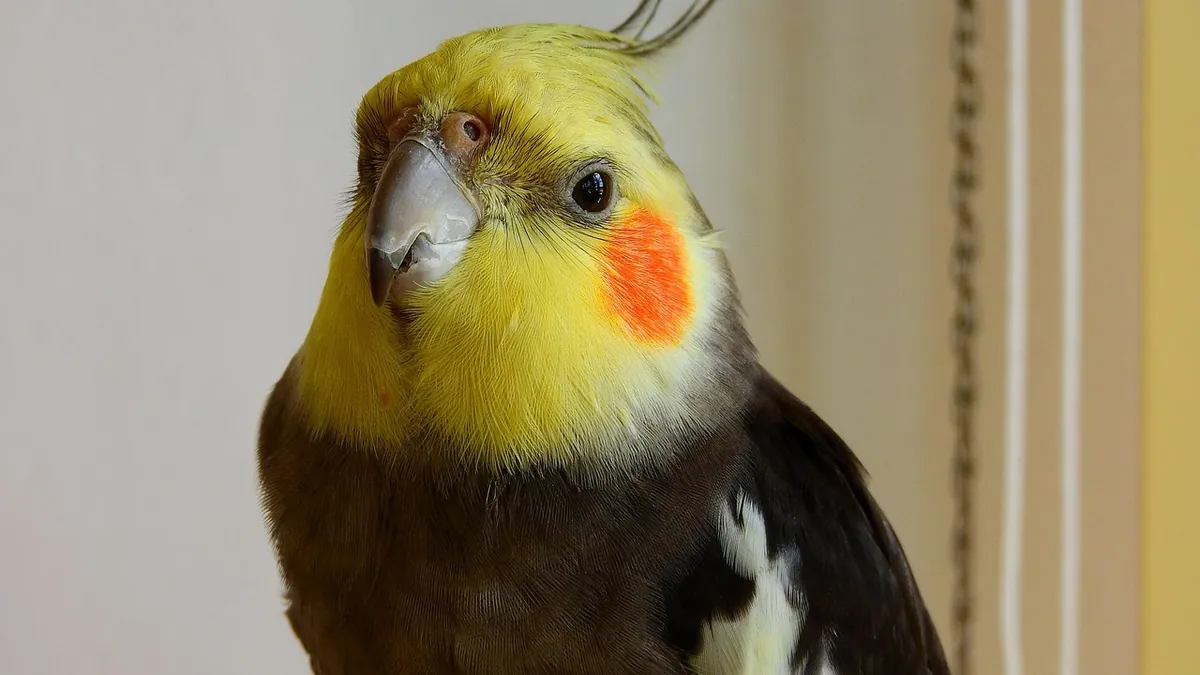
Do cockatiels watch TV? Many cockatiels do watch television, and some clearly enjoy it. Screens can be a useful source of background sound and visual interest for a social, intelligent bird. The catch is that TV is a supplement to real interaction, not a replacement for it.
This article is educational and is not a substitute for veterinary diagnosis or treatment.
Quick Answer
- Cockatiels are social birds that get bored and lonely without enough stimulation, and boredom can lead to biting, screaming, or feather pulling [1].
- Playing music or leaving a TV on nearby is a recognized way to keep a pet bird entertained [1].
- Cockatiels are vocal learners, and research shows they can respond to music, with individual birds showing preferences for different styles [2].
- Parrots, including cockatoos, show dance behavior in response to music, which may signal a positive welfare state [3].
- Screen time should stay short and supervised, and it never replaces time out of the cage, training, foraging, and sleep.
Why Cockatiels Watch TV
Cockatiels are flock animals
In the wild, a cockatiel is rarely alone. Your bird's brain is built to track movement, sound, and the comings and goings of flockmates. A television gives it something to track when you are busy or out of the room.
Screens provide sound and motion
Movement on a screen and voices in the room mimic a busy environment. This is likely why leaving a TV or radio on nearby is a common and accepted way to keep a pet bird entertained [1]. The bird is not following a plot. It is reacting to color, motion, and noise.
Some cockatiels respond to music
Cockatiels are vocal learners, a group that includes parrots and songbirds. In one study, cockatiels learned to use a touchscreen to pick between pieces of music, and some birds showed clear individual preferences for rock and roll or calm music [2]. No consistent preference for consonant versus dissonant music appeared in that study [2].
Movement to music may be a good sign
Cockatoos, which are close relatives of cockatiels, have been recorded performing many distinct dance movements in response to music [3]. Researchers suggest this kind of response may reflect a positive welfare state and could be used as enrichment [3]. If your cockatiel bobs, sways, or head-bangs when music plays, that is worth encouraging.
Boredom is the real problem
The reason screen time comes up at all is boredom. Birds that lack stimulation can develop behavior problems including biting, screaming, and feather destructive behavior [1]. A screen is one small tool against that problem. It is not the main one.
Medical Causes to Rule Out Before You Blame Boredom
If your cockatiel suddenly starts screaming, biting, or plucking feathers, do not assume it just needs more entertainment. A veterinarian should examine the bird first.
Pain, illness, and skin or feather disease can all drive these behaviors. Parrots in captivity show widespread welfare problems, and researchers are still working to identify reliable welfare indicators for companion parrots [4]. That means owners and vets often have to piece together clues from behavior, body weight, and plumage condition [4].
Changes in activity level, social interaction, and exploration are among the measures that can reflect a parrot's welfare state [4]. If your bird's screen habits change suddenly, or if it stops responding to things it used to enjoy, treat that as a health question, not a training question.
When TV Watching Becomes a Problem
Signs your bird is stressed, not entertained
Watch your cockatiel during screen time. Warning signs include:
- Freezing or leaning away from the screen
- Repeated alarm calls or frantic pacing
- Feather plucking or chewing that starts or worsens during screen time
- Aggression toward you or toward the cage when the TV is on
Signs your bird is overstimulated
Some birds get wound up instead of calmed. If your cockatiel screams over the TV, attacks toys, or cannot settle after the screen goes off, the content or volume is too much.
Signs screen time is replacing real life
If your bird spends most of the day in front of a screen and little time foraging, flying, or interacting with you, the balance is wrong. Boredom and lack of attention are the drivers of problem behaviors in pet birds [1]. A screen does not fix that.
What to Do: A Step by Step Plan
Step 1: Set a realistic schedule
Think of TV as background company, not a babysitter. Short sessions work better than all-day noise. Pair screen time with the hours you are busiest, then turn it off when you are available to interact.
Step 2: Choose calm, predictable content
Nature documentaries with slow camera work, quiet cooking shows, and gentle music programming tend to work well. Sudden loud noises, action scenes, and aggressive dialogue can startle birds.
Music is a strong option. Since cockatiels can show individual preferences between music styles [2], try a few and watch the reaction. If your bird bobs, sways, or vocalizes along, keep that style in rotation. If it goes still and quiet, switch.
Step 3: Control volume and distance
Keep the volume at a level where you can easily talk over it. Place the screen across the room from the cage so your bird can look away when it wants. Your bird should always have the option to ignore the screen.
Step 4: Build a real enrichment routine
This is the part that actually changes your bird's life.
- Foraging: hide small pieces of food around the cage for your bird to find [1].
- Feeding enrichment: naturalistic feeding devices can promote natural behaviors in parrots, though effectiveness varies by species and feeding ecology [5]. Cockatiels are primarily granivorous, so food puzzles and scatter feeding suit them better than nectar-style devices.
- Training: regular one-on-one time, especially training sessions, helps keep birds happy [1].
- Social time: birds are social and can get lonely without enough attention [1].
- Sleep: birds often sleep when their owners do, but they also need naps, so protect quiet hours [1].
Step 5: Rotate toys and perches
Swap toys every week or two so the cage stays interesting. A bored bird with the same three toys for a year will not be rescued by a television.
Step 6: Track what works
Keep a simple note of what your bird does during screen time. Over a few weeks you will learn which shows calm it and which ones wind it up. That is more useful than any general rule.
If you are still setting up your bird's space, see our guide to Cockatiel Cage Size and Setup: A Practical Guide for housing basics that support enrichment.
What Not to Do
Do not punish your bird
Yelling, spraying, or banging the cage does not teach a cockatiel anything useful. It damages trust and can make screaming and biting worse. Behavior problems in birds are usually rooted in boredom, loneliness, or a health issue [1].
Do not leave the TV on 24 hours a day
Constant noise and light interfere with rest. Birds need adequate sleep and naps [1]. A screen that never goes off is a welfare problem, not enrichment.
Do not assume your bird understands the screen
A cockatiel does not follow dialogue or storylines. It reacts to sound, motion, and color. Do not expect a show to teach your bird anything or keep it emotionally company the way a flockmate would.
Do not use TV to replace you
The single biggest factor in your bird's wellbeing is your attention. Screen time is a small add-on. If you are choosing between an hour of TV and an hour of training and handling, choose the training.
Do not ignore sudden behavior changes
If your cockatiel starts plucking, screaming, or biting after a change in routine, do not just add more screen time. Get the bird checked.
When to Involve a Veterinarian or Behavior Professional
Call your avian veterinarian if:
- Your bird is plucking feathers, self-mutilating, or has bare patches
- Screaming or biting is new, intense, or getting worse
- Your bird stops eating, loses weight, or becomes lethargic
- Your bird shows fear or panic around the TV that does not settle
A certified behavior professional can help if your veterinarian has ruled out medical causes and the behavior persists. Ask your vet for a referral.
If you are thinking about adding another bird for company, talk to your vet first. Some birds prefer their own space, and whether birds should live together or separately is a case-by-case decision [1].
For a longer view of what caring for a cockatiel involves over its lifetime, see Cockatiel Lifespan. If you are also considering a bird known for talking, our guide to Best Talking Pet Birds covers the species that vocalize most.
Limitations and When to Contact a Veterinarian
Research on parrot welfare is still developing. There are no fully validated, standardized tools for assessing companion parrot welfare, and many published measures rely on behavior, body weight, and plumage condition as indirect clues [4]. Housing guidelines for psittacine birds are also limited, which means species-specific recommendations are often based on general principles instead of precise data [6].
In plain terms, nobody can tell you the exact right number of TV hours for your cockatiel. You have to watch your individual bird and adjust.
Contact your veterinarian the same day if your cockatiel:
- Stops eating or drinking
- Becomes fluffed, quiet, and unresponsive
- Breathes with its tail bobbing or its beak open
- Has fresh blood on the cage or on itself
Go to an emergency clinic now if your bird:
- Collapses or cannot perch
- Has a seizure
- Is straining to breathe
- Has been exposed to fumes, overheated cookware, or a toxin
Schedule a routine visit if you notice:
- Gradual feather loss or damaged feathers
- A change in droppings that lasts more than a day
- New screaming or biting that does not respond to routine changes
- Any behavior change that worries you
Individual cases need a veterinarian who can examine your bird in person. No article can replace that exam.
Frequently Asked Questions
Do cockatiels like to watch TV?
Many cockatiels do show interest in screens, and leaving a TV on nearby is a recognized way to keep a pet bird entertained [1]. Whether your individual bird likes it depends on the content, volume, and how the bird is feeling that day. Watch for relaxed body language and occasional vocalizing, which suggest interest instead of stress.
Is TV bad for cockatiels?
TV is not inherently harmful, but constant screen time can interfere with sleep and rest, and birds need adequate sleep plus naps [1]. The bigger risk is using TV to replace social interaction, training, and foraging, since boredom and loneliness drive problem behaviors in pet birds [1]. Keep sessions short and pair them with real enrichment.
What kind of TV should I leave on for my cockatiel?
Calm, predictable content works best, such as nature programs, quiet cooking shows, or music programming. Since cockatiels can show individual preferences between music styles [2], try a few options and note which ones your bird responds to. Avoid sudden loud noises and aggressive dialogue.
Can music replace TV for my cockatiel?
Music is often a better choice than television because it is audio only and less visually overstimulating. Cockatiels are vocal learners and some show clear preferences for particular music styles [2]. Parrots including cockatoos also show dance behavior in response to music, which may reflect positive welfare [3].
How much screen time should a cockatiel get?
There is no scientifically established number of hours for pet cockatiels. A practical approach is to use short sessions during your busiest hours and turn the screen off when you are free to interact. Prioritize out-of-cage time, training, foraging, and undisturbed sleep, since these are the factors most tied to good welfare [1].
Related Articles
- Cockatiel Lifespan
- Best Talking Pet Birds
- Cockatoo Care Guide
- Cockatiel Cage Size and Setup: A Practical Guide
- Cockatiel Care: Pyramiding & Shell Health Management
- Choosing the Right Pet Bird for You
- Do Cockatiels Dream? Sleep and Night Behavior
- Can Cockatiels Talk? What to Expect and How to Encourage Speech
- Do Cockatiels and Budgies Sleep and Poop at Night? Sleep Facts
References
- Behavior of Pet Birds - Bird Owners. Merck Veterinary Manual.
- Do Cockatiels Choose Their Favourite Tunes? Use of Touchscreen for Animal Welfare Enhancement and Insights into Musical Preferences. Animals : an open access journal from MDPI, 2024.
- Dance behaviour in cockatoos: Implications for cognitive processes and welfare. PloS one, 2025.
- What we (don't) know about parrot welfare: Finding welfare indicators through a systematic literature review. Animal welfare (South Mimms, England), 2024.
- Functionally Relevant Feeding Enrichment: An Examination of Nectar Feeding Devices With Two Species of Parrot. Veterinary medicine and science, 2026.
- Guidelines and ethical considerations for housing and management of psittacine birds used in research. ILAR journal, 2010.