Do Ticks Jump? How Ticks Find and Bite Pets
By Dr. Zubair Khalid, DVM, MS, PhD ·
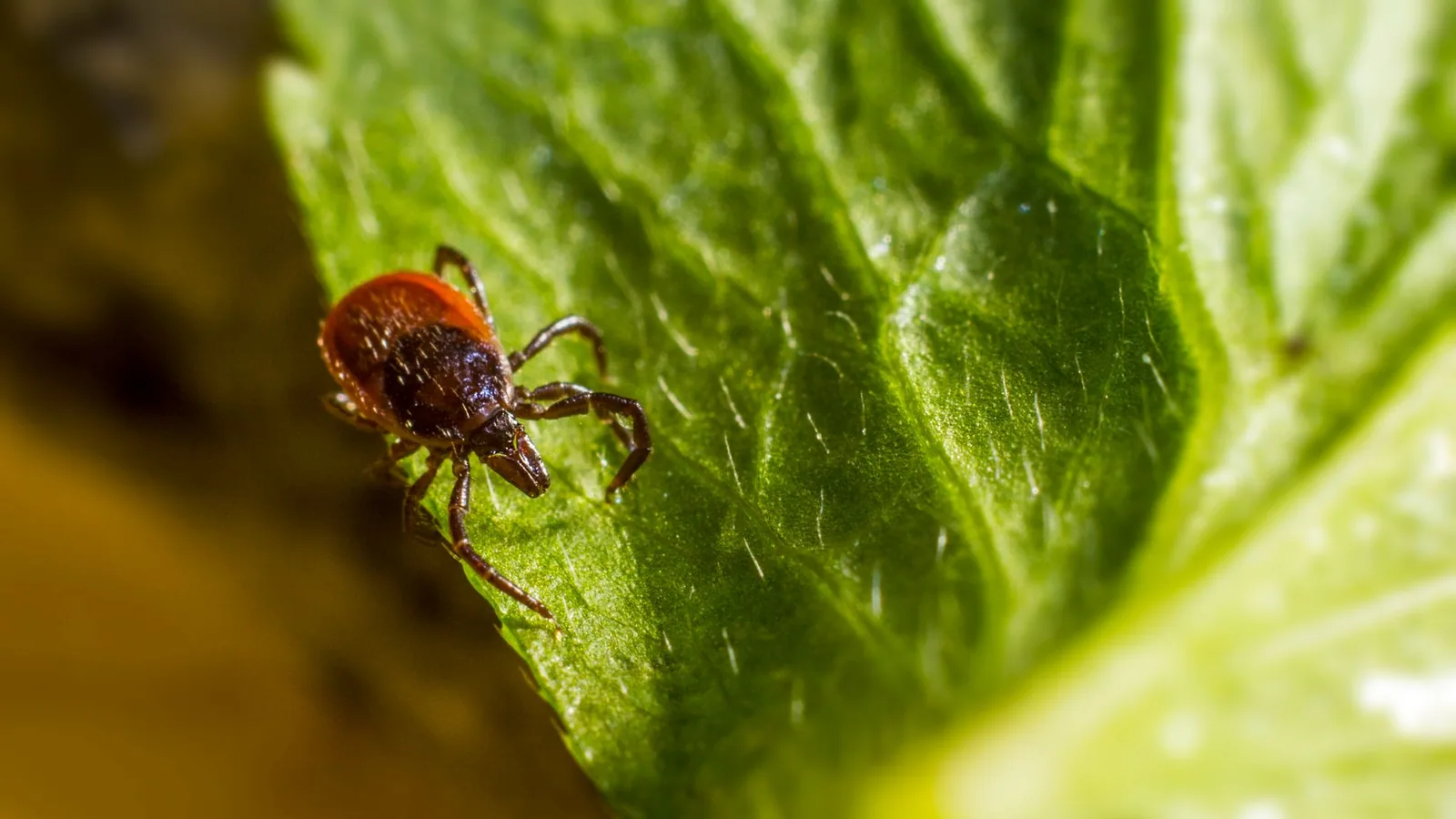
Ticks do not jump, and they cannot fly. A tick has no wings and no jumping legs, so it cannot leap from a bush onto your dog or cat. Instead, ticks use a behavior called questing, where they climb to the tip of a blade of grass or leaf, extend their front legs, and wait for a passing host to brush against them. Understanding exactly how ticks find and attach to pets is the first step toward preventing tick bites and the diseases they carry. This article explains the mechanics of tick host-seeking, the factors that change tick behavior, and what you can do to protect your pet.
At a Glance: How Ticks Find and Bite Pets
| Question | Answer |
|---|---|
| Do ticks jump? | No. Ticks have no jumping ability or wings. |
| How do ticks find hosts? | They quest, which means climbing vegetation and waiting with outstretched front legs. |
| What triggers a tick to grab? | Vibration, body heat, carbon dioxide, and chemical odors from the host. |
| Where do ticks wait? | On grass, leaf tips, and low vegetation at heights that match their preferred host. |
| How long can ticks quest? | Some nymphs can remain host-seeking for up to a year under favorable conditions. |
| How do ticks attach? | They grip with front legs, climb to a skin site, and insert barbed mouthparts. |
| How do pets get ticks? | By brushing against questing ticks during outdoor activity, not by ticks jumping on. |
The Short Answer: Ticks Do Not Jump
The question "do ticks jump?" has a clear answer: no. Adult and nymphal ticks have eight legs, while larvae have six; no tick stage has wings or jumping legs. Unlike fleas, which have powerful hind legs built for leaping, ticks rely entirely on contact with a passing host. They cannot launch themselves across a gap, and they cannot drop from a tree canopy onto an animal below. What looks like a tick "jumping" is usually a tick that has crawled onto a pet from low vegetation, or a tick that has been brushed off one animal and landed on another.
Ticks are obligate blood feeders in the larval, nymphal, and adult stages; each feeding stage must find a vertebrate host. Because they cannot move quickly or cover long distances, they have evolved a sit-and-wait strategy that maximizes the chance of contact with a host [1]. This strategy is called questing, and it is the central mechanism by which ticks find dogs, cats, and people.
Questing: The Primary Host-Finding Strategy
Questing is the term for the host-seeking behavior in which a tick climbs to the tip of a plant, extends its front legs, and holds its body poised and ready [1]. The front legs are held outward in a posture that researchers describe as "waiting," and they contain sensory organs called Haller's organs, which detect heat, carbon dioxide, and chemical signals from potential hosts. When a host brushes against the outstretched legs, the tick rapidly grips the fur, feathers, or clothing and begins to climb.
All ixodid ticks, which include the blacklegged tick and the lone star tick, use some form of questing during at least one life stage. Most hard ticks are three-host ticks, meaning they need a different host for the larval, nymphal, and adult stages, and each stage quests for its own meal [1]. A few species, including some economically important livestock ticks, are one-host ticks that only quest in the larval stage [1]. For companion animals in the United States, the relevant species are almost always three-host ticks.
Questing is not random. Ticks choose their questing height based on the typical host they need at each life stage. Larvae and nymphs tend to quest lower on vegetation, where they are more likely to encounter small mammals and ground-feeding birds. Adults quest higher, at the level of deer, dogs, and people. This height selection is flexible and varies by region, as discussed below.
What Questing Looks Like
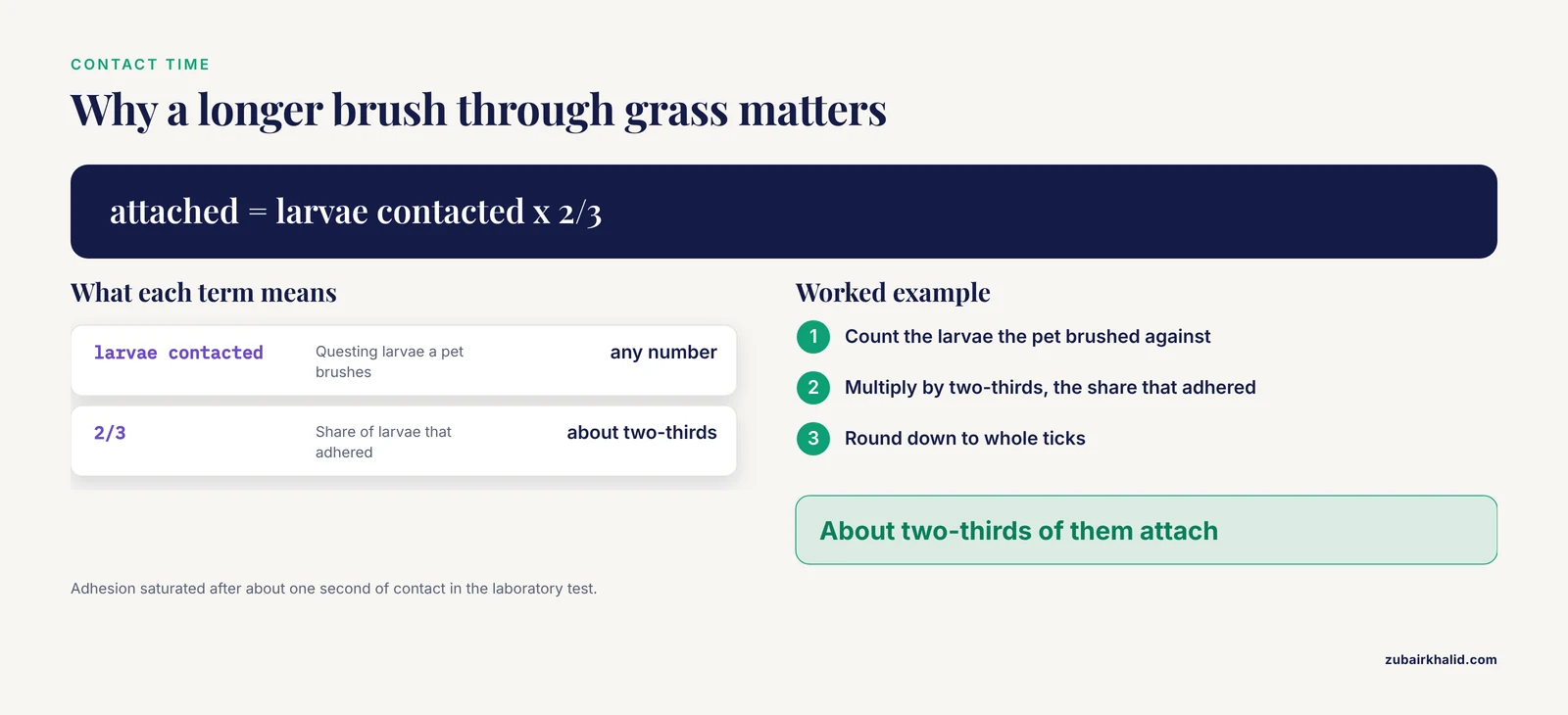
If you watch a questing tick closely, you will see a small dark creature perched at the very tip of a blade of grass, with its front legs extended forward and slightly upward. The tick holds this position for minutes to hours at a time. When a host passes, the tick does not leap. It simply allows the host to brush against it, then transfers its grip from the plant to the host's fur or skin. In laboratory experiments that simulated a host walking over ticks, researchers found that larvae were more likely to adhere when contact time was longer, and that the probability of adhesion saturated after about one second of contact [2]. Even with prolonged contact, only about two-thirds of larvae adhered to a simulated host, which shows that tick attachment is not guaranteed [2].
This finding matters for pet owners because it means that a quick brush through tall grass may not always result in a tick pickup, but it also means that a pet that spends extended time in tick habitat has a very high chance of acquiring ticks. The longer a pet lingers near questing ticks, the more likely attachment becomes.
Questing Height and Host Selection
The height at which a tick quests is strongly tied to the host it needs to find. In a study comparing northern and southern populations of the blacklegged tick in the United States, nymphs from Maryland quested at higher positions on vegetation than nymphs from Texas [3]. The Texas nymphs also displayed a behavior called "hiding," where they moved down and concealed themselves rather than remaining exposed on the plant tip [3]. The researchers proposed that this difference reflects the host communities in each region. The south has a higher abundance of lizards, which are inefficient reservoirs for Lyme disease, and ticks that quest lower and hide may be more likely to encounter these reptiles instead of small mammals [3][4]. In the north, ticks quest more readily and at greater heights, which brings them into contact with rodents and shrews that efficiently transmit Lyme spirochetes [4]. This geographic difference in questing behavior helps explain why Lyme disease is common in the northeastern United States but rare in the southeast, even though the tick vector is present in both regions [4].
For pet owners, the takeaway is that tick questing height varies by species, life stage, and region. A dog that runs through brush at ground level can pick up nymphs questing low, while a taller dog may brush against adult ticks questing at waist height. Cats that hunt in grass and undergrowth are exposed to ticks questing at the lowest levels.
Questing Duration and Persistence
Ticks are remarkably patient. A study that maintained infected blacklegged tick nymphs under controlled laboratory conditions found that these ticks could retain host-seeking behavior for a full year after molting, and that they remained capable of transmitting the Lyme disease bacterium to mice even after prolonged questing [5]. This finding has direct implications for disease risk. A tick that emerges in the spring and fails to find a host does not simply die. It can continue questing for months, waiting for an animal to pass.
The ability to persist in a questing state depends on the tick's energy reserves. A study of the European sheep tick found that the lipid index, which reflects stored fat, decreased steadily during the spring activity period, and that females became more determined in their host-seeking behavior as their lipid content declined [6]. The researchers described this as a "now or never" strategy, where a starving tick becomes more willing to quest under unfavorable conditions because its window of opportunity is closing [6].
Other Host-Finding Strategies
While questing is the primary strategy, ticks do not rely on it exclusively. Some ticks engage in hunting behavior, where they actively crawl toward a host rather than waiting passively. This is more common in certain soft tick species and in some hard tick species at specific life stages. The lone star tick and the Gulf Coast tick have both been observed in laboratory settings to vary between questing and burrowing behavior depending on the substrate they are placed on [7]. In that study, ticks placed on sand were far more likely to quest, while ticks placed on rock or soil were more likely to burrow into the substrate [7].
Ticks also respond to host cues from a distance. Carbon dioxide is a universal attractant for blood-feeding arthropods, and ticks can detect elevated CO2 levels in the breath of a passing animal [8]. They also respond to volatile organic compounds, including 1-octen-3-ol, hexanal, heptanal, nonanal, and acetone, which are emitted by animal skin, breath, and urine [8]. These chemical cues help a tick orient itself on its plant perch, turning toward the side where the host is approaching. However, the tick still cannot move fast enough to chase a host. It can only adjust its position and wait for contact.
Factors That Influence Tick Behavior
Several environmental and biological factors change how and when ticks quest. Understanding these factors helps pet owners predict when their pets are at highest risk.
Habitat and Substrate
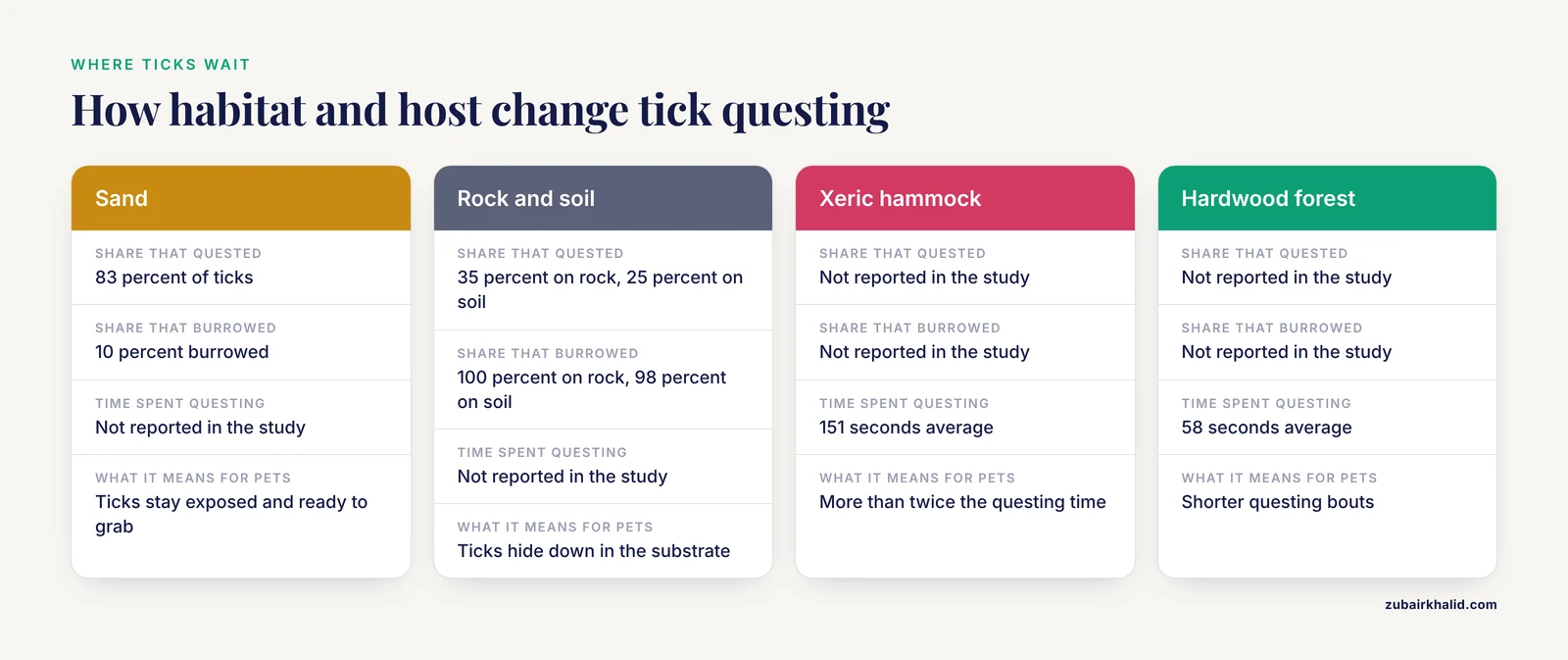
The type of environment a tick is in strongly affects its behavior. In a laboratory study comparing two tick species across different substrates, researchers found that 83 percent of ticks quested on sand, compared to 35 percent on rock and 25 percent on soil [7]. Burrowing behavior was nearly universal on rock and soil, with 100 percent and 98 percent of ticks respectively, while only 10 percent burrowed on sand [7]. The lone star tick quested more readily than the Gulf Coast tick, and it also traveled longer distances in the test arena [7].
Field studies support the idea that habitat type matters. A study of lone star ticks in Florida found that ticks collected from xeric hammock habitats spent more than twice as long questing as ticks from successional hardwood forests, with average questing times of 151 seconds versus 58 seconds during a 10-minute observation period [9]. This suggests that certain habitats are structurally more favorable for host-seeking, and that pets are at greater risk in those environments.
Temperature and Humidity
Temperature affects tick activity, but the relationship is not simple. In the substrate study, ticks were tested at 16 degrees Celsius and 22 degrees Celsius, and the lower temperature did not uniformly suppress questing [7]. The European sheep tick study found that females were more active during the last ten days of May, even when weather conditions were less favorable, because their declining lipid reserves pushed them to seek hosts aggressively [6]. In practical terms, tick activity is not limited to warm sunny days. Overcast, humid days can also produce high questing activity, and some ticks remain active in cool weather.
Infection Status
A tick's infection status can alter its behavior. In the lone star tick study, ticks infected with Rickettsia amblyommatis spent less time questing than uninfected ticks, averaging 85 seconds versus 112 seconds of questing during observation [9]. This finding is preliminary, and the mechanism is not fully understood, but it suggests that infected ticks may behave differently from uninfected ones. For pet owners, this is not a practical factor to monitor. It simply reinforces that any questing tick, infected or not, poses a risk.
Tick Condition and Age
The age and body condition of a tick influence its willingness to quest. Larvae that are older are less likely to adhere to a passing host, and the probability of adhesion declines with larval age [2]. Ticks with depleted lipid reserves are more aggressive in their host-seeking, as described above [6]. A tick that has been questing for weeks is hungrier and may be more likely to attach quickly once it contacts a host.
How Ticks Actually Bite and Attach
When a tick contacts a host, it does not bite immediately. The sequence of events is precise and involves multiple steps.
First, the tick uses its front legs to grip the host's fur, feathers, or skin. The front legs have claws and sensory structures that allow the tick to hold on firmly. In laboratory experiments, the probability of a larva adhering to a host increased rapidly with contact duration and saturated at about one second [2]. Host speed also played a small role, with slower-moving hosts allowing more ticks to adhere [2].
Second, the tick crawls on the host to find a suitable attachment site. Ticks prefer areas where the skin is thin and where grooming is difficult. On dogs and cats, common attachment sites include the ears, between the toes, under the collar, around the eyelids, and in the armpits and groin. The tick may crawl for minutes to hours before settling.
Third, the tick inserts its mouthparts. The tick's hypostome is a barbed, harpoon-like structure that the tick drives into the skin. Some ticks also secrete a cement-like substance that anchors the mouthparts in place, making removal more difficult. The tick then begins to feed, and it may remain attached for several days. During feeding, the tick can transmit pathogens, including the bacteria that cause Lyme disease, anaplasmosis, and ehrlichiosis.
The attachment process is not always successful. In the laboratory study of larval adhesion, even with the longest contact times, only about two-thirds of larvae adhered to a simulated host [2]. This means that some ticks that contact a pet will fail to attach and will fall off. However, a pet that encounters many ticks will still end up with several attachments.
Protecting Pets From Tick Bites
Preventing tick bites requires a multi-layered approach. No single method is completely effective, and the best protection combines environmental management, personal protective measures, and veterinary-prescribed preventives.
Environmental Management
Ticks thrive in tall grass, leaf litter, brush, and wooded edges. Keeping your lawn mowed, removing leaf litter, and creating a barrier of wood chips or gravel between your yard and wooded areas can reduce tick habitat. In a survey of New Jersey tick bite victims, researchers emphasized the need for education about landscape ecology, wildlife control, and tick habitat reduction to reduce human and pet exposure [10]. The same principles apply to pets.
Wildlife control is also important. White-tailed deer are the primary reproductive host for adult blacklegged ticks, and reducing deer access to your yard can lower tick populations [11]. Fencing and deer-resistant plants are options, though they are not always practical. Rodents and shrews are important hosts for immature ticks, and they are also the reservoirs for Lyme disease bacteria [4]. Controlling rodent populations around the home, by removing food sources and sealing entry points, can reduce the number of infected nymphs in your yard.
Personal Protective Measures for Pets
After any outdoor activity in tick habitat, check your pet thoroughly. Run your hands over the entire body, paying special attention to the ears, face, neck, armpits, groin, and between the toes. Ticks can be very small. Nymphs are often no larger than a poppy seed, and they are easy to miss. A fine-toothed comb can help you find ticks in dense fur.
If you find an attached tick, remove it promptly with fine-tipped tweezers or a tick removal tool. Grasp the tick as close to the skin as possible and pull straight out with steady, even pressure. Do not twist, jerk, or squeeze the tick's body, as this can cause the mouthparts to break off or can force infectious fluids into the bite wound. After removal, clean the area with soap and water or an antiseptic. Save the tick in a sealed container or take a photo, in case your pet develops symptoms and your veterinarian needs to identify the species.
Veterinary Prescribed Preventives
The most reliable protection for pets comes from veterinary-prescribed tick preventives. These products are available in several forms, including topical spot-ons, oral tablets, and collars. Your veterinarian can recommend a product based on your pet's species, age, weight, health status, and lifestyle. It is important to use only products labeled for your pet's species. Dog products can be toxic to cats, and dose errors can cause serious illness.
The Companion Animal Parasite Council recommends year-round tick prevention for pets in most of the United States, because tick activity can occur in every season and geographic ranges are expanding [11]. The geographic distribution of the blacklegged tick has expanded significantly since the 1970s, and tick-borne diseases are now reported in areas where they were previously absent [11]. Year-round prevention is the safest approach.
Community and Public Health Approaches
Tick-borne disease prevention is not just an individual responsibility. Public health agencies use risk maps that combine ecological data on tick density with human behavioral data to prioritize interventions [12]. In areas where ticks and tick-borne diseases are emerging, community-wide efforts such as public education campaigns, deer management, and acaricide application can reduce the overall tick burden. Pet owners who live in high-risk areas should stay informed about local tick activity and follow the recommendations of their local health department and veterinary clinic.
Surveys of pet owners consistently show that people with pets are more likely to practice tick bite prevention strategies than those without pets [13]. This is encouraging, but it also means that pet owners need accurate information. A study of Long Island residents found low to moderate knowledge about ticks and tick-borne diseases, even in a highly endemic region [13]. The same pattern appears in the Upper Midwest, where most residents have heard of Lyme disease but fewer than a third perceive tick-borne disease risk as common in their own community [14]. Staying informed is an ongoing process, and veterinary professionals are a reliable source of current information.
Limitations and When to Contact a Veterinarian
This article provides general information about tick behavior and tick-borne disease prevention, but it is not a substitute for veterinary diagnosis or treatment. Individual cases vary, and your veterinarian is the best source of advice for your specific pet.
Contact your veterinarian in these situations:
- You find a tick attached to your pet and you are unsure how to remove it safely.
- Your pet has been in tick habitat and you cannot find all the ticks, or you are concerned about missed ticks.
- Your pet develops symptoms such as fever, lethargy, loss of appetite, lameness, joint swelling, or a red rash at a tick bite site within several weeks of a known or suspected tick exposure.
- Your pet has a known tick-borne disease and is not improving with treatment, or you have questions about follow-up testing.
- You are considering a new tick preventive and want guidance on product selection, especially for cats or for pets with a history of drug reactions.
- Your pet is showing signs of tick paralysis, which can include weakness, unsteady gait, and difficulty breathing, and requires immediate veterinary attention.
Tick-borne diseases can have serious consequences if left untreated. Early diagnosis and treatment are associated with better outcomes, so do not wait to seek veterinary care if you are concerned.
Tick Life Stages on Pets: Why Size and Season Matter
Ticks develop through four stages: egg, larva, nymph, and adult. Larvae have six legs and are sand-grain sized. Nymphs have eight legs and are minute, often escaping notice entirely while they feed. Adults are larger and easier to spot, while an engorged female can swell to the size of a small grape after a blood meal.
Life stage drives seasonal risk. In many regions, larvae peak in late summer, nymphs in spring and early summer, and adults in fall and early spring. Nymphs carry the highest disease risk because their small size delays detection and removal, giving pathogens more time to transmit.
Attachment sites shift with stage. Nymphs commonly attach on the head, neck, and ears. Adults may attach anywhere but favor thin-skinned areas.
Heavy infestations, especially on puppies, kittens, or debilitated pets, can cause significant blood loss and warrant veterinary evaluation.
What Tick Preventives Can and Cannot Do
Tick products differ in how they work. Some have repellent or knockdown effects, meaning ticks are deterred or disabled before they settle. Others have little repellent action and mainly kill ticks after they attach and begin feeding. Neither kind creates an invisible barrier. A pet can still pick up ticks in heavy habitat, and protection can be reduced by late or missed application, bathing, swimming, or inconsistent use. The realistic goal is fewer attachments and rapid kill of ticks that do attach, not zero ticks.
Use only products labeled for the pet's species, age, and weight. Never apply a dog product to a cat. Follow label directions exactly, including the application interval and method. Do not assume a product is safe for every pet in the household. If you see redness, itching, lethargy, vomiting, tremors, or other signs after application, contact your veterinarian before reapplying or switching products, and keep the package for reference.
After a Tick Bite: Monitoring and Testing Decisions
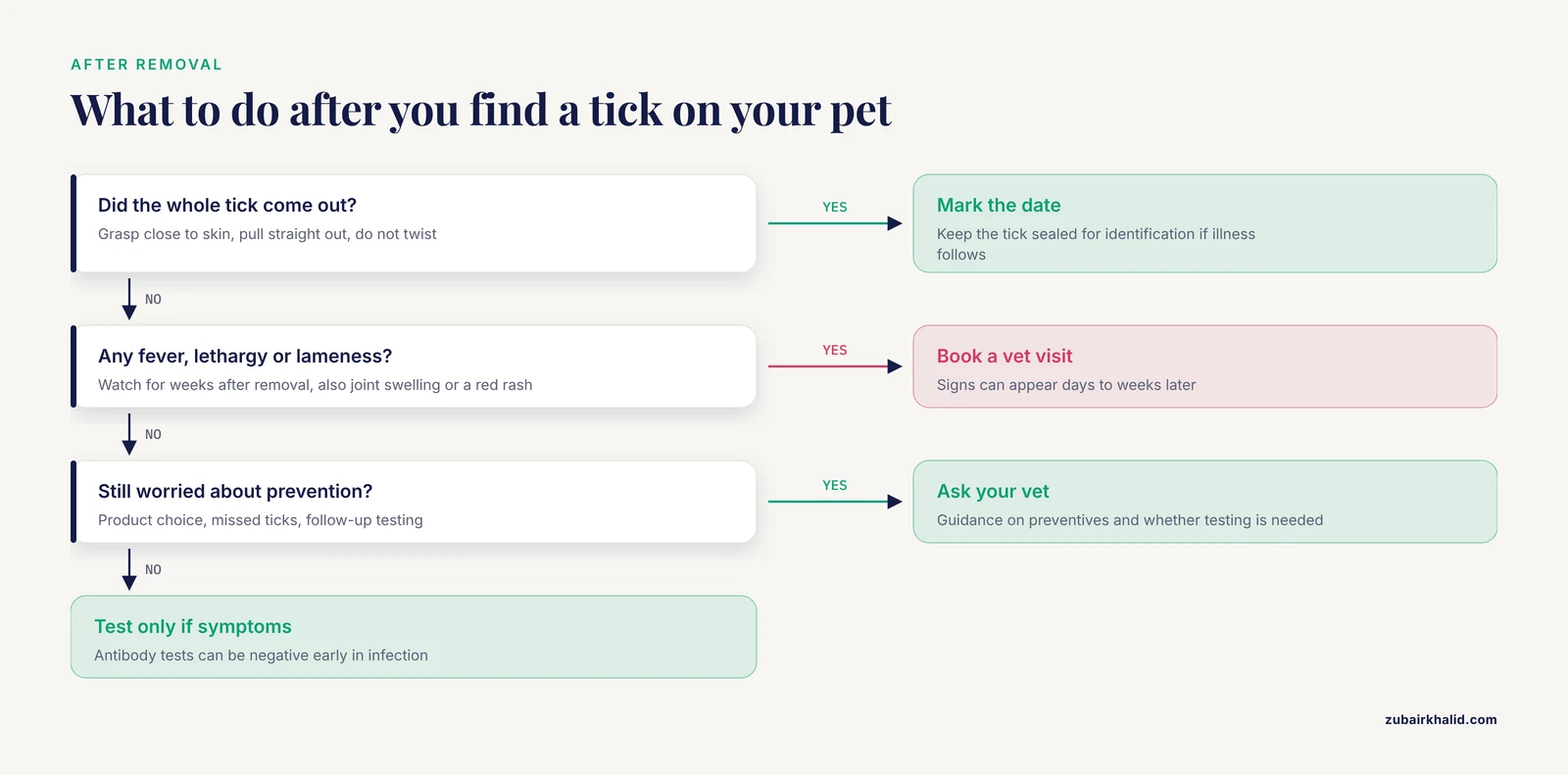
Transmission risk depends on how long the tick stayed attached and which pathogen it carried. Some pathogens transmit within hours, while others require days of feeding. After removing a tick, mark the date and keep the tick in a sealed container for identification if your pet becomes ill.
Watch for fever, lethargy, reduced appetite, lameness, joint swelling, or a red rash at the bite site in the weeks after removal. These signs can appear days to weeks later.
Routine testing of a healthy pet immediately after a tick bite is not recommended. Antibody tests can be negative early in infection, and a positive result does not prove the tick transmitted disease. Testing is more useful if symptoms develop or if a known disease is suspected.
Call your veterinarian if your pet shows any of these signs, if you cannot remove the tick completely, or if you have concerns about preventive care.
Related Guides
- Bug Bites Identification Guide: Ticks, Spiders, Fleas, Bed Bugs and Stings: Helps distinguish tick bites from fleas and other bug bites
- Tick-Borne Diseases in Dogs: Clinical Syndromes and Diagnostic Approaches: Covers clinical syndromes and diagnostic approaches for canine tick-borne diseases
- Tick-Borne Illness in Dogs: Comprehensive Review of Common Pathogens and Clinical Syndromes: Comprehensive review of common tick-borne pathogens and clinical syndromes
- Tick-Transmitted Diseases in Dogs: Pathogens, Clinical Syndromes, and Management: Explains pathogens, clinical syndromes, and management of tick-transmitted dog diseases
- Tick-Transmitted Diseases in Dogs: Comprehensive Clinical Guide: Detailed clinical guide to tick-transmitted diseases in dogs
- Tick-Borne Diseases in Dogs: Curability, Common Pathogens, and Diagnostic Testing: Reviews curability, common pathogens, and diagnostic testing for tick-borne diseases
- Tick-Transmitted Diseases in Dogs: Pathogens, Clinical Signs, and Control: Summarizes pathogens, clinical signs, and control of tick-transmitted diseases
Frequently Asked Questions
Do ticks jump from trees onto pets?
No. Ticks cannot jump, and they do not drop from tree canopies. They climb to the tips of low vegetation, extend their front legs, and wait for a passing host to brush against them. Ticks found on a pet's head or back usually crawled there from lower vegetation.
How do ticks get on dogs if they cannot jump?
Ticks get on dogs through questing. A dog walking through tall grass, brush, or leaf litter brushes against questing ticks, which then grip the dog's fur with their front legs and crawl to a suitable attachment site. The dog does not need to lie down in the grass to pick up ticks.
Can ticks fly?
No. Ticks have no wings and cannot fly. They are arachnids, not insects, and their only method of finding a host is to wait on vegetation or, in some species, to actively crawl short distances toward a host.
How long can a tick wait for a host?
Some ticks can quest for an extended period. One laboratory study found that infected blacklegged tick nymphs could maintain host-seeking behavior for a full year under favorable conditions and could still transmit disease after that time [5]. Field conditions are less predictable, but ticks can survive for many months without a blood meal.
What height do ticks quest at?
Questing height varies by species and life stage. Immature ticks, such as larvae and nymphs, tend to quest lower on vegetation to encounter small mammals and ground-feeding birds. Adult ticks quest higher, at the level of deer, dogs, and people. Geographic location also matters. In one study, blacklegged tick nymphs from Maryland quested higher than nymphs from Texas [3].
Are some habitats more dangerous for pets?
Yes. Ticks are more likely to quest in some habitats than others. A study of lone star ticks found that ticks from xeric hammock habitats spent more than twice as long questing as ticks from successional hardwood forests [9]. In laboratory settings, ticks on sand quested much more readily than ticks on rock or soil [7]. Tall grass, leaf litter, and wooded edges are consistently high-risk areas.
How quickly does a tick attach after contacting a pet?
Attachment is not immediate. The tick must first grip the host, then crawl to a suitable site, and then insert its mouthparts. The entire process can take minutes to hours. In laboratory tests, the probability of a larva adhering to a host increased with contact time and saturated at about one second, but even with long contact, only about two-thirds of larvae adhered [2].
What should I do if I find a tick on my pet?
Remove it promptly with fine-tipped tweezers, grasping close to the skin and pulling straight out with steady pressure. Do not twist or squeeze the tick's body. Clean the area afterward and monitor your pet for symptoms. Contact your veterinarian for advice on tick removal, preventive products, and whether testing is needed.
Sources
- Questing by Tick Larvae (Acari: Ixodidae): A Review of the Influences That Affect Off-Host Survival.
- What makes a tick-host encounter successful? Isolating the effects of host and tick qualities on rates of larvae adhering to hosts.
- A comparative evaluation of northern and southern Ixodes scapularis questing height and hiding behaviour in the USA.
- Why Lyme disease is common in the northern US, but rare in the south: The roles of host choice, host-seeking behavior, and tick density.
- Infected Ixodes scapularis Nymphs Maintained in Prolonged Questing under Optimal Environmental Conditions for One Year Can Transmit Borrelia burgdorferi (Borreliella genus novum) to Uninfected Hosts.
- Quantitative Parameters of the Body Composition Influencing Host Seeking Behavior of Ixodes ricinus Adults.
- Drivers of behavior in two tick species, Amblyomma americanum and Amblyomma maculatum (Acari: Ixodidae), in a laboratory setting.
- The impact of volatiles on tick-host interaction and vector competence.
- The effects of habitat type and pathogen infection on tick host-seeking behaviour.
- Tick bite victims and their environment: the risk of Lyme disease.
- Changes in the geographic distribution of the blacklegged tick, Ixodes scapularis, in the United States.
- Integrated human behavior and tick risk maps to prioritize Lyme disease interventions using a 'One Health' approach.
- Knowledge, attitudes, and practices for tick bite prevention and tick control among residents of Long Island, New York, USA.
- Knowledge, attitudes, and behaviors regarding tick-borne disease prevention in Lyme disease-endemic areas of the Upper Midwest, United States.