Do Fleas Live in Human Hair? Flea Facts and Control
By Dr. Zubair Khalid, DVM, MS, PhD ·
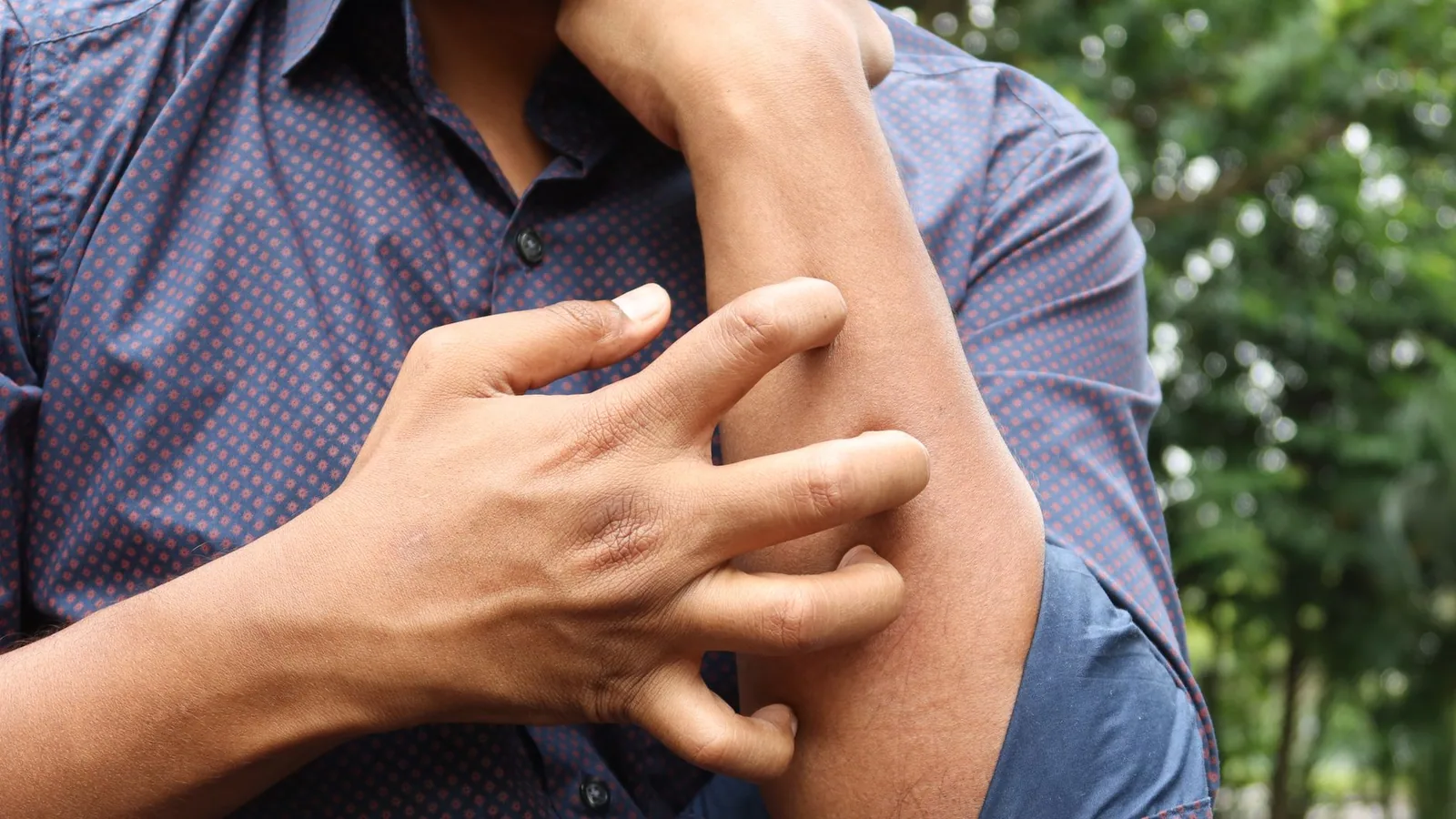
Fleas do not live in human hair. A flea can land on a person, bite, and be found in the hair or clothing long enough to be picked off, but the human scalp is not a place where cat fleas settle, feed, breed, and raise offspring. The animals that carry a flea population are almost always pets or wildlife, and the population that keeps a household infested lives in the home environment and on those animals, not on human heads.
This distinction matters because it changes what you do next. Treating your hair does not fix a flea problem. Treating every pet in the house with an effective veterinary product, plus managing the environment where fleas persist, does.
The published human case that anchors this topic makes the pattern clear. An 18-year-old woman with no pets presented with severe itching, hives, and raised bumps on her neck and arm. The flea was removed from her skin and identified as a cat flea (Ctenocephalides felis). Her diagnosis was flea-bite dermatitis, and it resolved with antihistamine treatment [1]. The problem was bites from a flea that came from somewhere else. It was not a colony living on her scalp.
Owner-facing triage summary
- You or a family member has itchy bumps. That is a bite reaction, not a hair infestation.
- The source is a pet, a visiting animal, or wildlife. Cat fleas have a wide host range and will feed on people [1].
- The fix is on the animal and in the home. Every dog and cat in the household needs an effective flea product.
- Human skin reactions often settle on their own or with medical care. Seek medical attention for spreading lesions, fever, or signs of infection.
- Heavy flea burdens can cause significant blood loss and intense itching in pets, so a heavy infestation is a veterinary urgency, not a grooming problem [2].
At a Glance: Fleas and Human Hair
| Question | What the evidence shows | What to do |
|---|---|---|
| Can fleas live and breed in human hair? | No. Human hair is not a flea habitat. Fleas that reach people are transient biters [1] | Do not treat your hair as the source. Look at pets and the home |
| Do fleas bite people? | Yes. Cat fleas have a wide host range and will feed on humans, causing itchy papules and hives [1] | Treat the animal reservoir and manage the environment |
| Where is the real infestation? | On dogs and cats, and in the home environment where fleas are collected in traps [3][4] | Treat every pet in the household and reduce environmental flea habitat |
| Which pets are at higher risk? | Stray cats, large cats, female cats, and long-haired cats had higher flea prevalence in one survey [5] | Check all pets, including indoor-only animals |
| What do bites look like? | Itchy papules, hives, and dermatitis, often called flea-bite dermatitis [1] | See a physician if lesions spread, break down, or come with fever |
| Can fleas transmit disease to people? | Cat fleas carry Bartonella and Rickettsia species and are the main vector of Bartonella henselae [6][7][8] | Flea control is a public health measure, not just a comfort measure |
| How fast does good control work? | In one home study, flea counts on cats dropped 99.3% by week 1 with an oral isoxazoline and all pets treated [4] | Expect weeks, not days, and keep treating on schedule |
| When is it an emergency? | Heavy infestation with weakness or collapse in a small pet suggests significant blood loss [2] | Contact a veterinarian the same day |
What People Actually Mean by "Fleas in Human Hair"
The phrase covers three different worries, and each has a different answer.
"Can fleas set up a colony in my hair?" No. Cat fleas are temporary feeders on people. They take a blood meal, and the population that produces the next generation is sustained by the animal host and the home environment. In the reported human case, a single flea was removed from the skin and identified, and the clinical problem was the skin reaction to bites, not an established infestation of the hair [1].
"Can a flea jump onto my head?" Fleas are strong jumpers. Cat fleas (Ctenocephalides felis) can jump up to 30 cm horizontally, roughly the height of a lower leg. That is why bites commonly land on ankles and lower legs when a person walks through an infested area. A flea can still reach a neck or arm, as in the reported case [1], and it can be found in hair after landing there. Landing is not the same as living there.
"Are these bites actually from fleas?" Not always. Flea-bite dermatitis has look-alikes, and the difference changes the treatment. The sections below cover how flea bites present and what else produces similar lesions.
The Fleas That Actually Reach People
Several flea species can bite humans. The one most often involved in US households is the cat flea, Ctenocephalides felis.
**Cat flea (Ctenocephalides felis).** This is the dominant flea on both cats and dogs in most of the world. In one survey of 426 cats, all 651 fleas collected were C. felis [5]. In a study of fleas from dogs in Colombia, Ctenocephalides felis felis made up 94% of the pooled samples [8]. The cat flea is the primary vector of Bartonella henselae, the cause of cat scratch disease, and it acquires the bacterium while feeding on a bacteremic cat [7].
Other fleas that can reach people. Surveys of small mammals at wildlife-human interfaces in Tanzania identified rat fleas (Xenopsylla cheopis and Xenopsylla brasiliensis), the chicken flea (Echidnophaga gallinacea), and the cat flea [10]. Each has its own preferred host and its own risk profile. Rat fleas are associated with rodents, and chicken fleas with poultry. They turn up in human spaces when those animals are nearby.
**The jigger flea (Tunga penetrans).** This flea behaves differently from all the others. It burrows into skin rather than biting and leaving. It is covered separately below because it is the one flea that genuinely lives inside a person.
For practical purposes, if you live in the United States and own a dog or cat, the flea on your pet and the flea biting your ankle are the same species.
Why Fleas Do Not Colonize Human Hair
Flea biology is built around a nest, not a scalp. Four features explain why a person cannot become a long-term flea host.
1. The household reservoir is the environment
Flea populations in a home are sustained by the environment where animals rest. Researchers studying flea-infested homes in Florida collected cat fleas from cats, dogs, and environmental traps set in the same houses, then sequenced the bacteria inside them [3]. In a separate trial, investigators screened homes by counting fleas on cats and in environmental traps before and after treating every dog and cat with an oral flea product, and the household flea burden collapsed as the animals were treated [4]. If fleas were living on human hair, treating pets would not clear a house. It does, which tells you where the population actually is.
2. Human hair does not offer what a flea needs
A flea needs a host that stays put, provides repeated blood meals, and rests in a consistent place so that the next generation lands in a suitable environment. A pet sleeping in the same bed every night provides exactly that. A human scalp provides none of it. People wash, comb, change clothes, and move around. There is no stable nest.
3. Human skin temperature and chemistry are a poor match
Flea physiology is tuned to the flea's own environment. The midgut of the cat flea shifts between acidic and alkaline conditions around a blood meal, and pathogens such as Bartonella henselae, Rickettsia typhi, and Yersinia pestis have to adapt to that gut to survive in the flea at all [11]. Even organisms that live inside fleas struggle outside them. One flea-associated trypanosomatid, Blechomonas campbelli, grew best at 25 degrees Celsius, grew poorly at 30, and did not grow at 35, which limits its ability to persist in a warm-blooded host [12]. Fleas and their microbes are adapted to the microhabitat of an animal nest, not to a human body.
4. Human blood is a meal, not a home
Flea saliva contains anticoagulant and immunomodulatory molecules that let the flea feed without the host's clotting and complement systems stopping it. In laboratory work on C. felis felis, salivary gland extracts prolonged clotting time by 53% in dogs, 37% in cats, and 35% in maned wolves, while intestinal extracts inhibited the classical complement pathway by up to 63.7% in dogs [13]. These adaptations exist so the flea can take a blood meal. They do not make a person a suitable place to live.
What actually happens when a flea meets a person
A flea lands, feeds, and leaves. The person is left with a bite reaction. Sometimes the flea is still present and can be found and removed, as in the reported case [1]. That is the full extent of human involvement in the flea life cycle in ordinary household settings.
The One Exception: Tungiasis
Tunga penetrans, the jigger flea, does burrow into human skin. This is a different disease from flea-bite dermatitis, and it deserves its own explanation.
Tungiasis is an infestation in which the flea enters the skin, usually on a foot. The fleas live in dry, sandy soil, and they infect people who walk barefoot in infested areas. Human tungiasis is accidental and zoonotic, and it causes severe morbidity if it is not managed properly [9]. A published case described fleas in a nail in a patient who was initially suspected of having onychomycosis, which is an unusual presentation that required a modified potassium hydroxide mount to identify [9].
Tungiasis is not a hair infestation and it is not the same as having cat fleas in a house. It is included here because it is the only common situation in which a flea takes up residence inside a person rather than biting and leaving. Travelers returning from resource-limited tropical settings with a painful, enlarging nodule on the foot should mention travel history to their physician.
What Flea Bites Look Like on Human Skin
Flea-bite dermatitis is the clinical name for the skin reaction to flea feeding. The reported case describes the typical picture. The patient had severe itching, urticaria, and papulomatous lesions, with the dermatitis distributed on the neck and arm. A flea was removed and identified as C. felis, and the patient recovered after five days of oral antihistamine treatment [1].
Several features follow from that description.
Itching is the dominant symptom. The reaction is driven by the immune response to flea saliva, which contains the anticoagulant and immunomodulatory proteins described above [13]. This is why antihistamines help and why the itching can be intense even when there are few visible bites.
Lesions are papules and hives. Raised, red, itchy bumps and wheals are the usual findings. Scratching can break the skin and introduce bacteria, which is when a simple bite reaction becomes a skin infection.
Distribution follows where fleas reach. Because fleas jump from floor level, bites often appear on ankles and lower legs. The reported case shows that any exposed skin can be involved, including the neck and arm [1].
People react differently. Some people living with infested pets have no obvious lesions. Others develop dramatic hives from a small number of bites. The severity of the skin reaction is not a reliable measure of how many fleas are in the house.
Conditions That Look Like Flea Bites
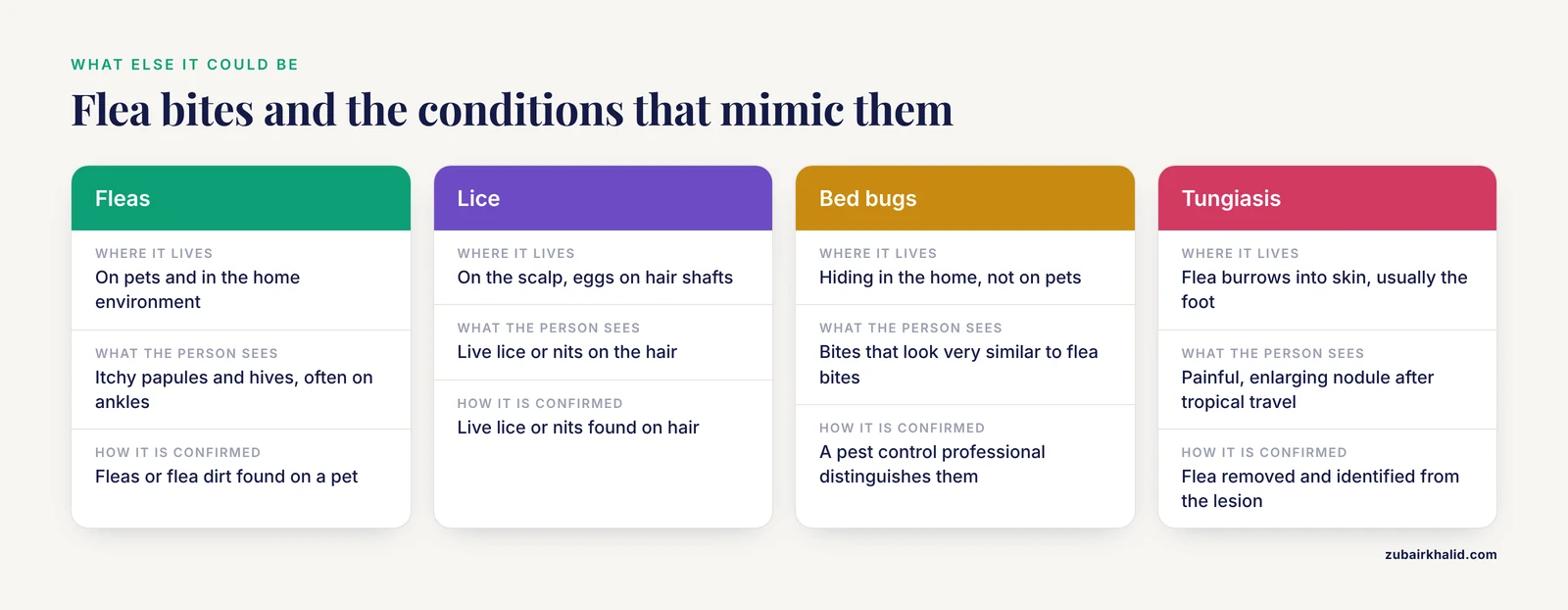
Not every itchy bump on a person is a flea bite, and the wrong diagnosis leads to the wrong control strategy.
Lice. Lice are true hair-dwelling parasites. Fleas are not. The contrast is a useful one to keep in mind. Head lice live on the scalp and lay eggs attached to hair shafts. Fleas have a much wider host range than lice and feed on many mammals, including humans, without taking up residence in hair [1]. If a physician or pharmacist finds live lice or nits on the hair, that is a lice problem, not a flea problem.
Bed bugs. Bed bug bites can look very similar to flea bites, and bed bugs hide in the home rather than on pets. A pest control professional can distinguish them.
Scabies and other mites. Mites burrow or feed on skin and produce intense itching, often in characteristic locations.
Tungiasis. A painful, enlarging nodule on the foot after travel to a tropical area is a different entity, and it requires removal of the flea [9].
Allergic and irritant skin disease. Eczema, contact dermatitis, and hives from other causes can mimic bite reactions.
The practical test. Look at the pets. If fleas or flea dirt are present on a cat or dog, the bites are almost certainly flea bites. If every pet is clean and the household has no pets, another diagnosis deserves consideration. A veterinarian can confirm fleas on the animal, and a physician can confirm the skin diagnosis on the person.
Risk Factors for a Flea Problem in the Home
Flea risk is a property of the household and the animals in it, not of a person's hair.
Animal-level risk factors
A survey of 426 cats in Peninsular Malaysia found flea infestation in 71.83% of them and identified several significant risk factors. Higher flea prevalence was seen in female cats (77.99%), big-sized cats (91.76%), stray cats (84.94%), cats reported to have clean body condition (73.35%), and long-haired cats (78.38%) compared with their counterparts [5]. The authors concluded that cats act as a flea reservoir, particularly for C. felis, and that understanding these risk factors supports better control measures [5].
Two of these findings are easy to misread. Stray status reflects exposure to outdoor environments and other animals. Long hair on a cat may make fleas harder to find and remove during grooming, and it was associated with higher prevalence in the survey [5]. Long hair on a cat says nothing about the risk to a person's hair.
Household and environmental risk factors
Habitat change increases flea exposure. In a study of small mammals across wildlife-human interfaces in Tanzania, flea infestation loads increased along a gradient of habitat modification from bush to farm to peridomestic settings, and the flea species recovered included rat fleas, chicken fleas, and cat fleas [10]. When wildlife, poultry, and rodents come closer to where people live, the flea species that prefer those animals come with them.
Homes with established infestations are their own risk factor. Researchers in Florida collected cat fleas from cats, dogs, and traps inside flea-infested houses, which confirms that a house can hold a flea population independent of any one animal at any one moment [3].
Human-level risk factors
There is no evidence that hair length, hair type, or shampoo habits change whether a person becomes a flea host. What changes is exposure. A person who lives with an untreated infested pet, works with stray animals, or spends time in heavily infested environments has more opportunities to be bitten.
Owner perception also matters. A survey of dog owners using the Health Belief Model found that women reported greater health concern about ectoparasites than men, and the authors noted that understanding owner beliefs can improve parasite control communication [14]. Beliefs about risk translate into whether pets get treated on schedule, and that is the single biggest lever in household flea control.
How Fleas Are Found and Confirmed
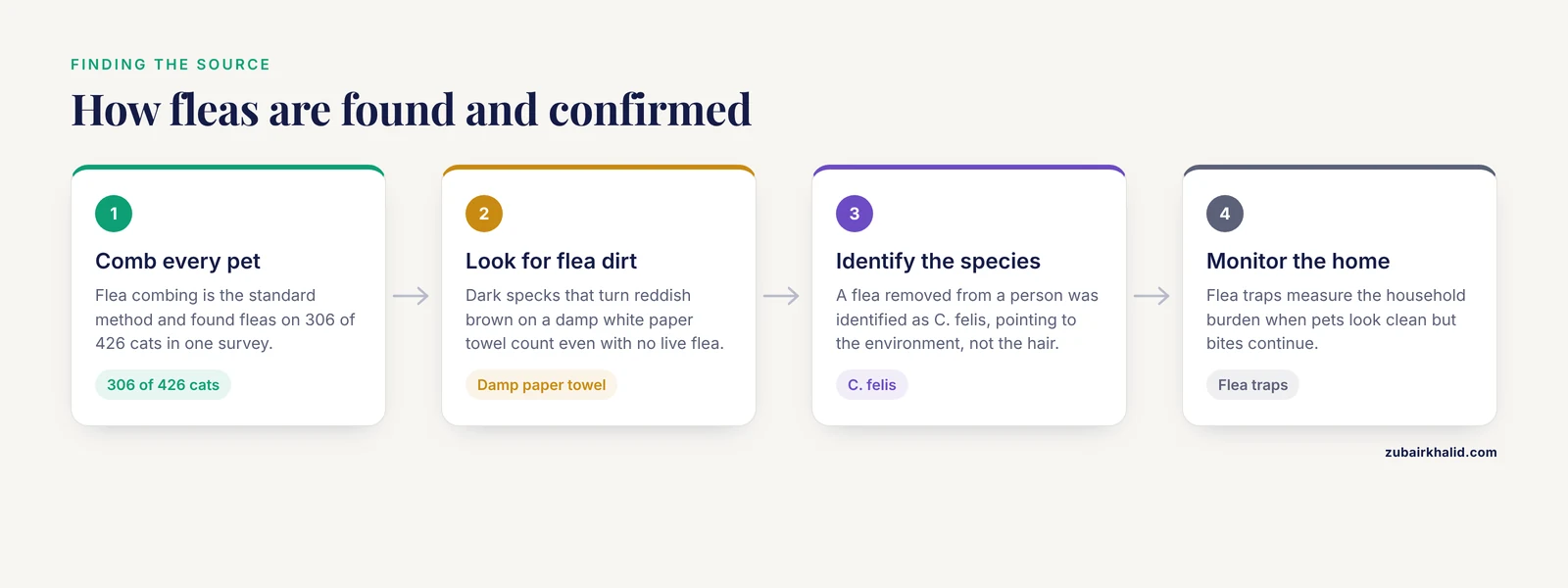
Diagnosis is straightforward when you know where to look.
Flea combing. This is the standard method for finding fleas on a pet. In the Malaysian survey, researchers flea-combed 426 cats and collected 651 fleas, all identified as C. felis, with a female-to-male ratio of 2.5 to 1 [5]. Female fleas predominating is consistent with what is known about flea biology. In laboratory studies, female cat fleas had significantly higher circulating hemocyte counts than males and were the only sex to increase hemocyte numbers after injury or bacterial challenge, which may help explain why females survive and persist in higher numbers [15].
Visual inspection and flea dirt. Flea dirt is dried blood in flea feces. It appears as dark specks in the coat, and it turns reddish brown when placed on a damp white paper towel. Finding flea dirt is meaningful even when no live flea is seen, because fleas spend time off the animal.
Species identification. When a flea is found on a person, identification confirms the source. In the reported case, the flea was removed and identified as C. felis, which directed attention to the environment rather than to the patient's hair [1].
Environmental monitoring. Flea traps set in a home collect fleas from the environment and are used in research and in difficult cases to measure the household burden [3][4]. This is useful when pets are clean but bites continue.
Pathogen testing. This is not routine for every case. It becomes relevant when a pet or person has systemic signs. Fleas carry a substantial microbial load. In Brazilian fleas from dogs and cats, Bartonella species were detected in 34.43% of fleas from cats and 8.98% of fleas from dogs, while Rickettsia species were detected in 24.8% of fleas from dogs and 3.28% of fleas from cats [6]. In Colombian dogs, Rickettsia was detected in 83% of flea pools and Bartonella in 28% [8]. Flea infestation intensity also tracks with pet disease. In cats in Padang, Indonesia, the prevalence of Mycoplasma haemofelis infection rose with flea burden, from 40.0% in mild infestations to 60.0% in moderate and 83.3% in severe infestations, a significant association [16].
Treating the Pet and the Home
Flea control is a two-part job. Kill the fleas on every animal, and reduce the flea population in the environment. Skipping either part lets the infestation restart.
Treat every pet in the household
Every dog and cat in the home needs treatment, including animals that never go outside and animals that show no symptoms. In a study of in-home infestations, all cats and dogs in each household were treated with an oral lotilaner tablet at weeks 0, 4, and 8, and on-animal and trap counts were tracked through weeks 11 to 12 [4]. Within one week, flea counts on cats in heavily infested homes fell 99.3% relative to pretreatment [4]. Partial treatment of a multi-pet household leaves an untreated reservoir.
Choose a product with demonstrated efficacy
Modern isoxazoline flea products are the standard of care because they kill fleas quickly and are given by mouth or applied to the skin on a schedule. A chewable combination containing lotilaner, moxidectin, pyrantel, and praziquantel was evaluated in controlled studies against C. felis in dogs, with experimental infestations at multiple time points and flea counts 24 hours after treatment and after each reinfestation [2]. Efficacy against fleas is the outcome that matters, and this class of drug has it.
Older options are weaker. A study of oral ivermectin in dogs found a peak flea efficacy of about 67%, well below what modern flea control achieves, and the authors concluded it was not the most appropriate treatment for flea control [17]. Inexpensive, over-the-counter products and unverified internet sources are a common reason flea problems persist.
Some pet owners ask about botanical sprays. A spray containing 10% carvacrol and 10% eugenol produced a 98% reduction in C. felis counts two days after treatment in artificially infested dogs, but reductions fell to 49 to 56% by days 7 and 14, and the authors did not claim residual efficacy. No adverse events were observed in that study [18]. Fast initial kill without residual activity is not a match for a household with an ongoing environmental reservoir.
Environmental control
Flea populations survive in the environment where animals rest. The measures that matter are mechanical and consistent.
- Wash pet bedding weekly in hot water.
- Vacuum carpets, rugs, and upholstered furniture, and dispose of the vacuum bag or empty the canister outside.
- Keep wildlife and stray animals away from the yard and porch.
- Restrict access to crawl spaces and areas under the house where feral cats or rodents shelter.
- Discuss household sprays and professional pest control with your veterinarian and a licensed pest professional when the infestation is heavy.
The reason environmental control works is visible in the trial data. Treating every animal in the house reduced the household flea burden dramatically, which means the animal was feeding the environmental population and interrupting that supply interrupts the cycle [4].
Human skin reactions
Flea bites on people are treated for symptoms. In the reported case, the patient received an oral antihistamine once daily for five days and recovered satisfactorily from flea-bite dermatitis [1]. That is a medical decision, not a veterinary one, and it should be made by a physician or pharmacist. Over-the-counter hydrocortisone and oral antihistamines are commonly used for itchy bites, but dosing and suitability depend on the person.
Do not ignore signs of secondary infection. A bite that becomes increasingly painful, warm, or draining, or that spreads into a larger red area, needs medical evaluation.
Recheck timing
Expect improvement in days and resolution in weeks. In the home treatment study, the schedule was treatment at weeks 0, 4, and 8 with follow-up counts through weeks 11 to 12, and the largest drop on the animals occurred in the first week [4]. If bites continue after four to six weeks of consistent whole-household treatment, the plan needs review. Common causes are a missed dose, an untreated pet, a visiting pet, or an environmental source such as stray cats or rodents.
Home Remedies and Common Mistakes to Avoid
Some responses to a flea problem are ineffective, and a few are risky.
Treating human hair with pet flea products. Never apply a dog or cat flea product to a person's hair or skin. Veterinary parasiticides are formulated and labeled for animals. Use only human-labeled products on people.
Shampooing the hair to kill fleas. Fleas are not living in the hair, so this does not address the source. Bathing a person who has been bitten may relieve itching, but it will not end the infestation.
Treating only the pet that shows symptoms. All pets in the household need treatment. Untreated animals sustain the population.
Using ivermectin or other livestock products off-label. Oral ivermectin at a studied low dose produced only about 67% flea efficacy in dogs, and the authors stated it was not the most appropriate choice for flea control [17]. Off-label use of agricultural products carries additional toxicity risk.
Relying on essential oil sprays alone. Carvacrol and eugenol achieved 98% knockdown at day 2 in one study but dropped to 49 to 56% by day 7 and day 14, with no residual efficacy claim [18]. Knockdown is not the same as control.
Skipping the environment. Fleas in carpets and bedding will reinfest treated pets. The animal-side and environment-side measures have to happen together [3][4].
Assuming a negative flea comb means no fleas. Flea combing found fleas on 306 of 426 cats in one survey, which means it detects a large share of cases, but a single clean combing is not definitive, especially in a long-haired cat [5].
Prevention That Actually Works
Prevention is cheaper and simpler than elimination. Four habits cover most households.
1. Keep every pet on a year-round flea preventive. Monthly or labeled-interval products with proven efficacy against C. felis are the foundation [2][4]. In many climates fleas survive indoors through the winter, so stopping treatment seasonally reliably produces a spring infestation.
2. Check pets regularly with a flea comb. Flea combing is how the Malaysian survey detected fleas on 306 of 426 cats [5]. Make it part of grooming. Pay particular attention to long-haired cats, which had higher flea prevalence in that survey [5].
3. Manage the animals that bring fleas onto the property. Stray cats, rodents, and poultry bring their own fleas. Reducing their access to the yard, garage, and crawl space lowers the background flea pressure.
4. Treat the whole household at once. When one pet is found with fleas, treat every dog and cat in the home on the same schedule rather than waiting for each animal to show signs [4].
Owner attitudes affect whether any of this happens. A survey of dog owners found that risk perception varied by demographic factors, and the authors suggested that understanding those beliefs could improve parasite control communication [14]. The practical message is that flea prevention works when it is scheduled rather than reactive.
Prognosis
The outlook is good in almost every case.
Flea-bite dermatitis in people is self-limited with symptomatic care. The reported patient recovered fully after five days of antihistamine therapy [1].
On the animal side, effective products clear fleas quickly. In heavily infested homes, flea counts on cats fell 99.3% within one week of starting an oral isoxazoline with all pets in the household treated, and the study continued treatment at weeks 4 and 8 to maintain control [4].
The main reason flea problems linger is incomplete treatment. A missed pet, a missed dose, or an untreated environmental source will restart the cycle within weeks. Consistency, not intensity, is what decides the outcome.
Emergency Red Flags
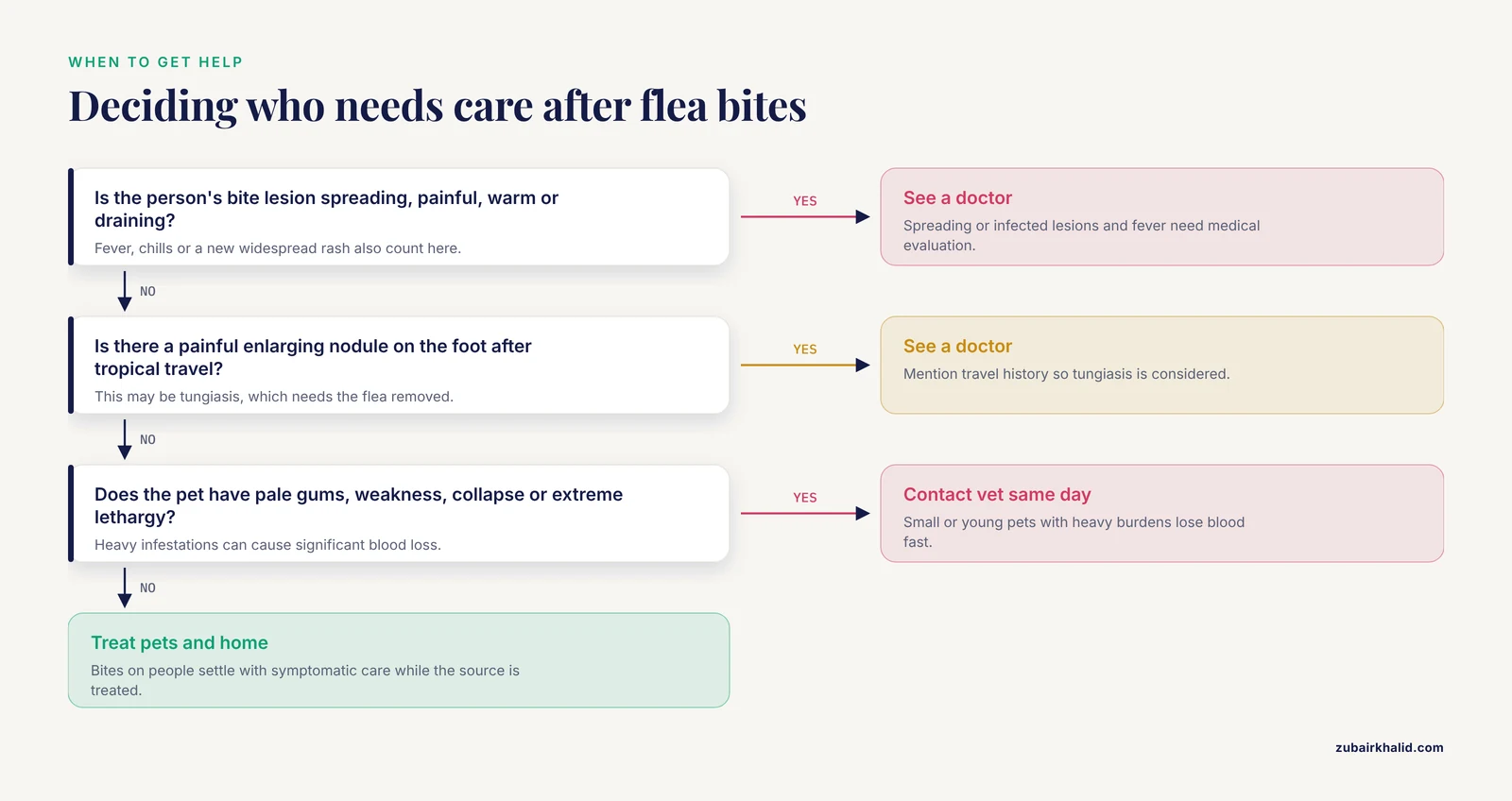
Contact a veterinarian promptly if any of the following apply to a pet.
- Pale gums, weakness, collapse, or extreme lethargy in a heavily infested animal. Heavy flea and tick infestations can cause significant blood loss [2].
- Intense, uncontrollable itching with self-trauma, open sores, or skin infection.
- A very small or very young pet with a heavy flea burden. Small body size means less blood volume to lose.
- Fleas that remain after four to six weeks of consistent whole-household treatment with a proven product.
Seek medical care for a person with any of the following.
- A bite lesion that is spreading, increasingly painful, warm, or draining.
- Fever, chills, or a new widespread rash after known flea exposure.
- A painful, enlarging nodule on the foot after travel to a tropical region, which may be tungiasis.
- Signs of an allergic reaction such as facial swelling or difficulty breathing.
Limitations and When to Contact a Veterinarian
This article describes general principles of flea biology and control. Individual animals and individual households differ, and a veterinarian who can examine your pet, identify the flea species, and review your treatment history should make the final plan.
Contact a veterinarian if your pet has never had a flea problem before and now does, if fleas persist despite treatment that was given correctly, if your pet has underlying skin disease that makes itching hard to interpret, or if your pet is very young, pregnant, nursing, or on other medications that could interact with a flea product. Contact a physician for any human skin reaction that is spreading, painful, or accompanied by fever, and mention the animal exposure when you do.
Related Guides
- Flea Allergy Dermatitis: Pruritus, Hair Loss and Control: Detailed overview of flea allergy dermatitis, pruritus, and hair loss
- Bug Bites Identification Guide: Ticks, Spiders, Fleas, Bed Bugs and Stings: Identify other bug bites that may mimic flea bites
- Flea Infestation Treatment: Comprehensive Veterinary Reference Guide: Comprehensive guide to treating a full flea infestation
- Fleas On Humans Symptoms: Comprehensive Veterinary Reference Guide: Symptoms of fleas on humans, including bite reactions
- Can Humans Get Fleas From Dogs? Transmission and Risks: Explains transmission of fleas from dogs to people
- How to Get Rid of Fleas in Your Home and on Your Pets: Step-by-step home and pet flea removal strategies
Frequently Asked Questions
Can fleas live in human hair?
No. Fleas bite people and can be found in hair briefly, but they do not establish a colony in human hair. The population lives on pets and in the home environment.
How long can a flea survive on a person?
Long enough to feed and be found, not long enough to build a life. Human blood is a meal for a flea, not a habitat, and the flea needs an animal host and a resting site to complete its cycle.
Can fleas jump from my pet onto my head?
They can land anywhere, and the reported human case involved bites on the neck and arm [1]. Landing is not the same as living there.
What do flea bites look like on people?
Itchy raised bumps and hives, often grouped where fleas reach exposed skin. The reported case involved papulomatous lesions with severe itching and urticaria on the neck and arm [1].
Can my indoor cat have fleas even if she never goes outside?
Yes. Fleas enter homes on other pets, on people's clothing, and through windows and doors from animals living nearby [3][4]. Indoor status lowers risk but does not eliminate it.
Does washing my hair get rid of fleas?
It may remove a flea that happens to be there, but it does not treat the source. The infestation is on the pets and in the environment, so hair washing does not solve it.
How do I know if my pet actually has fleas?
Flea combing and looking for flea dirt are the practical methods. Flea combing detected fleas on 306 of 426 cats in one survey [5], and it is the technique veterinarians use in the exam room.
How long does it take to clear fleas from a house?
Weeks, not days, with consistent treatment of every pet and the environment. A typical research schedule treated all pets at weeks 0, 4, and 8 and monitored through week 11 to 12 [4].
This article is educational and is not a substitute for veterinary diagnosis or treatment.
Sources
- The First Report on Cat Flea (Ctenocephalides felis), a Zoonotic Haematophagous Insect Infestation in Humans in Bangladesh: A Case Report and Literature Review.
- Efficacy of Credelio Quattro™ chewable tablets containing lotilaner, moxidectin, pyrantel, and praziquantel against Ctenocephalides felis and Rhipicephalus sanguineus infestations on dogs.
- Pathogenic bacterial species and the microbiome of cat fleas (Ctenocephalides felis) inhabiting flea-infested homes.
- Assessment of lotilaner (Credelio® CAT) for control of in-home Ctenocephalides felis infestations.
- Risk factors associated with flea infestation on cats.
- Molecular detection and characterization of flea-associated bacteria: genetic diversity and co-occurrence patterns involving Bartonella, Rickettsia, and Wolbachia in Ctenocephalides felis felis from an Atlantic Forest region of Brazil.
- From Acquisition to Transmission: Revisiting Bartonella henselae Infection in the Cat Flea (Ctenocephalides felis).
- Flea infestation and molecular detection of Rickettsia and Bartonella spp. in domestic dog-associated fleas from the inter-Andean basin of Cundinamarca, Colombia.
- Tungiasis Presenting as Onychomycosis: Probably the First Report of Flea Infestation of the Nail Observed Using Modified Potassium Hydroxide Mount Technique.
- Impact of habitat modifications on flea (Siphonaptera) infestation dynamics of non-volant small mammals across wildlife-human interfaces in Tanzania.
- Physiology of the cat flea (Ctenocephalides felis) gut: serine protease activity, midgut pH, and intestinal barrier integrity.
- Blechomonas campbelli from Ctenocephalides felis: in vitro development, thermotolerance, and phylogenetic insights.
- Anti-complement and anticoagulant activities from the salivary glands and gut of Ctenocephalides felis felis (Siphonaptera: Pulicidae) in wild and domestic Carnivora hosts.
- Assessing perceptions of flea and tick infestation risk in Southeast Queensland, Australia.
- Male and Female Cat Fleas (Ctenocephalides felis) Differ in Bacterial Control, Survival, and Circulating Hemocyte Responses Following Systemic Challenge.
- Molecular detection of Mycoplasma haemofelis in cats infested with Ctenocephalides felis in Padang, West Sumatra, Indonesia.
- Evaluation of pharmacokinetics and efficacy of ivermectin following oral administration in dogs against experimental infection of Ctenocephalides felis felis and Rhipicephalus sanguineus.
- Clinical efficacy and safety of a spray formulation containing carvacrol and eugenol against Rhipicephalus linnaei and Ctenocephalides felis felis in artificially infested dogs.