Brown Dog Tick: Identification and Diseases
By Dr. Zubair Khalid, DVM, MS, PhD ·
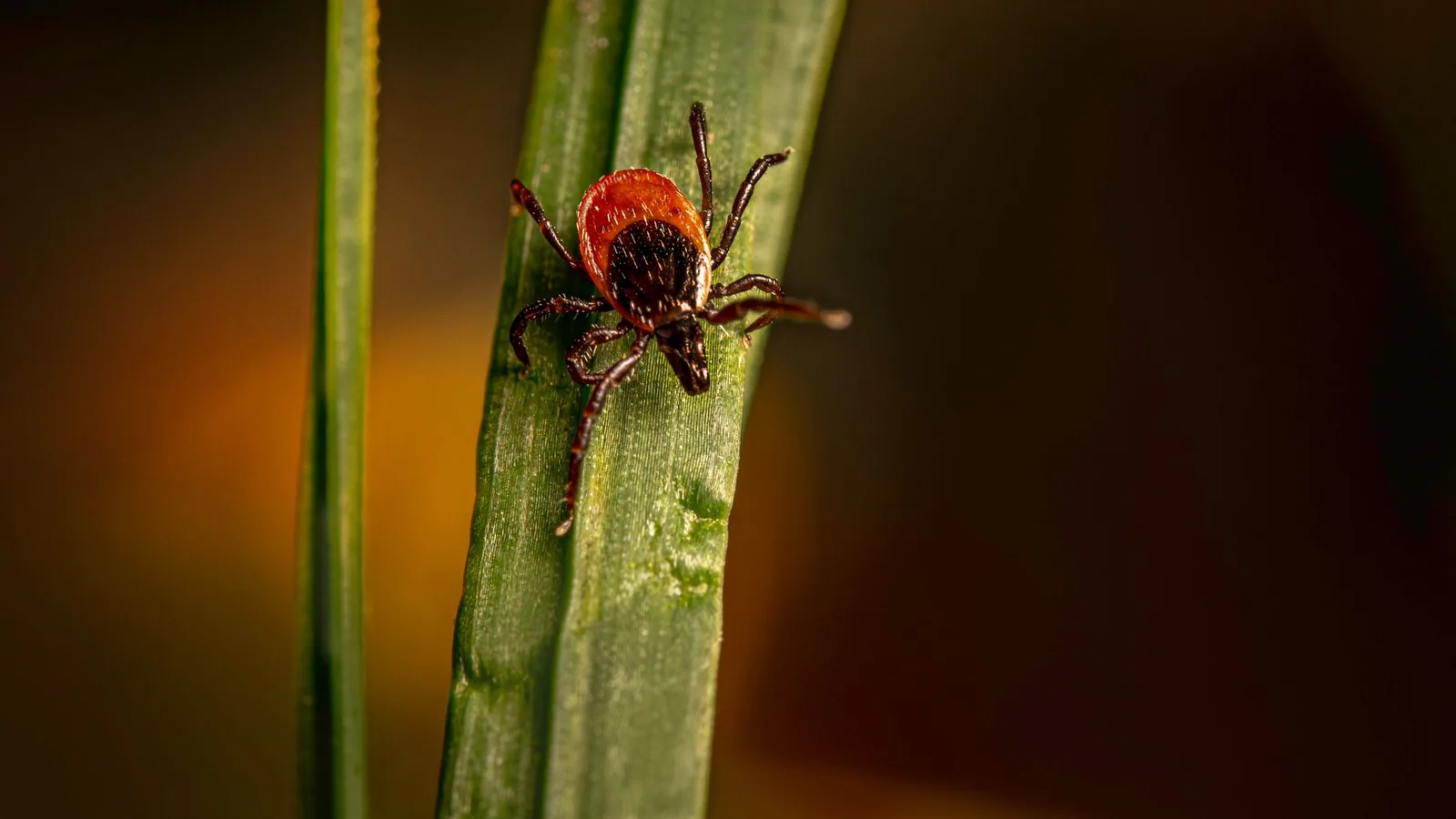
The brown dog tick (Rhipicephalus sanguineus) is the most widespread tick species in its genus and a proven carrier of pathogens that sicken dogs and people [1]. It stands apart from other ticks because it can complete its entire life cycle inside a home, which means a small number of ticks can quickly become a household infestation. If you find a small reddish-brown tick on your dog, do not wait to act. Remove the tick with fine-tipped tweezers, save it in a sealed container, and call your veterinarian the same day.
This guide covers brown dog tick identification, the diseases this tick transmits, how to treat an infestation in your home, and what to expect from veterinary care. It is written for pet owners who need clear, practical answers.
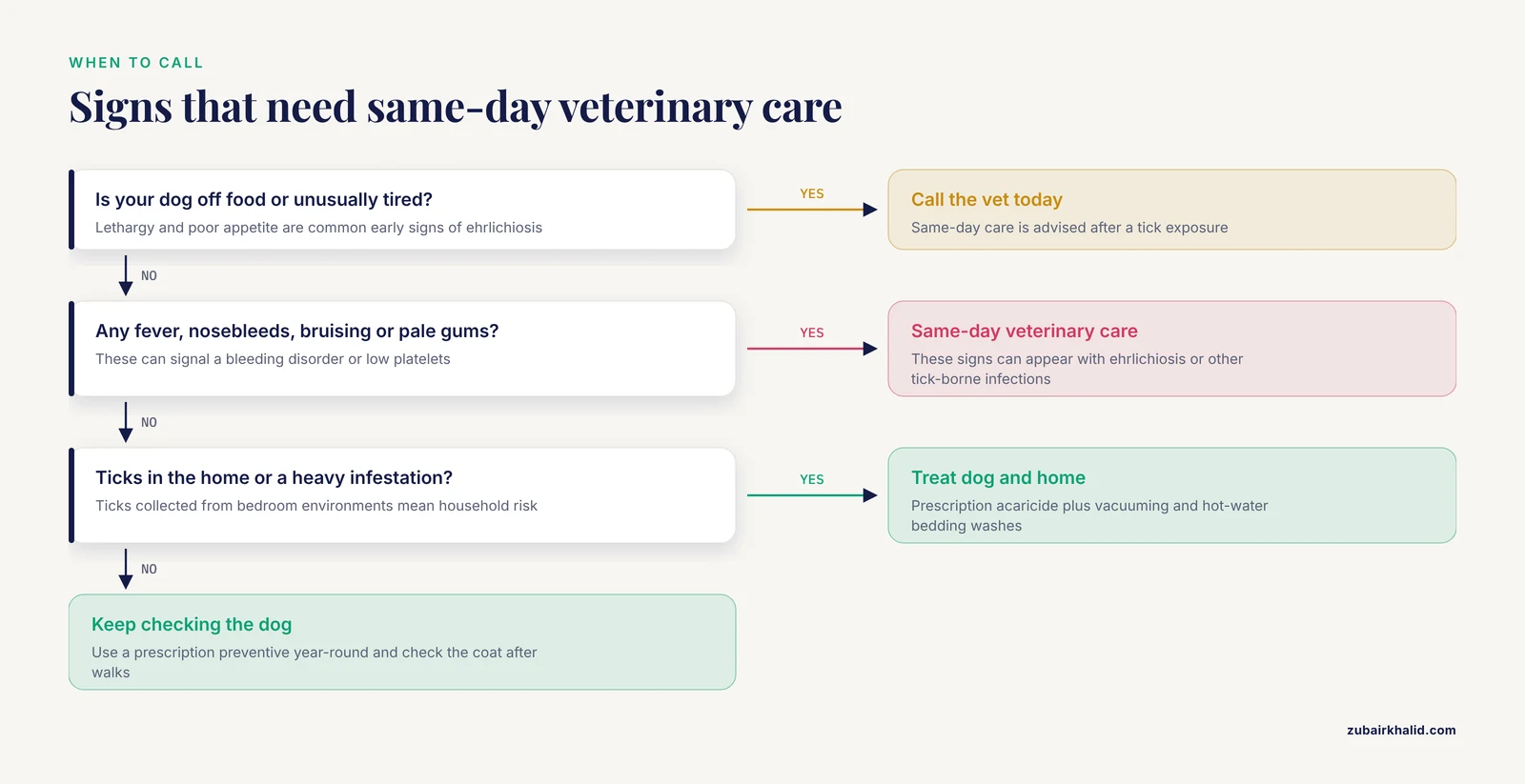
Triage summary: A dog with fever, lethargy, nosebleeds, bruising, pale gums, or poor appetite after a tick exposure needs same-day veterinary care. These signs can appear with ehrlichiosis or other tick-borne infections, and early treatment improves the outcome [3], [4]. People who develop fever, headache, or a rash after finding ticks in the home should contact their own physician and mention the tick exposure [2], [5].
This article is educational and is not a substitute for veterinary diagnosis or treatment.
At a Glance: Brown Dog Tick Facts
| Feature | Brown dog tick |
|---|---|
| , - | , - |
| Scientific name | Rhipicephalus sanguineus, part of the R. sanguineus group that includes R. linnaei in some regions [1], [6] |
| Size | Small-bodied tick, roughly sesame-seed sized as an adult before feeding |
| Color | Reddish-brown with no white markings; engorged females turn grayish |
| Preferred host | Dogs, but will feed on humans and other mammals [2], [5] |
| Indoor risk | High. Ticks have been collected from bedroom environments [2] |
| Key diseases | Canine ehrlichiosis, babesiosis, anaplasmosis, hepatozoonosis, spotted fever group rickettsiosis, severe fever with thrombocytopenia syndrome [2], [3], [5] |
| Treatment | Prescription oral and topical acaricides; doxycycline for ehrlichiosis [7], [4] |
| Resistance concern | Permethrin and other acaricide resistance documented worldwide [8], [1] |
What Is the Brown Dog Tick?
The brown dog tick belongs to the genus Rhipicephalus and is described in the scientific literature as the most widespread Rhipicephalus species globally [1]. It is a hard tick, meaning it has a tough outer shield called a scutum. All of its active life stages, larva, nymph, and adult, prefer to feed on dogs, which is why it is called the dog tick [6].
Taxonomy: One Name, Several Lineages
The brown dog tick is now understood as a species complex, Rhipicephalus sanguineus sensu lato. Genetic studies have separated it into distinct lineages with different geographic ranges. In parts of Asia and Australia, the tropical lineage is classified as Rhipicephalus linnaei, and this is the tick responsible for the recent emergence of Ehrlichia canis in northern Australia [6]. For dog owners, the practical message is that all lineages in the R. sanguineus group carry similar disease risks and require the same control approach [1].
The brown dog tick also carries a community of bacteria in its body, called its microbiome. Studies in Thailand and Mexico found that Coxiella-like endosymbionts dominate this community, likely playing a role in tick nutrition and reproduction [9], [10]. This bacterial community varies with geography and environment, which may influence how well the tick survives in different regions [9], [10].
Life Cycle and Biology
The brown dog tick has a four-stage life cycle: egg, larva, nymph, and adult. It is a three-host tick, meaning each feeding stage drops off the host after feeding and seeks a new host for the next meal. Larvae and nymphs commonly feed on small rodents or dogs, while adults prefer dogs [6]. After an adult female feeds, she drops off the host and lays thousands of eggs in a protected location. In a home, that location can be a crack in the baseboard, a fold in the dog's bedding, or the space behind a crate.
The entire life cycle can be completed indoors, which is rare among ticks. This indoor capability is the main reason a brown dog tick problem can become a brown dog tick infestation in a house.
Geographic Distribution and Climate
The brown dog tick is found worldwide, and climate change is expanding the areas where it can persist. A trait-based modeling study found that historical climate change has reshaped the thermal niche of R. sanguineus s.l., with temperature and humidity driving development, mortality, and egg production [11]. In practical terms, regions that were once too cold for the tick to establish are becoming suitable, and the tick's range is expected to keep shifting [11].
Brown Dog Tick Identification
Correct identification matters because the brown dog tick requires a different control strategy than other ticks. If you mistake it for a deer tick, you may not realize that your home is at risk of infestation.
Brown Dog Tick Size and Appearance
Adult brown dog ticks are small-bodied ticks. Unfed adults are roughly the size of a sesame seed, with a flattened, oval shape. The color is reddish-brown across the body, legs, and mouthparts, with no white or silver markings on the scutum. After feeding, an engorged female turns grayish or olive-brown and can expand to several times her unfed size, making her much easier to spot.
Nymphs are smaller than adults, about the size of a poppy seed, and larvae are even smaller. At these stages, the tick can easily be mistaken for a speck of dirt or a bit of dried blood, especially in a dog's thick coat.
Distinguishing Features
Parasitologists identify the brown dog tick using several structural features [2], [5]:
- Hexagonal basis capituli. The base of the mouthparts is hexagonal when viewed from above.
- Short, broad mouthparts that are visible from above.
- Reddish-brown color with no ornate pattern on the scutum.
- The anal groove curves around the anus from behind, a feature that separates Rhipicephalus from some related genera.
- Males have a scutum covering nearly the entire back. Females have a small scutum, which allows the body to expand during feeding.
Life Stages at a Glance
| Stage | Relative size | Feeding behavior |
|---|---|---|
| , - | , - | , - |
| Egg | Tiny, reddish-brown | Does not feed |
| Larva | Poppy-seed sized | Feeds on small rodents or dogs |
| Nymph | Poppy-seed to sesame-seed sized | Feeds on dogs, small mammals, humans |
| Adult | Sesame-seed sized unfed | Feeds on dogs, humans, other mammals |
Brown Dog Tick vs Deer Tick
The deer tick, also called the black-legged tick (Ixodes scapularis), is the tick most Americans associate with Lyme disease. The brown dog tick is a different species with a different appearance, behavior, and disease profile. Confusing the two can lead to the wrong prevention strategy.
| Feature | Brown dog tick | Deer tick (black-legged tick) |
|---|---|---|
| , - | , - | , - |
| Color | Reddish-brown, no white markings | Dark brown to black legs, reddish-orange body in females |
| Size | Small-bodied, sesame-seed sized as adults | Very small, similar size or slightly smaller |
| Preferred host | Dogs, then humans and other mammals | White-footed mice, deer, dogs, humans |
| Indoor behavior | Can complete its life cycle indoors [2] | Rarely infests homes, needs humid outdoor habitat |
| Lyme disease | Not a primary vector of Lyme disease | Primary vector of Borrelia burgdorferi |
| Key diseases | Ehrlichiosis, babesiosis, rickettsiosis, SFTS [2], [3], [5] | Lyme disease, anaplasmosis, babesiosis |
The most important practical difference is the indoor risk. A deer tick found on a dog is usually a one-off event from outdoor exposure. A brown dog tick found indoors is a warning sign that the home may be infested [2].
Brown Dog Tick Bite
The bite of a brown dog tick is usually painless. The tick inserts barbed mouthparts into the skin and secretes cement-like saliva to stay attached while it feeds. Many dogs show no local reaction at all, which is why ticks can go unnoticed for days.
What a Bite Looks Like on a Dog
The bite site may show mild redness, a small bump, or a scab after the tick is removed. Some dogs develop a localized skin reaction, but this is usually minor. The greater concern is the pathogens the tick may have passed into the dog's bloodstream during feeding.
What a Bite Looks Like on a Human
In humans, the bite site is often a small red spot that may itch. The serious risk is systemic illness. The fatal SFTS case in Thailand involved a patient with no clear bite recall, but ticks were found in his bedroom and on his dog, and the virus strain in the ticks matched the strain in his blood [2]. This case demonstrates that brown dog tick bites can transmit life-threatening disease even when the bite itself goes unnoticed [2].
Brown Dog Tick Diseases
The brown dog tick is a vector for bacteria, viruses, and parasites that affect dogs and humans. This section covers the diseases with the strongest evidence.
Ehrlichia canis and Canine Monocytic Ehrlichiosis
Ehrlichia canis is the most important pathogen transmitted by the brown dog tick [12], [6]. It causes canine monocytic ehrlichiosis, a disease that ranges from mild fever to a fatal bleeding disorder.
Geographic spread. E. canis occurs throughout the United States, South America, Asia, and Africa [6]. It emerged in the Kimberley region of Western Australia in May 2020 and has since spread across northern Australia [6]. In Ireland, the first endemic case was confirmed in a dog with no travel history, raising concern that the pathogen is now circulating locally [4]. In Italy, E. canis DNA was detected in R. sanguineus ticks collected from dogs and wolves, with a minimum infection rate of 3.41% [12]. In northern Pakistan, a study of 223 dogs found 66% were infested with Rhipicephalus ticks, and molecular testing identified Ehrlichia species in the ticks [13].
Clinical signs. The Irish case is a useful example of what ehrlichiosis looks like. A six-year-old female lurcher presented with chronic fever, lethargy, excessive thirst and urination, weight loss, low platelets, non-regenerative anemia, high blood globulins, protein in the urine, and eye problems including chorioretinitis and partial retinal detachment [4].
Diagnosis. Veterinarians confirm ehrlichiosis with blood tests, including ELISA, immunofluorescence antibody testing, and PCR [4]. A complete blood count often shows thrombocytopenia, which is a hallmark of the disease [4].
Treatment. Doxycycline is the standard first-line treatment [4]. In the Irish case, doxycycline combined with systemic corticosteroids resolved the clinical signs and the blood test abnormalities [4]. Dogs with eye inflammation or immune-mediated complications may need corticosteroids in addition to the antibiotic, but this decision belongs to the veterinarian.
Babesia vogeli, Hepatozoon canis, and Anaplasma platys

The brown dog tick also transmits Babesia vogeli, which causes babesiosis, Hepatozoon canis, which causes hepatozoonosis, and Anaplasma platys, which causes infectious cyclic thrombocytopenia [3]. These pathogens often occur together.
A Brazilian study of 181 dogs with suspected hemoparasitic infections found that dogs with a history of tick infestation were 3.41 times more likely to be co-infected with two pathogens [3]. Co-infections with two or more pathogens were significantly more common in dogs not receiving tick control medication [3]. The study also found that male dogs and dogs with nosebleeds, poor appetite, dehydration, overgrown nails, or visible ectoparasites were more likely to be co-infected with three or more pathogens [3].
This co-infection pattern matters because dogs with multiple pathogens tend to be sicker, and the clinical signs of one disease can mask another [3].
Rickettsial Infections
The brown dog tick is a vector for spotted fever group rickettsiae, which cause serious human illness.
Rickettsia conorii subsp. israelensis. In Ghana, this pathogen was detected in brown dog ticks collected from domestic dogs, the first molecular detection in that country [5]. It causes a Mediterranean spotted fever-like illness in humans. The same study detected Ehrlichia canis, an uncultured Anaplasma species, and Coxiella burnetii, the cause of Q fever, in the tick pools [5].
Rickettsia rickettsii. In Mexico, DNA sequences tentatively assigned to Rickettsia rickettsii, the cause of Rocky Mountain spotted fever, were found exclusively in two pools of brown dog ticks from Hermosillo [10]. Rocky Mountain spotted fever is one of the most severe tick-borne diseases in the Americas, with a high fatality rate when treatment is delayed.
The presence of these pathogens in brown dog ticks means that a tick bite should be taken seriously in any household with dogs [10], [5].
Severe Fever with Thrombocytopenia Syndrome (SFTS)
SFTS is a viral infection endemic in East Asia and increasingly reported in Southeast Asia [2]. It is caused by the SFTS virus, a phlebovirus, and has a high case fatality rate.
A fatal case in Thailand involved a 54-year-old man who developed fulminant multiorgan failure, secondary hemophagocytic lymphohistiocytosis, and unusual hemorrhagic blistering skin lesions [2]. An epidemiological investigation collected 268 ticks from stray dogs, the patient's dog, and the bedroom environment. All ticks were morphologically identified as R. sanguineus, and six tested positive for SFTSV RNA [2]. Genetic sequencing showed that the virus from the ticks clustered with the virus from the patient, providing strong evidence that the brown dog tick transmitted the infection [2].
This case is a reminder that the brown dog tick is not just a nuisance pest. It is a vector for a fatal human viral disease, and indoor tick infestations increase the risk of exposure [2].
Other Emerging Pathogens
Tacheng tick virus 2 (TcTV-2). This emerging virus was detected in R. sanguineus ticks collected from livestock and dogs across Türkiye [14]. The virus was found in multiple tick species, and the genetic diversity of Turkish isolates suggests multiple introductions or prolonged local circulation [14]. The human disease potential of TcTV-2 is still under investigation.
Babesia species in China. A large survey of 2,158 ticks from pet dogs and cats across 27 Chinese provinces found that R. sanguineus sensu lato was the second most common tick species, at 35.5% [15]. Babesia species had the highest infection rate among the pathogens tested, at 1.44%, including B. vogeli and B. gibsoni [15]. Ehrlichia species and Lyme disease spirochetes were also detected, at 0.37% and 0.28% respectively [15].
Borrelia and Babesia in France. A French multicenter study detected Borrelia garinii and Babesia canis canis in dogs, with R. sanguineus s.l. accounting for 16.4% of ticks collected [16]. This shows that the brown dog tick shares the landscape with other tick-borne pathogens and that dogs can carry multiple infections at once [16].
Fonsecaea pedrosoi. This fungus, the main cause of chromoblastomycosis, dominated the fungal microbiome of R. sanguineus ticks collected in endemic areas of Venezuela [17]. This is early evidence of a possible ecological association between the tick and the fungus, but transmission through tick bites is not established [17].
Zoonotic Risk Summary
The brown dog tick is a genuine One Health problem. It transmits Ehrlichia canis to dogs [12], [6], Rickettsia species and Coxiella burnetii to humans [10], [5], and SFTS virus to both [2]. The risk is highest in homes with heavy infestations, where ticks can move from the dog to bedding, furniture, and people [2].
Brown Dog Tick Infestation in House
The brown dog tick is one of the few tick species that can complete its entire life cycle indoors [2]. This changes how an infestation must be managed.
Why Indoor Infestation Happens
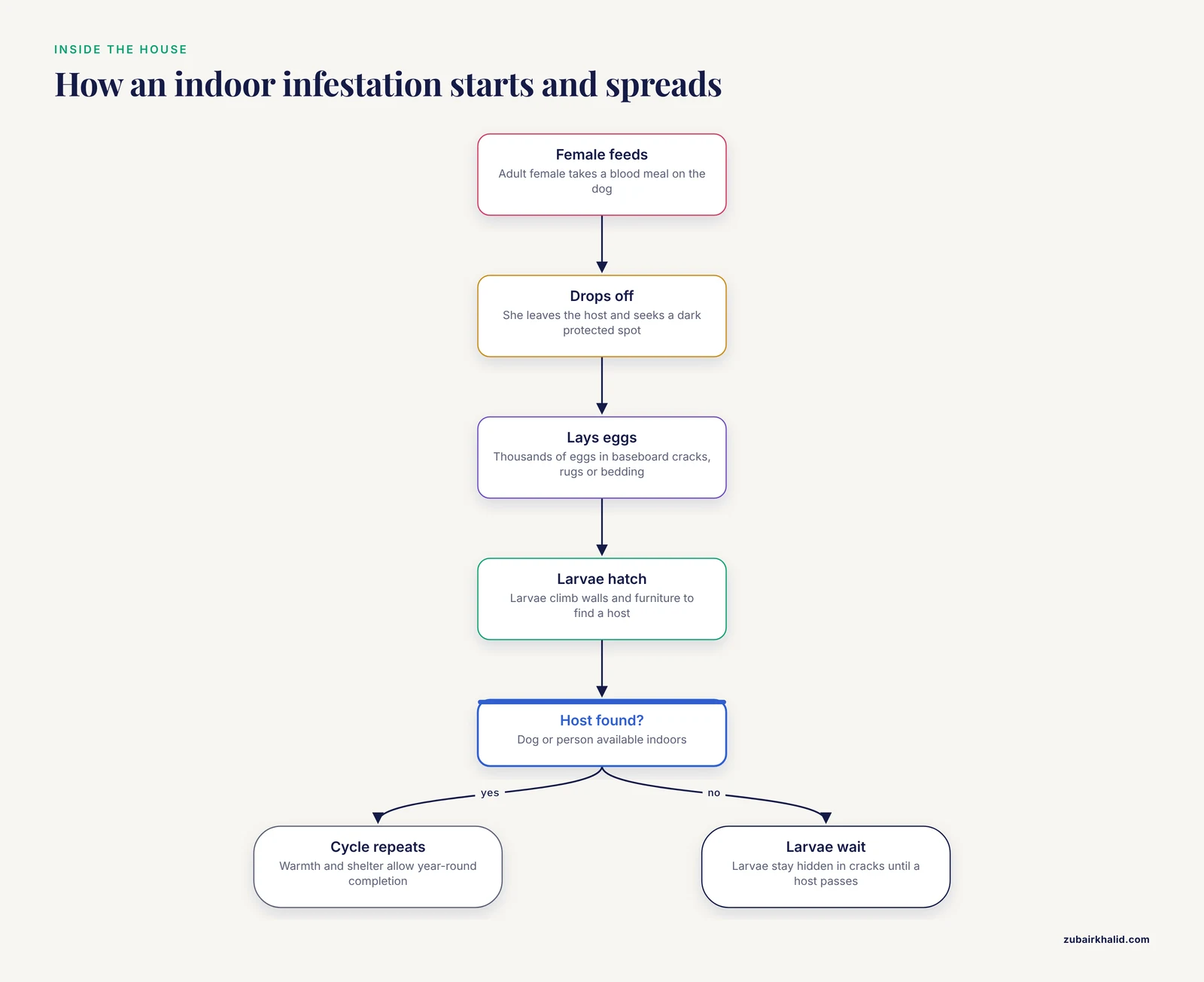
After an adult female feeds on a dog, she drops off and crawls to a dark, protected spot to lay eggs. In a home, that spot is often a crack in the baseboard, the edge of a rug, a dog crate, or bedding. The eggs hatch into larvae, which climb walls and furniture to find a host. Because the home provides warmth and shelter, the cycle can continue year-round, even in freezing outdoor temperatures.
Signs of an Indoor Infestation
- Ticks crawling on walls, curtains, or furniture, especially in rooms where the dog sleeps.
- Small reddish-brown ticks on bedding, floors, or baseboards.
- Ticks found on people who have not been outdoors.
- Recurring ticks on the dog despite treatment.
Risk Factors
- Dogs with free access to the home and yard.
- Stray dogs carrying ticks into the neighborhood [2], [18].
- Inconsistent tick control on pets [3].
- Warm indoor heating that allows ticks to survive winter.
Managing an Indoor Infestation
Indoor infestations require a two-front approach: treat the dog and treat the environment. The dog needs a prescription acaricide that kills ticks quickly [7]. The environment needs aggressive cleaning, including vacuuming all floors, furniture, and cracks, washing dog bedding in hot water, and disposing of the vacuum contents in a sealed bag. In severe cases, professional pest control may be necessary. Because ticks hide in tiny cracks and eggs can survive for weeks, expect to repeat the cleaning process several times.
Brown Dog Tick Treatment
Treating the Dog
The standard of care for brown dog tick control is a fast-acting prescription acaricide. A novel chewable containing lotilaner, moxidectin, pyrantel, and praziquantel (Credelio Quattro) was evaluated in multiple masked studies against R. sanguineus infestations on dogs [7]. In those studies, dogs were infested with 50 adult ticks on a fixed schedule, and ticks were assessed 48 hours after treatment and after each subsequent infestation [7]. The product demonstrated efficacy in killing ticks after treatment and after repeated challenges [7].
For owners, the practical message is that prescription oral and topical products are the most reliable tools. Over-the-counter products are often less effective and can contribute to resistance.
Acaricide Resistance
The brown dog tick has a well-documented history of developing resistance to acaricides. A worldwide review of 50 studies published from 2001 to 2025 documented resistance to synthetic pyrethroids (permethrin, deltamethrin, cypermethrin, and etofenprox) across America, Europe, Africa, and Asia [1]. Resistance to organophosphates was reported in Brazil and Panama, and to chlorpyriphos-methyl in Turkey [1]. Macrocyclic lactone resistance (ivermectin) was reported in Argentina, Brazil, Mexico, Italy, India, and Thailand [1]. Fipronil resistance was reported in seven countries, amitraz resistance in five, and propoxur resistance in one [1].
A field study in Iran confirmed permethrin resistance in brown dog ticks, with survival rates of 48.3% to 60.1% at the discriminating dose [8]. Genetic analysis found mutations C2130T and T2134C in the voltage-sensitive sodium channel gene in 38 of 40 ticks (95%) [8]. These mutations are the molecular mechanism behind pyrethroid resistance.
What this means for owners: if a tick product stops working, resistance is a real possibility. Your veterinarian may need to switch to a different drug class. Do not increase the dose of an over-the-counter product on your own, and do not use a product on a dog that has shown resistance to that class.
Alternative and Natural Control Options
Because of resistance, researchers are studying plant-based acaricides.
Essential oils. A study evaluated essential oils from Ocimum gratissimum (clove basil), Monarda citriodora (lemon bergamot), and Cymbopogon nardus (citronella) against brown dog tick larvae [19]. The individual oil with the best activity was O. gratissimum oil, with an LC50 of 0.19% [19]. A binary mixture of O. gratissimum and M. citriodora was more effective, with an LC50 of 0.12% [19]. A ternary blend of all three oils produced the strongest synergistic effect, with dose reduction values of 10.66, 7.85, and 7.21 for the three oils [19]. In plain terms, the combination killed larvae at much lower concentrations than any single oil [19].
Pomegranate peel extract. Another study tested Punica granatum peel ethanolic extract against adult brown dog ticks [20]. In the laboratory, immersion in 35 mg/mL extract killed 50% of adult ticks within 6 hours [20]. In live dogs, spraying infested dogs with the extract significantly reduced tick counts compared with untreated controls, with the maximum reduction on day 7 (4.67 ticks in treated dogs versus 81.7 in controls) [20]. The extract also improved antioxidant markers in the treated dogs [20].
Important caveat. These plant-based products are experimental. They are not licensed veterinary medicines, and their safety and efficacy in real-world conditions are not established. Some essential oils are toxic to dogs and cats. Never apply essential oils or plant extracts to your dog without veterinary supervision.
Treating Tick-Borne Disease
If a dog develops ehrlichiosis, doxycycline is the standard first-line treatment [4]. The duration and the need for additional drugs depend on the severity of the disease and the presence of complications such as eye inflammation or immune-mediated blood cell destruction [4]. Dogs with co-infections may need additional testing and supportive care [3].
Prevention and Prognosis
Prevention on the Dog
- Use a prescription tick preventive year-round, even in winter, because brown dog ticks can live indoors [2].
- Check your dog for ticks after walks, especially between the toes, in the ears, around the neck, and under the tail.
- Dogs not on tick control are significantly more likely to have multiple tick-borne infections [3].
Prevention in the Environment
- Keep grass short and remove leaf litter and brush where ticks and stray animals may shelter.
- Treat the home if ticks are found indoors, focusing on baseboards, cracks, dog bedding, and areas where the dog sleeps [2].
- Wash dog bedding in hot water weekly during an infestation.
- Support community efforts to manage stray dog populations, since stray dogs are a major source of brown dog ticks [2], [18].
Prognosis
The prognosis depends on the disease and how early treatment begins. Canine ehrlichiosis responds well to doxycycline when diagnosed early, as shown by the Irish case where clinical signs and blood abnormalities resolved after treatment [4]. Co-infected dogs, especially those with three or more pathogens, tend to be sicker and need more intensive care [3]. The most dangerous scenario is a heavy indoor infestation combined with a susceptible dog or person, because it increases the chance of pathogen transmission [2].
Limitations and When to Contact a Veterinarian
This article is educational and is not a substitute for veterinary diagnosis or treatment. Individual cases vary, and only a veterinarian who examines your dog can make a diagnosis and prescribe treatment.
Contact a veterinarian immediately if:
- Your dog has a known tick bite and develops fever, lethargy, nosebleeds, bruising, pale gums, or loss of appetite within 2 to 4 weeks [3], [4].
- Your dog has a heavy tick infestation or you find ticks in your home [2].
- You see ticks on yourself or family members, especially if anyone develops fever, headache, or a rash after tick exposure [2], [5].
- Your dog is on a tick preventive but ticks are still attaching, which may indicate resistance or product failure [8], [1].
- Your dog shows eye problems such as cloudiness, redness, or vision changes, which can occur with ehrlichiosis [4].
If you find a tick on your dog, remove it promptly with fine-tipped tweezers, grasping as close to the skin as possible and pulling straight out without twisting. Save the tick in a sealed bag or jar with a small piece of damp paper towel. Your veterinarian can identify it and may recommend testing for tick-borne disease.
Related Guides
- Dog Limping From Lyme Disease or a Tick Bite: Useful if a dog is limping after a tick bite or Lyme exposure
- Types of Ticks in the United States: Identification Chart and Diseases: Context for identifying brown dog tick among other US ticks
- Wood Tick: Identification, Diseases and Safe Removal: Another common tick species with identification and safe removal guidance
- Bug Bites Identification Guide: Ticks, Spiders, Fleas, Bed Bugs and Stings: Helps distinguish tick bites from spider, flea, and bed bug bites
- Bullseye Rash: Tick Bite and Lyme Disease Signs: Explains the bullseye rash and other Lyme disease signs
- Tick-Borne Diseases in Dogs: Lyme Disease, Ehrlichiosis, Anaplasmosis, and Babesiosis: Covers major tick-borne diseases in dogs with clinical details
- Tick-Borne Diseases in Dogs: Curability, Common Pathogens, and Diagnostic Testing: Addresses curability, common pathogens, and diagnostic testing for dog tick diseases
- Dog Skin Rash from Insect Bites: Identification and Care: Helps identify and care for dog skin rashes from insect bites
Frequently Asked Questions
What does a brown dog tick look like?
A brown dog tick is reddish-brown with a flattened, oval body and no white markings. Adults are about the size of a sesame seed, and engorged females become larger and grayish after feeding.
How big is a brown dog tick?
Adult brown dog ticks are small-bodied ticks, roughly sesame-seed sized before feeding. Engorged females can expand to several times that size and are much easier to see.
Can brown dog ticks infest a house?
Yes. The brown dog tick is one of the few tick species that can complete its entire life cycle indoors, and ticks have been collected from bedroom environments in homes with infested dogs [2].
What diseases do brown dog ticks carry?
Brown dog ticks transmit Ehrlichia canis, Babesia vogeli, Hepatozoon canis, Anaplasma platys, spotted fever group rickettsiae, and severe fever with thrombocytopenia syndrome virus [2], [3], [5].
How is a brown dog tick bite treated?
The bite itself usually needs no treatment beyond gentle cleaning. The concern is disease transmission. Your veterinarian may recommend blood testing after a bite and may prescribe doxycycline if ehrlichiosis is confirmed or strongly suspected [4].
What is the difference between a brown dog tick and a deer tick?
The brown dog tick is reddish-brown, prefers dogs, and can live indoors. The deer tick, also called the black-legged tick, is the main vector of Lyme disease and rarely infests homes. The brown dog tick is not a primary vector of Lyme disease.
Can brown dog ticks make humans sick?
Yes. Brown dog ticks have been linked to Rocky Mountain spotted fever, Mediterranean spotted fever, Q fever, and severe fever with thrombocytopenia syndrome in humans [2], [10], [5].
How do I get rid of brown dog ticks on my dog and in my home?
Use a prescription acaricide from your veterinarian to kill ticks on your dog, and treat the home by vacuuming, washing bedding in hot water, and focusing on baseboards and cracks. Severe indoor infestations may require professional pest control, [7].
Sources
- A review of acaricide resistance of the Rhipicephalus sanguineus group worldwide.
- Fatal severe fever with thrombocytopenia syndrome associated with multiorgan failure and unusual cutaneous manifestations: evidence of Rhipicephalus sanguineus (Brown Dog Tick) transmission.
- Epidemiological and clinicopathological factors associated with infection by multiple pathogens transmitted by Rhipicephalus sanguineus sensu lato in naturally infected dogs in the Semiarid area of Northeastern Brazil.
- Endemic Ehrlichia canis infection in a dog from Ireland: case report.
- Molecular identification of Rickettsia conorii subsp. israelensis and other tick-borne pathogens in dog ticks from the Upper East region of Ghana.
- Canine ehrlichiosis in Northern Australia: A sensitivity and elasticity analysis of R(0).
- Efficacy of Credelio Quattro™ chewable tablets containing lotilaner, moxidectin, pyrantel, and praziquantel against Ctenocephalides felis and Rhipicephalus sanguineus infestations on dogs.
- Permethrin Resistancein Field Populations of Rhipicephalus sanguineus sensu lato (Latrielle, 1806) Collected From Dogs in Eastern Iran.
- Environmental and host-associated determinants of microbiome variation in the brown dog tick Rhipicephalus linnaei in Thailand.
- Geographic Variation in the Bacterial Microbiota of Rhipicephalus sanguineus (Acari, Ixodidae) Across Environmentally Contrasting Regions of Mexico.
- Historical climate change reshapes the thermal niche of Rhipicephalus sanguineus s.l. (Acari: Ixodidae) under uncertainty.
- Detection of Ehrlichia canis in Rhipicephalus sanguineus and Dermacentor marginatus from sylvatic environments in Southern Italy.
- Molecular-based detection of Ehrlichia spp. in stray dogs-infesting Rhipicephalus ticks in high-altitude of northern Pakistan.
- Molecular characterisation of emerging tacheng tick virus 2 in ticks collected from livestock and dogs in Türkiye.
- Survey of tick species and tick-borne pathogens in pet dogs and cats in mainland China.
- Tick-borne pathogens in dogs and their ticks in France: Molecular and serological evidence from a multicenter participatory study.
- Molecular detection of Fonsecaea pedrosoi in Rhipicephalus sanguineus and Rhipicephalus microplus ticks from Venezuela.
- 16S rRNA profiling of bacterial communities in the brown dog tick Rhipicephalus linnaei from stray dogs in Perak, Malaysia.
- Analysis of synergism exhibited by essential oil combinations in controlling the brown dog tick Rhipicephalus sanguineus (Acari: Ixodidae).
- Punica granatum peel ethanolic extract exhibits acaricidal activity against Rhipicephalus sanguineus: in vitro and in vivo study.