Can Chickens Eat Tomatoes? Leaves, Fruit, and Risks
By Dr. Zubair Khalid, DVM, MS, PhD ·
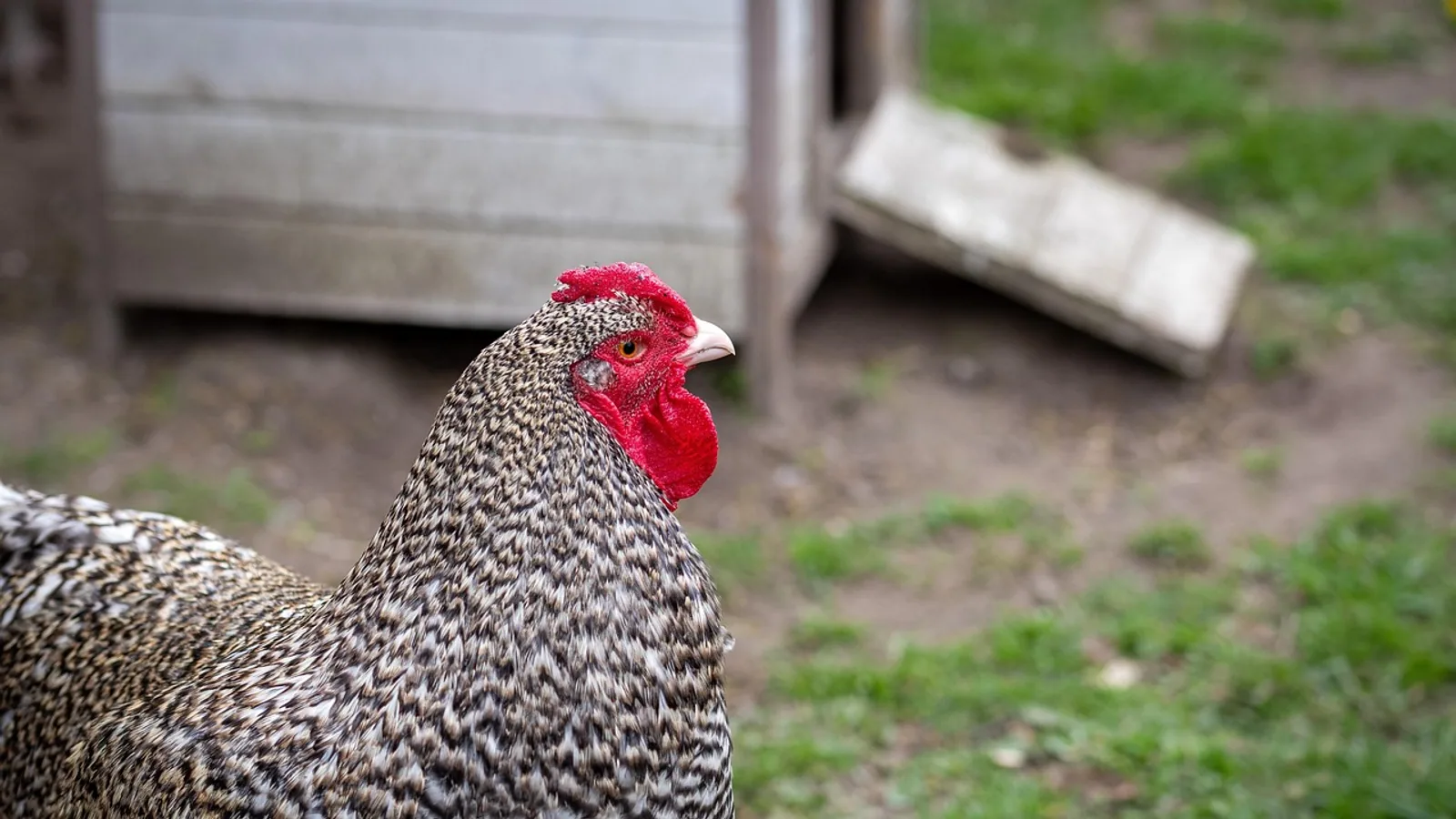
Yes. Chickens can eat ripe tomato fruit. A few small pieces of a red, fully ripe tomato are a safe treat for most backyard birds. The answer changes completely for the rest of the plant. Tomato leaves, stems, and unripe green fruit contain solanine and tomatine, two glycoalkaloids that can make a chicken sick when eaten in quantity. The practical rule is simple: fruit only, ripe only, small amounts only, and never the foliage or the green parts.
This guide explains which parts of the tomato plant are safe, how solanine and tomatine work in the chicken body, how much tomato a bird can have as a treat, and what to do if your flock gets into a tomato patch. It also covers how tomatoes fit, or do not fit, into a balanced layer diet.
This article is educational and is not a substitute for veterinary diagnosis or treatment.
At a Glance: Tomato Safety for Chickens
| Plant part | Safe for chickens? | Reason |
|---|---|---|
| Ripe red tomato fruit (flesh) | Yes, in moderation | Low glycoalkaloid content once fully ripe, edible and palatable |
| Ripe tomato seeds | Yes, in small amounts | Seeds inside ripe fruit are not a toxicity concern |
| Tomato skin | Yes, in small amounts | Same as flesh, but tough skins can slow digestion in large amounts |
| Unripe green tomato fruit | No | Contains solanine and tomatine at much higher levels than ripe fruit |
| Tomato leaves | No | High glycoalkaloid content, not a chicken feed |
| Tomato stems and vines | No | Same glycoalkaloid concern as leaves |
| Tomato roots | No | Not a feed, no nutritional role in a chicken diet |
| Cooked tomato (no salt, no oil, no onion or garlic) | Yes, in moderation | Cooking does not remove the need to use ripe fruit only |
| Tomato products with added salt, sugar, or spices | No | Additives are not appropriate for chickens |
| Tomato plants in the yard | Restrict access | Birds will peck leaves and green fruit if they can reach them |
If you remember nothing else from this table, remember this: red fruit yes, green plant no.
Why Ripe Tomato Fruit Is Safe

.jpg)
A ripe tomato is mostly water, with small amounts of carbohydrate, fiber, and a modest vitamin load. For a chicken, that makes it a low-calorie, high-moisture treat. It is not a significant source of protein, energy, calcium, or the amino acids a laying hen needs to build eggs and maintain body condition.
The reason ripe fruit is safe comes down to plant chemistry. The glycoalkaloids that make the rest of the tomato plant a problem are present at much lower concentrations in the fully ripe fruit. As a tomato ripens, the plant converts and dilutes these compounds. The red pigment and soft texture that tell you a tomato is ready to eat are the same signals that tell you the glycoalkaloid load has dropped to a level a chicken can handle in small amounts.
Chickens are omnivores and opportunistic foragers. A backyard flock will eat a wide range of plant and animal material if given access. A feeding trial in pasture-raised laying hens used 22 known food items, including insects and plants, to test how well dietary DNA could be recovered from excreta [1]. The study confirmed that chickens readily consume diverse plant material and that plant DNA can be detected in their droppings within about 44 minutes of feeding [1]. That finding is useful context. It tells you that if your birds get into the tomato patch, the plant material will move through the gut quickly, and the exposure is real, not theoretical.
The same study also showed that detection of specific food items in chicken excreta is variable, with recovery rates depending on the extraction method and the plant marker used [1]. In practical terms, you cannot rely on looking at droppings to tell whether a bird ate tomato leaves. You have to manage access.
Understanding Solanine and Tomatine
Solanine and tomatine belong to a family of plant compounds called glycoalkaloids. These are nitrogen-containing molecules that plants produce as a chemical defense. They taste bitter, and they can disrupt cell membranes in the gut and, at higher doses, affect the nervous system.
Tomatine is the main glycoalkaloid in tomato plants. Solanine is the better-known glycoalkaloid in the nightshade family, which includes tomatoes, potatoes, and eggplant. Both compounds are present in tomato leaves, stems, and unripe fruit. The concentration is highest in the green parts of the plant and drops as the fruit ripens.
How Glycoalkaloids Affect a Chicken
When a chicken eats a large amount of plant material containing solanine or tomatine, the compounds can irritate the gastrointestinal lining. The first signs are usually digestive: reduced appetite, crop discomfort, loose droppings, and lethargy. If the dose is high enough, neurologic signs can follow, including weakness, incoordination, and tremors.
Toxicity is dose-dependent. This is the single most important concept in this article. A chicken that takes one exploratory peck at a tomato leaf is not in the same situation as a chicken that eats a pile of green tomatoes. The dose, the bird's body weight, and the amount of plant material consumed all determine whether you see a problem.
A small accidental peck is usually not an emergency. A large ingestion is a different matter and warrants a call to a veterinarian.
Why the Dose Matters More Than the Plant
Backyard chickens vary enormously in body weight. A bantam hen may weigh under 2 pounds, while a large dual-purpose hen can weigh 6 to 8 pounds or more. The same amount of green tomato material represents a very different dose in a small bantam compared with a large Orpington. Smaller birds reach a toxic threshold faster.
Age matters too. Growing chicks and juvenile birds have less body mass and less reserve. A study of an improved backyard chicken variety during its juvenile phase (0 to 8 weeks) showed that young birds have specific energy and protein requirements and that body weight gain responds to dietary energy and protein levels [2]. That work is about balanced nutrition, not toxins, but it reinforces the point that young birds are in a building phase and should not be challenged with questionable plant material.
The Treat Rule: How Much Tomato Is Reasonable
Treats should stay under roughly 10 percent of a chicken's daily intake. For a typical backyard hen eating a complete layer ration, that leaves a small daily allowance for extras. A few small pieces of ripe tomato per bird fit inside that allowance. A whole tomato per bird does not.
Here is how to apply the rule in practice.
- Use ripe fruit only. The tomato should be fully red or fully colored for its variety, soft to gentle pressure, and free of green shoulders.
- Cut the fruit into pieces no larger than a thumbnail for a standard-size hen. Smaller pieces for bantams.
- Offer two to four small pieces per bird, no more than a few times per week.
- Put the tomato in a clean dish or scatter it on clean ground. Do not leave it to rot in the coop.
- Remove uneaten tomato within a few hours. Wet, sugary plant material attracts flies and spoils quickly.
- Count the tomato against the treat allowance. If you also feed scratch grains, mealworms, or kitchen scraps, the total extras should still stay under the 10 percent ceiling.
The 10 percent figure is a general feeding principle for backyard poultry, not a tomato-specific threshold. It exists to protect the nutritional balance of the diet. When treats crowd out complete feed, egg production, shell quality, and body condition can suffer.
Why Tomatoes Are Not a Substitute for Layer Feed
A laying hen has demanding nutritional needs. She must maintain her own body, produce eggs, and support immune function. Complete layer feed is formulated to deliver the energy, protein, calcium, phosphorus, and micronutrients she needs in the right proportions.
Tomatoes deliver water, some carbohydrate, and a small amount of vitamins. They do not deliver meaningful protein, calcium, or the amino acid profile a hen needs. Feeding tomatoes as a replacement for layer feed will dilute the diet and can lead to deficiencies over time.
Research on alternative feed ingredients in chicken diets shows the same principle repeatedly. When cassava and sweet potato meals were evaluated as partial substitutes in chicken rations, the useful findings came from controlled substitution levels, not from replacing the base diet wholesale [3]. The review noted that sweet potato meal can be incorporated into layer rations at defined inclusion levels without harming production [3]. The lesson for tomato feeding is that any extra food, including a treat, has to fit inside a balanced ration rather than displace it.
Studies of feed additives in backyard chicken varieties point in the same direction. A trial on black cumin and garlic as natural feed additives in Kaveri chickens examined growth performance across seasons and found that the basal diet remained the foundation, with additives layered on top [4]. Treats work the same way. They are an addition, not a foundation.
Step-by-Step: How to Feed Tomatoes Safely
Step 1: Confirm the Fruit Is Fully Ripe
Color is your best guide. A tomato that is still green, or green at the stem end, is not ready. Do not use the fruit just because it fell off the vine. A tomato that dropped early may still be unripe.
Step 2: Wash the Fruit
Rinse the tomato under running water. Garden tomatoes can carry soil, and soil can carry bacteria and parasite eggs. Washing reduces that load. Do not use soap or produce washes. Plain water is enough.
Step 3: Remove the Calyx and Stem
The green stem and the leafy calyx at the top of the fruit are plant material with glycoalkaloid content. Cut them off and discard them. Feed only the fruit.
Step 4: Cut Into Small Pieces
Small pieces reduce the risk of a bird gulping a large chunk and reduce competition in the flock. A hen that grabs a big piece can run off with it, and a smaller bird may get nothing. Uniform small pieces let you control how much each bird gets.
Step 5: Offer in a Clean Dish
Use a shallow dish or a clean spot on the ground away from droppings. Do not put food in the nesting boxes or under the roost.
Step 6: Watch the Flock
Stay with the birds for a few minutes. Watch for a bird that eats aggressively and pushes others away, and watch for a bird that seems uninterested. Changes in appetite can be an early sign of a problem.
Step 7: Remove Leftovers
Clear uneaten tomato within a few hours. Spoiled fruit can grow mold and attract pests.
Step 8: Keep a Simple Log
If you are introducing tomato for the first time, note the date and the amount. If a bird develops loose droppings or seems off, you will have a timeline to share with your veterinarian.
Equipment and Supplies for Safe Treat Feeding
You do not need special equipment to feed tomatoes. A few basic items make the job cleaner and safer.
- A sharp kitchen knife and a cutting board reserved for produce
- A shallow ceramic or plastic dish that is easy to scrub
- A colander for rinsing fruit
- A covered compost bin for leaves, stems, and unripe fruit, so birds cannot get into the discard pile
- A pair of garden gloves for handling tomato vines if you are pruning
Selection criteria are simple. Choose dishware that does not crack, because cracked plastic harbors bacteria. Choose a compost bin with a secure lid, because a determined hen will scratch through an open pile. If you garden and keep chickens, the compost bin is the single most important piece of equipment in this list. Most accidental tomato plant exposure happens at the compost pile, not in the coop.
Common Mistakes Owners Make
Mistake 1: Feeding the Whole Plant
The most common error is tossing an entire spent tomato plant into the run at the end of the season. The birds will strip the leaves and peck at any remaining green fruit. This is exactly the exposure you want to avoid. Pull plants, bag them, and compost them where the flock cannot reach them.
Mistake 2: Assuming Green Tomatoes Are Just Unripe Fruit
Green tomatoes are not a milder version of red tomatoes. They are a different risk category. The glycoalkaloid concentration is much higher in unripe fruit than in ripe fruit. Do not feed them.
Mistake 3: Using Tomato as a Hydration Strategy
Some owners offer tomatoes in hot weather to boost water intake. The intent is reasonable, but the method is unreliable. A chicken that is heat-stressed needs cool, clean water available at all times. Tomato is a treat, not a hydration plan.
Mistake 4: Feeding Tomato Products Meant for People
Canned tomatoes, tomato sauce, ketchup, and salsa contain salt, sugar, and sometimes onion and garlic. None of these belong in a chicken's diet. Onion and garlic in particular are not appropriate for birds. Feed fresh ripe fruit only.
Mistake 5: Letting the Flock Free-Range in the Vegetable Garden
If your chickens have access to a garden where tomatoes are growing, they will peck at leaves and green fruit. Fence the garden or fence the birds. A short section of poultry netting around the tomato bed solves the problem.
Mistake 6: Ignoring the Individual Bird
Flock-level advice does not always fit the individual bird. A hen recovering from illness, a bird with a history of digestive problems, or a very small bantam may need a stricter approach. When in doubt, skip the treat and ask your veterinarian.
Troubleshooting: What to Do After Exposure
My Chicken Ate One Tomato Leaf
One leaf is a small exposure. Remove the bird from the source, make sure fresh water is available, and observe. Watch for changes in appetite, droppings, and activity over the next 24 hours. Most small pecks do not produce signs.
My Chicken Ate Several Green Tomatoes
This is a larger exposure. Remove access to the plant material immediately. Offer fresh water. Observe closely for vomiting, diarrhea, weakness, or incoordination. Contact a veterinarian for guidance, especially if the bird is small, young, or already in poor condition.
My Whole Flock Got Into the Tomato Patch
Assess how much plant material was actually consumed. A flock that walked through a garden and nibbled is different from a flock that stripped a pile of green fruit. Check the area for evidence: torn leaves, bitten fruit, and disturbed soil. Then observe the flock as a group and individually. If several birds show digestive or neurologic signs, seek veterinary care.
I Am Not Sure Whether the Fruit Was Ripe
Treat uncertain fruit as unripe. Withhold it. The cost of skipping a treat is zero. The cost of a toxic exposure is not.
A Bird Seems Lethargic After Eating Tomato
Lethargy has many causes, and tomato is only one possibility. A sudden drop in activity, a change in droppings, or a bird that separates from the flock warrants a veterinary examination. Do not wait to see if it resolves on its own.
Welfare and Safety Points for Backyard Flocks
Backyard chicken keeping has grown quickly, and surveys of keepers show wide variation in management practices. A UK survey of backyard chicken keepers found that most flocks were small, kept as pets, and that 29 percent of keepers fed kitchen scraps [5]. That number is a useful reminder. Kitchen scraps are common, and tomatoes often end up in the scrap bucket. If you feed scraps, sort them first. Remove tomato leaves, stems, and any green fruit before the bucket goes to the run.
The same survey found that most keepers provided enrichment and that a majority used veterinary services, though a small percentage struggled to find a veterinarian willing to treat backyard poultry [5]. That last point matters for planning. If you keep chickens, identify a poultry-friendly veterinarian before you need one. A toxic exposure is a poor time to start searching.
A separate study of non-commercial chicken care found variable care-taking practices and a higher prevalence of health conditions than expected from earlier literature, with egg yolk peritonitis emerging as a leading health problem [6]. The takeaway is not that tomatoes cause these conditions. The takeaway is that backyard flocks have real health problems, and nutrition is one of the variables owners control. Feeding a balanced ration and keeping treats within limits is a low-effort way to reduce risk.
Welfare also includes access to clean water, shade, and space. A bird that is crowded, hot, or stressed will handle any dietary challenge less well than a bird in good condition.
How Tomatoes Fit Into a Balanced Layer Diet
A complete layer ration should make up the large majority of what a hen eats each day. Treats, including ripe tomato, fill the remaining small allowance. Think of the diet as a hierarchy.
- Complete layer feed, available free-choice, forms the base.
- Clean, fresh water is available at all times.
- Appropriate grit and calcium sources are available as needed for the flock.
- Treats, including ripe tomato, stay under roughly 10 percent of daily intake.
Research on alternative feed ingredients reinforces the value of controlled inclusion. A study on distillers dried grains with solubles in indigenous chicken diets found that inclusion up to 20 percent maintained growth performance while improving economic efficiency [7]. That study is about a protein and energy byproduct, not a treat, but the design principle is the same: define the inclusion level, then measure the outcome. For tomatoes, the inclusion level is small and the outcome you are measuring is simple. The bird stays healthy and the ration stays balanced.
Studies of feed additives in broiler and backyard chicken diets consistently treat the basal diet as the control against which additives are measured [4][8][9][10]. That structure reflects how poultry nutrition works. The base ration does the heavy lifting. Extras are evaluated against it.
Protein and Energy Context
Chickens need adequate energy and protein to grow, maintain body condition, and lay. A study of dietary energy and protein requirements in a backyard chicken variety during the juvenile phase found that body weight gain increased with higher protein levels and that feed conversion improved with higher energy levels [2]. Those findings apply to formulated diets, not to treats. The practical message is that young birds have real nutrient demands, and filling them with low-nutrient treats like tomato works against the goal.
Additives and Gut Health
Research on probiotics, plant additives, and antioxidant supplements in chicken diets shows ongoing interest in supporting gut health and performance through the diet [4][8][9][10]. None of these studies suggest that a random garden vegetable can replace a formulated ration. They support the opposite view. Precision in the diet produces measurable results.
A study on Bacillus subtilis probiotics in broilers found upregulation of antioxidant-related genes and downregulation of pro-inflammatory cytokines in supplemented groups [9]. A separate study on Lactiplantibacillus plantarum examined growth performance, antioxidant capacity, immune function, and cecal microbiota in broilers [10]. These are formulated additives studied under controlled conditions. They are not a template for feeding table scraps.
When the Diet Goes Wrong
Nutritional problems in backyard flocks can be subtle. A hen that gets too many treats may lay fewer eggs, produce thinner shells, or lose condition slowly. A study of gastrointestinal impaction and necrotic enteritis in a backyard chicken described a bird with a proventriculus, gizzard, and duodenum distended and impacted with fibrous plant material, cereal grain, and litter material [11]. That case involved impaction and a secondary bacterial infection, not tomato toxicity, but it illustrates how dietary material can cause serious gastrointestinal disease in backyard birds. The lesson is that what a chicken eats matters, and large amounts of fibrous or inappropriate material can cause real harm.
When a Veterinarian Is Needed
Contact a veterinarian if any of the following occur after a suspected tomato plant exposure.
- The bird ate a large amount of leaves, stems, or green fruit
- The bird is small, young, or already unwell
- You see vomiting, diarrhea, or a sudden change in droppings
- You see weakness, incoordination, tremors, or difficulty standing
- The bird stops eating or drinking
- The bird separates from the flock and sits with ruffled feathers
- Multiple birds in the flock show signs at the same time
- Signs persist for more than 24 hours
Bring information with you. Note the plant part involved, the approximate amount, the time of exposure, the number of birds affected, and the signs you have observed. That history helps your veterinarian assess the situation.
If you do not have a poultry veterinarian, contact your state veterinary diagnostic laboratory or a veterinary teaching hospital for guidance on finding one. Establish that relationship before an emergency.
Limitations and When to Contact a Veterinarian
This article covers general principles of tomato safety for backyard chickens. It cannot account for the specific health status, body weight, age, or medical history of your birds. Individual cases need a veterinarian.
Use the escalation criteria above as a guide, not as a substitute for professional judgment. If you are uncertain about an exposure, call. A phone consultation is faster and safer than waiting for signs to develop. If your bird has an underlying condition, is on any treatment, or has a history of digestive problems, ask your veterinarian before offering any new treat, including ripe tomato.
Frequently Asked Questions
Can chickens eat tomatoes?
Yes, chickens can eat ripe tomato fruit in small amounts. Feed only fully ripe fruit, cut into small pieces, and keep the total under roughly 10 percent of daily intake.
Can chickens have tomatoes every day?
A few small pieces a few times per week is a reasonable pattern. Daily feeding is possible if the amount stays small and the complete layer ration remains the base of the diet.
Are tomato leaves safe for chickens?
No. Tomato leaves contain solanine and tomatine and should be withheld. Keep leaves, stems, and vines out of the run and out of the compost pile the flock can reach.
What about green tomatoes?
Green, unripe tomatoes contain much higher levels of glycoalkaloids than ripe fruit. Do not feed them. Treat any tomato that is not fully ripe as unsafe.
How much tomato can I give a chicken?
Two to four small pieces per bird, a few times per week, fits within the treat allowance for a standard-size hen. Use smaller pieces for bantams and skip the treat for birds that are unwell.
What happens if my chicken eats a tomato leaf?
A single small peck is usually not an emergency. Remove access to the plant, provide fresh water, and observe for 24 hours. Call a veterinarian if you see digestive or neurologic signs.
Can tomatoes replace layer feed?
No. Tomatoes do not provide the protein, energy, calcium, or amino acid profile a laying hen needs. Complete layer feed should remain the foundation of the diet.
Are cooked tomatoes safe for chickens?
Cooked ripe tomato is safe in small amounts if nothing else is added. Skip any preparation with salt, sugar, oil, onion, or garlic.
Related Articles
- Can Dogs Eat Tomatoes
- Can Dogs Eat Strawberry Tomatoes
- Can Dogs Eat Strawberries Fruit
- Can Dogs Eat Strawberries And Strawberry Leaves
- Can Dogs Eat Tomatoes? Solanine Toxicity & Ripe vs Green
- Can Dogs Eat Strawberry Leaves And Stems
- Can Dogs Eat Fish? Safe Types, Benefits, and Risks
- Can Chickens Eat Carrots? Safe Feeding Guide
Sources
- DNA metabarcoding diet analysis in a generalist omnivore: feeding trials reveal the efficacy of extraction kits and a multi-locus approach for identifying diverse diets.
- Evaluation of Dietary Energy and Protein Requirements of an Improved Backyard Chicken Variety (Rajasri) in its Juvenile Phase
- Review on Feed Resources with More Emphasis on Use of Cassava and Sweet Potato Meal in Chicken Diet: Ethiopia
- Effect of black cumin (nigella sativa) and garlic (allium sativum) as natural feed additive on growth performance of kaveri chicken
- Survey of the husbandry and biosecurity practices of backyard chicken keepers in the UK.
- From the Backyard to Our Beds: The Spectrum of Care, Attitudes, Relationship Types, and Welfare in Non-Commercial Chicken Care
- Economics of Growth Production of Indigenous Chicken Fed Distillers Dried Grains with Solubles (DDGS) with or without Supplementation of Exogenous Enzyme
- Effects of Complex Antioxidants Added to Chicken Diet on Growth Performance, Serum Biochemical Indices, Meat Quality, and Antioxidant Capacity
- Impact of Bacillus subtilis (QST713 or Pb6 strains) as probiotics on performance, immune response and gut integrity in broiler chicken
- Effects of Probiotic Lactiplantibacillus plantarum HJLP-1 on Growth Performance, Selected Antioxidant Capacity, Immune Function Indices in the Serum, and Cecal Microbiota in Broiler Chicken
- Gastrointestinal Impaction and Necrotic Enteritis in a Backyard Chicken