Why Is My Horse Quivering? Muscle Tremors Explained
By Dr. Zubair Khalid, DVM, MS, PhD ·
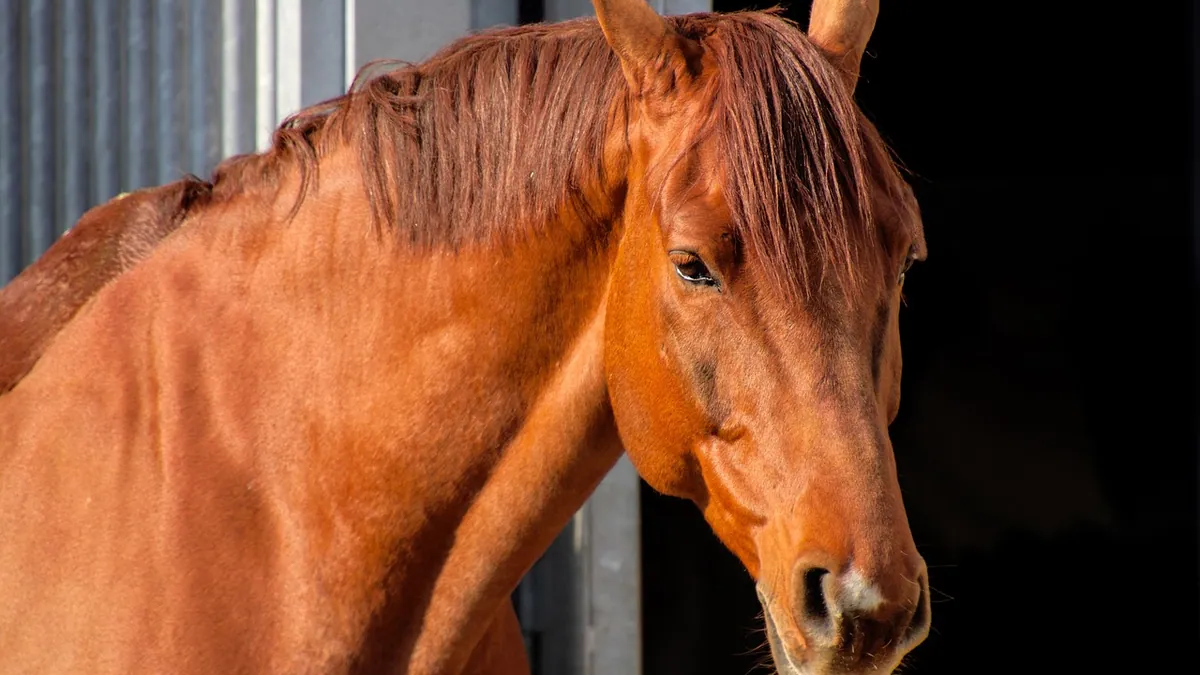
A quivering horse is usually reacting to something simple, like cold, flies, or a shiver of anticipation. But when the trembling is constant, affects the lips or face, or comes with stiffness, sweating, or weakness, it can point to muscle pain, electrolyte problems, or a neurological condition. This article explains why is my horse quivering and helps you judge how urgent it is.
This article is educational and is not a substitute for veterinary diagnosis or treatment.
Quick Answer
- A brief shiver in cold weather, during fly season, or right before work is common and usually stops once the trigger is gone.
- Muscle fasciculations (fine rippling under the skin) are a recognized sign of muscle disorders in horses, along with stiffness, pain, weakness, and exercise intolerance [1].
- Lip quivering alone is often a pain or stress signal, so check the mouth, teeth, and jaw and watch for other signs.
- Muscle tremors that come with sweating, a stiff gait, dark urine, or an inability to stand are emergencies. Call your veterinarian now.
- Do not give any medication or supplement for tremors on your own. Your veterinarian calculates any dose from your horse's weight and health.
What Quivering Looks Like and What Is Normal
Quivering can look very different from one horse to the next. Some horses have a fine ripple under the skin over the shoulder or flank. Others have a visible shake of the whole body, a nodding head, or a lip that twitches and curls. The pattern matters as much as the quiver itself.
Normal quivers are short and have an obvious trigger. A horse standing in a cold wind may shiver. A horse bothered by flies may twitch the skin along the back and flanks. A nervous horse may tremble slightly at the start of a ride or during a vet visit. Once the trigger is removed (a blanket, fly spray, a calm minute), the quivering stops.
Muscle fasciculations are different. These are fine, spontaneous muscle twitches that keep going without an outside trigger. They are listed among the common clinical signs of muscle disease in horses, together with muscle pain, stiffness, weakness, and reluctance to move [1]. If your horse is rippling, stiff, or unwilling to move, that is not a simple shiver.
A head tremor is another distinct sign. In one reported case, an 8.5-month-old Icelandic filly showed a sudden marked head tremor along with incoordination, ataxia, a lack of menace response, and a wide-based stance [2]. Head tremor with balance problems is a neurological pattern, not a chill.
Why Is My Horse Quivering? The Main Causes
The table below groups the common causes by what you are likely to see and how fast you need to act. Use it as a starting point, not a diagnosis.
| Cause | Typical clues | How urgent |
|---|---|---|
| Cold, flies, mild stress | Whole-body shiver or skin twitch, obvious trigger, stops when trigger is removed | Not urgent |
| Muscle pain or tying-up (exertional rhabdomyolysis) | Stiffness, reluctance to move, pain on palpation, sweating, quivering during or after exercise | Same day |
| Electrolyte or metabolic imbalance | Tremors after heavy sweating, hard work, or transport, often with fatigue | Same day |
| Hyperkalemic periodic paralysis (HyPP) | Episodes of muscle twitching, weakness, or collapse, most often in Quarter Horses and related breeds | Emergency if the horse cannot stand |
| Myotonia (delayed muscle relaxation) | Muscle dimpling or stiffness that lingers after contraction, worse with exercise in some forms | Routine to urgent, based on severity |
| Neurological disease (cerebellar or central) | Head tremor, incoordination, ataxia, wide-based stance, vision or menace deficits | Emergency or same day |
| Toxin exposure (for example, snake envenomation) | Muscle fasciculation, sweating, fast heart and breathing rates, swelling at a bite site | Emergency |
| Pain elsewhere (mouth, teeth, jaw, back, hoof) | Lip quivering, head shyness, flinching, chewing changes | Same day to routine |
Cold, Flies, and Stress
These are the harmless explanations, and they are the most common. A thin horse, a clipped horse, or a horse that just got wet in cold wind will shiver. Fly irritation produces skin twitching along the back, neck, and flanks. Stress or excitement can cause a fine tremble that fades as the horse settles.
The test is simple. Remove the trigger and watch. Blanket the cold horse, move the fly-bothered horse, or give a nervous horse a quiet minute. If the quivering stops, you have your answer. If it continues, keep reading.
Muscle Pain and Tying-Up
Muscle disorders in horses cause a range of signs, from stiffness and pain to atrophy, weakness, exercise intolerance, and muscle fasciculations [1]. The most common signs are muscle pain, stiffness, and reluctance to move due to rhabdomyolysis, which is disruption of striated skeletal muscle [1]. Rhabdomyolysis is grouped into causes linked to exercise (exertional rhabdomyolysis) and causes unrelated to exercise [1].
A horse in this state often quivers over the hindquarters, sweats, refuses to move forward, and has hard, painful muscles. Some specific muscle conditions are breed-linked. Glycogen branching enzyme deficiency occurs in Quarter Horse foals, malignant hyperthermia occurs in Quarter Horses, and myosin heavy chain myopathy occurs in Quarter Horse-related breeds [1].
Electrolyte and Metabolic Problems
Heavy sweating, long transport, and hard work can leave a horse low on electrolytes. The result can be muscle twitching, fatigue, and a shaky, weak appearance. This is a same-day call, because correcting electrolytes needs a veterinarian's assessment and, often, bloodwork.
Hyperkalemic Periodic Paralysis and Myotonia
Myotonic muscle disorders share one feature, delayed relaxation of muscle after mechanical stimulation or voluntary contraction, caused by abnormal muscle membrane conduction [3]. Horses have three known forms: myotonia congenita, myotonia dystrophica, and hyperkalemic periodic paralysis (HyPP) [3].
Foals with myotonia dystrophica show progressive signs over the first 1 to 2 years of life, including areas of muscle atrophy and fibrosis, stiffness that worsens with exercise, and a mix of overly large muscle areas and wasted areas [3]. Retinal dysplasia, lenticular opacities, and gonadal hypoplasia have been noted in Quarter Horse, Appaloosa, and Italian-bred foals with myotonic dystrophy [3].
HyPP causes episodes of muscle twitching, weakness, or collapse. If your horse goes down and cannot get up, that is an emergency.
Neurological Disease
Tremors that come with incoordination point to the nervous system. Cerebellar abiotrophy is an uncommon hereditary neurodegenerative disorder that affects the cerebellar Purkinje cells, and equine cases have been reported in several breeds [2]. In the Icelandic filly described above, blood and cerebrospinal fluid tests were normal, which ruled out several other diagnoses and left imaging and, ultimately, post-mortem examination to confirm the cause [2].
Congenital brain malformations are another possibility in foals. A neonatal Dutch Warmblood colt was evaluated for inability to stand, incoordination, and intention tremor, and imaging found a cyst-like lesion compressing the cerebellum, an absent corpus callosum, and other malformations [4]. Improvement in signs over the first 6 months suggested horses can survive complex congenital malformations, but the prognosis for athletic performance is poor [4].
If your horse's quivering comes with a head tremor, a wide-based stance, or a loss of balance, treat it as neurological until proven otherwise. For a deeper look at how horses signal discomfort through the head and body, see Understanding Horse Body Language and Equine Headshaking Syndrome: Diagnostic Workup and Management.
Toxins and Other Causes
Snake envenomation is rare but serious. A 7-year-old Thoroughbred gelding presented with muscle fasciculation, reluctance to move, profuse sweating, a fast heart rate, rapid breathing, and a localized swelling on the muzzle, and urine testing confirmed tiger snake envenomation [5]. Treatment with antivenom and supportive care produced an excellent response [5]. If you see fasciculations plus sweating, a fast heart rate, and a swollen bite site, call your veterinarian immediately.
Pain anywhere can also cause quivering. A horse with a sore mouth, a fractured tooth, or jaw pain may quiver the lip and flinch when you touch the face. Back pain and hoof pain can produce a whole-body tremble too.
Red Flags That Make It an Emergency
Call your veterinarian right away if you see any of these:
- Your horse cannot stand or keeps collapsing.
- Muscle tremors come with heavy sweating, a fast heart rate, or rapid breathing.
- Your horse is stiff and refuses to move, or the muscles feel hard and hot.
- The urine is dark brown or cola-colored.
- There is a swollen area that could be a bite or sting.
- There is a head tremor with incoordination, ataxia, or a wide-based stance.
- Your horse seems blind or does not respond to a menace test.
- The quivering started suddenly and is getting worse by the minute.
Safe Things You Can Do at Home While You Wait
Stay calm and keep your horse calm. Stress makes tremors worse, and a panicked horse can injure itself or you.
Move your horse to a safe, quiet area with good footing. Do not force exercise. If the quivering came on during work, stop the session and hand-walk only if your horse is willing and steady.
Check the basics. Take your horse's temperature, pulse, and breathing rate if you can do so safely. Look for swelling, wounds, or a bite site. Note whether the muscles feel hard or soft, and whether your horse is sweating.
Blanket a cold horse and remove fly pressure if those are the likely triggers. Offer water. Do not hose a trembling, sweating horse with cold water unless your veterinarian tells you to.
Do not give medications, electrolytes, or supplements on your own. Some muscle conditions, including HyPP, involve potassium balance, and the wrong supplement can make things worse. Your veterinarian calculates any dose from your horse's weight and health.
Write down what you see. Time of onset, which muscles are involved, what your horse was doing, and whether the quivering is constant or comes in waves. That timeline helps your veterinarian a great deal.
What Your Veterinarian Will Check and Test
Your veterinarian will start with a full physical exam, including a neurological exam. They will watch your horse walk and trot, check muscle tone and symmetry, test the menace response and other cranial nerves, and palpate the muscles for pain, hardness, or wasting.
Bloodwork is usually next. Muscle enzyme levels, electrolyte panels, and kidney values help separate muscle damage from metabolic and neurological causes. In the cerebellar abiotrophy case, blood and cerebrospinal fluid findings were normal, which helped rule out several other diagnoses [2].
Advanced imaging may be needed. Magnetic resonance imaging identified the brain malformations in the Dutch Warmblood foal, and better access to MRI is improving diagnostic accuracy for central nervous system disorders in foals where congenital malformations are suspected [4].
If your horse needs anesthesia for any procedure, tell your veterinarian about the quivering. Pre-existing muscle disorders in horses can be subtle and may only become evident during or after anesthesia, so adequate preanesthesia assessment and an early diagnosis matter for safety [6].
Prevention and Monitoring
Know your horse's breed risks. If you own a Quarter Horse or a related breed, ask your veterinarian about HyPP and other inherited muscle conditions. If you own an Arabian, ask about cerebellar abiotrophy testing, since the genetic cause is confirmed in that breed [2].
Manage exercise and hydration carefully. Warm up and cool down, avoid sudden hard work in unfit horses, and make sure your horse drinks well during travel and hot weather. Horses that tie up repeatedly need a specific plan, not just rest.
Watch for patterns. Note when the quivering happens (rest, warm-up, hard work, after transport), how long it lasts, and what makes it better. Patterns help your veterinarian narrow the list.
Keep up routine dental and lameness care. Mouth pain and hoof pain can both show up as quivering, and both are easier to treat when caught early.
Limitations and When to Contact a Veterinarian
This article cannot tell you what is causing your horse's quivering. Only a veterinarian who examines your horse can do that, and individual cases always need a veterinarian's judgment.
Call now, as an emergency, if your horse cannot stand, is collapsing, has dark urine, is sweating heavily with a fast heart rate, or has a head tremor with loss of balance.
Call the same day if your horse is stiff and reluctant to move, has muscle fasciculations that will not stop, or has lip quivering with flinching around the face or mouth.
Schedule a routine visit if the quivering is mild, has an obvious trigger like cold or flies, and stops when the trigger is removed, but keeps coming back.
Frequently Asked Questions
Why is my horse's lip quivering?
A quivering lip is often a pain or stress signal, so check the mouth, teeth, and jaw and watch for other signs like head shyness or chewing changes. It can also be a mild reaction to cold, flies, or excitement. If it happens with stiffness, sweating, or balance problems, call your veterinarian.
Can cold weather make a horse quiver?
Yes, shivering in cold wind or rain is common, especially in thin, clipped, or wet horses. Blanket the horse and move it out of the wind, and the quivering should stop within minutes. If it continues after your horse is warm and dry, look for another cause.
Is muscle twitching in horses always serious?
No, brief twitching from flies or stress is normal and stops when the trigger goes away. Constant fasciculations, especially with stiffness, pain, weakness, or exercise intolerance, are a recognized sign of muscle disease and need veterinary attention [1]. The pattern and duration tell you which one you are dealing with.
What is hyperkalemic periodic paralysis in horses?
HyPP is one of three known myotonic muscle disorders in horses, and it causes episodes of muscle twitching, weakness, or collapse [3]. It is most often seen in Quarter Horses and related breeds. If your horse goes down and cannot rise, treat it as an emergency.
Can a horse recover from a neurological cause of tremors?
It depends on the cause. Some foals with complex congenital brain malformations improve over the first months of life, though the prognosis for athletic performance is poor [4]. Others, like cerebellar abiotrophy, are progressive neurodegenerative conditions with no cure [2]. Your veterinarian can give you a realistic picture after examination and testing.
Related Articles
- Understanding Horse Body Language
- Equine Headshaking Syndrome: Diagnostic Workup and Management
- Why Does My Horse Rub or Lean His Head on Me?
- Why Is My Horse Itching and Rubbing Its Tail?
References
- Overview of Myopathies in Horses - Musculoskeletal System. Merck Veterinary Manual.
- Cerebellar abiotrophy in an Icelandic horse. Acta veterinaria Scandinavica, 2022.
- Myotonic Disorders in Horses - Musculoskeletal System. Merck Veterinary Manual.
- Complex central nervous system malformations in a Dutch Warmblood foal. Journal of veterinary internal medicine, 2022.
- Tiger snake (Notechis scutatus) envenomation in a horse. Australian veterinary journal, 2013.
- Anesthesia and Myopathies of Horses. The Veterinary clinics of North America. Equine practice, 2025.