Understanding Horse Body Language
By Dr. Zubair Khalid, DVM, MS, PhD ·
Key Takeaways
- Equine communication relies heavily on subtle visual cues, with ear position serving as a primary mood barometer; relaxed ears swivel loosely, while pinned ears indicate aggression or intense fear.
- The equine eye's expression is critical, with visible sclera ("whale eye") signifying fear or alarm, and a soft, blinking eye indicating relaxation.
- Pain in horses is often masked by prey animal instincts and is best assessed using validated tools like the Horse Grimace Scale (HGS), which identifies specific facial indicators such as orbital tightening and a tense muzzle.
- Postural changes, including weight shifting, a raised head and tense neck, or a clamped-down tail, are significant indicators of distress, fear, or pain, with repeated stereotypies like weaving suggesting chronic welfare compromise.
- Human handlers significantly influence equine emotional states through their own body language; controlled, neutral movements mitigate emotional contagion and promote calmness in horses.
- Safe handling protocols mandate approaching horses at the shoulder, assessing their baseline relaxed state, and immediately de-escalating or reassessing if danger signals like pinned ears or visible sclera are observed.
Horses are exquisitely social prey animals whose survival has historically depended on rapid, accurate communication within their herd and with potential threats. For the modern veterinary professional, equestrian, or dedicated horse owner, the ability to interpret equine body language is not merely an academic skill; it is a cornerstone of safe handling, effective training, and optimal welfare. Misreading a horse's signals is a common precursor to human injury and can mask significant pain or psychological distress.
This pillar article provides a comprehensive, evidence-based review of equine body language, drawing on recent scientific publications and established veterinary guidelines. We will dissect the primary communication channels (ears, posture, tail, eyes, and mouth), describe the specific indicators of pain and fear, and conclude with practical safety protocols. By refining our observational skills, we enhance the human-horse bond and contribute to a more humane and safe equine industry. As research by Wells et al. (2025) emphasizes, improving owner awareness of equine emotions is critical for better management practices.
Quick Q&A: Horse Body Language
Question: What is the single most important thing to look for when approaching a horse to ensure safety? Answer: The horse's overall posture and ear carriage. A relaxed horse will have loosely held ears that swivel to listen, a level head, and a soft, blinking eye. Ears pinned flat against the neck, a raised head, and tense muscles are clear warnings of fear or aggression. Always approach a horse at the shoulder, avoiding its blind spots directly in front and behind, and watch for these signals before moving closer.
The Foundation: Emotional Contagion and the Human Influence
Before analysing specific body parts, it is crucial to understand the bidirectional nature of equine communication. Horses are highly sensitive to human emotional states, but not through some mystical intuition. Instead, research confirms that they respond to the body language cues that accompany human emotions. A 2025 study by Manolăchescu et al. demonstrated that horses exhibited significantly higher heart rate variability (HRV) and ethogram scores (indicative of stress) when interacting with high-anxiety handlers who moved freely. However, when handlers suppressed their body language, this emotional contagion was mitigated.
This finding has profound practical implications. It suggests that the horse is not necessarily feeling our "stress" but is reacting to our tense posture, jerky movements, and altered breathing patterns. For the handler, maintaining controlled, neutral, and deliberate body language is a powerful tool for keeping the horse calm, a concept highlighted in the study as "constrained-style" handling. Your own body language is the first signal the horse reads.
Decoding the Primary Signals: Ears, Eyes, Muzzle, and Head
Ear Position: The Mood Barometer
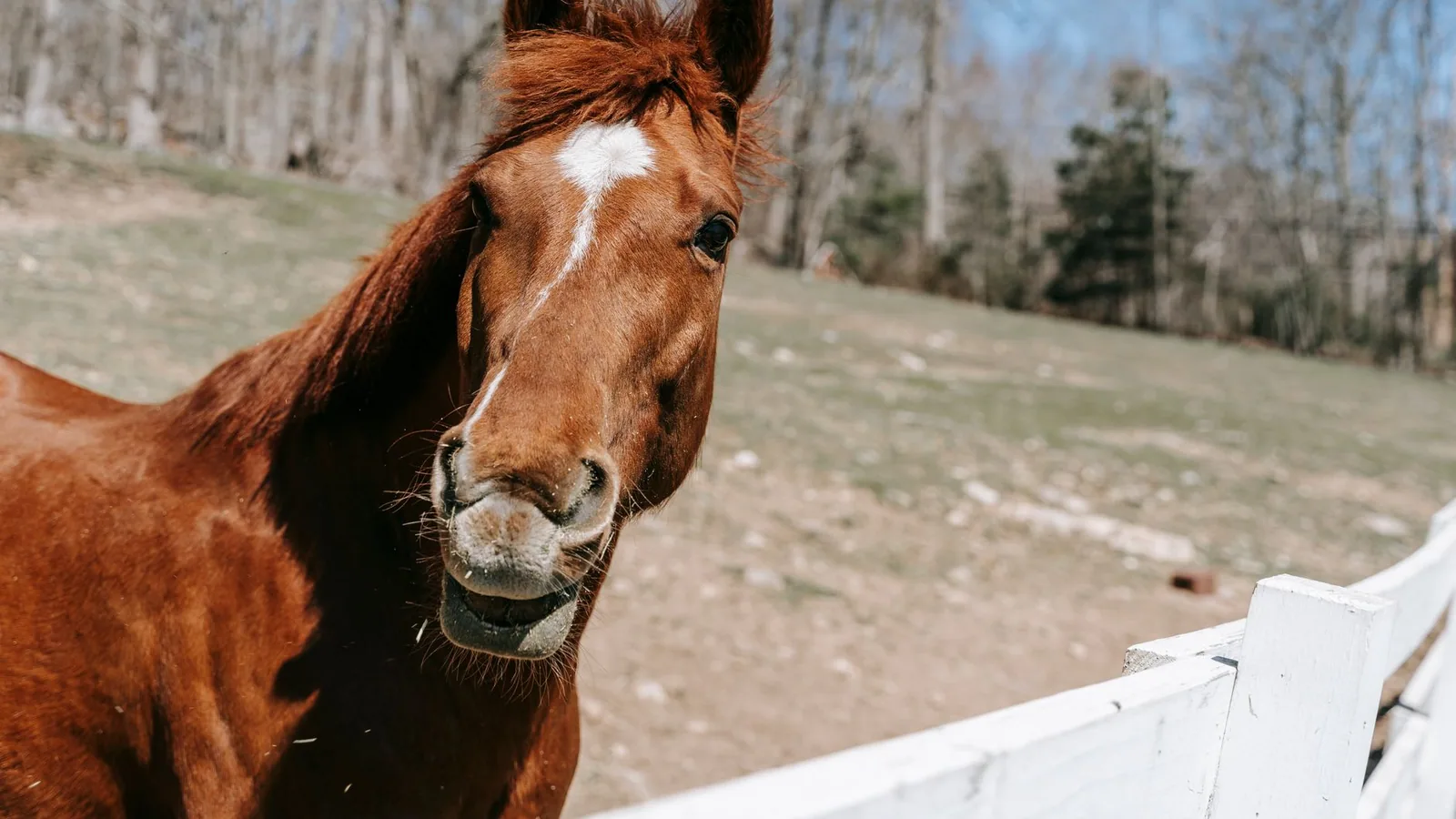
The horse's ears, with their 360-degree range of motion, are the most immediate and reliable indicators of attention and emotional state.
- Relaxed and Bouncy: Ears are held loosely to the side, not stiffly, and they swivel independently to sample sounds. This indicates a calm, content, and non-threatened state.
- Forward and Alert: Ears are pricked forward and stiff, pointing towards an object or sound. This indicates focused attention, curiosity, or slight concern. The horse is assessing a stimulus.
- Pinned Flat Back (against the neck): This is a universal sign of aggression, threat, or intense fear. The horse is preparing to defend itself by biting or kicking. This signal is often accompanied by a wrinkled muzzle and exposed teeth. Never approach a horse with pinned ears.
- One Ear Back, One Ear Forward: This often indicates the horse is paying attention to a handler behind them while still monitoring the environment ahead. It is not necessarily a sign of distress, but it indicates divided attention. A handler should speak or touch the horse to let it know they are approaching.
The Eyes and Muzzle: Windows to the Equine Mind
The equine eye is large and positioned laterally, giving them a wide field of view but creating blind spots directly in front and directly behind. Beyond the physical, the eye's expression is critical.
- Soft, Blinking Eye: The sclera (white of the eye) is not visible or only barely visible. The eyelids are relaxed, and the horse may blink slowly. This is the hallmark of a relaxed horse.
- Wide Eye with Visible Sclera (Whale Eye): When the sclera is clearly visible around the iris, it is a strong indicator of fear, anxiety, or alarm. The horse is in a high state of arousal and is prepared for flight. This is a high-risk signal that warrants immediate de-escalation.
- Tense Muzzle and Clenched Jaw: A relaxed horse will often have a loose, swinging lower jaw, sometimes licking and chewing. A tense, tight muzzle, with nostrils flared and a clenched jaw, indicates stress, pain, or impending reactivity.
The Horse Grimace Scale (HGS) is a validated tool for pain assessment that specifically examines these facial features. Key indicators include a "stiffly backward ears" posture, an "orbital tightening" (narrowing of the eye area), a "tense" muzzle and chin, and a "strained" mouth. These pain-specific expressions are distinct from those of fear and are being investigated for automated recognition using artificial intelligence.
Decoding Posture and Weight Distribution
The horse's entire body mass communicates its state of mind.
- Standing Square, Head Lowered: A horse resting or dozing will often stand with its weight evenly distributed, one hind leg cocked (resting), and its head lowered. The muscles are relaxed.
- Head Raised, Neck Tense: This is the "high-head" posture of an alarmed horse. The neck muscles are tense, the head is elevated to see better and be ready to spin and flee. This is a pre-flight signal.
- Pawing the Ground (Foreleg): This is often a sign of frustration, impatience, or anticipation (e.g., before feeding). It can also be a sign of discomfort or colic (abdominal pain).
- Stamping a Hind Foot: A clear sign of irritation, often directed at a fly, but it can also be a warning to another horse or a human who is causing annoyance. If directed at you, back away.
- Weaving or Stall Walking: These are stereotypies (repetitive, purposeless behaviours) associated with chronic stress, boredom, or management issues like social isolation. They are a sign of compromised welfare.
- Weight Shifting and Restlessness: A horse constantly shifting weight from one hind leg to the other, or lying down and getting up repeatedly, is a classic sign of colic. This requires immediate veterinary attention.
A horse's posture is also linked to its cognitive state. Research shows horses can follow human pointing gestures to find food, indicating they can understand human attentional states and goals. A horse that is looking at you with a raised head is likely assessing your communicative intent.
The Tail as a Communication Tool
While often discussed last, the tail provides equally important clues.
- Tail Carried Loosely: A relaxed horse carries its tail in a neutral, low position. It may swish gently at flies.
- Tail Clamped Down (Between Legs): This is a major sign of fear, submission, or severe pain. It is the equine equivalent of a dog tucking its tail. A horse in extreme colic or acute distress may clamp its tail tightly.
- Tail Held High (Flagging): In a horse that is not actively defecating, holding the tail high and stiff is often a sign of excitement, alarm, or intense arousal. It is common in horses that are about to spook or bolt.
- Vigorous Tail Swishing: While a gentle swish is normal, a hard, vigorous, or "whipping" tail swish is a clear sign of irritation, frustration, or pain. This can be a response to a poorly fitting saddle (tack-associated wounds are a known welfare issue), an irritating rider's leg, or internal discomfort.
Vocalizations: The Auditory Component
While less complex than in many social mammals, horses do use vocalizations as part of their communication repertoire.
- The Nicker: A low, guttural, pulsating sound. It is primarily a greeting or a sound of anticipation, often made by a mare to her foal or a horse to its owner bringing food. It usually indicates a positive, expectant state.
- The Squeal: A high-pitched, short, sharp sound. It is almost always a sign of aggression, threat, or social protest. It is common when horses are first introduced or when a horse is defending its space.
- The Snort: A sudden, forceful expulsion of air through the nostrils. It is a sign of alarm, surprise, or clearing the nasal passages. A single snort often signals "something caught my attention." Repeated snorting, combined with an elevated head and wide eyes, indicates high alert.
- The Whinny (or Neigh): A loud, prolonged call. It is the most variable vocalization. A high-pitched, long whinny is a call for social contact, often used when a horse is separated from its herd or is seeking a companion. A shorter, more urgent whinny can indicate distress.
Recognizing Signs of Pain and Fear: A Clinical Perspective
It is vital to differentiate between fear and pain, as they require different management responses. Both states can lead to dangerous behaviours like kicking, biting, bolting, and rearing.
Signs of Pain (Often Subtle and Chronic)
Pain in horses is often expressed through very subtle changes in their normal posture and behaviour. The horse's natural instinct as a prey animal is to mask pain to avoid appearing vulnerable. The Horse Grimace Scale (HGS) is a validated and objective tool for detecting pain.
Key pain indicators include:
- Asymmetry: Standing with a hip dropped, a hoof pointed, or a head tilted. The horse may be reluctant to bear weight on a limb.
- Abnormal Posture: A "sawhorse" stance (all four legs braced out) is classic for colic or laminitis. The back may appear hunched or tense.
- Facial Expression (HGS): As noted, look for orbital tightening, a tense muzzle, stiffly backward ears (not flat back, but rigidly back), and a strained mouth.
- Behavioural Changes: The horse may be unusually dull, depressed, and unresponsive, or conversely, irritable, aggressive, and grouchy. It may have a poor appetite, a reluctance to move, or subtle changes in its gait. These changes are often missed by owners who are not conducting comprehensive observations. The presence of tack-associated wounds or poor hoof condition are strong risk factors for chronic pain.
Signs of Fear (Often Acute and Obvious)
Fear is an acute emotional response to a perceived threat. The classic fear response is the "flight" reaction.
Key fear indicators include:
- Elevated Head and Neck: The horse looks up and tenses its neck muscles.
- Wide Eyes (Sclera Visible): The eye is fully open, and the white is visible.
- Flared Nostrils: Accompanied by rapid, heavy breathing.
- Tense Muscles: The entire body becomes rigid.
- Tail Clamped Down: A very reliable sign.
- Low to Ground Posture: The horse may crouch, lowering its chest towards the ground, ready to spring.
- Trembling: A full-body tremor can occur in extreme fear.
- Attempts to Escape: The horse will try to move away from the trigger.
A horse in fear is dangerous. The handler's immediate goal should be to remove the trigger or distract the horse. Movement should be slow, purposeful, and calm, as fast or jerky human movements can amplify the fear.
A Practical Safety Protocol for Handlers
The knowledge of body language must translate into safe action. The following protocol is based on established equine safety practices.
- Approach the Horse Safely: Always approach at the shoulder, where the horse has the best vision. Identify yourself with a soft, low voice before you touch the horse.
- Assess the "Relaxed Baseline": Before leading, grooming, or tacking up, stop for 15 seconds and observe the horse. Is it relaxed? Are the ears soft? Is the muzzle loose? Is the tail neutral?
- Identify Danger Signals (Stop and Reassess): If you see ears pinned, the sclera of the eye visible, a tail clamped down, or a raised, tense head, do not proceed.
- De-escalation Tactics: If a horse is showing fear or irritation, stop all work. Move to a position of safety (off to the side, not in front or behind). Use a calm, rhythmic voice to provide a soothing auditory cue. Grant the horse a moment of autonomy. Do not corner the horse.
- When in Doubt, Call the Vet: If a normally relaxed horse is consistently showing signs of ear pinning, a clamped tail, or orbital tightening (HGS signs), suspect pain. A thorough veterinary examination, including lameness and dental evaluation, is warranted.
Conclusion
Understanding horse body language is a continuous learning process that combines art and science. It requires a dedication to careful, unbiased observation and a willingness to consider the horse's perspective. The science is clear: horses are not simply reactive creatures; they are cognitively complex beings that read our every gesture and react to our emotional displays. By becoming fluent in their language, we move closer to a relationship built on mutual trust and respect, ultimately improving both safety and welfare. As the horse industry faces increasing scrutiny regarding its social license to operate, tools like RAiSE and a commitment to evidence-based ethology are not just helpful, they are essential.
Related Clinical & Scientific Guides
- Equine Hematologic Disorders: Anemia and Coagulopathies
- Equine Lifespan: Factors Influencing Longevity in Horses
- Miniature Horse Care Guide
References
Manolăchescu, D., Tripon, M., Crecan, C., et al. (2025). Emotional contagion in human-horse interactions: A pilot study investigating the role of stress and body language in emotional transfer. Open Vet J. https://pubmed.ncbi.nlm.nih.gov/41630745/
Wells, A., Hiney, K. M., Brady, C. M., et al. (2025). Enhancing equine welfare: a qualitative study on the impact of RAiSE (Recognizing Affective States in Equine) as an educational tool. Transl Anim Sci. https://pubmed.ncbi.nlm.nih.gov/40242489/
Chiavaccini, L., Gupta, A., & Chiavaccini, G. (2024). From facial expressions to algorithms: a narrative review of animal pain recognition technologies. Front Vet Sci. https://pubmed.ncbi.nlm.nih.gov/39086767/
Jardat, P., & Lansade, L. (2022). Cognition and the human-animal relationship: a review of the sociocognitive skills of domestic mammals toward humans. Anim Cogn. https://pubmed.ncbi.nlm.nih.gov/34476652/
Ringhofer, M., Trösch, M., Lansade, L., et al. (2021). Horses with sustained attention follow the pointing of a human who knows where food is hidden. Sci Rep. https://pubmed.ncbi.nlm.nih.gov/34376761/
Upjohn, M. M., Shipton, K., Pfeiffer, D. U., et al. (2012). Cross-sectional survey of owner knowledge and husbandry practices, tack and health issues affecting working horses in Lesotho. Equine Vet J. https://pubmed.ncbi.nlm.nih.gov/21848533/
Maros, K., Gácsi, M., & Miklósi, A. (2008). Comprehension of human pointing gestures in horses (Equus caballus). Anim Cogn. https://pubmed.ncbi.nlm.nih.gov/18247069/