Equine Deworming: Schedule and Parasite Control
By Dr. Zubair Khalid, DVM, MS, PhD ·

Modern equine deworming has moved away from fixed calendars. The current standard of care is built on fecal egg counts, targeted treatment of the horses that need it, and verification that each treatment actually worked. The reason for this shift is urgent: drug-resistant parasites now threaten every major deworming class [1][2]. This guide explains how to build a deworming schedule for your horse, why fecal egg counts matter, how to choose a dewormer, and how to slow the spread of resistance on your farm. It also covers the management practices that reduce your horse's exposure to parasites in the first place. By the end, you will understand the difference between selective and strategic deworming, the role of fecal egg count reduction testing, and why the egg reappearance period matters.
At a Glance: A Modern Deworming Plan
| Step | Action | Why it matters |
|---|---|---|
| 1 | Run a fecal egg count on every horse | Most horses have no detectable strongyle eggs at any given time [3] |
| 2 | Group horses by shedding level | About 20% of horses carry 80% of the worm burden [4] |
| 3 | Treat only high shedders and at-risk horses | High shedders need about 3 treatments per year [3] |
| 4 | Verify with a fecal egg count reduction test | Confirms the drug worked and detects resistance early [1][2] |
| 5 | Adjust for housing | Stabled horses need less treatment than pastured horses [5] |
| 6 | Recheck during the grazing season | Pastured horses peak in summer and autumn [5] |
The steps above summarize the core of modern parasite control. The rest of this guide explains the evidence behind each step and how to adapt it to your horse's situation.
Why the Old Equine Deworming Schedule Failed
For decades, many horse owners dewormed every horse on a fixed schedule, often every 6 to 8 weeks, regardless of parasite burden. That approach has been abandoned by equine veterinarians because it applies constant drug pressure to parasite populations. Parasites respond by evolving resistance.
The scale of the problem is now well documented. A three-year French study conducted 104 fecal egg count reduction tests in 98 groups of horses across 70 facilities. Fenbendazole resistance was detected in 89% of tested groups, pyrantel resistance in 68%, ivermectin resistance in 27%, and moxidectin resistance in 23% [1]. This was the first evidence in France of resistance to all four available anthelmintic classes [1].
Ireland shows a similar pattern. In a study of 44 horse farms, benzimidazole resistance was identified on 12 of 14 farms tested, with fecal egg count reductions ranging from 0% to 86.2% [2]. Ivermectin resistance was observed on two farms, and reduced moxidectin efficacy was noted on two additional farms [2].
The problem extends beyond strongyles. A modeling study of Parascaris spp. in foals found that treating foals monthly for the first year of life produced resistance to all anthelmintics used, regardless of how they were rotated [6].
Even in regions where resistance is not yet widespread, the warning signs are clear. In Brazil, ivermectin failed to maintain adequate suppression of strongyle eggs beyond 5 weeks after treatment, and the authors recommended withdrawing ivermectin from control programs when 5-week fecal egg count reduction falls below 80% [7].
Drug use patterns show how deeply the old approach is embedded. In a German survey of 1,887 horses, ivermectin was the most frequently applied anthelmintic (50.8% of treatments), followed by pyrantel (21.6%), and the mean time since last treatment was 6.3 months [3]. Yet 55.4% of those horses had no detectable strongyle eggs at the time of sampling [3]. In other words, a large share of treatments were given to horses that did not need them. Among the high egg shedders, 72.5% had already exceeded their planned treatment date, which shows that even motivated owners struggle to stay on a fixed schedule [3].
The consequences of resistance are not abstract. When a drug class fails, the treatment options for that farm shrink. In France, the loss of benzimidazoles and pyrantel leaves only the macrocyclic lactones, and resistance to those is already present on a quarter of farms [1]. In Ireland, the same pattern is emerging. Each lost drug class makes it harder to treat horses that genuinely need help.
The Parasites That Matter
Small Strongyles (Cyathostomins)
Cyathostomins are the most common internal parasites of horses. In a German survey of 1,887 horses on 195 farms, cyathostome infections were present on every farm [3]. These parasites live in the large intestine, and their larvae can encyst in the gut wall. When large numbers emerge at once, they can cause diarrhea, weight loss, and colic.
Large Strongyles (Strongylus vulgaris)
Strongylus vulgaris was historically one of the most dangerous equine parasites because its larvae migrate through the cranial mesenteric artery and can cause thromboembolic colic. Modern deworming has made it uncommon in managed horses, but it has not been eliminated. The German survey found S. vulgaris in 2 of 841 positive samples [3]. A study of feral horses in Alberta, Canada, found high strongyle egg counts relative to domestic populations, and nemabiome sequencing showed a high prevalence of S. vulgaris [8]. A 2026 study using cytochrome c oxidase I deep amplicon sequencing found unexpectedly high Strongylus spp. prevalence even in regularly treated horses, suggesting that standard surveillance may underestimate these parasites [9].
Ascarids (Parascaris spp.)
Parascaris spp. are large roundworms that primarily affect foals and weanlings. They can cause poor growth, colic, and intestinal obstruction. The modeling study by Leathwick and colleagues focused on ascarid control and showed that intensive monthly treatment of foals is unsustainable [6].
The Foundation: Fecal Egg Counts
What a Fecal Egg Count Tells You
A fecal egg count (FEC) measures the number of parasite eggs per gram of feces. It is the cornerstone of modern parasite control.
The distribution of eggs among horses is heavily aggregated. Using Taylor's power law, researchers showed that the variance of fecal egg counts is strictly related to the mean, and this relationship held across horse populations in France, Poland, and Mexico [4]. In practical terms, about 20% of horses harbor 80% of the parasites [4]. Treating every horse equally means treating many horses that do not need it.
The German survey illustrates this clearly. Of 1,887 samples, 55.4% had egg counts below the detection limit of 20 EPG [3]. Only a minority of horses were high shedders, defined as more than 500 EPG, and those horses were treated an average of three times per year [3]. In the same study, all samples with FEC of 20 EPG or higher were cultured to generate third-stage larvae for species identification. This allowed the researchers to confirm that cyathostomes were present on every farm and to detect the rare S. vulgaris larvae [3].
A single FEC is a snapshot, not a complete picture. Strongyle egg shedding varies by season, age, and management, and day-to-day variation can be substantial. However, the relationship between the average egg count in a group and its variability is predictable enough to support selective treatment decisions [4]. The key is to repeat FECs at regular intervals and to track each horse's shedding pattern over time. A veterinarian or diagnostic laboratory can provide instructions for collecting and submitting a fecal sample.
Selective Versus Strategic Deworming
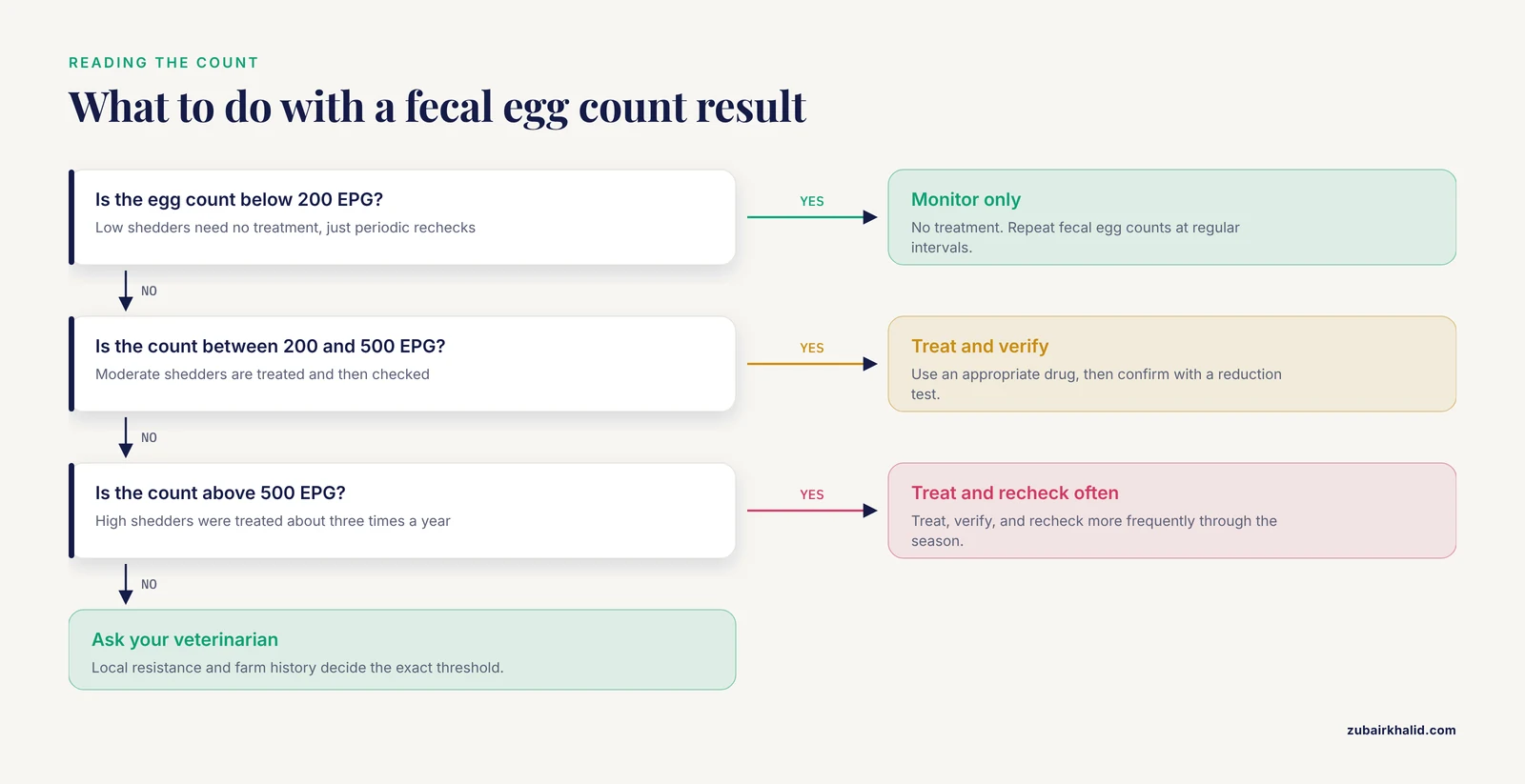
Selective deworming, also called targeted selective treatment (TST), means treating only the horses that need it based on FEC results [4]. Strategic deworming means timing treatments to interrupt the parasite life cycle. Modern programs combine both approaches: the FEC identifies which horses to treat, and the calendar determines when treatment is most effective.
The choice of FEC threshold matters. Researchers have proposed using either 200 or 500 EPG as the cutoff for treatment [4]. The German study used 500 EPG to define high shedders [3]. A veterinarian can help determine the right threshold for a specific farm. A threshold that is too low leads to unnecessary treatments. A threshold that is too high may leave some horses with clinically significant burdens. The 200 to 500 EPG range is a reasonable starting point for most adult horses.
Building an Equine Deworming Schedule
Foals and Young Horses
Foals are the exception to the selective approach because they are highly susceptible to ascarids. However, the traditional practice of monthly deworming is counterproductive. The modeling study showed that 12 treatments per year produced resistance to all drugs, while the recommended strategy of two treatments during the first five months of life was more sustainable [6].
The timing of treatments also matters. Single annual treatments at 3 and 4 months of age were more selective for resistance than treatments at other times [6]. This means that treating foals too early or too often can accelerate resistance. For breeders, the practical takeaway is that ascarid control should be deliberate and limited, not automatic. Each treatment should have a clear target and a way to verify that it worked.
Adult Horses
For adult horses, the schedule should be based on FEC results. The German data show that high egg shedders (>500 EPG) were treated on average three times per year, and the mean time since last treatment across all horses was 6.3 months [3]. This suggests that even high-risk horses do not need monthly treatment.
A practical adult schedule uses three shedding categories:
| Category | FEC | Approach |
|---|---|---|
| Low shedder | Below 200 EPG | No treatment. Monitor with periodic FECs [4] |
| Moderate shedder | 200 to 500 EPG | Treat with an appropriate drug, then verify with FECRT [4] |
| High shedder | Above 500 EPG | Treat, verify, and recheck more frequently [3][4] |
The exact threshold a veterinarian chooses will depend on the farm's history, the age of the horses, and the local parasite pressure. The important principle is that treatment decisions follow the FEC rather than the calendar [3][4].
A Seasonal Approach
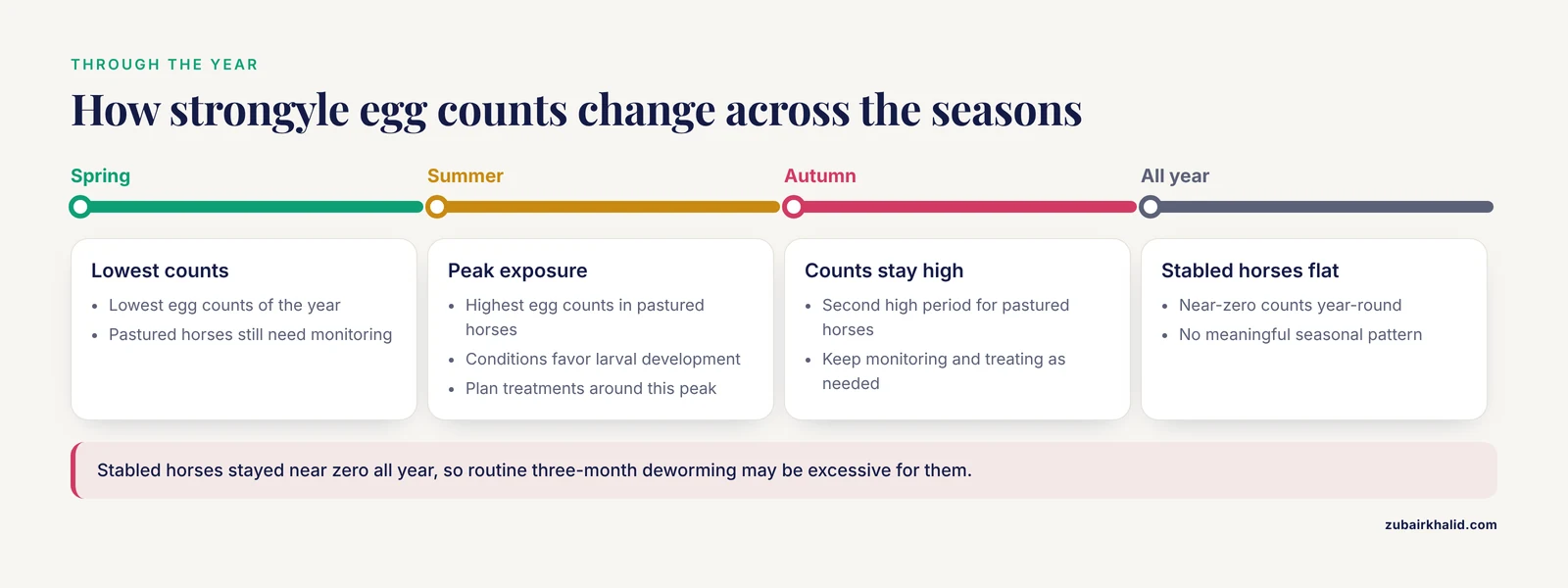
Seasonal patterns matter. In the South Korean study, pastured horses showed the highest egg counts in summer and autumn, with the lowest counts in spring [5]. This suggests that monitoring and treatment should be intensified during the summer and autumn months for pastured horses. Stabled horses, by contrast, showed no meaningful seasonal pattern and maintained near-zero counts year-round [5]. A seasonal calendar should therefore be built around the horse's actual exposure, not the calendar alone.
Senior Horses and PPID
Horses with pituitary pars intermedia dysfunction (PPID), also called equine Cushing's disease, may be more susceptible to strongyle infections. In an Australian study, PPID horses had significantly higher fecal egg counts than control horses at days 56 and 70 after anthelmintic treatment, and their cumulative egg output over 14 weeks was more than double that of controls [10]. PPID horses should be monitored more closely and may need more frequent FEC checks. The same study controlled for age, so the difference was not simply a function of the horses being older [10].
Stabled Versus Pastured Horses
Housing has a major effect on deworming needs. In a South Korean study, stabled horses maintained near-zero EPG counts year-round, while pastured horses showed significant seasonal fluctuations with peaks in summer and autumn [5]. Deworming intervals had minimal impact on parasite burden in stabled horses, and the authors concluded that routine three-month deworming may be excessive for stabled horses but adequate for pastured horses [5].
For pastured horses, reinfection risk was highest in summer, when environmental conditions favor larval development [5]. Owners of pastured horses should plan treatments and pasture management around this seasonal peak. For stabled horses, the priority shifts to monitoring, because their near-zero counts mean that most treatments are unnecessary [5].
Mixed groups of horses and donkeys need special attention, because the two species can differ in parasite burden and drug handling [11].
Choosing the Right Dewormer
Drug Classes and Resistance Patterns
Four main drug classes are available for horses:
- Benzimidazoles: fenbendazole, mebendazole, oxibendazole, oxfendazole
- Tetrahydropyrimidines: pyrantel
- Macrocyclic lactones: ivermectin, moxidectin
- Combination products, such as ivermectin/praziquantel
Resistance patterns vary by region and farm. In France, fenbendazole and pyrantel resistance are common, while ivermectin and moxidectin resistance are emerging [1]. In Ireland, benzimidazole resistance is nearly universal, and reduced ivermectin and moxidectin efficacy has been documented [2]. In Brazil, ivermectin resistance has shortened the egg reappearance period to less than 8 weeks [7].
Some regions remain fortunate. In western Iran, mebendazole and fenbendazole achieved 96.1% to 98.7% fecal egg count reduction, and molecular testing found no benzimidazole resistance mutations [12]. A herd of grazing horses in China remained susceptible to albendazole despite harboring a diverse cyathostomin community [13]. These examples show that resistance is not inevitable, and that good management can keep drugs effective for longer.
The takeaway is that drug choice must be based on local resistance data. A fecal egg count reduction test is the only reliable way to know whether a drug works on a specific farm [1][2].
Egg Reappearance Period
The egg reappearance period (ERP) is the time after treatment before parasite eggs reappear in feces. A shortened ERP is an early sign of resistance. In the Brazilian study, ivermectin produced 100% fecal egg count reduction at 2 weeks after treatment, but efficacy fell below 83% by 5 weeks [7]. The authors proposed withdrawing ivermectin from control programs when 5-week fecal egg count reduction falls below 80% [7].
Verifying Treatment Success
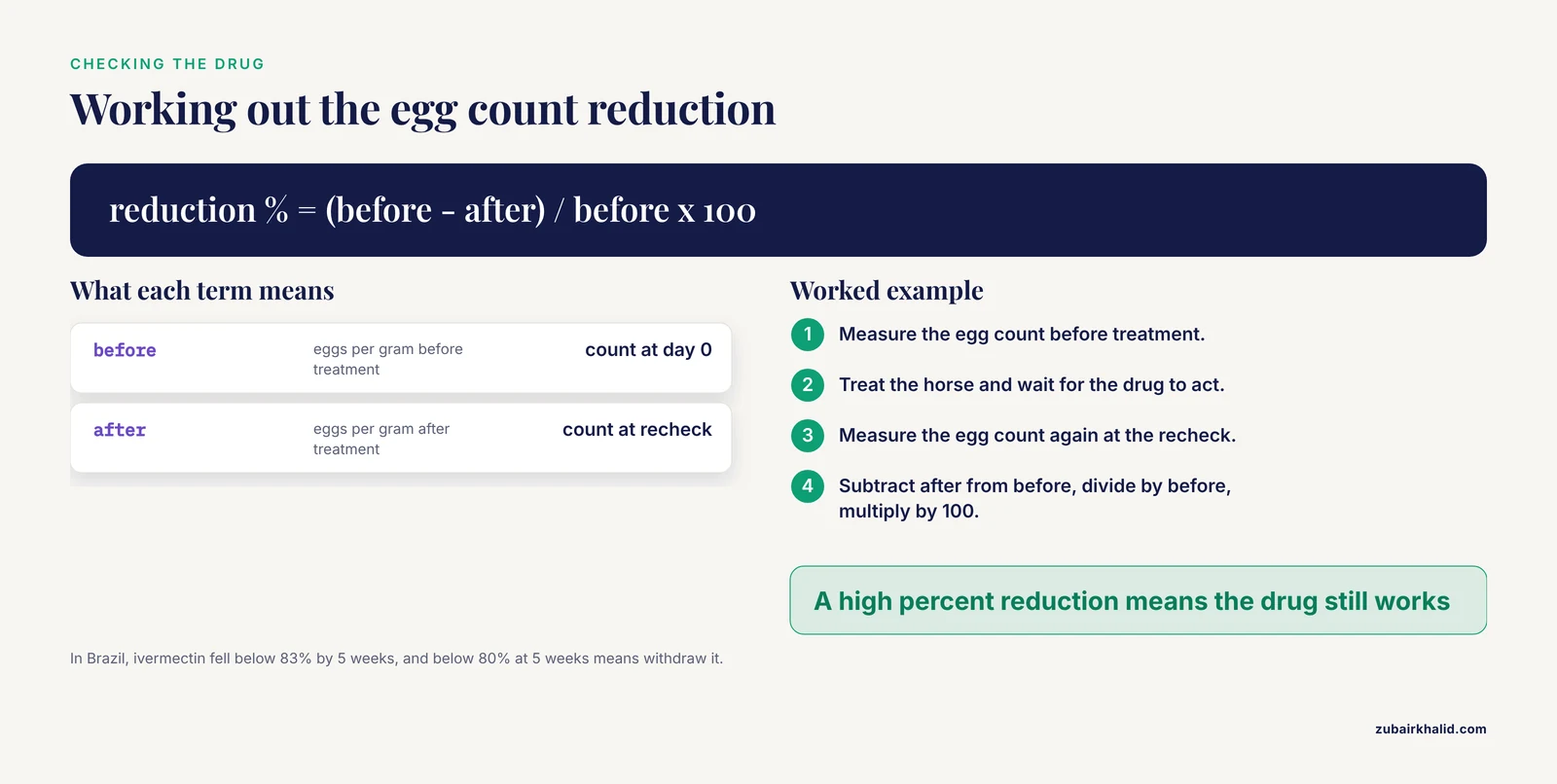
A fecal egg count reduction test (FECRT) compares egg counts before and after treatment. It is the standard tool for detecting resistance [1]. Without it, there is no way to know whether a dewormer is still working. In vitro tests such as the egg hatch test can also detect benzimidazole resistance earlier than field tests, which may help farms identify problems before clinical failure occurs [14].
The FECRT works by measuring the egg count before treatment, treating the horse, then measuring again after the drug has had time to act. The percent reduction tells you whether the drug is still effective. The French and Irish studies used this method to document resistance on farms [1][2]. Without regular FECRTs, a failing drug can go unnoticed for years, and resistant worms can spread across the farm.
Management: The Other Half of Parasite Control
Drugs are only one tool. The most effective parasite control programs combine anthelmintic treatment with environmental and nutritional management. The evidence for this comes from studies showing that housing, diet, and even the presence of beneficial fungi in feces can influence parasite burden [5][15][16].
Pasture and Housing
The environment is the main source of reinfection for grazing horses. The South Korean study showed that stabled horses had near-zero exposure, while pastured horses faced continuous reinfection, with the highest risk in summer [5]. Reducing pasture contamination is therefore a central goal for pastured horses. The same study found that deworming intervals had little effect on parasite burden in stabled horses, which reinforces the idea that housing and management matter more than drug frequency in low-exposure settings [5].
Diet and Gut Health
Diet influences strongyle egg shedding. In a French study, horses fed a high-starch diet excreted more strongyle eggs than horses fed a high-fiber diet, and adding dehydrated sainfoin pellets to the high-starch diet reduced egg excretion [15]. Sainfoin also decreased larval motility regardless of diet [15]. However, a longer 84-day study found no effect of sainfoin on fecal egg counts, which suggests the effect may be short-lived or dependent on the specific diet [17].
The high-starch diet was also associated with lower fecal bacterial diversity, lower fecal pH, and lower blood acetate compared with the high-fiber diet [15]. These findings suggest that diet quality and gut health play a role in parasite resistance. For owners, the practical implication is that a high-fiber diet with appropriate forage may support better gut health than a high-starch diet, and that certain plant compounds may offer modest benefits under specific feeding conditions [17][15].
Biological Control
Helminthophagous fungi such as Duddingtonia flagrans, Pochonia chlamydosporia, and Arthrobotrys oligospora can trap and destroy parasite larvae in feces. A 2025 review highlighted these fungi as a promising biological alternative, with ovicidal and predatory species working in complementary ways [16]. This approach is still emerging and is not yet a replacement for deworming.
Plant Extracts and Experimental Approaches
Several plant-based products have been tested for antiparasitic activity:
- Terpenes such as cinnamaldehyde and carvacrol showed strong in vitro activity against cyathostomin larvae and modulated parasite community structure, but a 28-day feeding study found no effect on egg excretion [18].
- Acacia mearnsii extract, a tannin source, reduced egg hatching in vitro but had no effect on fecal egg counts in a 28-day field trial [19].
- Carbon quantum dots and copper-doped carbon quantum dots showed nematicidal activity against strongyle eggs and larvae in vitro, but these are experimental [20].
The pattern is consistent: in vitro activity does not guarantee in vivo efficacy. None of these products is currently a substitute for proven anthelmintics, and none has been shown to reduce egg shedding in a clinical setting [18][20][19]. Owners should be skeptical of products that have not been validated in live horses.
Common Deworming Mistakes
These are the most common errors seen in equine parasite control programs.
- Deworming on a fixed calendar without fecal egg counts. This treats many horses that do not need it and accelerates resistance [3][4].
- Treating every horse the same. About 20% of horses carry 80% of the worms.
- Deworming stabled horses as often as pastured horses. Stabled horses have near-zero exposure [5].
- Deworming foals monthly. This is the fastest route to multidrug resistance.
- Never verifying that the drug worked. A FECRT is the only way to detect resistance early [1].
- Repeating the same drug class for years. Resistance to benzimidazoles and pyrantel is common, and ivermectin and moxidectin resistance is spreading [1][2].
- Ignoring the egg reappearance period. A shortened ERP means the drug is losing efficacy [7].
- Relying on supplements or plant extracts that have not shown in vivo efficacy [18][17][19].
These mistakes share a common theme: they rely on habit, convenience, or marketing instead of data. The cost of that approach is measurable. Resistance to benzimidazoles is already widespread, and resistance to ivermectin and moxidectin is being documented on more farms every year [1][2]. A FEC-based program takes more planning, but it is the only approach that preserves drug efficacy for the horses that truly need it.
Limitations and When to Contact a Veterinarian
This article is educational and is not a substitute for veterinary diagnosis or treatment.
A veterinarian should be involved in any deworming program because resistance patterns vary by farm and region, and drug selection requires local data [1][2]. Contact a veterinarian if:
- A horse has a persistently high FEC despite treatment [3][4].
- A foal or young horse is failing to thrive or has signs of ascarid infection [6].
- A senior horse has PPID, since these horses may shed more eggs after treatment [10].
- A dewormer appears to be losing effectiveness, such as a shortened egg reappearance period [7].
- You want to design a new deworming program or change drug classes [1].
Every farm is different. A schedule that works for a single stabled horse in a city may be wrong for a breeding farm with 50 horses on pasture. The combination of FEC monitoring, fecal egg count reduction testing, and management changes is the most reliable way to protect both individual horses and the broader parasite population.
The evidence in this guide comes from field studies and modeling work across Europe, the Americas, Asia, and Australia. Resistance patterns differ between regions and even between farms in the same region, which is why local testing is essential [1][2].
Related Guides
- Gasterophilus intestinalis in Horses: Equine Bot Fly Larvae Infestation of Stomach Walls and Control Strategies: Bot fly larvae are another equine stomach parasite worth monitoring
Frequently Asked Questions
How often should I deworm my horse?
There is no single answer. The right interval depends on the horse's age, housing, and fecal egg count. High shedders may need about three treatments per year, while low shedders may need none [3]. Stabled horses may need far less than pastured horses [5].
What is a fecal egg count and why does it matter?
A fecal egg count measures the number of parasite eggs per gram of feces. It matters because most horses have low or zero egg counts, and only a minority carry most of the parasites [3][4]. Treating without a FEC wastes drugs and drives resistance.
Which dewormer should I use?
The best dewormer depends on local resistance patterns. In many regions, benzimidazoles and pyrantel are no longer reliable, and ivermectin and moxidectin resistance is spreading [1][2]. A veterinarian can help choose a drug based on fecal egg count reduction testing.
Do stabled horses need the same deworming schedule as pastured horses?
No. Stabled horses maintain near-zero egg counts year-round and may not need routine three-month deworming [5]. Pastured horses face continuous reinfection and need more attention, especially in summer and autumn [5].
What is the egg reappearance period?
The egg reappearance period is the time after treatment before parasite eggs reappear in feces. A shortened ERP is an early warning sign of resistance [7].
Why did my dewormer stop working?
The worms on your farm have likely developed resistance to that drug class. Resistance to benzimidazoles is widespread, and resistance to ivermectin and moxidectin has been documented in multiple countries [1][7][2].
Do foals need monthly deworming?
No. Monthly deworming of foals for the first year of life leads to resistance to all drug classes. A more sustainable approach targets ascarid infections with fewer, well-timed treatments in the first five months [6].
Can diet or supplements replace dewormers?
Not yet. Some plant compounds reduce egg shedding under specific conditions, but longer studies have not confirmed consistent effects [18][17][15]. Diet can influence parasite burden, but it is not a substitute for proven deworming and management.
Sources
- Three-year evaluation of anthelmintic treatment efficacy against equine strongyles in France using FECRT.
- Unravelling the Effectiveness of Anthelmintic Treatments on Equine Strongyles on Irish Farms.
- Strongyle infections and parasitic control strategies in German horses - a risk assessment.
- Relationship Between Mean Faecal Gastrointestinal Nematode Egg Excretion in Horses and Its Variability: Implications for Control.
- Comparison of prevalence and strongyle egg counts per gram of feces in horses at pasture and in stables following ivermectin/praziquantel treatment.
- Managing anthelmintic resistance in Parascaris spp.: A modelling exercise.
- Reduction of egg reappearance period of cyathostomins in naturally infected horses after increasing doses of ivermectin in Brazil: a grim picture for sustainable parasite control.
- Nemabiome sequencing reveals seasonal and age associated patterns of strongyle infection and high prevalence of Strongylus vulgaris in Alberta feral horses.
- Cytochrome c oxidase I deep amplicon sequencing for metabarcoding of equine strongyle communities: unexpectedly high Strongylus spp. prevalence in treated horses.
- Strongyle egg shedding and egg reappearance periods in horses with pituitary pars intermedia dysfunction.
- [[Deworming schedule in mixed group of horses and donkeys].](https://pubmed.ncbi.nlm.nih.gov/11858042/)
- Evaluation of Benzimidazole Resistance in Equine Cyathostomins in the Kermanshah Province of Iran Using Coprological Analysis and Allele-Specific PCR.
- Molecular Identification and Benzimidazole Resistance Analysis of Cyathostomins in Chinese Grazing Horses.
- Assessing the benzimidazole resistance in equine strongyles by in vitro methods.
- Diet modulates strongyle infection and microbiota in the large intestine of horses.
- Exploring the Use of Helminthophagous Fungi in the Control of Helminthoses in Horses: A Review.
- Combining in vivo and in vitro approaches to investigate the effect of sainfoin on strongyle infection, immunity, and large intestine ecosystem of horses.
- Terpenic compounds possess anthelmintic and immunomodulatory properties with potential for controlling equine cyathostomin infections.
- In vitro and in vivo effects of Acacia mearnsii De Wild extract for cyathostomin control in horses.
- In vitro evaluation of anthelmintic activity of biocompatibile carbon quantum dot nanocomposite against egg and larval stages of equine strongyles.