Cribbing in Horses: Causes, Health Effects, and What Helps
By Dr. Zubair Khalid, DVM, MS, PhD ·
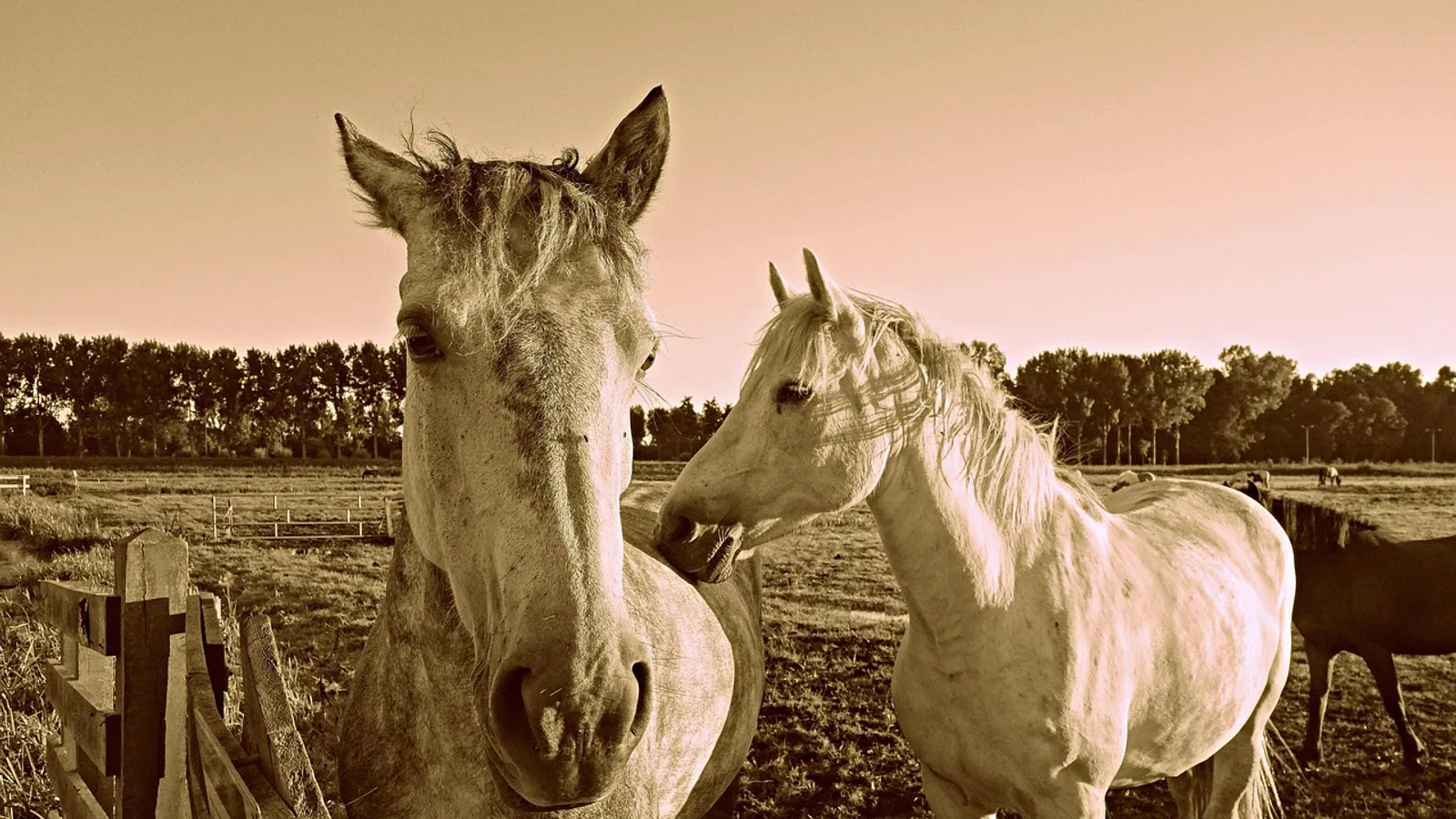
Cribbing is a repetitive oral behavior in which a horse grips a fixed object with its incisor teeth, arches its neck, and swallows air. It is a stereotypy, meaning a repetitive behavior pattern that develops under conditions of stress, confinement, or gastrointestinal irritation. It is not a vice a horse learns by watching another horse do it. A major health consequence is a striking association with epiploic foramen entrapment, a strangulating small intestinal colic that is a surgical emergency and carries a guarded prognosis [1][2][3][4].
This article is educational and is not a substitute for veterinary diagnosis or treatment.
If your horse cribs and shows signs of colic (pawing, rolling, flank watching, going off feed, sweating without work), call your veterinarian immediately. Epiploic foramen entrapment is a surgical lesion and delay worsens the outcome [2][5].
At a Glance: Cribbing, Windsucking, and What Owners Need to Know
| Question | Short answer |
|---|---|
| What is cribbing? | A repetitive oral stereotypy where the horse grabs a fixed object with its incisors, arches the neck, and swallows air [1][6] |
| Is windsucking the same thing? | Windsucking is the air-swallowing component. Most studies group the two together as "crib-biting/windsucking" [3][4][7] |
| Do horses copy it from each other? | No. In a US survey, only 1.0% of horses became affected after exposure to a crib-biter, and contact with other horses was not statistically related to risk [8] |
| Main health risk | Epiploic foramen entrapment colic. Crib-biting/windsucking is the single largest risk factor identified in multiple case-control studies [1][3][4][7] |
| Other health effects | Gastric ulceration and inflammation in young horses, lower fecal pH, abnormal tooth wear [9][10] |
| Does a cribbing collar cure it? | No. Collars reduce the behavior while worn but do not address the cause, and they raise welfare concerns [6] |
| What actually helps? | Forage-first feeding, turnout, social contact, slow feeders, and veterinary treatment of gastric ulcers [9][11] |
| When is it an emergency? | Any colic signs in a cribbing horse. Call your veterinarian the same day [2][5] |
What Cribbing Actually Is
Cribbing is classified as an oral stereotypy. A stereotypy is a repetitive, relatively invariant behavior pattern seen in captive animals. In horses, cribbing is the most studied oral stereotypy and one of the most common [6][12].
The physical sequence is consistent. The horse presses its upper incisors against a solid edge such as a fence board, feed bucket rim, or stall door. It arches its neck, opens the pharynx, and pulls air into the cranial esophagus. The audible grunt or groan that owners hear is the air being swallowed. Windsucking describes the same air-swallowing action, sometimes performed without gripping a surface. Researchers and clinicians usually combine the two behaviors under the label "crib-biting/windsucking" because they share the same risk profile and the same health consequences [3][4][7].
Cribbing is not a trained behavior. It is not a dominance display. It is not a sign that a horse is spoiled or badly handled. It is a behavioral response that emerges from a specific set of environmental, physiological, and possibly genetic conditions.
Why Do Horses Crib? The Real Causes
Owners often ask why a horse starts cribbing. The honest answer is that no single cause has been identified, but several risk factors are well documented. The behavior appears to be multifactorial, meaning it develops when several stressors stack on top of each other.
Weaning, Diet, and Early Life
A key study of developmental triggers involved 19 young horses that had recently started cribbing compared with 16 non-stereotypic horses. At the start of the trial, the crib-biting foals had significantly more ulcerated and inflamed stomachs than the normal foals. Their fecal pH was also significantly lower (6.05 versus 6.58), suggesting a more acidic hindgut environment [9].
That finding matters because it points to gastrointestinal irritation as a driver, not just boredom. A young horse on a high-concentrate, low-forage diet produces more gastric acid and has less buffering from saliva and forage. The cribbing behavior may begin as a response to that discomfort.
High-Concentrate, Low-Forage Diets
Diets built around grain and limited hay are consistently associated with cribbing. A Swiss survey of 2,341 horses found that horses fed four times a day and without daily pasture had increased odds of displaying cribbing, weaving, and box-walking. The authors concluded that prevention should be based on housing and management conditions that allow tactile contact and natural feeding [13].
The mechanism is partly physiological. Concentrate meals produce a spike in gastric acid and a drop in the buffering that comes from continuous forage intake. A cribbing horse may be trying to stimulate saliva production or alter gastric pH. The behavior often intensifies right after a concentrate meal, which supports this idea [14].
Confinement and Stabling
Stabling duration is a documented risk factor for the most serious consequence of cribbing, epiploic foramen entrapment. In a UK case-control study, increased stabling in the previous 28 days increased the likelihood of EFE [3]. The international follow-up study confirmed that management practices, not just the behavior itself, contribute to risk [4].
Horses evolved to move and graze for most of the day. Stall confinement removes both. The result is a horse with an unstimulated gut, an unoccupied mind, and a stress response that has no outlet.
Stress and the Hypothalamic-Pituitary-Adrenal Axis
Cribbing horses respond differently to physiological stress. In an ACTH challenge test, crib-biters had significantly higher cortisol responses than controls. Crib-biters that did not perform the stereotypy during the test period had higher cortisol levels than controls, while those that did crib had lower levels. This supports the coping hypothesis: the behavior may help the horse regulate a stress response that is already dysregulated [12].
A separate study found that crib-biting horses had significantly higher mean plasma ghrelin concentrations than controls. Ghrelin is involved in food intake and reward, and it is produced in the gastric mucosa. The authors noted that crib-biting may be initiated by stress susceptibility, management factors, genetic factors, and gastrointestinal irritation [15].
Genetic and Breed Predisposition
Breed matters. A US survey found an overall cribbing prevalence of 4.4%, with Thoroughbreds most affected [8]. A retrospective analysis of 71 epiploic foramen entrapment cases found Thoroughbred and Thoroughbred-cross horses over-represented [7]. A large surgical series found Warmblood horses represented 85% of EFE surgery cases, with windsucking or crib-biting confirmed in 60% of those cases [5].
This does not mean breed causes cribbing. It means certain bloodlines may carry a higher susceptibility to the underlying stress or gastrointestinal factors that trigger it.
The Copying Myth
Many owners believe cribbing spreads by imitation. The evidence does not support this. In a US survey, approximately half of owners believed cribbing is learned by observation, but only 1.0% of horses became affected after being exposed to a crib-biter. The majority of horses (86%) were turned out in the same pasture with other horses, and the extent of contact with other horses was not statistically related to risk [8].
A qualitative study of owner perceptions found that owners who had direct experience with cribbing horses did not believe copying was a cause, based on their own observations [16]. The belief that cribbing is contagious is one of the most persistent myths in equine care, and it drives unnecessary isolation of affected horses.
Health Effects of Cribbing
Cribbing is not just a cosmetic problem. It has measurable consequences for the horse's health, and one of them is potentially fatal.
Epiploic Foramen Entrapment Colic
The epiploic foramen is a small opening in the abdominal cavity near the liver. A portion of the small intestine can slip through this opening and become trapped, cutting off blood supply. This is called epiploic foramen entrapment, or EFE. It is a strangulating lesion, meaning the trapped intestine dies if it is not surgically corrected [2].
The association between cribbing and EFE is one of the strongest behavioral-disease links in equine medicine.
- In a study of 68 horses, 13 of 19 horses with EFE at the University of Illinois had a history of cribbing, compared with only 2 of 34 horses with other strangulating small intestinal lesions. The odds ratio was 34.7 [1].
- In the same study, 24 of 49 horses with EFE at the University of Liverpool had a history of cribbing, compared with 72 of 687 horses with colic from other causes. The odds ratio was 8.2 [1].
- A UK case-control study of 77 cases and 216 controls found that crib-biting/windsucking was associated with the largest increase in likelihood of EFE of any variable tested [3].
- An international matched case-control study of 109 cases and 310 controls found an odds ratio of 67.3 for crib-biting/windsucking and EFE [4].
- A retrospective analysis of 71 EFE cases found the cases were significantly more likely to have a history of crib-biting/windsucking than controls, with an odds ratio of 7.9 [7].
The mechanism is not fully understood. One hypothesis is that cribbing alters intra-abdominal pressure or intestinal motility in a way that makes entrapment more likely. Another is that the same underlying gastrointestinal dysfunction that drives cribbing also predisposes to EFE. Either way, the clinical implication is clear: a cribbing horse with colic signs needs urgent veterinary attention [2][5].
EFE is also a serious surgical condition. In a series of 145 surgeries on 142 horses, 74% recovered from surgery and 65% of those survived to discharge, giving an overall survival to discharge rate of 48%. Ileal involvement occurred in 74% of cases, and uncontrollable intraoperative hemorrhage occurred in 6% of surgeries [5]. The recurrence rate is low, around 3%, partly because the epiploic foramen closes spontaneously with fibrous tissue after surgery in about 40% of cases [2][17][5].
Gastric Ulcers and Gastric Inflammation
The link between cribbing and gastric disease is well documented in young horses. In the study of 19 recently started crib-biters, the crib-biting foals had significantly more ulcerated and inflamed stomachs than non-crib-biting foals at the start of the trial. An antacid diet improved the condition of the stomachs. The crib-biting behavior declined in most foals regardless of diet, but declined more in the foals on the antacid diet [9].
This finding supports the idea that gastric irritation is not just a consequence of cribbing but may be part of the cause. Treating the stomach may reduce the behavior.
Tooth Wear
Cribbing involves repeated pressure and friction on the upper incisors. Over time, this can cause abnormal wear patterns. A Texas A&M report on cribbing and dentistry notes that the behavior can lead to dental problems that require veterinary dental evaluation [10]. Regular dental examinations are part of routine care for any cribbing horse.
Effects on the Gut Microbiome
A 2024 study compared the fecal microbiome of six crib-biting horses with six non-crib-biting horses. The community structure differed significantly between the two groups. Crib-biting horses showed a decrease in Bacteroidales and an increase in Bacillota and Clostridia [18].
This is an emerging area of research. It does not yet change clinical management, but it supports the broader idea that cribbing is associated with measurable changes in the gastrointestinal system, not just behavior.
Stress Physiology
Cribbing horses show altered stress responses. The ACTH challenge study found higher cortisol responses in crib-biters, and crib-biters that did not perform the behavior during the test had higher cortisol levels than controls [12]. A separate study found no difference in cortisol, ACTH, or beta-endorphin concentrations between crib-biters and controls under normal conditions, but did find higher mean plasma ghrelin concentrations in crib-biters [15].
A 2025 study using dexamethasone suppression and cortisol index tests found no difference between crib-biting and non-crib-biting horses in hypothalamic-pituitary-adrenal axis function under the conditions tested [19]. The picture is complex, and no single hormonal marker reliably identifies cribbing horses.
Learning and Behavior
There is evidence that cribbing horses process reward-based learning differently. In an instrumental choice paradigm, non-stereotypic horses learned over three sessions to choose a more immediate reinforcer, while stereotypic horses failed to do so. The authors suggested this reflects dysfunction of the dorsomedial striatum, a brain region involved in response-outcome learning [20].
This does not mean cribbing horses are less intelligent. It means their decision-making circuitry may be wired differently, which has implications for training and management.
How Cribbing Is Diagnosed
Cribbing is usually diagnosed by observation. The behavior is distinctive: the horse grips a fixed object with its incisors, arches its neck, and swallows air with an audible grunt. Most owners recognize it without veterinary input.
Veterinary involvement is about identifying the underlying conditions that may be driving the behavior and assessing the damage it has caused.
Physical Examination
Your veterinarian will perform a full physical examination, including body condition scoring, dental examination, and abdominal auscultation. They will ask about diet, turnout, stabling, social contact, and weaning history.
Gastric Endoscopy
Gastric endoscopy is the definitive way to diagnose gastric ulcers. A flexible endoscope is passed through the nose into the stomach after a period of fasting. This allows direct visualization of the squamous and glandular mucosa. Endoscopic examination can document the severity of gastric ulceration and inflammation in young crib-biters [9].
Dental Examination
A thorough oral examination with a speculum allows the veterinarian to assess incisor wear and any other dental abnormalities. The Texas A&M report on cribbing and dentistry highlights the importance of this evaluation [10].
Colic Workup
If a cribbing horse shows colic signs, the workup is urgent. Your veterinarian will assess heart rate, respiratory rate, mucous membrane color, capillary refill time, and gut sounds. They may perform a rectal examination, pass a nasogastric tube, and run blood work. If EFE is suspected, referral for exploratory laparotomy is the standard next step [2][5].
What Helps: Evidence-Based Management
There is no cure for cribbing. The goal of management is to reduce the underlying drivers, protect the horse's health, and improve welfare. Punishment and mechanical suppression do not achieve these goals.
Forage First
Forage is the foundation of cribbing management. Horses are designed to eat small amounts of fibrous feed almost continuously. A high-concentrate, low-forage diet is a documented risk factor for cribbing and other stereotypies [13].
Practical steps:
- Maximize hay or pasture intake. Aim for the majority of the diet to be forage.
- Reduce or eliminate concentrate meals where possible. If concentrate is needed, split it into smaller, more frequent meals.
- Use slow feeders, hay nets, or multiple hay stations to extend eating time.
- Feed at the same time as other horses where possible.
Turnout and Movement
Increased stabling is a documented risk factor for EFE [3]. Turnout allows movement, grazing, and social interaction, all of which are natural for horses.
- Provide as much turnout as possible, ideally on pasture.
- If pasture is not available, use a dry lot or paddock with hay.
- Avoid prolonged stall confinement except when medically necessary.
Social Contact
Horses are herd animals. Social isolation is a stressor. The Swiss survey found that housing and management conditions allowing tactile contact were associated with reduced odds of stereotypies [13].
- Turn out with compatible horses.
- Allow physical contact over stalls or fences if full turnout is not possible.
- Do not isolate a cribbing horse. The behavior is not contagious [8].
Slow Feeders
Slow feeders extend eating time and mimic natural grazing. They are a practical tool for horses that bolt their feed or spend long periods without forage. While no study has directly tested slow feeders as a cribbing treatment, they address the low-forage, high-concentrate diet pattern that is a documented risk factor [13].
Treat Gastric Ulcers
If your horse has gastric ulcers, treating them may reduce cribbing. In the study of young crib-biters, an antacid diet improved the condition of the stomachs, and cribbing declined more in foals on the antacid diet [9]. Work with your veterinarian to diagnose and treat gastric disease appropriately.
Environmental Enrichment
Boredom is a commonly cited cause of cribbing by owners [16]. Enrichment strategies include:
- Multiple forage sources in different locations.
- Toys or objects that encourage licking or chewing.
- Visual access to other horses.
- Varied turnout environments.
No single enrichment strategy is proven to eliminate cribbing, but reducing boredom addresses one of the perceived drivers.
What Does Not Help: Collars, Punishment, and Surgery
Owners often ask how to stop a horse from cribbing. The most common approaches, cribbing collars and punishment, are the least effective and raise serious welfare concerns.
Cribbing Collars
A cribbing collar is a strap that fits around the throatlatch and tightens when the horse arches its neck to crib. The goal is to make the behavior physically impossible or uncomfortable.
A randomized crossover trial tested two anti-crib collars, a muzzle, and surgically implanted gingival rings in established crib-biting horses. All devices significantly reduced cribbing compared with control periods. However, there was no significant difference in crib-bite reduction among the devices, and the behavior returned to pre-device levels the day after the device was removed. The only increase in plasma cortisol occurred on the day of gingival ring implantation [6].
The conclusion is clear. Collars suppress the behavior while they are worn. They do not address the cause. When the collar comes off, the behavior returns. The horse is still stressed, still uncomfortable, and now has no outlet for the behavior that may help it cope [6][12].
Punishment
Punishment, including hitting, shouting, or using electric shock devices, is not supported by any evidence as a treatment for cribbing. It adds stress to a horse that is already stressed. The coping hypothesis suggests that cribbing may help the horse regulate its stress response, and removing that outlet without addressing the cause may worsen welfare [12].
Surgical Treatments
Surgical treatments such as gingival rings or modified Forssell procedures are sometimes used. The randomized trial found that gingival rings reduced cribbing while they were effective, but the effect was not different from collars or muzzles, and the rings caused a cortisol increase on the day of implantation [6]. These procedures are invasive and do not address the underlying cause.
Muzzles
Muzzles reduced cribbing in the same trial, but like collars, they suppress rather than treat [6]. A muzzle also prevents normal grazing and social behavior, which may create new welfare problems.
Prevention
Prevention is more effective than treatment. The risk factors for cribbing are largely management-related, which means they can be modified.
For Young Horses
- Feed a forage-first diet from the start.
- Avoid prolonged weaning stress where possible.
- Provide turnout and social contact early.
- Monitor for gastric ulcers, especially during periods of stress such as weaning, transport, or diet change.
For All Horses
- Maximize forage and minimize concentrate.
- Provide daily turnout.
- Allow social contact.
- Use slow feeders.
- Feed at consistent times.
- Monitor for colic signs, especially in horses with a history of cribbing.
Emergency Red Flags
Epiploic foramen entrapment is a surgical emergency. Call your veterinarian immediately if a cribbing horse shows any of these signs:
- Pawing at the ground
- Rolling or attempting to roll
- Flank watching or kicking at the belly
- Going off feed or water
- Sweating without exercise
- Increased heart rate
- Absent or reduced gut sounds
- Depression or lethargy
- Nasogastric reflux
Do not wait to see if the signs resolve. EFE is a strangulating lesion, and delay worsens the prognosis [2][5].
Limitations and When to Contact a Veterinarian
This article is educational and is not a substitute for veterinary diagnosis or treatment. Individual horses vary, and the management strategies described here may need to be adjusted by your veterinarian based on your horse's specific health status, diet, and environment.
Contact your veterinarian if:
- Your horse shows any signs of colic.
- Your horse's cribbing behavior changes suddenly in frequency or intensity.
- Your horse loses weight, has a poor appetite, or shows signs of gastric ulcers.
- Your horse has difficulty eating or shows signs of dental problems.
- You are considering a cribbing collar, muzzle, or surgical treatment.
- You want to develop a management plan for a cribbing horse.
Frequently Asked Questions
What is the difference between cribbing and windsucking?
Cribbing is the full behavior where the horse grips a fixed object with its incisors, arches its neck, and swallows air. Windsucking is the air-swallowing component, which can occur with or without gripping a surface. Most research groups the two together as "crib-biting/windsucking" because they share the same risk factors and health consequences [3][4][7].
Do horses learn to crib by watching other horses?
No. In a US survey, only 1.0% of horses became affected after being exposed to a crib-biter, and the extent of contact with other horses was not statistically related to risk [8]. Owners with direct experience of cribbing horses also did not believe copying was a cause [16]. Cribbing is a stereotypy, not a learned vice.
Is cribbing a sign of gastric ulcers?
It can be. In a study of 19 young horses that had recently started cribbing, the crib-biting foals had significantly more ulcerated and inflamed stomachs than non-crib-biting foals. An antacid diet improved the stomach condition and cribbing declined more in foals on the antacid diet [9]. If your horse cribs, ask your veterinarian about gastric endoscopy.
Can a cribbing collar stop my horse from cribbing?
A cribbing collar reduces the behavior while it is worn, but the behavior returns when the collar is removed. In a randomized trial, collars, muzzles, and gingival rings all reduced cribbing, but there was no difference among them, and the behavior returned to pre-device levels the day after removal [6]. Collars do not address the underlying cause and raise welfare concerns.
Why does my horse crib more after eating?
Cribbing intensity is often higher shortly after a concentrate meal. A study measuring plasma ghrelin and leptin found that crib-biting intensity was significantly higher shortly after feeding than before or 30 minutes later [14]. This supports the idea that concentrate meals trigger a physiological response that drives the behavior.
Is cribbing dangerous for my horse's health?
Yes. Cribbing is strongly associated with epiploic foramen entrapment, a strangulating colic that requires surgery and carries a guarded prognosis [1][2][3][4][7]. It is also associated with gastric ulcers and inflammation in young horses [9] and with abnormal tooth wear [10].
What is the best diet for a cribbing horse?
A forage-first diet with minimal concentrate is the foundation. High-concentrate, low-forage diets are a documented risk factor for cribbing and other stereotypies [13]. Use slow feeders to extend eating time, and feed at consistent times. If your horse needs concentrate, split it into smaller meals.
Can cribbing be cured?
There is no cure. Management focuses on reducing the underlying drivers through forage, turnout, social contact, and veterinary treatment of gastric disease. Some horses reduce or stop cribbing when their environment and health improve, but many continue the behavior at some level for life [9].
Related Articles
- Colic in Horses: Signs, Causes, and Prevention
- Miniature Horse Care Guide
- Horse Blanketing: When and How
- Senior Horse Care Guide
- How To Groom A Sensitive Horse
- Horse Trailering Stress
- What Is a Group of Horses Called? Herds, Bands, and Horse Society
- Thoroughbred Horse: Traits, Off-Track Care, and Health Problems
- Roan Horse: Red, Blue, and Bay Roan Color and Genetics
Sources
- Association between cribbing and entrapment of the small intestine in the epiploic foramen in horses: 68 cases (1991-2002).
- Equine colic associated with small intestinal epiploic foramen entrapment.
- Risk factors for epiploic foramen entrapment colic in a UK horse population: a prospective case-control study.
- Risk factors for epiploic foramen entrapment colic: an international study.
- Surgical treatment of epiploic foramen entrapment in 142 horses (2008-2016).
- Efficacy and effects of various anti-crib devices on behaviour and physiology of crib-biting horses.
- Entrapment of the small intestine in the epiploic foramen in horses: a retrospective analysis of 71 cases recorded between 1991 and 2001.
- Crib-biting in US horses: breed predispositions and owner perceptions of aetiology.
- Study of crib-biting and gastric inflammation and ulceration in young horses.
- Horse Cribbing And Dentistry - Texas A&M Stories (stories.tamu.edu)
- Management Considerations for the Cribbing Horse - Ohioline (ohioline.osu.edu)
- The physiological consequences of crib-biting in horses in response to an ACTH challenge test.
- Risk factors associated with behavioural disorders of crib-biting, weaving and box-walking in Swiss horses.
- Effects of feed on plasma leptin and ghrelin concentrations in crib-biting horses.
- Circadian variation in ghrelin and certain stress hormones in crib-biting horses.
- Exploring lay perceptions of the causes of crib-biting/windsucking behaviour in horses.
- Laparoscopic Evaluation of the Epiploic Foramen after Celiotomy for Epiploic Foramen Entrapment in the Horse.
- Fecal microbiome and functional prediction profiles of horses with and without crib-biting behavior: A comparative study.
- Overnight dexamethasone suppression and cortisol index tests in clinically healthy horses and with crib-biting.
- Impaired instrumental choice in crib-biting horses (Equus caballus).