Kitten Not Moving or Meowing After Birth: What to Do
By Dr. Zubair Khalid, DVM, MS, PhD ·
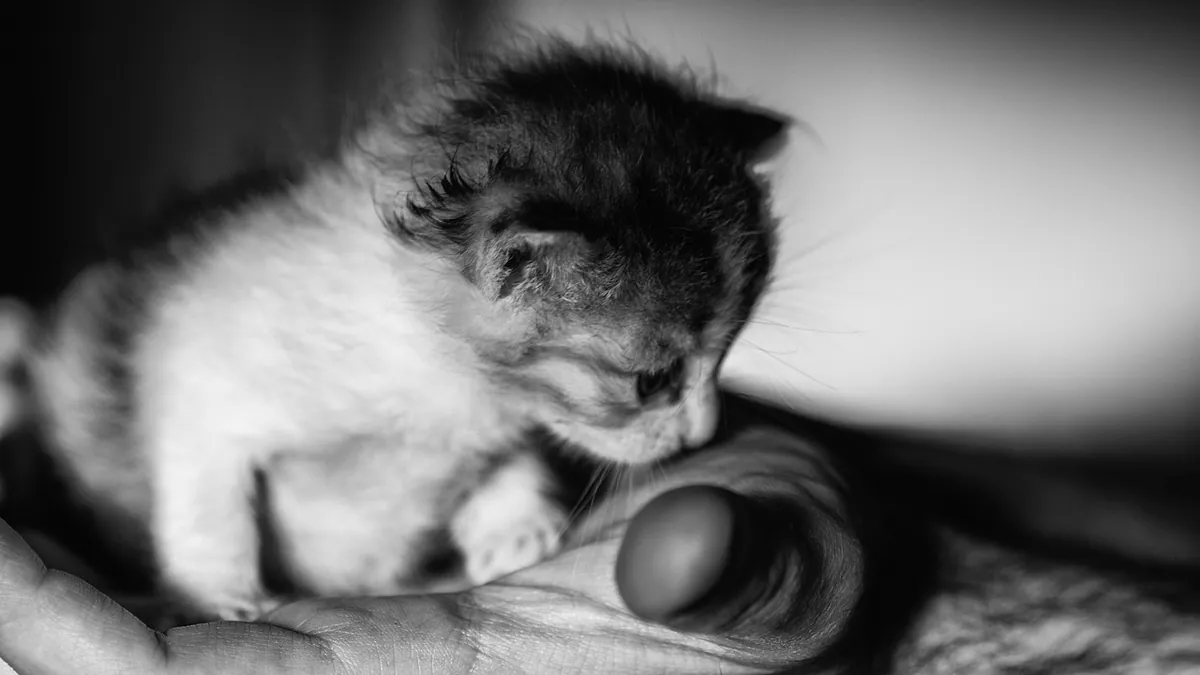
A kitten not moving after birth is a medical emergency that needs action within seconds, not minutes. A limp newborn may be hypothermic, have a blocked airway, or be struggling to breathe on its own, and warming plus gentle stimulation often makes the difference. Call an emergency veterinarian right away while you start the steps below.
This article is educational and is not a substitute for veterinary diagnosis or treatment.
Quick Answer
- Dry the kitten vigorously with a warm towel, then place it on a heating source wrapped in cloth so the skin is never in direct contact with heat.
- Clear the mouth and nose with a bulb syringe or the corner of a clean cloth, then rub the kitten firmly with a towel to stimulate breathing and circulation.
- Keep the kitten's body warm first. A cold newborn cannot respond to resuscitation efforts until its temperature rises.
- Do not put the kitten in water, do not shake it, and do not give any medication or milk by mouth.
- Call an emergency veterinary hospital immediately, even if the kitten starts to move, because fading kitten syndrome can develop over the first two weeks of life [1].
What a Limp Newborn Kitten Looks Like and What Is Normal
A healthy newborn kitten is born wet and usually starts moving, squirming, and crying within the first minute or two. It should have a strong suckle reflex and root toward the mother's nipple. Normal newborns sleep a great deal, but they wake and wiggle when handled or when they are cold or hungry.
A kitten that is not moving when born may be completely limp, may have a floppy head and neck, or may only twitch weakly. Some kittens are born with a heartbeat but no breathing effort. Others breathe but stay still and silent. A kitten that is not meowing after birth is not always in trouble, because some kittens are quiet, but a kitten that is both silent and limp needs immediate help.
Kittens that appear healthy at birth can still decline in the first two weeks. This pattern is called fading kitten syndrome, where one or more kittens in a litter become inactive, sick, and die despite looking normal at first [1]. That is why any newborn that is not moving normally deserves a veterinary call.
Main Causes of a Kitten Not Moving After Birth
Several problems can cause a newborn kitten to be limp, silent, or unresponsive. The table below lists the most common causes and how urgent each one is.
| Cause | Typical clues | How urgent |
|---|---|---|
| Hypothermia (low body temperature) | Cold to the touch, limp, slow heartbeat, weak suckle | Emergency now |
| Airway obstruction or fluid in the nose and mouth | Gurgling, open-mouth breathing, no cry | Emergency now |
| Hypoxia (low oxygen during or after birth) | Blue-tinged gums, no breathing effort, floppy body | Emergency now |
| Fading kitten syndrome | Born looking normal, then becomes inactive and weak over hours to days | Emergency now |
| Difficult birth (dystocia) | Long labor, kitten stuck, mother straining without delivering | Emergency now |
| Congenital malformations | Visible deformities, abnormal limbs or head shape, whole litter affected | Emergency now |
| Infection or toxicity passed from the mother | Multiple kittens in the litter declining together | Emergency now |
Hypoxia is a major concern in newborns. When a newborn does not get enough oxygen, the glottis (the opening to the windpipe) can close, which blocks air from entering the lungs and makes breathing even harder [2]. This is why clearing the airway and stimulating breathing quickly matters so much.
Difficult births are also common. In one study of 153 queens with dystocia, medical treatment worked in only 17% of cases, and 83% needed surgery [3]. Stillbirth rates rise when delivery is prolonged, so a kitten that is not moving after a hard labor needs a veterinarian fast.
Congenital malformations are less common but may be underrecognized as a cause of newborn death. In one report, a litter of fetuses had multiple severe malformations after the mother was given a synthetic progestin to suppress estrus before the pregnancy was recognized [4]. If several kittens in a litter are affected, a congenital cause should be considered.
Red Flags That Mean an Emergency
Call an emergency veterinary hospital right away if you see any of these signs:
- The kitten is limp, floppy, or does not respond to touch.
- The kitten is not breathing, or breathing is slow, gasping, or noisy.
- The gums or tongue look blue, gray, or white.
- The kitten feels cold to the touch.
- The mother is still straining and has not delivered all the kittens.
- The mother is bleeding, collapsed, or in distress.
- More than one kitten in the litter is weak, silent, or not nursing.
- The kitten has a visible deformity or an abnormal body shape.
Do not wait to see if the kitten improves on its own. Newborns can go from weak to dead in a short time, and the first hour is the most important window for survival.
Safe Things You Can Do at Home While Waiting
These steps are for the minutes before you reach a veterinarian. They are not a substitute for veterinary care.
Warm the kitten first
A cold kitten cannot breathe or respond well. Dry the kitten thoroughly with a warm towel, then place it on a heating pad set to low, a warm water bottle wrapped in a cloth, or a towel warmed in a dryer. Always put a cloth between the heat source and the kitten's skin. Never use a hair dryer, and never put the kitten in water.
Clear the airway
If the nose or mouth has fluid, wipe it gently with a clean cloth or use a bulb syringe. Hold the kitten's head slightly lower than its body so fluid can drain. Do not stick anything deep into the mouth or throat.
Stimulate breathing and circulation
Rub the kitten firmly but gently with a towel, especially along the back and chest. You can also rub the paws and the area around the ribs. This mimics the mother's licking and helps stimulate breathing and blood flow. If the kitten still is not breathing, you can give a few tiny puffs of air into the nose and mouth with your mouth, but only if you have been shown how, because too much air can damage the lungs.
Keep the kitten with its mother if she is stable
If the mother is calm and healthy, place the warmed kitten back with her so it can nurse. Colostrum in the first milk provides antibodies that protect the kitten [5]. If the mother rejects the kitten or is not producing milk, a veterinarian or shelter can guide you on kitten milk replacer.
Do not do these things
Do not give the kitten cow's milk, human formula, or any medication. Do not shake the kitten. Do not put it in a bath. Do not try to feed a kitten that is not fully warm and responsive, because it can choke.
If you are also managing a mother cat who seems stressed or is hiding after the birth, see Cat Suddenly Hiding and Not Coming Out: What to Do for guidance on when that behavior needs veterinary attention.
What the Veterinarian Will Check and Test
When you arrive, the veterinarian will start with a full physical exam. Newborns have different physiology than adult cats, and some tests are harder to run on them, so the exam is the first and most important step [1].
The veterinarian will check:
- Body temperature, heart rate, and breathing rate.
- Gum color and capillary refill time to assess circulation.
- Airway patency and lung sounds.
- Suckle and swallow reflexes.
- Umbilical stump and any signs of infection.
- Birth weight, which is one of the earliest health markers for a kitten [6].
- The mother's uterus and placenta if she is still in labor.
Depending on findings, the veterinarian may warm the kitten in an incubator, give oxygen, suction the airway, or provide fluids and glucose. Blood collection in newborns is difficult, so the treatment plan is often based on the exam and response to supportive care [1]. If the mother is still in labor or has retained a kitten, the veterinarian may need to intervene surgically, since most dystocia cases require surgery [3].
Prevention and Monitoring
You cannot prevent every case of a kitten not moving after birth, but you can lower the risk.
- Monitor the mother closely during labor. Know the signs of dystocia, such as strong straining for more than 20 to 30 minutes without delivering a kitten, and call a veterinarian.
- Keep the birthing area warm and clean. Newborns lose heat quickly.
- Weigh each kitten daily for the first two weeks. A kitten that is not gaining weight or is losing weight needs veterinary attention.
- Watch for fading signs. A kitten that was active and becomes quiet, cold, or refuses to nurse is a fader until proven otherwise [1].
- Avoid giving the mother any medication during pregnancy without veterinary guidance. Some drugs given during pregnancy have been linked to congenital malformations in kittens [4].
- Follow the vaccination schedule for the mother and the kittens. Maternal immunity passes to kittens at birth and through nursing, and it declines over time, so kittens should be vaccinated starting at 2 to 3 months old [5].
- Keep kittens away from unvaccinated cats until they have completed their vaccine series [5].
If you are also dealing with a mother cat who is pacing or vocalizing after the birth, Why Is My Cat Pacing and Meowing? Anxiety or Medical Issue? can help you decide whether that behavior is normal or needs a vet.
Limitations and When to Contact a Veterinarian
No article can tell you whether your specific kitten is going to survive. Every case needs a veterinarian who can examine the kitten in person.
Call an emergency veterinarian now if the kitten is limp, not breathing, blue, cold, or not responding to stimulation. Call the same day if the kitten is weak but responsive, not nursing well, or if the mother is not caring for it. Schedule a routine visit if the kitten is stable but you have concerns about weight gain, nursing, or the mother's health.
If you are unsure whether the situation is an emergency, call the clinic and describe what you see. It is always safer to call than to wait.
Frequently Asked Questions
How long can a newborn kitten go without breathing before it dies?
A newborn kitten can suffer brain damage or die within a few minutes without oxygen. If the kitten is not breathing, start warming and stimulating it immediately and call an emergency vet at the same time. Do not wait to see if it starts breathing on its own.
Should I rub a newborn kitten to make it breathe?
Yes, gentle but firm rubbing with a warm towel helps stimulate breathing and circulation. Rub the back, chest, and paws, and keep the kitten warm at the same time. If rubbing does not work within a minute or two, get veterinary help right away.
Can a kitten that is not moving after birth survive?
Some kittens do survive with fast warming, airway clearing, and veterinary care. Survival depends on the cause, how cold the kitten got, and how quickly treatment started. A veterinarian can give you a realistic outlook after examining the kitten.
What should I feed a limp newborn kitten?
Do not feed a limp or cold kitten anything by mouth. A kitten that is not fully warm and responsive cannot swallow safely and may choke. Once the kitten is warm and stable, a veterinarian or shelter can guide you on kitten milk replacer and feeding amounts.
Is it normal for a kitten to be quiet right after birth?
Some kittens are quiet for a short time after birth, especially if they are still wet and being cleaned by the mother. A kitten that stays silent and limp, or that does not start moving within a minute or two, is not normal and needs immediate help.
Related Articles
- Cat Not Using Litter Box After Moving: How to Help
- Cat Hiding After Moving: How to Help Your Cat Adjust
- Cat Suddenly Hiding and Not Coming Out: What to Do
- Cat Hissing and Growling at New Baby: How to Manage
- Why Is My Cat Pacing and Meowing? Anxiety or Medical Issue?
- Cat Litter Box Problems After Moving: How to Help Your Cat Adjust
- Kitten Not Responding or Unresponsive: What to Do Now
- Kitten Not Breathing or Unresponsive: Emergency Steps
- Cat Just Gave Birth: What to Do to Help
- Toxocara cati Roundworm Infection in Cats and Kittens: Prenatal Transmission and Clinical Management
References
- Fading kitten syndrome: Factors predisposing to 'faders' and treatment options. Journal of feline medicine and surgery, 2022.
- Hypoxia inhibits breathing and causes the glottis to close in preterm rabbit kittens at birth. Pediatric research, 2026.
- Investigation of maternal mortality and stillbirth in feline dystocia after emergency obstetric care interventions: a retrospective analysis. Journal of feline medicine and surgery, 2025.
- Multiple congenital malformations in a litter of feline fetuses associated with gestational exposure to a synthetic estrus-suppressing progestin. BMC veterinary research, 2026.
- Kitten Care - Cat Owners. Merck Veterinary Manual.
- Birth weight in the feline species: Description and factors of variation in a large population of purebred kittens. Theriogenology, 2022.