Foreign Objects in a Dog's Ear or Mouth: What to Do
By Dr. Zubair Khalid, DVM, MS, PhD ·
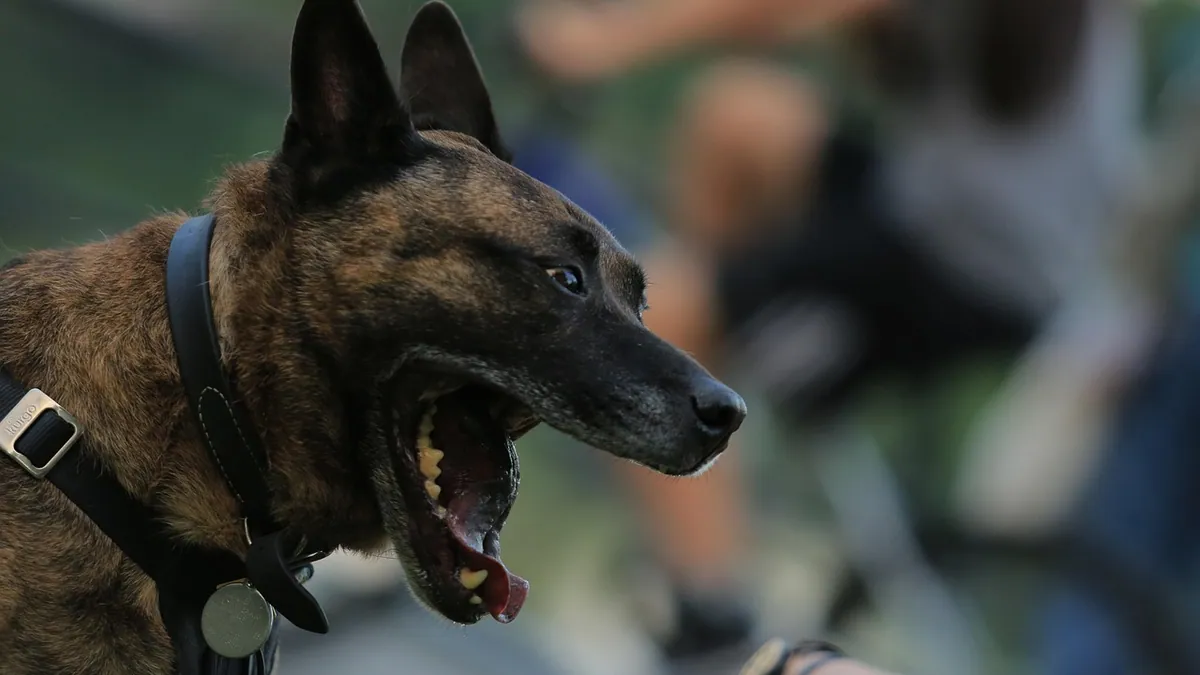
A foreign body in a dog's ear or mouth is anything trapped there that should not be, such as a grass awn, a bone fragment, or a piece of a toy. Some objects cause only mild irritation, while others block the airway, tear tissue, or damage the eardrum and need treatment right away. The first step is to look without pushing the object deeper, then decide whether this is a same-day visit or an emergency. This article is educational and is not a substitute for veterinary diagnosis or treatment.
Quick Answer
- If your dog can breathe, bark, and swallow, keep him calm and call your veterinarian for guidance before you try anything at home.
- If your dog is choking, pawing at the mouth, gagging without producing anything, or struggling to breathe, this is an emergency. Go to the nearest veterinary hospital now.
- Never push a cotton swab, finger, or tweezers blindly into the ear canal. You can rupture the eardrum or drive the object deeper.
- Do not pull on string, ribbon, or thread you see in the mouth. Linear objects can cut through the intestine and cause life-threatening damage [1].
- Objects lodged in the ear usually need sedation or general anesthesia for safe removal, so plan on a veterinary visit even if your dog seems comfortable.
What You May See at Home
Dogs show ear and mouth foreign bodies in different ways, and the signs can be easy to miss at first.
Ear signs
A dog with something stuck in the ear often tilts his head toward the affected side, shakes his head, or scratches at that ear. The ear may look red, feel warm, or have discharge. Some dogs yelp when the ear is touched. Others hold the ear down or rub it along the floor.
These signs overlap with common ear infections. Bacterial infections are a major cause of otitis externa in dogs, and Staphylococcus species are frequently involved [2]. Staphylococcus pseudintermedius is the most common isolate, found in about 41% of cases in one analysis, followed by Staphylococcus aureus and Pseudomonas aeruginosa [3]. Because infection and foreign bodies can look alike, a veterinarian needs to examine the canal to tell them apart.
Mouth signs
A dog with something stuck in the mouth may paw at his face, drool heavily, or refuse food. He might gag, swallow repeatedly, or regurgitate. Ptyalism (heavy drooling), gagging, difficulty swallowing, and repeated attempts to swallow are classic signs of an object lodged in the esophagus [4]. Sometimes you will see the dog eat the object, which makes the cause obvious [4].
What is normal
It is normal for dogs to chew, lick, and occasionally gag on grass or hair. A single soft gag that resolves in seconds is usually not an emergency. It is also normal for a dog to scratch an ear briefly after a bath or swim. What is not normal is repeated or ongoing behavior, especially if it lasts more than a few minutes or comes with pain, breathing changes, or appetite loss.
Main Causes and How Urgent They Are
The table below covers the objects veterinarians see most often. Urgency depends on where the object sits and what it is made of.
| Cause | Typical clues | How urgent |
|---|---|---|
| Grass awn or plant material in the ear | Head tilt, head shaking, sudden ear pain, often after a walk in tall grass | Same-day visit. These objects migrate and can reach the eardrum. |
| Insect or tick in the ear | Sudden frantic scratching, visible movement, swelling | Same-day visit. Do not dig for it at home. |
| Small toy piece or chewed item in the mouth | Drooling, pawing at mouth, dropping food | Same-day visit if the dog is breathing normally. |
| Bone or dental chew lodged in the esophagus | Gagging, regurgitation, repeated swallowing, drooling [4] | Emergency. Bones are the most common esophageal foreign body in dogs [4]. |
| Needle, fishhook, or wood splinter in the mouth or throat | Drooling, bleeding, pain when swallowing [4] | Emergency. Sharp objects can perforate tissue. |
| String, ribbon, or thread swallowed | Vomiting, lethargy, abdominal pain, sometimes a visible string at the mouth | Emergency. Linear foreign bodies can cut through the intestine and cause peritonitis and sepsis [1]. |
| Rock, corn cob, sock, or toy swallowed whole | Vomiting, no appetite, abdominal pain, no bowel movement | Emergency. These are common causes of gastrointestinal obstruction [1]. |
| Tumor or mass in the ear canal | Chronic discharge, odor, head tilt, sometimes a visible growth | Routine to urgent visit. Benign and malignant ear canal tumors occur in dogs and need imaging to characterize [5]. |
If your dog swallowed an object and you are watching for obstruction signs, see Dog Ate a Foreign Object: Signs of Obstruction and When to Go to the Vet. For sharp items, Dog Ate a Sharp Object: Signs of Internal Injury and What to Do covers the warning signs. If the object was a toy, Dog Ate a Toy: When to Worry and What to Do walks through the decision.
Red Flags That Mean Emergency
Some situations cannot wait for a scheduled appointment. Go to a veterinary hospital immediately if you see any of these.
- Your dog is choking, cannot breathe, or has blue or gray gums.
- Your dog is gagging repeatedly and nothing comes up.
- Your dog collapses, seems weak, or loses consciousness.
- There is heavy bleeding from the mouth or ear.
- You see string, ribbon, or thread in the mouth or coming from the rectum. Do not pull it [1].
- Your dog has a swollen, painful abdomen and is vomiting.
- Your dog swallowed a needle, fishhook, or sharp bone.
- Your dog is drooling and cannot swallow at all.
A dog choking on an object is a true emergency. If the object is visible in the mouth and you can reach it without being bitten, you may try to remove it with your fingers or a flat tool. Do not sweep blindly with your finger, because you can push the object into the throat. If you cannot see it or cannot reach it, stop and get help.
Safe Things You Can Do at Home
Your job at home is to keep your dog safe and comfortable until a veterinarian can help. It is not to remove the object unless it is clearly visible and easy to grasp.
Restrain gently
Approach your dog calmly. Use a towel or blanket to wrap a small dog, leaving the head free. For a large dog, have a second person hold the body while you look. A muzzle can help, but never muzzle a dog who is having trouble breathing or is vomiting.
Look, do not dig
For the mouth, lift the lip and look at the teeth, gums, and tongue. Use a flashlight. If you see a loose piece of food or a small object sitting on the tongue, you can try to remove it with your fingers or a spoon handle. If it is stuck, stop.
For the ear, look at the opening only. Do not insert a cotton swab, pencil, or tweezers. The ear canal is narrow and angled, and you cannot see how far the object has traveled. Pushing it can rupture the eardrum or cause a tear in the canal. Ear canal tears and avulsions are most often caused by acute trauma, and many of these injuries require surgery [6].
Keep your dog calm
Activity makes objects move. Keep your dog leashed and quiet. Do not let him shake his head violently or scratch at the ear. If he is pawing at his mouth, offer a small amount of water but no food, in case sedation or anesthesia is needed.
Call ahead
Phone the veterinary clinic before you arrive. Tell them what you saw, how long ago it happened, and whether your dog is breathing normally. This helps the team prepare for a possible foreign body in dogs ear or mouth removal.
What the Veterinarian Will Check and Test
Your veterinarian will start with a full history and a physical exam. They will check your dog's breathing, heart rate, gum color, and level of pain.
Ear examination
The standard first step is otoscopy, which means looking into the ear canal with a special instrument. Otoscopy is the standard diagnostic procedure for ear disease in dogs [7]. If the canal is swollen, painful, or filled with debris, your veterinarian may need to sedate your dog to see the object clearly. In some cases, computed tomography (CT) is used to assess the ear canal and middle ear, and CT has shown high sensitivity for detecting otitis externa [7]. CT is also used to evaluate ear canal masses and plan surgery [5].
Mouth and throat examination
For the mouth, your veterinarian will look under the tongue, along the gums, and at the back of the throat. For the esophagus, they may recommend endoscopy, which uses a camera to see and often remove the object. Some objects pass on their own, but others need to be pulled out or pushed into the stomach.
Imaging and blood work
X-rays or CT may be needed to find objects that are not visible on exam. Blood work helps the team assess your dog's overall health and readiness for anesthesia. If your dog has an ear infection along with the foreign body, your veterinarian may take a sample to identify the bacteria involved. Pseudomonas aeruginosa is a common and often resistant organism in canine ear infections, with high rates of resistance to some antibiotics [3]. This is why cultures and sensitivity testing matter when infection is present.
Removal
Small, loose objects in the mouth may come out with a gentle grasp. Objects in the ear almost always require sedation or general anesthesia. This protects your dog from pain and lets the veterinarian work safely. If the object has caused a tear in the ear canal, surgery may be needed [6]. If a mass is found, further testing can determine whether it is benign or malignant [5].
Prevention and Monitoring
Prevention is easier than removal. Here are practical steps.
- Keep small toys, bones, and chewed items out of reach. Supervise chew time.
- Choose toys that are the right size for your dog. If it fits in the mouth easily, it can be swallowed.
- Check your dog's ears after walks in tall grass, especially in late summer. Grass awns are a common culprit.
- Keep trash, string, ribbon, and sewing supplies secured.
- Learn your dog's normal ear and mouth appearance so changes stand out.
- If your dog has chronic ear problems, work with your veterinarian on a long-term plan. Recurrent infections can be linked to resistant bacteria [3].
- If your dog has an ear infection, follow treatment instructions fully. For more on home care, see What Can I Do For Dog With Ear Infection and Dog Itching Ear What To Do.
Limitations and When to Contact a Veterinarian
This article cannot tell you whether your dog's specific object is dangerous. Only a veterinarian who examines your dog can do that. Individual cases need a veterinarian.
Contact your veterinarian the same day if your dog has a head tilt, ear pain, drooling, or a mild gag that keeps happening. Go to an emergency hospital now if your dog is choking, struggling to breathe, bleeding heavily, or has swallowed string or a sharp object. Schedule a routine visit if you notice a chronic ear odor, discharge, or a visible mass in the ear canal. When in doubt, call. A quick phone call can save you hours of worry and may save your dog's life.
Frequently Asked Questions
Can I remove an object from my dog's ear at home?
No, you should not try to remove an object from your dog's ear at home. The canal is narrow and curved, and you cannot see how deep the object sits. Pushing it can damage the eardrum or the canal wall. Your veterinarian has the right tools and can use sedation if needed.
What should I do if my dog is choking on something?
If your dog is choking, keep him calm and go to the nearest veterinary hospital right away. If the object is clearly visible in the mouth and you can grasp it safely, you may remove it. Do not sweep your finger blindly in the throat, because you can push the object deeper. Call ahead so the team is ready.
How do I know if my dog swallowed something dangerous?
Watch for vomiting, loss of appetite, abdominal pain, lethargy, and no bowel movements. These are signs of a possible obstruction, which is an emergency [1]. If you saw your dog swallow a toy, bone, rock, or string, call your veterinarian even if he seems fine right now.
Will a foreign body in the ear pass on its own?
No, objects in the ear canal do not pass on their own. They stay in the canal or move deeper toward the eardrum. Some cause infection or pain within hours. Others sit quietly for days before signs appear. A veterinarian needs to look and remove it.
Is sedation always needed for removal?
Not always, but it is common for ear foreign bodies. Sedation or general anesthesia keeps your dog still and free of pain, which makes removal safer and more complete. Small, loose objects in the mouth may come out without sedation. Your veterinarian will decide based on the object, its location, and your dog's comfort.
Related Articles
- Dog Ate a Foreign Object: Signs of Obstruction and When to Go to the Vet
- Dog Itching Ear What To Do
- What Can I Do For Dog With Ear Infection
- Dog Ate a Sharp Object: Signs of Internal Injury and What to Do
- Dog Ate a Toy: When to Worry and What to Do
- Dog Itchy Ears What To Do
- Something Stuck in Dog's Throat: Safe Steps to Take
- How to Tell If Your Dog Swallowed Something Dangerous
- Foreign Body in a Dog's Stomach or Gut: Warning Signs
References
- Gastrointestinal foreign body obstruction in dogs. Cornell University College of Veterinary Medicine.
- Microbiology of Otitis externa in dogs reveals wide variation in Staphylococcus species. Veterinaria italiana, 2025.
- Bacterial Agents and Antimicrobial-Resistance Patterns in Canine Otitis Externa. Animals : an open access journal from MDPI, 2025.
- Esophageal Foreign Bodies in Small Animals - Digestive System. Merck Veterinary Manual.
- Computed Tomographic Features of Benign and Malignant External Ear Canal Neoplasms in 39 Dogs. Veterinary radiology & ultrasound : the official journal of the American College of Veterinary Radiology and the International Veterinary Radiology Association, 2026.
- Causes, treatment and outcome of external ear canal tears and avulsions in cats and dogs: 24 cases (2008-2024). The Veterinary record, 2026.
- Computed Tomographic Findings in Canine Otitis Externa. Veterinary radiology & ultrasound : the official journal of the American College of Veterinary Radiology and the International Veterinary Radiology Association, 2026.