Coral Snake Bite in Cats: Signs and Emergency Care
By Dr. Zubair Khalid, DVM, MS, PhD ·
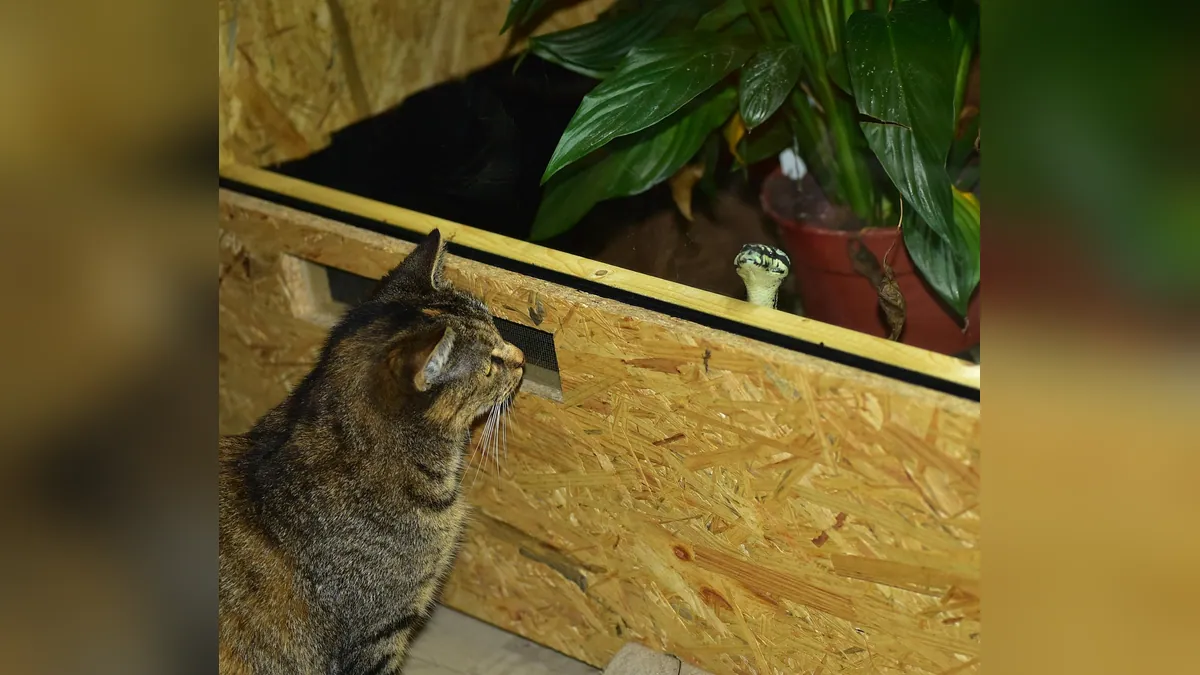
A coral snake bite in cats is a true medical emergency, even when your cat seems completely normal right after the bite. Coral snake venom attacks the nervous system, and serious weakness or breathing failure can appear hours later. Because there is no reliable home treatment, every suspected bite needs a veterinarian immediately.
This article is educational and is not a substitute for veterinary diagnosis or treatment.
Quick Answer
- Coral snake venom is neurotoxic, meaning it targets nerves and muscles, and signs can be delayed for hours after the bite.
- A bite may leave little swelling or pain, so a calm, normal-looking cat can still be envenomated.
- Call your veterinarian, the ASPCA Animal Poison Control Center at (888) 426-4435, or Pet Poison Helpline at (855) 764-7661 right away, even if you are not certain a bite happened.
- Do not induce vomiting, do not cut or suction the wound, and do not apply a tourniquet unless a veterinarian directs you to.
- Antivenom and supportive care are the mainstays of treatment, and cats that receive care early have a much better chance of surviving [1][2].
Are Coral Snakes Dangerous to Cats?
Yes. Coral snakes belong to the same family as cobras and other elapids, and their venom is built to paralyze prey. In the United States, the eastern coral snake (Micrurus fulvius) is the species most often involved in pet exposures, and it is found mainly in the southeastern states. Coral snakes are shy and usually bite only when handled, stepped on, or cornered, but cats are curious and may paw at one in a yard, garage, or woodpile.
Coral snakes have small mouths and short fangs, so they often have to chew or hold on to deliver venom. That means some bites inject little or no venom, while others inject a full dose. You usually cannot tell which happened just by looking at the wound.
Which Parts of the Snake and Which Products Are Toxic
The venom is produced in glands in the snake's upper jaw and delivered through fixed fangs. All parts of the snake should be treated as dangerous, including a dead snake, because a bite reflex can still fire after death. There is no "safe" product from a coral snake. The venom itself is the toxic principle, and it is injected, not sprayed or absorbed through intact skin.
What the Venom Does in the Body
Coral snake venom contains toxins that block communication between nerves and muscles. In simple terms, the signal from the nerve never reaches the muscle, so muscles become weak and then unable to move. This is called neuromuscular paralysis. It starts with the muscles that are easiest to tire, such as the ones controlling the limbs, eyelids, and throat, and it can progress to the muscles that drive breathing.
Because the venom works at the nerve-muscle junction instead of destroying tissue, the bite site often looks unimpressive. You may see tiny puncture marks, a little redness, or nothing at all. That mismatch between a quiet wound and a sick cat is one of the most dangerous features of coral snake envenomation.
In a review of 92 dogs and cats exposed to eastern coral snakes, peripheral neurologic deficits such as ataxia, paresis to plegia, absent reflexes, and hypoventilation were documented in about 19.6% of cases [1]. Gastrointestinal signs like vomiting and drooling occurred in about a third of cats [1]. Hemolysis, or breakdown of red blood cells, has also been reported in these cases [1].
Coral Snake Bite Cat Symptoms and Timeline
Signs can be subtle at first and then worsen over hours. The timeline varies with how much venom was injected, where the bite is, and how quickly your cat receives care.
Early Signs (First 1 to 3 Hours)
- Drooling or excessive salivation [1]
- Vomiting [1]
- Mild wobbling or unsteady walking
- Dilated pupils or droopy eyelids
- Restlessness, hiding, or unusual quietness
- Small bite marks, often on a paw, leg, muzzle, or face
Later Signs (3 to 12 Hours and Beyond)
- Weakness that progresses to inability to stand
- Reduced or absent reflexes [1]
- Trouble swallowing
- Slow, shallow, or labored breathing (hypoventilation) [1]
- Collapse
- In severe cases, respiratory failure requiring a breathing machine [2]
If your cat is having trouble breathing, that is an emergency right now. You can read more about what respiratory distress looks like in Cat Difficulty Breathing: Emergency Signs and What to Do.
What to Do Right Now
- Move your cat away from the snake and keep the snake away from people and other pets. Do not try to catch or kill it. If you can safely take a photo from a distance, that helps identification, but never risk a second bite.
- Call your veterinarian or an emergency clinic immediately. If they are closed, call the ASPCA Animal Poison Control Center at (888) 426-4435 or Pet Poison Helpline at (855) 764-7661.
- Keep your cat calm and quiet. Carry your cat instead of letting it walk. Stress and movement can speed up venom spread.
- Do not induce vomiting unless a veterinarian tells you to. Do not give food, water, or any human medication.
- Do not cut, suck, or squeeze the wound. Do not apply ice or a tight bandage. Do not use a tourniquet unless a veterinarian instructs you to.
- Go to the clinic even if your cat looks fine. Delayed neurologic signs are the hallmark of coral snake envenomation, and early treatment is far safer than waiting for symptoms [1].
If your cat has a wound that looks infected or swollen after any bite, that is a separate concern covered in Cat Bite Abscess: Signs, Home Care, and When to See the Vet and Cat Bite Infection: Comprehensive Veterinary Reference Guide.
Veterinary Treatment for a Cat Bitten by a Coral Snake
Your veterinarian will start with a physical exam, a neurologic assessment, and blood work. They will ask about the time of the bite, the location, and any signs you noticed. Treatment focuses on antivenom and close monitoring.
Coral Snake Antivenom in Cats
Coral snake antivenom is the specific treatment for envenomation. It is given by a veterinarian, and the dose is calculated from your cat's weight, the severity of signs, and the veterinarian's judgment. In one review, the mean time from hospital presentation to antivenom administration was about 2.26 hours, and the mean number of vials used was 1.29, with a range of 1 to 4 vials [1]. Antivenom is not a home treatment, and it must be given in a hospital where reactions can be managed.
Antivenom use in cats is not well studied compared with dogs. In a small case series of three cats with snake envenomation, one cat received antivenom and had no adverse reactions, and all three cats survived with supportive care [3]. That is encouraging, but the number of cats is tiny, so your veterinarian will weigh the risks and benefits for your individual cat.
Supportive Care
Supportive care can include intravenous fluids, oxygen, medications to control vomiting and drooling, pain management, and monitoring of heart and lung function. Cats with severe weakness or breathing failure may need a ventilator. In dogs and cats with elapid envenomation, the median survival to discharge is about 72%, with a median of 33 hours on a ventilator and 140 hours in the hospital when ventilation is needed [2]. Those numbers come from a mixed population, so they are a general guide, not a promise for your cat.
Hospital stays for coral snake cases are often measured in days. In the coral snake review, the mean hospitalization time was about 34 hours for cats, excluding cases where owners declined in-hospital care [1]. Some cats need longer stays if breathing support is required.
Outlook After a Coral Snake Bite
The outlook depends on how much venom was injected and how fast treatment started. Cats that receive antivenom and supportive care early generally do better than cats that arrive after paralysis has set in. Respiratory failure is the main life-threatening complication, and it can develop quickly [2].
Recovery is not always instant. Some pets have lingering weakness or fatigue for days to weeks after discharge. In a survey of dogs and cats after pit viper envenomation, most pets returned to normal within 5 days of discharge, while a small number took 6 to 9 weeks to fully recover [4]. That study looked at a different snake family, so it is not a direct match for coral snakes, but it shows that a full recovery can take time.
Prevention and Safer Alternatives
The best protection is to keep your cat away from snakes.
- Keep cats indoors or in a secure catio. Indoor cats rarely encounter venomous snakes.
- Walk dogs on a leash and keep cats supervised if they go outside.
- Clear woodpiles, brush, and debris from areas where cats play. Coral snakes like cover.
- Never let your cat investigate a snake, even a dead one.
- If you live in an area with coral snakes, learn what they look like and teach everyone in the household to leave them alone.
- Contact a wildlife removal service if a snake is living near your home. Do not try to move it yourself.
There is no vaccine or home remedy that prevents or treats coral snake envenomation. If you suspect a bite, the only safe alternative to waiting is immediate veterinary care.
Limitations and When to Contact a Veterinarian
Call your veterinarian or an emergency clinic right away if you saw a coral snake bite your cat, if you found a snake near your cat, or if your cat has sudden drooling, vomiting, wobbling, weakness, droopy eyelids, or trouble breathing. These signs can worsen within hours, so do not wait to see if your cat improves on its own.
Contact a veterinarian the same day if you are unsure whether a bite happened but your cat has a new wound on a paw, leg, or face, or if your cat seems quieter or less steady than usual. A routine visit is reasonable for a small wound with no neurologic signs, but any change in behavior, breathing, or movement should be treated as urgent.
If your cat has a skin wound that is red, swollen, or draining, or a rash with fever, those need separate evaluation. See Cat Skin Rash with Fever: Emergency Signs You Shouldn't Ignore for guidance. Ear pain and head tilt after a bite or scratch can also signal a problem, covered in Cat Ear Infection with Pain: Signs and Emergency Steps.
Every cat is different, and only a veterinarian who examines your cat can decide what treatment is right. When in doubt, call. It is always better to be told your cat is fine than to wait too long.
Frequently Asked Questions
How long after a coral snake bite do cats show signs?
Signs often start within a few hours, but they can be delayed longer. Some cats drool or vomit early, while weakness and breathing problems may not appear until later. Because of that delay, a cat that looks normal right after a bite still needs emergency care.
Can a cat survive a coral snake bite without antivenom?
Some cats survive with supportive care alone, but the risk of paralysis and breathing failure is high. Antivenom is the specific treatment and gives the best chance of a good outcome. Your veterinarian will decide whether antivenom is needed based on your cat's signs and exam.
Is there a coral snake antivenom for cats?
Yes, coral snake antivenom exists and is used in veterinary medicine. It is given in a hospital setting, and the dose is calculated by your veterinarian based on your cat's weight and condition. Cats may tolerate it well, but reactions are possible and are managed in the clinic [3].
What should I not do after a suspected coral snake bite?
Do not induce vomiting, cut or suction the wound, apply ice, or use a tourniquet unless a veterinarian tells you to. Do not give food, water, or human medications. Keep your cat calm and get to a veterinarian as fast as you safely can.
How can I tell a coral snake from other snakes?
Coral snakes have red, yellow, and black bands, and the red bands touch the yellow bands. Many harmless snakes mimic this pattern, so color alone is not reliable. Do not get close to identify a snake. Take a photo from a safe distance if you can, and let your veterinarian or poison control help with identification.
Related Articles
- Cat Bite Abscess: Signs, Home Care, and When to See the Vet
- Cat Difficulty Breathing: Emergency Signs and What to Do
- Cat Bite Infection: Comprehensive Veterinary Reference Guide
- Cat Ear Infection with Pain: Signs and Emergency Steps
- Cat Skin Rash with Fever: Emergency Signs You Shouldn't Ignore
- Cat Blocked Bladder: Recognizing a Life-Threatening Emergency
- Rattlesnake Bite in Cats: Emergency First Aid and Treatment
- Snake Bite on a Cat's Paw or Leg: Signs and First Aid
- Copperhead Snake Bite in Cats: What to Do
References
- Retrospective Evaluation of Clinical and Clinicopathologic Findings, Case Management, and Outcome for Dogs and Cats Exposed to Micrurus fulvius (Eastern Coral Snake): 92 Cases (2021-2022). Toxins, 2024.
- Mechanical ventilation in snake envenomation of dogs and cats. Frontiers in veterinary science, 2023.
- Snake envenomation in three cats in South Korea. JFMS open reports, 2023.
- Most dogs and cats recovered within 5 days of discharge after hospitalization secondary to crotalid (pit viper) envenomation: a survey-based study. American journal of veterinary research, 2026.