Cat Leg Sprain or Strain: Home Care and When to See a Vet
By Dr. Zubair Khalid, DVM, MS, PhD ·
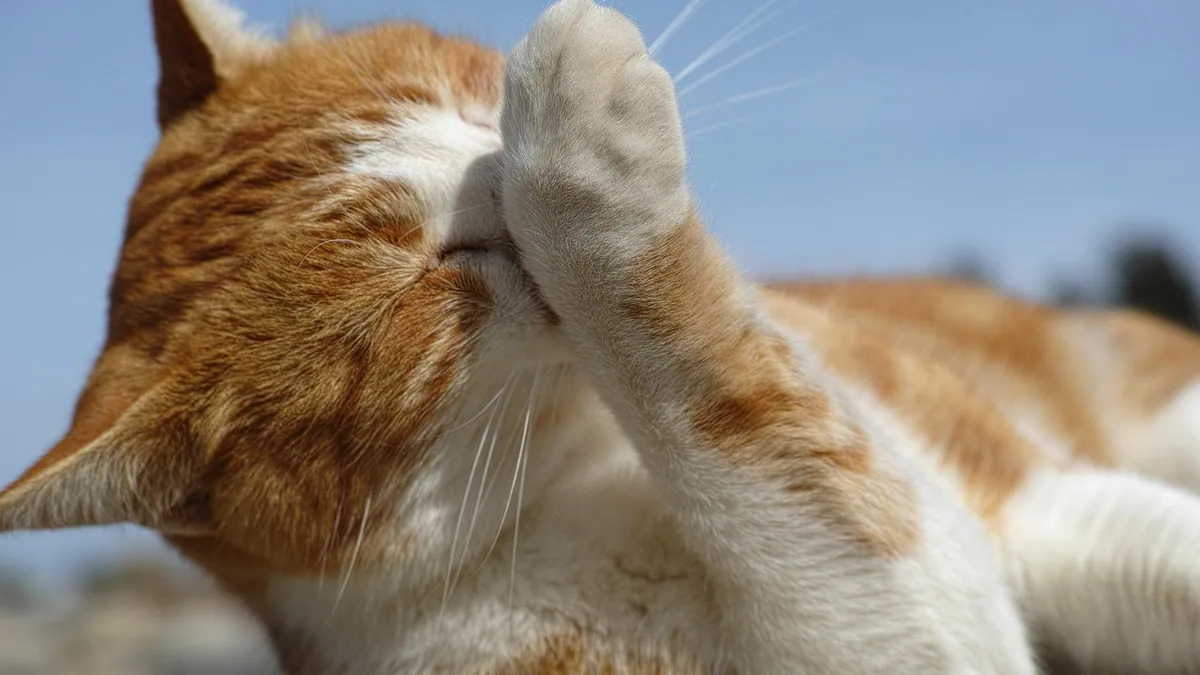
A cat leg sprain or strain is a soft tissue injury to a ligament, tendon, or muscle, and mild cases often improve with strict rest and pain control. The hard part is telling a mild sprain apart from a fracture, a dislocated kneecap, or a torn cruciate ligament, because those need veterinary imaging and sometimes surgery. This article is educational and is not a substitute for veterinary diagnosis or treatment.
Quick Answer
- If your cat is bearing some weight, the leg is not dangling or crooked, and there is no open wound, confine your cat to a small room or large crate and call your vet for guidance.
- Never give human pain relievers. Acetaminophen and ibuprofen are toxic to cats, and your veterinarian will calculate any safe dose from your cat's weight and health.
- Any cat that cannot bear weight, cries when the leg is touched, or has a swollen, deformed, or bleeding limb needs to be seen the same day.
- Most soft tissue injuries need weeks of restricted activity, not days, so plan for a quiet room, low litter box edges, and no jumping.
- If lameness lasts more than 24 to 48 hours, worsens, or keeps coming back, an X-ray is the next step.
What a Leg Sprain or Strain Actually Is
A sprain is stretching or tearing of a ligament, the tough band that connects bone to bone and stabilizes a joint. A strain is the same kind of injury in a muscle or tendon. Both are soft tissue injuries, which means the bones themselves are intact.
Cats also get joint problems that are not simple sprains. Joint disorders in cats can affect the joint membranes, tendons, cartilage, bursae, and the fluid inside the joint, and they may be present from birth or result from injury, abnormal development, immune-related conditions, cancer, or infection [1]. That is why a limp that looks like a sprain sometimes turns out to be something else.
Two injuries are especially easy to confuse with a sprain. The first is a torn cranial cruciate ligament in the knee, which usually follows a serious injury but is more likely when the joint is already weakened by degeneration, the cat's own immune system, or joint conformation defects [1]. The second is a kneecap (patellar) luxation. In mild cases the lameness comes and goes and the kneecap can be pushed out of place but slides back easily, while more severe cases cause consistent lameness and bone deformities, and X-rays help show the effects on the limb [1].
If you are trying to sort out whether your cat's leg problem started with a jump or a fall, this guide on Cat Limping After a Jump: Is It a Sprain or a Break? walks through the differences.
Signs Owners Notice
Cats hide pain well, so the first clue is often a change in behavior instead of a dramatic cry.
- Limping or hopping, which may be mild at first and worse after rest
- Holding the leg up or touching the toes to the floor without bearing weight
- Reluctance to jump onto the couch or bed, or missing jumps
- Stiffness when getting up, especially after sleeping
- Licking or chewing at one spot on the leg
- Swelling, warmth, or a flinch when you touch the limb
- Hiding, grumpiness, or less interest in play
The Feline Grimace Scale is the most commonly used acute pain assessment tool among veterinarians, according to a survey of 833 practitioners in Europe [2]. You can look up the scale and compare your cat's face to the photos. A tense, squinting, ears-flat expression with a wrinkled nose is a real pain signal, not just a bad mood.
Causes and Risk Factors
Most leg sprains in cats come from a sudden twist, slip, or awkward landing. Common situations include jumping down from a high shelf, catching a paw in something, or a fall.
One small case series of five cats with traumatic tarsometatarsal injuries (the joint area near the ankle) found that four of the five hurt themselves by catching a paw in a horizontal drawer handle [3]. That is a good reminder to check your home for gaps and handles a cat could snag a leg on.
Risk factors for a more serious injury include:
- Being overweight, which adds load to joints
- Age, since older cats often have underlying joint disease
- Prior knee problems, including cruciate ligament disease or kneecap luxation [1]
- High furniture with a hard landing zone
- Outdoor access, which raises the odds of falls, bites, and car accidents
Bite wounds deserve special attention. A small puncture on a leg can look like a mild sprain at first, then swell into an abscess. If you see paired puncture marks or any swelling that grows over a day or two, read Cat Bite Abscess: Signs, Home Care, and When to See the Vet and call your vet. For minor surface bites, How to Treat Minor Cat Bites at Home and When to See a Vet covers first steps.
How Your Veterinarian Figures Out What Is Wrong
Your vet starts with their hands and eyes. They watch your cat walk, feel the leg for swelling, heat, and instability, and check the joints above and below the sore spot. They will also test the kneecap for luxation, since veterinarians can often feel the displacement directly [1].
X-rays are the main tool for ruling out a fracture or bone problem. X-rays also help your vet see what effects a kneecap problem has had on the limb [1]. If the bones look normal but the knee is unstable, your vet may suspect a cruciate ligament tear, which can make the knee unstable and lead to cartilage injury, joint fluid buildup, bony outgrowths, and thickening of the joint membrane [1].
Some cases need more than plain X-rays. Advanced imaging or referral to a specialist may be recommended if your vet suspects a ligament rupture, a complex fracture, or a joint problem that needs surgery.
Sprain vs. Fracture vs. Cruciate Injury
| Feature | Sprain or strain | Fracture | Cruciate ligament tear |
|---|---|---|---|
| Onset | Often after a slip or jump | Usually after a fall or impact | Often sudden, sometimes on a weakened joint [1] |
| Weight bearing | Usually partial | Often none | Often none or toe-touching |
| Limb shape | Normal | May look crooked or shortened | Normal |
| Swelling | Mild to moderate | Often marked | Joint fluid buildup is common [1] |
| X-ray findings | Normal bones | Visible break | Bones normal, joint may show changes [1] |
| Typical path | Rest and pain control | Splint, cast, or surgery | Often surgery, such as a TPLO [4] |
How to Treat a Cat Leg Sprain at Home
Home care for a mild sprain is mostly about two things: keeping your cat quiet and keeping your cat comfortable. Here is how to treat cat leg sprain at home in practical terms.
Restrict Activity Strictly
This is the single most important step. Confine your cat to one small, quiet room or a large dog crate. Remove cat trees, shelves, and anything to jump on. Put food, water, and a low-sided litter box within easy reach so your cat does not have to walk far or step over a high rim.
Expect weeks, not days. Soft tissue healing in cats is slow, and a cat that feels better after three days will re-injure the leg the moment it jumps. Ask your vet for a specific timeline for your cat.
Pain Control Only Through Your Vet
Never give your cat human medications. Acetaminophen and ibuprofen can be fatal to cats. Meloxicam and robenacoxib are the nonsteroidal anti-inflammatory drugs most used by veterinarians for chronic pain management in cats [2], but the dose and choice depend on your cat's weight, kidney values, and other health conditions. Your veterinarian calculates the dose for your pet.
If your cat is already on pain medication from a previous visit, do not reuse it without asking. Doses and safety change with weight, age, and kidney function.
Support the Leg and Keep It Clean
If your vet applied a bandage or splint, keep it dry and check it daily for slipping, swelling, odor, or discharge. Do not remove it yourself. If your cat chews at the bandage, call your vet about an Elizabethan collar.
Check the toes for swelling or coolness. Four of five cats in one surgical case series had post-operative paw swelling on the operated limb after tarsometatarsal surgery [3], so paw swelling after a leg injury is common and worth reporting, not ignoring.
Gentle Handling
When you move your cat, support the chest and hindquarters together. Do not lift by the front legs or pull on the sore limb. For litter box trips, place the box right next to your cat's bed.
Treatment Options Your Vet May Recommend
Treatment depends on what is actually injured.
- Mild sprain or strain: rest, activity restriction, and vet-prescribed pain relief. No surgery.
- Fracture: splinting, casting, or surgical repair, depending on the bone and the stability of the break.
- Cruciate ligament tear: surgery is common. In one study of 28 cats that had a tibial plateau leveling osteotomy (TPLO), the median lameness grade dropped from 3 out of 5 before surgery to 0 out of 5 afterward, and cranial tibial thrust was neutralized in 28 of 32 stifles [4]. Complications occurred in 9 of 32 stifles and were mostly minor [4].
- Kneecap luxation: treatment ranges from monitoring to surgery, and a modified tibial plateau leveling osteotomy has been used to correct both a cruciate rupture and a grade 3 medial patellar luxation in one procedure in a single cat [5].
- Severe ankle injuries: partial tarsal arthrodesis with a bone plate has been described in cats with traumatic tarsometatarsal injuries, with no intra-operative or major post-operative complications recorded in a series of five cats [3].
If your cat has a broken bone instead of a sprain, the plan looks very different. See Cat Broken Leg: How to Tell and What to Do for what to expect.
Recovery, Outlook, and Long-Term Management
Most mild sprains improve over one to several weeks with strict rest. Improvement should be steady. If your cat is not better in a few days, or is worse, that is a signal to go back to your vet.
Long-term management matters if your cat has an underlying joint problem. Joint disorders in cats can be congenital or acquired, and the signs vary with severity [1]. Cats with ongoing joint disease often benefit from:
- Weight management, since extra pounds load every joint
- Soft, warm bedding and ramps or steps to favorite spots
- Regular low-impact play instead of high jumps
- Scheduled rechecks so your vet can adjust pain control
Chronic pain in cats is often under-recognized. In one survey, 48.5% of veterinarians did not use any chronic pain scoring instrument [2]. You are your cat's best pain monitor at home. Track appetite, grooming, jumping, and mood, and bring notes to each visit.
Prevention
You cannot prevent every accident, but you can lower the odds.
- Cat-proof for snags. Check drawers, handles, and gaps where a paw could catch, since drawer handles caused four of five traumatic ankle injuries in one case series [3].
- Add traction. Rugs or mats at the bottom of stairs and near furniture reduce slips.
- Keep your cat at a healthy weight.
- Provide easy routes up and down. Ramps and steps beat long jumps.
- Limit unsupervised outdoor access.
- Treat underlying joint disease early, before a weakened joint tears [1].
Limitations and When to Contact a Veterinarian
Home care only works for mild injuries that a veterinarian has cleared or that clearly improve within a day or two. Individual cases need a veterinarian, and no article can replace an exam.
Call your veterinarian the same day if your cat:
- Will not bear weight on the leg at all
- Cries or bites when the leg is touched
- Has a leg that looks crooked, shortened, or dangling
- Has an open wound, bleeding, or a bone visible
- Has a swollen, hot, or rapidly growing lump
- Is not eating, is hiding, or seems depressed
- Is not improving after 24 to 48 hours of rest
Go to an emergency clinic now if your cat:
- Was hit by a car or fell from a height
- Has heavy bleeding you cannot stop with pressure
- Is dragging a back leg with no pain response
- Is breathing fast, pale, or collapsed
- Cannot urinate or has lost bladder control
A routine visit is fine for a mild, stable limp that has lasted more than a day or two, a limp that keeps returning, or a cat that needs a pain plan and an X-ray.
Frequently Asked Questions
How long does a cat leg sprain take to heal?
Most mild sprains improve over one to several weeks with strict rest, and your veterinarian will set a specific timeline for your cat. Cats often feel better before the tissue is fully healed, which is why jumping and stairs must stay off-limits until your vet clears them.
Can I give my cat ibuprofen or acetaminophen for the pain?
No. These human medications are toxic to cats and can be fatal. Meloxicam and robenacoxib are the nonsteroidal anti-inflammatory drugs most used in cats [2], but only your veterinarian can decide whether one is safe and calculate the dose from your cat's weight and health.
How do I know if it is a sprain or a break?
You usually cannot tell at home. A fracture often causes no weight bearing, a crooked limb, or marked swelling, while a sprain usually allows some weight bearing, but the only way to be sure is an X-ray. X-rays also help your vet see the effects of kneecap problems on the limb [1].
Should I wrap my cat's leg myself?
No. A home wrap that is too tight can cut off circulation, and a loose one does nothing. If your vet wants the leg supported, they will apply the bandage and tell you how to check the toes for swelling and how to keep it dry.
Will my cat need surgery for a leg injury?
Many sprains heal without surgery. Surgery is more likely for fractures, cruciate ligament tears, and severe kneecap luxation. In one study of cats treated with a TPLO for cruciate ligament disease, median lameness improved from 3 out of 5 before surgery to 0 out of 5 afterward, with mostly minor complications [4].
Related Articles
- Cat Broken Leg: How to Tell and What to Do
- How to Treat Minor Cat Bites at Home and When to See a Vet
- Cat Bite Abscess: Signs, Home Care, and When to See the Vet
- Cat Limping After a Jump: Is It a Sprain or a Break?
- Cat Limping: When to See a Vet and When to Monitor
- Cat Straining to Urinate: Emergency or Wait and See?
- Swollen Paw or Leg in Cats: Causes and What to Do
- Back Leg Weakness in Cats: Causes and When to Worry
- Lump on Your Cat's Leg or Foot: What It Could Be
References
- Joint Disorders in Cats - Cat Owners. Merck Veterinary Manual.
- EXPRESS: Attitudes and practices of veterinarians regarding feline pain management in Western versus Eastern Europe. Journal of feline medicine and surgery, 2026.
- Partial tarsal arthrodesis with plate fixation for management of traumatic tarsometatarsal injuries in five cats. The Journal of small animal practice, 2026.
- Short- and Intermediate-Term Outcomes in 28 Cats that have Undergone a Tibial Plateau Leveling Osteotomy for Cranial Cruciate Ligament Disease. Veterinary and comparative orthopaedics and traumatology : V.C.O.T, 2026.
- Modified Tibial Plateau Levelling Osteotomy in a Cat With a Cranial Cruciate Ligament Rupture and a Concurrent Medial Patellar Luxation. Veterinary medicine and science, 2026.