Megaesophagus in Cats: Treatment and Management
By Dr. Zubair Khalid, DVM, MS, PhD ·
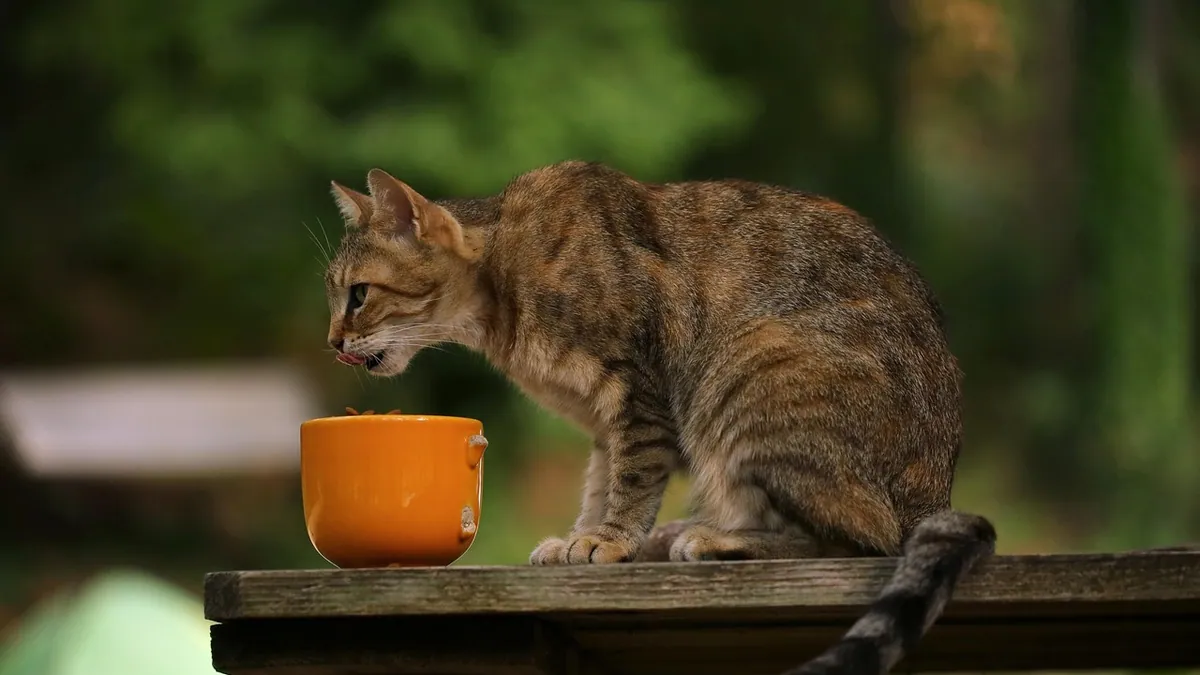
Megaesophagus in cats treatment centers on managing the esophagus's inability to move food to the stomach, since the condition itself often cannot be cured. Most cats need upright feeding, small frequent meals, and sometimes medications or surgery to address the underlying cause. This article is educational and is not a substitute for veterinary diagnosis or treatment.
Quick Answer
- Megaesophagus means the esophagus is stretched and weak, so food and water pool instead of reaching the stomach.
- The single most important home strategy is feeding your cat in an upright or elevated position and holding that posture for 10 to 15 minutes after eating.
- Soft, low-fat, low-fiber food in small, frequent meals is often recommended for cats with esophageal disease [1].
- If a structural cause is found, such as a hernia or a mass, surgery can sometimes resolve the megaesophagus completely [2][3].
- Aspiration pneumonia is the biggest danger, so any coughing, fever, or trouble breathing needs same-day veterinary attention.
What Is Megaesophagus in Cats?
Megaesophagus is a condition where the esophagus becomes abnormally dilated and loses its ability to push food down into the stomach. In a healthy cat, muscles in the esophageal wall contract in a wave that moves food along. When that motility fails, food and liquid sit in the esophagus, and the cat regurgitates them.
Regurgitation is different from vomiting. Vomiting involves active abdominal contractions and often brings up digested food or bile. Regurgitation is passive, and the material usually looks like undigested food or clear fluid shaped like a tube.
Feline megaesophagus is rare [4]. When it happens, it can be congenital (present from birth) or acquired later in life. In congenital cases, the nerve cells that control the esophagus may be missing or reduced, a finding called aganglionosis [5]. In acquired cases, the dilation is a secondary problem caused by something else.
Signs Owners Notice
The most common sign is regurgitation, often right after eating or drinking. You may notice food appearing on the floor shortly after a meal, sometimes in a tubular shape. Some cats regurgitate while sleeping or shortly after waking.
Other signs include:
- Weight loss or failure to gain weight in kittens
- Drooling or excessive saliva
- Difficulty swallowing or repeated swallowing attempts
- Coughing, especially after eating
- Nasal discharge or noisy breathing
- Loss of appetite
- A stretched-out, hunched posture while eating
In one reported case, a young cat had progressive difficulty breathing and swallowing along with regurgitation [3]. Another cat showed vomiting and reduced appetite for eight weeks before diagnosis [2]. These signs can look like many other problems, so veterinary evaluation matters.
Aspiration pneumonia is the complication that worries veterinarians most. When regurgitated material enters the airway, it can cause infection. Signs include fever, rapid breathing, lethargy, and a moist cough. This is an emergency.
Causes and Risk Factors
Megaesophagus in cats has many possible causes. Some are structural, some are neurologic, and some remain unknown.
Structural Causes
Anything that blocks or compresses the esophagus can cause it to dilate over time. Reported causes in cats include:
- Paraesophageal hernia, where part of the stomach pushes through the diaphragm [2]
- Laryngomucocele, a fluid-filled mass in the throat that obstructs the airway and esophagus [3]
- Vascular anomalies, such as a tortuous aorta pressing on the esophagus [6]
- Esophageal stricture, a narrowing from scar tissue [7]
- Extraluminal compression from abnormal bones or ribs (documented in other species) [8]
When the obstruction is removed, the megaesophagus can resolve. In one cat, correcting a paraesophageal hernia led to complete resolution of the esophageal dilation and all clinical signs [2]. In another, removing a laryngomucocele resolved the megaesophagus within days [3].
Neurologic and Neuromuscular Causes
Conditions that affect the nerves or muscles of the esophagus can cause megaesophagus. These include myasthenia gravis, dysautonomia, and other neuromuscular disorders. In congenital cases, the myenteric plexus (the network of nerves in the esophageal wall) may have reduced ganglion cells [5].
Functional Causes
Sometimes the lower esophageal sphincter (the valve between the esophagus and stomach) fails to relax properly. This is called achalasia-like syndrome. In one reported case, a 3-month-old kitten had regurgitation since weaning and was diagnosed with this condition after a videofluoroscopic swallow study [4].
Idiopathic Causes
When no cause is found, the condition is called idiopathic megaesophagus [4]. This is a diagnosis of exclusion, meaning your veterinarian rules out other causes first.
Risk Factors
Congenital megaesophagus can appear in young kittens, sometimes as early as 5 weeks old in other species [5]. Acquired cases can happen at any age. Siamese cats have been reported in at least two cases, one with a paraesophageal hernia [2] and one with a vascular anomaly [6], but there is no confirmed breed predisposition.
How It Is Diagnosed
Your veterinarian will start with a physical exam and a detailed history. They will ask about the timing of regurgitation, what the material looks like, and whether your cat has trouble breathing.
Imaging
Radiographs (X-rays) are usually the first step. They can show a dilated esophagus and sometimes reveal the underlying cause, such as a hernia or mass [2][3]. In one case, plain radiography showed both megaesophagus and a large soft tissue opacity in the throat [3].
Advanced Imaging
If radiographs do not show the cause, your vet may recommend:
- Videofluoroscopic swallow study (VFSS), which watches the esophagus in motion. This is especially useful for identifying functional problems like achalasia-like syndrome [4].
- Computed tomography (CT), which gives detailed images of structures around the esophagus [8].
- Endoscopy, which uses a camera to look inside the esophagus. This can find strictures, ulcers, or masses [7].
Laboratory Tests
Blood work can check for underlying conditions. One cat with a paraesophageal hernia had a hypochloremic alkalosis, an electrolyte imbalance caused by chronic vomiting [2]. Testing for myasthenia gravis may be recommended if neuromuscular disease is suspected.
Other Tests
In some cases, your vet may recommend a biopsy of the esophageal muscle or nerve tissue. In congenital cases, special staining can show whether ganglion cells are present [5].
Treatment Options for Megaesophagus in Cats
Treatment depends on the cause. If a structural problem is found, surgery may correct it. If the cause is neurologic or idiopathic, management focuses on feeding strategies and preventing complications.
Feeding Strategies
This is the foundation of daily care. The goal is to use gravity to help food reach the stomach.
- Feed your cat in an upright position. This often means holding them upright or using a specially designed feeding chair (sometimes called a Bailey chair, adapted for cats).
- Keep them upright for 10 to 15 minutes after eating. This gives food time to move down.
- Feed small, frequent meals. Four to six small meals per day is often better than two large ones.
- Use a soft food diet that is low in fat and fiber. Your veterinarian may recommend a specific consistency, such as a slurry or meatball texture [1].
- Offer water in small amounts or in an upright position. Some cats do better with water added to food instead of free access to a bowl.
A feeding tube may be needed if your cat cannot take in enough calories by mouth. In severe esophagitis, a feeding tube can bypass the esophagus and let it rest [1]. Your vet will calculate the tube feeding volume and schedule based on your cat's weight and health.
Medications
Medications may be used to treat underlying conditions or reduce complications.
- Acid reducers: If acid reflux is contributing to esophageal damage, drugs to reduce stomach acid may be prescribed [1].
- Prokinetics: These drugs help the stomach empty and may help the esophagus in some cases. Your vet will decide if they are appropriate.
- Antibiotics: If aspiration pneumonia is present or suspected, antibiotics are needed [1].
- Sildenafil: This was tried in one kitten with achalasia-like syndrome, but it did not improve clinical signs [4].
Never give your cat any medication without veterinary guidance. Some drugs, including doxycycline, can cause esophagitis if they sit in the esophagus [1].
Surgery
Surgery is considered when a structural cause is found or when medical management fails.
- Hernia repair: In one cat, reducing a paraesophageal hernia and performing phrenoplasty and esophagopexy led to complete resolution of megaesophagus [2].
- Mass removal: Removing a laryngomucocele resolved megaesophagus within days in one reported case [3].
- Heller myotomy and Dor fundoplication: This surgery is used in humans for achalasia. It was offered in one feline case but declined by the owner [4]. It remains an option in selected cases.
- Stricture dilation: Balloon dilation can correct esophageal strictures. One cat needed several sessions but remained asymptomatic one year later [7].
Surgery is not right for every cat. Your veterinarian will consider the cause, your cat's overall health, and the risks of anesthesia.
Recovery, Outlook, and Long-Term Management
The outlook depends on the cause. If the megaesophagus is secondary to a correctable problem, the prognosis can be excellent. In one case, megaesophagus resolved completely after hernia repair [2]. In another, it resolved within days after mass removal and did not return over three years [3].
For idiopathic or neurologic cases, the condition is usually managed, not cured. You will need to commit to upright feeding, small meals, and regular veterinary checkups. Some cats do well for years with good management. Others may have repeated episodes of aspiration pneumonia.
Long-term management includes:
- Monitoring for signs of pneumonia (cough, fever, trouble breathing)
- Keeping a feeding log to track what works
- Regular weigh-ins to catch weight loss early
- Working with your vet to adjust diet and medications as needed
If your cat also has trouble with the colon, you may find our article on Feline Megacolon: Diagnosis and Management helpful. Some cats with motility disorders have problems in more than one part of the digestive tract.
Prevention
True prevention is not always possible, especially for congenital cases. But you can reduce some risks.
- Avoid giving medications that can irritate the esophagus, such as doxycycline, without food or water. If your vet prescribes a pill, ask about the best way to give it [1].
- Treat vomiting and acid reflux promptly. Acid reflux can be associated with anesthesia, certain drugs, vomiting, and feeding tubes [1].
- If your cat needs anesthesia, ask your vet about steps to reduce reflux risk. Gastroesophageal reflux occurs in 12 to 33 percent of cats under general anesthesia [7].
- Feed a balanced diet and manage underlying conditions like obesity or dental disease that could affect eating.
If your cat has a known structural problem, early correction may prevent megaesophagus from developing.
Limitations and When to Contact a Veterinarian
This article gives general information, but every cat is different. Your veterinarian needs to examine your cat to make a diagnosis and treatment plan.
Contact your veterinarian right away if you notice:
- Regurgitation after every meal
- Weight loss or refusal to eat
- Coughing, especially after eating
- Drooling or difficulty swallowing
- Bad breath or nasal discharge
Go to an emergency clinic immediately if your cat has:
- Trouble breathing, especially with a moist cough
- Fever
- Blue gums or tongue
- Collapse or extreme weakness
- Repeated vomiting with inability to keep water down
These signs could mean aspiration pneumonia or another serious complication. Do not wait.
Frequently Asked Questions
What is the life expectancy for a cat with megaesophagus?
Life expectancy varies widely depending on the cause and how well complications are managed. Cats with a correctable structural cause can live a normal life after surgery [2][3]. Cats with idiopathic megaesophagus may live for years with careful management, but aspiration pneumonia is a constant risk.
Can megaesophagus in cats be cured?
It can be cured if the underlying cause is correctable. In one cat, surgery to repair a hernia led to complete resolution [2]. In another, removing a throat mass resolved the condition within days [3]. For most cats with idiopathic or neurologic megaesophagus, the goal is management, not cure.
What should I feed a cat with megaesophagus?
Most veterinarians recommend a soft, low-fat, low-fiber diet fed in small, frequent meals [1]. The exact consistency (slurry, meatball, or blended) depends on your cat. Some cats do better with food and water mixed together. Your vet can help you find what works.
Is surgery always needed for megaesophagus in cats?
No. Surgery is only considered when a structural cause is found, such as a hernia, mass, or stricture [2][3][7]. For functional or idiopathic cases, management with feeding strategies and medications is the main approach. In one reported case, surgery for achalasia-like syndrome was declined and medical management was used instead [4].
Can I manage my cat's megaesophagus at home?
Yes, much of the daily care happens at home. Upright feeding, small frequent meals, and monitoring for pneumonia are things you do every day. But you will still need regular veterinary checkups to adjust the plan and catch problems early. If your cat also has colon motility issues, our article on Megacolon in Cats: Subtotal Colectomy vs Lactulose and Cisapride Therapy may help you understand the options.
Related Articles
- Feline Megacolon: Diagnosis and Management
- Megacolon in Cats: Subtotal Colectomy vs Lactulose and Cisapride Therapy
- Feline Portosystemic Shunt: Diagnosis and Management
- Feline Hypercalcemia: Differential Diagnosis and Management
- Feline Hypereosinophilic Syndrome: Diagnosis and Management
- Feline Feline Mammary Tumors: Diagnosis and Management
- Megaesophagus in Cats: Symptoms and Diagnosis
- Pneumonia in Cats: Treatment and Home Care
- Tracheal Collapse in Cats: Symptoms, Diagnosis, and Treatment
References
- Disorders of the Esophagus in Cats - Cat Owners. Merck Veterinary Manual.
- Resolution of megaesophagus after correction of a paraesophageal hernia. JFMS open reports, 2023.
- Megaesophagus in an 8-month-old cat secondary to a laryngomucocele. JFMS open reports, 2024.
- Lower esophageal sphincter achalasia-like syndrome causing megaesophagus in a cat. JFMS open reports, 2025.
- Clinicopathologic evaluation of congenital idiopathic megaesophagus in a Gordon Setter puppy: a case report and development and application of peripherin immunohistochemistry for detection of ganglion cells. Journal of veterinary diagnostic investigation : official publication of the American Association of Veterinary Laboratory Diagnosticians, Inc, 2024.
- A Presumed Dysphagia Aortica in a Siamese Cat. Veterinary radiology & ultrasound : the official journal of the American College of Veterinary Radiology and the International Veterinary Radiology Association, 2026.
- Severe oesophageal stricture after sedation with xylazine and endoscopic management in a cat. JFMS open reports, 2025.
- Segmental Megaesophagus Secondary to Extraluminal Esophageal Stenosis Caused by Transitional Seventh Cervical Vertebra and Supernumerary Ribs in a Goat. Veterinary radiology & ultrasound : the official journal of the American College of Veterinary Radiology and the International Veterinary Radiology Association, 2025.