Cranberry Juice for UTI: Does It Actually Help?
By Dr. Zubair Khalid, DVM, MS, PhD ·
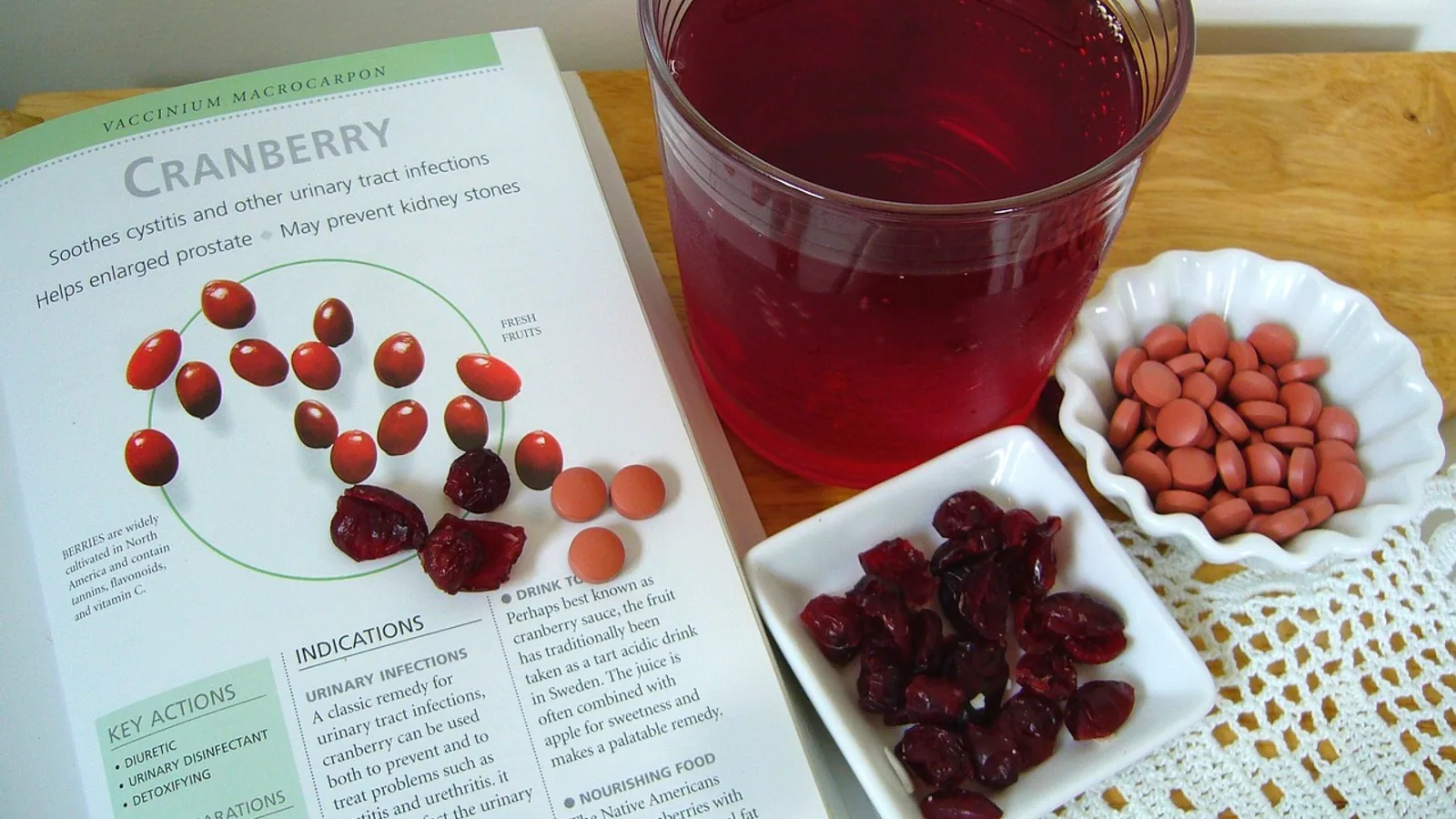
Cranberry juice does not cure a urinary tract infection, and it is not a substitute for antibiotics when an infection is active. The strongest evidence for cranberry products is in prevention of recurrent urinary tract infections (rUTI), and even that evidence is mixed, formulation-dependent, and far weaker in dogs and cats than in humans.
That short answer matters because cranberry is one of the most widely used home remedies for bladder problems in both people and pets. Owners search "cranberry juice for UTI" hoping for a simple kitchen-cabinet fix. The reality is more nuanced: cranberry has a real, measurable biochemical effect on how some bacteria stick to the urinary tract lining, but that effect does not reliably translate into treating an established infection, and the product forms people actually use (juice, capsules, powders) vary enormously in potency.
This article explains the proposed mechanism, reviews what human and veterinary studies actually found, and clarifies when cranberry is reasonable to discuss with a clinician and when antibiotics are non-negotiable.
The Direct Answer
Cranberry is a preventive adjunct, not a treatment. It may reduce the risk of recurrent UTIs in some women, particularly when a standardized product delivers enough of the active compounds. It does not treat an active infection, and it should never delay antibiotics in a patient with fever, blood in the urine, vomiting, or other systemic signs.
For pets, the picture is even less certain. A systematic review of cranberry supplementation in dogs and cats found no statistically significant or numerical benefit for preventing or treating bacterial cystitis or subclinical bacteriuria, and the certainty of that evidence was rated low to very low [1].
What Is a UTI, and Why Does Recurrence Matter?

.jpg)
A urinary tract infection is a bacterial infection of part of the urinary system, most often the bladder (cystitis). The most common cause in uncomplicated cases is uropathogenic Escherichia coli (UPEC), which accounts for roughly 90% of acute uncomplicated cystitis cases in healthy women [2]. Other organisms, including Klebsiella pneumoniae, Proteus mirabilis, and Gram-positive bacteria such as Enterococcus and Staphylococcus, also cause infections [3].
Recurrence is the central problem. Recurrent UTI is not one disease. It is a heterogeneous syndrome driven by different underlying factors, including postmenopausal hypoestrogenism, post-coital recurrence, low fluid intake, voiding dysfunction, persistent-source relapse, and resistant organisms [4]. Two patients with the same number of infections in a year may need completely different prevention strategies. This is why blanket advice like "drink cranberry juice" fails: it ignores the phenotype driving the recurrence.
Antibiotics remain essential for treating acute bacterial infection and for selected prophylactic use [4]. The concern is cumulative antibiotic exposure, which drives resistance, disrupts the urogenital microbiome, and causes adverse effects [5]. That concern is exactly why non-antibiotic options like cranberry have attracted so much research attention.
The Proposed Mechanism: Proanthocyanidins and Bacterial Adhesion
Cranberry (Vaccinium macrocarpon) is a distinctive source of polyphenols, including flavonoids and phenolic acids [3]. The compounds most studied for urinary tract effects are proanthocyanidins (PACs), particularly A-type PACs.
The leading theory is anti-adhesion. For a UTI to start, bacteria must first attach to the urothelium, the lining of the urinary tract. Cranberry PACs appear to interfere with that first step. In laboratory work, A2-linked proanthocyanidins from cranberry reduced UPEC adhesion to a bladder cell line by up to 75% compared with controls, and also reduced adhesion, motility, and urease activity in Proteus mirabilis [2].
The mechanism is not simply "killing bacteria." PACs inhibit adhesion, and they may also disrupt biofilm formation and quorum sensing, the cell-to-cell signaling that coordinates bacterial virulence [6]. Cranberry oligosaccharides have been shown to disrupt biofilm formation in high-risk populations [7]. Gut microbiota appear to transform PACs into bioactive metabolites that enhance this effect [7].
There is an important detail about formulation. Only soluble PACs elicited anti-adhesion activity in testing. A cranberry juice extract product with higher soluble PAC content produced urinary anti-adhesion activity, while a whole cranberry blended product containing mainly insoluble PACs did not [8]. This helps explain why some cranberry products work in trials and others do not.
Cranberry also shows broader anti-adhesion activity than D-mannose. In a crossover study, a cranberry fruit juice dry extract containing 36 mg of soluble PACs exhibited both P-type and Type 1 anti-adhesion activity, while D-mannose only prevented Type 1 adhesion [9]. That distinction matters because different fimbrial types use different adhesion mechanisms.
Why the Mechanism Does Not Equal a Cure
A biochemical effect in a lab dish is not the same as a clinical cure. Anti-adhesion may reduce the chance that bacteria establish a foothold. It does not clear an infection that is already established, and it does not address systemic infection. The mechanism is preventive in nature, which is exactly what the clinical evidence reflects.
What the Human Evidence Shows
Human research on cranberry is extensive but inconsistent. The inconsistency is largely explained by differences in product formulation, PAC content, and duration of use.
A 2026 literature review concluded that cranberry products may reduce recurrence risk, particularly in women with recurrent uncomplicated cystitis [10]. The same review emphasized that cranberry should not be regarded as a single uniform intervention. Clinical effect appears to depend on formulation, proanthocyanidin content, and duration of administration. Preparations providing at least 36 mg of proanthocyanidins daily seemed to offer the most consistent benefit, while non-standardized products yielded heterogeneous and less reliable results [10].
A 2025 multicenter, randomized, double-blind, placebo-controlled trial tested a whole cranberry fruit powder supplement in 150 women with a history of recurrent UTI. Participants took 500 mg per day of whole cranberry powder or placebo for six months. The cranberry group had a 52% reduction in culture-confirmed UTI risk compared with placebo (adjusted relative risk 0.48, 95% confidence interval 0.26 to 0.87, P = 0.01). The supplement also reduced E. coli UTIs and reduced the incidence of UTI with urinary frequency and urgency [11].
An observational study compared three cranberry formulations in 219 women with recurrent UTI over six months. All three extracts significantly improved urinary comfort and reduced symptomatic episodes and symptom duration, though the extracts differed notably in their composition, including organic acids, fiber, monomeric phenolic compounds, and the degree of PAC polymerization [12]. Because this was open-label and observational, it cannot establish causation the way a blinded randomized trial can.
A 2025 narrative review of non-antibiotic prophylaxis noted that cranberry products are among the strategies reviewed in contemporary guidelines, alongside methenamine hippurate, topical estrogen, D-mannose, probiotics, and immunoactive prophylaxis, each appraised for efficacy, safety, tolerability, accessibility, and quality of evidence [5]. A separate review found that non-antibiotic treatments including cranberry products, methenamine hippurate, and vaginal estrogen for postmenopausal women demonstrate efficacy comparable to low-dose antibiotics, while calling for high-quality studies to validate the evidence [13].
Not all reviews are positive. A 2025 review focused on older patients with frailty found that evidence for cranberry products, D-mannose, and probiotics remains inconsistent in frail populations [14]. A Flemish consensus statement on UTI management in older nursing home residents went further, stating that the use of cranberry and probiotics is not to be advocated in that population [15]. These are not contradictions so much as reflections of different populations. Cranberry evidence is strongest in otherwise healthy women with recurrent uncomplicated cystitis and weakest in frail, older, or institutionalized patients.
The Recurrence Phenotype Problem
The reason cranberry helps some people and not others may come down to why they get recurrent infections in the first place. A 2026 editorial argued that recurrent UTI should be approached as a phenotype-driven syndrome rather than a uniform pathway toward repeated antimicrobial treatment. It cited cranberry products as one example of targeted non-antibiotic prevention, while noting that negative trial evidence for D-mannose reinforces the need for evidence discipline rather than indiscriminate supplement use [4]. In other words, cranberry is a reasonable option for the right patient, not a universal remedy.
What the Veterinary Evidence Shows
The pet evidence is much thinner. A systematic review identified only three studies involving a total of 122 animals (106 dogs and 16 cats) on cranberry supplementation for prevention or treatment of bacterial cystitis and subclinical bacteriuria. No studies reported statistically significant or numerical impacts of treatment. Two studies were at high risk of bias and one at low risk. Certainty of evidence was low to very low. The review concluded that the small number of studies, small sample sizes, and low certainty of evidence preclude confident assessment of cranberry's role in dogs and cats [1].
That is the honest state of the veterinary literature. There is a plausible mechanism, extrapolated largely from human and laboratory work, but no reliable clinical evidence that cranberry prevents or treats UTIs in dogs and cats.
Why Pets Usually Get Supplements, Not Juice
Owners often ask about cranberry juice for a bladder infection in a dog or cat. In practice, veterinary cranberry products are supplements or extracts, not juice. There are practical reasons for this.
Juice contains sugar and is acidic. Sugar adds empty calories and is a particular concern for pets with diabetes or obesity. Acidity can be irritating to the gastrointestinal tract, and some pets will refuse juice or develop digestive upset. Juice also delivers an inconsistent and often low dose of soluble PACs compared with standardized extracts. A pet-sized dose of juice is unlikely to match the PAC content used in human trials, and there is no established dosing for juice in dogs or cats.
Even with supplements, product quality varies. Cranberry supplements for consumer use are not regulated the same way drugs are, and they can be formulated differently using cranberry juice, pomace, or various combinations, which leads to confusion about which products are effective [8]. Since only soluble PACs showed anti-adhesion activity in testing, a product's total PAC number on a label may not reflect its bioactive content [8].
For all of these reasons, whether to use a cranberry product in a pet, and which one, is a conversation for the veterinarian. There is no reliable over-the-counter dosing to follow.
Evidence Table: Humans, Dogs, and Cats
The table below summarizes the key evidence by species. It compares study type, outcome, and confidence. It is not a dosing guide.
| Species | Study type | Outcome | Confidence |
|---|---|---|---|
| Humans (adult women, recurrent UTI) | 6-month multicenter randomized, double-blind, placebo-controlled trial, 150 women, 500 mg/day whole cranberry powder | 52% reduction in culture-confirmed UTI risk versus placebo (adjusted RR 0.48, 95% CI 0.26 to 0.87, P = 0.01) [11] | Moderate for this specific standardized product and population |
| Humans (adult women, recurrent UTI) | Literature review of guidelines, systematic reviews, meta-analyses, and randomized trials | May reduce recurrence risk, particularly in recurrent uncomplicated cystitis. Benefit depends on formulation, PAC content, and duration. At least 36 mg PACs daily most consistent [10] | Moderate, with heterogeneity across products |
| Humans (adult women, recurrent UTI) | Observational, open-label comparison of three cranberry formulations, 219 women, 6 months | All three extracts improved urinary comfort and reduced symptomatic episodes and duration [12] | Low to moderate (observational design, no placebo) |
| Humans (older adults with frailty) | Review of prevention strategies | Evidence for cranberry remains inconsistent in frail populations [14] | Low |
| Humans (older nursing home residents) | Consensus statement | Cranberry and probiotics not advocated for UTI prevention in this population [15] | Consensus opinion, not trial evidence |
| Dogs and cats | Systematic review, 3 studies, 122 animals (106 dogs, 16 cats) | No statistically significant or numerical treatment impacts reported [1] | Low to very low |
| Dogs and cats | Mechanistic and laboratory work (extrapolated) | PACs reduce bacterial adhesion in vitro [2][6] | Mechanistic only, not clinical |
Cranberry Is Not a Substitute for Antibiotics
This is the single most important safety message in this article. Cranberry does not treat an active infection, and it must never delay or replace antibiotics when they are needed.
Seek veterinary or medical care promptly, and do not rely on cranberry, if any of the following are present:
- Fever
- Blood in the urine
- Vomiting
- Lethargy or weakness
- Straining to urinate with little or no urine produced
- Signs of systemic illness such as not eating, dehydration, or collapse
- In cats, especially male cats, repeated trips to the litter box with little urine output (this can indicate a urethral obstruction, which is a life-threatening emergency)
Antibiotics remain essential for acute bacterial infection and selected prophylactic use [4]. In patients with systemic signs, the infection may have moved beyond the bladder, and prompt antimicrobial treatment is required. Non-antibiotic strategies like cranberry belong in the prevention conversation, not the acute treatment conversation.
A Note on Struvite Stones
Some UTIs are complicated by infection stones (struvite stones), which form through the interaction between bacteria and urine mineral components. Biofilm formation helps these bacteria survive host defenses and resist simple antimicrobial treatment, and recurrence and resistance are common [6]. Proanthocyanidins have been studied for their effects on adherence, motility, quorum sensing, and biofilm formation in major UTI strains including E. coli, Pseudomonas aeruginosa, and Proteus mirabilis [6]. This is promising mechanistic territory, but it does not mean cranberry dissolves or prevents stones. Any pet with suspected stones needs veterinary imaging and treatment.
Practical Implications for Owners
If you are considering cranberry for yourself or your pet, here is a reasonable framework.
For people, the evidence supports discussing a standardized cranberry product with a clinician as part of a broader prevention plan, especially if you have recurrent uncomplicated cystitis. Product choice matters more than the word "cranberry" on the label. Look for a product that specifies its PAC content, because preparations providing at least 36 mg of proanthocyanidins daily seem to offer the most consistent benefit [10]. Do not use cranberry to self-treat an active infection.
For pets, understand that the clinical evidence does not support cranberry for preventing or treating UTIs, and the certainty of that evidence is low to very low [1]. If your veterinarian recommends a cranberry supplement as part of a broader plan, use the specific product they recommend rather than choosing one yourself. Do not give your pet cranberry juice, which adds sugar and acidity without a reliable dose of soluble PACs.
For everyone, remember that prevention is phenotype-specific. Low fluid intake, voiding dysfunction, postmenopausal changes, and other factors each point to different strategies [4]. Cranberry is one possible piece, not the whole plan. In older nursing home residents, cranberry is not advocated at all [15].
What About Probiotics and Other Plant-Based Options?
Cranberry is not the only non-antibiotic option studied. Probiotics and plant-based foods, including cranberry, garlic, bearberry, juniper, and nettle, have been explored for antimicrobial, anti-inflammatory, and diuretic properties. Laboratory and clinical studies suggest these may reduce UTI incidence by inhibiting pathogen adhesion, modulating immune responses, and promoting urinary tract health, but inconsistencies in study methods, dosage standardization, and long-term efficacy mean more research is needed [16].
For frail older patients, nonpharmacological strategies such as continence management, minimizing catheter use, hydration support, and caregiver education form the foundation of prevention. Locally applied vaginal estrogen is the best-supported pharmacological option in postmenopausal women, while methenamine hippurate offers a promising, well-tolerated alternative to antibiotics [14]. Prophylactic antibiotics may reduce recurrence in selected patients but carry risks including Clostridioides difficile infection and antimicrobial resistance [14].
What Is Still Uncertain
Several questions remain open.
The optimal PAC dose, the best formulation, and the ideal duration of cranberry use are not settled. The evidence favors at least 36 mg of PACs daily, but this threshold comes from comparing across heterogeneous studies rather than from a single definitive dose-finding trial [10].
Bioavailability is a challenge. Variations in formulation, dosage, and metabolic bioavailability present ongoing challenges for cranberry research [7]. How much of the active compound actually reaches the urinary tract, and how long it stays active, varies between individuals and products.
The role of the gut microbiome is still being worked out. Gut microbiota-driven transformation of PACs into bioactive metabolites appears to enhance efficacy [7], which means two people taking the same product might get different results depending on their gut bacteria.
For pets, the fundamental question of whether cranberry works at all is unanswered. The systematic review's conclusion that evidence precludes confident assessment is a call for better research, not a green light for use [1].
Finally, the interaction between cranberry and the broader prevention plan is unclear. Cranberry may work best as part of a phenotype-guided approach that also addresses hydration, voiding habits, and other modifiable factors [4]. Isolating cranberry's contribution within that package is difficult.
Limitations and When to Contact a Veterinarian
This article is educational and is not a substitute for veterinary diagnosis or treatment. Individual cases need individual assessment, and no article can replace a physical examination, urinalysis, and culture when indicated.
Contact a veterinarian promptly if your pet has any of the following:
- Straining to urinate, crying out while urinating, or frequent attempts with little urine produced
- Blood in the urine or a strong abnormal odor
- Vomiting, diarrhea, or not eating
- Lethargy, weakness, or collapse
- Fever or signs of systemic illness
- In male cats, any sign of urinary blockage, including repeated litter box visits with no urine, yowling, or hiding. This is an emergency.
- Recurrent infections despite treatment
- New incontinence or changes in drinking and urination habits
For people, contact a physician promptly for fever, flank pain, blood in the urine, vomiting, or symptoms that worsen or do not improve. Do not use cranberry juice or supplements to self-treat an active infection.
Frequently Asked Questions
Does cranberry juice cure a UTI?
No. Cranberry juice does not cure an active urinary tract infection. The evidence supports a possible role in prevention of recurrent infections, not treatment of an established one. Antibiotics are needed for active bacterial infection.
Is cranberry juice good for a UTI?
It may help prevent recurrent UTIs in some women when delivered as a standardized product with adequate proanthocyanidin content. It is not reliable for treating an active infection, and juice is a poor delivery format because of sugar, acidity, and inconsistent PAC content.
Does cranberry juice help with UTIs in dogs?
There is no reliable clinical evidence that it does. A systematic review of cranberry supplementation in dogs and cats found no significant treatment impacts and rated the certainty of evidence as low to very low.
Can I give my dog cranberry juice for a bladder infection?
Do not give cranberry juice to treat a bladder infection. Juice adds sugar and acidity and does not provide a reliable dose of the active compounds. If your veterinarian recommends a cranberry supplement, use the specific product they choose.
How long does it take for cranberry to work?
Cranberry is a preventive strategy, not a fast-acting treatment. Human trials showing benefit used daily supplementation for months, typically six months or longer. It is not something you use for a few days to clear an infection.
Is cranberry juice safe for cats?
Cranberry juice is not an appropriate treatment for cats and should not be used to self-treat urinary signs. Male cats with urinary blockage signs need emergency care. Any cranberry product for a cat should be discussed with a veterinarian first.
What should I do if my pet has a UTI?
See a veterinarian. A urinalysis and often a urine culture are needed to confirm infection and choose the right antibiotic. Do not rely on home remedies, and do not delay treatment if there is fever, blood, vomiting, or lethargy.
Can cranberry replace antibiotics?
No. Antibiotics remain essential for acute bacterial infection and selected prophylactic use. Cranberry belongs in the prevention discussion, and only as an adjunct under clinical guidance. Never delay antibiotics for an active infection.
Related Articles
- Can Dogs Eat Cranberries? UTI Prevention and Oxalate Risks
- Why Is My Dog having bloody urine? Cystitis Bladder Stones and UTI Guide
- Why Is My Cat having blood in urine? UTI and Bladder Stones Diagnosis
- Symptoms Of Bladder Infection In Cats
- Fireworks and Thunderstorm Anxiety in Dogs: What Actually Helps
- How to Draw Biology Diagrams That Actually Help You Learn
- E. coli UTI: Causes, Symptoms, and Treatment
- Septic From UTI: Sepsis Warning Signs
- Amoxicillin for UTI: Veterinary Use and Dosing
Sources
- Effectiveness of Cranberry Supplementation for Prevention and Treatment of Infectious Urinary Tract Disease in Dogs and Cats: A Systematic Review.
- Anti-Adhesion Activity of A2-type Proanthocyanidins (a Cranberry Major Component) on Uropathogenic E. coli and P. mirabilis Strains.
- Cranberry Polyphenols and Prevention against Urinary Tract Infections: Relevant Considerations.
- Recurrent urinary tract infection is not one disease: moving from antibiotic suppression to phenotype-guided prevention.
- Non-Antibiotic Prophylaxis for Recurrent Urinary Tract Infection: A Narrative Review & Clinical Guide for Primary and Hospital Care.
- Proanthocyanidins-Will they effectively restrain conspicuous bacterial strains devolving on urinary tract infection?
- Cranberry-derived bioactives for the prevention and treatment of urinary tract infections: antimicrobial mechanisms and global research trends in nutraceutical applications.
- Differences in Urinary Bacterial Anti-Adhesion Activity after Intake of Cranberry Dietary Supplements with Soluble versus Insoluble Proanthocyanidins.
- Differences in P-Type and Type 1 Uropathogenic Escherichia coli Urinary Anti-Adhesion Activity of Cranberry Fruit Juice Dry Extract Product and D-Mannose Dietary Supplement.
- Cranberry products in the prevention of recurrent urinary tract infections in adult women: Efficacy, safety, and place in non-antibiotic prophylaxis - literature review.
- Whole cranberry fruit powder supplement reduces the incidence of culture-confirmed urinary tract infections in females with a history of recurrent urinary tract infection: A 6-month multicenter, randomized, double-blind, placebo-controlled trial.
- Comparative Evaluation of Three Cranberry Formulations in Women with Recurrent Urinary Tract Infections: An Observational Study.
- [[Pharmacological prevention of recurrent urinary tract infections].](https://pubmed.ncbi.nlm.nih.gov/41025766/)
- Optimizing Prevention of Recurrent Urinary Tract Infections in Older Patients with Frailty.
- Flemish consensus statement on the prevention, diagnosis and treatment of urinary tract infections in older nursing home residents.
- Probiotics and Plant-Based Foods as Preventive Agents of Urinary Tract Infection: A Narrative Review of Possible Mechanisms Related to Health.