Cat Throwing Up Spit, Saliva, or Foam: Causes
By Dr. Zubair Khalid, DVM, MS, PhD ·
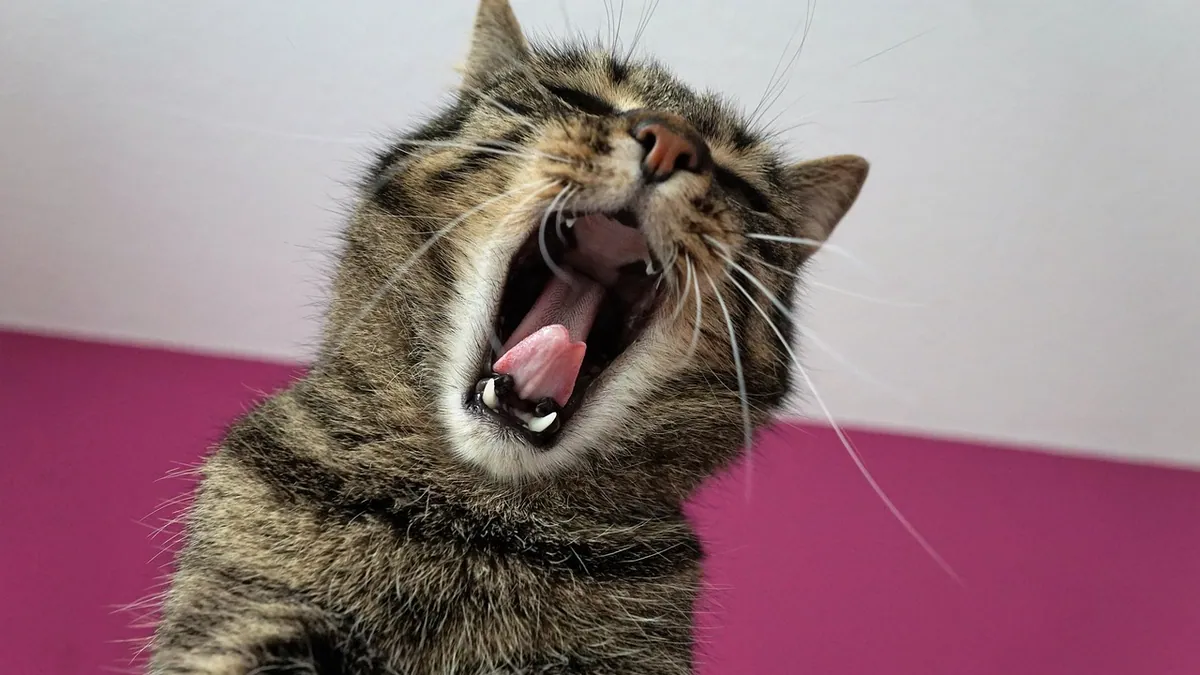
A cat throwing up spit is passing a small amount of saliva, mucus, or foam, often with nothing solid in it. This usually points to nausea, an empty stomach, or irritation in the mouth and throat, though some medical conditions cause it too. The pattern, timing, and what else you see will help your veterinarian sort out the cause.
This article is educational and is not a substitute for veterinary diagnosis or treatment.
Quick Answer
- Clear or white foam with no food usually means your cat's stomach is empty or she feels nauseated.
- True vomiting has warning signs first: drooling, swallowing, retching, and belly contractions [1].
- A hairball is a tube of hair, not foam. Foam alone is not a hairball.
- Vomiting more than once or twice a day, or lasting more than a day, needs a vet visit [1].
- Bring a photo or video of the episode. It helps your vet tell vomiting from regurgitation.
What Cat Throwing Up Spit, Saliva, or Foam Actually Looks Like
Owners use "throwing up" for several different events. The details matter.
True vomiting is the forceful ejection of stomach or upper intestinal contents through the mouth. It is normally preceded by excessive salivation, repeated swallowing, retching, and forceful contractions of the abdominal muscles and the diaphragm [1]. Your cat may meow oddly, lick her lips, swallow hard, and crouch before anything comes up. That buildup is the "cat throwing up sound" many owners describe.
Regurgitation looks different. Food or fluid slides back out with little or no effort, often right after eating. There is no big retching sequence. Regurgitation points more toward the esophagus (the tube from the mouth to the stomach) than the stomach itself.
Here is what the material can look like:
- Spit or saliva: thin, clear, or slightly cloudy fluid. Often just drool that pools and then comes up.
- Foam: white or clear bubbles. Foam forms when saliva and stomach fluid mix with swallowed air.
- Mucus: slippery, stringy, clear or slightly white material. It can come from the stomach lining or the throat.
- Yellow fluid: bile, which often shows up when the stomach is empty.
- Hair: a tube or clump of hair, sometimes with food or fluid.
If you are seeing mostly white froth, our guide to why is my cat throwing up foam white foam walks through that pattern in more detail. If there is yellow fluid mixed in, see why is my cat throwing up white foam and yellow liquid.
What Is Normal, and What Is Not
An occasional isolated episode can happen in a healthy cat. Maybe she ate too fast, or her stomach was empty for a long stretch.
What is not normal:
- Repeated episodes in one day
- Vomiting every day or most days
- Vomiting with no food in the stomach, over and over
- Any episode with blood, pain, or a very sick cat
Long-term vomiting, vomiting more often than once or twice daily, and vomiting with blood, abdominal pain, depression, dehydration, weakness, fever, or weight loss all require a detailed exam by your veterinarian [1]. Some causes of severe or long-term vomiting are life-threatening [1].
Main Causes of a Cat Throwing Up Spit or Foam
Nausea and an Empty Stomach
This is the most common everyday reason. When a cat has not eaten for many hours, stomach acid and bile build up. The stomach gets irritated, nausea sets in, and the cat brings up foam or yellow-tinged fluid. Cats who vomit in the early morning before breakfast often fit this pattern.
Nausea itself is a symptom, not a diagnosis. It can come from something mild (a missed meal, a new food) or something serious (organ disease, infection, a blockage).
Hairballs and Hair in the Stomach
Hairballs are common in cats who groom a lot. A true hairball is a cylinder of hair, sometimes with food mixed in. Foam alone is not a hairball, even if your cat has hairballs often.
Hair can also cause real trouble. In one reported case, a cat had a narrowing in the esophagus with ulcerated lesions caused by a hairball (trichobezoar) lodged at that narrow spot [2]. That cat had both regurgitation and vomiting [2]. So hair does not always pass on its own.
If your cat gags and brings up foam without hair, that is a different picture. Our article on why is my cat gagging and throwing up white foam covers that specific sign.
Dental and Oral Problems
Mouth pain is an underrated cause of drooling and spit. A broken tooth, gum disease, an oral ulcer, or something stuck in the mouth can make a cat drool heavily. That saliva then drips out or gets swallowed and comes back up.
Watch for:
- Bad breath
- Dropping food while eating
- Chewing on one side
- Pawing at the mouth
- Reluctance to eat hard food
Any of these with spit or foam deserves a mouth exam by your vet.
Esophageal Problems
The esophagus can narrow, become inflamed, or be compressed from the outside. In the reported case above, a tortuous thoracic aorta was pressing on the esophagus and causing a narrowing [2]. That cat presented with acute regurgitation and vomiting [2]. Esophageal disease often causes regurgitation instead of true vomiting, but the two can be hard to tell apart at home.
Infections and Inflammation
Gastrointestinal infections can cause vomiting, with or without diarrhea. Feline chaphamaparvovirus (FeChPV) has been found in vomit and feces from cats, including cats in shelters with clusters of sudden vomiting and diarrhea [3]. In one shelter with an outbreak, 88% of tested samples were positive for the virus [3]. That does not mean every vomiting cat has this virus. It means infection is one possible cause your vet may consider, especially in multi-cat homes or shelters.
Inflammation of the stomach or intestines, pancreatitis, and other inflammatory conditions also cause vomiting [1].
Other Medical Causes
Vomiting in cats has many causes. It can come from digestive system disease, kidney or liver failure, pancreatitis, or nervous system disorders [1]. Other causes include poisons, insect stings or snake bites, internal parasites (including heartworm disease), infections, inflammation, drugs, swallowed foreign objects, food allergy, and tumors [1].
Some of these are emergencies. A cat who swallowed a string or toy needs care right away.
Cause Table
| Cause | Typical clues | How urgent |
|---|---|---|
| Empty stomach or mild nausea | Morning foam, otherwise bright and eating | Routine if it happens once or twice |
| Hairball | Tube of hair, often after grooming | Routine, but see vet if frequent |
| Dental or oral pain | Drooling, bad breath, dropping food | Same-day to routine visit |
| Esophageal narrowing or compression | Regurgitation right after eating, weight loss | Same-day visit |
| Infection (viral or bacterial) | Vomiting with diarrhea, multiple cats affected | Same-day visit |
| Poisoning or toxin | Sudden vomiting, drooling, tremors, known exposure | Emergency now |
| Foreign object or blockage | Repeated vomiting, not eating, painful belly | Emergency now |
| Kidney, liver, or pancreatic disease | Long-term vomiting, weight loss, poor appetite | Same-day to urgent visit |
| Tumor | Slow onset, weight loss, changes over weeks | Routine to urgent visit |
Red Flags That Mean Emergency
Go to an emergency clinic now if you see any of these:
- Vomiting with blood (red or coffee-ground material)
- A hard, painful, or swollen belly
- Repeated unproductive retching with nothing coming up
- Known or suspected exposure to a poison, human medication, or toxic plant
- Collapse, weakness, staggering, or seizures
- Trouble breathing
- Vomiting after swallowing a string, toy, or sharp object
- A kitten or senior cat who is vomiting and will not eat
For poison exposures in the United States, call the ASPCA Animal Poison Control Center at (888) 426-4435 or the Pet Poison Helpline at (855) 764-7661. These lines may charge a consultation fee.
Vomiting with blood, abdominal pain, depression, dehydration, weakness, fever, or weight loss needs a detailed exam [1]. Do not wait to see if it passes.
Safe Things You Can Do at Home While You Wait
You cannot diagnose your cat at home. You can keep her comfortable and gather information.
- Remove food for a short time only if your vet advises it. Do not withhold food from kittens, diabetic cats, or cats on medication without asking your vet first.
- Offer small amounts of water. Do not let her gulp a large bowl at once.
- Separate her from other pets. This lets you see exactly what she eats, drinks, pees, and poops.
- Check the litter box. Note the size and number of clumps and whether stool looks normal.
- Take a photo or video of the next episode. The sound and body movements help your vet tell vomiting from regurgitation.
- Look in the mouth if she will let you. Do not force it. Note any smell, drooling, or swelling.
- Write down the timeline. When did it start, how often, what came up, and what she ate in the last 24 hours.
Do not give human anti-nausea drugs, antacids, or pain relievers. Several common human medications are toxic to cats. Your veterinarian will choose a safe drug and calculate the dose from your cat's weight and health.
If your cat is bright, drinking, and has vomited once, a short period of watching at home may be fine. If she vomits again, call your vet.
What Your Veterinarian Will Check and Test
Your vet starts with the history and a full physical exam. They will check hydration, gum color, belly comfort, mouth and teeth, and weight.
Diagnosis may include blood, fecal, and urine tests as well as abdominal x-rays and ultrasonography [1]. In many cases, endoscopic evaluation and biopsy of the stomach and small intestine are the only tests that can determine the cause of the vomiting [1].
Depending on what they find, your vet may also:
- Run a parvovirus or other infection panel, since viruses like FeChPV can be found in vomit and feces [3]
- Take dental x-rays if the mouth looks painful
- Check blood pressure and heart function if esophageal or vascular disease is suspected [2]
- Use imaging to look for a foreign object, mass, or narrowing [2]
Treatment depends on the cause. Some cats need fluids and anti-nausea medication. Some need dental work, diet changes, or surgery. Your vet will set the plan for your cat.
If your cat is vomiting after surgery or a sedative procedure, know that emesis is a common side effect in cats receiving alpha-2 adrenergic agonists and opioids [4]. Maropitant reduced the risk of emesis in controlled feline studies [4]. Your vet may use a drug like this to prevent or treat nausea. The dose is calculated for your cat.
Prevention and Monitoring
You cannot prevent every cause of vomiting. You can lower the odds and catch problems early.
- Feed on a schedule. Several small meals can help cats who vomit on an empty stomach.
- Use a slow feeder. It helps cats who eat too fast.
- Brush your cat regularly. This reduces the hair she swallows while grooming.
- Keep string, toys, and small objects out of reach. Swallowed objects are a common emergency.
- Store medications and toxins safely. Human drugs and some plants are dangerous to cats.
- Watch the litter box and food bowl. Small changes show up there first.
- Keep dental care current. Mouth pain causes drooling and spit that owners often mistake for stomach upset.
- Track episodes in a note on your phone. Date, time, what came up, and how your cat acted afterward.
If your cat has had more than a couple of episodes in a month, or if the pattern is changing, book a routine visit. Early testing often finds problems before they become emergencies.
Limitations and When to Contact a Veterinarian
This article gives general information. It cannot tell you what is wrong with your cat. Individual cases need a veterinarian who can examine your cat and run tests.
Call an emergency clinic now if your cat is vomiting blood, has a painful or swollen belly, is retching with nothing coming up, has collapsed, is struggling to breathe, or may have eaten a poison or foreign object.
Call your vet the same day if your cat vomits more than once or twice in a day, vomits for more than 24 hours, stops eating, seems painful, hides, or has diarrhea along with the vomiting [1].
Book a routine visit if your cat vomits spit or foam now and then but is otherwise normal, has bad breath or drools, or has a pattern that has slowly gotten worse over weeks.
Do not wait for a home remedy to work. Vomiting that lasts or comes with other signs can have a life-threatening cause [1].
Frequently Asked Questions
Is it serious if my cat throws up clear spit?
Not always. A single episode in a bright, eating cat is often minor. Repeated episodes, or spit with blood, pain, or weakness, need a vet visit.
Why does my cat throw up foam in the morning?
An empty stomach is a common reason. Stomach acid builds up overnight and irritates the stomach lining. Feeding a small meal before bed helps some cats, but check with your vet first.
How can I tell vomiting from regurgitation?
Vomiting has a buildup: drooling, swallowing, retching, and belly contractions before anything comes up [1]. Regurgitation is quieter and often happens right after eating, with little effort.
Can hairballs cause my cat to throw up foam?
Hairballs usually bring up a tube of hair, not plain foam. Hair can also get stuck and cause a narrowing or blockage in rare cases [2]. If your cat gags on foam often, have your vet check.
What should I do right after my cat vomits?
Keep her calm and offer a small amount of water. Note the time and what came up. If she vomits again, stops eating, or seems painful, call your vet.
Related Articles
- Why Is My Cat Throwing Up Foam White Foam
- Cat Throwing Up White Foam: Causes and When to Call the Vet
- Why Is My Cat Throwing Up White Foam And Yellow Liquid
- Why Is My Cat Gagging And Throwing Up White Foam
- Why Is My Cat Throwing Up White Foam And Water
- Why Is My Cat Repeatedly Throwing Up White Foam
- Cat Throwing Up Phlegm: Causes and When to Worry
- Why Is My Cat Foaming at the Mouth? Causes and Urgency
- Cat Throwing Up Foam and Not Eating: What It Means
References
- Vomiting in Cats - Cat Owners. Merck Veterinary Manual.
- A Presumed Dysphagia Aortica in a Siamese Cat. Veterinary radiology & ultrasound : the official journal of the American College of Veterinary Radiology and the International Veterinary Radiology Association, 2026.
- Feline chaphamaparvovirus (feline fechavirus) in different cat populations. Journal of feline medicine and surgery, 2026.
- Receptor-Targeted Antiemetic Strategies in Cats: A Systematic Review and Intervention-Specific Meta-Analysis. Veterinary medicine and science, 2026.