Cat Pooping Blood: Causes and What to Do Next
By Dr. Zubair Khalid, DVM, MS, PhD ·
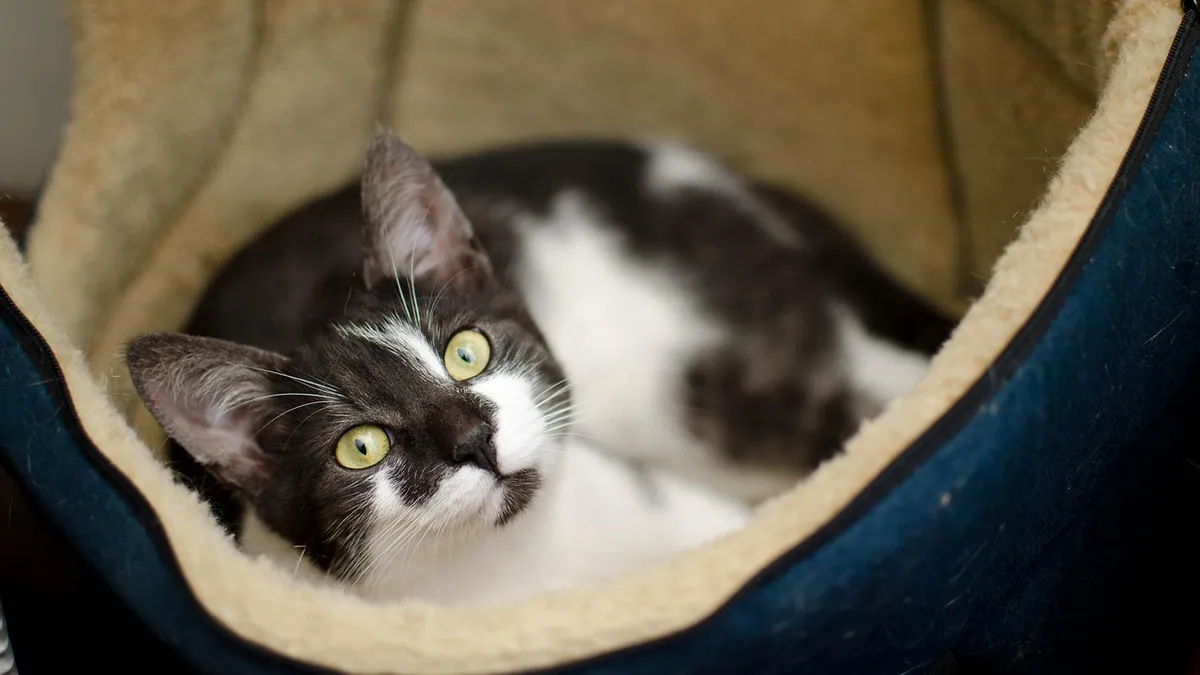
Blood in your cat's stool can range from a small streak of bright red on the surface to a large volume of dark, tarry material, and the right response depends on which one you are seeing. Knowing how to treat cat pooping blood starts with triage, because some causes are minor and self-limiting while others need same-day care. This article is educational and is not a substitute for veterinary diagnosis or treatment.
Quick Answer
- Bright red blood on the outside of a formed stool often points to irritation in the lower bowel, while dark tarry stool suggests bleeding higher up in the digestive tract.
- A single small streak in a cat that is eating, drinking, and acting normal can wait for a routine vet visit, but any large amount of blood needs same-day care.
- Repeated vomiting, weakness, pale gums, or a swollen belly mean go to an emergency clinic now.
- Do not give human medications such as ibuprofen, acetaminophen, or aspirin, and do not fast your cat unless a veterinarian tells you to.
- Bring a photo of the stool and a note of when it started, since this helps your vet choose the right tests.
What Blood in Cat Stool Looks Like and What Is Normal
Normal cat stool is firm, brown, and log-shaped. A healthy stool should not contain visible blood, mucus, or black material that looks like coffee grounds or tar.
Veterinarians divide blood in stool into two broad patterns. Hematochezia is bright red blood, which usually comes from the colon or rectum. Melena is black, tarry stool, which means blood has been digested higher in the stomach or small intestine. One case report described a cat with recurrent vomiting of blood and melena that turned out to have a mass in the duodenum, the first part of the small intestine [1]. That is why the color and texture of the blood matters so much.
Small amounts of bright red blood can also come from the anal area itself, such as a small tear or irritated tissue. In people, bleeding attributed to hemorrhoids can cause intermittent rectal bleeding that comes and goes over months [2]. Cats do not get hemorrhoids the way humans do, but the principle holds, a minor source near the exit can look alarming while a serious source deeper inside can look subtle.
Cat Bloody Stool Causes
The list of possible causes is long, and several of them overlap in how they look. Your veterinarian will use the pattern, your cat's age, and other signs to narrow it down.
| Cause | Typical clues | How urgent |
|---|---|---|
| Colitis (colon inflammation) | Bright red blood, mucus, straining, small frequent stools | Routine to same-day |
| Inflammatory bowel disease | Chronic vomiting and diarrhea with blood, often in younger or middle-aged cats | Routine, but needs diagnosis |
| Intestinal parasites | Blood with soft stool, possible weight loss, often in cats with outdoor access | Routine |
| Food intolerance or sudden diet change | Blood and soft stool after a new food | Routine |
| Foreign body or toxin | Vomiting, blood, pain, sudden onset | Emergency |
| Bleeding mass or tumor | Dark or red blood, weight loss, older cat | Same-day to emergency |
| Severe systemic illness | Blood plus lethargy, fever, poor appetite | Emergency |
Inflammatory bowel disease is a common cause of recurring gastrointestinal signs in cats, and it is confirmed by finding intestinal inflammation on biopsy [3]. A nine-month-old cat with five weeks of vomiting and blood in the stool was eventually diagnosed with lymphocytic-plasmacytic and eosinophilic enterocolitis after colonoscopy showed erosions in the cecum and a surgical biopsy confirmed the diagnosis [3]. Treatment with prednisolone and antibiotics resolved the signs, and the cat's blood cell counts returned to normal about eight weeks after treatment began [3].
Less common causes exist too. A three-and-a-half-year-old cat with two weeks of lethargy and vomiting developed diarrhea and was found to have a septic spleen, an infected organ in the abdomen [4]. That cat had anemia and an enlarged spleen on ultrasound, and it recovered after surgery and a four-week course of an antibiotic [4]. This shows how a digestive sign can sometimes trace back to a problem outside the gut.
Some causes are not digestive at all. A cat with a long history of urinary signs was found to have a foreign body in the urethra and bladder, and the signs resolved only after the object was removed [5]. If your cat has blood in the stool along with urinary changes, tell your vet about both. You can read more about urinary bleeding in Cat Peeing Blood: What Should You Do? and Cat Blood in Urine but Acting Normal: Causes and Next Steps.
Red Flags That Make It an Emergency
Go to an emergency clinic now if you see any of these:
- A large amount of blood, or blood that keeps coming with every stool
- Black, tarry stool or vomit that looks like coffee grounds
- Pale or white gums, weakness, collapse, or trouble breathing
- A swollen, painful, or hard belly
- Repeated vomiting, especially with blood
- Known or suspected exposure to a toxin, human medication, or a foreign object
- Blood in the stool in a kitten, a senior cat, or a cat with a chronic illness
Severe anemia from intestinal bleeding can develop quickly. In one human case, a patient arrived with a hemoglobin of 4.3 g/dl, which is dangerously low, after three days of bleeding [2]. Cats can also bleed enough to become severely anemic, and one cat with a duodenal tumor died of severe anemia when the bleeding could not be controlled [1]. Do not wait to see if it improves on its own when the volume is large or your cat looks unwell.
What to Do at Home While You Wait
Your job at home is to keep your cat safe and gather information, not to treat the bleeding yourself.
- Do not give any human pain reliever. Ibuprofen, acetaminophen, and aspirin can be toxic to cats.
- Do not give any medication left over from a previous prescription unless your vet specifically says to.
- Offer fresh water at all times. Dehydration makes everything worse.
- Offer small amounts of your cat's usual food. If your cat will not eat, note that.
- Take a photo of the stool and note the time, color, and amount.
- Keep your cat indoors and away from garbage, string, toys, and houseplants.
- Call your vet or an emergency clinic and describe exactly what you saw.
If your cat is also vomiting blood, that changes the urgency. See Cat Vomiting Blood: What to Do Right Now. If the main sign is loose stool with blood, Cat Diarrhea with Blood: Urgency and Next Steps walks through the timing. If your cat is straining without producing stool, that is a different problem, covered in Cat Constipation: What Should You Do?.
What the Veterinarian Will Check and Test
Your vet will start with a full history and a physical exam. Expect questions about diet, outdoor access, medications, possible foreign objects, and how long the bleeding has lasted.
First-line tests
- Complete blood count to look for anemia, infection, and unusual white blood cell patterns. Marked eosinophilia and basophilia were key findings in one cat with enterocolitis [3].
- Blood chemistry to check organ function, protein levels, and electrolytes. A cat with a septic spleen had anemia and high globulin levels on bloodwork [4].
- Fecal testing for parasites and bacteria.
- Urinalysis if urinary signs are present, since urinary and digestive problems can occur together [5].
- Abdominal ultrasound or X-rays to look for masses, foreign objects, or organ changes. Ultrasound revealed a nodular spleen in one cat [4] and a duodenal mass in another.
Advanced tests
- Colonoscopy or endoscopy to look directly at the lining of the bowel and take biopsies. This is how inflammatory bowel disease is confirmed [3], and it also allows vets to see bleeding points and take samples from masses [1].
- Surgical biopsy when the affected area cannot be reached with a scope. One cat needed a surgical biopsy of the cecum to reach the diagnosis [3].
- Fine-needle aspiration of a mass or organ. This technique identified abnormal cells in a duodenal tumor [1] and bacteria in an infected spleen [4].
Treatment depends on the cause
Treatment is not one-size-fits-all. If the cause is inflammatory bowel disease, your vet may prescribe a steroid such as prednisolone along with antibiotics, and one cat in a case report improved on this combination with antibiotics tapered as signs resolved [3]. If the cause is a bacterial infection in an organ, a targeted antibiotic may be needed, and one cat received a four-week course after surgery [4]. If the cause is a mass, surgery or other procedures may be needed, and bleeding control can be difficult [1]. Your veterinarian calculates every dose from your cat's weight, test results, and overall health. Never use a dose you found online.
Prevention and Monitoring
You cannot prevent every cause of blood in the stool, but you can lower the odds and catch problems early.
- Keep your cat indoors or supervise outdoor time to reduce parasite exposure and eating things it should not.
- Feed a consistent, balanced diet and change foods gradually over about a week.
- Keep string, rubber bands, small toys, and human medications out of reach.
- Stay current on parasite prevention as directed by your vet.
- Weigh your cat monthly and note any change.
- Watch the litter box. You are the first screening tool your cat has.
- Schedule routine exams, especially for senior cats.
If your cat has a chronic condition such as inflammatory bowel disease, your vet will set a monitoring schedule. Follow it, because relapses can happen when medications stop, as seen in one case where signs returned after treatment was discontinued [3].
Limitations and When to Contact a Veterinarian
This article cannot tell you what is causing your cat's bleeding. Only a veterinarian who examines your cat and runs tests can do that.
Contact your veterinarian the same day if you see a small amount of bright red blood on a formed stool, if the bleeding has happened more than once, or if your cat has any change in appetite or energy. Go to an emergency clinic right away if you see a large amount of blood, black tarry stool, repeated vomiting, weakness, pale gums, a painful belly, or a possible toxin or foreign object exposure. A routine visit is reasonable for a single tiny streak in a cat that is completely normal otherwise, but mention it so your vet can decide whether testing is needed. Every cat is different, and your veterinarian will tailor the plan to your pet.
Frequently Asked Questions
Should I panic if my cat poops blood?
No, but you should pay attention. A small streak of bright red blood on a formed stool in an otherwise healthy cat is often minor, while large amounts of blood or dark tarry stool are serious. Call your vet and describe what you saw.
Can I treat my cat's bloody stool at home?
You can keep your cat comfortable and hydrated, but you cannot treat the cause at home. Do not give human medications, and do not fast your cat. Your vet needs to find the source before any treatment is safe.
How long can blood in cat stool last before it is a problem?
Any bleeding that lasts more than a day or two, or that comes back after seeming to stop, deserves a vet visit. Chronic, recurring bleeding can point to inflammatory bowel disease or another ongoing condition that needs diagnosis and treatment.
Is blood in cat stool always a sign of cancer?
No. Most cases are caused by inflammation, parasites, diet issues, or infections. Tumors are less common but do occur, and they are more likely in older cats, so age matters when your vet decides which tests to run.
What should I bring to the vet appointment?
Bring a photo of the stool, the date and time you first saw blood, a list of everything your cat eats, and any medications or supplements. Also note vomiting, appetite changes, energy level, and whether your cat goes outside.
Related Articles
- Cat Peeing Blood: What Should You Do?
- Cat Diarrhea with Blood: Urgency and Next Steps
- Cat Vomiting Blood: What to Do Right Now
- Cat Blood in Urine but Acting Normal: Causes and Next Steps
- Cat Constipation: What Should You Do?
- Cat Ear Infection with Blood: What to Do Right Now
- Blood in Cat Poop: Causes, Urgency, and What to Do
- Blood in Kitten Poop: Causes and When to Worry
- Red in Cat Poop or Pee: Blood, Mucus, and Next Steps
References
- A case of feline primary duodenal carcinoid with intestinal hemorrhage. The Journal of veterinary medical science, 2019.
- Cat Scratch Colon: A Case Report and Review of the Literature. Cureus, 2025.
- Case report: Lymphocytic-plasmacytic and eosinophilic enterocolitis presented with marked eosinophilia and basophilia in a cat. Frontiers in veterinary science, 2023.
- Successful Management of Septic Splenitis in an Abyssinian Cat. Veterinary medicine and science, 2026.
- Fluoroscopy-guided basket retrieval of a chronic urinary foreign body in a cat. The Canadian veterinary journal = La revue veterinaire canadienne, 2026.