Split Tooth in Dogs: Signs, Pain, and Treatment
By Dr. Zubair Khalid, DVM, MS, PhD ·
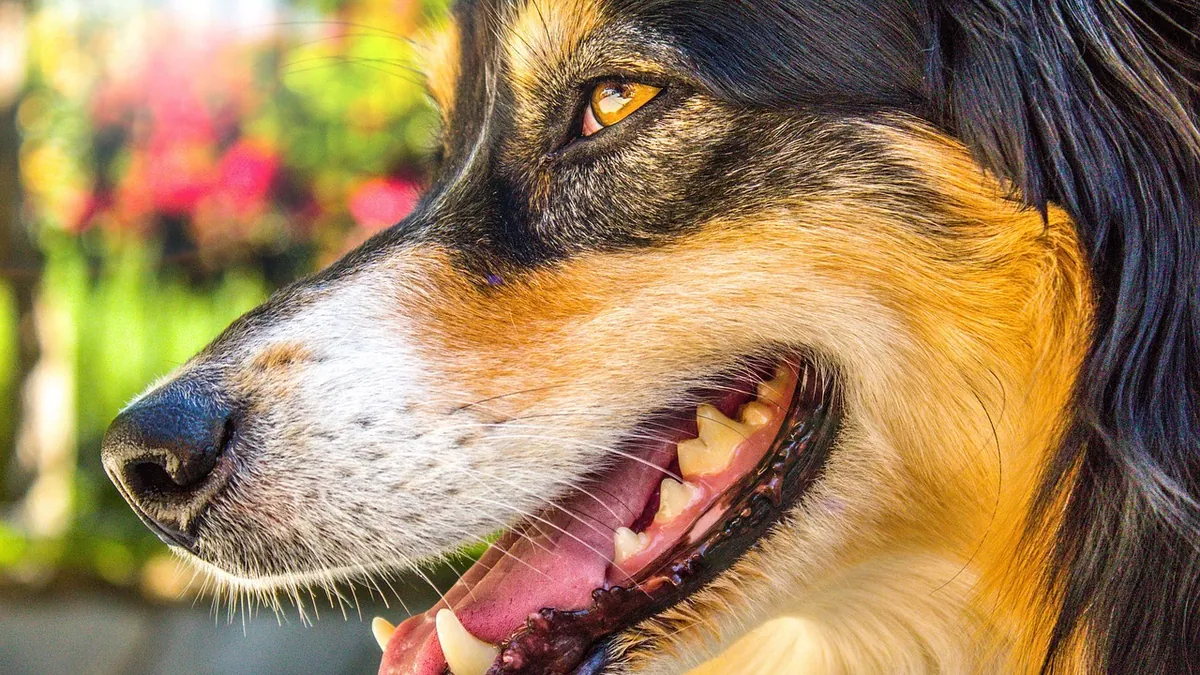
A split tooth in dogs is a fracture that reaches the pulp, the nerve and blood supply inside the tooth. It is painful, it does not heal on its own, and it needs veterinary dental care. The good news is that most affected teeth can be saved or safely removed, and dogs do well either way.
This article is educational and is not a substitute for veterinary diagnosis or treatment.
Quick Answer
- A tooth that is cracked into the pulp will not repair itself. The exposed tissue becomes infected and painful, and the pain continues until the tooth is treated or removed.
- Common signs include chewing on one side, dropping food, drooling, pawing at the mouth, bad breath, and flinching when the muzzle is touched.
- Tooth fracture and periodontal disease are the two main reasons dogs lose teeth [1].
- Treatment is usually root canal therapy (which saves the tooth) or extraction (which removes the pain source). Your veterinarian will recommend one based on which tooth is involved and its condition.
- Do not wait for it to "settle down." Call your veterinarian for an oral exam, and seek same-day care if your dog is not eating or drinking or has facial swelling.
What a Split Tooth Actually Is
Dog teeth are built in layers. The outside is hard enamel. Under that is dentin, a living tissue. In the center is the pulp, which holds nerves, blood vessels, and connective tissue.
A split or cracked tooth is a fracture. Veterinarians classify fractures by how deep they go. A simple crown fracture involves enamel only, or enamel and dentin, and does not open the pulp. A complicated crown fracture reaches the pulp [2]. A crown-root fracture extends below the gumline.
The distinction matters because of what happens next. When the pulp is exposed, bacteria enter the tooth. The pulp becomes inflamed and then infected. Because the pulp sits inside a hard shell, there is no room for swelling, and the pressure on the nerve is what causes the pain. This is the same reason a cracked tooth hurts in people.
A tooth with an exposed pulp can look normal from the outside for a while. The dog may even seem fine between painful episodes. That does not mean the tooth has healed. It means the dog is coping.
Signs of a Split Tooth in Dogs
Dogs hide mouth pain well. In the wild, showing weakness is a disadvantage, and that instinct is still present in your pet. You often have to look for smaller clues.
Signs you may notice at home
- Chewing on one side of the mouth, or tilting the head while eating
- Dropping food, or refusing hard kibble and treats while still eating soft food
- Drooling more than usual, sometimes with blood tinged saliva
- Pawing at the face or rubbing the muzzle on furniture or the floor
- Bad breath that appeared or worsened suddenly
- Flinching, pulling away, or growling when you touch the muzzle or the side of the face
- Reluctance to play with hard toys, or to pick up toys at all
- Swelling under the eye or along the jaw
- A visible crack, a dark spot on the tooth, or a broken tip
That last group of signs is easy to misread as a behavior problem. A dog who snaps when the head is touched may be in pain, not becoming aggressive. If your dog has started growling when touched, it is worth reading about Dog Growling When Touched: Pain or Behavior Problem? and How to Tell If Your Dog's Aggression Is Pain-Related. Mouth pain and joint pain often travel together in older dogs, and Signs Of Arthritis Pain In Dogs covers what that looks like.
Signs your veterinarian finds
Many fractures are found during a routine exam, not because the owner noticed anything. A veterinarian may find a fractured tooth, a discolored tooth, a draining tract on the gum, or a pocket of infection around a root. Fractures of the back teeth are easy to miss at home because you cannot see them.
Causes and Risk Factors for a Split Tooth in Dogs
The most common cause is trauma from chewing on something too hard. Bones, antlers, hooves, hard nylon toys, rocks, and even ice can crack a tooth. Dogs who chew aggressively or who chew inappropriate objects are at higher risk.
Working dogs have a much higher rate of traumatic dental injury than non-working dogs. In one review, working dogs had about 6.3 traumatic dentoalveolar injuries per dog, compared with about 1.3 in non-working dogs, and their risk of having such an injury was three times higher [1]. Working dogs also had more teeth with wear [1]. If your dog does bite work, protection sports, or heavy tug and fetch play, dental checks matter more.
Other factors:
- Age. Fractures can happen at any age. Periodontal disease, which weakens tooth support, usually begins at 4 to 6 years of age and progresses to tooth loss if untreated [3].
- Breed and size. Small-breed dogs tend to have more problems with periodontitis than large-breed dogs [3]. Small and medium dogs also make up a large share of the fracture cases that need root canal treatment [4].
- Which teeth. In the United States, the most commonly fractured teeth are the canine teeth [4]. Back teeth are affected by periodontal disease more often than front teeth, and upper teeth are affected more severely than lower teeth [3].
- Diet and chewing habits. Dogs on a regular diet of hard kibble develop fewer dental problems, likely because chewing provides a mechanical cleaning effect [3]. That does not mean kibble prevents fractures. It means the overall dental picture tends to be better.
- Existing dental disease. A tooth already weakened by periodontal disease or resorption is more likely to break.
How Veterinarians Diagnose a Split Tooth in Dogs
Diagnosis starts with a full oral exam. Your veterinarian will look at every tooth, probe the gumline, and check for mobility, discoloration, and exposed pulp. In many dogs this requires general anesthesia, because a complete exam of the back of the mouth is not possible in an awake dog.
An intraoral camera and dental radiographs (X-rays) are the core tools. In a reported case of a fractured upper canine tooth, the exam and radiographs confirmed a fracture with exposed pulp and loss of about two thirds of the crown, which was diagnosed as a complicated crown fracture [2]. Radiographs show what is happening below the gumline, including root fractures, bone loss, and infection around the root tip.
Your veterinarian may also check for a draining tract, test tooth vitality, and assess how much of the crown remains. The findings determine whether the tooth can be saved and which treatment is best.
Treatment Options for a Split Tooth in Dogs
There are two main paths: save the tooth or remove it. Both relieve pain. The right choice depends on which tooth is fractured, how much tooth structure remains, the health of the surrounding bone, and your dog's age and overall health.
| Treatment | What it involves | Best suited for |
|---|---|---|
| Root canal therapy (endodontic treatment) | Removes infected pulp, cleans and shapes the canal, and seals it with filling material [4] | Functionally important teeth, such as canine teeth and the large chewing teeth, when the root and crown can be saved |
| Root canal plus crown | Root canal, then a metal crown cemented over the prepared tooth to protect it [2][5] | Canine teeth and other teeth under heavy chewing load |
| Extraction | Surgical removal of the entire tooth and root | Teeth that are too damaged to save, teeth with root fractures, or when the owner prefers removal |
Root canal therapy
Root canal treatment is often the treatment of choice for fractured teeth with pulp exposure when the tooth matters for function [4]. The procedure mechanically and chemically removes pulp tissue and bacteria from the infected canal, then fills the canal so the tooth can function without inflammation [4].
Outcomes are good. In one study of 45 incisor teeth treated with root canal therapy, treatment was successful in 42 teeth (93.3%), with no evidence of failure in the remaining three and no failures at all [6]. Follow-up in that study ranged from 6 to 64 months [6]. Another study of 120 fractured upper fourth premolar teeth in small and medium dogs compared three different sealers used during root canal treatment [4].
Crowns
For canine teeth, a metal crown can protect the repaired tooth from future fracture. In a study of 160 canine teeth in 84 dogs that received full metal crowns, the overall failure rate was 2.5% [5]. A separate review of 53 titanium alloy crowns in 25 dogs found no bond failures between the tooth and crown, with all failures caused by fracture of the tooth below the crown margin, for an overall tooth survival of 91% [7].
Crowns are not always needed. Research on fracture resistance after endodontic treatment found that restoring the access sites did not weaken the tooth compared with untreated teeth [8]. Your veterinarian will decide whether a crown adds enough protection for your dog's specific tooth and chewing habits.
Extraction
If a tooth cannot be saved, extraction is a valid and often kind choice. It removes the pain source. Most dogs eat normally after healing, even after losing a large tooth, because they adapt well. The main downside is loss of function, which matters most for the canine teeth and the large shearing teeth.
Pain management
Dental pain is real pain. Your veterinarian will use appropriate pain medication before, during, and after treatment. Never give human pain relievers to a dog, because several common ones are toxic to dogs. The dose and drug choice are calculated by your veterinarian based on your dog's weight and health.
Recovery, Outlook, and Long-Term Management
After root canal therapy, most dogs are comfortable within a few days. Soft food and restricted chewing are typical for a short period. Your veterinarian will schedule a recheck, often with radiographs, to confirm the tooth is stable. Long-term success rates for endodontic treatment are high, with most treated teeth doing well for years [6].
After extraction, the gum heals over several weeks. Keep your dog away from hard toys and chews during healing. Watch for swelling, bleeding, or a sudden drop in appetite, and call your veterinarian if any appear.
Long term, the rest of the mouth still needs attention. Periodontal disease is irreversible once it reaches the stage where gums, ligaments, and bone are damaged, and it leads to permanent loss of tooth support [3]. Gingivitis is often first noticed around 2 years of age and improves with treatment, while periodontitis usually begins at 4 to 6 years of age [3]. That timeline is a good reason to start dental care early and keep it going. Dog Dental Disease: Signs, Stages, and What You Can Do walks through the stages and what helps at each one.
Plan on professional dental cleanings under anesthesia at the interval your veterinarian recommends, plus home care between visits.
Prevention
You cannot prevent every accident, but you can lower the odds.
- Choose chews carefully. Skip bones, antlers, hooves, hard nylon, and anything you cannot dent with a fingernail. If it does not give, it can break a tooth.
- Supervise chew time. Remove chews once they become small or sharp.
- Brush your dog's teeth. Daily brushing is the most effective home method for controlling plaque. Ask your veterinarian to show you the technique.
- Keep up with professional cleanings. Treating gingivitis early prevents the irreversible damage of periodontitis [3].
- Feed an appropriate diet. Dogs on regular hard kibble tend to have fewer dental problems, likely from the mechanical cleaning effect of chewing [3]. Ask your veterinarian whether a dental diet fits your dog.
- Check the mouth monthly. Lift the lips, look at the teeth on both sides, and note any new cracks, discoloration, or tartar. Early findings are easier to treat.
- Protect working and sport dogs. Given the higher injury rates in working dogs [1], schedule dental exams as part of their regular health checks.
Limitations and When to Contact a Veterinarian
No article can tell you whether your dog's specific tooth is fractured, infected, or salvageable. That requires an oral exam and radiographs. Individual cases need a veterinarian.
Contact a veterinarian the same day if your dog:
- Stops eating or drinking
- Has facial swelling, especially under the eye
- Has a broken tooth with a visible pink or red center (the exposed pulp)
- Has bleeding from the mouth that does not stop
- Is drooling heavily or holding the mouth open
Seek emergency care now if your dog:
- Has trouble breathing
- Has severe swelling that is closing the eye or blocking the airway
- Has heavy bleeding that will not stop with gentle pressure
- Collapsed, is weak, or seems disoriented
Schedule a routine visit if your dog:
- Chews on one side, drops food, or avoids hard food
- Has bad breath or visible tartar
- Has a chipped or discolored tooth without other signs
- Has become head shy or flinches when the muzzle is touched
If you are not sure which category fits, call your veterinarian's office and describe what you see. They can help you decide how soon your dog needs to be seen.
Frequently Asked Questions
Will a split tooth heal on its own?
No. Once the pulp is exposed, bacteria enter the tooth and the tissue cannot repair itself inside the hard shell of the tooth. The infection and pain continue until the tooth is treated or removed. Waiting usually makes the problem worse and can allow infection to spread into the bone around the root.
How do I know if my dog's tooth is actually split?
You often cannot tell from the outside, especially with back teeth. A veterinarian can confirm it with an oral exam, an intraoral camera, and dental radiographs. Signs at home, such as chewing on one side or flinching when touched, are reasons to get an exam, not proof of a specific diagnosis.
Is a root canal painful for my dog?
The procedure is done under general anesthesia, so your dog is not awake for it. Afterward, your veterinarian manages pain with appropriate medication. Most dogs are comfortable within a few days and return to normal eating quickly.
Can I just have the tooth pulled instead?
Yes, extraction is a reasonable option, especially for teeth that are too damaged to save. The trade-off is loss of function, which matters most for the canine teeth and the large chewing teeth. Your veterinarian can explain how much function your dog would lose with a given tooth.
Are some dogs more likely to split a tooth?
Yes. Dogs who chew hard objects, and working dogs in particular, have higher rates of traumatic dental injury. Working dogs in one review had about three times the risk of a traumatic dentoalveolar injury compared with non-working dogs. Small-breed dogs also tend to have more periodontal problems, which can weaken teeth over time.
Related Articles
- Dog Dental Disease: Signs, Stages, and What You Can Do
- Signs Of Arthritis Pain In Dogs
- Dog Growling When Touched: Pain or Behavior Problem?
- How to Tell If Your Dog's Aggression Is Pain-Related
- Signs Of Worms In A Dog
- Pet Dental Disease Signs
- Broken Tooth in Dogs: Symptoms, Types, and When It Hurts
- What to Do If Your Dog Breaks a Tooth: Treatment Options
- Chipped Tooth in Dogs: What to Do and When to Worry
References
- Traumatic dentoalveolar injury, tooth wear, and periodontal disease in working and non-working dogs (2018-2022). Frontiers in veterinary science, 2026.
- Prosthetic reconstruction of a fractured canine tooth in a dog using post and core. The Canadian veterinary journal = La revue veterinaire canadienne, 2025.
- Dental Disorders of Dogs - Dog Owners. Merck Veterinary Manual.
- Outcomes of root canal treatments with three different sealers for 120 fractured maxillary fourth premolar teeth in small-to medium-sized dogs. Frontiers in veterinary science, 2024.
- Success of Feather Margin Preparation for Full Metal Prosthodontic Crowns in the Canine Teeth in 84 Pet and Working Dogs (2005-2017). Journal of veterinary dentistry, 2022.
- Endodontic Treatment Outcome of 45 Incisor Teeth in Dogs Determined by Intraoral Radiography. Journal of veterinary dentistry, 2023.
- Success of Full-Coverage Titanium Alloy Crowns of Canine Teeth in Dogs. Journal of veterinary dentistry, 2026.
- Effect of Pulp Chamber Access, Instrumentation, Obturation, and Restoration on the Fracture Resistance of Endodontically Treated Canine Teeth in Dogs. Journal of veterinary dentistry, 2024.