U-40 vs U-100 Insulin Syringes for Pets: Avoiding Dosing Errors
By Dr. Zubair Khalid, DVM, MS, PhD ·
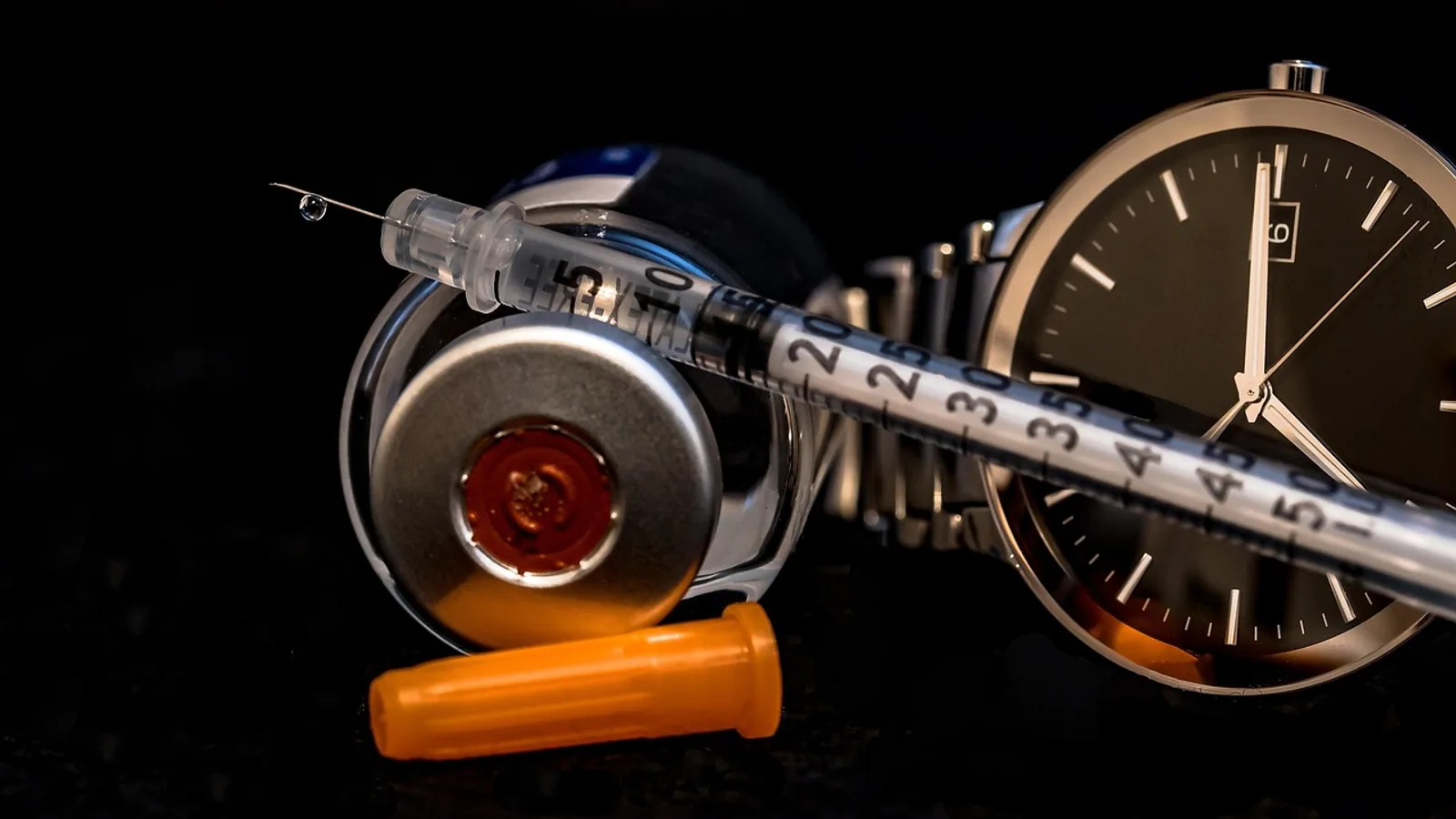
One of the most dangerous insulin dosing errors in small animal practice is a syringe and insulin concentration mismatch. U-40 insulin contains 40 units per mL. U-100 insulin contains 100 units per mL. A syringe is printed with markings for one concentration only. If a U-40 insulin is drawn into a U-100 syringe to the 10 unit mark, the pet receives 0.1 mL, which is 4 units, a 60 percent underdose. If a U-100 insulin is drawn into a U-40 syringe to the 10 unit mark, the pet receives 0.25 mL, which is 25 units, 2.5 times the intended dose and a direct route to severe hypoglycemia. The correct syringe, or an insulin pen matched to the product, is the only reliable safeguard.
If a dosing error has already happened: If a pet has received the wrong insulin dose, do not wait for symptoms. Call the veterinary clinic or an animal poison control service immediately. If the pet is already weak, collapsing, having a seizure, or unresponsive, treat it as a hypoglycemia emergency and get to a veterinarian now.
This article is educational and is not a substitute for veterinary diagnosis or treatment.
Key Takeaways
- U-40 insulin contains 40 units per mL and U-100 insulin contains 100 units per mL, so each syringe is printed with markings for only one concentration.
- Drawing U-100 insulin into a U-40 syringe at the 10 unit mark delivers 25 units, which is 2.5 times the intended dose and a direct route to severe hypoglycemia.
- Drawing U-40 insulin into a U-100 syringe at the 10 unit mark delivers 4 units, a 60 percent underdose of the intended 10 units.
- Vetsulin, Caninsulin, and ProZinc are U-40 products requiring U-40 syringes, while glargine, detemir, and NPH are U-100 products requiring U-100 syringes.
- If a pet receives the wrong insulin dose, call the veterinary clinic or an animal poison control service immediately rather than waiting for symptoms.
At a Glance: Matching Insulin to Syringe
| Insulin product | Concentration | Correct syringe | Wrong syringe consequence |
|---|---|---|---|
| Vetsulin / Caninsulin (porcine zinc lente) | U-40 | U-40 syringe or manufacturer pen | U-100 syringe at the 10 unit mark delivers 4 units (60 percent underdose) |
| ProZinc (protamine zinc recombinant human insulin) | U-40 | U-40 syringe or manufacturer pen | U-100 syringe at the 10 unit mark delivers 4 units (60 percent underdose) |
| Insulin glargine | U-100 | U-100 syringe or pen | U-40 syringe at the 10 unit mark delivers 25 units (2.5x overdose) |
| Insulin detemir | U-100 | U-100 syringe or pen | U-40 syringe at the 10 unit mark delivers 25 units (2.5x overdose) |
| NPH (isophane) insulin | U-100 | U-100 syringe or pen | U-40 syringe at the 10 unit mark delivers 25 units (2.5x overdose) |
The rule is absolute. U-40 insulin goes in a U-40 syringe. U-100 insulin goes in a U-100 syringe. Never substitute one for the other, and never attempt to "convert" by counting marks on the wrong device.
Why Insulin Concentration Matters in Veterinary Medicine
Diabetes mellitus is one of the most common endocrine diseases in dogs and cats, and insulin therapy is the mainstay of treatment [1]. The 2018 AAHA Diabetes Management Guidelines for Dogs and Cats emphasize that successful management depends on the owner's ability to administer insulin correctly, recognize the clinical signs of inadequate control, and monitor blood glucose at home when feasible [1]. Dose accuracy sits at the center of all three skills.
Insulin is supplied as a liquid suspension or solution in a fixed concentration. That concentration is expressed in units per milliliter. A unit is a biological measure of hormone activity, not a weight or volume. Two vials can hold the same volume of liquid and contain wildly different numbers of units if their concentrations differ. This is why the syringe barrel, not the vial, determines what a mark on the side actually means.
Veterinary insulin products have historically been manufactured at U-40 for a practical reason. Dogs and cats usually receive small doses, often well under 1 unit per kilogram per injection [1]. A U-40 syringe with half-unit or single-unit markings lets a clinician or owner measure those small doses with a visible, readable scale. Human insulin products, by contrast, are manufactured at U-100 because human doses are larger and the more concentrated formulation reduces injection volume. When human insulins are used off-label in pets, the concentration mismatch risk rises sharply.
The Two Concentrations: U-40 and U-100 Defined
U-40 means 40 units of insulin per milliliter of liquid. A 10 mL vial of U-40 insulin contains 400 units. Each 0.025 mL contains 1 unit.
U-100 means 100 units of insulin per milliliter. A 10 mL vial of U-100 insulin contains 1,000 units. Each 0.01 mL contains 1 unit.
Both concentrations are drawn into syringes measured in units, but the unit scale is calibrated to the matching concentration. A U-40 syringe's "10 unit" mark sits at 0.25 mL of liquid. A U-100 syringe's "10 unit" mark sits at 0.1 mL of liquid. The marks look similar on the barrel. The volumes they represent are not.
This is the core of the u40 vs u100 insulin problem. The numbers on the barrel are unit counts, not volume measurements, and they only tell the truth when the syringe concentration matches the insulin concentration.
Which Veterinary Insulins Are U-40?
Two insulin families used in small animal practice are U-40.
Porcine zinc lente insulin, sold as Vetsulin in the United States and Caninsulin in other markets, is a U-40 product. It is a veterinary-registered intermediate-acting insulin used in dogs and cats. Merck Animal Health publishes syringe administration guidance for Vetsulin that specifies the use of the matching syringe or pen device [3].
Protamine zinc insulin (PZI), including the recombinant human formulation sold as ProZinc, is a U-40 product. PZI has a long history in feline diabetes management. Early studies documented its absorption kinetics in cats [11]. Later work confirmed that protamine zinc recombinant human insulin produces significant reductions in mean blood glucose and serum fructosamine in diabetic cats when dosed twice daily [4]. Comparative studies found that PZI has a longer duration of action than lente insulin in healthy cats and produces lower mean daily glucose concentrations [5]. A separate study comparing protamine zinc recombinant insulin with an older veterinary-approved beef and pork source PZI found comparable glycemic control at the same dose and interval, with only one reported hypoglycemia episode among 50 cats [6]. Long-term loose-control data from 185 cats treated with PZI reported a remission probability of 56.2 percent, with lower mean insulin dose and lower mean blood glucose during treatment associated with higher remission likelihood [7].
Both of these U-40 products require U-40 syringes or their manufacturer-supplied pen devices. UltiCare VetRx U-40 insulin syringes are one example of a syringe line manufactured specifically for this concentration [8].
Which Insulins Used in Pets Are U-100?
Human insulin preparations used off-label in dogs and cats are U-100. These include:
- Insulin glargine, a long-acting analog. In newly diagnosed diabetic cats, twice-daily glargine produced better glycemic control and a higher probability of remission than PZI or lente insulin [9]. Glargine also has a later glucose nadir and longer duration of action than lente insulin in healthy cats [5].
- Insulin detemir, another long-acting analog used in feline diabetes. Long-acting insulins including glargine, detemir, and PZI are reviewed in the veterinary literature for their dosing protocols and remission outcomes [10].
- NPH (isophane) insulin, an intermediate-acting human insulin. Absorption studies in normal cats showed that NPH is absorbed more slowly than regular insulin but more rapidly than PZI [11]. NPH has historically been one of the most commonly administered insulins in diabetic dogs [12].
All three are U-100. They require U-100 syringes or pen devices. A U-40 syringe used with any of these delivers 2.5 times the intended dose at every mark.
The Math of Syringe Mismatch
The conversion is simple arithmetic, and every veterinary professional should be able to reproduce it from memory.
Scenario 1: U-40 insulin drawn in a U-100 syringe. The U-100 syringe's 10 unit mark corresponds to 0.1 mL. U-40 insulin contains 40 units per mL. Therefore 0.1 mL × 40 units/mL = 4 units. The intended dose was 10 units. The pet received 4 units. That is a 60 percent underdose.
Scenario 2: U-100 insulin drawn in a U-40 syringe. The U-40 syringe's 10 unit mark corresponds to 0.25 mL. U-100 insulin contains 100 units per mL. Therefore 0.25 mL × 100 units/mL = 25 units. The intended dose was 10 units. The pet received 25 units. That is 2.5 times the intended dose.
The general rule: A U-40 dose drawn in a U-100 syringe must be multiplied by 2.5 to find the correct mark on the U-100 barrel. A U-100 dose drawn in a U-40 syringe must be divided by 2.5. Neither calculation should ever be performed at the kitchen counter. The correct syringe eliminates the arithmetic entirely.
Insulin Syringe Conversion Table
| Intended dose | Mark on correct syringe | Volume delivered | Dose if U-40 insulin drawn in U-100 syringe | Dose if U-100 insulin drawn in U-40 syringe |
|---|---|---|---|---|
| 2 units | 2 units | 0.05 mL (U-40) / 0.02 mL (U-100) | 0.8 units | 5 units |
| 4 units | 4 units | 0.1 mL (U-40) / 0.04 mL (U-100) | 1.6 units | 10 units |
| 5 units | 5 units | 0.125 mL (U-40) / 0.05 mL (U-100) | 2 units | 12.5 units |
| 10 units | 10 units | 0.25 mL (U-40) / 0.1 mL (U-100) | 4 units | 25 units |
| 15 units | 15 units | 0.375 mL (U-40) / 0.15 mL (U-100) | 6 units | 37.5 units |
| 20 units | 20 units | 0.5 mL (U-40) / 0.2 mL (U-100) | 8 units | 50 units |
| 30 units | 30 units | 0.75 mL (U-40) / 0.3 mL (U-100) | 12 units | 75 units |
Read the table by column. The "Intended dose" and "Mark on correct syringe" columns match. The last two columns show what the pet actually receives when the syringe does not match the insulin. Every row in those two columns is wrong, and the U-100-in-U-40 column is dangerous.
Why the Errors Happen
Syringe mismatch errors are not a knowledge problem in most clinics. They are a systems problem. Several recurring failure points drive them.
Look-alike packaging. U-40 and U-100 syringes are often the same length, the same gauge, and the same color. The only difference is the scale printed on the barrel and a small concentration label on the box. Under time pressure, the wrong box gets opened.
Pharmacy dispensing errors. A pet owner fills a Vetsulin prescription and receives U-100 syringes because the pharmacy stocks U-100 as its default. The pharmacist may not know that veterinary insulin is U-40. The reverse also happens when a pet on glargine receives U-40 syringes.
Owner substitution. An owner runs out of syringes, borrows a family member's U-100 syringes (often from a human diabetic in the household), and assumes the marks are interchangeable. This is one of the highest-risk scenarios because the owner may not mention the substitution at the next visit.
Verbal dose instructions without a device check. A relief veterinarian or an emergency clinician gives a dose in units without confirming which syringe the owner has at home. The owner draws to that number on whatever syringe is in the drawer.
Insulin product switches. When a pet transitions from Vetsulin to glargine, or from PZI to detemir, the concentration changes from U-40 to U-100. If the syringe supply is not changed at the same time, the first dose after the switch can be a 2.5-fold overdose. Transition protocols between insulin types are described in the veterinary literature, and they assume the correct device is in hand [2].
Hypoglycemia: Recognition and Emergency Steps
An overdose of insulin, whether from a U-100-in-U-40 mismatch or any other cause, drives blood glucose down. Clinical hypoglycemia in dogs and cats typically produces signs in a predictable progression.
Early signs:
- Restlessness or unusual behavior
- Weakness or lethargy
- Trembling or muscle twitching
- Increased hunger
- Vomiting
Moderate signs:
- Wobbling or unsteady gait
- Disorientation
- Dilated pupils
- Hypersalivation
Severe signs:
- Collapse
- Seizures
- Coma
- Death
Post-hypoglycemic hyperglycemia is a documented phenomenon in diabetic cats. In one study, 25 percent of diabetic cats with hypoglycemia on a blood glucose curve went on to have blood glucose above 15 mmol/L within 12 hours [13]. This means a single hypoglycemic episode can be followed by marked hyperglycemia, which can confuse the clinical picture if the hypoglycemia was not recognized at the time.
Emergency steps for a suspected overdose:
- If the pet is conscious and able to swallow, apply a glucose source to the gums or offer food. Corn syrup, honey, or a glucose gel rubbed on the gingival mucosa is absorbed quickly.
- If the pet is unconscious, seizing, or unable to swallow, do not put anything in the mouth. Transport immediately.
- Call ahead to the veterinary clinic so the team can prepare for a glucose check and intravenous dextrose if needed.
- Bring the insulin vial and the syringe used for the dose. The concentration printed on the vial tells the clinician exactly how much insulin was given.
- Do not induce vomiting. Insulin is injected, not ingested, so emesis has no role.
A single overdose does not always cause clinical hypoglycemia, particularly if the pet ate normally. It does require a blood glucose check and monitoring. The 2018 AAHA guidelines identify avoiding hypoglycemia as one of the two defining goals of a controlled diabetic, alongside reducing clinical signs [1].
Reading the Label Correctly
Every insulin vial and every syringe box carries the concentration. The failure is in reading it under pressure. Build the habit of reading three things out loud before every draw.
On the insulin vial:
- The product name (Vetsulin, ProZinc, glargine, detemir, NPH)
- The concentration (U-40 or U-100)
- The expiration date and the date the vial was opened
On the syringe package:
- The concentration (U-40 or U-100)
- The unit scale (half-unit, single-unit, or larger increments)
- The needle gauge and length
On the syringe barrel:
- The unit markings themselves. A U-40 barrel and a U-100 barrel are printed with different scales for the same physical volume.
If any of these three checks does not match, stop. Do not draw the dose.
Handling Each Product as Its Label Directs
Insulin products have different storage and handling requirements, and those requirements are printed on the label and the package insert. Follow them exactly.
Vetsulin (porcine zinc lente, U-40): This is a suspension. Its label directs users to shake the vial thoroughly until a uniform, milky suspension forms before each dose, and to let any surface foam settle, which differs from the gentle rolling used for many other insulin suspensions. Merck Animal Health publishes specific syringe administration guidance for this product, including the recommendation to use the matching syringe or pen [3].
ProZinc (protamine zinc recombinant human insulin, U-40): This is also a suspension and requires gentle rolling before use. The manufacturer's instructions govern storage, mixing, and dose preparation.
Glargine, detemir, and NPH (U-100): These are solutions (glargine and detemir) or suspensions (NPH) with their own storage requirements. Glargine in particular has specific handling instructions. Insulin pens for these products have their own priming and storage rules, including that some pen cartridges are stored out of the refrigerator once in use [14].
Pens versus vials: Insulin pens have entered the veterinary market and offer improved dose accuracy, especially for low insulin doses [14]. Pens also reduce the risk of concentration mismatch because the pen and cartridge are a matched system. Pens require priming before each injection to ensure a full dose is delivered, and the pen device must be held in place for several seconds during the injection [14]. Features such as half-unit dosing, large dials for visually impaired owners, and memory that displays the last dose and time are available on some devices [14].
Clinic and Pharmacist Checklists
Dosing errors are prevented by systems, not by memory. The following checklists are designed to be posted at the dispensing station and the pharmacy counter.
Veterinary Clinic Checklist
- Confirm the insulin product name and concentration on the vial before writing the prescription.
- Write the syringe concentration on the prescription. Do not write "insulin syringes" alone.
- Specify the unit scale (half-unit or single-unit) and the needle gauge and length.
- When switching insulin products, explicitly state the new concentration and confirm the owner has the matching syringes before the first dose.
- Verbally confirm with the owner which syringe they have at home at every recheck.
- Provide a written dose in units and the matching mark on the matching syringe. Do not provide a dose in milliliters unless the owner is using a pen.
- Document the insulin concentration, syringe concentration, and dose in the medical record at every visit.
- Train all staff who handle insulin prescriptions on the U-40 versus U-100 distinction.
Pharmacy Checklist
- Verify the insulin concentration on the prescription against the product on the shelf.
- Dispense only syringes that match the insulin concentration.
- If the prescribed syringe is out of stock, do not substitute a different concentration. Contact the prescriber.
- Label the syringe box with the pet's name and the insulin concentration.
- Counsel the owner at pickup on the concentration match and the danger of substitution.
- Flag any prescription for U-40 insulin so it is not filled with the default U-100 stock.
Owner Checklist
- Keep only the syringes that match the pet's insulin in the house.
- Never borrow syringes from a human diabetic household member.
- Check the concentration on the vial and the syringe box before every draw.
- If the syringe box and the vial do not match, call the clinic before giving the dose.
- Bring both the vial and the syringe to every veterinary visit.
- Store insulin as the label directs.
Prevention: Making the Error Impossible
The most effective prevention is to remove the choice. Several practical steps reduce the opportunity for a mismatch.
Use pens when available. Pens are a matched system. The cartridge and the device are designed for each other, and the dose dial is calibrated to the cartridge concentration [14]. For owners with low-vision or dexterity challenges, pens with large dials and memory features reduce both dosing and handling errors [14].
Stock only the concentration you need. A clinic that primarily uses U-40 veterinary insulin should not keep U-100 syringes in the same drawer. Physical separation of U-40 and U-100 supplies reduces the chance of a grab-and-go error.
Color-code the storage. If both concentrations must be stocked, use separate labeled bins and consider colored tape on the boxes. The goal is to make the wrong choice visually obvious.
Reconcile at every visit. Ask the owner to bring the insulin vial and the syringe to every appointment. Confirm the match in front of the owner. This catches pharmacy dispensing errors before they cause harm.
Document the switch. When a pet changes insulin products, write the new concentration in bold in the record and on the discharge instructions. Confirm the owner has the correct syringes before they leave the building.
Prognosis and Follow-Up After a Dosing Error
The outcome after an insulin dosing error depends on the direction and magnitude of the error, the pet's underlying glycemic control, and how quickly the error is recognized.
An underdose from a U-40-in-U-100 mismatch produces transient hyperglycemia. The pet may show increased thirst, urination, and appetite for a day or more. The clinical team should check blood glucose, confirm the error, and resume the correct dose with the correct syringe. Persistent hyperglycemia in a previously controlled diabetic warrants a glucose curve to reassess the insulin dose and duration of action.
An overdose from a U-100-in-U-40 mismatch is a medical emergency. The pet needs immediate blood glucose assessment and, if hypoglycemic, dextrose supplementation. Once stabilized, the pet should be monitored for at least 12 to 24 hours because insulin action can be prolonged, particularly with long-acting formulations. Post-hypoglycemic hyperglycemia can follow and should not be mistaken for a need to increase the insulin dose [13].
Follow-up after any dosing error should include a recheck of blood glucose, a review of the owner's technique, and a confirmation that the syringe and insulin match. The 2018 AAHA guidelines recommend regular monitoring of blood glucose and clinical signs as part of ongoing diabetes management [1].
Unsafe Home Remedies and Dangerous Practices
Several practices around insulin dosing are actively dangerous and should be corrected immediately.
Do not "convert" doses by counting marks on the wrong syringe. The arithmetic is error-prone under stress, and a single miscalculation can cause severe hypoglycemia.
Do not dilute insulin to change its concentration. Dilution changes the pharmacokinetics and is not a substitute for the correct syringe.
Do not use a U-100 syringe to measure U-40 insulin and then multiply the dose. This is the same error in a different form.
Do not skip a dose to compensate for a suspected overdose without veterinary guidance. Skipping a dose can cause rebound hyperglycemia and, in some pets, diabetic ketoacidosis.
Do not give extra insulin to compensate for a high blood glucose reading. Insulin stacking causes hypoglycemia. Dose changes belong to the veterinarian.
Limitations and When to Contact a Veterinarian
This article describes the concentration mismatch between U-40 and U-100 insulin syringes and the general principles of recognition and prevention. It does not replace an individual veterinary assessment. Every diabetic pet has a unique insulin requirement, and dose decisions must be made by the veterinarian managing that pet.
Contact a veterinarian immediately if any of the following occur:
- The pet received insulin from a syringe that does not match the insulin concentration
- The pet is weak, wobbly, disoriented, trembling, or collapsing
- The pet has had a seizure or is unresponsive
- The pet vomited after an insulin dose
- The pet is not eating but has already received insulin
- The owner is unsure whether the correct dose was given
- The pet's blood glucose is below the range set by the veterinarian
- The pet shows signs of illness that could be unrelated to diabetes but may affect insulin needs
For a known or suspected overdose, call the clinic before the pet shows symptoms. Early intervention is far safer than waiting.
Frequently Asked Questions
What is the difference between U-40 and U-100 insulin?
U-40 insulin contains 40 units per milliliter, and U-100 insulin contains 100 units per milliliter. The concentration determines which syringe can measure the dose accurately.
Can I use a U-100 syringe with Vetsulin?
No. Vetsulin is U-40 insulin and must be measured with a U-40 syringe or the manufacturer's pen device. Using a U-100 syringe delivers a fraction of the intended dose.
What happens if I give U-100 insulin in a U-40 syringe?
The pet receives 2.5 times the intended dose. This can cause severe hypoglycemia, collapse, seizures, and death.
How do I convert a U-40 dose to a U-100 syringe?
The correct approach is to use a U-40 syringe, not to convert. If conversion is unavoidable in an emergency, the U-40 dose must be multiplied by 2.5 to find the equivalent mark on a U-100 barrel, but this practice is strongly discouraged.
What are the signs of hypoglycemia in dogs and cats?
Early signs include restlessness, weakness, trembling, hunger, and vomiting. Severe signs include collapse, seizures, and coma.
What should I do if my pet gets too much insulin?
Apply a glucose source to the gums if the pet can swallow, and transport to a veterinarian immediately if the pet is unconscious or seizing. Bring the insulin vial and syringe with you.
Why did my pharmacy give me the wrong syringes?
Pharmacies often stock U-100 syringes as their default and may not recognize that veterinary insulin is U-40. Always confirm the concentration match at pickup.
Are insulin pens safer than syringes?
Pens reduce concentration mismatch because the cartridge and device are a matched system, and they offer improved dose accuracy for low doses. They still require priming and correct technique.
Related Articles
- How to Give Your Dog Liquid Medicine Without a Syringe
- How to Give Your Dog Liquid Medication Without a Syringe: Alternative Methods
- How to Give Your Dog a Shot at Home: Insulin and Other Injections
- How to Give Your Dog Insulin Injections Without Stress: A Step-by-Step Guide
- Caring for Diabetic Dog at Home: Glucose Monitoring Insulin and Diet
- NPH Insulin Dogs Dose: Canine Diabetes Twice Daily Protocol
- Dog Diabetes: How to Tell If Your Dog's Insulin Dose Is Too High
- Needle Gauge and Syringe Size Chart for Veterinary Use
- Veterinary Dosage Calculation Practice Problems With Answers
- How to Calculate a Constant Rate Infusion (CRI) in Veterinary Patients
Sources
- 2018 AAHA Diabetes Management Guidelines for Dogs and Cats.
- Prospective evaluation of a protocol for transitioning porcine lente insulin-treated diabetic cats to human recombinant protamine zinc insulin.
- Syringe Administration - Merck Animal Health USA (merck-animal-health-usa.com)
- Field safety and efficacy of protamine zinc recombinant human insulin for treatment of diabetes mellitus in cats.
- Glargine and protamine zinc insulin have a longer duration of action and result in lower mean daily glucose concentrations than lente insulin in healthy cats.
- Preliminary study of protamine zinc recombinant insulin for the treatment of diabetes mellitus in cats.
- Loose-control of diabetes mellitus with protamine zinc insulin in cats: 185 cases (2005-2015).
- UltiCare® VetRx U-40 Insulin Syringes - UltiMed, Inc (ultimedinc.com)
- Treatment of newly diagnosed diabetic cats with glargine insulin improves glycaemic control and results in higher probability of remission than protamine zinc and lente insulins.
- Management of diabetic cats with long-acting insulin.
- Absorption kinetics of regular, isophane, and protamine zinc insulin in normal cats.
- Owner experiences in treating dogs and cats diagnosed with diabetes mellitus in the United States.
- Glucose concentrations after insulin-induced hypoglycemia and glycemic variability in healthy and diabetic cats.
- Update on insulin treatment for dogs and cats: insulin dosing pens and more.