Malinois GSD Mix: Drive, Size and Health
By Dr. Zubair Khalid, DVM, MS, PhD ·
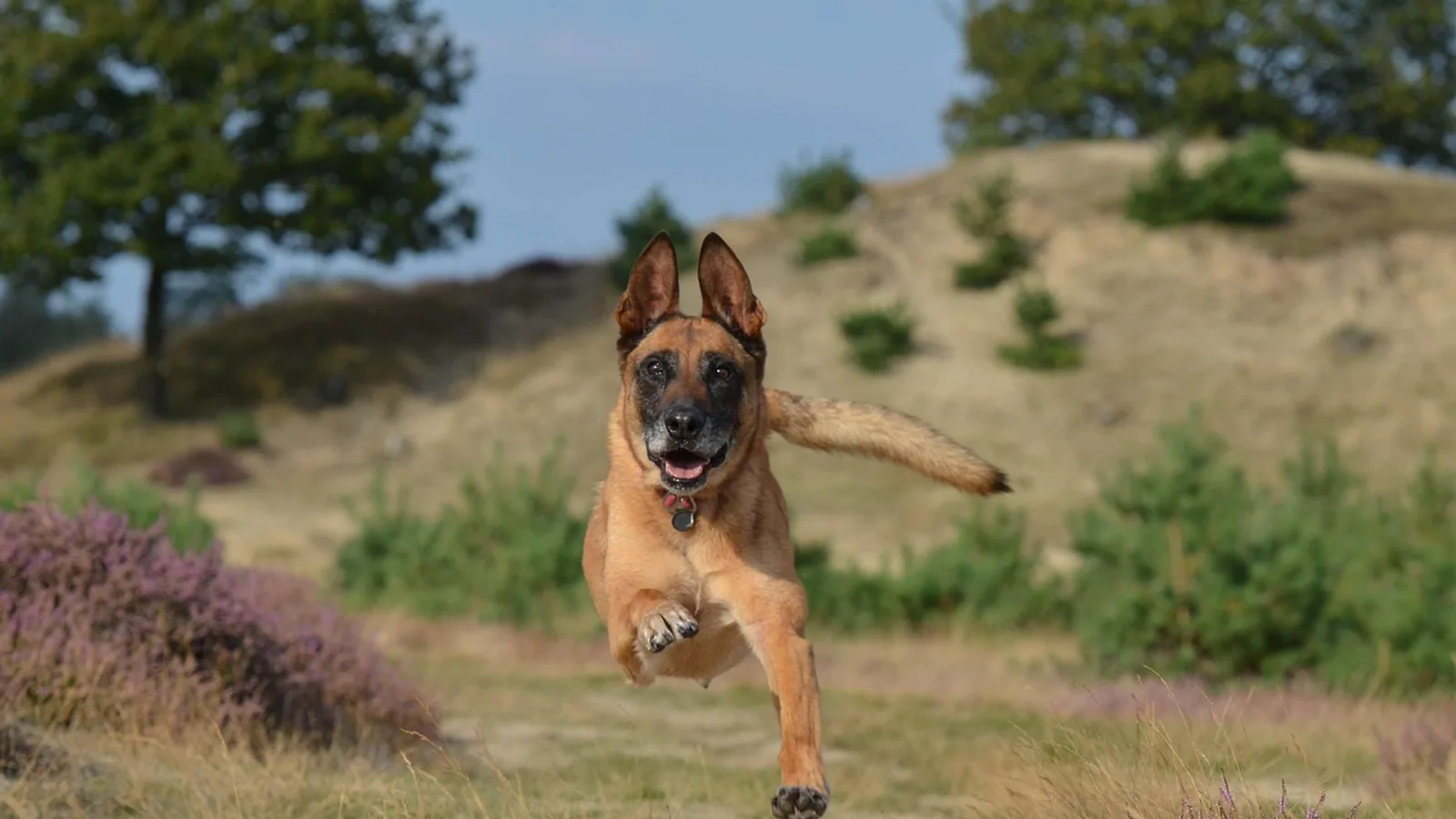
A Malinois GSD mix is a cross between the Belgian Malinois and the German Shepherd Dog, two breeds built for police, military and protection work. The result is a large, athletic dog that typically stands 55 to 65 cm (roughly 22 to 26 inches) at the shoulder and weighs about 25 to 40 kg (55 to 88 lb), with a working lifespan of about 10 to 14 years. The defining feature of this crossbreed is not its coat or its color. It is drive: the intense, sustained need to work, move and solve problems. This is a dog that suits experienced handlers with a real job for it, whether that job is protection sports, scent work, patrol work or structured daily training. It is a poor fit for a household that wants a calm companion for two short walks a day.
The Malinois GSD mix inherits from both parent breeds a body designed for sustained physical output and a mind that deteriorates without engagement. That combination drives almost every practical decision an owner makes: how much exercise the dog gets, how early joint screening is done, how the dog is fed, and whether the household can realistically meet the demand. This guide covers size, coat, drive, exercise hours, training demands, and the health screening that responsible breeders and working programs use for these lines.
This article is educational and is not a substitute for veterinary diagnosis or treatment.
At a Glance
| Attribute | Typical range for a Malinois GSD mix |
|---|---|
| Height at shoulder | 55 to 65 cm (about 22 to 26 inches) |
| Adult weight | 25 to 40 kg (about 55 to 88 lb) |
| Coat | Short to medium, dense double coat, often sable, black and tan, or fawn |
| Lifespan | About 10 to 14 years |
| Energy level | Very high, working level |
| Daily exercise | At least 1 to 2 hours of physical activity plus mental work |
| Grooming | Brush two to three times weekly, daily during seasonal shedding |
| Trainability | Very high, but requires an experienced handler |
| Good with children | Possible with supervision and training, high herding and mouthing drive |
| Good with other pets | Variable, often poor with small animals without early socialization |
| Best suited to | Experienced handlers, working homes, protection sports, police or military roles |
Because this is a crossbreed and not a standardized breed, there is no breed standard and no guaranteed size, coat or temperament. Litters vary widely depending on which parent line dominates. The figures above describe the common range, not a fixed specification.
Where the Malinois GSD Mix Comes From
The Belgian Malinois and the German Shepherd Dog share a common ancestry in the herding dogs of late nineteenth century Europe. Both were developed as multipurpose working dogs that could move livestock, guard property and later serve in military and police roles. The German Shepherd Dog became one of the most widely used working breeds in the world, and it remains central to police and military programs. One study of military working dogs on active duty within the Department of Defense from 2000 to 2023 reviewed 2,220 deceased dog records with pathology data, confirming the scale of these programs and the reliance on working breeds in service roles [1].
The Belgian Malinois was selected for a lighter, faster, more agile frame and an extremely high work drive. Breeders of the Malinois favored dogs that could sustain intense activity and respond to precise commands under stress. The German Shepherd Dog was selected for a heavier, more powerful frame, a deep chest, and a temperament that combined courage with a strong bond to a handler.
When the two are crossed, the offspring typically inherit the athletic structure and high arousal of the Malinois along with the size, strength and protective instinct of the German Shepherd Dog. This is why the cross appears so often in police K9 units, military contract programs, and protection sports. The cross is not a recognized breed, so there is no registry standard, no closed gene pool, and no predictable outcome from one litter to the next.
Appearance and Size
Height and Weight
A Malinois GSD mix is a large dog. Most adults fall between 55 and 65 cm at the shoulder (about 22 to 26 inches) and weigh between 25 and 40 kg (about 55 to 88 lb). Males tend to sit at the upper end of both ranges, females at the lower end. A dog that leans heavily toward the Malinois parent may be leaner and lighter, while a dog that leans toward the German Shepherd Dog may be broader in the chest and heavier in bone.
Body condition matters more than the number on the scale. A working dog should carry visible waist definition and easily palpable ribs under a thin layer of muscle. Both parent breeds are prone to carrying excess weight when exercise drops, and excess weight loads dysplastic joints. Owners should assess body condition monthly and adjust food to activity, not to a fixed cup measure.
Coat and Color
The coat is usually short to medium in length with a dense double layer: a soft undercoat for insulation and a harsher outer coat for weather resistance. Colors vary. Common patterns include sable, black and tan, fawn, and solid black, drawn from the genetics of both parent breeds. Shedding is heavy year round and extreme during seasonal coat blows, when the undercoat releases in large tufts.
Structure and Movement
Both parent breeds are built for sustained trotting work. A biomechanical study comparing Labrador retrievers, shepherd breeds and spaniel breeds during steady-state trotting found that the larger shepherds trotted with greater velocities, longer stride lengths and higher ground reaction forces than the smaller breeds, and that joint angles and moments differed between breeds in ways that did not scale simply with body size [2]. In practical terms, this means a shepherd-type dog is mechanically built to cover ground efficiently and to absorb repeated loading through the hips, elbows and spine. That same loading is why joint health screening matters so much in these lines.
Drive and Temperament
Drive is the single most important word in any discussion of this cross. In working dog terms, drive describes the dog's internal motivation to pursue a task: to chase, to grip, to search, to problem-solve, to work for a reward. Both the Belgian Malinois and the German Shepherd Dog sit at the high end of the working dog spectrum. A cross between them usually inherits that intensity.
A high-drive dog is not aggressive by default. It is switched on. It notices everything, reacts fast, recovers fast, and wants repetition. Without an outlet, that same energy turns into pacing, barking, fence-running, chewing, digging, and household destruction. Understimulation is the most common reason these dogs end up in rescue.
Temperament in a crossbreed cannot be predicted from the parent breeds alone. Some individuals are confident and socially neutral, others are sharp and reactive, and others are soft and handler-focused. Early socialization, structured training, and the temperament of the actual parents shape the adult dog far more than the breed label does.
Drive in the Home
Inside the house, expect a dog that follows you from room to room, watches the door, and treats every movement as a potential event. Crate training and a clear house routine reduce arousal. A dog that has learned to settle on a mat is far easier to live with than one that has never been taught an off switch.
Drive Around Children and Other Pets
Herding breeds use their eyes, bodies and mouths to move things. Children running and screaming can trigger chasing and nipping. This is manageable with training and supervision, but it is not a dog to leave alone with toddlers. Small pets, cats and poultry can trigger the same predatory sequence. Households with small animals need early, careful introductions and realistic expectations.
Exercise Requirements
A Malinois GSD mix needs at least one to two hours of physical activity every day, plus mental work. This is a floor, not a target. Working-line dogs in active service often get considerably more.
Physical exercise alone is not enough. A dog that runs for two hours but never has to think will still develop problem behavior. Mental work means scent games, obedience drills, trick training, puzzle feeders, tracking, protection sport training, or structured fetch with rules. Ten to twenty minutes of focused training can tire a working dog more than an hour of free running.
What Counts as Exercise
- Structured walks with obedience commands mixed in
- Off-leash running in a securely fenced area
- Fetch and retrieve with a clear start and stop command
- Treadmill or bike-joring for conditioned adult dogs
- Swimming for dogs with joint issues, once cleared by a veterinarian
What Does Not Count
- A short walk around the block
- Time alone in a yard, no matter how large
- Dog park visits with no structure
A yard is not exercise. A yard is a place where an understimulated dog practices barking at the fence for eight hours.
Signs of Understimulation
- Destructive chewing of furniture, doors or crates
- Nonstop barking or whining
- Pacing, spinning or tail chasing
- Leash reactivity that worsens with each walk
- Refusing to settle indoors
When these signs appear, the first question is not which correction to use. It is how much real work the dog did that day.
Lifelong Activity and Cognitive Health
Exercise and training are not just a young dog's concern. A questionnaire study of 858 senior dogs over seven years of age found that a lifetime sports career and joint activities with the owner had the strongest negative association with canine cognitive decline, meaning dogs that stayed active and worked alongside their owners scored better on owner-reported cognitive measures [3]. Dogs regarded as sports companions, regardless of breed type, had lower cognitive decline scores than dogs kept purely as domestic or breeding animals [3]. For a high-drive mix, keeping the dog engaged into old age is a health intervention, not a luxury.
Training Demands
This cross suits experienced handlers. It is not a first dog for most people.
Both parent breeds are highly trainable and highly sensitive to handler error. They learn fast, which means they also learn mistakes fast. A handler who is inconsistent, harsh or unclear will produce a dog that is anxious, reactive or shut down. A handler who is clear, fair and consistent will produce a dog that is remarkably capable.
Core Training Priorities
- Obedience under distraction. Reliable sit, down, stay, recall and heel in the presence of other dogs, people and movement.
- Leash manners. A 30 to 40 kg dog that pulls is a physical hazard. Loose-leash walking is a safety skill.
- A reliable off switch. A place or settle command that the dog will hold indoors.
- Crate training. Essential for house training, travel, veterinary visits and recovery from injury or surgery.
- Muzzle conditioning. A dog that accepts a muzzle calmly is safer at the vet and in public.
- Socialization. Controlled, positive exposure to people, dogs, surfaces, sounds and handling during the first months of life.
Working Roles
This mix is well suited to protection sports, police and military work, scent detection, search and rescue, and competitive obedience. Patrol-certified military working dogs in one retrospective study had decreased odds of an osteosarcoma diagnosis compared with non-patrol dogs, though the authors noted that breed, sex, neuter status, age at death and procurement location did not significantly affect the odds of diagnosis [1]. That finding does not mean work prevents cancer. It reflects the selection pressures and physical demands of patrol roles.
Who Should Not Own This Mix
- First-time dog owners without a trainer
- Households where the dog will be alone more than six hours a day
- Apartments with no plan for daily high-intensity exercise
- Families with very young children and no capacity for supervision
- Owners who want a dog that is calm by default
- Anyone unwilling to commit to 10 to 14 years of daily work
Grooming
A Malinois GSD mix has a dense double coat that sheds continuously. Brush two to three times a week with an undercoat rake and a slicker brush. During seasonal coat blows, brush daily and expect large volumes of loose undercoat.
Bathe only when needed, typically every six to twelve weeks, using a dog-specific shampoo. Overbathing strips the coat oils. Check ears weekly and clean them with a veterinarian-approved ear cleaner. Trim nails every three to four weeks. Brush teeth several times a week, following the AAHA dental care guidance for home oral hygiene.
Feeding Considerations
Feed a complete and balanced diet formulated for large-breed dogs, and match portion size to activity level. Working dogs in heavy training have higher caloric needs than a dog in a pet home, and those needs change with the season and the training cycle.
Two feeding points matter specifically for this cross.
First, body condition. Excess weight increases load on the hips and elbows. Keep the dog lean.
Second, bloat risk. Deep-chested breeds, including both parent breeds, are at higher risk of gastric dilatation and volvulus (GDV), a life-threatening twisting of the stomach. Feed two or three smaller meals a day rather than one large meal, use a slow-feeder bowl if the dog bolts food, and avoid vigorous exercise immediately before and after meals. Know the emergency signs: a distended abdomen, unproductive retching, pacing, drooling and restlessness. GDV is a surgical emergency. Call an emergency veterinary hospital immediately if these signs appear.
Health Problems and Screening
Crossbreeding does not guarantee health. A Malinois GSD mix inherits the disease risks of both parent lines, and the German Shepherd Dog in particular has a well-documented genetic burden for orthopedic disease.
Hip Dysplasia
Canine hip dysplasia (CHD) is the most common hereditary skeletal disorder in dogs and a major welfare concern in German Shepherd Dogs [4][5]. It is a developmental disease of the hip joint in which the femoral head does not fit properly in the acetabulum, leading to laxity, osteoarthritis and pain.
The genetics are complex. Hip dysplasia is moderately heritable in German Shepherd Dogs, with reported heritability estimates of 0.14 to 0.25 for individual radiographic traits and about 0.30 for a summed phenotype in an Australian cohort of 13,124 dogs [6]. A Brazilian study of 1,632 German Shepherd Dogs estimated heritability of 0.20 for hip scores and 0.19 for hip status [7]. Genome-wide studies have identified multiple quantitative trait loci and candidate genes associated with CHD in the breed, including loci on chromosomes 1, 3, 4, 8, 9, 16, 19, 24, 26, 33 and 34 [4][8][9]. A Finnish study identified deletions in a putative enhancer of the NOG gene on chromosome 9 that were associated with healthy and mildly dysplastic dogs, suggesting a protective role [10]. Segregation analysis has also detected a major gene effect alongside polygenic inheritance [11].
What this means for owners is simple: hip dysplasia is not a single-gene problem, and a dog with two dysplastic parents is at higher risk, but a dog from good lines can still develop it. Screening is the only way to know.
Screening options include the Orthopedic Foundation for Animals (OFA) hip evaluation, the PennHIP distraction index, and the Fédération Cynologique Internationale (FCI) scoring used in Europe. A prospective study of 47 German Shepherd police dogs compared the New Zealand Veterinary Association scoring system with the PennHIP distraction index and found significant correlation between the left-hip distraction index and left-side NZVA scores, while right-hip agreement was weaker [12]. The practical takeaway is that different screening systems measure related but not identical things, and breeders should use one consistent system with published results.
Elbow Dysplasia
Elbow dysplasia (CED) is the second major orthopedic concern. A large German Shepherd Dog study using radiographic screening data from 48,367 dogs found moderate heritabilities of 0.2 to 0.3 for hip and elbow dysplasia traits, with a positive genetic correlation of about 0.3 between CHD and CED [13]. That genetic correlation means the two conditions tend to travel together in lines. A dog with a strong elbow clearance behind it is more likely to also have hip clearance behind it.
Screening for elbows is done by OFA, the FCI, or the British Veterinary Association/Kennel Club scheme. Ask for elbow scores on both parents, not just hips.
Degenerative Myelopathy
Degenerative myelopathy (DM) is a progressive, non-painful disease of the spinal cord that causes rear-limb weakness and incoordination, eventually leading to paralysis. It is well recognized in German Shepherd Dogs and other breeds. There is a DNA test for the associated SOD1 mutation. Because DM is inherited in a complex way and not all dogs with two copies of the mutation develop the disease, a DNA result is a risk indicator, not a diagnosis. Breeders should test both parents, and owners should discuss results with a veterinarian before breeding or purchasing.
Osteoarthritis in Working Dogs
Working and sporting dogs are predisposed to osteoarthritis because of chronic fatigue injuries and repetitive loading on bone and muscle [14]. A study of 50 police working dogs with bilateral hip osteoarthritis found that the mean age at diagnosis was 6.5 years and mean bodyweight was 26.7 kg, and that radiographic changes correlated with age and with reduced joint extension [14][15]. These are exactly the size and age parameters of a Malinois GSD mix in a working role. Early diagnosis and management of osteoarthritis preserve working life.
Osteosarcoma
Osteosarcoma is a bone cancer that occurs in large and giant breeds. A retrospective study of military working dogs on active duty from 2000 to 2023 found an overall prevalence of 1.2% among 2,220 deceased dogs with pathology data, with 45% of cases axial and 48% appendicular [1]. Any persistent lameness or firm swelling over a bone in a middle-aged or older large dog warrants prompt veterinary imaging.
Joint Disorders and Neutering
A 14.5-year study of 1,170 German Shepherd Dogs examined the relationship between neutering and joint disorders. In intact males, 7% were diagnosed with one or more joint disorders, while in males neutered before one year of age, 21% were diagnosed with one or more joint disorders, a significant increase. In intact females, 5% were diagnosed with one or more joint disorders, while in females neutered before one year of age, the figure rose to 16%. The increase was mostly associated with cranial cruciate ligament tear [16]. Mammary cancer was diagnosed in 4% of intact females compared with less than 1% of females neutered before one year [16].
This is a decision to make with a veterinarian, weighing orthopedic risk against reproductive and oncologic risk, and timing matters.
Recommended Screening Tests
| Test | Purpose | When |
|---|---|---|
| OFA or PennHIP hip evaluation | Detect hip laxity and dysplasia | Before breeding, ideally at 2 years |
| OFA or FCI elbow evaluation | Detect elbow dysplasia | Before breeding, ideally at 2 years |
| DM DNA test (SOD1) | Assess degenerative myelopathy risk | Any age, before breeding |
| Full orthopedic exam | Detect lameness, range of motion loss, pain | Annually, more often in working dogs |
| Radiographs of hips and elbows | Monitor osteoarthritis progression | As directed by a veterinarian |
Screening Before You Buy or Adopt
Ask the breeder or rescue for written documentation of hip and elbow clearances on both parents, DM test results, and the age at which the parents were screened. A clearance issued before two years of age is not a final OFA clearance. Ask whether the parents are actively worked and what their exercise and recovery routine looks like. A working dog's joints are its career.
Lifespan and Aging
The expected lifespan of a Malinois GSD mix is about 10 to 14 years. Working dogs often remain physically capable into their senior years if joint disease is managed early and activity is maintained.
Senior care for this cross focuses on three things: joint comfort, cognitive engagement, and weight control. As noted earlier, a lifetime of sports and joint activity with the owner is associated with better cognitive scores in senior dogs [3]. Keep training, keep walking, and adjust intensity rather than stopping activity. Annual or twice-yearly veterinary exams become more valuable after age seven.
Finding a Responsible Breeder or Rescue
Because this is a crossbreed, there is no breed club overseeing it. That places more responsibility on the buyer.
Questions to Ask
- Can I see written hip and elbow clearances for both parents?
- Were both parents tested for the SOD1 mutation associated with degenerative myelopathy?
- At what age were the parents screened?
- What working roles do the parents perform?
- Can I meet the mother and, if possible, the father?
- What socialization has the litter received?
- What is your health guarantee, and what does it cover?
- Will you take the dog back if I can no longer keep it?
Breed-Specific Rescue
Malinois and German Shepherd rescues frequently take in this cross, often from owners who underestimated the exercise demand. Rescue dogs can make excellent working partners, but they need a full veterinary evaluation, including orthopedic assessment, before starting a training program. A dog with untreated hip pain will not perform and will not improve with more exercise.
Limitations and When to Contact a Veterinarian
This article describes general patterns for a crossbreed. Individual dogs vary in size, temperament, drive and health, and no article can assess your dog. Your veterinarian can examine your dog, review its history, and recommend screening and treatment specific to it.
Contact a veterinarian promptly if you observe any of the following:
- Sudden or progressive lameness, stiffness after rest, or reluctance to jump or climb stairs
- A distended or hard abdomen, unproductive retching, drooling, or pacing, which may indicate gastric dilatation and volvulus and requires emergency care
- Rear-limb weakness, dragging of the toes, or loss of coordination
- Persistent lameness or a firm swelling over a bone
- Weight loss, reduced appetite, or a change in drinking and urination
- Behavior changes such as new aggression, anxiety, or loss of house training
- Any injury during training or work, even if the dog seems to recover quickly
Do not start supplements, pain medications, or joint injections without veterinary guidance. Some human pain relievers are toxic to dogs.
Frequently Asked Questions
How big does a Malinois GSD mix get?
Most adults stand 55 to 65 cm at the shoulder and weigh 25 to 40 kg. Males tend to be larger than females, and individuals leaning toward the German Shepherd parent tend to be heavier in bone.
How much exercise does a Malinois GSD mix need?
At least one to two hours of physical activity daily, plus mental work such as scent games, obedience drills or structured training. This is a minimum for a working-line dog.
What happens if a Malinois GSD mix is understimulated?
Destructive chewing, nonstop barking, pacing, leash reactivity and an inability to settle indoors are common. Understimulation is the leading reason these dogs are surrendered.
Do Malinois GSD mixes have health problems?
Yes. They inherit the disease risks of both parent breeds, especially hip dysplasia, elbow dysplasia, degenerative myelopathy and bloat. Screening the parents reduces but does not eliminate risk.
What screening tests should the parents have?
Hip evaluation by OFA or PennHIP, elbow evaluation by OFA or FCI, and a DNA test for the SOD1 mutation associated with degenerative myelopathy. Ask for written results.
Is a Malinois GSD mix good with children?
It can be, with training, supervision and early socialization. The herding and mouthing drive of both parent breeds makes unsupervised contact with young children risky.
How long do Malinois GSD mixes live?
About 10 to 14 years. Lifespan depends heavily on joint health, body condition and continued physical and mental activity.
Is a Malinois GSD mix a good first dog?
No. This cross suits experienced handlers, working homes, and protection sports, police or military roles. First-time owners should choose a lower-drive breed.
Related Articles
- Belgian Malinois Health Problems: Inherited Conditions and Preventive Screenings
- Belgian Malinois Feeding Guide: Calorie Targets and Sensitive Stomach Diet Plans
- Belgian Tervuren Health Problems: Inherited Conditions and Preventive Screenings
- Belgian Sheepdog Health Problems: Inherited Conditions and Preventive Screenings
- Rabbit Cage Size Guide: Minimum Dimensions for Health and Welfare
- Oncogene Definition: How Mutated Genes Drive Cancer
- Malinois German Shepherd Mix Breed Guide
- Boxer Pit Mix: Temperament and Health Guide
Sources
- Prevalence of osteosarcoma and investigation of risk factors in military working dogs: a retrospective study using data from the Deceased Military Working Dog Database.
- The biomechanics of working dog locomotion I: Steady-state trotting.
- Hard-working or hardly working dogs stay young longer? Lifetime sports engagement, joint activity with the owner and breed type are associated with the severity of canine cognitive decline.
- Identification and validation of quantitative trait loci (QTL) for canine hip dysplasia (CHD) in German Shepherd Dogs.
- Genetic correlations among canine hip dysplasia radiographic traits in a cohort of Australian German Shepherd Dogs, and implications for the design of a more effective genetic control program.
- Heritability and phenotypic variation of canine hip dysplasia radiographic traits in a cohort of Australian German shepherd dogs.
- Heritability of hip dysplasia: Preliminary results for German Shepherd dogs in Brazil.
- Multiple loci associated with canine hip dysplasia (CHD) in German shepherd dogs.
- Mapping quantitative trait loci for canine hip dysplasia in German Shepherd dogs.
- Novel protective and risk loci in hip dysplasia in German Shepherds.
- Complex segregation analysis of canine hip dysplasia in German shepherd dogs.
- An assessment of the agreement between the New Zealand Veterinary Association Hip Dysplasia Scoring System and the PennHIP Distraction Index in German Shepherd dogs.
- Genetic analyses of elbow and hip dysplasia in the German shepherd dog.
- Clinical and diagnostic imaging findings in police working dogs referred for hip osteoarthritis.
- Comparison of clinical and radiographic signs of hip osteoarthritis in contralateral hip joints of fifty working dogs.
- Neutering of German Shepherd Dogs: associated joint disorders, cancers and urinary incontinence.