Malinois German Shepherd Mix Breed Guide
By Dr. Zubair Khalid, DVM, MS, PhD ·
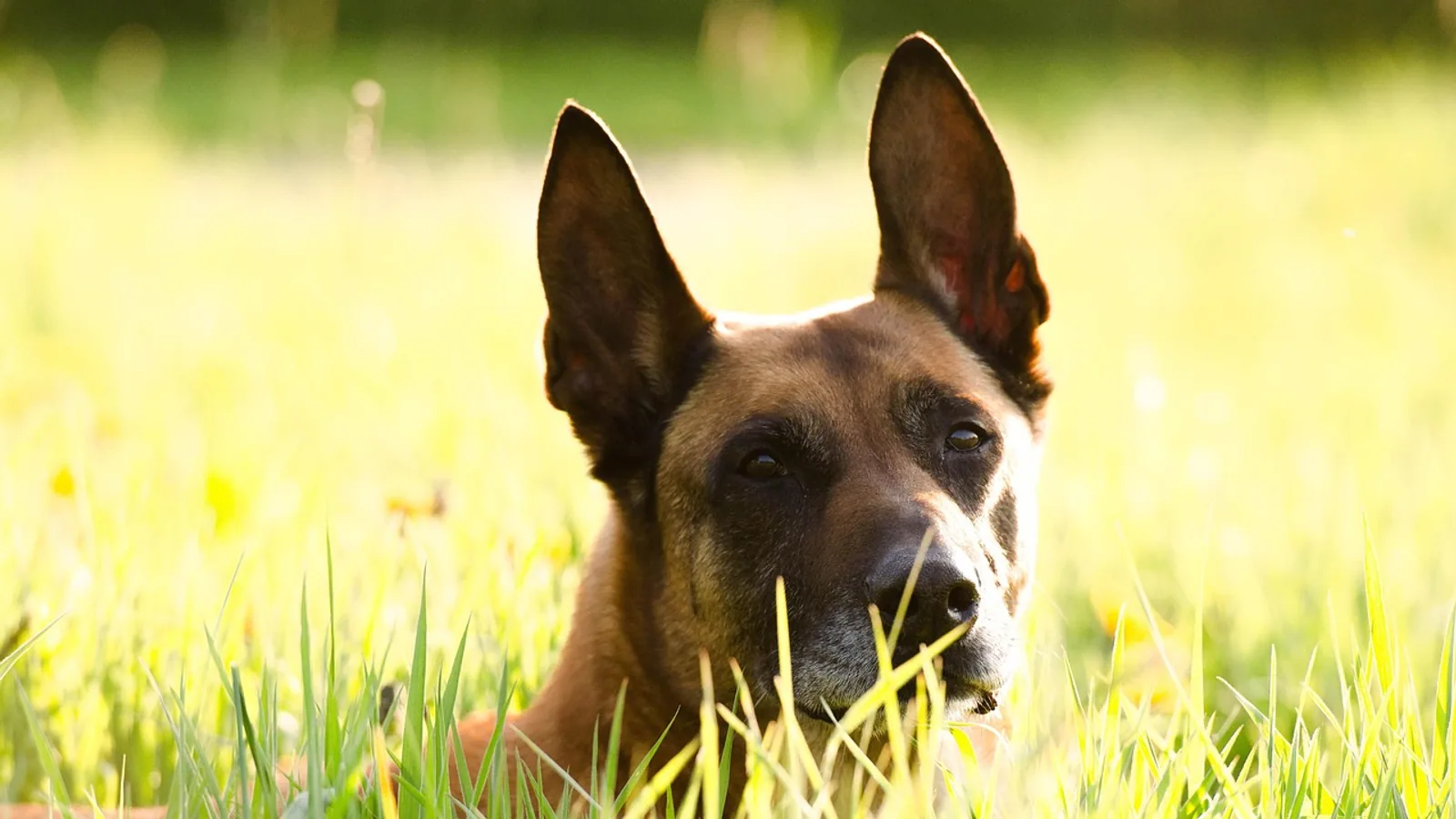
A Malinois German Shepherd mix is a cross between two of the most widely used working dog breeds in the world: the Belgian Malinois and the German Shepherd Dog. Both parents were developed for herding and police or military service, and both carry high energy, strong handler focus, and a serious need for daily physical and mental work. The cross is not a recognized breed, so there is no breed standard, no predictable adult size, and no reliable temperament blueprint. Most adults land somewhere between roughly 25 and 40 kg (55 to 88 lb), but individuals can fall below or above that range depending on which parent lines they inherit from.
This guide covers what the cross actually is, how the two parent breeds differ in working drive, what a realistic exercise and training schedule looks like, the orthopedic and gastric risks that matter most, and how to decide whether this dog fits your household. It is written for owners who want a straight answer rather than a sales pitch.
This article is educational and is not a substitute for veterinary diagnosis or treatment.
At a Glance
| Trait | Typical range for the cross |
|---|---|
| Parent breeds | Belgian Malinois and German Shepherd Dog |
| Registry status | Not a recognized breed. No breed standard exists |
| Adult weight | Roughly 25 to 40 kg (55 to 88 lb), with outliers on both ends |
| Adult height | Tall, athletic, deep-chested build. No fixed standard |
| Coat | Short to medium, often a sable, fawn, black, or black-and-tan pattern |
| Lifespan | No cross-specific figure exists. Both parents are large working breeds |
| Energy level | Very high. Often 1 to 2 hours of activity daily plus mental work |
| Trainability | High, with strong handler orientation and high arousal |
| Grooming | Moderate. Seasonal shedding is heavy in most individuals |
| Good with children | Depends on the individual dog, its training, and supervision |
| Good with other pets | Variable. Prey drive and same-sex tension are common concerns |
| Key health risks | Hip and elbow dysplasia, gastric dilatation-volvulus (bloat) |
| Best suited to | Experienced owners with time for daily training and exercise |
What the Malinois German Shepherd Mix Actually Is
The Belgian Malinois and the German Shepherd Dog are separate breeds with separate histories, but they sit close together in function. Both are herding breeds repurposed for protection, scent detection, patrol, and search work. Crossing them produces what trainers often call a "german malinois," a dog that blends Malinois speed and intensity with German Shepherd substance and, in many lines, a slightly more reserved edge.
Because this is a crossbreed, you cannot predict which parent a puppy will resemble in drive, nerve, or structure. Two littermates from the same litter can mature into very different dogs. A puppy that looks like a Malinois may behave like a German Shepherd, and the reverse happens just as often. Any breeder or seller who promises a fixed size, a fixed temperament, or a fixed working ability is describing a marketing story, not genetics.
The practical consequence is that you should evaluate the individual dog, not the label. Ask about the parents' health testing, meet the parents if possible, and watch how the puppy recovers from mild stress. Those observations tell you more than any crossbreed description.
History and Purpose of the Parent Breeds
The Belgian Malinois
The Belgian Malinois is a herding breed from the Malines region of Belgium. It was selected for active herding work and later became a favored police and military dog because of its speed, endurance, and responsiveness to a handler. Malinois lines used in protection and detection work are bred for high drive and quick recovery from arousal.
The German Shepherd Dog
The German Shepherd Dog was developed in Germany in the late nineteenth century as a versatile herding and working dog. It became the standard service dog of the twentieth century, used in police patrol, military service, guide work, and scent detection. German Shepherd lines vary widely. Show lines tend toward a heavier, angulated build, while working lines tend toward lighter, more athletic structure.
What the Cross Inherits
Crossing the two does not create a new working breed. It produces a dog with a mixed genetic background drawn from two high-drive populations. That mixing can reduce the concentration of some breed-specific problems, and it can also combine problems from both sides. Hip and elbow dysplasia appear in both parent breeds, and both are deep-chested large breeds, which places the cross in the population at elevated risk for gastric dilatation-volvulus [1], [2].
Working Drive and Suitability: Parent Breeds Compared
Drive describes how strongly a dog pursues work, how quickly it escalates, and how well it settles afterward. The table below compares the two parents and the cross on the traits that most affect daily life. These are general tendencies, not guarantees for any individual dog.
| Trait | Belgian Malinois | German Shepherd Dog | The cross |
|---|---|---|---|
| Primary historical function | Herding, then police and military work | Herding, then versatile service work | Mixed working background |
| Typical energy | Very high, often constant | High, with more settling ability | High to very high |
| Arousal speed | Fast escalation, fast recovery | Moderate escalation, slower recovery | Variable, often fast |
| Handler focus | Intense, narrow | Strong, broader | Strong to intense |
| Trainability | Very high, needs clear structure | Very high, often more forgiving | High, structure dependent |
| Independence | Low to moderate | Moderate | Variable |
| Suitability for first-time owners | Poor fit | Poor to moderate fit | Poor fit |
| Suitability for active sport homes | Excellent | Excellent | Excellent |
| Suitability for low-exercise homes | Poor fit | Poor fit | Poor fit |
| Suitability as a casual family pet | Poor fit | Poor to moderate fit | Poor fit |
The pattern is consistent across all three columns. These are dogs that need a job. A Malinois German Shepherd mix that is under-exercised and under-trained does not become calm. It becomes destructive, vocal, and hard to live with. The same dog with a structured daily routine is often a focused, obedient companion.
Exercise Needs
Plan on one to two hours of purposeful activity per day for most adults, split across the day rather than delivered in a single session. Purposeful means structured movement with a goal, not free time in a yard. A dog left alone in a fenced yard for two hours will usually stand at the gate, not exercise itself.
A realistic daily template looks like this:
- Morning: 30 to 45 minutes of brisk walking, jogging, or structured heel work.
- Midday: a short training session of 10 to 15 minutes covering obedience, positioning, or scent games.
- Evening: 30 to 60 minutes of higher-intensity work such as fetch, tug, hill work, or sport training.
- Throughout the day: food delivered through puzzle feeders, scatter feeding, or training rather than a single bowl.
Puppies need less volume and more caution. Growth plates in large breeds stay open for many months, and repetitive high-impact work on hard surfaces during that window is a known concern in both parent breeds. Keep puppy exercise to free play, short walks, and low-impact skill work, and let the puppy set the pace.
Adults in working or sport homes may need considerably more than two hours. Dogs in police, detection, or competitive sport programs often train several sessions per day. That level of output is not realistic for most households, and it is the main reason these dogs are surrendered.
Mental work counts. Ten minutes of focused obedience, nose work, or problem-solving tires a dog more than thirty minutes of unstructured running. Owners who only provide physical exercise usually end up with a fit, frustrated dog.
Training and Socialization
Start socialization early and keep it structured. The goal is not to expose the puppy to everything at once. The goal is to build neutral, calm responses to common triggers: strangers, other dogs, traffic, loud equipment, veterinary handling, and being restrained.
Key training priorities for this cross:
- Impulse control. Teach a reliable sit, down, stay, and release cue before adding high-arousal activities.
- Leash manners. These dogs are strong and fast. A dog that pulls at 35 kg is a safety problem for the owner and the public.
- Recall. A dependable recall is the single most important safety behavior for any dog with high prey drive.
- Settling. Teach an off switch on a mat or bed. High-drive dogs often need to be taught how to relax.
- Handling tolerance. Practice nail trims, ear checks, and muzzle handling before they are needed.
Avoid aversive-heavy methods that rely on pain or fear. Working breeds with strong nerve can appear to tolerate harsh handling while becoming increasingly defensive. Reward-based training with clear boundaries produces more reliable behavior in the long run.
Group classes are useful for proofing behaviors around other dogs. Private instruction is useful for specific problems. Neither replaces daily practice at home.
Grooming and Coat Care
Coat type varies. Some individuals inherit the short, tight Malinois coat. Others inherit the denser German Shepherd coat with a thicker undercoat. Both shed heavily, and both blow coat seasonally.
A practical grooming routine:
- Brush two to three times per week with an undercoat rake or slicker brush.
- Increase to daily during seasonal shedding periods.
- Bathe only when needed, typically every four to eight weeks or when the dog is genuinely dirty.
- Check ears weekly and clean when debris is visible.
- Trim nails every three to four weeks.
- Brush teeth several times per week.
Grooming sessions double as handling practice. A dog that stands calmly for brushing is usually easier to examine at the veterinary clinic.
Feeding Considerations
Feed a complete and balanced diet formulated for the dog's life stage. Large-breed puppy formulas are designed to support controlled growth, and they are the appropriate choice for a puppy expected to mature into a large adult.
Two feeding practices matter specifically for this cross because of bloat risk.
First, meal volume matters. Dogs fed a larger volume of food per meal were at significantly increased risk of gastric dilatation-volvulus, regardless of how many meals were fed per day, and the risk was highest for dogs fed a large volume once daily [3]. Splitting the daily ration into two or more smaller meals is the practical response.
Second, bowl height matters. In a prospective cohort study of large and giant breed dogs, having a raised feeding bowl was significantly associated with increased risk of GDV, and roughly 20 percent of GDV cases in large breed dogs and 52 percent in giant breed dogs were attributed to the use of a raised feed bowl [4]. Feed from a bowl on the floor.
Other feeding points supported by the evidence:
- Slower eating is better. Faster speed of eating was significantly associated with increased GDV risk [4].
- Avoid feeding immediately before or after intense exercise.
- Keep the dog away from objects it might swallow. A gastric foreign body was a significant risk factor for GDV, and affected dogs were roughly five times as likely to develop GDV as similar dogs without one [5].
- Maintain lean body condition. Excess weight adds load to dysplastic joints.
Discuss any diet change, supplement, or feeding schedule adjustment with your veterinarian rather than making changes based on internet claims.
Inherited and Common Health Problems
Hip and Elbow Dysplasia
Both parent breeds carry hip and elbow dysplasia, and the cross inherits risk from both sides. Dysplasia is a developmental disorder of the joint in which the ball and socket do not fit properly. It can range from mild to severe, and it often shows up as stiffness after rest, reluctance to jump, bunny-hopping gait, or exercise intolerance.
Screening matters because it changes management. The standard approach in both parent breeds is radiographic screening of hips and elbows under a recognized scheme, with results recorded before breeding. Ask to see the parents' screening results. A dog with no documentation has no verified status.
Management of a dog with confirmed dysplasia usually combines weight control, controlled exercise, physical rehabilitation, and pain management. Some dogs need surgical intervention. Your veterinarian will recommend the appropriate path based on the severity and the dog's age.
Gastric Dilatation-Volvulus (Bloat)
Gastric dilatation-volvulus, commonly called bloat or GDV, is the most urgent health risk for this cross. The stomach fills with gas or fluid and rotates on its axis, cutting off blood supply and trapping contents. It is rapidly fatal without treatment [6].
Several risk factors are well documented in large and giant breed dogs:
- Increasing age [4], [1].
- Having a first-degree relative with a history of GDV [4].
- Faster speed of eating [4].
- A raised feeding bowl [4].
- Larger volume of food per meal, especially once daily [3].
- A gastric foreign body [5].
- Increasing thoracic depth relative to width, which is a structural feature of both parent breeds [6].
A breed predisposition for German Shepherd Dogs has been demonstrated in a critical care case series [7]. German Shepherd Dogs and other large mixed-breed dogs appear among the breeds most commonly presented for GDV [7]. Genetic work has identified variants in genes involved in gastric tone and motility that associate with GDV risk across breeds [8], and microbiome differences have been reported in dogs that developed GDV compared with healthy controls [9].
Clinical signs to recognize immediately:
- A distended, drum-like abdomen.
- Non-productive retching or attempts to vomit without producing anything.
- Restlessness, pacing, and inability to settle.
- Drooling, panting, or signs of shock.
- Collapse.
If you see these signs, go to a veterinary emergency hospital immediately. Do not wait to see whether it resolves. Fatality rates in GDV are substantial. In one case series, the fatality rate among dogs with confirmed GDV was 15 percent, and among dogs that required partial gastrectomy it was 31 percent [7]. Cardiac arrhythmias were detected in 40 percent of dogs with GDV in that series [7], and arrhythmias are a recognized feature of the systemic effects of the condition [10].
Prophylactic Gastropexy
Gastropexy is a surgical procedure that permanently attaches the stomach to the body wall. It is indicated in every dog that undergoes surgical correction of GDV, because it dramatically reduces recurrence. Effective gastropexy decreases recurrence from as high as 80 percent to less than 5 percent [11].
Prophylactic gastropexy is the same procedure performed before a dog ever bloats. It is typically discussed for dogs at elevated risk, and it is often combined with another procedure such as a spay or neuter so the dog undergoes anesthesia only once. The procedure is performed on the right side of the abdomen near the last rib, and correct anatomic placement is important to avoid complications [11].
This is a decision to make with your veterinarian. The conversation should weigh the dog's individual risk profile, its age, its intended activity level, and the owner's willingness to manage an emergency. There is no single right answer for every dog, and the recommendation should be individualized [12].
Other Health Areas to Monitor
- Splenic disease. Splenectomy has been studied as a possible risk factor for later GDV, though results have not reached statistical significance and the current recommendation is to decide on gastropexy at the time of splenic removal case by case while considering documented risk factors [12].
- Gastric motility. Abnormal gastric motility and delayed gastric emptying have been described in dogs following GDV, though the exact role of motility in causing the condition remains unclear [13], [14].
- Degenerative myelopathy and other German Shepherd associated conditions. Discuss breed-relevant screening with your veterinarian based on the individual dog's lineage.
- Environmental and stress factors. Fearful temperament and stressful events have been proposed as predisposing factors for GDV [6], and meteorological pressure changes have been associated with GDV occurrence in a working dog population [15]. These are background factors, not things an owner can control.
Screening Tests to Ask About
Before committing to a puppy, ask the seller for documentation of the following on both parents:
- Hip screening through a recognized radiographic scheme.
- Elbow screening through a recognized radiographic scheme.
- Any available cardiac or eye screening appropriate to the lines.
- A written health history for the parents and, where available, the grandparents.
A seller who cannot or will not provide this documentation is not a source of reliable information about the dog's health background. No screening scheme eliminates risk, but documented screening is the difference between a known background and a guess.
Lifespan
There is no cross-specific lifespan figure for the Malinois German Shepherd mix. Both parent breeds are large working dogs, and large breeds generally have shorter lifespans than small breeds. The most useful planning assumption is that you are committing to a decade or more of daily exercise, training, and veterinary care. Owners should budget for routine wellness care, screening radiographs, and the possibility of an emergency GDV episode.
Finding a Responsible Breeder or Rescue
Rescue is a strong option for this cross. High-drive working crosses are surrendered regularly by owners who underestimated the exercise requirement. Breed-specific rescue organizations for both parent breeds, and general working dog rescues, frequently have adolescents and young adults available. An adult dog with a known temperament is often a better fit for a household than a puppy whose adult drive is unknown.
If you pursue a breeder, evaluate them on evidence rather than presentation:
- They provide documented health screening on both parents.
- They let you meet the dam and, where possible, the sire.
- They ask you detailed questions about your exercise routine, training plan, and living situation.
- They are willing to take the dog back at any point in its life.
- They do not promise a specific size, temperament, or working ability.
Red flags include puppies available without any health documentation, pressure to decide immediately, refusal to let you meet the parents, and claims that the cross is a recognized breed with a fixed standard.
Who Should Not Get This Dog
This cross is a poor fit for several households:
- First-time dog owners without a training plan.
- Homes where the dog will be alone for long stretches with no midday break.
- Apartments or small properties without a realistic daily exercise route.
- Households that want a low-energy companion dog.
- Owners who are not prepared to manage a large, strong, fast dog on leash in public.
- Families with very young children who cannot participate safely in training and supervision.
- Owners who will not pursue veterinary care promptly in an emergency.
If more than one of these applies to you, a different breed is the better choice. This is not a dog that adapts to a sedentary lifestyle.
Limitations and When to Contact a Veterinarian
Individual dogs vary, and no crossbreed description predicts the health or behavior of a specific animal. Your veterinarian can assess your dog directly and give advice tailored to its age, body condition, and history.
Contact a veterinarian promptly if you observe any of the following:
- A distended abdomen, unproductive retching, or restlessness that will not settle. This is an emergency. Go immediately.
- Sudden reluctance to rise, lameness, or stiffness that persists beyond a day or two.
- Exercise intolerance, coughing, or fainting.
- Vomiting, diarrhea, or refusal to eat for more than 24 hours.
- Weight loss despite a normal appetite.
- Any new behavioral change, especially sudden aggression or fearfulness.
- A suspected swallowed object, even if the dog seems fine.
- A wound, swelling, or lump that is growing or painful.
Do not attempt to manage a suspected bloat episode at home. There is no safe home treatment.
Frequently Asked Questions
What is a Malinois German Shepherd mix?
It is a cross between a Belgian Malinois and a German Shepherd Dog. It is not a recognized breed, so there is no standard for size, coat, or temperament.
How big does a Belgian Malinois German Shepherd mix get?
Most adults fall roughly between 25 and 40 kg (55 to 88 lb). Individuals can be smaller or larger, and no reliable prediction can be made from the cross alone.
How much exercise does a german shepherd and malinois mix need?
Plan on one to two hours of purposeful activity daily, plus mental work such as training and puzzle feeding. Working and sport homes often need more.
Is the german shepherd mixed with belgian malinois a good family dog?
It can be, in a household with an experienced owner, a structured training plan, and time for daily exercise. It is a poor fit for sedentary homes and first-time owners.
Do these dogs have hip and elbow problems?
Yes. Both parent breeds carry hip and elbow dysplasia, and the cross inherits risk from both sides. Ask for documented screening on both parents.
What is the risk of bloat in this cross?
The cross is a deep-chested large dog, which places it in the population at elevated risk for gastric dilatation-volvulus. German Shepherd Dogs have shown a breed predisposition in clinical case series.
Should I get a prophylactic gastropexy for my dog?
That is a decision to make with your veterinarian. Gastropexy reduces recurrence dramatically when performed during GDV surgery, and prophylactic gastropexy is often discussed for at-risk dogs, frequently at the time of spay or neuter.
Can I leave this dog alone all day?
Not without a midday break and a plan for exercise and mental work. Under-stimulated dogs of this type commonly develop destructive and vocal behavior.
Related Articles
- German Shepherd Dog Behavior Problems
- German Shepherd Lifespan Diet and Preventive Care Guide
- Belgian Malinois Health Problems: Inherited Conditions and Preventive Screenings
- Belgian Malinois Feeding Guide: Calorie Targets and Sensitive Stomach Diet Plans
- German Shepherd Health Problems: DM Bloat and Exocrine Pancreatic Insufficiency
- German Shepherd Health Guide: Genetic Risks, Joint Care & Lifespan
- Malinois GSD Mix: Drive, Size and Health
Sources
- Incidence of and breed-related risk factors for gastric dilatation-volvulus in dogs.
- Inherited and predisposing factors in the development of gastric dilatation volvulus in dogs.
- Diet-related risk factors for gastric dilatation-volvulus in dogs of high-risk breeds.
- Non-dietary risk factors for gastric dilatation-volvulus in large and giant breed dogs.
- Gastric foreign body as a risk factor for gastric dilatation and volvulus in dogs.
- Gastric dilatation-volvulus in dogs.
- Canine gastric dilatation/volvulus syndrome in a veterinary critical care unit: 295 cases (1986-1992).
- Identification of Genetic Susceptibility Factors Associated with Canine Gastric Dilatation-Volvulus.
- The canine gut microbiome is associated with higher risk of gastric dilatation-volvulus and high risk genetic variants of the immune system.
- Cardiovascular and systemic effects of gastric dilatation and volvulus in dogs.
- Gastropexy for prevention of gastric dilatation-volvulus in dogs: history and techniques.
- Incidence of gastric dilatation-volvulus following a splenectomy in 238 dogs.
- The relationship between gastrointestinal motility and gastric dilatation-volvulus in dogs.
- 13C-sodium acetate breath test for evaluation of gastric emptying times in dogs with gastric dilatation-volvulus.
- A time series model of the occurrence of gastric dilatation-volvulus in a population of dogs.