Greater Swiss Mountain Dog: Health and Care Guide
By Dr. Zubair Khalid, DVM, MS, PhD ·
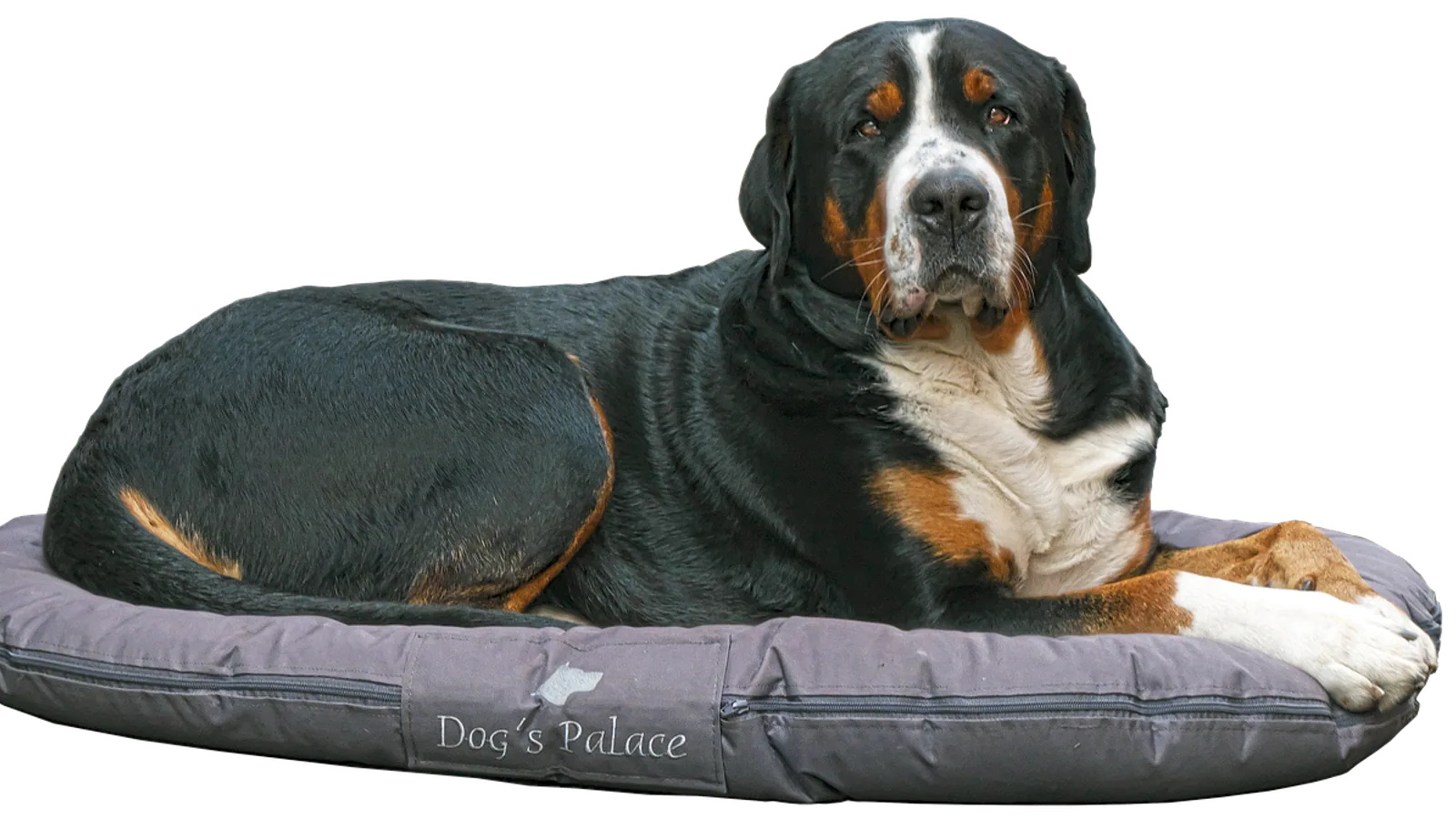
The Greater Swiss Mountain Dog is a giant working breed that was developed in the Swiss Alps as a draft and droving dog. Adults typically weigh between 50 and 70 kg, which places them firmly in the giant breed category, and they carry the health risks that come with that size. The breed is confident, steady, and strongly bonded to its family, but it is not a casual choice. A Swissy needs space, structured exercise, early training, and a preventive health plan built around bloat prevention, orthopedic screening, and careful management of anesthesia and surgery. Average lifespan is roughly 8 to 11 years.
This guide covers what owners need to know about keeping a Greater Swiss Mountain Dog healthy from puppyhood through the senior years. It focuses on the conditions that matter most in this breed, the screening tests that detect them early, and the day-to-day care that reduces risk.
This article is educational and is not a substitute for veterinary diagnosis or treatment.
At a Glance
| Trait | Detail |
|---|---|
| Size | Giant breed |
| Adult weight | Roughly 50 to 70 kg (110 to 154 lb) |
| Average lifespan | About 8 to 11 years |
| Coat | Dense double coat, black with rust and white markings |
| Energy level | Moderate to high, built for work |
| Grooming | Regular brushing, heavier during seasonal shedding |
| Trainability | High, responds well to consistent positive training |
| Good with children | Generally yes, with supervision because of size |
| Good with other pets | Often yes with early socialization |
| Key health risks | Gastric dilatation-volvulus, hip and elbow dysplasia, splenic torsion, osteochondrosis |
| Anesthesia risk | Higher than average because of body size |
Breed Overview
Size and Body Type
The Greater Swiss Mountain Dog is one of the largest of the Swiss breeds. Adults commonly reach 50 to 70 kg, and that mass shapes nearly every aspect of care. Large and giant breed dogs have a higher incidence of gastric dilatation-volvulus than smaller dogs, and the risk climbs with age [1]. Their deep chest and large abdomen are part of the breed's working build, and that conformation is one of the factors linked to bloat risk in large and giant breeds [2].
Body size also affects drug dosing, anesthesia planning, and surgical decision-making. A Swissy is not simply a scaled-up medium dog. Every procedure, from a routine dental cleaning to an emergency laparotomy, carries different risk in a 60 kg patient than in a 15 kg one.
Temperament and Suitability
Swissies are described as confident, alert, and devoted to their people. They were bred to pull carts, guard property, and drive livestock, so they combine physical strength with a calm, watchful temperament. In the GDV literature, one owner-perceived personality trait, happiness, was associated with a lower incidence of bloat, which reflects how much temperament and stress can interact with physical health in large breeds [1].
This is a breed for owners who can commit to daily exercise, ongoing training, and the financial reality of giant-breed veterinary care. It is not well suited to apartment living without substantial daily activity, and it is not a breed for someone who wants a low-maintenance dog.
Coat and Grooming
The coat is dense and double-layered, black with rust and white markings. Grooming needs are moderate. A thorough brushing two to three times a week keeps the coat healthy and controls shedding, with more frequent brushing during the twice-yearly shed. Nails, ears, and teeth need routine attention like any large breed.
Health Screening Table
The table below lists the conditions that matter most in this breed, the screening test or preventive measure, and the recommended age and frequency. Screening recommendations should always be confirmed with your veterinarian, who can adjust timing based on your dog's individual risk.
| Condition | Screening test or measure | Recommended age | Frequency |
|---|---|---|---|
| Gastric dilatation-volvulus (bloat) | Owner education on risk factors, discussion of prophylactic gastropexy | Discuss at 6 to 12 months, before any elective surgery | Ongoing risk assessment, revisit at each wellness visit |
| Hip dysplasia | OFA or PennHIP radiographs | 24 months for OFA, as early as 4 to 6 months for PennHIP | Once for breeding clearance, repeat if clinical signs appear |
| Elbow dysplasia | OFA elbow radiographs | 24 months | Once for breeding clearance, repeat if lameness develops |
| Splenic torsion | Physical examination, abdominal ultrasound when indicated | Any age if signs appear | As clinically indicated |
| Osteochondrosis | Orthopedic examination, radiographs if lameness | 4 to 12 months | As clinically indicated |
Gastric Dilatation-Volvulus
Gastric dilatation-volvulus, commonly called bloat or GDV, is the single most important emergency condition in this breed. It occurs when the stomach fills with gas or fluid and then twists on its axis, cutting off blood supply and trapping contents. It is rapidly fatal without treatment [2].
The incidence of GDV in large and giant breeds is substantial. In a prospective cohort study, the cumulative incidence of GDV was 5.7% across all breeds studied, and 6% for large and giant breed dogs combined [3][1]. Among the 105 dogs that developed GDV in that cohort, 28.6% died [1]. These numbers explain why bloat prevention is not optional in a Swissy.
Several risk factors are well documented. Increasing age is consistently associated with higher risk [3][1]. Having a first-degree relative with a history of GDV raises risk, which points to a genetic component [3]. A faster speed of eating and the use of a raised feeding bowl are both significantly associated with increased risk [3]. In that same study, approximately 20% of GDV cases in large breed dogs and 52% in giant breed dogs were attributed to the use of a raised feed bowl [3]. This is one of the most actionable findings for owners. Feeding from a bowl on the floor rather than an elevated stand is a simple change with meaningful risk reduction.
Diet-related factors matter as well. Dogs fed a larger volume of food per meal are at significantly increased risk of GDV, regardless of how many meals are fed daily [4]. For both large and giant breeds, the risk was highest for dogs fed a large volume of food once daily [4]. Splitting daily calories into two or more smaller meals is a practical response to this finding.
A gastric foreign body is another significant risk factor. In a case-control study, a large or giant breed dog with a gastric foreign body was approximately five times as likely to develop GDV as a similar dog without one [5]. This is a strong argument for preventing access to socks, toys, bones, and other objects that can lodge in the stomach.
The genetic basis of GDV is an active area of research. A genome-wide association study identified a putatively protective intergenic SNP across breeds, along with additional variants in genes involved in gastric tone and motility [6]. This work supports the idea that GDV susceptibility has a heritable component, though no commercial genetic test for GDV risk is in routine use.
Prophylactic Gastropexy
Gastropexy is a surgical procedure that permanently attaches the stomach to the body wall, preventing the organ from twisting. It is the standard preventive measure for dogs at high risk of GDV. Effective gastropexy decreases the recurrence of GDV from as high as 80% to less than 5% [7].
Gastropexy is indicated in every dog that undergoes surgical correction of GDV, because recurrence rates without it are extremely high [7][8]. Conservative treatment alone, using a stomach tube and shock management, can save a dog's life in the acute stage but cannot prevent recurrence. In one retrospective study, 71% of conservatively treated dogs had a recurrence, and 56% of those recurrences happened within three months [9].
Prophylactic gastropexy is a separate decision. It is performed in an at-risk dog before any episode of GDV occurs, usually at the time of another elective procedure such as spay or neuter. The procedure is always performed on the right side of the abdomen near the last rib, and correct anatomic placement is vital to prevent complications such as partial pyloric outflow obstruction [7].
For a Greater Swiss Mountain Dog, the case for discussing prophylactic gastropexy with your veterinarian is strong. The breed is giant, the lifetime risk of GDV is meaningful, and the procedure is far safer when performed electively in a stable dog than emergently in a dog in shock. The timing is best discussed at 6 to 12 months of age, before any planned elective surgery.
Splenic Torsion
Splenic torsion is a twisting of the spleen on its blood supply. It causes acute abdominal pain, cardiovascular compromise, and can be life-threatening. The spleen is a vascular organ, and torsion cuts off venous drainage while arterial flow continues, leading to rapid enlargement and potential rupture.
Splenic torsion is often discussed alongside GDV because the two conditions share risk factors and can occur together. The spleen sits adjacent to the stomach in the left upper abdomen, and a dog with a loose or abnormal splenic attachment is at risk. When splenic torsion requires splenectomy, the question of whether to perform a concurrent gastropexy arises.
The evidence here is nuanced. A study of 238 dogs that underwent splenectomy found that 4% subsequently developed GDV, compared with 1.4% of control dogs that had other abdominal procedures [10]. The difference approached but did not reach statistical significance, and increasing age was the only factor significantly associated with GDV occurrence in that study [10]. The authors concluded that the recommendation for gastropexy at the time of splenic removal should be made on a case-by-case basis, considering previously documented risk factors [10].
For a Greater Swiss Mountain Dog undergoing splenectomy for splenic torsion, the breed's giant size and high baseline GDV risk tilt the decision toward concurrent gastropexy. This is a conversation to have with your surgeon before the procedure, not after.
Hip and Elbow Dysplasia
Hip dysplasia is a developmental condition in which the hip joint does not form properly, leading to laxity, osteoarthritis, and lameness. Elbow dysplasia is a similar failure of normal development in the elbow joint. Both are common in large and giant breeds, and both have a genetic component that makes screening important for any dog intended for breeding.
The Orthopedic Foundation for Animals (OFA) evaluates hip and elbow radiographs and issues a clearance grade. OFA hip evaluation is typically performed at 24 months of age, when the joints have finished developing. PennHIP is an alternative method that measures hip joint laxity and can be performed as early as 4 to 6 months, which allows earlier intervention in dogs with significant laxity.
For a Swissy, screening matters for two reasons. First, it identifies dogs with dysplasia so that breeding decisions can reduce the burden in the breed. Second, it establishes a baseline for the individual dog. A dog with mild dysplasia may benefit from joint supplements, weight management, and modified exercise before clinical signs appear.
Osteochondrosis
Osteochondrosis is a developmental disorder of cartilage that most commonly affects the shoulder, elbow, and stifle in growing large breed dogs. It occurs when normal cartilage maturation fails, leaving a thickened area that can crack and separate, forming an osteochondral flap. This causes pain, lameness, and joint inflammation.
Osteochondrosis typically appears between 4 and 12 months of age, during the rapid growth phase. A Swissy puppy grows quickly, and that rapid growth is one of the factors that increases risk. Management ranges from conservative rest and activity modification to arthroscopic surgery to remove the cartilage flap, depending on the location and severity.
Preventive Care Timeline
The following timeline reflects standard preventive care for a giant breed puppy through the senior years. Your veterinarian will tailor it to your individual dog.
Puppy Stage (8 Weeks to 6 Months)
The first months are about vaccination, parasite control, socialization, and protecting the growing skeleton.
Core vaccinations typically begin at 6 to 8 weeks and continue every 3 to 4 weeks until 16 weeks of age, with a rabies vaccine given according to state law, usually at 12 to 16 weeks. Your veterinarian will follow the AAHA vaccination guidelines for timing and boosters.
Parasite control starts early. Puppies are dewormed for roundworms and hookworms, and monthly heartworm prevention begins as soon as the puppy is old enough. The Companion Animal Parasite Council provides region-specific guidance on flea, tick, and heartworm risk.
Growth rate is a major concern in a giant breed. Feeding a diet formulated for large breed growth, and avoiding free-feeding, helps moderate growth speed. Rapid weight gain in a large breed puppy is associated with increased risk of developmental orthopedic disease.
This is also the window for socialization. Puppy classes, controlled introductions to new people and environments, and gentle handling build the confident temperament the breed is known for.
Juvenile Stage (6 to 18 Months)
At 6 to 12 months, discuss prophylactic gastropexy with your veterinarian. If the dog will be spayed or neutered, combining the procedures means one anesthesia event instead of two.
PennHIP screening can be performed as early as 4 to 6 months if there is concern about hip laxity. OFA hip and elbow radiographs are typically done at 24 months.
Watch for signs of osteochondrosis during this period, including lameness, stiffness after rest, or reluctance to exercise. Early evaluation improves outcomes.
Continue monthly parasite prevention year-round. Heartworm, flea, and tick prevention should not be seasonal in most parts of the United States.
Adult Stage (18 Months to 7 Years)
Annual wellness examinations are the foundation of adult care. Your veterinarian will check weight, body condition, dental health, and joint function, and will screen for early signs of the conditions common in this breed.
Bloat risk increases with age. Continue feeding two or more small meals daily from a floor-level bowl, discourage rapid eating, and keep the dog away from objects it might swallow. Know the signs of GDV: a distended abdomen, non-productive retching, restlessness, and signs of shock [2]. If you see these, go to an emergency hospital immediately.
Dental care matters throughout adulthood. Periodontal disease is common in large breeds and contributes to systemic inflammation.
Senior Stage (7 Years and Older)
Swissies are considered senior at around 7 years, which aligns with the median age at death from GDV reported in one large UK survey, 7.92 years [11]. Senior care focuses on early detection and comfort.
Twice-yearly wellness examinations become worthwhile. Your veterinarian may recommend blood work, urinalysis, and blood pressure measurement to screen for kidney disease, liver disease, and endocrine disorders.
Joint health needs more attention. Osteoarthritis from hip or elbow dysplasia may become clinically apparent, and pain management, weight control, and modified exercise help maintain quality of life.
Bloat risk continues to rise with age [3][1]. The preventive habits established earlier remain important.
Anesthesia and Surgical Risk in Giant Breeds
A Greater Swiss Mountain Dog carries higher anesthesia risk than a medium-sized dog for several reasons. Body size affects drug distribution and metabolism, and giant breeds require careful dosing to avoid both under- and over-dosing. Cardiovascular reserve is lower in a dog carrying 60 kg of body mass, and pre-existing conditions such as hip or elbow arthritis can complicate positioning and recovery.
The GDV literature provides specific guidance for anesthesia in at-risk dogs. Premedication with an opioid and benzodiazepine combination has been recommended, and induction agents that cause minimal cardiovascular changes, such as opioids, neuroactive steroidal agents, and etomidate, are preferred [2]. Anesthesia is maintained with an inhalational agent [2].
For any elective procedure, ask your veterinarian about the anesthesia protocol and whether the clinic has experience with giant breeds. For emergency surgery, the same principles apply under more urgent conditions. A Swissy with GDV is a critically ill patient, and the systemic effects of the condition include cardiovascular, respiratory, gastrointestinal, coagulation, and renal dysfunction [12].
Feeding and Nutrition
Feeding a Greater Swiss Mountain Dog is about managing two things: growth rate in puppies and bloat risk in adults.
For puppies, a large breed growth diet supports controlled growth. Free-feeding is not recommended because it makes intake difficult to monitor and can promote obesity.
For adults, the evidence on bloat risk points to specific feeding practices.
Feed two or more smaller meals per day rather than one large meal. Dogs fed a larger volume of food per meal are at significantly increased risk of GDV, and the risk is highest for dogs fed a large meal once daily [4].
Feed from a bowl on the floor. Raised feeding bowls are significantly associated with increased GDV risk, and in one study they accounted for approximately 20% of GDV cases in large breed dogs and 52% in giant breed dogs [3].
Slow down fast eaters. A faster speed of eating is significantly associated with increased risk of GDV [3]. Puzzle bowls and scatter feeding can help.
Keep the dog away from foreign objects. A gastric foreign body increases GDV risk roughly fivefold in large and giant breeds [5].
Exercise and Training
Swissies were bred to work, and they need daily exercise to stay physically and mentally sound. A mature Swissy does well with a combination of leash walks, free running in a secure area, and structured activities such as carting or hiking.
Puppies need a different approach. During the rapid growth phase, avoid repetitive high-impact activity such as long runs on hard surfaces or repeated jumping. Free play and short walks are appropriate. This reduces stress on developing joints and may lower the risk of osteochondrosis and other developmental orthopedic problems.
Training should begin early. The breed is intelligent and responsive, but it is also large and strong. Basic obedience, leash manners, and impulse control are not optional for a dog that will weigh as much as an adult human. Positive reinforcement training works well. Harsh methods damage the bond and can increase stress, which is relevant given the association between stress and bloat risk in large breeds [2].
Finding a Responsible Breeder or Rescue
A responsible breeder screens breeding dogs for hip and elbow dysplasia and can provide OFA or PennHIP documentation. Ask about the health of the parents and grandparents, including any history of bloat, splenic torsion, or orthopedic disease.
Ask specifically about GDV in the pedigree. Having a first-degree relative with a history of GDV is a significant risk factor [3], so this information matters for planning preventive care.
A responsible breeder will also discuss prophylactic gastropexy and will not discourage you from pursuing it. Some breeders have their puppies gastropexied before placement, which is a reasonable preventive step in a high-risk breed.
Rescue is a valid path for this breed. Breed-specific rescue organizations place adult Swissies and can provide health history when it is available. Adult dogs from rescue often have known temperaments and may already be past the most intensive puppy care.
Who Should Not Get This Breed
A Greater Swiss Mountain Dog is not the right choice for every household.
The breed is a poor fit for someone who cannot provide daily exercise and structured activity. A bored, under-exercised giant breed dog is difficult to manage and prone to behavior problems.
It is a poor fit for someone who cannot afford giant-breed veterinary care. Bloat surgery, gastropexy, orthopedic evaluation, and emergency care are expensive, and the breed's health risks make these costs more likely than average.
It is a poor fit for someone who wants a dog that can be left alone for long hours. Swissies are family dogs that bond closely and do not thrive in isolation.
It is a poor fit for someone who cannot commit to training. A 60 kg dog that has not learned leash manners and basic obedience is a safety risk to the owner and to the public.
Limitations and When to Contact a Veterinarian
This guide describes breed-level risks and standard preventive care. Every dog is an individual, and your veterinarian is the only person who can evaluate your dog's specific situation.
Contact a veterinarian promptly if you notice any of the following.
A distended or firm abdomen, especially with retching, drooling, restlessness, or collapse. These are signs of GDV and require immediate emergency care [2].
Sudden weakness, pale gums, or collapse. These can indicate splenic torsion, internal bleeding, or another emergency.
Lameness that lasts more than a few days, or stiffness that worsens after rest. These can indicate hip dysplasia, elbow dysplasia, or osteochondrosis.
Difficulty breathing, exercise intolerance, or fainting. These can indicate cardiac or respiratory disease.
Vomiting, diarrhea, or loss of appetite lasting more than 24 hours. In a giant breed, dehydration and electrolyte disturbances develop quickly.
Any sudden change in behavior, appetite, or energy level in a senior dog. Early detection improves outcomes for most age-related conditions.
Frequently Asked Questions
How long do Greater Swiss Mountain Dogs live?
Average lifespan is roughly 8 to 11 years. As a giant breed, the Swissy has a shorter expected lifespan than medium-sized dogs, and senior care typically begins around 7 years of age.
What is the biggest health risk for a Greater Swiss Mountain Dog?
Gastric dilatation-volvulus, or bloat, is the most serious acute risk. The breed's giant size places it in the highest-risk category, and the condition is rapidly fatal without emergency surgery.
Should I have my Greater Swiss Mountain Dog gastropexied?
Prophylactic gastropexy is strongly worth discussing with your veterinarian. The procedure reduces GDV recurrence from as high as 80% to less than 5% when performed correctly, and it is safer when done electively than emergently.
Are raised feeding bowls bad for Swissies?
Yes. Raised feeding bowls are significantly associated with increased GDV risk, and in one study they accounted for a large share of GDV cases in large and giant breeds. Feed from a floor-level bowl instead.
How much should I feed my Greater Swiss Mountain Dog?
Feed two or more smaller meals per day rather than one large meal. Larger meal volume is associated with higher GDV risk, and the risk is greatest for dogs fed a large meal once daily.
When should hip and elbow screening be done?
OFA hip and elbow radiographs are typically performed at 24 months of age. PennHIP can be done as early as 4 to 6 months if earlier information is needed.
Do Swissies need special anesthesia precautions?
Yes. Giant breeds carry higher anesthesia risk, and the GDV literature recommends specific premedication and induction protocols for at-risk dogs. Discuss the anesthesia plan with your veterinarian before any procedure.
What are the signs of bloat in a Swissy?
A distended abdomen, non-productive retching, restlessness, drooling, and signs of shock. These signs require immediate emergency veterinary care.
Related Articles
- Bernese Mountain Dog: Health, Lifespan, and Care Guide
- Bernese Mountain Dog Care, Health, Temperament, Size and Lifespan
- Bernese Mountain Dog Health Guide: Genetic Risks, Joint Care & Lifespan
- Bernese Mountain Dog Lifespan Diet and Preventive Care Guide
- Bernese Mountain Dog: Complete Breed Guide, Temperament, and Care Tips
- Bernese Mountain Dog Health Problems: Malignant Histiocytosis and Elbow Dysplasia
- Greater Trochanter: Anatomy, Attachments, and Role
- Greater Omentum: Anatomy and Function
Sources
- Incidence of and breed-related risk factors for gastric dilatation-volvulus in dogs.
- Gastric dilatation-volvulus in dogs.
- Non-dietary risk factors for gastric dilatation-volvulus in large and giant breed dogs.
- Diet-related risk factors for gastric dilatation-volvulus in dogs of high-risk breeds.
- Gastric foreign body as a risk factor for gastric dilatation and volvulus in dogs.
- Identification of Genetic Susceptibility Factors Associated with Canine Gastric Dilatation-Volvulus.
- Gastropexy for prevention of gastric dilatation-volvulus in dogs: history and techniques.
- Gastric dilatation-volvulus syndrome in dogs.
- A retrospective study of conservative treatment of gastric dilatation-volvulus in the dog.
- Incidence of gastric dilatation-volvulus following a splenectomy in 238 dogs.
- Mortality and morbidity due to gastric dilatation-volvulus syndrome in pedigree dogs in the UK.
- Cardiovascular and systemic effects of gastric dilatation and volvulus in dogs.