Goldendoodle Breeding: Genetics and Health Screening
By Dr. Zubair Khalid, DVM, MS, PhD ·
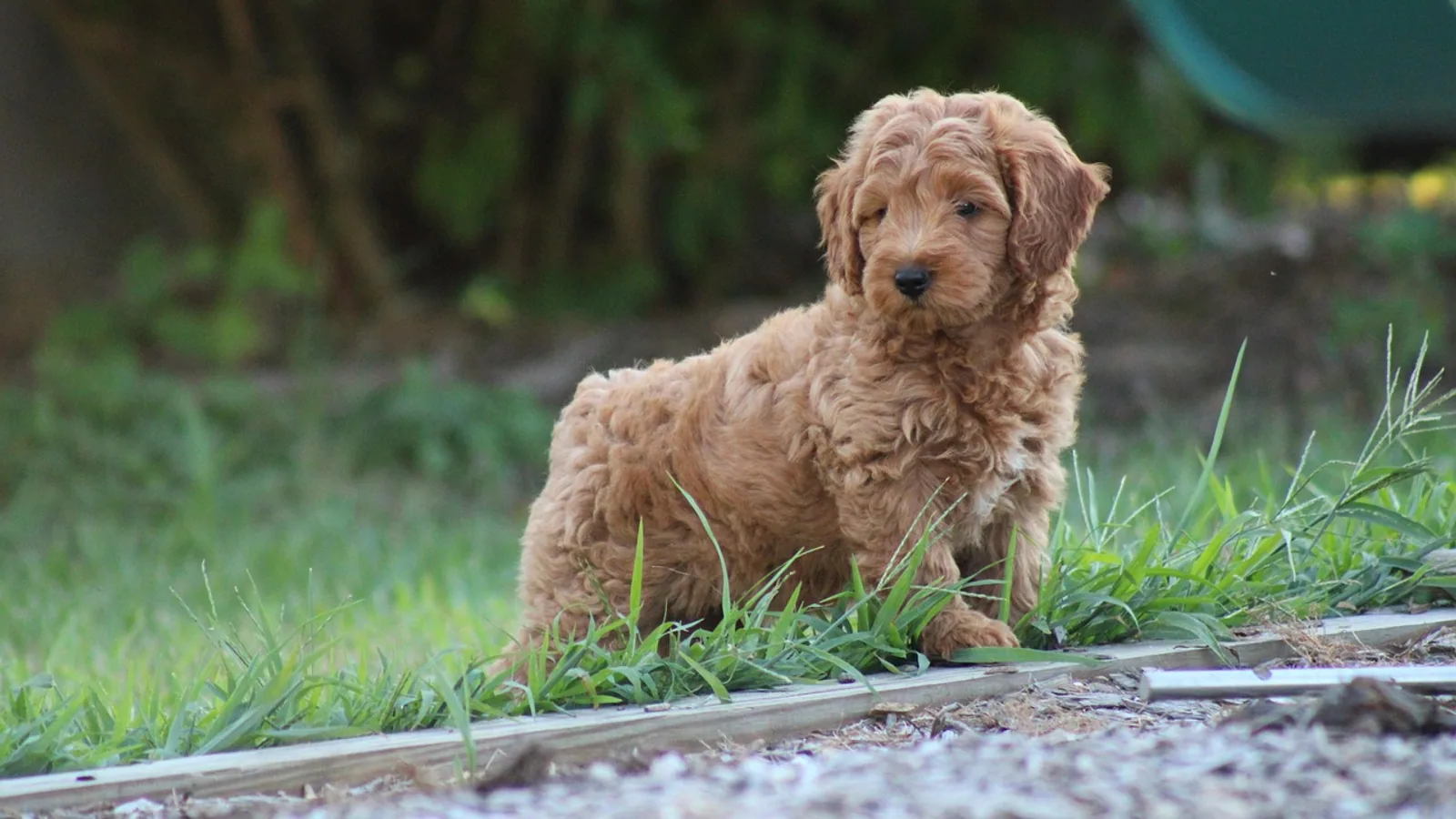
A Goldendoodle is a cross between a Golden Retriever and a Poodle. The cross was developed in the 1990s with the goal of producing a service and family dog that combined the Golden Retriever's biddable, people-focused temperament with the Poodle's low-shedding coat and athletic build. Because the Goldendoodle is a crossbreed rather than a breed, there is no closed studbook, no single breed standard, and no predictable litter outcome. Size, coat type, shedding, and adult appearance vary widely between litters and even within the same litter.
That variability is the central fact of Goldendoodle breeding, and it drives everything else in this guide. A responsible golden doodle breeding program does not promise a hypoallergenic dog or a guaranteed adult weight. It screens both parent breeds for the orthopedic, cardiac, ocular, and genetic diseases that each side of the cross can transmit, then uses those results to make individual mating decisions.
This article explains the genetics behind coat and size, the health screening that both Golden Retrievers and Poodles require, how the major screening schemes work, and the decision points that separate an ethical program from a puppy mill.
This article is educational and is not a substitute for veterinary diagnosis or treatment.
At a Glance
| Trait | Typical range or description |
|---|---|
| Origin | Cross of Golden Retriever and Poodle, developed in the 1990s |
| Size | Highly variable, depends on which Poodle variety is used (Toy, Miniature, or Standard) |
| Weight | No fixed range, driven by the Poodle variety and the individual Golden Retriever parent |
| Height | No fixed range, same drivers as weight |
| Coat | Variable: straight, wavy, or curly, with variable shedding and furnishings |
| Lifespan | Not standardized, inherited from both parent lines |
| Energy level | Moderate to high, reflects both parent breeds |
| Grooming | High maintenance for most coat types, requires routine brushing and professional trimming |
| Trainability | Generally high, both parent breeds are working and sporting dogs |
| Good with children | Often yes, with supervision and appropriate training |
| Good with other pets | Variable by individual dog and early socialization |
The size and coat entries are deliberately open. Any breeder or website that gives you a single number for adult Goldendoodle weight, or a single coat type for a whole litter, is describing an average or a hope rather than a genetic certainty.
History and Purpose of the Goldendoodle
The Goldendoodle emerged in the 1990s as part of a broader wave of Poodle crosses. The design goal was practical. Guide dog and service dog organizations wanted dogs with the Golden Retriever's trainability and social temperament, combined with a coat that shed less and produced less dander in the home. Poodles were the obvious partner because they are highly trainable, athletic, and carry a coat that grows continuously and sheds less than most breeds.
The cross was never intended to be a breed with a fixed standard. Early litters were first-generation crosses (often written F1), meaning a purebred Golden Retriever bred to a purebred Poodle. Later generations include backcrosses to a Poodle (F1b), crosses between two Goldendoodles (F2), and multigenerational lines. Each of these has different genetic predictability, and none of them is a breed.
This matters for buyers. A "multigenerational Goldendoodle" is still a crossbred dog. It may be more consistent in appearance than an F1, but it is not governed by a breed club standard, and the health screening obligations do not disappear with generation number.
Coat Genetics: Why Goldendoodles Are Not Predictable
Coat type in dogs is controlled by several genes that interact with each other. Three are especially relevant to Poodle crosses: RSPO2, KRT71, and FGF5. These genes influence furnishings (the longer hair on the face, legs, and tail), curl, and coat length respectively. Each has multiple variants, and the combinations produce the range of coats seen in Goldendoodles.
A first-generation cross inherits one set of variants from the Golden Retriever and one from the Poodle. The Golden Retriever typically contributes a short, straight, shedding coat. The Poodle typically contributes a long, curly, low-shedding coat. Because the traits do not follow simple dominant or recessive patterns in a single gene, a puppy in an F1 litter can inherit a coat closer to either parent, or something in between.
The practical consequences are straightforward:
- Shedding varies. Some Goldendoodles shed lightly, some shed heavily, and some shed seasonally. Coat appearance does not reliably predict shedding volume.
- Furnishings vary. The characteristic "beard" and longer leg hair depend on the RSPO2 variants a puppy inherits. Some puppies have minimal furnishings.
- Curl varies. Curl intensity depends on KRT71 and other genes. A wavy coat and a tight curl are both possible in the same litter.
- Grooming needs vary. A curly coat mats more easily and needs more frequent brushing and trimming. A straighter coat may shed more but mat less.
The Hypoallergenic Claim
No dog is hypoallergenic in the medical sense. Allergens come from dander, saliva, and urine proteins, not from hair alone. A low-shedding coat reduces the amount of hair and dander distributed around a home, which can reduce allergen exposure for some people, but it does not eliminate it. A Goldendoodle with a straight, shedding coat will distribute more allergen than one with a curly, low-shedding coat, and even a curly Goldendoodle produces dander.
Anyone with a diagnosed dog allergy should spend time with adult Goldendoodles of the coat type they are considering before committing to a puppy. A breeder who guarantees an allergy-free dog is making a claim that cannot be supported.
Size Genetics: The Poodle Variety Sets the Range
Goldendoodle size is determined mainly by which Poodle variety is used in the cross.
- Toy Poodle crosses produce the smallest Goldendoodles.
- Miniature Poodle crosses produce medium-sized Goldendoodles, often called Mini Goldendoodles.
- Standard Poodle crosses produce the largest Goldendoodles, often called Standard Goldendoodles.
The Golden Retriever parent also contributes. A large Golden Retriever bred to a Standard Poodle will generally produce larger puppies than a smaller Golden Retriever bred to the same Poodle. Because size is polygenic, meaning many genes each contribute a small effect, even within a single litter there can be noticeable variation in adult size.
This is why a breeder cannot promise an exact adult weight. They can give a range based on the parents' sizes and the Poodle variety used, but individual puppies will fall across that range. Buyers who need a dog under a specific weight for housing, travel, or insurance reasons should plan for the upper end of the range rather than the average.
Health Screening for Both Parent Breeds
The core principle of ethical Goldendoodle breeding is that both the Golden Retriever and the Poodle side must be screened. A Goldendoodle inherits one copy of every gene from each parent, so a disease carried silently by either parent breed can appear in the cross.
The main categories of screening are orthopedic (hips and elbows), cardiac, ocular, and DNA-based.
Hip Dysplasia
Canine hip dysplasia is a developmental disorder of the hip joint characterized by laxity, abnormal femoral head development, and secondary osteoarthritis. It is one of the most common orthopedic conditions in dogs and has a strong genetic component, though it is polygenic and influenced by environment [1][2].
Screening is done by radiography. The most widely used view is the ventrodorsal hip-extended projection, and dogs are typically sedated or anesthetized to allow proper positioning [3]. Anesthesia matters for accuracy. A study comparing radiographs taken with and without anesthesia found that unanesthetized images produced significantly lower hip scores, distraction indices, and subluxation indices, and higher compression indices, meaning the joints appeared better than they were [4]. Poor positioning, including pelvic rotation, also affects scoring and can change breeding decisions [5].
Several schemes exist:
- The Orthopedic Foundation for Animals (OFA) in the United States grades hips and issues certifications.
- PennHIP uses a distraction index (DI) to quantify joint laxity.
- The Fédération Cynologique Internationale (FCI) grades hips from A (normal) to E (severe) and is used widely in Europe.
- The British Veterinary Association and Kennel Club (BVA/KC) scheme uses a numerical hip score.
These schemes are not identical, and a dog's grade can differ between them. A study comparing the FCI 2022 method with the earlier FCI 2006 method found that 68.3 percent of hips kept the same grade, with reclassification concentrated among hips that were near a threshold [6]. Another study examined whether BVA/KC and FCI records could be combined for genetic evaluation and found that joint analysis improved the predictability of estimated breeding values [7].
Heritability estimates for hip quality are moderate to high. In a study of guide dogs, heritability for the hip-extended score was 0.76 in German Shepherd Dogs, 0.72 in Labrador Retrievers, and 0.41 in Golden Retrievers, while heritability for the distraction index was 0.60, 0.66, and 0.59 respectively [8]. High heritability means selection works. That same study showed that after eight generations of selection based largely on estimated breeding values, over 87 percent of Golden Retrievers and over 93 percent of German Shepherd Dogs and Labrador Retrievers received an Excellent hip-extended score [8].
Laxity-focused screening adds value. A study using the Vezzoni modified Badertscher distension device to measure a laxity index found heritability estimates of 0.83 and 0.82 in two breeding populations, and screening both parents with the technique significantly reduced laxity and hip dysplasia prevalence in their offspring [9].
Body weight is a modifiable factor. A large Swedish study of 114,568 young adult dogs found that higher body weight within a breed was associated with a more severe hip dysplasia grade, and the association was breed-dependent [10]. Keeping a growing Goldendoodle lean is one of the few environmental levers an owner controls.
Elbow Dysplasia
Elbow dysplasia is a related developmental disorder and a known contributor to osteoarthritis, lameness, and reduced mobility [11]. It is screened radiographically, and in the UK the BVA/KC Elbow Dysplasia grading scheme, based on International Elbow Working Group guidelines, has been in use since 1998 [11]. In the United States, the OFA administers elbow evaluations.
Long-term selection programs that screen and certify both hips and elbows have produced measurable improvement. A study of Border Collies found a positive trend as breeding programs required both sire and dam to be screened and certified free of hip and elbow dysplasia [12]. A separate analysis of six UK pedigree breeds found a general decline in hip score parameters and evidence that screening schemes had a positive influence on hip and elbow health [11].
Cardiac Screening
Both Golden Retrievers and Poodles have breed-relevant cardiac conditions, most notably subvalvular aortic stenosis and other congenital heart disease in Golden Retrievers. Cardiac screening is performed by a veterinary cardiologist, typically via auscultation and echocardiography, and results are recorded with the OFA or an equivalent registry. Breeding dogs should have a current cardiac clearance, and the clearance should be from a specialist rather than a general practice auscultation alone.
Eye Screening
Both parent breeds carry risk for inherited eye disease, including progressive retinal atrophy, cataracts, and other conditions. The standard examination is the Companion Animal Eye Registry (CAER) exam, formerly known as the CERF exam, performed by a board-certified veterinary ophthalmologist. CAER results are valid for a limited period, so breeding dogs need current exams at the time of mating rather than a single exam from years earlier.
DNA Testing
DNA tests identify carrier status for specific single-gene disorders. The three most relevant to Goldendoodle breeding are:
- prcd-PRA (progressive rod-cone degeneration). A form of progressive retinal atrophy that causes vision loss. It is inherited in an autosomal recessive pattern, so two carriers can produce affected puppies.
- von Willebrand disease (vWD). A bleeding disorder caused by a deficiency or dysfunction of von Willebrand factor. Type I vWD is the most common form and is inherited in an autosomal recessive pattern in most breeds.
- Degenerative myelopathy (DM). A progressive neurodegenerative disease of the spinal cord. The risk allele is a mutation in the SOD1 gene, inherited in an autosomal recessive pattern with incomplete penetrance, meaning not every dog with two copies develops the disease.
Because these are single-gene tests with known inheritance patterns, they are the most predictable part of Goldendoodle breeding. A breeder can test both parents and know with certainty whether a mating can produce affected puppies.
Table of Parent-Breed Screening Tests
| Test | What it evaluates | Typical method | Inheritance or nature | Applies to |
|---|---|---|---|---|
| Hip evaluation | Hip joint conformation and laxity | Radiography under anesthesia, OFA, PennHIP, FCI, or BVA/KC | Polygenic, moderate to high heritability [8] | Golden Retriever and Poodle |
| Elbow evaluation | Elbow joint conformation | Radiography, OFA or BVA/KC | Polygenic | Golden Retriever and Poodle |
| Cardiac evaluation | Congenital and acquired heart disease | Auscultation and echocardiography by a cardiologist | Mixed, some conditions polygenic | Golden Retriever and Poodle |
| CAER eye exam | Inherited eye disease | Examination by a veterinary ophthalmologist | Mixed, varies by condition | Golden Retriever and Poodle |
| prcd-PRA | Progressive retinal atrophy | DNA test | Autosomal recessive | Poodle lines primarily |
| von Willebrand disease | Bleeding disorder | DNA test | Autosomal recessive for Type I | Poodle lines primarily |
| Degenerative myelopathy | Spinal cord degeneration | DNA test for SOD1 mutation | Autosomal recessive with incomplete penetrance | Both parent breeds |
The inheritance column is the key practical information. For the recessive DNA conditions, a carrier bred to a clear dog produces no affected puppies, though some puppies may be carriers. For the polygenic conditions, no test gives a yes-or-no answer, and selection relies on breeding values and population data.
How Screening Schemes Differ and Why It Matters
A buyer comparing breeders will encounter different terminology. Understanding the schemes prevents confusion.
The OFA is the dominant registry in the United States. It issues hip, elbow, cardiac, eye, and DNA clearances, and publishes results publicly. OFA hip grades run from Excellent to Severe.
PennHIP measures distraction index, a continuous number that quantifies how far the femoral head can be displaced from the acetabulum. Lower values indicate tighter joints. A study of purpose-bred detection dogs found that selecting breeding stock using both PennHIP and OFA measurements significantly improved hip joint quality, while OFA measurements alone did not change scores over the study period [13].
The FCI system grades hips from A to E and is used across Europe. The Swedish Kennel Club has run a structured screening and genetic health program since the 1950s, with open registries that record both positive and negative results linked to each dog's ancestry. This program markedly decreased the prevalence of hip dysplasia during the 1980s [14]. The Swedish experience demonstrates that long-term, transparent, population-level screening works.
The BVA/KC scheme in the UK uses a numerical hip score and a separate elbow grade. Analysis of six UK breeds found a general decline in hip score parameters over time, indicating the scheme has had a positive influence [11].
For a Goldendoodle buyer, the specific scheme matters less than the principle. Both parents should have current, verifiable results from a recognized scheme, and the breeder should be able to show them.
Estimated Breeding Values and Why They Beat a Single Score
A single hip score describes one dog at one point in time. An estimated breeding value (EBV) combines a dog's own results with the results of its relatives to estimate the genetic quality it will pass on. EBVs are more accurate than raw scores because they account for family data.
The guide dog study is the clearest demonstration. Selection based on EBVs derived from the hip-extended score moved three breeds from roughly 34 to 55 percent Excellent hips in the first generation to over 87 percent after eight generations [8]. That is the kind of progress that raw phenotype selection alone struggles to achieve.
A breeder who talks about EBVs, population data, and selection pressure is working with the tools that actually reduce disease prevalence. A breeder who talks only about "champion bloodlines" is not.
Decision Points in Ethical Goldendoodle Breeding
Several decisions separate a responsible program from a commercial one.
Which Poodle variety is used
This determines the size range and should be stated clearly. A breeder who cannot tell you whether the Poodle parent was a Toy, Miniature, or Standard Poodle is not tracking the single biggest driver of adult size.
Which generation is being produced
F1, F1b, F2, and multigenerational crosses have different predictability. F1 crosses tend to be the most variable. Backcrosses to Poodles (F1b) tend to produce more consistent, more Poodle-like coats. Multigenerational lines can be more consistent still, but only if the breeder is selecting deliberately rather than just breeding Goldendoodles to Goldendoodles.
Whether both parent breeds are screened
This is non-negotiable. A Poodle that has never had a hip radiograph, or a Golden Retriever with no cardiac clearance, should not be bred. The screening obligation applies to both sides.
Whether DNA results are used to plan matings
For recessive conditions like prcd-PRA, vWD, and DM, a breeder can avoid producing affected puppies entirely by not breeding two carriers together. A breeder who tests but ignores the results is not using the information.
Whether health results are published
Open registries are the backbone of population-level improvement, as the Swedish program demonstrates [14]. A breeder who will not share results, or who shares only selected results, is hiding something.
Whether the breeder keeps or places puppies responsibly
This includes raising puppies in a home environment, providing early socialization, and being willing to take a dog back at any age. It also includes not separating puppies from the mother before they are developmentally ready.
Whether claims match the genetics
A breeder who guarantees a hypoallergenic, non-shedding, 40-pound adult dog is making claims that the genetics of a crossbreed cannot support. Honest breeders describe ranges and probabilities.
A Workflow for Evaluating a Goldendoodle Breeding Program
The flowchart below summarizes the main decision path for evaluating a breeder.
flowchart TD
    A[Start with a breeder] --> B{Both parent breeds identified}
    B -->|No| C[Walk away]
    B -->|Yes| D{Poodle variety stated}
    D -->|No| C
    D -->|Yes| E{Hip and elbow results available}
    E -->|No| C
    E -->|Yes| F{Cardiac and eye clearances current}
    F -->|No| C
    F -->|Yes| G{DNA tests for PRA vWD and DM}
    G -->|No| C
    G -->|Yes| H{Results published and verifiable}
    H -->|No| C
    H -->|Yes| I[Review contract and health guarantee]
    I --> J[Meet the dam and puppies]
    J --> K[Proceed with deposit]
Temperament, Exercise, and Training
Goldendoodles inherit temperament from both parent breeds. Golden Retrievers are known for being biddable, social, and eager to please. Poodles are highly intelligent, athletic, and trainable. The combination generally produces a dog that is friendly, responsive to training, and suited to active families.
Temperament is not guaranteed by genetics alone. Early socialization, consistent training, and adequate exercise all shape adult behavior. A Goldendoodle that is under-exercised or under-trained can become destructive or anxious regardless of its parentage.
Exercise needs scale with size and energy level. A Standard Goldendoodle from a Standard Poodle cross generally needs more daily activity than a Mini Goldendoodle from a Miniature Poodle cross. Both benefit from structured exercise, training, and mental enrichment.
Training should begin early. Both parent breeds respond well to positive reinforcement, and Goldendoodles are often quick to learn basic obedience and more advanced tasks. Because they are social dogs, they benefit from regular interaction with people and other dogs.
Grooming
Grooming needs depend on coat type, which as discussed is variable. A curly, low-shedding coat mats easily and requires frequent brushing plus regular professional trimming. A straighter, shedding coat may need less brushing but will deposit more hair around the home.
Owners should plan for routine grooming from puppyhood. Early handling of the feet, ears, and face makes professional grooming easier. Ear cleaning matters because floppy or hairy ears can trap moisture and predispose to infection.
Feeding Considerations
Feeding should match the dog's size, age, and activity level. Growing large-breed puppies have different nutritional needs than small-breed puppies, and the Poodle variety used in the cross affects which category a puppy falls into.
Body condition matters for joint health. The Swedish study linking higher body weight within a breed to more severe hip dysplasia grades supports keeping growing dogs lean [10]. Owners should monitor body condition and adjust portions rather than free-feeding.
Any specific diet, supplement, or feeding protocol should be discussed with a veterinarian who can assess the individual dog.
Lifespan and Long-Term Health
There is no standardized lifespan for the Goldendoodle because it is not a breed. Lifespan depends on the health of both parent lines and on individual factors including body weight, joint health, and the presence of any inherited disease.
The health conditions covered in this article are the main drivers of long-term quality of life. Hip and elbow dysplasia contribute to osteoarthritis, lameness, and reduced mobility [11]. Progressive retinal atrophy causes vision loss. Degenerative myelopathy causes progressive loss of hind limb function. Von Willebrand disease increases bleeding risk during surgery or injury.
Screening both parent breeds reduces the probability that a puppy inherits these conditions, but it does not eliminate risk. Polygenic conditions like hip dysplasia can appear in puppies from screened parents, and environmental factors including body weight and activity influence expression [10].
Finding a Responsible Breeder or Rescue
A responsible breeder will:
- Provide verifiable OFA, PennHIP, FCI, or BVA/KC results for both parents.
- Provide current cardiac and CAER eye clearances.
- Provide DNA test results for prcd-PRA, vWD, and DM.
- Explain which Poodle variety was used and what size range to expect.
- Describe the coat types possible in the litter without promising a specific outcome.
- Allow you to meet the dam and, when possible, the sire.
- Provide a written contract with a health guarantee and a return clause.
- Answer questions about health testing without defensiveness.
Rescue is a strong option for buyers who want a Goldendoodle without supporting commercial breeding. Breed-specific and doodle rescues exist, and adult dogs from rescues often have known temperaments and health histories.
Who Should Not Get a Goldendoodle
A Goldendoodle is not the right choice for every household.
- People with a diagnosed dog allergy who need a guarantee of no reaction should not rely on the hypoallergenic claim.
- People who need a dog within a specific adult weight should not choose a crossbreed with variable size.
- People who cannot commit to regular grooming should avoid curly-coated lines.
- People who cannot provide daily exercise and training should consider a lower-energy breed.
- People who want a predictable, standardized breed should choose a purebred dog with a closed studbook and a breed club standard.
Limitations and When to Contact a Veterinarian
This article describes population-level genetics and screening standards. It cannot tell you whether a specific puppy will develop a specific disease, and it cannot replace an examination of an individual dog.
Contact a veterinarian if your Goldendoodle shows any of the following:
- Lameness, stiffness, or difficulty rising, especially after rest or exercise.
- Reluctance to climb stairs, jump, or play at previous levels.
- Vision changes, including bumping into objects, reluctance to move in low light, or changes in pupil appearance.
- Unexplained bruising, prolonged bleeding from minor cuts, or bleeding from the nose or gums.
- Progressive weakness, wobbling, or loss of coordination in the hind limbs.
- Exercise intolerance, fainting, or difficulty breathing.
- Any new lump, persistent vomiting or diarrhea, or unexplained weight loss.
For puppies, contact a veterinarian promptly for any of the above plus poor growth, persistent diarrhea, or difficulty eating.
Frequently Asked Questions
Are Goldendoodles hypoallergenic?
No. Goldendoodles produce dander, saliva, and urine proteins that trigger allergies, and coat type varies. Some Goldendoodles shed less than others, which can reduce allergen distribution in a home, but no Goldendoodle is allergen-free.
What size will my Goldendoodle be?
Size depends mainly on which Poodle variety was used. Toy Poodle crosses are smallest, Miniature Poodle crosses are medium, and Standard Poodle crosses are largest. The Golden Retriever parent also contributes, and individual puppies within a litter vary.
What health tests should a Goldendoodle breeder do?
Both parent breeds should have hip and elbow evaluations, cardiac screening, a current CAER eye exam, and DNA tests for prcd-PRA, von Willebrand disease, and degenerative myelopathy.
What is the difference between F1, F1b, and F2 Goldendoodles?
F1 is a first-generation cross of a Golden Retriever and a Poodle. F1b is a backcross of an F1 Goldendoodle to a Poodle. F2 is a cross of two Goldendoodles. Coat and size predictability differ between them, and none is a breed.
Do Goldendoodles shed?
Some do and some do not. Shedding depends on which coat genes a puppy inherits, and coat appearance does not reliably predict shedding volume.
Is hip dysplasia common in Goldendoodles?
Hip dysplasia is a polygenic condition present in both parent breeds. Screening both parents and selecting breeding stock with good hip results reduces risk, but it does not eliminate it.
What is degenerative myelopathy?
Degenerative myelopathy is a progressive spinal cord disease caused by a SOD1 mutation. It is inherited in an autosomal recessive pattern with incomplete penetrance, meaning not every dog with two copies of the mutation develops the disease.
Should I choose a breeder or a rescue?
Both can be good options. A responsible breeder provides verifiable health testing for both parent breeds. A rescue offers an adult dog with a known temperament and often a known health history. The right choice depends on what you need.
Related Articles
- Golden Retriever Health Guide: Genetic Risks, Joint Care & Lifespan
- Goat Genetics and Breeding: Selection for Production and Health Traits
- Cattle Breeding Chart: A Visual Guide to Genetic Planning
- Water Buffalo Genetic Improvement and Breeding Programs
- Line Breeding Rabbits: Strategies for Genetic Improvement
- Queen Breeding Business: Genetics, Mating, and Sales
- Golden Shepherd: Breed Traits, Care, and Health
- Mutt Dog Health: Why Mixed Breeds Still Need Screening
- Ayam Cemani Breeding: Genetics and Fertility Tips
Sources
- Prevalence of canine hip dysplasia in 10 breeds in France, a retrospective study of the 1997-2017 radiographic screening period.
- The association of genetic polymorphisms of bone formation genes with canine hip dysplasia.
- Imaging diagnosis of canine hip dysplasia with and without human exposure to ionizing radiation.
- Influence of Anesthesia on Grading of Canine Hip Dysplasia.
- Automated Assessment of Pelvic Longitudinal Rotation Using Computer Vision in Canine Hip Dysplasia Screening.
- The updated 2022 Fédération Cynologique Internationale method may lead to changes in hip dysplasia grading in some dogs.
- Methods to Improve Joint Genetic Evaluation of Canine Hip Dysplasia Across BVA/KC and FCI Screening Schemes.
- Genetic improvement of hip-extended scores in 3 breeds of guide dogs using estimated breeding values: Notable progress but more improvement is needed.
- The utilization of the Vezzoni modified Badertscher distension device in breeding programs: Heritability estimates and effect on the hip dysplasia prevalence.
- Association between body weight and hip dysplasia screening results in young adult dogs of different breeds in Sweden.
- Effectiveness of Canine Hip Dysplasia and Elbow Dysplasia Improvement Programs in Six UK Pedigree Breeds.
- Effects of Long-Term Selection in the Border Collie Dog Breed: Inbreeding Purge of Canine Hip and Elbow Dysplasia.
- Effectiveness of PennHIP and Orthopedic Foundation for Animals measurements of hip joint quality for breeding selection to reduce hip dysplasia in a population of purpose-bred detection dogs.
- Swedish Experiences From 60 Years of Screening and Breeding Programs for Hip Dysplasia-Research, Success, and Challenges.