Ayam Cemani Breeding: Genetics and Fertility Tips
By Dr. Zubair Khalid, DVM, MS, PhD ·
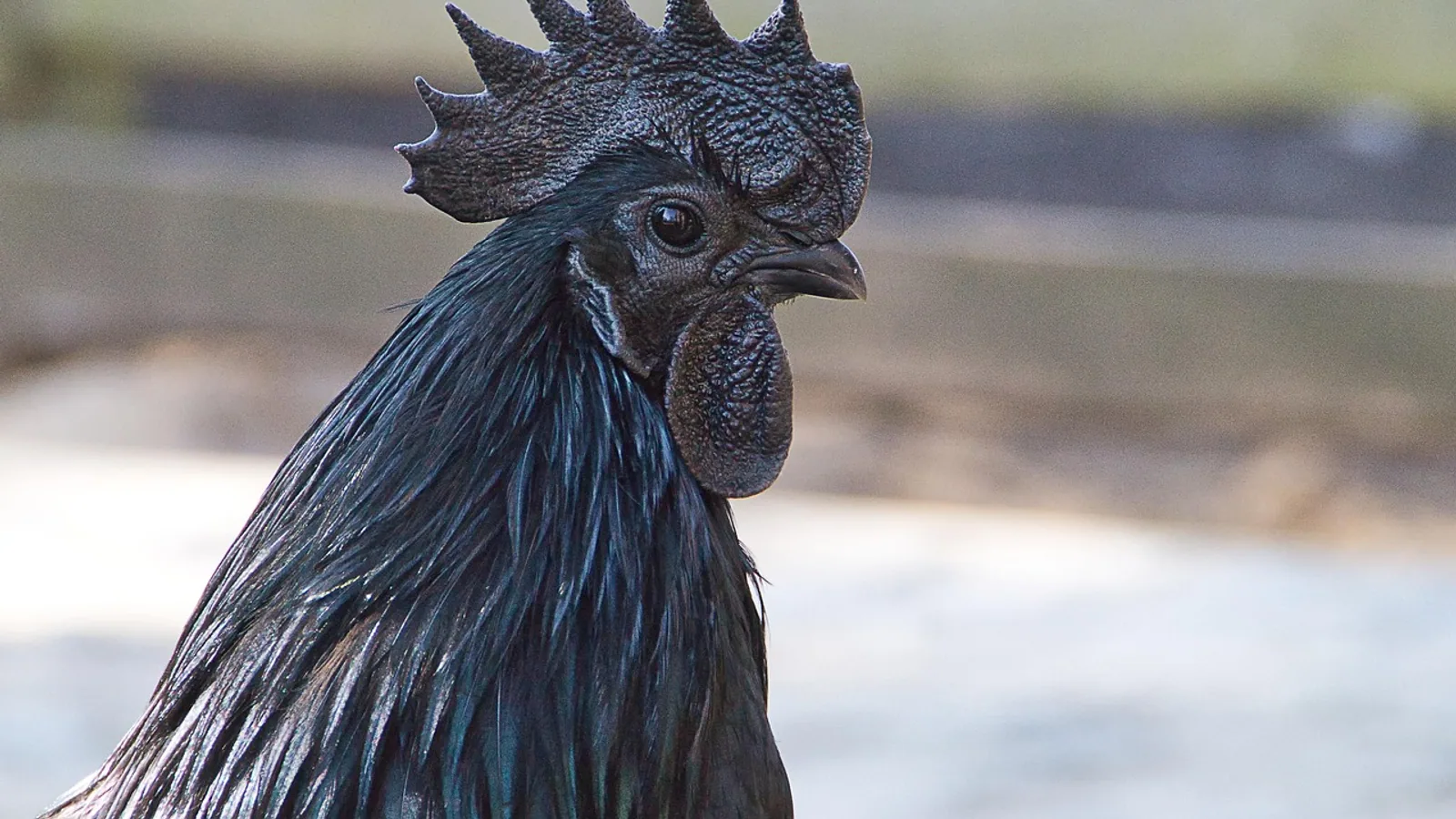
The Ayam Cemani is an Indonesian chicken from the island of Java, and it is one of the very few breeds in the world in which the black color extends past the feathers into the skin, the fascia, the connective tissue, and the internal organs. That trait is called fibromelanosis, and it is the reason the breed exists as a distinct genetic entity rather than a color variety of something else. Ayam Cemani breeding is therefore two projects running at once. The first is a genetics project, because every bird you keep or sell should carry the fibromelanosis structural variant and pass it on reliably. The second is a fertility project, because the same breed that carries this dramatic pigmentation also tends to hatch fewer chicks per egg set than commercial layers, and the difference is usually management, not bad luck.
This guide covers the inheritance of fibromelanosis in plain terms, the pairing strategy that keeps fertility high, the hatchability numbers you should realistically expect, and a step-by-step troubleshooting sequence for when a set of eggs produces too few chicks.
This article is educational and is not a substitute for veterinary diagnosis or treatment.
At a Glance
| Attribute | Detail |
|---|---|
| Origin | Indonesia, island of Java |
| Primary use | Ornamental and genetic curiosity, small-scale breeding |
| Defining trait | Fibromelanosis, hyperpigmentation of skin, fascia, and connective tissue [1][2] |
| Genetic basis | Complex structural rearrangement at the Fm locus on chromosome 20 involving EDN3 [3][2] |
| Inheritance | Autosomal, not sex-linked, both sexes carry and express it [2] |
| Typical fertility | Lower than commercial breeds, often reported around 50 to 70 percent hatchability depending on management |
| Recommended pairing | 1 rooster to 4 to 6 hens |
| Temperament | Active, hardy, generally calm in a well-managed flock |
| Suits | Breeders, smallholders, and keepers interested in poultry genetics |
| Does not suit | Anyone wanting high-volume egg or meat production |
What Fibromelanosis Actually Is
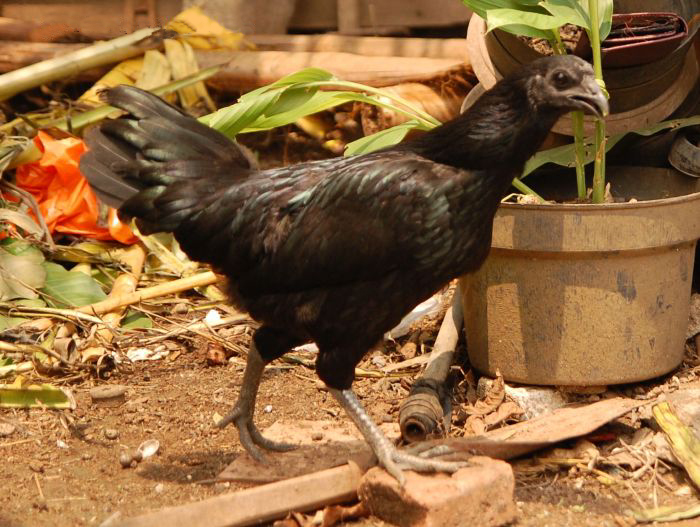

Fibromelanosis, abbreviated Fm, is a pigmentation phenotype in which melanin is deposited in the dermal layer of the skin and in the majority of internal connective tissue [2]. In most chicken color genetics, the visible variation is in the feather, and the skin underneath stays pale. Fibromelanosis is one of the few examples where the skin itself is the trait, and it is the reason an Ayam Cemani looks black when you part the feathers, when you look at the shanks, and when you open the body cavity.
The trait is not a pigment that spreads outward from the feather follicles. It is a change in where melanin-producing cells, called melanoblasts, travel and settle during embryonic development. The gene responsible is endothelin 3, or EDN3, which has a known role in promoting melanoblast proliferation [2]. When EDN3 expression is elevated during the window in which melanoblasts are migrating through the embryo, those cells colonize tissues they would normally skip, and the result is a bird whose connective tissue is pigmented from the inside out [2].
The mutation that causes this is not a simple base change. It is a complex structural rearrangement, meaning large blocks of the chromosome are duplicated, inverted, or joined in a way that does not occur in wild-type birds.
The Genetics of the Fm Locus
Chromosome 20 and the EDN3 Rearrangement
The causal mutation for fibromelanosis sits on chicken chromosome 20 and consists of an inverted duplication and junction of two genomic regions that are separated by more than 400 kilobases in wild-type individuals [2]. One of those duplicated regions contains EDN3 [2]. In the original description of the locus, the rearrangement was characterized as an inverted duplication, and that arrangement explains why EDN3 is expressed at higher levels in affected birds than in unaffected ones.
Later work refined the picture considerably. A comprehensive genomic survey of 517 fibromelanosis chickens representing 44 different populations resolved the precise configuration of the duplications and inversions at the locus, providing conclusive support for one specific arrangement and settling a controversy that had been unresolved for more than a decade [3]. That study also showed that the birth of this complex structural variant must have involved an interchromosomal rearrangement, which created fixed heterozygosity because the two copies of the 127.4 kilobase duplication differ in sequence [3].
The practical translation for a breeder is this. The Fm locus is not a single gene you can genotype with a simple on or off test. It is a structural arrangement, and the arrangement itself is what drives the elevated EDN3 expression.
Two Duplications and Permanent Heterozygosity
The arrangement involves two duplicated regions. One is approximately 127 kilobases, referred to as DR1, and the other is approximately 171 kilobases, referred to as DR2 [1]. These were created by unequal crossing over, accompanied by inversion of one DR2 [1].
The two DR1 copies harbor two distinct EDN3 haplotypes in a form of permanent heterozygosity [1]. In the ancestral Red Jungle Fowl and in some domesticated breeds, these sequences remain allelic, meaning they sit at the same position on homologous chromosomes in the ordinary way. Their allelic divergence time is estimated at roughly 0.3 million years ago [1]. In Cemani and Silkie, the duplication has locked both haplotypes into the same chromosome in a fixed heterozygous state.
Independent long-read sequencing work on the Silkie breed resolved high-confidence haplotypes across both duplicated regions and established which of the three proposed configurations of the rearrangement is correct [4]. That study also confirmed that all black-bone breeds, including Kadaknath from India, share the complex chromosomal rearrangement junctions at the Fm locus [4]. The genetic cause is therefore shared across breeds, which matters for breeders who outcross.
A Single Origin for the Trait
The genetic arrangements at the Fm locus are identical in Ayam Cemani and Chinese Silkie, which indicates a single origin for the genetic cause of fibromelanosis [1]. The Fm phenotype is estimated to have come into existence at least 6,600 to 9,100 years ago, before the domestication of either Cemani or Silkie [1]. Throughout domestication, artificial selection has favored the phenotype, and that selection has left a clear selective sweep extending in both directions from the tandemly duplicated EDN3 loci [1].
That sweep is highly homozygous, but its length differs between Cemani and Silkie, reflecting their distinct breeding histories [1]. The same pattern appears in other black-bone populations. In Kadaknath, researchers identified two regions near the Fm locus with signatures of selection unique to that breed, and those regions contain genes with protein-coding changes, including two breed-specific changes in a bactericidal permeability-increasing protein-like gene that appear to have hitchhiked along with the Fm locus because of close physical linkage [4].
For a Cemani breeder, the takeaway is that the black phenotype is ancient, widely shared, and strongly selected. It is not fragile, and it is not something you need to protect by avoiding all outcrosses. It is, however, something you should understand before you plan a mating.
Why Fibromelanosis Is Not Sex-Linked
Fibromelanosis is inherited as an autosomal trait. The Fm allele is dominant, and its presence results in extensive pigmentation of the dermal layer of skin and the majority of internal connective tissue [2]. Because it is autosomal, it is not carried on the sex chromosomes, and it is not passed differently to sons and daughters. Both sexes carry the locus, both sexes express it, and both sexes transmit it to their offspring at the same rate.
This is a common point of confusion. Breeders who are used to sex-linked traits such as barring or certain forms of silver and gold coloring sometimes assume that black skin follows a similar pattern. It does not. If you mate a fibromelanotic rooster to a non-fibromelanotic hen, or the reverse, the inheritance pattern is the same.
There is a separate locus that modifies the intensity of the pigmentation. The sex-linked Id locus produces an epistatic effect on the pigmentation pattern of the skin, and variable allelic forms of Id acting in different crosses result in variation in the degree of melanosis of the host [5]. In practical terms, this means that the Fm locus determines whether a bird is fibromelanotic, while Id and other modifiers influence how dark the pigmentation appears in a given cross. For purebred Cemani breeding within a closed flock, this variation is usually minor, but it becomes visible when you outcross.
What This Means for a Breeding Program
Because the trait is dominant and autosomal, a single copy of the Fm arrangement is enough to produce the phenotype. A bird that carries the arrangement will be black-skinned. A bird that does not carry it will not be.
That gives you a straightforward selection rule. Any bird in your flock that shows the full fibromelanotic phenotype is a candidate breeder. Any bird that does not show it has either lost the arrangement or is a mosaic, and it should not be used for a Cemani breeding program if your goal is to produce consistent stock.
The more difficult question is how dark, and how complete, the pigmentation is across the body. Because the trait is a structural variant rather than a simple allele, and because modifier loci such as Id influence the visible result, two fully fibromelanotic birds can still produce offspring that differ slightly in the depth of pigmentation in the shanks, comb, or fascia. The way to manage this is selection over generations within your own flock, keeping breeders that show the most complete expression and culling from the breeding pool any bird that shows obvious gaps.
The Fertility Reality of Ayam Cemani Breeding
Ayam Cemani are not commercial layers, and they do not behave like one. Fertility and hatchability in this breed are commonly lower than in production breeds, with hatchability often reported in the range of 50 to 70 percent depending on management. That range is wide because management is the dominant variable. Two flocks of the same genetic stock, kept under different conditions, can differ by twenty percentage points or more in the proportion of set eggs that produce a live chick.
The reason for the breed's lower baseline is not fully understood, and it is not a single defect. It reflects the breed's history as a small, geographically isolated population that was selected primarily for pigmentation rather than for reproductive output. Selection for the Fm phenotype has been intense, and the selective sweep around the locus is unambiguous [1]. When a population is small and selection pressure is concentrated on one trait, reproductive traits tend to drift rather than improve.
That does not mean Cemani breeding is hopeless. It means the margin for error is smaller. A commercial broiler breeder can afford to be careless about pairing ratios and egg storage and still get a good hatch. A Cemani breeder cannot.
Pairing Strategy: Ratios That Protect Fertility
The 1 to 4 to 6 Rule
The single most effective management decision in a Cemani breeding program is the mating ratio. The recommended pairing is one rooster to four to six hens. This is not a conservative suggestion. It is the ratio that keeps the rooster's mating frequency within a range where sperm quality and hen receptivity both stay adequate.
Over-mating reduces fertility. When a rooster is asked to service too many hens, he mates more frequently than his sperm reserves can replenish, and the proportion of eggs that are fertilized drops. The hens also suffer. Excessive mating causes feather loss on the back and vent, skin damage, and stress, and stressed hens lay fewer eggs and store sperm less effectively.
At one to four, the rooster has enough hens that no single hen is over-mated, and each hen is mated often enough to maintain a pool of viable sperm in her sperm storage tubules. At one to six, the load per hen is lighter still, which is useful if your rooster is young or if you are working with a small number of hens and want to minimize damage. Beyond one to six, fertility typically starts to fall because the rooster cannot cover the flock reliably.
Age of the Breeding Birds
Both the rooster and the hens have age windows in which fertility is highest. Roosters typically reach peak fertility in their second year and begin to decline after that, with a gradual reduction in sperm volume and motility. Hens lay their largest and most consistently fertile eggs in their first and second laying seasons, and fertility and hatchability both tend to decline as the hen ages.
A practical structure is to run your breeding flock with young to middle-aged birds and to replace breeders on a rolling schedule rather than keeping the same individuals for many years. If you keep a favorite rooster past his prime, pair him with a smaller number of hens so that each hen receives more matings, and expect to compensate with a higher ratio of eggs set to chicks hatched.
Seasonal Timing
Cemani are seasonal breeders in the sense that day length drives laying. Fertility follows laying. The highest fertility in most flocks occurs in spring and early summer, when daylight is increasing and temperatures are moderate. Late summer heat depresses both libido in roosters and lay in hens. Winter, with short days and cold, depresses both further unless you provide supplemental light and manage the housing carefully.
If you are planning a set of eggs for incubation, collect them during the period when your flock is laying most consistently. That is usually the period when fertility is also highest.
The Fertility and Hatchability Workflow
The decision path from flock management to a live chick runs through several checkpoints, and a failure at any one of them reduces the final count. The following flow shows the sequence.
flowchart TD
    A[Select breeding birds] --> B[Set pairing ratio]
    B --> C[Manage nutrition]
    C --> D[Collect clean eggs]
    D --> E[Store eggs correctly]
    E --> F[Set eggs in incubator]
    F --> G[Candle at day seven]
    G --> H{Developing embryos}
    H -->|Yes| I[Continue incubation]
    H -->|No| J[Check rooster and hen age]
    J --> K[Check nutrition and storage]
    K --> B
    I --> L[Hatch and assess]
Nutrition for Fertility
Nutrition affects fertility at two points. It affects the hen's ability to produce a well-formed, viable egg, and it affects the rooster's sperm production. The nutrients most often implicated in poor fertility in backyard flocks are vitamin E and selenium.
Vitamin E functions as an antioxidant and protects the lipids in sperm cell membranes from oxidative damage. Selenium is a cofactor for glutathione peroxidase, an enzyme that also protects against oxidative stress. The two work together, and a deficiency in either can reduce sperm motility and viability in the rooster and can affect the hen's reproductive tract.
If you are mixing your own feed or feeding a diet that was formulated for a different class of bird, review the vitamin and mineral premix. A complete commercial layer or breeder ration is formulated to meet these requirements. If you are supplementing, do so under the guidance of a veterinarian or a poultry nutritionist, because selenium in particular has a narrow margin between adequate and toxic.
Beyond vitamin E and selenium, the general principles apply. Breeders need adequate protein, calcium, and phosphorus, and they need consistent access to clean water. Sudden changes in feed, moldy feed, and feed that has been stored too long all reduce intake and can depress fertility.
Egg Handling Before Incubation
Collection and Cleanliness
Collect eggs frequently, at least twice a day, and more often in hot weather. An egg that sits in a nest box in summer heat begins to lose viability within hours. Dirty eggs should not be set. If an egg has a small amount of soiling, it can be gently buffed with fine sandpaper or a dry cloth, but washing removes the cuticle and opens the shell pores to bacteria.
Do not set cracked, misshapen, or unusually small or large eggs. These are more likely to fail for reasons unrelated to fertility, and including them in a set distorts your hatchability data.
Storage Temperature and Humidity
Egg storage conditions matter more than most breeders realize. The standard recommendation is to store eggs at a temperature cool enough to slow embryonic development but warm enough to avoid chilling damage, and at a humidity high enough to prevent the egg from losing too much moisture before it is set.
In practice, this means a dedicated egg storage space with a stable temperature in the cool range and relative humidity in the moderate range. A refrigerator is too cold and too dry for hatching eggs. A kitchen counter is too warm and too variable. A basement or a purpose-built cabinet works well if you monitor it.
Storage time also matters. Fertility and hatchability decline with each day an egg is held before setting. Set eggs within a week of collection when possible, and turn them daily during storage to prevent the embryo from sticking to the shell membrane.
Incubation Parameters
Once eggs are set, the incubation parameters determine whether a fertilized egg becomes a chick. Temperature, humidity, turning, and ventilation all need to be within range, and the requirements change between the setter phase and the hatcher phase.
A forced-air incubator holds temperature more evenly than a still-air model, and for a small, valuable set of Cemani eggs, that consistency is worth the cost. Follow the manufacturer's instructions for your specific model, and verify the temperature with a separate calibrated thermometer rather than trusting the built-in display.
Humidity is the parameter most often mismanaged. Too little humidity during incubation causes excess moisture loss and a small, sticky chick that cannot rotate in the shell. Too much humidity produces a large, wet chick and a swollen navel. Weigh a sample of eggs during incubation to track moisture loss, or follow the incubator manufacturer's humidity targets.
Turning prevents the embryo from adhering to the shell membrane. If your incubator has an automatic turner, verify that it is actually operating. If you turn by hand, do so an odd number of times per day so that the eggs spend alternating nights on opposite sides.
Troubleshooting a Poor Hatch
When a set of eggs produces fewer chicks than expected, work through the possibilities in order. The goal is to identify the single largest constraint rather than to change everything at once.
Step 1: Confirm That the Eggs Were Fertilized
Candle the eggs at day seven. A fertile egg shows a distinct vascular network and a small dark embryo. An infertile egg is clear and bright. A very early dead embryo shows a faint ring or a blood spot without a developed vascular pattern.
If most eggs are clear, the problem is fertilization, not incubation. Move to the rooster and hen assessment. If most eggs show early deaths, the problem is likely incubation or handling, not fertilization.
Step 2: Assess the Rooster
Check the rooster's age, body condition, and feet. A rooster with bumblefoot, leg injury, or obesity cannot mate effectively. A rooster that is being bullied by a more dominant bird may not mate at all. A rooster that has been in the flock for several years may simply be past his reproductive peak.
If you have more than one rooster, check whether the dominant bird is interfering with the subordinate's access to hens. If you have only one rooster and he is young, give him time. A rooster's first season is often his least productive.
Step 3: Assess the Hens
Check the age of the hens. Older hens produce fewer fertile eggs. Check for signs of over-mating, including bare backs and vent damage. Check body condition, because a hen that is too thin or too heavy lays fewer eggs and may not be mated successfully. Check for illness, because a hen with an active infection will often stop laying entirely.
Step 4: Review Nutrition
Review the feed against the requirements for a breeding flock. Confirm that the vitamin and mineral premix is complete and within date. Confirm that the feed has not been stored in heat or moisture. If you are supplementing, confirm that the supplement is appropriate for poultry and that the dose is correct.
Step 5: Review Egg Storage
Review how long eggs were held before setting, what temperature and humidity they were stored at, and whether they were turned during storage. A single hot afternoon in a nest box can reduce the hatch from that day's collection.
Step 6: Review Incubation
Review the incubator's temperature and humidity records. Check the thermometer and hygrometer against a reference. Check that the turner is working. Check that the ventilation is adequate, because embryos need oxygen and produce carbon dioxide. Check that the incubator was not opened excessively during the critical periods.
Step 7: Review the Hatch Itself
If embryos developed to full term but failed to hatch, the problem is usually humidity during the hatch phase, or a chick that was too weak to pip. If chicks pipped but died before emerging, the problem is often humidity that was too low or too high, or a temperature that drifted.
Comparing Fertility and Hatchability Across Conditions
The table below summarizes how management conditions and flock age typically affect the proportion of eggs that are fertile and the proportion of fertile eggs that hatch. The figures are general patterns rather than guarantees, and individual flocks vary.
| Condition | Typical fertility | Typical hatchability of set eggs | Main constraint |
|---|---|---|---|
| Young flock, 1 to 4 ratio, spring, fresh eggs, well-maintained incubator | High | 60 to 70 percent | Incubation precision |
| Young flock, 1 to 6 ratio, spring, eggs held 3 to 7 days | High | 55 to 65 percent | Storage time |
| Mixed-age flock, 1 to 4 ratio, summer heat | Moderate | 45 to 60 percent | Heat stress on hens and roosters |
| Older rooster, 1 to 8 ratio, eggs held over 10 days | Low to moderate | 35 to 50 percent | Rooster age and over-extension |
| Any flock, nutrition deficient in vitamin E or selenium | Reduced | 40 to 55 percent | Sperm viability and embryo development |
| Any flock, eggs stored in a warm room or refrigerator | Variable | 30 to 50 percent | Storage temperature and humidity |
| Any flock, incubator temperature or humidity out of range | Not affected | 20 to 45 percent | Incubation parameters |
The pattern in this table is consistent. Fertility is driven by the birds and the pairing. Hatchability is driven by egg handling and incubation. A breeder who fixes the pairing and the nutrition but ignores the incubator will still get a poor result, and a breeder with a perfect incubator and an overworked rooster will get the same.
Selecting and Maintaining Breeding Stock
Recording Performance
Keep records for each hen and each rooster. Record the number of eggs set from each pairing, the number that were fertile at candling, and the number that hatched. Over a season, these records tell you which birds are contributing and which are not.
Cull from the breeding pool any hen that consistently produces infertile eggs, and any rooster whose fertility is consistently below the flock average. This is the single most effective long-term improvement you can make to a Cemani breeding program, because it converts a general breed-level fertility problem into a specific bird-level one that you can solve.
Managing Genetic Diversity
Cemani are a small breed worldwide, and many lines are closely related. Inbreeding depression reduces fertility and hatchability, and it also reduces the vigor of the chicks that do hatch. If your flock is closed, introduce an unrelated bird periodically, or maintain two or three separate lines and rotate the roosters between them.
When you outcross, remember that the Fm arrangement is shared across black-bone breeds [4][1]. A cross with another fibromelanotic breed will produce fibromelanotic offspring, though the type and the depth of pigmentation may differ. A cross with a non-fibromelanotic breed will produce offspring that carry the arrangement but may show incomplete expression depending on the modifier loci they inherit.
Health Screening Before Breeding
Before you commit a bird to the breeding pen, have it examined. A veterinarian familiar with poultry can check for external parasites, respiratory disease, and reproductive tract problems. Birds that are carrying an infection should not be bred, both because they will pass it to the chicks and because their fertility will be depressed.
The AVMA and the Merck Veterinary Manual both maintain resources on backyard poultry health that can help you recognize the common problems. Your veterinarian is the appropriate source for diagnosis and treatment.
Common Mistakes in Ayam Cemani Breeding
The same handful of errors accounts for most disappointing hatches.
Running too many hens per rooster is the first. A breeder who keeps one rooster with a dozen hens will see fertility drop, and the drop will be attributed to the breed rather than to the ratio.
Setting eggs that have been stored too long or at the wrong temperature is the second. Eggs are not shelf-stable, and every day of storage costs some viability.
Trusting the incubator's built-in readout is the third. Built-in thermometers and hygrometers drift, and a two-degree error is enough to reduce a hatch substantially.
Ignoring the age of the breeding birds is the fourth. A rooster in his fourth season is not the same breeder he was in his second.
Failing to keep records is the fifth. Without records, you cannot tell whether your problem is the birds, the eggs, or the incubator, and you cannot tell which individuals to keep.
Limitations and When to Contact a Veterinarian
Individual birds vary, and no article can diagnose a specific flock problem. Contact a veterinarian if you see any of the following.
- Sudden drop in egg production across the flock
- Respiratory signs such as sneezing, nasal discharge, or labored breathing
- Diarrhea, especially with blood or with a sudden onset
- Swelling of the face, wattles, or joints
- Lameness or reluctance to walk in the rooster
- Unexplained deaths in the flock
- Persistent infertility despite correction of pairing, nutrition, and incubation
- Any bird that appears to be in pain or distress
A veterinarian with poultry experience can examine the birds, run appropriate diagnostics, and advise on treatment and on whether the flock is safe to breed. For flocks in the United States, your state veterinary diagnostic laboratory is often the fastest route to a definitive diagnosis when mortality is involved.
Frequently Asked Questions
Is fibromelanosis sex-linked in Ayam Cemani?
No. Fibromelanosis is an autosomal dominant trait, so both sexes carry it and both sexes pass it on equally [2]. There is a separate sex-linked locus, Id, that modifies the intensity of the pigmentation, but it does not determine whether a bird is fibromelanotic [5].
What chromosome carries the fibromelanosis mutation?
The Fm locus is on chicken chromosome 20, and the rearrangement involves the EDN3 gene [4][2]. The arrangement includes two large duplications and inversions that together raise EDN3 expression during embryonic development [3][1].
How many hens should I keep with one Ayam Cemani rooster?
One rooster to four to six hens is the recommended ratio. Going above six hens per rooster reduces fertility because the rooster cannot cover the flock reliably, and going below four hens per rooster increases the risk of over-mating damage to individual hens.
What hatchability should I expect from Ayam Cemani eggs?
Hatchability is commonly reported around 50 to 70 percent depending on management. The upper end of that range requires a young flock, a correct pairing ratio, good nutrition, careful egg storage, and a well-calibrated incubator.
Why are my Cemani eggs clear when I candle them?
Clear eggs at day seven mean the eggs were not fertilized. Check the rooster's age and condition, confirm the pairing ratio, and confirm that the hens are being mated. Over-mating and an over-extended rooster are the two most common causes.
Do I need to supplement vitamin E and selenium?
Breeding birds need adequate vitamin E and selenium for sperm viability and embryo development. A complete breeder ration supplies both. If you are mixing your own feed, have the formulation reviewed by a veterinarian or poultry nutritionist, because selenium has a narrow margin between adequate and toxic.
How long can I store Cemani eggs before incubating them?
Set eggs within about a week of collection. Fertility and hatchability decline with each day of storage, and eggs held longer than a week produce fewer chicks even under ideal conditions. Store them cool, at moderate humidity, and turn them daily.
Can I improve fertility by changing roosters?
Yes, in many cases. If a rooster is old, overweight, lame, or being displaced by a dominant bird, replacing him or reducing the number of hens he covers often restores fertility. Keep records so you can tell whether the change actually helped.
Related Articles
- Poultry Reproduction: Understanding Breeding and Fertility
- Cattle Breeding Chart: A Visual Guide to Genetic Planning
- Water Buffalo Genetic Improvement and Breeding Programs
- Line Breeding Rabbits: Strategies for Genetic Improvement
- Queen Breeding Business: Genetics, Mating, and Sales
- Breeding Dutch Rabbits: Characteristics, Care, and Breeding Tips
- Ayam Cemani Chicken: Traits and Care Guide
- Pekin Duck Breeding: Timing, Fertility and Care
- Goldendoodle Breeding: Genetics and Health Screening
Further Reading
Sources
- The origin and evolution of fibromelanosis in domesticated chickens: Genomic comparison of Indonesian Cemani and Chinese Silkie breeds.
- A complex genomic rearrangement involving the endothelin 3 locus causes dermal hyperpigmentation in the chicken.
- Population genomic analysis identifies the complex structural variation at the fibromelanosis (FM) locus in chicken.
- Decoding the fibromelanosis locus complex chromosomal rearrangement of black-bone chicken: genetic differentiation, selective sweeps and protein-coding changes in Kadaknath chicken.
- Genetics of hyperpigmentation associated with the Fibromelanosis gene (Fm) and analysis of growth and meat quality traits in crosses of native Indian Kadaknath chickens and non-indigenous breeds.