Golden Husky Mix: Golden Retriever Husky Traits
By Dr. Zubair Khalid, DVM, MS, PhD ·
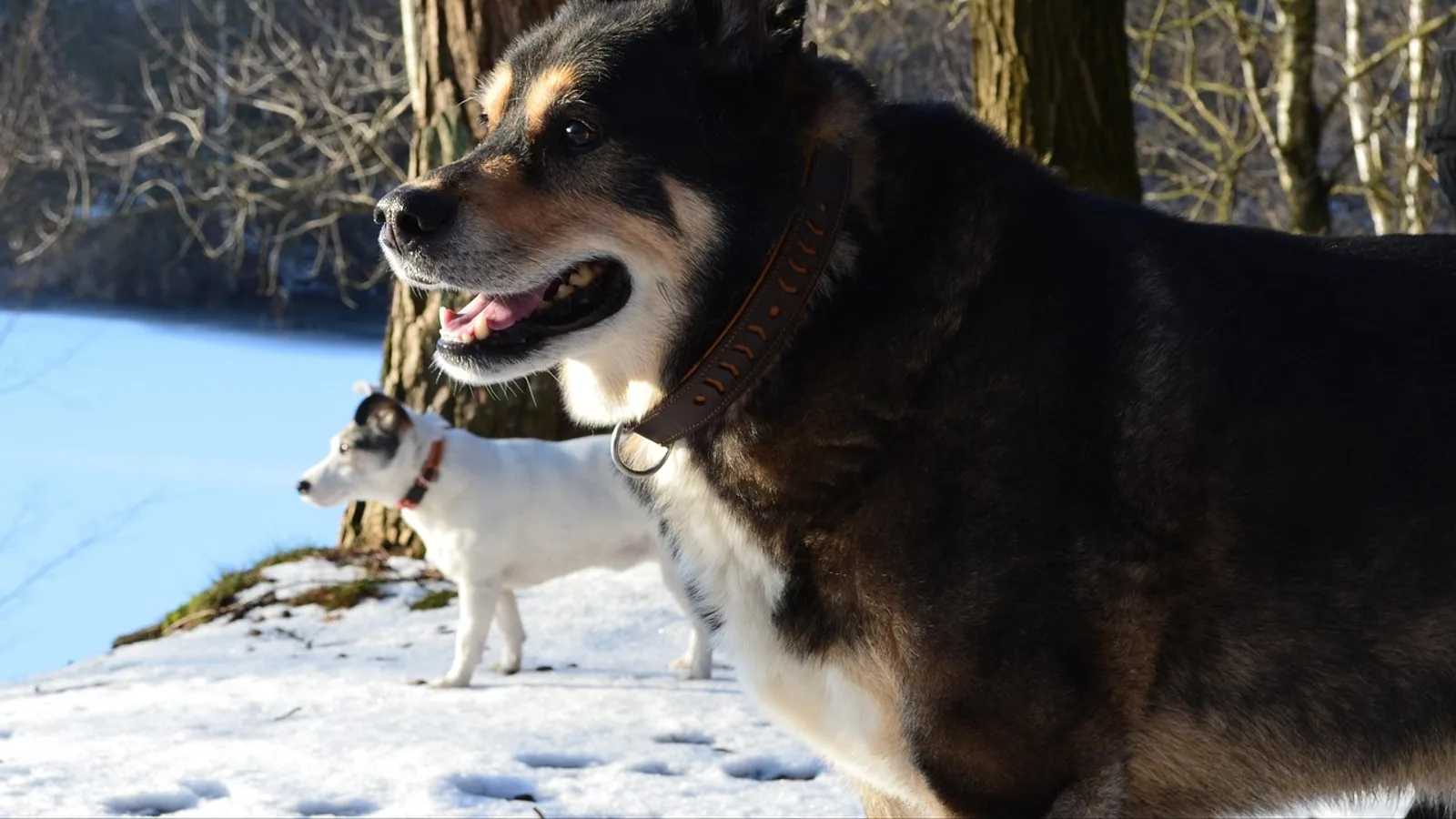
The Golden Husky mix is a cross between the Golden Retriever and the Siberian Husky. It is not a breed. It has no breed standard, no closed studbook, and no predictable litter. Two dogs from the same pairing can inherit almost opposite traits. One puppy may look and act like a Golden Retriever with a heavier coat. A littermate may carry the Husky's erect ears, lighter frame, and independent drive. That variability is the single most important fact about this dog, and it should shape every decision you make before you bring one home.
This guide covers what the parent breeds contribute, how size, coat, and energy typically fall out in the cross, which inherited diseases matter most, and how to decide whether this dog fits your household. It also explains why the popular claim of "hybrid vigor" is often overstated for a cross of two large working breeds.
This article is educational and is not a substitute for veterinary diagnosis or treatment.
At a Glance
| Trait | Golden Retriever parent | Siberian Husky parent | Likely crossbreed range |
|---|---|---|---|
| Adult weight | Large breed, commonly over 20 kg | Large breed, commonly over 20 kg | Roughly 20 to 32 kg |
| Height | Medium to large | Medium | Variable, often 20 to 26 inches at the shoulder |
| Coat | Dense water-resistant double coat, moderate to heavy shedding | Dense double coat built for cold, heavy seasonal shedding | Double coat, heavy shedding year-round with seasonal blowouts |
| Ear carriage | Pendulous (drop) ears | Erect ears | Either, or one of each |
| Eye color | Brown or amber | Often blue, also brown or parti | Any combination |
| Energy level | High, retrieving and working drive | Very high, endurance and pulling drive | High to very high |
| Trainability | Biddable, eager to please | Independent, strong-willed | Variable, often needs high-value reinforcement |
| Lifespan | Roughly 10 to 12 years | Roughly 12 to 14 years | Commonly 10 to 13 years |
| Good with children | Typically yes with supervision | Typically yes with supervision | Individual, depends on socialization |
| Good with other pets | Often yes | Often poor with small animals due to prey drive | Individual, assess early |
Weight and height ranges reflect the large-breed status of both parents. Mixed-breed dogs weighing more than 20 kg carry elevated risks of joint disorders tied to neutering timing, which is discussed below [1].
History and Purpose of the Parent Breeds
The Golden Retriever was developed in Scotland in the nineteenth century as a gundog for retrieving waterfowl on land and in water. The breed was built for a soft mouth, a strong retrieving drive, and cooperation with a handler. That history explains the breed's biddable nature and its dense, water-resistant coat.
The Siberian Husky is a very different animal. It is a sled dog from northeastern Siberia, bred by the Chukchi people for long-distance hauling in extreme cold. Huskies were selected for endurance, efficient gait, tough feet, and the ability to work in a team while remaining independent. They were not selected for obedience. This is why Huskies are famously difficult to recall off leash and why they often treat small animals as prey.
The Golden Husky mix, sometimes called a Golden Retriever Husky mix or a Siberian Husky Golden Retriever mix, combines two lineages with almost nothing in common except size and a double coat. One parent was bred to work with people. The other was bred to work alongside people while making its own decisions. A puppy can lean toward either side, and there is no way to predict which.
These crosses are not recognized by any major kennel club. They are produced by hobby breeders, by accidental matings, and occasionally by deliberate outcrossing for sport or companionship. Because there is no registry, no health-testing requirement, and no breed club oversight, the burden of due diligence falls entirely on the buyer.
Appearance: What a Golden Husky Mix Looks Like
There is no fixed appearance. The cross can produce a dog that resembles either parent or a blend of both.
Coat type is one of the more consistent features because both parents carry a double coat. You can expect a dense undercoat and a longer, weather-resistant topcoat. Colors vary widely and can include cream, gold, red, black, gray, white, and parti-color patterns. Markings may include a mask, a saddle, or white points on the face, chest, and feet.
Ear carriage is a coin flip. Drop ears come from the Golden Retriever. Erect, triangular ears come from the Husky. Some dogs have one of each, or ears that stand partially.
Eye color is equally unpredictable. Golden Retrievers have brown or amber eyes. Siberian Huskies frequently have blue eyes, and blue eyes are common in the cross. Heterochromia, where the two eyes differ in color, occurs in Huskies and can appear in the mix.
Build tends to be athletic and medium to large. The Husky influence often produces a lighter, more agile frame than a purebred Golden Retriever, while the Golden influence can add substance and a broader chest. Tail carriage varies from a low, feathered tail to a curled Husky-style tail.
Because appearance is unpredictable, a puppy's adult look cannot be guaranteed from photographs of the parents. If appearance matters to you, an adult dog from a rescue is a better fit than a puppy.
Temperament: What You Can and Cannot Predict
Temperament in this cross is genuinely variable. Any statement that a Golden Husky mix is "always friendly" or "always stubborn" is false. What you can do is understand the drives each parent contributes and plan for the full range.
From the Golden Retriever side, expect a strong desire to be near people, a retrieving instinct, a willingness to work for praise, and generally soft body language. From the Husky side, expect independence, a high prey drive, a tendency to roam, vocalization (including howling and "talking"), and a lower tolerance for repetitive obedience drills.
The combination often produces a dog that is affectionate with its family but not reliably obedient off leash. Recall is the single most common training failure in Husky-influenced dogs. A Golden Husky mix may bolt after a squirrel or a deer and ignore you completely, even if it has been trained.
Prey drive toward cats, rabbits, chickens, and other small pets is a real risk. Some individuals live peacefully with cats. Others do not, and no amount of training fully removes a strong prey drive. If you have small pets, choose an adult dog with a known history rather than a puppy, and introduce them carefully.
Vocalization is common. Huskies howl, whine, and "talk." Golden Retrievers bark. The mix may do all of the above. Apartment living is possible only if you have tolerant neighbors and you invest in exercise and training.
Guarding and resource guarding can appear in individual dogs. Early socialization and humane, reward-based training reduce the risk. Punitive training methods tend to backfire with independent dogs and can create fear or defensive behavior.
Exercise and Training Needs
This is a high-energy cross. The Husky side alone requires substantial daily activity, and the Golden side adds retrieving and working drive. A short walk around the block will not meet the needs of most Golden Husky mixes.
Plan for at least one to two hours of vigorous activity per day for an adult dog. This can include brisk walks, jogging, hiking, swimming (many Golden-influenced dogs love water), fetch, and structured pulling or canine sports. Mental work matters as much as physical work. Puzzle feeders, scent games, and short training sessions tire a dog in ways that running does not.
Under-exercised dogs of this type commonly develop destructive chewing, digging, escaping, and excessive vocalization. These are not personality flaws. They are the predictable result of unmet needs.
Obesity is a separate concern. Overweight dogs exercise less frequently and for shorter periods, and several large breeds including the Golden Retriever and Labrador Retriever are over-represented among overweight dogs in owner surveys [2]. That creates a feedback loop: the dog gains weight, moves less, and gains more. Keep your dog lean and adjust food to activity level.
Training should start the day the dog comes home. Use reward-based methods, keep sessions short, and build a strong recall in a fenced, distraction-free area before you ever trust it in the open. A long line is a safer tool than an invisible fence for a Husky-influenced dog, because these dogs often cross boundaries to chase.
Crate training helps with house training and gives the dog a safe space. Early socialization to people, dogs, sounds, and handling reduces fear-based problems later. Puppy classes and adult obedience classes are worthwhile even for experienced owners.
Grooming and Coat Care
The double coat is heavy. Both parents shed, and the cross typically sheds year-round with two heavy seasonal blowouts in spring and fall. There is no such thing as a low-shedding Golden Husky mix.
Brush your dog several times a week with a slicker brush and an undercoat rake. During a blowout, daily brushing is necessary to remove dead undercoat and prevent matting. Mats are painful and can hide skin infections.
Bathe only as needed, typically every four to eight weeks or when the dog is dirty. Over-bathing strips natural oils and can dry the skin. Use a dog-specific shampoo. Dry the coat thoroughly, especially the undercoat, because a damp undercoat holds moisture against the skin and can promote hot spots.
Do not shave a double-coated dog. The coat insulates against both heat and cold, and shaving can permanently damage regrowth and increase the risk of sunburn.
Nails should be trimmed every three to four weeks. Ears should be checked weekly and cleaned when dirty. The Golden Retriever parent has pendulous ears, which are a known risk factor for otitis externa. In a large UK primary-care study, Golden Retrievers had 2.23 times the odds of otitis externa compared with crossbred dogs, and breeds with pendulous ear carriage had 1.76 times the odds compared with breeds with erect ears [3]. If your mix inherits drop ears, watch for head shaking, ear odor, redness, and discharge, and see your veterinarian promptly.
Dental care matters too. Brush your dog's teeth several times a week with pet-safe toothpaste, and ask your veterinarian about professional cleanings.
Feeding Considerations
Feed a complete and balanced diet formulated for the dog's life stage. Puppies need a growth diet. Adults need an adult maintenance diet. Large-breed puppies should be fed a large-breed growth formula to support controlled bone growth.
Portion by body condition, not by the bag chart alone. You should be able to feel the ribs easily without seeing them, and your dog should have a visible waist when viewed from above. Adjust portions as activity changes with the seasons and with age.
Treats should make up a small fraction of daily calories. Many training treats are calorie-dense, and a dog in training can easily gain weight. Use part of the daily kibble ration as training rewards.
Fresh water should be available at all times, especially in hot weather and after exercise. Huskies and Husky-influenced dogs can be picky eaters, and some skip meals when stressed or overheated. Persistent appetite loss, vomiting, or diarrhea warrants a veterinary visit.
Do not feed cooked bones, high-fat table scraps, chocolate, grapes, raisins, onions, garlic, xylitol, or alcohol. Ask your veterinarian before starting any supplement.
Inherited and Common Health Problems
Both parent breeds carry significant inherited disease burdens. A review of inherited disorders in the top 50 UK Kennel Club breeds identified 312 non-conformation-linked disorders, with German Shepherds and Golden Retrievers associated with the greatest number of disorders [4]. That does not mean every Golden Husky mix will be sick. It means the genetic lottery is loaded, and screening matters.
Hip and Elbow Dysplasia
Hip dysplasia and elbow dysplasia are developmental orthopedic disorders. They occur when the joint does not form properly, leading to pain, lameness, and arthritis. Both Golden Retrievers and Siberian Huskies are affected, and mixed-breed dogs weighing more than 20 kg are also at elevated risk [1].
Genetic trends in hip and elbow dysplasia have improved in most breeds under phenotypic selection, but the Siberian Husky is a notable exception, where genetic progress has not followed the same pattern [5]. That is a meaningful point for this cross, because the Husky side may contribute joint risk that is not improving as quickly as in other breeds.
Neutering timing interacts with joint risk. In Golden Retrievers, neutering before 12 months was associated with a marked increase in joint disorders. Early-neutered males had a 10 percent rate of hip dysplasia, double the rate in intact males, and no cases of cranial cruciate ligament tear were diagnosed in intact males or females in that dataset [6]. A follow-up comparison found that in Golden Retrievers, neutering before 6 months increased the incidence of a joint disorder to four to five times that of intact dogs, a larger effect than in Labrador Retrievers [7]. A broader study of 35 breeds confirmed that neutering before a year of age was associated with increased joint disorder risk in some breeds, with the largest increases in dogs neutered by 6 months [8].
For mixed-breed dogs specifically, a study of five weight categories found that the 20 to 29 kg and 30 to 39 kg groups are the relevant reference points for this cross, and that neutering effects on joint disorders and cancers vary by weight category and sex [1]. Discuss neutering timing with your veterinarian rather than following a default schedule.
Cancers
Golden Retrievers carry a well-documented cancer burden. The cancers followed in the neutering literature include lymphosarcoma, hemangiosarcoma, mast cell tumor, and osteosarcoma [6][7][8]. In female Golden Retrievers, neutering at any age was associated with an increase in one or more of these cancers to roughly two to four times the rate in intact females [8]. In the original Golden Retriever study, early-neutered males had elevated hip dysplasia rates and the cancer picture differed by sex and neutering age [6].
This does not mean your dog will develop cancer. It means you should know the early signs: new lumps, unexplained weight loss, lethargy, pale gums, difficulty breathing, lameness that does not resolve, or bleeding from the nose or gums. Report any of these to your veterinarian promptly.
Hypothyroidism
Hypothyroidism is a common endocrine disorder in dogs and is over-represented in Golden Retrievers. It causes weight gain, lethargy, cold intolerance, dull coat, and skin changes. It is diagnosed with blood testing and managed with lifelong medication. Hypothyroidism also appeared as a concurrent disease in a survey of dogs with acquired megaesophagus, alongside myasthenia gravis and esophagitis [9].
If your dog gains weight despite controlled feeding, becomes sluggish, or develops a poor coat, ask your veterinarian to evaluate thyroid function.
Cataracts and Progressive Retinal Atrophy
Siberian Huskies carry hereditary eye disease. X-linked progressive retinal atrophy (XLPRA) was first described in the Siberian Husky and is the canine homologue of human X-linked retinitis pigmentosa [10][11]. This is a serious, inherited retinal degeneration that leads to vision loss.
Golden Retrievers also carry retinal disease. A frameshift mutation in the SLC4A3 gene was identified in Golden Retrievers with progressive retinal atrophy, with a recessive mode of inheritance and full penetrance in lineages where it segregated [12]. Allele frequencies were approximately 4 percent in the UK, 6 percent in Sweden, and 2 percent in France, and the variant was not found in US Golden Retrievers in that study [12].
Cataracts are also reported in both parent breeds. Any dog with cloudy eyes, bumping into objects, reluctance to move in dim light, or red or painful eyes should be examined by a veterinarian. Because XLPRA is X-linked, male dogs are more severely affected, and carrier females can pass the trait to offspring [11].
Zinc-Responsive Dermatosis
Zinc-responsive dermatosis is a skin disorder seen in northern breeds, including Siberian Huskies and Malamutes. It causes crusting, scaling, and hair loss, typically around the muzzle, eyes, and pressure points. It responds to zinc supplementation under veterinary supervision. Do not supplement zinc on your own, because zinc toxicity is possible and the dose must be managed by a veterinarian.
Other Conditions to Discuss With Your Veterinarian
Golden Retrievers carry a high prevalence of PNPLA1-related non-epidermolytic ichthyosis, a hereditary skin disorder. In one study of 463 Golden Retrievers tested in Italy, 42 percent were clear, 37 percent were carriers, and 21 percent were affected, with a mutant allele frequency of 40 percent, though the frequency declined over the study period as genetic screening increased [13]. A separate study of 48 breeding Golden Retrievers found 21 percent wild-type, 48 percent heterozygous, and 31 percent homozygous for the PNPLA1 variant, and only 3 of 48 dogs showed clinical signs, which means genotype does not reliably predict visible disease [14].
Golden Retrievers are also predisposed to pyometra, a serious uterine infection in intact females. A genome-wide association study identified a locus on chromosome 22 within the ABCC4 gene associated with pyometra in Golden Retrievers, a breed with an increased risk ratio of 3.3 [15]. If you keep a female intact, learn the signs: lethargy, vomiting, increased drinking, and vaginal discharge, and seek emergency care if they appear.
Golden Retrievers are over-represented among dogs with steroid-responsive meningitis-arteritis, an inflammatory neurologic disorder, in a North American case series [16]. Golden Retrievers also appear among breeds associated with acquired megaesophagus, a condition in which the esophagus loses motility [9].
Large dogs generally have shorter lifespans and higher rates of age-related disease than small dogs, and recent work suggests epigenetic changes may contribute to this pattern [17]. This is a general large-breed consideration rather than a breed-specific diagnosis.
Recommended Screening
Before breeding or before acquiring a puppy, ask for documentation of the following where available:
- Hip and elbow evaluations from the Orthopedic Foundation for Animals (OFA) or an equivalent scheme for both parents.
- Eye examinations by a board-certified veterinary ophthalmologist for both parents.
- Thyroid testing for both parents.
- Genetic testing for PNPLA1 ichthyosis and for progressive retinal atrophy variants relevant to Golden Retrievers and Siberian Huskies.
- Cardiac evaluation if the breeder reports a family history of heart disease.
No screening panel eliminates risk. It reduces it. A breeder who cannot or will not provide health clearances is a red flag.
Hybrid Vigor: Why the Claim Is Overstated
"Hybrid vigor" is the idea that crossbred animals are healthier than purebreds because they inherit a wider mix of genes. This is real in some contexts, particularly for traits controlled by many genes with inbreeding depression, but it is frequently overstated for crosses like the Golden Husky mix.
Three reasons matter here.
First, both parent breeds carry heavy inherited disease burdens. A cross of two affected lineages can inherit risk from both sides rather than canceling it out. The Golden Retriever alone is associated with one of the highest numbers of inherited disorders among popular breeds [4].
Second, hybrid vigor does not protect against disorders that are common in both parent breeds. Hip dysplasia, elbow dysplasia, cataracts, and hypothyroidism all occur in both Golden Retrievers and Siberian Huskies. A mixed-breed dog can develop any of them.
Third, mixed-breed status does not remove the neutering-related risk. Mixed-breed dogs over 20 kg show elevated joint disorder risk with early neutering, just as large purebreds do [1].
A crossbreed can be healthier than a poorly bred purebred. It can also be less healthy than a well-bred purebred from a screened lineage. The deciding factor is the health of the individual parents, not the fact that the dog is a mix.
Lifespan and Senior Care
A reasonable expectation for a Golden Husky mix is roughly 10 to 13 years, with the Husky influence often pulling toward the longer end and the Golden influence toward the shorter end. Large dogs generally age faster and develop age-related disease earlier than small dogs [17].
Senior care starts around age 7 to 8 for a dog of this size. At that point, ask your veterinarian about twice-yearly wellness exams, baseline bloodwork, and screening for arthritis, thyroid disease, and dental disease. Watch for changes in mobility, appetite, water intake, urination, and behavior. Many senior problems are manageable when caught early.
Keep exercising your senior dog, but adjust intensity. Swimming and leash walks are gentler on joints than running and jumping. Joint pain is common in this cross given the dysplasia risk, and untreated pain reduces quality of life.
Finding a Responsible Breeder or Rescue
Because this is a mixed breed with no registry, there is no breed club to enforce health testing. That makes breeder selection the single most important decision you will make.
Look for a breeder who:
- Tests both parent dogs for hips, elbows, eyes, and thyroid, and can show you the results.
- Screens for PNPLA1 ichthyosis and relevant retinal atrophy variants.
- Raises puppies in the home with exposure to household sounds, people, and handling.
- Provides a written health guarantee and a contract that includes a return clause.
- Allows you to meet the mother and, if possible, the father.
- Asks you detailed questions about your home, activity level, and experience.
- Does not produce multiple litters at once or sell puppies through brokers.
Rescue is a strong option. Golden Retriever rescues, Husky rescues, and all-breed rescues frequently have mixes available, including adults with known temperaments and health histories. An adult dog lets you skip the guesswork about size, coat, and prey drive. Many rescued Huskies and Husky mixes are surrendered because owners underestimated exercise needs, so rescue staff can often match you with a dog whose energy level fits your lifestyle.
Avoid any seller who will not let you see the parents, who meets you in a parking lot, who sells puppies under eight weeks of age, or who cannot produce health records.
Who Should Not Get a Golden Husky Mix
This dog is a poor fit for some households. Do not get one if any of the following apply.
- You cannot provide one to two hours of vigorous daily exercise.
- You live in an apartment with noise-sensitive neighbors and cannot manage howling and barking.
- You expect reliable off-leash obedience without extensive training.
- You have small pets and are unwilling to manage prey drive.
- You cannot afford routine care, grooming, and potential treatment for joint or cancer disease.
- You are away from home for long stretches and cannot arrange midday activity.
- You want a low-shedding dog.
- You are not prepared to commit for 10 to 13 years.
- You plan to use punitive training methods.
- You want a dog whose adult size, coat, and temperament are guaranteed.
Limitations and When to Contact a Veterinarian
Individual dogs vary, and no article can replace an examination of your specific pet. Contact a veterinarian promptly if you notice any of the following:
- Lameness, stiffness, reluctance to rise, or difficulty on stairs that lasts more than a day or two.
- New lumps, swelling, or non-healing wounds.
- Unexplained weight loss, weight gain, or change in appetite.
- Increased drinking or urination.
- Vomiting, diarrhea, or abdominal pain lasting more than 24 hours.
- Cloudy eyes, redness, discharge, or bumping into objects.
- Head shaking, ear odor, or ear discharge.
- Crusting, scaling, or hair loss on the face or pressure points.
- Lethargy, collapse, pale gums, or difficulty breathing. These are emergencies.
- Vaginal discharge, vomiting, or lethargy in an intact female. Pyometra is life-threatening.
Bring your dog in for a wellness examination at least once a year, and twice a year after age 7. Discuss neutering timing, vaccination, parasite prevention, and dental care at those visits. Follow AAHA and AVMA guidance on preventive care, and ask your veterinarian to tailor a plan for your dog's size, age, and lifestyle.
Frequently Asked Questions
How big does a Golden Husky mix get?
Most adults fall roughly between 20 and 32 kg (about 44 to 70 pounds), with height commonly around 20 to 26 inches at the shoulder. Both parent breeds are large, and the cross is generally a medium-to-large dog.
Does a Golden Husky mix shed a lot?
Yes. Both parents have double coats, so the cross sheds heavily year-round with two major seasonal blowouts. Expect to brush several times a week and daily during shedding season.
Is a Golden Husky mix good with children?
Many are, but temperament is individual and unpredictable in a cross of two working breeds. Supervise all interactions between dogs and children, teach children how to behave around dogs, and choose an adult dog with a known history if you have young kids.
Is a Golden Husky mix good with cats?
It depends on the individual dog. The Husky side carries a strong prey drive toward small animals, and some Golden Husky mixes cannot safely live with cats. Choose an adult dog with a documented history of living with cats if this matters to you.
How much exercise does a Golden Husky mix need?
Plan for at least one to two hours of vigorous daily activity for an adult, plus mental enrichment. Under-exercised dogs of this type commonly develop destructive behavior, digging, escaping, and excessive vocalization.
Do Golden Husky mixes have health problems?
Yes. They can inherit hip and elbow dysplasia, hypothyroidism, and cancer predisposition from the Golden Retriever side, and cataracts, progressive retinal atrophy, and zinc-responsive dermatosis from the Husky side. Mixed-breed status does not guarantee freedom from inherited disease.
Is hybrid vigor real for this cross?
It is often overstated. Both parent breeds carry significant inherited disease burdens, and a cross can inherit risk from both sides. The health of the individual parents matters more than the fact that the dog is a mix.
Should I neuter my Golden Husky mix early?
Discuss timing with your veterinarian. Early neutering has been associated with increased joint disorder risk in large dogs and in mixed-breed dogs over 20 kg, and with increased cancer risk in female Golden Retrievers. There is no single correct age for every dog.
Related Articles
- Siberian Husky Lifespan Diet and Preventive Care Guide
- Golden Retriever Lifespan Diet and Preventive Care Guide
- How To Clean Dog Eears Golden Retriever
- Best High Protein Dog Food For Golden Retrievers
- Siberian Husky Health Guide: Genetic Risks, Joint Care & Lifespan
- Siberian Husky Health Problems: Zinc-Responsive Dermatosis and Autoimmune
- Pitbull Labrador Mix: Traits, Health, and Care
- Dachshund Golden Retriever Mix Guide
Sources
- Assisting Decision-Making on Age of Neutering for Mixed Breed Dogs of Five Weight Categories: Associated Joint Disorders and Cancers.
- Overweight dogs exercise less frequently and for shorter periods: results of a large online survey of dog owners from the UK.
- Frequency and predisposing factors for canine otitis externa in the UK - a primary veterinary care epidemiological view.
- Inherited defects in pedigree dogs. Part 2: Disorders that are not related to breed standards.
- Comparative analyses of genetic trends and prospects for selection against hip and elbow dysplasia in 15 UK dog breeds.
- Neutering dogs: effects on joint disorders and cancers in golden retrievers.
- Long-term health effects of neutering dogs: comparison of Labrador Retrievers with Golden Retrievers.
- Assisting Decision-Making on Age of Neutering for 35 Breeds of Dogs: Associated Joint Disorders, Cancers, and Urinary Incontinence.
- Survey of owners on population characteristics, diagnosis, and environmental, health, and disease associations in dogs with megaesophagus.
- Characterization of three microsatellite loci linked to the canine RP3 interval.
- XLPRA: a canine retinal degeneration inherited as an X-linked trait.
- A frameshift mutation in golden retriever dogs with progressive retinal atrophy endorses SLC4A3 as a candidate gene for human retinal degenerations.
- Prevalence and genotypic distribution of non-epidermolytic ichthyosis in Italian Golden Retrievers.
- Prevalence of PNPLA1 Gene Mutation in 48 Breeding Golden Retriever Dogs.
- The ABCC4 gene is associated with pyometra in golden retriever dogs.
- Clinical characteristics, breed differences, and quality of life in North American dogs with acute steroid-responsive meningitis-arteritis.
- DNA methylation of transposons pattern aging differences across a diverse cohort of dogs from the Dog Aging Project.