Doberman Pinscher: Breed Health, Lifespan and Care
By Dr. Zubair Khalid, DVM, MS, PhD ·
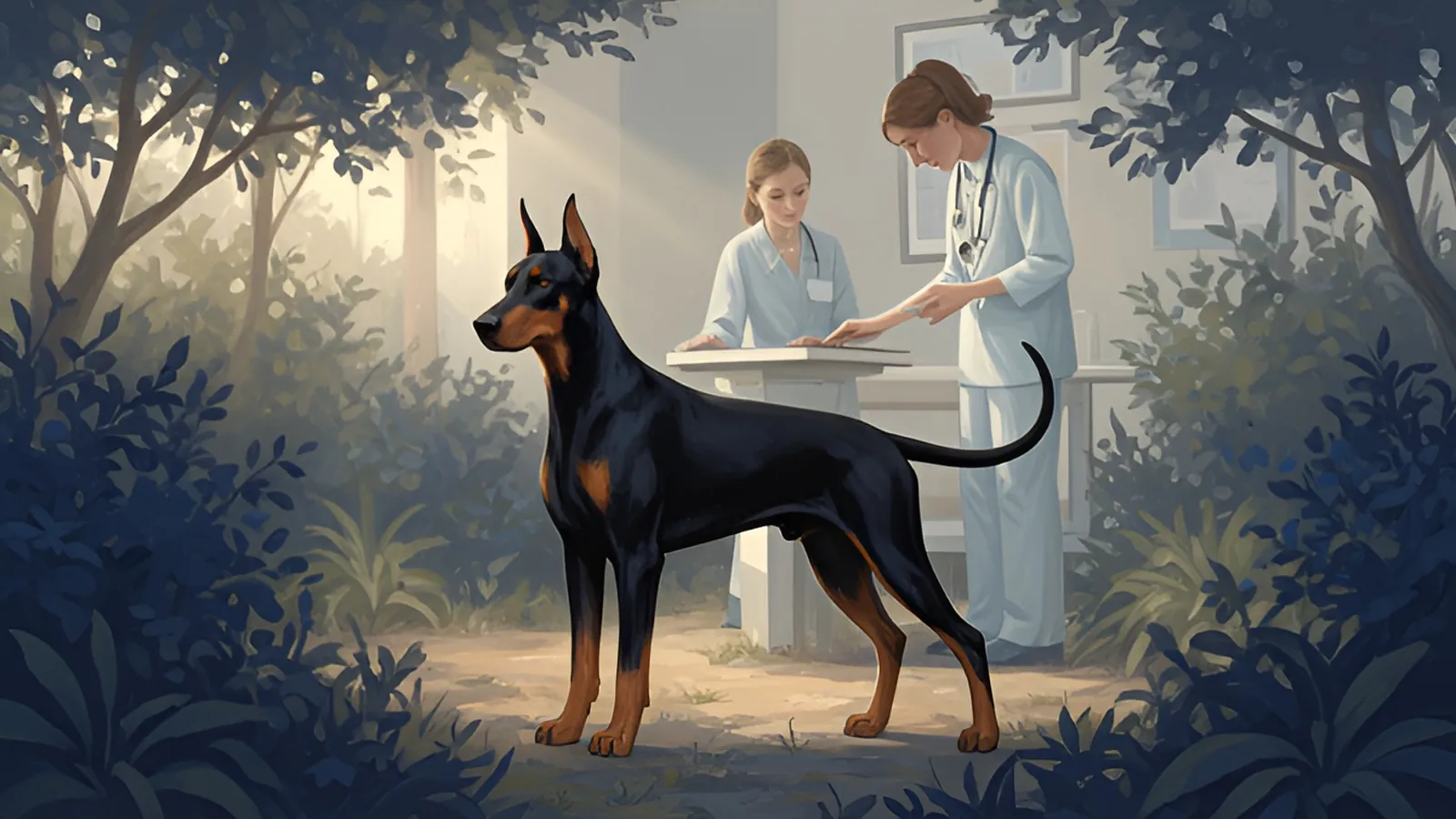
The Doberman Pinscher is a German working breed of pinscher type, developed in Thuringia around 1890 by the tax collector Louis Dobermann and kept today as a guard dog or a companion animal (Dobermann). It is intelligent, alert, and tenaciously loyal, learns quickly, and responds fast to training, but it is a very strong dog that can become pushy without consistent handling (Doberman Pinscher Dog Breed Information; Dobermann).
Care centers on daily exercise, structured obedience work, and screening for conditions seen in the breed, including disc-associated wobbler syndrome and color dilution alopecia in blue or fawn coats (Disc-associated wobbler syndrome in the Doberman pinscher50061-x); Colour Dilution Alopecia in Doberman Pinschers with Blue or Fawn Coat...). Ears were traditionally cropped and tails docked, practices that are now illegal in many countries (Dobermann).
Key Points
- Origin: The breed was developed in Apolda in present-day Thuringia, Germany, in about 1890 by Karl Friedrich Louis Dobermann, a tax collector who ran a dog pound (Dobermann).
- Name: It is called the Dobermann in most of the world; the United States and Canada are the only countries that still use "Doberman Pinscher".
- Ancestry: Experts believe the breed combines several dogs, possibly the Beauceron, German Pinscher, Rottweiler, and Weimaraner, with the old German Shepherd as a likely major contributor; the single documented crossing is with the Greyhound and Manchester Terrier.
- Temperament: Intelligent, alert, and tenaciously loyal, the Doberman is strong enough to become pushy if training and boundaries are not maintained (Doberman Pinscher Dog Breed Information; Dobermann).
- Wobbler syndrome: Disc-associated wobbler disease occurs in many large breeds, but the vast majority of cases are middle-aged Doberman Pinschers; long-term conservative therapy is only palliative, while surgery offers a potential cure with significant risk of complications (Disc-associated wobbler syndrome in the Doberman pinscher50061-x)).
- Color dilution alopecia: In a study of 57 blue or fawn Doberman Pinschers, 42 had hair loss typical of the disorder, confirmed by skin biopsy in 11 dogs and by microscopic examination of plucked hairs in 6 (Colour Dilution Alopecia in Doberman Pinschers with Blue or Fawn Coat...).
At a Glance
| Trait | Detail |
|---|---|
| Origin | Germany; bred as a working and guard dog (Dobermann) |
| Size | 24 to 28 inches tall; 60 to 100 pounds (Doberman Pinscher Dog Breed Information) |
| Lifespan | About 10 to 12 years on average |
| Coat | Short, smooth; black, blue, fawn, red |
| Temperament | Alert, loyal, intelligent, energetic, and protective |
| Care | Daily exercise, training, socialization, and routine vet checks |
The Doberman Pinscher is a large working breed that needs an owner with time for daily exercise and structured training (Doberman Pinscher Dog Breed Information). Its short coat is easy to keep clean, but its strength and protective instincts call for consistent handling from an early age.
Breed Origins and History
The Doberman Pinscher takes its name from Karl Friedrich Louis Dobermann, a German tax collector who lived and worked in Apolda, in present-day Thuringia. Dobermann also ran the local dog pound, which gave him access to dogs of many breeds and types. He wanted a dog that could protect him during his rounds, and he set out to produce an animal with stamina, strength, and intelligence (Dobermann).
From Apolda to a Recognized Breed
Breeding began in the 1880s, and the breed is generally dated to about 1890 (Dobermann). Dobermann died in 1894. Five years later, Otto Goeller, one of the earliest breeders, founded the National Doberman Pinscher Club and is credited with perfecting the breed through the 1890s, refining both type and working ability. The breed club and the standard that followed shaped the modern Doberman Pinscher, and major kennel clubs classify it as a working breed (Doberman Pinscher Dog Breed Information).
Ancestry and Breed Development
The exact mix behind the breed is not documented. Many experts believe the Doberman descends from several breeds, including the Beauceron, German Pinscher, Rottweiler, and Weimaraner. The single documented crossing is with the Greyhound and the Manchester Terrier. The old German Shepherd is widely believed to have been the largest single contributor to the breed (Dobermann). The American Kennel Club lists possible ancestors as the old shorthaired shepherd, Rottweiler, Black and Tan Terrier, and German Pinscher.
The Name and Modern Roles
After Dobermann's death, German breeders named the breed Dobermann-pinscher in his honor. Roughly half a century later, the Germans dropped the word "pinscher," judging that the German term for terrier no longer fit, and the British followed later. The United States and Canada are now the only countries that keep "Pinscher" and drop the second "n" from Dobermann's surname (Dobermann).
The breed's working ability carried it into police, military, and search work in many countries (Dobermann). Its intelligence, alertness, and tenacious loyalty keep it in demand as a guard dog and as a companion animal. Owners who trace a puppy's background will find that most modern lines descend from dogs bred for both roles at once, which is why working ability and family temperament are often discussed together in breed literature.
Size, Appearance and Coat Colors
The Doberman Pinscher is a large, athletic dog with a compact body built for speed and endurance (Doberman Pinscher Dog Breed Information). Height and weight vary by sex, and adult dogs sit in a fairly narrow band for a breed of this size.
| Measure | Males | Females |
|---|---|---|
| Height at the shoulder | 26 to 28 inches (Doberman Pinscher Dog Breed Information) | 24 to 26 inches |
| Weight | About 60 to 100 pounds | About 60 to 100 pounds |
Height and Weight
Adult males stand 26 to 28 inches at the shoulder, while females stand 24 to 26 inches (Doberman Pinscher Dog Breed Information). The overall weight range for the breed is about 60 to 100 pounds. Puppies grow quickly and reach most of their adult height in the first year, though filling out in muscle and chest depth continues after that.
Body and Structure
The body is muscular, compact, and square in outline, with a deep chest and a long muzzle (Doberman Pinscher Dog Breed Information). The gait should be even and graceful, and the breed standard calls for an athletic build that can sustain fast, sustained movement (Dobermann). A well-conditioned Doberman looks lean and hard, with visible muscle over the shoulders and hindquarters.
Ears and Tails
Ears were traditionally cropped and the tail docked, practices that are now illegal in many countries (Dobermann). Many owners now keep the natural drop ears and full tail (Doberman Pinscher Dog Breed Information). Ear cropping and tail docking are cosmetic procedures with no health benefit, and rules on them differ by country and by kennel club.
Coat Colors
The coat is short, smooth, and close to the body (Doberman Pinscher Dog Breed Information). The four standard colors are black, blue, fawn, and red. Black and red dogs usually carry tan markings on the muzzle, chest, legs, and above the eyes. Blue is a diluted black, and fawn is a diluted red.
Color Dilution Alopecia
Blue and fawn coats can be linked to color dilution alopecia, a hair loss disorder seen in dogs with dilute coat colors (Colour Dilution Alopecia in Doberman Pinschers with Blue or Fawn Coat...). In one study of 57 blue or fawn Doberman Pinschers, 42 dogs had hair loss typical of the condition. The diagnosis was confirmed in 11 dogs by skin biopsy and in 6 dogs by light microscopic examination of plucked hairs. Key diagnostic features included large macromelanosomes in the hair shafts, free clumps of melanin in the lumens of hair follicles, and numerous perifollicular melanophages. A blue or fawn Doberman with progressive thinning of the coat, patchy bare areas, or a dull, sparse jacket should be examined by a veterinarian, since the condition is managed, not cured.
Temperament and Personality
The Doberman Pinscher is alert, fearless, and loyal, and it often forms strong bonds with the family it lives with (Doberman Pinscher Dog Breed Information). It is also a very strong dog with a serious bite, so temperament and training matter as much as size.
Core Traits
Dobermans are very intelligent, learn easily, and respond quickly to fair, consistent handling. They make loving and fun companions for owners who enjoy an active dog (Doberman Pinscher Dog Breed Information). Alertness and a low threshold for noticing change make them natural watchdogs.
Training and Willfulness
Intelligence does not guarantee obedience. Dobermans can become pushy and intense when rules are unclear or when they are allowed to decide what happens next (Doberman Pinscher Dog Breed Information). Short, frequent sessions with clear rewards work better than long, repetitive drills. Basic obedience, a reliable recall, and polite leash manners should be in place before the dog reaches full adult strength.
Protection, Territory and Strangers
Protective instincts are part of the breed and require early socialization and clear household rules (Doberman Pinscher Dog Breed Information). Many Dobermans are reserved with strangers and watchful around their territory. Socialization means regular, calm exposure to new people, places, sounds, and friendly dogs during the first year, with positive experiences attached to each new situation.
Children and Households
Dobermans can be good with children when they are raised with them and supervised carefully (Doberman Pinscher Dog Breed Information). Because the breed is large and energetic, interactions between a Doberman and a small child should always have an adult present. Households with frequent visitors, shared yards, or multiple pets need a dog that has been trained to settle on cue.
Energy and Activity Match
High energy needs suit active households (Doberman Pinscher Dog Breed Information). A Doberman that gets daily running, structured play, and training is calmer indoors and easier to live with. A bored, under-exercised Doberman is more likely to bark, pace, chew, or push against household boundaries. Prospective owners should honestly assess how much time they can give to exercise and training each day before choosing this breed.
Exercise and Training Needs
A Doberman Pinscher is built for work. The breed needs vigorous daily exercise and mental work to stay calm and manageable at home (Doberman Pinscher Dog Breed Information). A short walk around the block does not meet that need. Owners who treat an adult Doberman as a lap dog often end up with a restless, noisy, or destructive dog.
Daily Exercise
Adults do best with purposeful activity every day, split into more than one session.
- Brisk leash walks or jogging
- Running free in a securely fenced yard or field
- Fetch, tug, and structured games
- Hiking on varied ground
- Swimming, for dogs that enjoy water
One long walk helps, but two sessions, morning and evening, suit the breed better. Puppies need shorter and gentler activity than adults, and older dogs need the intensity adjusted to what their joints tolerate. Heat is a real limit for a dark-coated, deep-chested dog, so exercise early or late on hot days.
Mental Work and Training
Dobermans are very intelligent, learn easily, and respond quickly (Doberman Pinscher Dog Breed Information). The same intelligence means an untrained dog will invent its own entertainment. Formal obedience classes and puppy classes build control and confidence. Daily training sessions should be short, clear, and consistent. Ten focused minutes repeated every day teaches more than one long session each week.
Useful foundation behaviors:
- Name recognition and attention
- Sit, down, stay, and come
- Loose-leash walking
- Leave it and drop it
- Settling quietly on a mat while the household moves around
Keep corrections fair and timing sharp. Harsh handling creates suspicion in a strong, sensitive dog.
Socialization
Early socialization reduces fear and defensive behavior (Doberman Pinscher Dog Breed Information). Puppy classes, supervised play, and calm exposure to new places all help. Aim for variety:
- People of different ages, heights, and voices
- Calm adult dogs
- Traffic, bicycles, strollers, and doorbells
- Stairs, slick floors, crates, and car rides
- Handling of ears, feet, mouth, and nails
Sports and Structured Activities
Tracking and agility suit the breed (Doberman Pinscher Dog Breed Information). Obedience, rally, nose work, dock diving, and carting also give the dog a job. Protection sports require an experienced club and careful handling.
A Sample Week
| Day | Morning | Evening |
|---|---|---|
| Monday | 40-minute brisk walk | Obedience drills, 10 minutes |
| Tuesday | Fetch and free running | Nose work games |
| Wednesday | 40-minute walk | Grooming and handling practice |
| Thursday | Agility class | Settle on mat, 10 minutes |
| Friday | Hike on varied ground | Puzzle feeder and chew time |
| Saturday | Training class | Long sniff walk |
| Sunday | Rest and gentle walk | Family time and light play |
Managing Energy Indoors
Chew toys, puzzle feeders, and frozen stuffed toys give the mouth and brain something to do. A crate or mat gives the dog a place to settle. Without an outlet, a bored Doberman will find one.
Grooming and Daily Care
The Doberman's short, close coat makes grooming simpler than for many large breeds. Routine care still takes a few minutes most days.
Coat and Brushing
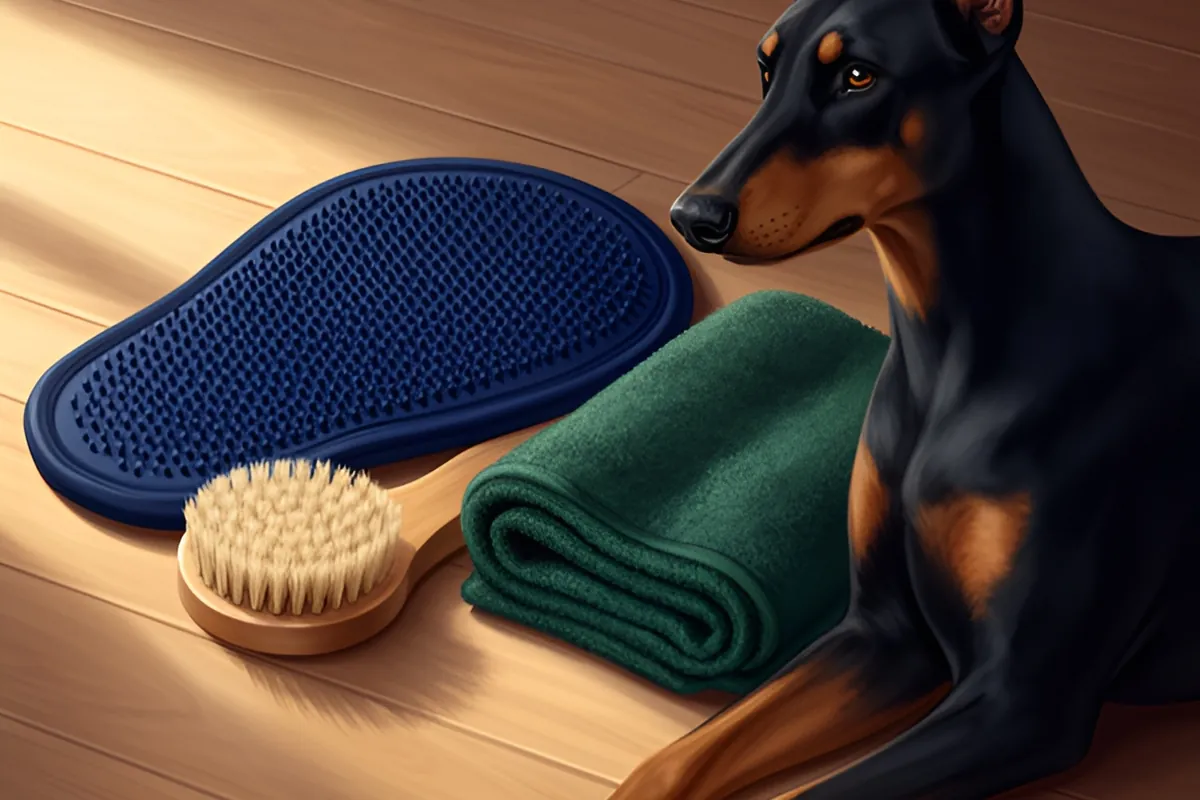
The short coat needs weekly brushing and occasional bathing (Doberman Pinscher Dog Breed Information). A rubber curry brush or hound mitt removes loose hair and spreads skin oils. During seasonal shedding, brush two or three times a week. Check the skin while brushing for redness, scabs, bald patches, or lumps.
Bathing
Bathe when the dog is dirty or smelly, using a mild dog shampoo. Rinse thoroughly, since leftover shampoo can irritate skin. Dry the ears afterward and keep water out of the ear canals. Overbathing strips oils and can leave the coat dull.
Ears, Nails, and Teeth
Check ears, nails, and teeth as part of routine care (Doberman Pinscher Dog Breed Information).
- Ears: look inside weekly for redness, discharge, or odor. Clean the visible folds with a veterinary ear cleaner and a cotton ball. Do not push swabs into the canal.
- Nails: trim every three to four weeks. Long nails change the gait and can split.
- Teeth: brush with dog toothpaste several times a week or daily. Dental chews and veterinary cleanings help.
Shedding
Shedding is moderate, and loose hair collects on furniture (Doberman Pinscher Dog Breed Information). Short hairs weave into upholstery and are hard to remove. Washable covers, a vacuum with a pet attachment, and lint rollers keep the house manageable.
Bedding, Toys, and Contact
Provide a bed, safe chew toys, and daily human contact (Doberman Pinscher Dog Breed Information). Dobermans are social dogs that want to be near their people. A crate with a soft pad gives a quiet den. Rotate chew toys to keep them interesting, and replace any toy that is torn or small enough to swallow.
Blue and Fawn Coats
Blue and fawn dogs may need gentle skin and coat care (Colour Dilution Alopecia in Doberman Pinschers with Blue or Fawn Coat...). In one study of 57 blue or fawn Doberman Pinschers, 42 had hair loss typical of color dilution alopecia, confirmed by skin biopsy in 11 dogs and by microscopic hair examination in 6. The condition shows as a thinning coat, patchy baldness, and sometimes dry or scaly skin. Use gentle shampoos, avoid harsh products, and ask a veterinarian about medicated options if the skin becomes inflamed.
Routine Care Schedule
| Task | Frequency | Notes |
|---|---|---|
| Brushing | Weekly, more in shedding season | Rubber curry or hound mitt |
| Bathing | Every few weeks to a few months | Mild dog shampoo, rinse well |
| Ear check | Weekly | Clean only what is visible |
| Nail trim | Every 3 to 4 weeks | Include dewclaws |
| Tooth brushing | Several times a week or daily | Dog toothpaste only |
| Bed and toy check | Weekly | Replace worn or torn items |
Diet and Feeding
Feeding a Doberman is mostly about consistency and portion control. The breed is deep-chested, so how and when meals are given deserves as much attention as what is in the bowl.
Choosing a Complete Diet
Feed a complete diet sized for age, weight, and activity (Doberman Pinscher Dog Breed Information). Commercial diets that carry a statement of nutritional adequacy meet recognized nutrient profiles. Match the formula to life stage: puppy, adult, or senior. Large-breed puppy formulas are designed for controlled growth.
Portion Control
Measure portions and avoid free feeding to prevent obesity (Doberman Pinscher Dog Breed Information). Use a measuring cup or a kitchen scale, and check body condition monthly. Ribs should be easy to feel under a thin layer of fat, and there should be a visible waist when the dog is viewed from above.
| Body condition | What you see and feel | Action |
|---|---|---|
| Thin | Ribs, spine, and hip bones prominent | Increase portions slightly and check for disease |
| Ideal | Ribs felt easily, waist visible | Keep current portions |
| Overweight | Ribs hard to feel, no waist | Reduce portions and treats, increase exercise |
Feeding Puppies
Puppies need growth-appropriate food in measured meals (Doberman Pinscher Dog Breed Information). Young puppies eat three or four small meals a day, tapering to two as they grow. Splitting food into smaller meals also suits a deep-chested breed. Keep meal times calm, and feed dogs separately if more than one lives in the house.
Water
Fresh water should be available at all times (Doberman Pinscher Dog Breed Information). Clean the bowl daily. Offer water after exercise, and watch for sudden increases in drinking, which can signal disease.
Treats, Supplements, and Raw Diets
Ask a veterinarian before adding supplements or raw diets (Doberman Pinscher Dog Breed Information). Treats should be small and counted as part of the daily intake. Raw meat diets carry bacterial risks for the dog and for the people handling the food. Supplements such as joint products, oils, or calcium are best chosen with veterinary advice, since some can unbalance a complete diet.
Feeding Routine
| Time | What to do |
|---|---|
| Morning | Measured meal, fresh water |
| Midday | Water check, light training treats |
| Evening | Measured meal, fresh water |
| Before bed | Remove leftover food, offer water |
Lifespan and Senior Care
The average lifespan is about 10 to 12 years (Doberman Pinscher Dog Breed Information). Some Dobermans stay athletic into their last years, while others slow down earlier. Watching for small changes and adjusting the routine keeps older dogs comfortable.
What Changes with Age
Large breeds often show signs of aging earlier than small ones. Muscle mass along the spine and hindquarters decreases, the coat may gray around the muzzle, and sleep becomes lighter. Hearing and vision may fade. These changes should not be ignored or assumed to be normal.
Signs to Watch
Watch for stiffness, weight loss, and changes in behavior (Doberman Pinscher Dog Breed Information). Other changes worth a veterinary visit:
- Difficulty rising, climbing stairs, or jumping into a car
- Stiffness that eases after movement
- Loss of muscle over the back and rear legs
- Reduced appetite, vomiting, or diarrhea
- Increased thirst or urination
- Coughing, fainting, or tiring quickly on walks
- Confusion, night waking, or house soiling
Wobbler Syndrome
Disc-associated wobbler syndrome is a cervical spinal condition seen most often in middle-aged Doberman Pinschers (Disc-associated wobbler syndrome in the Doberman pinscher50061-x)). It causes slowly progressive weakness and incoordination of the rear limbs that can advance to all four limbs (Disc-associated wobbler syndrome in the Doberman pinscher50061-x)). Diagnosis uses history, neurologic examination, and imaging, and treatment ranges from conservative management to surgery (Disc-associated wobbler syndrome in the Doberman pinscher50061-x)). A dog that stumbles, drags the toes, or has an unsteady rear gait needs prompt assessment.
Adjusting the Home
Senior dogs may need softer food, ramps, and warmer bedding (Doberman Pinscher Dog Breed Information). Practical changes:
- Non-slip rugs or mats on hard floors
- A ramp or low step for the car and the couch
- An orthopedic bed away from drafts
- Bowls at a comfortable height, raised only on your veterinarian's advice, since raised bowls may add bloat risk in deep-chested breeds
- Night lights along the route to the yard
Veterinary Care
More frequent veterinary checks help catch age-related disease (Doberman Pinscher Dog Breed Information). Twice-yearly examinations with bloodwork, urinalysis, and blood pressure measurement give a baseline for comparison. Dental disease, arthritis, heart disease, and kidney changes are easier to manage when found early. Discuss pain control with the veterinarian; limping should not be accepted as a normal part of old age.
Exercise and Enrichment
Keep gentle exercise and mental enrichment in the daily routine (Doberman Pinscher Dog Breed Information). Shorter, more frequent walks often work better than one long outing. Sniffing walks, food puzzles, and gentle grooming keep the brain engaged. Warm up slowly and avoid slippery ground.
Quality of Life
Track good days and bad days, appetite, mobility, and interest in family life. When the bad days outnumber the good, talk with a veterinarian about options and comfort-focused care.
Common Health Problems
Dobermans are a large, deep-chested breed with a well-documented set of inherited and acquired conditions. Some appear in young dogs, others in middle age or later. Knowing what to watch for helps owners catch problems while treatment options are widest.
Dilated Cardiomyopathy and Arrhythmias
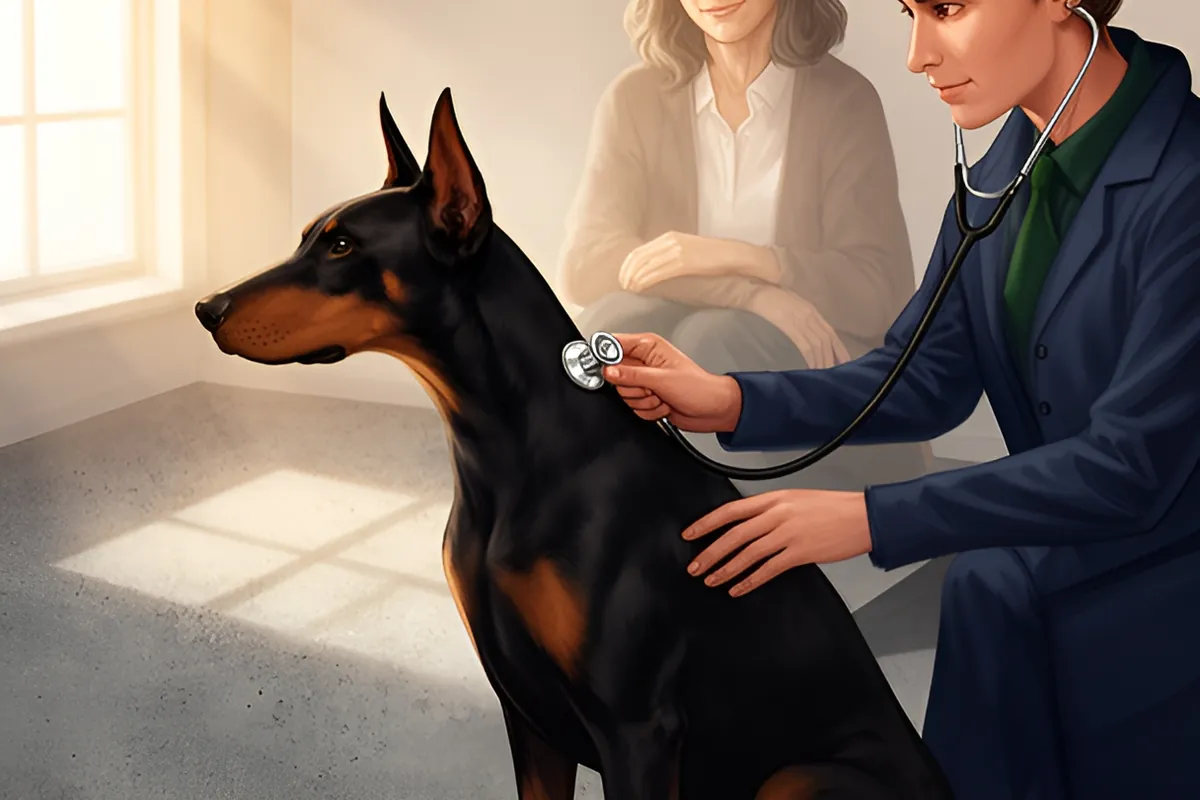
Dobermans are prone to dilated cardiomyopathy and arrhythmias (Doberman Pinscher Dog Breed Information). In dilated cardiomyopathy, the heart muscle weakens and the chambers enlarge, so the heart pumps less effectively. Arrhythmias are abnormal heart rhythms; in this breed they can include fast ventricular rhythms that reduce blood flow to the brain and cause fainting or sudden collapse. Early disease often produces no obvious signs, so many owners and breeders use routine cardiac screening. A veterinarian may listen for a murmur or an irregular rhythm, recommend an echocardiogram to assess chamber size and contractility, and use Holter monitoring to record the rhythm across a full day. Dogs with a family history of heart disease deserve a lower threshold for testing.
Bleeding Disorders
Von Willebrand disease and other bleeding disorders occur in the breed (Doberman Pinscher Dog Breed Information). Von Willebrand disease affects a protein that helps platelets stick to damaged vessel walls, so clotting takes longer than normal. Signs include nosebleeds, bleeding gums, blood in the stool or urine, and prolonged bleeding after a cut, a nail trim, or a dental extraction. Some affected dogs bleed only after surgery or trauma, which means the condition can stay hidden for years. A veterinarian can order clotting tests before elective procedures and can advise on which dogs should not be bred.
Hip Dysplasia and Eye Conditions
Hip dysplasia and eye conditions are also reported (Doberman Pinscher Dog Breed Information). Hip dysplasia is a poor fit between the femoral head and the hip socket. Affected dogs may be stiff after rest, reluctant to climb stairs, or slow to rise. Weight control, controlled exercise, and pain management help many dogs, and some benefit from surgery. Eye problems are best evaluated by a veterinary ophthalmologist, who can examine the lens, retina, and eyelids. Squinting, redness, cloudiness, or a sudden change in vision calls for an appointment.
Disc-Associated Wobbler Syndrome
Disc-associated wobbler syndrome has been reported in Dobermans (Disc-associated wobbler syndrome in the Doberman pinscher50061-x)). It is a subset of the canine wobbler complex, and the vast majority of affected dogs are middle-aged Doberman Pinschers (Disc-associated wobbler syndrome in the Doberman pinscher50061-x)). The hallmark lesion is hypertrophy and protrusion of the dorsal annulus, sometimes with thickening of the ligamentum flavum and bony malformations, producing chronic compression of the caudal cervical spinal cord (Disc-associated wobbler syndrome in the Doberman pinscher50061-x)). Signs usually develop slowly, moving from hind limb weakness to involvement of all four limbs, though acute onset or sudden worsening is less common (Disc-associated wobbler syndrome in the Doberman pinscher50061-x)). Diagnosis relies on history, neurologic examination, and imaging such as radiography or myelography (Disc-associated wobbler syndrome in the Doberman pinscher50061-x)). Long-term conservative care is palliative and often ends with the dog's decline, while surgery offers the chance of a cure at a real risk of complications (Disc-associated wobbler syndrome in the Doberman pinscher50061-x)).
Color Dilution Alopecia
Blue and fawn coats may develop color dilution alopecia (Colour Dilution Alopecia in Doberman Pinschers with Blue or Fawn Coat...). In one study of 57 blue or fawn Doberman Pinschers, 42 had hair loss typical of the disorder, and the diagnosis was confirmed in 11 dogs by skin biopsy and in 6 by microscopic examination of plucked hairs. Key findings included large macromelanosomes in hair shafts, free clumps of melanin inside hair follicles, and numerous melanophages around the follicles. Affected dogs often develop patchy thinning over the back and flanks, and the exposed skin can become dry, scaly, or infected. There is no cure, so management focuses on gentle bathing, moisturizing, and treating secondary bacterial or yeast infections.
Screening Before Breeding
Breeders should screen breeding dogs for heart, bleeding, and eye disease (Doberman Pinscher Dog Breed Information). Screening results help buyers judge risk and help breeders avoid pairing two affected dogs.
When to Contact a Veterinarian
Dobermans tolerate discomfort quietly, and several breed-related conditions worsen quickly once signs appear. The timing of a call often matters as much as the treatment that follows.
Collapse, Fainting, or an Irregular Heartbeat
Call promptly for collapse, fainting, or irregular heartbeat (Doberman Pinscher Dog Breed Information). These signs can point to an arrhythmia or advanced heart disease. Describe how long the episode lasted, whether the dog lost consciousness, whether it happened at rest or during activity, and how quickly the dog recovered. Do not wait for a second episode before seeking care.
Sudden Weakness, Neck Pain, or a Wobbly Gait
Seek care for sudden weakness, neck pain, or wobbly gait (Disc-associated wobbler syndrome in the Doberman pinscher50061-x)). These signs overlap with disc-associated wobbler syndrome and other spinal conditions. A dog that yelps when the neck is touched, holds the head low, or scuffs the toes needs a neurologic examination. Delay can allow spinal cord compression to worsen.
Hair Loss or Skin Infection in Blue or Fawn Dogs
Report hair loss or skin infection in blue or fawn dogs (Colour Dilution Alopecia in Doberman Pinschers with Blue or Fawn Coat...). Color dilution alopecia is common in these coat colors, and the bare skin that results is vulnerable to bacterial and yeast infections. Redness, greasy scale, odor, and itching all warrant an examination.
Bleeding After Surgery, Injury, or Dental Work
Ask about bleeding after surgery, injury, or dental work (Doberman Pinscher Dog Breed Information). If bleeding continues longer than expected, or if there is bleeding from the nose or gums, mention von Willebrand disease so the veterinarian can test and plan accordingly.
Weight Loss, Vomiting, or Appetite Changes
Contact a vet for weight loss, vomiting, or appetite changes (Doberman Pinscher Dog Breed Information). These signs are vague, but in a breed with heart disease they can reflect poor circulation, and they also point to dental, gastrointestinal, or metabolic problems.
Signs and Urgency
| Sign | Why it matters | Urgency |
|---|---|---|
| Collapse or fainting | Possible arrhythmia or advanced heart disease (Doberman Pinscher Dog Breed Information) | Emergency |
| Irregular or racing heartbeat at rest | Possible arrhythmia | Emergency |
| Retching without vomiting, swollen hard belly, restlessness | Possible bloat (gastric dilatation-volvulus), a risk in deep-chested breeds | Emergency |
| Sudden weakness in one or more limbs | Possible spinal cord compression (Disc-associated wobbler syndrome in the Doberman pinscher50061-x)) | Same day |
| Neck pain, low head carriage, unsteady gait | Possible wobbler syndrome (Disc-associated wobbler syndrome in the Doberman pinscher50061-x)) | Same day |
| Prolonged bleeding after a cut or procedure | Possible von Willebrand disease | Same day |
| Patchy hair loss in a blue or fawn dog | Possible color dilution alopecia (Colour Dilution Alopecia in Doberman Pinschers with Blue or Fawn Coat...) | Within days |
| Red, odorous, itchy skin | Secondary skin infection | Within days |
| Weight loss, vomiting, refusing food | Many causes, including heart disease | Within days |
Preparing for the Visit
Write down when each sign started and how often it occurs. Record short videos of fainting, limping, or unsteady walking, since these episodes rarely happen in the clinic. Bring a list of medications, supplements, and food, plus any health screening results from the breeder. Mention the dog's age, because middle-aged Dobermans are the group most affected by wobbler syndrome (Disc-associated wobbler syndrome in the Doberman pinscher50061-x)).
Is a Doberman Pinscher Right for You?
Dobermans are intelligent, trainable, and closely bonded to their people. They are also strong, fast, and willing to test boundaries. The breed suits some households well and frustrates others, and the difference usually comes down to time, structure, and planning.
Activity and Training
The breed is best suited to active owners who can train and supervise daily (Doberman Pinscher Dog Breed Information). Dobermans learn quickly and respond well to short, consistent sessions, but they need mental work as much as physical exercise. Without a job, a routine, and clear rules, a young Doberman can become pushy and hard to manage. Group obedience classes, leash manners, crate training, and the same rules from every family member make a large difference.
Space and Containment
Space matters less than exercise, routine, and safe containment (Doberman Pinscher Dog Breed Information). A Doberman can live in an apartment when daily exercise and training needs are met, and a large yard does not replace walks and structured activity. Fencing must be tall and secure, gates must latch reliably, and doors need attention, because the breed is athletic and quick. Visitors, delivery drivers, and children in the home should be part of the training plan from the start.
Cost Planning
Costs include food, training, insurance, and preventive care (Doberman Pinscher Dog Breed Information). Breed-related conditions add financial risk. Owners should budget for cardiac screening, clotting tests before surgery, and dermatology care for blue or fawn dogs. Surgery for spinal disease carries significant risk of complications and cost (Disc-associated wobbler syndrome in the Doberman pinscher50061-x)). Local prices vary widely, so ask clinics in your area for estimates instead of relying on national averages.
Rescue and Adult Dogs
Breed-specific rescue groups can help with adult dogs (Doberman Pinscher Dog Breed Information). An adult Doberman may already have basic training, a known temperament, and a health history that includes heart screening. That information can reduce uncertainty for first-time owners of the breed. Rescue groups also place dogs whose owners moved, became ill, or could not meet the exercise needs.
A Lifelong Commitment
Plan for a strong, intelligent dog that needs lifelong guidance (Doberman Pinscher Dog Breed Information). Training does not end at one year. Heart screening, dental care, weight management, and joint monitoring continue into the senior years, and behavior can shift if exercise drops or the household changes.
| Question to ask yourself | What to consider |
|---|---|
| Can the dog get daily exercise plus training? | The breed needs both, every day (Doberman Pinscher Dog Breed Information) |
| Is containment secure? | Tall fencing, working latches, controlled doors |
| Is the budget realistic? | Food, training, insurance, preventive care, breed-related testing |
| Will every adult in the home follow the same rules? | Inconsistent rules produce a pushy dog |
| Is there a plan for travel, boarding, or illness? | Large, bonded dogs need a familiar caregiver |
| Would an adult dog from rescue fit better? | Rescue groups match dogs to homes |
A Doberman rewards owners who enjoy training, daily activity, and clear routines. Households that want a low-maintenance dog or cannot commit time each day should consider another breed.
Related Guides
- Doberman Health Problems: DCM Genetic Testing and vWD Protocol: Focuses on DCM genetic testing and vWD protocol in Dobermans
- Doberman Pinscher Feeding Guide: Calorie Targets & Sensitive Stomach Food: Feeding guide with calorie targets and sensitive stomach food advice
- Soft Coated Wheaten Terrier Dog Breed Guide: Temperament, Size, Lifespan, Health Problems and Care
- Anatolian Shepherd Dog Breed Guide: Temperament, Size, Lifespan, Health Problems and Care
- Dogo Argentino Dog Breed Guide: Temperament, Size, Lifespan, Health Problems and Care
Frequently Asked Questions
How long do Doberman Pinschers live?
Most Doberman Pinschers live about 10 to 12 years. Dobermans are a large working breed, and large dogs generally live shorter lives than small ones. Individual lifespan depends on genetics, body condition, dental care, and how early breed-specific problems are found. Middle-aged Doberman Pinschers are the group most often affected by disc-associated wobbler syndrome, a cervical spinal condition that causes progressive weakness; conservative treatment is only palliative, while surgery carries real risk (Disc-associated wobbler syndrome in the Doberman pinscher50061-x)). Buyers should ask breeders about health testing in the parents and keep up with veterinary checkups, because early detection of spinal, joint, and skin disease gives the best chance of a long, comfortable life.
Are Doberman Pinschers good family dogs?
Yes, with the right owner. The American Kennel Club describes Dobermans as very intelligent dogs that learn easily, respond quickly, and make loving, fun companions (Doberman Pinscher Dog Breed Information). They are also strong and can become pushy if rules are not enforced. The breed is alert and tenaciously loyal, historically kept as a guard dog or companion (Dobermann). That combination suits families who train consistently, supervise interactions with young children, and include the dog in daily life. A bored or untrained Doberman is a large, powerful dog with poor manners, which is where most family problems begin.
How much exercise does a Doberman Pinscher need?
Dobermans were bred for stamina, strength, and intelligence, so they need real work, not a short walk around the block (Dobermann). Plan on vigorous daily activity: brisk walks, jogging, structured fetch, and training sessions that make the dog think. Because the breed is strong and can become pushy without guidance, exercise should be paired with obedience work and clear rules (Doberman Pinscher Dog Breed Information). Secure fencing matters, since many Dobermans will run. Mental exercise tires them as much as physical exercise. A tired, well-trained Doberman is calm indoors; an under-exercised one will find its own entertainment.
Do Doberman Pinschers have health problems?
Yes. Two well-documented problems are disc-associated wobbler syndrome and color dilution alopecia. Disc-associated wobbler syndrome is a cervical spinal condition in which a thickened dorsal annulus compresses the spinal cord; most affected dogs are middle-aged Doberman Pinschers, and signs progress from hind limb weakness to all four limbs (Disc-associated wobbler syndrome in the Doberman pinscher50061-x)). Color dilution alopecia affects blue and fawn dogs, causing patchy hair loss (Colour Dilution Alopecia in Doberman Pinschers with Blue or Fawn Coat...). Other concerns include heart disease and bleeding disorders, so ask breeders for screening results on both parents. Pet insurance or a savings fund helps, because treatment for spinal disease can be expensive.
Are blue Doberman Pinschers rare?
Blue is a dilute coat color, not a separate breed, and blue Dobermans are less common than black and tan but not truly rare. The color does carry a known risk. In a study of 57 blue or fawn Doberman Pinschers, 42 had hair loss typical of color dilution alopecia, confirmed by skin biopsy in 11 dogs and by microscopic examination of plucked hairs in 6 (Colour Dilution Alopecia in Doberman Pinschers with Blue or Fawn Coat...). Affected dogs often develop patchy thinning and bald spots over the back and flanks. Anyone choosing a blue puppy should expect to discuss skin care with a veterinarian.
How often should a Doberman Pinscher be groomed?
The Doberman has a short, dense, smooth coat, so grooming is simple. A rubber curry brush or hound glove once or twice a week removes loose hair and spreads skin oils; bathing every few weeks or when the dog is dirty is usually enough. Nails need trimming every few weeks, and ears should be checked weekly, especially in dogs with cropped ears or those prone to wax buildup. Teeth need brushing several times a week. Blue and fawn dogs with thinning coats need gentle products and, in cold weather, a coat, since color dilution alopecia leaves less insulation (Colour Dilution Alopecia in Doberman Pinschers with Blue or Fawn Coat...).
References and Further Reading
- Dobermann, en.wikipedia.org
- Doberman Pinscher Dog Breed Information, akc.org
- Disc-associated wobbler syndrome in the Doberman pinscher50061-x), The Veterinary clinics of North America. Small animal practice (1988)
- Colour Dilution Alopecia in Doberman Pinschers with Blue or Fawn Coat Colours: A Study on the Incidence and Histopathology of this Disorder, Veterinary dermatology (1990)
This article is educational and is not a substitute for veterinary diagnosis or treatment. Consult a veterinarian about your animal.