Bengal Cat Price Guide and Ownership Costs
By Dr. Zubair Khalid, DVM, MS, PhD ·
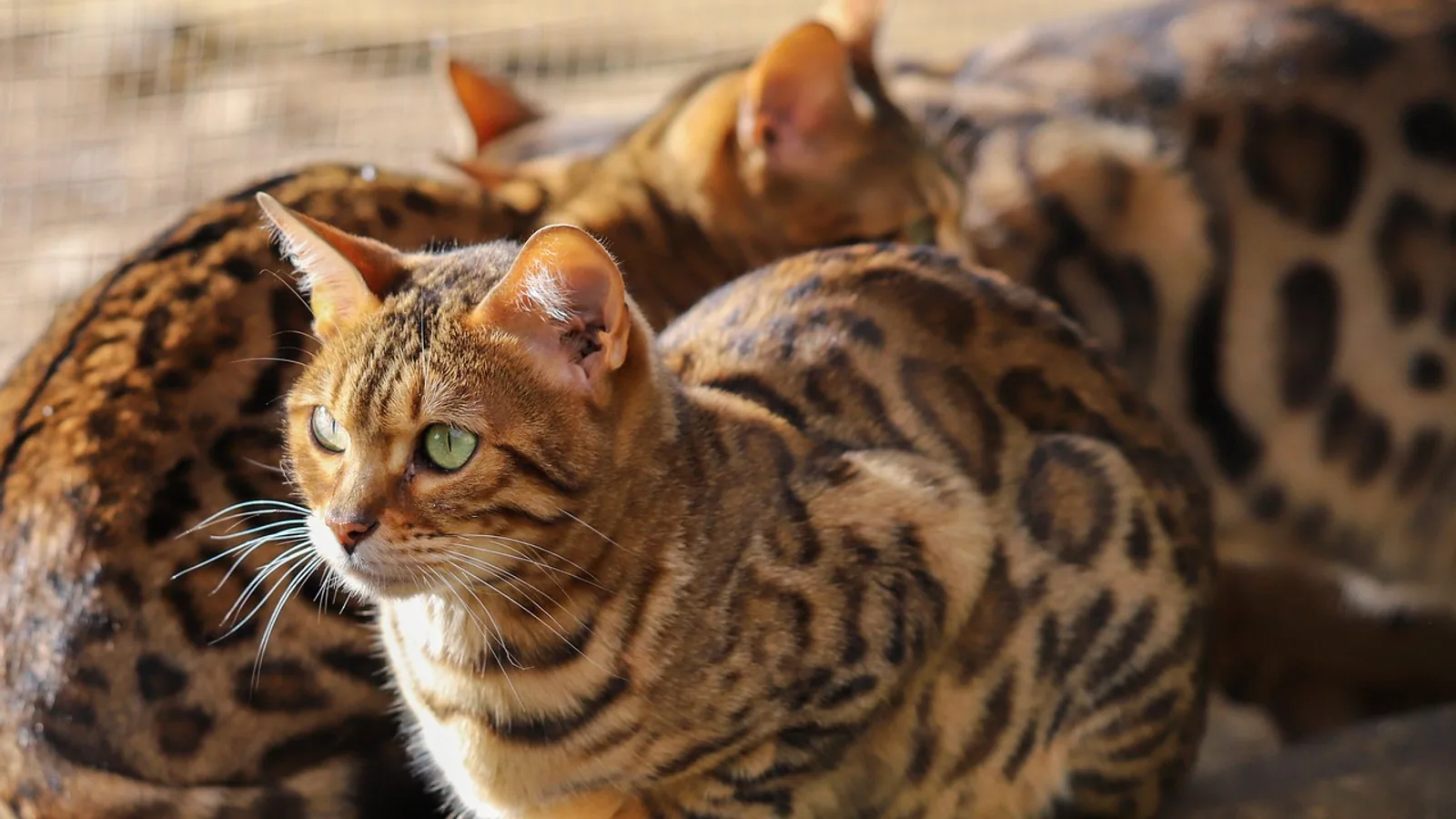
Bengal cats are a domestic breed developed from crosses between domestic cats and Asian leopard cats. They are medium to large, muscular, and famously active. The coat carries a spotted or marbled pattern that breeders and owners describe as resembling a small wildcat, but the temperament is domestic: curious, vocal, busy, and socially demanding. Bengals suit households that can commit to daily interactive play, vertical territory, and a budget that stretches beyond the purchase price. This guide breaks down what Bengal cat breed prices look like across quality tiers, what ownership costs run each year in the United States, and which health screening tests matter when you choose a breeder.
This article is educational and is not a substitute for veterinary diagnosis or treatment.
At a Glance
| Trait | Typical range |
|---|---|
| Height | 8 to 10 inches at the shoulder (medium to large frame) |
| Weight | 8 to 15 pounds, males generally larger than females |
| Coat | Short to medium, dense, spotted (rosetted) or marbled |
| Lifespan | 12 to 16 years with routine preventive care |
| Energy level | Very high, needs daily structured play |
| Grooming | Low, weekly brushing and nail trims |
| Trainability | High, responds to clicker work and puzzle feeders |
| Good with children | Often yes, when play is supervised and gentle |
| Good with other pets | Variable, early socialization helps |
What a Bengal Cat Is and Who It Suits
A Bengal is not a low-maintenance lap cat. The breed was created to bring the look of a wildcat into a domestic pet, and the personality followed the look. Bengals climb, open cabinets, follow owners from room to room, and often learn to fetch. Many enjoy water. They are also loud, and a bored Bengal can become destructive.
The breed suits owners who are home often, who enjoy training an animal, and who can provide vertical space such as cat trees and wall shelves. It suits households that can absorb a higher-than-average annual budget. It does not suit owners who want a cat that sleeps all day, or who travel frequently without arranging daily care.
Size matters for cost. A larger, more active cat eats more, needs sturdier furniture, and may need larger litter boxes and carriers. Those details add up over a 12 to 16 year lifespan.
Bengal Cat Breed Prices by Tier
Bengal cat breed prices in the United States vary widely. Registry affiliation, breeder reputation, health testing, coat pattern, and region all move the number. Treat any figure as a range, not a quote.
Pet Quality
Pet quality kittens are sold with a spay or neuter contract, limited registration, and no show rights. Typical US prices run from about $1,500 to $3,000. A kitten from a breeder who does not perform cardiac or genetic screening may sit at the bottom of that range. A kitten from a screened, well-regarded cattery may sit at the top.
Breeder Quality
Breeder quality kittens are sold with full registration and breeding rights. Prices commonly run from about $2,500 to $5,000. Breeders in this tier usually charge more because they have invested in health testing and because they are selling the right to produce future litters. Some contracts add a separate fee for breeding rights on top of the kitten price.
Show Quality
Show quality kittens are selected for pattern, structure, and type that judges reward in the ring. Prices commonly run from about $4,000 to $10,000, and top show lines from well-known catteries can exceed that. Show quality is a narrow category. Most buyers do not need it, and a show-quality kitten is not automatically a healthier cat.
What Moves the Price
Several factors push a Bengal kitten above or below the ranges above.
- Registry. Kittens registered with a major cat registry and sold with pedigree papers usually cost more than unregistered kittens.
- Breeder reputation. Waitlists, show wins, and a documented health-testing program raise prices.
- Region. Urban coastal markets and areas with high demand tend to run higher than rural markets.
- Pattern and color. Rosetted spots, high contrast, and rarer colors often command a premium.
- Health testing. Breeders who screen breeding cats for heart and eye disease spend more and charge more.
- Age and socialization. Older kittens and retired adults are sometimes sold at a discount.
Rescue and Adoption
Bengal rescues exist in most US regions, and Bengal-specific breed rescues rehome adults and adolescents. Adoption fees are usually a few hundred dollars, far below breeder prices. Rescue cats may come with unknown health history, so budget for a full veterinary intake exam, baseline bloodwork, and parasite screening.
Yearly Ownership Costs
The purchase price is a one-time cost. The annual cost is where a Bengal differs from a typical short-haired house cat. Bengals need more enrichment, more interactive play, and more durable supplies. Many insurers also treat the breed as higher risk because of inherited heart disease.
The table below gives typical annual US ranges for a single adult Bengal. Costs vary by region, lifestyle, and the individual cat's health.
| Cost category | Typical annual USD range | Notes |
|---|---|---|
| Food | $300 to $700 | Higher for large, active cats and premium wet or raw diets |
| Routine veterinary care | $200 to $500 | Annual exam, fecal and parasite checks, senior bloodwork as the cat ages |
| Vaccines | $80 to $200 | Core vaccines plus rabies, following the veterinarian's schedule |
| Parasite prevention | $100 to $300 | Monthly flea, tick, and heartworm prevention year round |
| Pet insurance premiums | $300 to $900 | Higher for Bengals because of breed-associated heart disease |
| Litter and litter box supplies | $150 to $400 | Large boxes and frequent scooping raise consumption |
| Toys, cat trees, and enrichment | $150 to $600 | Bengals destroy lightweight toys and need sturdy vertical territory |
| Grooming supplies | $30 to $100 | Brush, nail trimmers, and dental products |
| Emergency fund or savings | $500 to $1,500 set aside | Not spent every year, but needed for accidents and sudden illness |
Total routine annual spending typically lands between $1,300 and $3,000 for a healthy adult, before emergencies. Add the emergency reserve on top. A single foreign-body surgery or a cardiac workup can exceed the entire routine budget for a year.
Food
Bengals are muscular and active, so they eat more than a sedentary cat of similar size. Expect $300 to $700 per year for a single cat on a quality commercial diet. Wet food, raw diets, and prescription diets push the number higher. Large males at the top of the weight range sit at the upper end. Discuss portion size and body condition with your veterinarian at each annual exam, because obesity is a risk in any indoor cat regardless of breed.
Routine Veterinary Care
A healthy adult Bengal needs at least one wellness exam per year. According to AAHA wellness guidelines, the annual visit includes a physical examination, weight and body condition scoring, dental assessment, and a conversation about nutrition, behavior, and parasite control. Expect $200 to $500 per year for the exam and routine diagnostics. Senior cats need bloodwork and blood pressure checks more often, which raises the annual figure.
Vaccines
Core feline vaccines and rabies vaccination are the standard. Annual vaccine costs typically run $80 to $200 depending on the clinic, the vaccine combination, and local rabies requirements. Your veterinarian sets the schedule based on the cat's age, lifestyle, and risk. Indoor cats still need rabies vaccination in most US jurisdictions because it is legally required.
Parasite Prevention
The Companion Animal Parasite Council recommends year-round parasite prevention for cats, including flea, tick, and heartworm prevention. Annual costs run $100 to $300 for a single cat. Indoor cats are not exempt. Fleas and heartworm-carrying mosquitoes reach indoor cats, and owners track them in on clothing and shoes.
Pet Insurance Premiums
Pet insurance premiums for Bengals tend to run higher than for mixed-breed cats. Breed-associated heart disease is the main driver. Insurers price premiums using actuarial models that weigh expected claim costs, and a breed with a known predisposition to a costly chronic disease carries a higher expected claim cost. Research on insurance premium modeling shows that expected medical costs and predicted claim risk are the core inputs to premium calculation [1]. Studies of premium growth in human insurance markets show the same principle: as expected costs rise, premiums follow [2]. In veterinary insurance, that means a Bengal policy commonly runs $300 to $900 per year for accident and illness coverage, depending on the cat's age, your ZIP code, the deductible, and the reimbursement percentage.
A few practical points on premiums.
- Premiums rise as the cat ages and as claim history accumulates.
- Wellness add-ons raise the monthly premium and usually cap at a modest annual payout.
- A high deductible lowers the premium but shifts more routine cost to you.
- Pre-existing conditions are typically excluded, so enrolling while the cat is young and healthy matters.
- Administrative costs are a real component of any insurance premium, and insurers with higher-cost populations tend to carry higher administrative loads [3]. That is one reason two insurers can quote very different numbers for the same cat.
Litter and Litter Box Supplies
Bengals are large cats, so they need large boxes. Many owners keep two boxes for one cat, which doubles litter consumption. Budget $150 to $400 per year for litter, liners, scoops, and box replacement. Clumping clay, crystal, and biodegradable litters vary widely in price per pound.
Toys, Cat Trees, and Enrichment
This is the line item owners underestimate. Bengals need daily interactive play and environmental complexity. Budget $150 to $600 per year for wand toys, puzzle feeders, tunnels, and sturdy cat trees. Cheap cat trees wobble and fail under a leaping Bengal. A well-built floor-to-ceiling tree or wall-mounted shelving system costs more up front and lasts years.
Grooming Supplies
The Bengal coat is short and easy to maintain. Weekly brushing, nail trims every two to three weeks, and dental care cover most needs. Budget $30 to $100 per year for a quality brush, nail trimmers, cat-safe toothpaste, and a toothbrush. Professional grooming is rarely needed.
Emergency Reserve
Set aside $500 to $1,500 per year, or build a standing fund, for emergencies. Common feline emergencies include urinary obstruction, foreign body ingestion, trauma from a fall, and acute cardiac events. A single emergency visit with hospitalization can run into the thousands. Insurance reduces the shock but does not eliminate deductibles and copays.
Inherited and Common Health Problems
Bengals are generally robust, but the breed carries two inherited conditions that responsible breeders screen for. Both are worth understanding before you buy.
Hypertrophic Cardiomyopathy (HCM)
HCM is the most common heart disease in cats. The heart muscle thickens, the ventricle stiffens, and the heart struggles to fill and pump. In some cats it causes no signs for years. In others it leads to heart failure, blood clots, or sudden death.
HCM is inherited in several breeds, and Bengals are among the breeds with a documented predisposition. The disease can appear at any age. Screening is done by echocardiography, an ultrasound of the heart performed by a veterinarian or veterinary cardiologist. Breeders who screen their breeding cats typically perform echocardiograms at intervals, often annually, and remove affected cats from breeding programs.
For buyers, the practical steps are these.
- Ask whether the breeder performs echocardiographic screening on breeding cats.
- Ask for the date and result of the most recent screening.
- Ask whether any cats in the line have been diagnosed with HCM.
- Understand that a normal echocardiogram today does not guarantee a normal heart in five years, because HCM can develop later.
- Continue cardiac screening with your own veterinarian as the cat ages, especially if a murmur or arrhythmia is detected.
Pyruvate Kinase Deficiency (PKD) and Progressive Retinal Atrophy (PRA)
Bengals can carry pyruvate kinase deficiency, an inherited red blood cell disorder, and progressive retinal atrophy, an inherited degeneration of the retina that leads to blindness. Both are genetic conditions that can be identified through DNA testing of breeding cats. Reputable breeders test breeding cats and breed only unaffected animals.
Progressive retinal atrophy is the condition most often discussed under the PRA abbreviation. A breeder who states that breeding cats are PRA-tested is describing DNA screening for the retinal degeneration mutation. Ask for the test result, not just the claim.
Other Health Considerations
Bengals can develop the same common feline problems as any cat: dental disease, obesity, chronic kidney disease in older age, hyperthyroidism, and inflammatory bowel disease. Routine wellness exams catch many of these early. The breed's high activity level is protective against obesity, but only if the owner provides outlets for that energy.
How to Find a Responsible Breeder
A responsible breeder is the single biggest factor in the health of your future cat. Use these steps.
- Verify registry registration and pedigree paperwork.
- Ask for proof of HCM screening by echocardiography on both parents.
- Ask for DNA test results for PKD and PRA on both parents.
- Ask how many litters the cattery produces per year and where the cats live.
- Visit the cattery in person or by video call. Kittens should be raised indoors and socialized.
- Ask about the contract, the health guarantee, and the return policy.
- Ask what the breeder feeds and how the kittens are litter trained.
- Ask for references from previous buyers.
- Confirm the kitten will be spayed or neutered before or shortly after placement, unless you are buying breeding rights.
- Walk away from any breeder who will not provide health testing documentation.
Rescue is a legitimate alternative. Bengal rescues place adults and adolescents, and adoption fees are far lower than breeder prices. Rescue cats may need more patience during the transition, but many settle into affectionate, active companions.
Who Should Not Get a Bengal
Skip this breed if any of the following describes your household.
- You are away from home more than 10 hours a day and cannot arrange daily play and companionship.
- You want a quiet, low-energy cat.
- You are not prepared for a cat that climbs, opens doors, and investigates everything.
- You cannot absorb $1,300 to $3,000 per year in routine costs plus an emergency reserve.
- You are unwilling to buy pet insurance or maintain a savings fund for cardiac and emergency care.
- You cannot commit to the cat's 12 to 16 year lifespan.
- You want a cat that will be satisfied with a single litter box and one toy.
Limitations and When to Contact a Veterinarian
This article is educational and is not a substitute for veterinary diagnosis or treatment. Individual cats vary. A Bengal with a normal echocardiogram at age two can develop HCM at age eight. A cat with a clean DNA panel can still develop unrelated disease. Your veterinarian is the only person who can examine your cat, interpret test results, and set a care plan.
Contact a veterinarian promptly if you observe any of the following.
- Difficulty breathing, open-mouth breathing, or rapid breathing at rest.
- Sudden hind limb weakness, dragging a leg, or vocalizing in pain. These can signal a blood clot from heart disease.
- Collapse, fainting, or a seizure.
- A new heart murmur or arrhythmia noted at any exam.
- Weight loss despite a normal appetite.
- Vomiting or diarrhea lasting more than 24 hours.
- Straining to urinate, especially in a male cat. This is an emergency.
- Sudden changes in vision, bumping into objects, or dilated pupils that do not respond to light.
- Lethargy, hiding, or a sudden change in behavior lasting more than a day.
- Any suspected ingestion of string, thread, toys, or human medication.
For a cat with known HCM, follow the cardiologist's recheck schedule exactly. Recheck intervals are usually every 6 to 12 months for stable cats and more often after any change in medication or clinical status.
Reading the Price Tag as a Clinical Signal
Most buyers treat the purchase price as a shopping decision and the veterinary relationship as something that starts after the cat comes home. That framing misses the most useful thing a price can tell you. In a breed with two well-characterized inherited conditions, the price tier a breeder occupies is often a rough proxy for how much money that breeder has spent on health testing, and health testing is the closest thing the companion cat world has to a warranty on the genetic and cardiac health of a kitten.
A cattery that echocardiograms every breeding cat annually and runs DNA panels for pyruvate kinase deficiency and progressive retinal atrophy carries a real recurring cost per breeding animal. That cost gets distributed across the litters the cattery produces. A cattery that skips screening carries no such cost and can undercut the market. When you see a pet quality Bengal advertised well below the typical range, the discount is frequently funded by the absence of screening rather than by efficiency. This is not a universal rule, and a low price alone is not proof of poor practice, but it is a reasonable prior to hold while you ask questions.
The practical translation is this: the difference between a screened and an unscreened kitten is small relative to the lifetime cost of managing hypertrophic cardiomyopathy. A single cardiac workup, a course of recheck echocardiograms, and long-term medication can dwarf the price gap between tiers. Buyers who understand this stop optimizing for the lowest purchase price and start optimizing for the most complete health documentation.
The Diagnostic Workflow Behind a Breeder's Health Claims
Owners hear the words "health tested" and treat them as a binary. In practice, cardiac and genetic screening in cats is a workflow with distinct steps, and each step has limitations worth understanding before you accept a breeder's summary.
Echocardiography as a Screening Tool
Echocardiography is an ultrasound examination of the heart performed by a veterinarian, ideally one with cardiology training. It measures wall thickness, chamber size, and contractile function, and it can detect the thickened ventricular muscle that defines hypertrophic cardiomyopathy. It is the standard screening method for the disease in breeds with a documented predisposition, and Bengals are among those breeds.
The key limitation is timing. HCM is a disease of variable onset. A breeding cat can have a normal echocardiogram at one screening and develop measurable disease at a later screening. This is why responsible programs repeat the examination at intervals rather than relying on a single result. When a breeder tells you a cat was screened, the useful follow-up questions are when the most recent screening happened and whether screening is repeated on a schedule. A result from several years ago tells you less than a result from the current breeding cycle.
A second limitation is that echocardiography in a general practice setting and echocardiography by a cardiologist are not identical in sensitivity. Subtle changes are easier to miss without specialized training and equipment. A breeder who uses a cardiologist for screening is spending more per examination, and that spending is part of what a higher price tier reflects.
DNA Testing and What It Can and Cannot Do
DNA testing for pyruvate kinase deficiency and progressive retinal atrophy is a different kind of tool. These are single-gene conditions, and a DNA test can identify whether a cat carries, is affected by, or is clear of the mutation. The result is stable across the cat's life, so a single test is generally sufficient for those specific mutations.
What DNA testing cannot do is rule out every inherited problem. A cat with a clean panel for PKD and PRA can still develop HCM, dental disease, kidney disease, or any of the common feline conditions that are not covered by those tests. A clean panel is a meaningful piece of information about two specific risks, not a certificate of general health. Owners who over-interpret a clean panel sometimes skip the cardiac screening that matters more for this breed.
Reading a Health Guarantee
Breeder health guarantees vary enormously in scope. Some cover only congenital defects identified within a short window after placement. Some cover the inherited conditions discussed here for a defined period. Some require that you use a specific veterinarian or that you return the cat rather than keep it. Read the guarantee as a contract, not as a promise. The most useful guarantees are the ones that specify which conditions are covered, for how long, what documentation is required, and what remedy is offered. A guarantee that excludes cardiac disease in a breed with a cardiac predisposition is worth very little.
What Owners Actually Observe at Home
The clinical signs of the conditions discussed in this guide are often subtle and progressive, which is why owner observation is a genuine diagnostic input rather than a layperson's guess. Veterinarians rely on owners to report changes that a once-yearly examination cannot capture.
Respiratory and Activity Changes
The earliest sign of cardiac compromise in many cats is a change in how the cat tolerates exertion. A Bengal that once raced up a cat tree and now pauses halfway, or that breathes visibly faster while resting, is showing something worth reporting. Resting respiratory rate is one of the few objective measurements an owner can take at home without equipment. Counting breaths while the cat sleeps and tracking the number over time gives your veterinarian a trend line that a single examination cannot provide. A rising trend is more informative than any single reading.
Open-mouth breathing in a cat is never normal and warrants immediate attention. Cats do not pant to cool down the way dogs do, so open-mouth breathing at rest or after mild activity is a red flag for respiratory or cardiac compromise.
Mobility and Pain Signs
Sudden hind limb weakness, dragging of a limb, or vocalizing in apparent pain can indicate a thromboembolic event, a clot that lodges in the blood vessels supplying the hind limbs. This is a complication of heart disease and it is an emergency. Owners sometimes mistake the early stage for a minor injury or a cat that slept awkwardly. The distinguishing feature is that the cat is often distressed, may vocalize, and may have cold or painful hind limbs. Any sudden loss of hind limb function requires immediate veterinary contact.
Vision Changes
Progressive retinal atrophy causes gradual vision loss, and cats compensate remarkably well. Owners often notice the change only when it is advanced. Early signs include hesitating at the edge of furniture, reluctance to jump in dim light, and a change in how the cat navigates familiar spaces after the furniture is rearranged. Pupils that remain dilated and do not respond normally to light are a more specific sign. Because cats adapt to vision loss, the absence of obvious bumping into walls does not rule out retinal disease.
Behavioral Change as a Symptom
Bengals are busy, social cats, so a Bengal that becomes withdrawn, hides, or stops seeking interaction is showing a meaningful change. Lethargy, reduced grooming, and reduced appetite are nonspecific but important. In a breed known for high activity, a drop in activity is more conspicuous than it would be in a sedentary cat, which is one small advantage of owning a breed with a well-defined behavioral baseline.
Preparing for the Veterinary Visit
A productive veterinary visit for a Bengal starts before you leave the house. The information you bring shapes what the veterinarian can do in a short appointment.
What to Bring
Bring a written timeline of any changes you have noticed, with approximate dates. Note when the change started, whether it is progressing, and what the cat was doing when you first noticed it. If you have been tracking resting respiratory rate, bring the numbers. Bring the breeder's health documentation, including echocardiogram reports and DNA test results, so the veterinarian can record the baseline. Bring a list of everything the cat eats, including treats and supplements, and the approximate amounts. Bring any medications or preventives currently in use.
What the Examination Will Cover
A wellness examination for an adult Bengal follows the general feline structure. The veterinarian will assess body condition and weight, listen to the heart and lungs, palpate the abdomen and thyroid region, examine the mouth for dental disease, check the eyes, and assess hydration and lymph nodes. For this breed specifically, cardiac auscultation is a focused point. A murmur or an arrhythmia detected on auscultation is a reason to recommend echocardiography even in a cat with no other signs.
Weight trend is one of the most underused data points in feline practice. A cat that loses weight gradually over two years may look normal at each individual visit while the trend line reveals a problem. Ask your veterinarian to show you the weight graph rather than just the current number.
Questions Worth Asking
Ask what the veterinarian recommends for cardiac screening given the breed, and at what interval. Ask whether a baseline echocardiogram is reasonable for a young adult Bengal with no signs. Ask how to monitor resting respiratory rate at home and what threshold should prompt a call. Ask what the plan is if a murmur is detected. Ask about dental care timing and about parasite prevention appropriate to your cat's lifestyle. Ask what the practice's emergency arrangements are, since Bengal owners should know in advance where to go at night.
Prevention and Risk Reduction Over the Lifespan
Prevention in a breed with inherited disease is partly about screening and partly about the everyday factors that determine how long a cat stays comfortable.
Weight and Body Condition
Obesity worsens cardiac workload and is a risk factor for several feline diseases. Bengals are protected somewhat by their activity level, but only if owners provide outlets. A Bengal kept in a small apartment without vertical territory and without daily interactive play can become sedentary despite its genetics. Body condition scoring at each wellness visit, with portion adjustment as needed, is the practical tool. Feeding measured portions rather than free-feeding gives you control.
Dental Care
Dental disease is common in cats and often under-treated. Daily or frequent tooth brushing, when the cat tolerates it, reduces plaque accumulation. Professional dental cleaning under anesthesia is sometimes necessary, and it carries its own cost and risk considerations that your veterinarian can discuss. Dental disease matters beyond the mouth because oral bacteria and chronic inflammation have systemic effects.
Parasite Prevention
Year-round prevention against fleas, ticks, and heartworm is recommended for cats, and indoor cats are not exempt. Owners bring fleas and mosquito-borne disease risk indoors on clothing and shoes. Heartworm disease in cats is difficult to treat, which makes prevention the only practical strategy. Your veterinarian will select products appropriate to your cat's age, weight, and health status.
Environmental Enrichment as Preventive Medicine
Enrichment is usually framed as a behavior topic, but for Bengals it is also preventive. Boredom and under-stimulation drive destructive behavior, which drives owner frustration, which is a common reason cats are rehomed. A rehomed Bengal at age three is a worse outcome than a well-managed one at age fifteen. Vertical territory, puzzle feeders, scheduled play sessions, and rotated toys reduce the behavioral problems that shorten a cat's time in a home.
Cardiac Surveillance
For a Bengal with a normal baseline echocardiogram, the question is when to recheck. There is no single schedule that fits every cat, and the decision depends on the cat's age, the presence of a murmur, the breeder's line history, and the veterinarian's judgment. Some clinicians recommend periodic rechecks as the cat enters middle age, when HCM is more likely to become detectable. For a cat with a confirmed diagnosis, the recheck interval is set by the managing veterinarian or cardiologist and is usually measured in months rather than years. Following that schedule exactly is one of the few things an owner can do that measurably affects outcome.
Special Populations and Situations
The general guidance in this guide assumes a healthy adult Bengal in a stable home. Several populations need different framing.
Kittens and Young Adults
A kitten's first veterinary visit should happen soon after placement. The intake examination establishes a baseline weight, checks for parasites, reviews vaccination status, and confirms the spay or neuter plan. Kittens from a breeder should arrive with a record of what has already been given. Owners should not assume that a kitten is fully vaccinated because it came from a cattery. Verify the record and let your veterinarian set the remaining schedule.
Young adults are the ideal time to establish a cardiac baseline. An echocardiogram at this stage gives the veterinarian a reference point against which future changes can be compared. It also gives the owner information about the cat's status before any signs appear.
Senior Bengals
As Bengals enter the senior years, the annual visit should expand. Bloodwork, blood pressure measurement, and more frequent cardiac assessment become reasonable. Chronic kidney disease, hyperthyroidism, and dental disease become more common with age, and early detection changes management. Senior cats also tolerate stress and anesthesia differently, which affects decisions about dental procedures and other interventions. The cost of care rises in this phase, and owners who planned for it are better positioned to make decisions based on the cat's needs rather than on the invoice.
Bengals with a Confirmed Cardiac Diagnosis
A Bengal diagnosed with hypertrophic cardiomyopathy moves into a different care model. The focus shifts from screening to monitoring and management. Recheck intervals shorten, medication may be introduced, and the owner's role expands to include home monitoring of respiratory rate, appetite, and activity. The financial picture also changes, because a chronic cardiac condition generates recurring costs for examinations, imaging, and medication. This is the scenario that makes pet insurance or a dedicated savings fund most valuable, and it is the scenario that a well-documented breeder history can help you anticipate.
Multi-Cat Households
Bengals in multi-cat homes present two practical issues. The first is resource competition. A Bengal may monopolize food, litter boxes, or resting spots, and a quieter cat in the home may lose access. Multiple feeding stations and multiple litter boxes reduce this. The second is infectious disease risk. A new Bengal entering a home with existing cats should be introduced with attention to parasite screening and vaccination status, and any signs of upper respiratory or gastrointestinal illness in either group should prompt veterinary contact.
Households with Children or Dogs
Bengals often do well with children and cat-friendly dogs when introductions are managed and play is supervised. The relevant veterinary point is that injuries from rough play or from a fall while climbing are real risks in active households. Owners should know the signs of pain and lameness and should not assume that a cat hiding after an interaction is simply being aloof.
Travel and Boarding
Bengals are social and can become distressed when left alone, which affects boarding decisions. A cat with a cardiac diagnosis may not tolerate the stress of a boarding facility well, and some owners arrange in-home care instead. If boarding is necessary, provide the facility with the cat's health history, current medications, and emergency contact information, and confirm that the facility can recognize and respond to respiratory distress.
Evidence Limitations and How to Weigh What You Read
Owners researching Bengal health will encounter confident claims from breeders, forums, and marketing pages. It helps to know where the evidence is strong and where it is thin.
Breed predispositions for hypertrophic cardiomyopathy are supported by veterinary cardiology literature and breed screening programs, and the general recommendation to screen breeding cats is well established. The specific prevalence of the disease in Bengals, and the exact proportion of affected cats that will develop clinical signs, are less precisely known. Prevalence estimates depend on the population studied, the screening method used, and the age of the cats screened, so figures vary across sources.
DNA testing for pyruvate kinase deficiency and progressive retinal atrophy rests on identified mutations, and the tests are analytically reliable for those mutations. The clinical course in an individual cat still varies, and a genetic result does not predict the age of onset or the severity of signs.
Insurance premium figures are market data, not clinical data. They reflect what insurers charge, which reflects their actuarial models and administrative costs, not necessarily the true expected cost of care for any individual cat. Premiums also vary by region, deductible, and reimbursement structure, so any quoted range should be treated as a starting point for your own quotes.
The honest summary is that the strongest evidence supports screening breeding cats and monitoring owned cats over time. The weakest evidence is in the specific numbers, whether prices, premiums, or prevalence figures. Use the numbers to plan, and use the clinical reasoning to decide.
Building a Realistic Ownership Plan
A Bengal is a long commitment with a predictable cost structure and an unpredictable tail. The predictable part includes food, routine veterinary care, parasite prevention, insurance or savings, litter, and enrichment. The unpredictable part includes emergencies and, for some cats, chronic disease management.
A workable plan does three things. It funds the routine costs without strain. It maintains a dedicated reserve or an insurance policy for the unpredictable part. And it establishes a veterinary relationship before there is a problem, so that when something changes, you have a clinician who knows your cat's baseline and can act on it.
Owners who plan this way tend to make better decisions under pressure, because the financial question is already answered and the remaining question is purely medical. That is the position you want to be in when a Bengal with a heart murmur needs an echocardiogram, or when a young cat swallows a toy and needs surgery at midnight.
This article is educational and is not a substitute for veterinary diagnosis or treatment. Costs, premiums, and screening recommendations vary by region and by individual cat. Your veterinarian is the appropriate source for guidance specific to your animal.
Frequently Asked Questions
How much does a Bengal cat cost to buy?
Pet quality Bengal kittens typically run $1,500 to $3,000 in the United States. Breeder quality runs $2,500 to $5,000, and show quality runs $4,000 to $10,000 or more. Registry, breeder reputation, health testing, and region all shift the number.
Are Bengal cats expensive to own each year?
Yes, more than a typical short-haired house cat. Routine annual costs for a healthy adult usually fall between $1,300 and $3,000, driven by food, veterinary care, parasite prevention, insurance, and enrichment supplies.
Why is Bengal pet insurance more expensive?
Insurers price premiums on expected claim costs, and Bengals have a breed-associated risk of hypertrophic cardiomyopathy, a chronic and costly heart disease. That higher expected cost shows up as a higher premium.
Do Bengal cats need HCM screening?
Yes. Responsible breeders screen breeding cats with echocardiograms, and owners should continue cardiac screening with their own veterinarian as the cat ages. HCM can develop at any age, so a single normal scan is not a lifetime clearance.
What is PRA in Bengal cats?
PRA stands for progressive retinal atrophy, an inherited degeneration of the retina that leads to blindness. Breeders can screen for it with DNA testing and should breed only unaffected cats.
Do Bengal cats need more toys than other cats?
Yes. Bengals are high-energy and need daily interactive play plus vertical territory. Budget $150 to $600 per year for sturdy cat trees, puzzle feeders, and durable toys.
Can I adopt a Bengal instead of buying one?
Yes. Bengal-specific rescues place adults and adolescents for adoption fees of a few hundred dollars. Budget for a veterinary intake exam, baseline bloodwork, and parasite screening after adoption.
What is the biggest hidden cost of owning a Bengal?
Emergency veterinary care. A single cardiac workup, foreign body surgery, or urinary obstruction hospitalization can exceed a full year of routine costs. Pet insurance or a dedicated savings fund is the practical safeguard.
Related Articles
- Bengal Cat: Wild Looks, Domestic Personality - Complete Breed Guide
- How Much Does a Vet Visit Cost? Why Prices Vary
- Hematology Analyzer Cost: Pricing Models and Total Cost of Ownership
- How Much Does a Dog Wellness Exam Cost? A Price Breakdown
- How Much Does a Vet Prescription Cost? Price Comparison Tips
- How Much Does an Emergency Vet Visit Cost? A Price Breakdown
- Peafowl Prices: What Affects Cost and Care Needs
Further Reading
- Conceptual Framework for Fire Safety Management Implementation Strategy to Determine Realistic Fire Insurance Premium Costs
- Financial transaction costs reduce benefit take-up evidence from zero-premium health insurance plans in Colorado.
- Costs associated with the use of multigene panel tests in three solid tumor types and the impact on insurance premiums.