Why Does My Kitten Jump on My Back and Legs?
By Dr. Zubair Khalid, DVM, MS, PhD ·
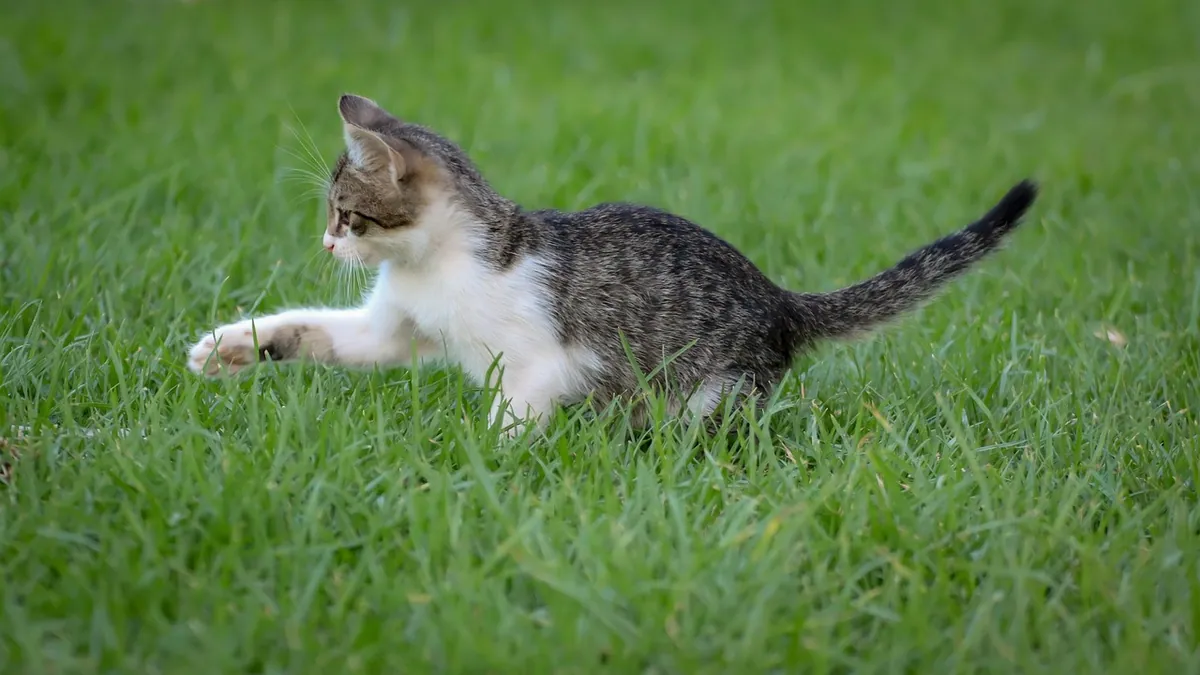
Your kitten jumps on your back and legs because you look like prey. Movement, warmth, and a turned-away body trigger the same stalk-and-pounce sequence a kitten would use on a littermate or a mouse. This article is educational and is not a substitute for veterinary diagnosis or treatment.
Quick Answer
- Ambush jumping at your back and legs is normal predatory play in kittens, and it peaks during the high-energy months of early life.
- Your back and calves are favorite targets because they move, they are close to the floor, and you often cannot see the kitten coming.
- Most kittens grow out of full-body pouncing as they mature, but the behavior can become a habit if it keeps getting rewarded with a reaction.
- The fix is not punishment. It is scheduled play, better toys, and teaching your kitten what to attack instead of you.
- Sudden new jumping, jumping that comes with limping, or jumping that seems to hurt your cat needs a veterinary visit.
Why Does My Kitten Jump on My Back? The Normal Reasons
Kittens are built to hunt. Even well-fed house cats carry the full predatory motor pattern: stalk, crouch, wiggle, pounce, grab, bite. When no mouse is available, that pattern gets aimed at whatever moves. Your ankles and back move.
Play and predatory drive
Ambush is the core of feline hunting. A cat hides, waits, then launches at the target. Your kitten is doing the same thing to you. The pounce is not aggression in the usual sense. It is practice.
Cats are also physically suited to leaping and twisting. The thoracic spine (the upper back) has more range of motion and less stiffness than the lower back, which helps cats rotate and right themselves in the air [1]. A kitten launching onto your back is using that natural spring and flexibility.
Why your back and legs are the targets
Think about where you are when it happens. You are standing at the counter, walking down a hall, or sitting on the floor. Your calves are at kitten eye level. Your back is a large, warm, moving surface that is easy to reach from the floor or from furniture.
Kittens also learn fast. If pouncing on your leg gets a yelp, a jump, or a chase, the behavior worked. From the kitten's view, you just became the most exciting toy in the house.
Why kittens do it more than adult cats
Young cats have enormous energy and a short attention span. They also have less impulse control. A kitten that is bored, under-exercised, or alone most of the day will invent its own games. Your legs are the game.
It can also be a bid for attention
Some kittens learn that ambushing you is the fastest way to get you to stop what you are doing. Even scolding counts as attention. If the only time you drop everything is when you get pounced, the pouncing will continue.
Medical Causes to Rule Out
Most back-and-leg pouncing is behavioral. Still, a few physical problems can change how a cat moves, jumps, or reacts to touch, and those deserve a look.
Pain or discomfort
A cat with sore hips, knees, or spine may avoid normal jumping or may land awkwardly. One report described an 11-month-old cat with a tremor in both pelvic limbs that appeared only when standing or extending the stifle, and the cat seemed to have difficulty jumping [2]. That is a specific and uncommon diagnosis, but it shows the principle: trouble with jumping can have a medical cause.
If your kitten suddenly starts jumping on you in a frantic or clumsy way, or if it seems to be missing jumps it used to make, have your veterinarian examine the legs and spine. Limping is a separate red flag. See our guides to Cat Limping on a Back Leg: Causes and Urgency Guide and Why Is My Cat Limping?.
Skin problems and sensitivity
Fleas, allergies, or a painful spot on the back can make a kitten twitchy and reactive when something touches it. If your kitten flinches when you pet its back, or if the pouncing comes with excessive scratching or hair loss, book a visit.
Vision or neurologic issues
A kitten that startles easily, misjudges distance, or pounces at things that are not there may have a vision or neurologic problem. Your veterinarian can sort this out with an exam.
When Kitten Jumping Becomes a Problem
Play pouncing is normal. It crosses into a problem when it hurts, when it scares people in the home, or when it becomes the kitten's main way of getting attention.
Signs it has become a habit
- The kitten pounces every time you walk past, not just during play sessions.
- The bites and grabs are getting harder.
- The kitten targets guests, children, or anyone who moves.
- The behavior happens more when the kitten has been alone all day.
Why it matters for the household
Small children and older adults can be knocked off balance by a cat launching at their legs. A kitten that learns to grab ankles can become a cat that grabs ankles. Catching this early is easier than changing it later.
How to Redirect Ambush Jumping: Step by Step
You are not trying to punish the behavior. You are trying to move it onto a better target and drain the energy that drives it.
Step 1: Give the kitten a real outlet
Set up two or three short play sessions every day. Ten to fifteen minutes each is a good starting point for a young kitten. Use a wand toy and move it like prey: dart it under a rug, drag it along the floor, let it hide, then let the kitten catch it.
End each session with a successful catch. That closes the hunt cycle and tells the kitten the game is over.
Step 2: Teach the swap
Keep a soft toy or a kicker toy within reach. When your kitten crouches and locks onto your leg, toss or drag the toy away from your body. The moment the kitten goes for the toy, praise quietly. You are teaching one simple rule: attack the toy, not the person.
Step 3: Make your legs boring
Stop being a moving target. If your kitten pounces, freeze. Do not yelp, run, or push it away with your hands. Stand still and look away. When the kitten loses interest, walk away calmly.
If the kitten keeps grabbing, use a barrier. Step behind a baby gate, close a door, or place a cushion between you and the kitten. Removing yourself is the consequence.
Step 4: Reward the calm
Catch your kitten being good. When it plays with its own toys, sits quietly, or watches you from a cat tree, drop a treat or offer a short petting session. Calm behavior should pay better than ambush behavior.
Step 5: Build a richer environment
Boredom fuels pouncing. Add these to your home:
- A tall cat tree with a perch near a window.
- Puzzle feeders or food-dispensing toys for part of the daily food.
- Rotating toys so the selection stays new.
- A second daily play session in the evening, before your kitten's most active hours.
Step 6: Set up the ambush zones
If your kitten ambushes you in the same hallway or doorway every day, change the setup. Keep a toy on a string by that spot. Toss it ahead of you as you walk through. Give the kitten something to chase that is not you.
Step 7: Consider a companion
Some kittens do better with another young cat to wrestle and chase. This is not right for every home, and introductions take time. Talk with your veterinarian or a behavior professional before adding a cat.
What Not to Do
Do not hit, swat, or spray your kitten
Physical punishment does not teach a kitten to stop hunting. It teaches the kitten that hands are scary or that hands are part of the game. Either result makes biting worse.
Do not yell or chase
A loud reaction is a reward to a playful kitten. Chasing turns you into a giant toy. It also raises the kitten's arousal, which makes the next pounce harder.
Do not use your hands as toys
Wrestling with bare hands teaches a kitten that hands are fair targets. Use toys for play and hands for gentle petting only.
Do not lock the kitten away all day
Confinement without play and enrichment increases frustration. A bored kitten will pounce harder when it finally gets out.
Do not assume it is "just a phase" if it hurts
Many kittens do settle down. But if the behavior is causing bites that break skin, or if it is getting worse instead of better, get help.
When to Involve a Veterinarian or Behavior Professional
Call your veterinarian if the jumping started suddenly in an older kitten or adult cat, if it comes with limping or trouble landing, or if your cat seems painful when touched. A cat that limps after a jump needs prompt attention. Our article on Cat Limping After a Jump: Is It a Sprain or a Break? explains what to watch for.
Ask for a behavior referral if:
- Your kitten bites hard enough to break skin.
- The behavior continues after several weeks of consistent play and redirection.
- Anyone in the home is afraid of the cat or is being injured.
- You have tried the steps above and the pouncing is getting worse.
A certified behavior professional can watch the pattern in your home and build a plan for your specific kitten.
Limitations and When to Contact a Veterinarian
This article covers the common, normal reasons kittens jump on backs and legs. It cannot tell you what is happening with your individual cat. Only a veterinarian who examines your kitten can do that.
Contact your veterinarian the same day if:
- Your kitten is limping or holding up a leg.
- Your kitten cries out when it jumps or lands.
- Your kitten stops eating or drinking.
- The pouncing started suddenly and your kitten seems agitated or confused.
Go to an emergency clinic now if:
- Your kitten cannot use a leg at all.
- Your kitten is dragging a limb or has a visibly deformed leg.
- Your kitten is panting, collapsed, or unresponsive.
- A bite from your kitten broke your skin and the wound is deep, on a hand, or on a joint. Human bites from cats can become infected quickly.
Schedule a routine visit if:
- The behavior is new in an adult cat.
- Your kitten seems stiff, slow, or reluctant to jump onto furniture.
- You want help with a training plan and do not know where to start.
For sudden changes in urination or litter box habits that can come with stress, see Why Is My Cat Peeing on the Floor Right in Front of Me?.
Frequently Asked Questions
Is it normal for a kitten to jump on your back?
Yes, this is normal predatory play for most kittens. Your back is a large, warm, moving target that is easy to reach, and pouncing is how kittens practice hunting. It usually fades as the kitten matures and gets more appropriate play.
Why does my kitten attack my legs when I walk?
Your legs look like fleeing prey. Walking triggers the chase-and-pounce sequence, and the kitten gets a reaction from you, which rewards the behavior. Scheduled wand-toy play and staying still when pounced on both help reduce it.
Does my kitten hate me when it pounces?
No. Pouncing is play and hunting practice, not dislike. A kitten that ambushes you is usually excited and engaged, not angry. The goal is to move that energy onto toys.
Will my kitten grow out of jumping on me?
Many kittens do calm down as they mature, especially with daily play and clear rules. Some cats keep the habit if it keeps working for them. Consistent redirection is what makes the difference.
Should I punish my kitten for jumping on my back?
No. Hitting, spraying, or yelling can make biting worse and damage your relationship with the cat. Freeze, remove yourself calmly, and give the kitten a toy to attack instead.
Related Articles
- Cat Limping on a Back Leg: Causes and Urgency Guide
- Why Is My Cat Limping?
- Cat Limping After a Jump: Is It a Sprain or a Break?
- Why Is My Cat Peeing on the Floor Right in Front of Me?
- Why Is My Dog Limping Front Leg On His Back
- Cat Overgrooming: Why It Happens and What to Do
- Why Do Kittens Jump on You? Play and Attention Explained
- Why Does My Kitten Attack My Hands and Feet?
- Why Is My Kitten Jumping Around So Much? Normal or Not
References
- Torsional flexibility of the thoracic spine is superior to that of the lumbar spine in cats: Implications for the falling cat problem. Anatomical record (Hoboken, N.J. : 2007), 2026.
- Pseudo-orthostatic tremor in a cat. Journal of veterinary internal medicine, 2025.