Why Does My Kitten Bite and Nibble My Nose?
By Dr. Zubair Khalid, DVM, MS, PhD ·
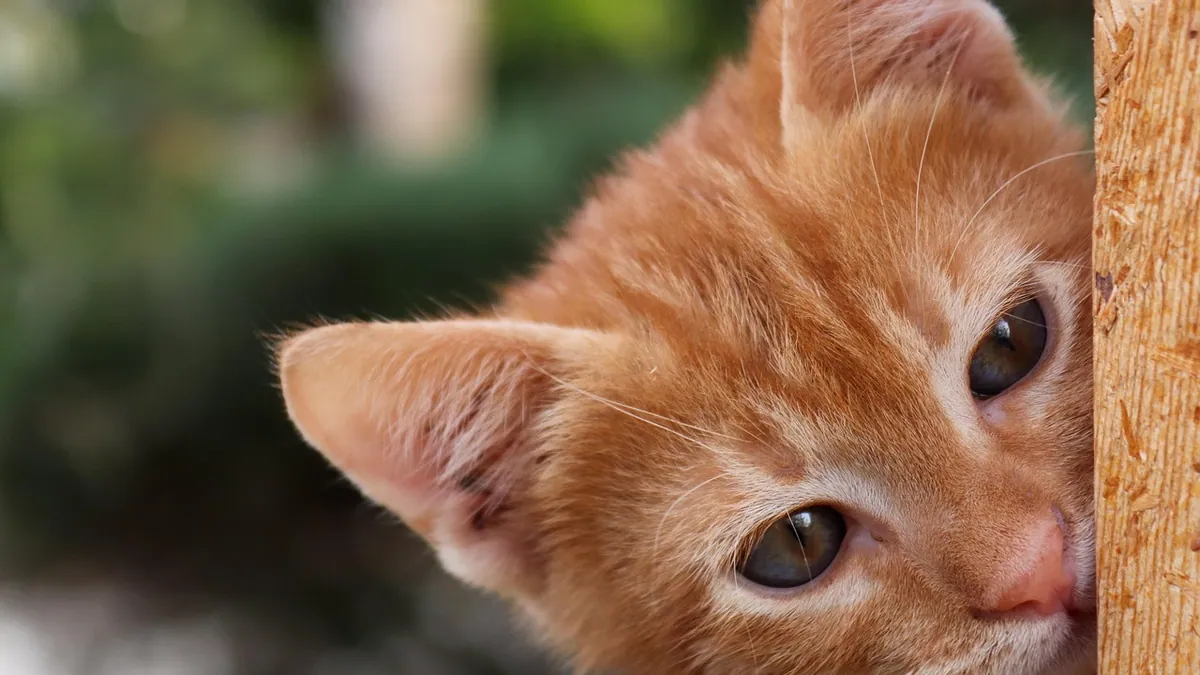
Kittens often bite and nibble noses because faces are warm, close, and full of motion, and because mouthing is a normal part of how kittens explore and play. In most cases this is playful or affectionate behavior that peaks during early development, though it can also signal overstimulation, fear, or a medical problem. This article is educational and is not a substitute for veterinary diagnosis or treatment.
Quick Answer
- Nose and chin biting is usually normal kitten play, exploration, or a request for attention, and it tends to fade with age and training.
- Kittens have poor bite control at first, so sharp nips are common even when the intent is friendly.
- The best response is to stop the interaction, offer a toy instead, and reward calm behavior, since punishment can increase fear and aggression [1].
- Rule out pain, dental problems, and nasal or oral disease if the biting is new, sudden, or paired with other symptoms.
- Get help early if biting is hard, directed at faces, or accompanied by hissing, flattened ears, or hiding, because fear and poor socialization are linked to problem behaviors later [2].
Why Does My Kitten Bite My Nose?
Your nose sits at the exact height where a kitten's face meets yours. It moves when you talk, it is warm, and it smells like you. For a young cat, that combination is hard to ignore.
Play and predation practice
Play behavior in cats shares a common basis with predation and social interaction [3]. Stalking, pouncing, grabbing, and biting are rehearsal skills. When your kitten launches at your nose, it is often treating a small moving target the way it would treat prey or a littermate.
Kittens learn bite inhibition from their mother and siblings. A kitten removed from the litter early, or one who had limited contact with other cats, may never have learned how much pressure is too much. This is one reason hand-raised and rescue kittens often bite harder than expected [2].
Affection and social grooming
Not every nose bite is a hunt. Some kittens nibble gently as part of social contact. You may notice the same behavior when your kitten kneads your blanket or headbutts your cheek. Gentle mouthing during close contact is often a sign your kitten is comfortable with you, even if the technique needs work.
Curiosity and scent
Cats investigate the world with their noses and mouths. Your face carries food smells, soap, lotion, and your own scent. A kitten checking you out may lick first, then nibble. If you are wondering why your kitten is licking your nose, that is usually the same investigative behavior in a softer form. Licking often comes before biting, and it can be a grooming gesture or simple taste testing.
Attention seeking
Kittens learn fast. If biting your nose makes you yelp, pull back, or laugh, that is a reaction. From your kitten's point of view, the bite worked. Vocal signals in cats are tied to motivation and context, and meowing increases when a cat wants something it cannot reach [3]. Biting can function the same way, as a physical demand for play, food, or contact.
Overstimulation
Some kittens bite because petting or close face contact has crossed a line. Watch for a twitching tail, flattened ears, dilated pupils, or skin rippling along the back. Those are warnings. A bite that follows them is not play, it is a request for space.
Fear and stress
Fearful cats are more likely to develop problematic behaviors, and poor socialization with humans is associated with higher fearfulness [2]. A kitten who bites your face while backing away, hiding, or hissing is not being playful. That kitten is scared, and the behavior needs a different plan.
Why Is My Kitten Biting My Face and Chin?
Faces and chins get targeted for practical reasons. They are the closest part of you during cuddling, feeding, and sleep. A kitten who wants to wake you, groom you, or start a game will go for whatever is nearest.
Chin biting often happens during chin scratches. Your hand is near your kitten's mouth, your chin is right there, and the kitten redirects. This is common in kittens who are still learning that hands and faces are not toys.
If your kitten is obsessed with your nose, think about your routine. Do you hold your kitten close to your face? Do you let your kitten nibble during play and then stop only sometimes? Inconsistent rules teach a kitten that persistence pays off.
Medical Causes to Rule Out
Behavior is not always the whole story. A kitten who suddenly starts biting at faces, or whose biting gets worse, should be checked for physical problems.
- Oral pain: Teething, broken teeth, or inflammation in the mouth can make a kitten mouthy or irritable.
- Nasal or respiratory disease: Kittens with stuffy noses may paw or bite near faces, including their own. If you also see sneezing, read Why Is My Cat Sneezing? and Why Is My Cat Sneezing So Much And Has A Runny Nose.
- Ear problems: Head shaking and ear discomfort can make a kitten reactive when you reach toward the head. See Why Is My Cat Shaking Her Head And Ears.
- Dental disease: Bad breath plus mouthiness can point to problems in the mouth. See Why Does My Cat's Breath Smell?.
- Neurologic or vision problems: A kitten who startles easily or misjudges distance may bite out of confusion.
- Hunger or GI upset: Some kittens become mouthy when their feeding schedule does not match their needs.
Your veterinarian can examine the mouth, nose, ears, and teeth and decide whether testing is needed. The dose of any medication is calculated by your veterinarian from your kitten's weight and health, so never use human products or leftover pet medicine.
When Nose Biting Becomes a Problem
Play biting in a young kitten is expected. It becomes a problem when it causes pain, breaks skin, frightens children or guests, or continues past the age when most kittens learn control.
Aggression in cats is a common welfare and public health concern, and its causes are not fully understood [4]. That means there is no single switch to flip. What matters is the pattern. Biting that is paired with hissing, growling, flattened ears, or a stiff body is not play. Biting that happens only in specific situations, such as nail trims or being picked up, points to fear or discomfort.
Problematic behaviors in cats often occur together, and fearfulness, aggression toward humans, and other issues tend to cluster in the same cats [2]. A kitten who bites faces and also hides from visitors or overgrooms is showing a broader pattern that deserves early attention.
What to Do Step by Step
1. End the interaction, every time
The moment teeth touch skin, stop. Set your kitten down, turn away, and go quiet for a short pause. This is not punishment. It removes the reward, which is your attention and the fun of the game. Rewarding acceptable behavior works better than punishing unacceptable behavior [1].
2. Redirect to a toy
Keep a soft toy or a wand toy within reach of where you sit. When your kitten starts eyeing your nose, offer the toy and let your kitten bite and bunny-kick that instead. Redirecting gives the kitten an acceptable outlet for the same drive.
3. Build a play routine
Kittens need real play sessions, not just toys lying on the floor. Two or three short sessions a day with a wand toy, ending with a small treat or meal, mimic a natural hunt-eat-rest cycle. Play and feeding are both strong motivators for cats, and meowing increases when cats are blocked from a desired outcome [3]. Meeting those needs directly reduces demand biting.
4. Teach gentle contact
If your kitten nibbles softly during cuddling, you can allow brief, gentle contact and then stop before it escalates. If pressure increases, end the session. Consistency is what teaches the difference.
5. Use kitten classes and socialization
Kitten Kindergarten style classes introduce owners to humane training and socialization methods [1]. Socialization with humans during the sensitive period is linked to lower fearfulness later [2]. If your kitten is still young enough, structured socialization is one of the best investments you can make.
6. Set up the environment
Give your kitten vertical space, scratching posts, puzzle feeders, and a window perch. A bored kitten with no outlet will invent one, and your nose is convenient. Rotate toys so they stay interesting.
7. Protect sleep and faces
If your kitten bites your nose at night, keep the bedroom door closed or set up a cozy sleeping area outside the room. Do not let a kitten practice face biting on a sleeping person.
8. Keep nails trimmed
Trimmed nails reduce injury during normal kitten play. Ask your veterinarian or a technician to show you how if you are unsure.
What Not to Do
- Do not hit, flick, or scruff your kitten. Punishment can increase fear and aggression and damages trust [1].
- Do not use your hands as toys. Every hand-wrestling session teaches that skin is fair game.
- Do not yelp loudly and then keep playing. A dramatic reaction can be exciting, and the game continues.
- Do not assume a bite is dominance. Cats do not operate on a dominance hierarchy with their owners the way some old advice claims.
- Do not rely on catnip to fix behavior. The catnip reaction involves sniffing, chewing, rolling, and rubbing, and it is triggered through the main olfactory system [5]. It is a play and sensory experience, not a training tool.
- Do not wait out hard biting. Early help is easier than fixing an established habit.
When to Involve a Veterinarian or Behavior Professional
Contact your veterinarian if biting starts suddenly in a kitten who was previously gentle, if your kitten also shows appetite changes, drooling, sneezing, head shaking, or bad breath, or if biting is directed at faces with real force.
Ask for a referral to a veterinary behaviorist or a certified behavior professional if biting continues despite consistent redirection, if anyone in the home has been injured, or if your kitten shows fear, hiding, or aggression in other situations. Fearfulness and aggression toward humans are linked to socialization history and can be part of a wider pattern [2][4]. A professional can build a plan that fits your home.
Limitations and When to Contact a Veterinarian
This article covers common patterns, not your individual kitten. Every case needs a veterinarian who can examine your cat and review the full history.
Contact a veterinarian the same day if your kitten has a swollen or painful face, refuses to eat, drools heavily, has trouble breathing, or has a sudden change in behavior. Seek emergency care now if your kitten is choking, gasping, or has collapsed. If you are unsure whether your cat is choking, see Why Was My Cat Choking.
Book a routine visit if biting is new, if it is getting harder, or if you see sneezing, ear scratching, or mouth odor along with it. For any suspected poisoning, call the ASPCA Animal Poison Control Center at (888) 426-4435 or the Pet Poison Helpline at (855) 764-7661. If a bite from your kitten breaks human skin, wash the wound well and seek medical care for the person who was bitten.
Frequently Asked Questions
Should I let my kitten nibble my nose during cuddles?
It is safer to redirect nibbling to a toy, even when it seems affectionate. Gentle mouthing can escalate quickly, and kittens who practice face biting often keep doing it as adults. If you allow any contact, keep it brief and stop the moment pressure increases.
Will my kitten grow out of biting my face?
Many kittens do reduce face biting as they mature and learn better control, especially with consistent redirection. Some do not, particularly kittens with limited socialization or a history of fear. Starting training early gives you the best chance of a calm adult cat.
Does my kitten bite my nose because it loves me?
Affection can be part of it, since close face contact and gentle mouthing happen during social bonding. Play drive, curiosity, and attention seeking are usually bigger factors. Either way, the fix is the same: redirect to a toy and reward calm behavior.
Is nose biting a sign of aggression in kittens?
Usually not. True aggression involves warning signals like hissing, growling, flattened ears, and a stiff posture, and it often has a fear or pain component. A playful kitten with relaxed ears and a bouncy body is not being aggressive.
Can I stop nose biting by ignoring my kitten?
Ignoring helps only if you also remove the fun and offer an alternative. Simply ignoring a kitten who is bored or under-stimulated usually leads to more persistent biting. Pair the pause with a toy, more play sessions, and a predictable routine.
Do kitten classes really help with biting?
Structured kitten classes teach owners how to reward good behavior and socialize their cat humanely, which is the foundation for preventing biting problems [1]. Early socialization with humans is also linked to lower fearfulness later [2]. Ask your veterinarian about local options.
Related Articles
- Why Is My Cat Sneezing?
- Why Is My Cat Sneezing So Much And Has A Runny Nose
- Why Is My Cat Shaking Her Head And Ears
- Why Does My Cat's Breath Smell?
- Why Was My Cat Choking
- Why Is My Cat Scratching Its Ears?
- Why Does My Cat Nibble Me? Causes and What to Do
- Why Does My Kitten Chew and Bite My Fingers?
- Why Does My Cat Bite Me? Causes and How to Stop It
References
- Preventing behavior problems in puppies and kittens. The Veterinary clinics of North America. Small animal practice, 2008.
- Fearfulness associates with problematic behaviors and poor socialization in cats. iScience, 2022.
- Vocal signals produced by the domestic cat (Felis silvestris catus) in highly motivating contexts. Journal of comparative psychology (Washington, D.C. : 1983), 2026.
- Genetic and Environmental Causes of Aggression in the Domestic Cat. Veterinary sciences, 2026.
- Analysis of the catnip reaction: mediation by olfactory system, not vomeronasal organ. Behavioral and neural biology, 1985.