How to Help a Kitten Sleep Through the Night
By Dr. Zubair Khalid, DVM, MS, PhD ·
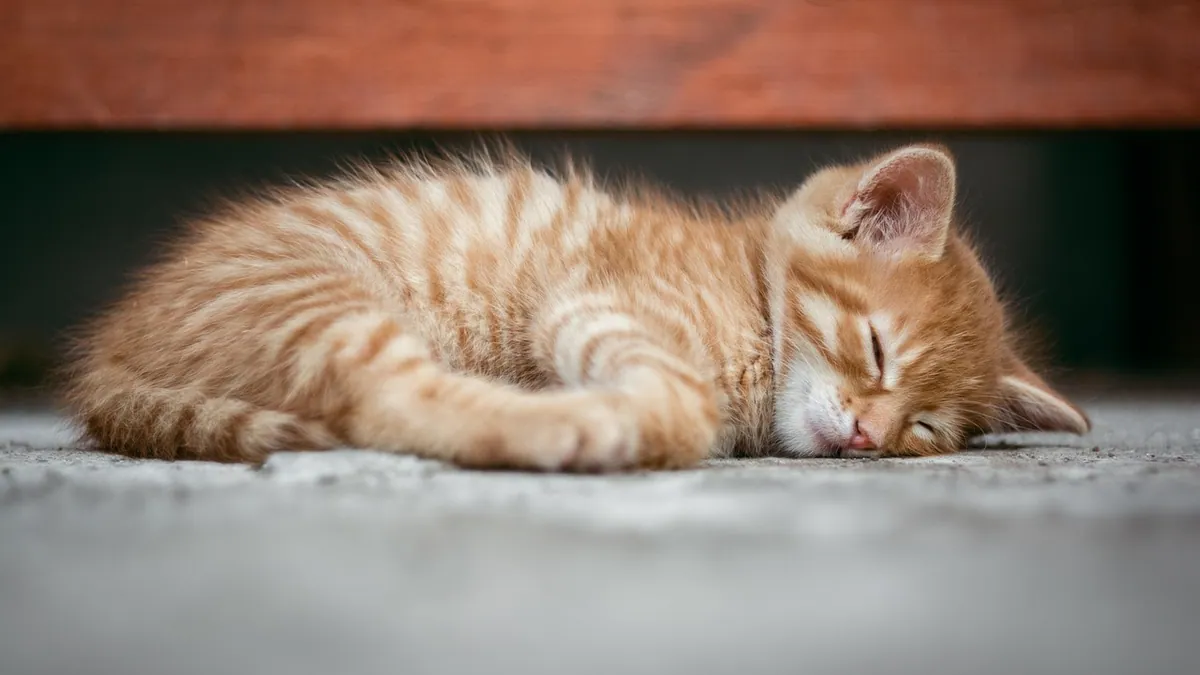
Kittens are naturally active at night, so the fastest way to quieter nights is to tire your kitten out before bed and feed a meal right before lights out. You can learn how to help a kitten sleep at night by working with normal cat biology instead of against it. Punishment does not work and can make nighttime crying worse.
This article is educational and is not a substitute for veterinary diagnosis or treatment.
Quick Answer
- Kittens are crepuscular and nocturnal by nature, so nighttime activity is normal behavior, not misbehavior [1].
- Schedule a long interactive play session in the evening, then feed a full meal right before you go to bed.
- Keep the bedroom dark and quiet at night, and avoid turning on lights or playing when your kitten wakes you.
- Never punish, yell at, or spray your kitten for nighttime activity. It increases stress and does not teach sleep.
- Sudden night waking in a kitten that previously slept well can signal pain or illness, so call your veterinarian.
Why Kittens Are Active at Night
Domestic cats are naturally most active in low light. In a study of cats in the Houston area, domestic cats were primarily nocturnal at sites where no bobcats were present [1]. Your kitten inherited that schedule. Nighttime energy is normal feline behavior.
Kittens also sleep differently than adult cats. Young kittens spend a large share of their sleep in paradoxical sleep, the stage linked to rapid eye movements and muscle twitches. Researchers recorded abundant paradoxical sleep and frequent muscle twitches with rapid eye movements in neonatal kittens [2]. That is why a sleeping kitten may twitch, paddle, or wake suddenly.
A kitten's body clock is still maturing. Brain wave patterns that mark mature sleep cycles keep developing over the first weeks and months of life [2]. Expect your kitten's sleep to become more predictable as it grows.
Hunger and growth play a role too. Kittens burn a lot of energy and have small stomachs, so they may genuinely need to eat more often than an adult cat. A hungry kitten at 3 a.m. is often a kitten that needs a later, larger meal.
Medical Causes to Rule Out First
Most nighttime activity in kittens is normal. Some of it is not. Before you build a training plan, make sure your kitten is healthy.
Pain is a common reason a kitten cries or paces at night. Dental pain, injuries, intestinal parasites, and urinary problems can all disrupt sleep. A kitten with a urinary blockage may cry, strain, and visit the litter box repeatedly. That is an emergency. If your cat is sleeping in the litter box or showing other signs of urinary pain and anxiety, read Why Is My Cat sleeping in litter box? FLUTD Pain and Anxiety Response.
Hunger from parasites or poor weight gain can also cause night waking. Kittens should be growing steadily. If yours is thin, losing weight, or not gaining, that needs a veterinary exam.
New kittens also face a big adjustment. Shelter dogs rested better in a new home than in a shelter, and their stress hormone levels dropped within the first week after adoption [3]. A kitten in a new home is likely going through a similar settling-in period. Some night waking in the first days is expected.
When Nighttime Activity Becomes a Problem
Night waking becomes a problem when it disrupts your sleep, your household, or your kitten's health. A kitten that cries for hours, scratches at doors, or cannot settle at all needs a closer look.
It also matters whether the pattern changed. A kitten that slept well for weeks and then suddenly started waking and crying may have a medical issue. A kitten that has always been busy at night is probably just being a kitten.
Consider your own limits. If you are losing sleep every night, you are more likely to make mistakes, and your kitten is more likely to be stressed. Getting help early is better for both of you.
How to Help a Kitten Sleep at Night: Step by Step
Build an Evening Play Routine
Play is the most powerful tool you have. Cats are predators, and hunting behavior tires them in a way that toys alone do not.
Set aside 15 to 20 minutes in the evening for active play. Use a wand toy and move it like prey. Let your kitten stalk, chase, pounce, and catch. End with a successful catch so the hunt feels complete.
Do this at the same time every night. Kittens learn routines quickly when the routine is consistent.
Feed a Meal Right Before Bed
After play, feed your kitten a full meal. This mimics the natural cat pattern of hunt, catch, eat, groom, sleep.
If your kitten is old enough for free feeding, a small portion left out overnight can help. If your veterinarian has your kitten on scheduled meals, ask whether a later feeding fits your kitten's growth needs. Your veterinarian can calculate how much and how often based on your kitten's weight and health.
Set Up a Nighttime Environment
Make the room where your kitten sleeps dark, quiet, and boring at night. Close the curtains and turn off screens.
Give your kitten a warm, safe sleeping spot. A covered bed or a box with a soft blanket works well. Some kittens settle better with a low radio or a white noise machine.
Keep the litter box, water, and a few quiet toys available. A bored kitten with nothing to do will find something to do, and it will usually be your curtains.
Ignore Nighttime Demands
If your kitten cries at 2 a.m., do not turn on lights, play, or feed. Any response can teach your kitten that crying works.
Stay quiet and still. If your kitten is safe and healthy, let it settle on its own. This is hard for the first few nights. Most kittens adjust within one to two weeks when the routine is consistent.
If you must check on your kitten, keep it brief and boring. A quick look with no talking or petting is fine. A midnight play session is not.
Add Daytime Enrichment
A tired kitten sleeps better at night. Break up the day with short play sessions, food puzzles, and climbing opportunities.
Rotate toys so they stay interesting. Window perches give indoor kittens something to watch. If you have more than one cat, a smooth introduction can reduce stress for everyone. See How To Introduce A New Kitten To A Resident Cat.
Keep the Schedule Consistent
Cats are creatures of habit. Feed, play, and wind down at the same times each day, including weekends.
A consistent schedule helps your kitten's body clock mature. It also makes the difference between day and night clear. During the day, be active and interactive. At night, be quiet and dull.
What Not to Do
Do not punish your kitten. Yelling, spraying water, or shaking cans does not teach a kitten to sleep. It teaches a kitten that nighttime is scary. Stress can make night waking worse.
Do not lock your kitten in a small space with no water, litter, or comfort. That is not sleep training, it is confinement, and it can cause distress.
Do not use melatonin, sedatives, or any supplement on your own. Melatonin implants have been linked to uterine inflammation in female cats, with higher levels of inflammatory markers in treated cats compared to controls [4]. Lighting changes also affect cat reproductive hormones and ovarian activity [5]. These are not casual sleep aids. Any medication for sleep must come from your veterinarian, who will calculate the dose from your kitten's weight and health.
Do not assume your kitten is being spiteful. Cats do not plan revenge. Night activity is biology, not attitude.
Do not skip meals to make your kitten tired. Kittens need consistent nutrition for growth. If you are worried about your kitten's weight, talk to your veterinarian. For adult cats, weight management is a separate topic covered in How To Help A Fat Cat Lose Weight and How To Help Cat Lose Belly Fat.
When to Involve a Veterinarian or Behavior Professional
Call your veterinarian if your kitten cries at night for more than a few nights in a row, stops eating, loses weight, or seems painful. Also call if your kitten was sleeping well and suddenly is not.
Ask about a referral to a veterinary behaviorist if your kitten shows signs of anxiety, such as pacing, hiding, overgrooming, or distress when left alone. A certified behavior professional can build a plan that fits your kitten.
Keep vaccinations current as part of general kitten care. Kittens should be vaccinated on a regular schedule starting at 2 to 3 months old, and they should stay away from unvaccinated cats until the full series is complete [6]. A healthy kitten is a better sleeper.
Limitations and When to Contact a Veterinarian
This article covers general kitten sleep behavior. It cannot tell you whether your specific kitten is healthy. Individual cases need a veterinarian who can examine your kitten.
Contact a veterinarian the same day if your kitten cries constantly, refuses food, vomits, has diarrhea, or seems painful when touched.
Go to an emergency clinic now if your kitten strains to urinate, cannot urinate, cries while urinating, has a swollen or painful belly, breathes with an open mouth, or collapses. Urinary blockage in a male kitten is life threatening within hours.
Schedule a routine visit if night waking continues despite a consistent routine, if your kitten is not gaining weight, or if you feel overwhelmed. Your veterinarian can rule out medical causes and help you build a plan.
Frequently Asked Questions
Should I let my kitten cry at night?
Yes, if your kitten is healthy and has a full belly, a safe space, and a clean litter box. Responding to every cry with play or food teaches your kitten that crying works. Keep your response boring and brief, and the crying usually fades within a week or two.
How long does it take for a kitten to sleep through the night?
Most kittens settle into a predictable routine within a few weeks of consistent play, feeding, and quiet nights. Some take longer, especially in a new home. If night waking continues past a month or gets worse, talk to your veterinarian.
Is it normal for a kitten to sleep all day and play all night?
Yes, this is normal cat biology. Cats are naturally more active in low light, and domestic cats are often nocturnal when no larger predators are around [1]. You can shift some of that energy by playing hard in the evening and keeping the daytime environment active.
Can I give my kitten melatonin to sleep?
No, do not give melatonin or any sleep supplement without veterinary guidance. Melatonin implants have been associated with uterine inflammation in female cats [4], and lighting changes affect cat reproductive hormones [5]. Your veterinarian can tell you whether any medication is safe for your kitten.
Why does my kitten wake up at 3 a.m. every night?
Kittens often wake in the early morning because their sleep cycles are still maturing and their stomachs are small. A late-night meal and a long evening play session can help. If the waking is sudden, intense, or comes with crying or litter box trips, call your veterinarian.
Related Articles
- Why Is My Cat Crying at Night?
- How To Help A Fat Cat Lose Weight
- How To Help Cat Lose Belly Fat
- How To Introduce A New Kitten To A Resident Cat
- Why Is My Cat sleeping in litter box? FLUTD Pain and Anxiety Response
- Cat Crying At Night
- How Long Do Kittens Sleep? Day and Night Sleep Guide
- Cat Not Letting Me Sleep at Night: How to Fix It
- How to Stop Your Cat Waking You Up at Night
References
- Diel Activity Patterns of Bobcats and Domestic Cats in the Houston Metropolitan Area. microPublication biology, 2026.
- Ontogenetic development of ponto-geniculo-occipital waves during paradoxical sleep in kittens. Sleep, 2025.
- Nocturnal activity as a useful indicator of adaptability of dogs in an animal shelter and after subsequent adoption. Scientific reports, 2023.
- Effects of melatonin implants on uterine inflammation and ovarian progesterone receptor expression in female cats: A histopathological and molecular analysis. Theriogenology, 2025.
- Comparison of Different Lighting Protocols on Female Cat Reproduction. Reproduction in domestic animals = Zuchthygiene, 2026.
- Kitten Care - Cat Owners. Merck Veterinary Manual.