
Clicker Training for Dogs: Step-by-Step Marker Skills and Troubleshooting
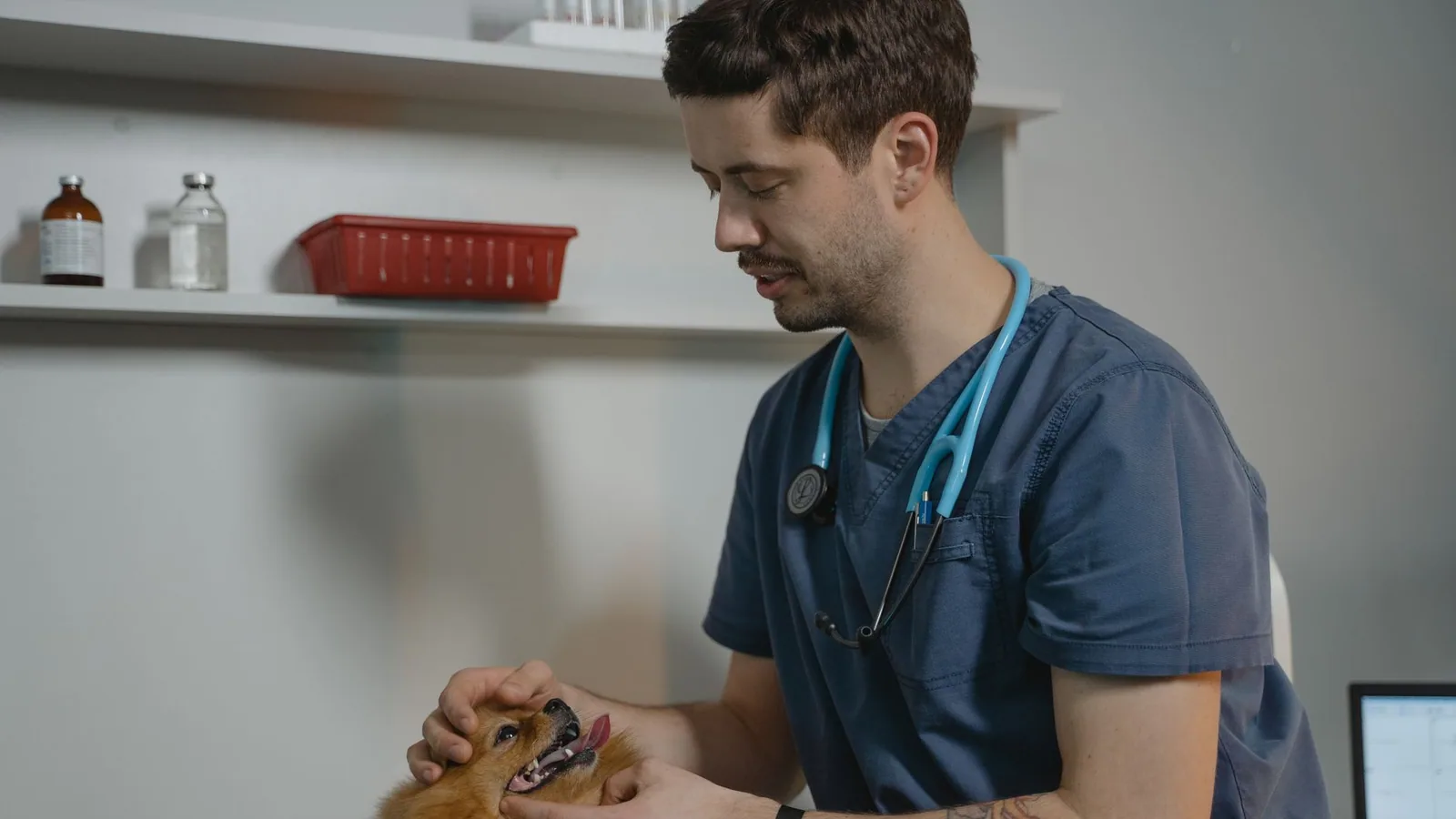
Clicker training is a method of positive reinforcement that uses a small handheld device (the clicker) to produce a sharp, consistent sound that marks exactly the moment a dog performs a desired behaviour. This sound, called a conditioned reinforcer, predicts that a primary reward (usually food) will follow. The click is not magic and it is not the primary reward; it is a precise marker that bridges the gap between the behaviour and the treat. A well-timed verbal marker like "Yes!" or "Good" can serve the same function, and some dogs learn equally well with food alone [1]. The purpose of this article is to teach a humane, step-by-step marker-training system from reward selection through targeting, shaping, cue transfer, and generalisation, while also interpreting the current scientific evidence, addressing common pitfalls, and guiding when veterinary assessment is needed.
This article is educational. Sudden behavior change, reduced appetite, reluctance to sit or rise, yelping, hiding, collapse, breathing difficulty, seizures, escalating aggression or a bite risk needs veterinary assessment and a safety plan, not a harder training session.
At a Glance: Key Evidence and Practical Points
| Topic | Key Finding | Source / Guidance |
|---|---|---|
| Clicker vs. food alone | No overall superiority in learning speed for naive dogs in three experiments; clicker group performed intermediate between food alone and verbal marker, but not significantly different. | Gilchrist et al. 2021 [1] |
| Click-reward contingency | In one partial-reward protocol, omitting food after some clicks did not improve learning speed and was associated with a pessimistic-like judgment-bias result. Apply this to that protocol, not every mature behavior schedule. | Cimarelli et al. 2021 [3] |
| Dangers of skipping rewards | A "two clicks" condition (where a click sometimes occurred without food) disrupted behaviour frequency, accuracy, and topography, and increased noncompliance. | Peiris & Rosales-Ruiz 2022 [2] |
| Marker training for detection dogs | Clicker marker training improved learning speed and performance in odor detection tasks compared to training without a marker. This is task-specific evidence, not universal proof. | Lazarowski et al. 2025 [4] |
| Humane training philosophy | Positive reinforcement methods are recommended; aversive techniques (e-collars, prong collars, leash corrections) are contraindicated. | AVSAB Humane Dog Training Position Statement [5] |
| Conditioned reinforcer definition | A stimulus that has acquired reinforcing properties through pairing with an unconditioned reinforcer (e.g., food). The click is a conditioned reinforcer. | AVSAB Behavior Glossary [7] |
| Calories and diet | Account for training treats in daily ration; reduce meal portions accordingly to avoid obesity. | Standard veterinary nutritional guidance |
| Sound sensitivity / deafness | Use a visual marker (e.g., thumbs-up sign, flashlight blink) or tactile marker (gentle vibration) for dogs with hearing impairment. | Adaptations of the same principles |
Understanding Marker Training: The Click as a Conditioned Reinforcer
Marker training is a subset of positive reinforcement in which a defined signal (the marker) is delivered at the exact moment the dog offers the correct behaviour. The marker then serves as a conditioned reinforcer, meaning the animal has learned to associate that sound with the delivery of a primary reinforcer (usually a high-value treat) [6,7]. The clicker is popular because its sound is distinct, consistent, and rapid, which allows the trainer to mark a fraction-of-a-second behaviour with high precision.
However, the clicker is not inherently superior to other markers. The 2021 study by Gilchrist, Gunter, Anderson, and Wynne [1] tested three groups of naive dogs learning a novel sit-and-stay with increasing duration. Dogs trained with food alone reached a significantly higher criterion than those trained with a verbal secondary reinforcer; the clicker group fell between the two but was not significantly different from either. In a second experiment involving a nose-targeting task at increasing distances, no statistically significant differences were found among the three groups [1]. These results indicate that while clicker training is effective, the choice of marker (clicker, word, food alone) may be less critical than the precision and consistency of the trainer's delivery.
The 2025 study on detection dogs by Lazarowski et al. [4] provides task-specific evidence: candidate detection dogs trained with a clicker as a marker learned the odor discrimination and alert response faster than those trained without a marker. This does not prove that clickers are universally better, but it does support their utility in tasks requiring precise timing and discrimination.
Keep the Marker-Reinforcer Promise Clear
A useful beginner rule is: if you click, deliver the reward. The click identifies the behavior that earned reinforcement. If you click accidentally, honor the signal, reset, and improve timing on the next repetition.
The evidence is narrower than an absolute law. Peiris and Rosales-Ruiz used a within-subject design in only two dogs and found disruption when one click sometimes predicted food and a second click did not [2]. Cimarelli and colleagues tested a particular partial-reward protocol and found no learning-speed advantage plus a pessimistic-like judgment-bias result [3]. These experiments do not prove that all established behaviors require food after every performance.
Separate two decisions. Decide which performances to mark, then reward every marked performance. Once a behavior is fluent, click fewer performances and reinforce selected responses or use safe natural rewards. Do not keep clicking and then deliberately turn the marker into an empty promise.
Step 1: Choose an Individual Reinforcer
A reinforcer is defined by its effect: it increases the future probability of behavior. Food is convenient, but not every dog values the same food in every setting. Play, permission to sniff, access to a person, movement toward a destination or another safe activity may also reinforce behavior.
For early marker conditioning, choose something the dog can receive quickly and safely. Account for food used in training within the total diet. Dogs with food allergy, gastrointestinal disease, pancreatitis risk, diabetes, kidney disease or a therapeutic diet need a veterinarian-approved plan. Avoid presenting one rich food as safe for every dog.
Do not withhold normal meals to manufacture motivation. A dog that will not eat may be full, frightened, nauseated, painful, distracted or uninterested in that reward. Change the setting or reinforcer and consider medical assessment when appetite changes beyond training.
Step 2: Pair the Marker With the Reward
Begin in a low-distraction place where the dog is comfortable. Click once, then deliver the reward. Pause and repeat a small number of times without demanding a sit, eye contact or stillness.
Orientation after the sound can suggest that an association is developing, but there is no universal repetition count. If the sound causes startle, stop. Use a quieter mechanical click, a consistent word or a clear visual marker instead.
Keep the sequence clean: mark, then reach for and deliver the reward. Reaching into the pouch before the click can make the hand movement, rather than the click, the most informative signal.
Step 3: Targeting
Targeting is a foundational skill that teaches the dog to touch a specific object (e.g., your hand, a mat, a target stick) with their nose or paw.
- Hand target: Present your open palm a few inches from the dog’s nose. When the dog sniffs or touches it, click and treat. Gradually move the hand to different positions.
- Mat target: Place a mat on the floor. Click and treat when the dog steps on or touches it. This becomes the basis for calm settling and stationing.
- Nose target for recall foundation: Use a target stick or your hand to teach the dog to touch it on cue. Later, you can pair the touch with a verbal cue like “Touch” and use it as an intermediate step in recall training.
Step 4: Shape Behavior and Add a Cue
Shaping reinforces small approximations toward a final behavior. Define a first step the dog is likely to offer. Mark that step, then raise criteria slightly. If the dog stops succeeding, split the task into a smaller approximation rather than repeating a failed request.
Capturing marks a behavior the dog offers naturally. Luring guides behavior with the movement of a reward or target. Fade a lure so the dog responds to the intended cue rather than visible food.
Add a cue when the behavior is predictable. Present it shortly before the dog is likely to perform, mark the behavior, and reward. Repeating a cue more loudly does not make it meaningful.
To reduce clicker use later, stop marking every easy performance. Continue reinforcing selected good responses, especially under harder conditions. Clicks remain followed by rewards even though not every performance is clicked.
Step 5: Build Duration, Distance and Distraction Separately
A behavior learned in the kitchen is not automatically reliable outdoors. Dogs learn context, so generalization requires practice across safe settings, surfaces and distraction levels.
Change one dimension at a time. For duration, mark before the dog leaves the position and increase in small, non-linear steps. For distance, begin with movement the dog can handle. For distraction, start far enough away that the dog can still eat, orient and respond.
If performance falls apart, reduce difficulty. Failure often means the current combination exceeds the learning history. It does not prove stubbornness, dominance or deliberate disobedience.
Troubleshooting Timing and Setup
| Problem | What may be happening | Safer adjustment |
|---|---|---|
| The dog performs something different after the click | The marker arrived late or the criterion was unclear | Practice timing away from the dog, use video, and mark an easier approximation |
| The dog stares at the food hand | Reaching predicts food before the marker | Keep the food hand still and reach only after marking |
| The dog stops participating | Reward value, fear, fatigue, pain, satiation or distraction changed | Pause, offer an easy choice, change the setting, and assess the whole dog |
| The dog becomes frantic | Repetitions or arousal may be too high | Slow delivery, add breaks, and end before escalation |
| Progress works only at home | Context changed too quickly | Rebuild the skill in easier versions of new settings |
| The dog startles at the click | The sound is too intense | Stop using it and choose a quiet verbal or visual marker |
| Dogs crowd the trainer | Reward competition contaminates the session | Train separately or behind secure barriers |
Session length is determined by welfare and performance, not a stopwatch. Several successful repetitions may be enough. “End on a success” should never mean pressuring a frightened or painful dog.
Adapt Marker Training to the Learner
Puppies
Puppies can learn marker-reward relationships, targeting and settling foundations, but there is no mandatory starting age or fixed session duration. Use developmentally appropriate movement, protect rest, prevent frightening exposure and coordinate socialization with disease-risk advice from the veterinarian.
Adult Dogs
An adult can learn new skills regardless of prior training. Do not assume a rescue or punishment history without evidence. Begin with the behavior in front of you, establish safety, identify useful rewards and build predictability.
Older Dogs
Reduced hearing, vision, strength, mobility or cognition may change the marker and task. A visual marker can help some deaf dogs if it is clearly visible and not startling. A verbal marker may suit a sound-sensitive dog better than a click. Unexpected touch is not an appropriate marker for a fearful dog.
Choose comfortable postures and surfaces. Reluctance to sit, lie down, turn or climb can indicate pain. Obtain a veterinary assessment rather than using reinforcement to push through discomfort.
Multi-Dog Logistics
Training multiple dogs together can be challenging because each dog must receive its own clear marker and reward. A common approach is to keep one dog on a mat or behind a barrier while training the other. Use separate sessions for each dog initially, then gradually combine after each dog understands their station (mat) and can wait their turn. Never allow dogs to crowd or compete for treats. If any dog shows resource guarding, separate them and address the guarding behaviour with the help of a professional.
When Training Difficulty May Be Medical
A dog that suddenly stops taking food, avoids a previously comfortable posture, resists touch, tires unusually, seems confused or becomes irritable may have a medical problem. Training errors are common too, so one failed repetition is not a diagnosis.
Seek veterinary advice for sudden or progressive change, pain signs, appetite loss, weakness, altered gait, sensory change, collapse, seizure, breathing difficulty or behavior that creates a bite risk. Video can help if recorded without provoking the sign.
Food delivered during a frightening event does not “reward fear” as though fear were a voluntary trick. Food can be part of counterconditioning when the dog remains able to learn. Severe fear, aggression or panic needs a structured safety and treatment plan. AVSAB recommends reward-based methods and rejects methods that rely on pain, fear or emotional discomfort [5].
Cooperative Care and Husbandry
Clicker training is ideal for teaching cooperative care, including behaviours that facilitate veterinary examinations, nail trims, ear cleaning, and grooming. The method allows the dog to actively participate and even signal readiness.
- Mat work: Teach the dog to go to a mat and lie down. This becomes a foundation for calm waits during exams.
- Nail trim: Shape the dog to offer a paw onto a surface, then gradually build tolerance to handling the paw and nail clipper. Use a click for each small step. Pair with a high-value reward. Never force a nail trim; if the dog resists, slow down and consult a professional.
- Veterinary examination: Teach behaviours such as chin rest (resting chin on a target) and standing still for palpation. With a clicker, you can mark moments of relaxation and acceptance.
- Recall: The clicker can be used to build a strong recall by clicking the moment the dog turns toward you, then rewarding. However, do not promise off-leash safety from clicker training alone. Recall must be proofed with high reinforcement, in safe, enclosed areas for a long period before any off-leash work is considered.
Always preserve the dog’s choice. If the dog walks away from a handling procedure, that choice should be accepted. With cooperative care, the dog learns that they control the pace, and that compliance leads to rewards.
Diagnose a Training Plateau Before Raising Criteria
When progress stalls, audit the plan in order:
- Health and comfort: Can the dog perform the movement without pain, fatigue or breathing difficulty?
- Reinforcer value: Does the consequence matter here and now?
- Marker clarity: Is the marker consistent and followed by reinforcement?
- Criterion: Is the trainer marking one observable action or hoping for a vague state such as “respect”?
- Environment: Is distance from distractions sufficient?
- Cue history: Has the cue been repeated when response was unlikely?
- Handler mechanics: Is the food hand prompting something different?
Change one variable and record the result. If a behavior fails only on a slippery floor, only after exercise or only when the dog turns one way, that pattern is useful to the veterinarian. If it fails only around another dog, investigate distance, social pressure and reward competition.
Do not assume that slow learning is a disease. Individual learning history, environment and trainer timing matter. Conversely, do not assume every physical reluctance is disobedience. Sudden change, progressive decline and a consistent movement-specific pattern deserve medical attention.
What the Clicker Studies Do and Do Not Prove
Gilchrist and colleagues ran three experiments comparing food alone, a verbal secondary reinforcer and a clicker in naive dogs learning selected tasks [1]. Across the experiments, no positive-reinforcement condition showed overall superiority. That supports honest counseling: a clicker is an optional precision tool, not a scientifically required device.
Study design matters. Controlled tasks can isolate variables better than household observation, but performance on a sit-and-stay or target task does not represent every dog, trainer, behavior or environment. The experiments do not show that timing is irrelevant, that all verbal markers are interchangeable or that a clicker has no practical value for an individual handler.
Peiris and Rosales-Ruiz used a reversal design in two dogs [2]. The tiny sample produced useful experimental evidence about those click arrangements but cannot estimate how commonly disruption occurs in pet dogs. Cimarelli and colleagues studied a particular partial-reward protocol and a judgment-bias outcome [3]. A judgment-bias task is an indirect measure of affect, and one schedule does not represent every mature reinforcement plan.
The 2025 detection-dog study reported benefits for markers during specialized odor-detection training [4]. Detection tasks, experienced handlers and operational performance differ from teaching a family dog to settle. Treat that result as promising task-specific evidence, not universal proof that a clicker beats every other marker.
The broader method literature asks a different question. In a controlled study of dogs with off-lead problems, a reward-focused group performed as well as or better than groups trained by electronic-collar specialists, providing no evidence that the collar was necessary [8]. A companion-dog study found more stress-related behavior and other welfare differences in aversive-heavy schools than reward-based schools [9]. These studies have limitations, but their direction is consistent with the AVSAB recommendation to use reward-based methods [5].
Keep a Useful Training Log
A training log does not need to become a research project. Record the setting, behavior, criterion, reinforcer, approximate repetitions and reason for pausing. A short video can reveal late markers, visible-food prompts, distractions and body language.
Do not chase a target success percentage. The purpose is to see patterns. If success drops after a criterion change, make the next step easier. If the dog stops eating or moving normally, stop collecting training data and assess health.
For a veterinary or behavior consultation, bring medical records, a medication and supplement list, diet information, bite history, trigger descriptions and videos recorded from a safe distance. Never stage aggression, panic or a dangerous recall failure for footage.
Caregiver skill also matters. A systematic review found promising effects from training people who work with dogs but emphasized the limited and heterogeneous evidence base [10]. Good instruction should include demonstration, observation, feedback and practice, not simply blame the owner or dog.
Recall Foundations and Safety Boundaries
Marker training can strengthen orientation, hand targeting, check-ins and movement toward the handler. Begin in a secure area. Mark the turn or committed movement, then deliver a reward that competes with the environment. A long line may add safety when paired with appropriate equipment and handling.
Build value at short distance before increasing distance. Practice releases as well as arrivals so coming to the handler does not always end access to enjoyable activity. Avoid repeating the cue after the dog has disengaged; change distance and setup instead.
No recall is guaranteed. Predatory pursuit, fear, pain, startling events and hazards can overwhelm a learned response. A clicker does not make roads, wildlife encounters or dog conflict safe. Use physical containment and follow leash rules.
Never punish arrival. If restraint or an unpleasant procedure is unavoidable, manage it separately and rebuild the recall cue under easier conditions. Do not use a recall cue to test whether a dog is “ready” for an unsafe environment.
Cooperative Care Has Real Limits
A chin rest, station, paw presentation or voluntary approach can improve communication during grooming and veterinary care. Break procedures into components: approaching the station, brief touch, equipment appearing, equipment moving and the actual care step. Withdrawal can signal a pause.
Choice is not unlimited in an emergency. A painful or unstable patient may need professional restraint, sedation or anesthesia. Cooperative-care training should never delay urgent care or support a claim that all procedures can be performed voluntarily.
For nail care, ear care, tooth brushing and medication practice, confirm that the procedure itself is appropriate. Do not repeatedly rehearse touching a painful ear, inflamed mouth or injured paw. Treat the medical problem first.
A marker can identify stillness or voluntary contact, but it should not be used to lure a dog into tolerating escalating fear. If the dog freezes, stops eating, repeatedly withdraws or threatens, reduce intensity and seek skilled help.
Multi-Dog Training Requires Resource Planning
Dogs hearing one shared click may reasonably expect a reward. That can create confusion when only one dog was working. Begin separately when possible. Barriers, distance and individual stations can help, but every dog needs access to water, rest and a safe exit.
Do not leave a waiting dog frustrated behind a barrier while another consumes all rewards. Reinforce stationing separately, keep turns brief and end the group setup if arousal rises. Dogs with resource guarding or inter-dog aggression need individualized management rather than a generic turn-taking exercise.
A different verbal marker for each dog can clarify which learner earned reinforcement. Alternatively, separate sessions may remain the safest permanent arrangement. Household harmony is more important than proving all dogs can train together.
Selecting a Trainer or Behavior Professional
Dog training is not uniformly regulated. Ask the trainer to describe exact methods and equipment, how fear or aggression cases are handled, and when referral to a veterinarian occurs. Look for reward-based teaching, transparent credentials, humane management and willingness to protect the dog from overwhelming exposure.
Avoid guaranteed results, instant off-leash reliability, “dominance” correction, flooding, forced social interaction, electronic shock, prong or choke corrections, alpha rolls and punishment of warning signals. Suppressing a growl does not resolve the reason for the warning.
Aggression, separation-related distress, panic, compulsive behavior or severe noise fear may require a veterinarian and a qualified behavior specialist. Medication decisions belong to a veterinarian. A marker can support a plan but is not a diagnosis or standalone cure.
Ask how progress is measured and what happens if the dog cannot perform. A good answer describes reducing criteria, changing the environment and protecting welfare. “The dog must comply” is not an evidence-based troubleshooting plan.
Advanced Skills Without Losing the Foundation
Once the dog understands the marker, the same process can support:
- stationing on a mat or platform;
- entering a carrier or vehicle safely;
- standing on a scale;
- accepting a harness;
- orienting to the handler;
- retrieving or delivering an object;
- moving between targets;
- maintaining position for a brief examination;
- trick training and scent games.
Define the behavior, arrange the environment, mark a reachable approximation and reinforce it. Add duration, distance or distraction gradually. If speed, precision and duration all degrade, criteria rose too quickly.
Keep reinforcement functional. A dog may work for release to sniff, access to a toy or permission to move through a doorway. This makes training part of daily life without clicking continuously or feeding unlimited treats.
Complex chains are built backward or in small linked parts. Train each component separately before expecting a sequence. If one weak link fails repeatedly, repair that component outside the full chain.
Common Myths About Dog Clicker Training
“The clicker bribes the dog”
Visible food can become a lure, but reinforcement delivered after behavior is not a bribe. Fade visible prompts and keep consequences contingent on behavior.
“A clicker replaces praise”
A clicker marks a precise moment. It does not replace social interaction, play, rest or a relationship. Some dogs value praise; others prefer different outcomes.
“Clicker training cannot address serious behavior”
Markers can be used within carefully designed behavior modification, but the clicker does not treat fear, pain or aggression. Safety, management, diagnosis, distance and professional guidance determine whether learning can occur.
“Once conditioned, the click is the reward”
The click acquires meaning through its relationship with reinforcement. For mature behavior, reduce how often you click instead of turning the click into an empty promise.
“Reward-based means permissive”
Humane training includes boundaries and management. Gates, leashes, distance, secure storage and prevention of rehearsal protect people and animals while alternatives are taught.
“If the dog knows it at home, the dog knows it everywhere”
Learning is contextual. New surfaces, distances, handlers, sounds and competing rewards can change performance. Generalization is trained, not assumed.
A Practical Four-Session Progression
“Session” here means one comfortable opportunity, not a fixed number of minutes or repetitions. Progress at the dog's pace and repeat a stage as needed.
Opportunity 1: Establish the Marker
Pair the marker with a reward without requiring behavior. Confirm that the sound is comfortable and that the dog can take the reward normally.
Opportunity 2: Teach a Simple Target
Present a hand or target close enough that investigation is likely. Mark the first clear orientation or touch. Move the target only slightly after success.
Opportunity 3: Add Movement or a Station
Use the target to guide one or two steps, or mark interaction with a mat. Keep surfaces secure and movement comfortable.
Opportunity 4: Add a Cue and New Context
When behavior is predictable, introduce a cue just before it occurs. Later, rebuild the skill in another low-distraction place. Do not raise duration, distance and distraction together.
This progression is illustrative, not a promise that every dog completes a stage on the same day. Return to an easier step whenever clarity or comfort declines.
Frequently Asked Questions
Is clicker training better than a verbal marker?
Not universally. In three naive-dog experiments, clicker, verbal-marker and food-only conditions did not produce one overall superior method [1]. Choose a marker the dog perceives comfortably and the trainer can deliver consistently.
How do I start clicker training a dog?
In a quiet, comfortable setting, click once and deliver a valued reward. Repeat a few times without requiring behavior, then mark a simple action such as touching a target. There is no universal repetition count.
Must every click be followed by food?
Every click should be followed by the promised reward while food is the established consequence. Once behavior is fluent, click fewer performances rather than clicking and deliberately withholding reinforcement.
Can a puppy use a clicker?
A puppy can learn a marker-reward relationship when awake, comfortable and interested. Keep movement developmentally appropriate, protect rest and stop before fear, fatigue or over-arousal.
What if the click scares my dog?
Stop using that sound. Choose a quiet verbal or visual marker and pair it with rewards at an intensity the dog handles comfortably. Do not force exposure.
Can clicker training create a reliable recall?
It can strengthen recall components, but it cannot guarantee off-leash safety. Practice with secure containment and continue physical safety measures around roads, wildlife and conflict.
Can clicker training treat aggression or anxiety?
A marker can support a professionally designed plan, but it is not a standalone treatment. Veterinary assessment, management, safety and work below the dog's fear threshold are essential.
When can I stop using the clicker?
When behavior is fluent, stop clicking every easy performance and reinforce selected responses or use natural rewards. Any delivered click should retain its established consequence.
Related Veterinary Guides
- Dog Training Techniques: Positive Reinforcement
- Adolescent Dog Behavior Problems
- Agility Training for Dogs
- Dog Seizures: What To Do
- Senior Dog Checkup
References
[1] Gilchrist RJ, Gunter LM, Anderson SF, Wynne CDL. The click is not the trick: the efficacy of clickers and other reinforcement methods in training naïve dogs to perform new tasks. PeerJ. 2021. https://pubmed.ncbi.nlm.nih.gov/33665026/
[2] Peiris PL, Rosales-Ruiz J. Some detrimental effects of conditioned reinforcement on the maintenance of dog behavior. Journal of the Experimental Analysis of Behavior. 2022. https://pubmed.ncbi.nlm.nih.gov/36121597/
[3] Cimarelli G, Schoesswender J, Vitiello R, Huber L, et al. Partial rewarding during clicker training does not improve naïve dogs' learning speed and induces a pessimistic-like affective state. Animal Cognition. 2021. https://pubmed.ncbi.nlm.nih.gov/32897444/
[4] Lazarowski L, Rogers B, Collins-Pisano C, et al. Effectiveness of marker training for detection dogs. Frontiers in Veterinary Science. 2025. https://pubmed.ncbi.nlm.nih.gov/40061907/
[5] American Veterinary Society of Animal Behavior. Humane Dog Training Position Statement. https://avsab.org/wp-content/uploads/2024/12/AVSAB-Humane-Dog-Training-Position-Statement-2021.pdf
[6] American Veterinary Society of Animal Behavior. A Brief Overview of the Use of a Clicker in Training. https://avsab.org/a-brief-overview-of-the-use-of-a-clicker-in-training/
[7] American Veterinary Society of Animal Behavior. Glossary of Behavior Terms. https://avsab.org/wp-content/uploads/2021/08/AVSAB-Glossary-Aug-2021.pdf
[8] China L, Mills DS, Cooper JJ. Efficacy of Dog Training With and Without Remote Electronic Collars vs. a Focus on Positive Reinforcement. Frontiers in Veterinary Science. 2020. https://pubmed.ncbi.nlm.nih.gov/32793652/
[9] Vieira de Castro AC, Fuchs D, Morello GM, et al. Does training method matter? Evidence for the negative impact of aversive-based methods on companion dog welfare. PLOS ONE. 2020. https://pubmed.ncbi.nlm.nih.gov/33326450/
[10] Glanville C, Ford J, Cook R, et al. We Don't Train in Vain: A Systematic Review and Meta-Analysis of Human and Canine Caregiver Training. Journal of Veterinary Behavior. 2019. https://pubmed.ncbi.nlm.nih.gov/31394050/