Smartest Dog Breeds: What the Rankings and Science Say
By Dr. Zubair Khalid, DVM, MS, PhD ·
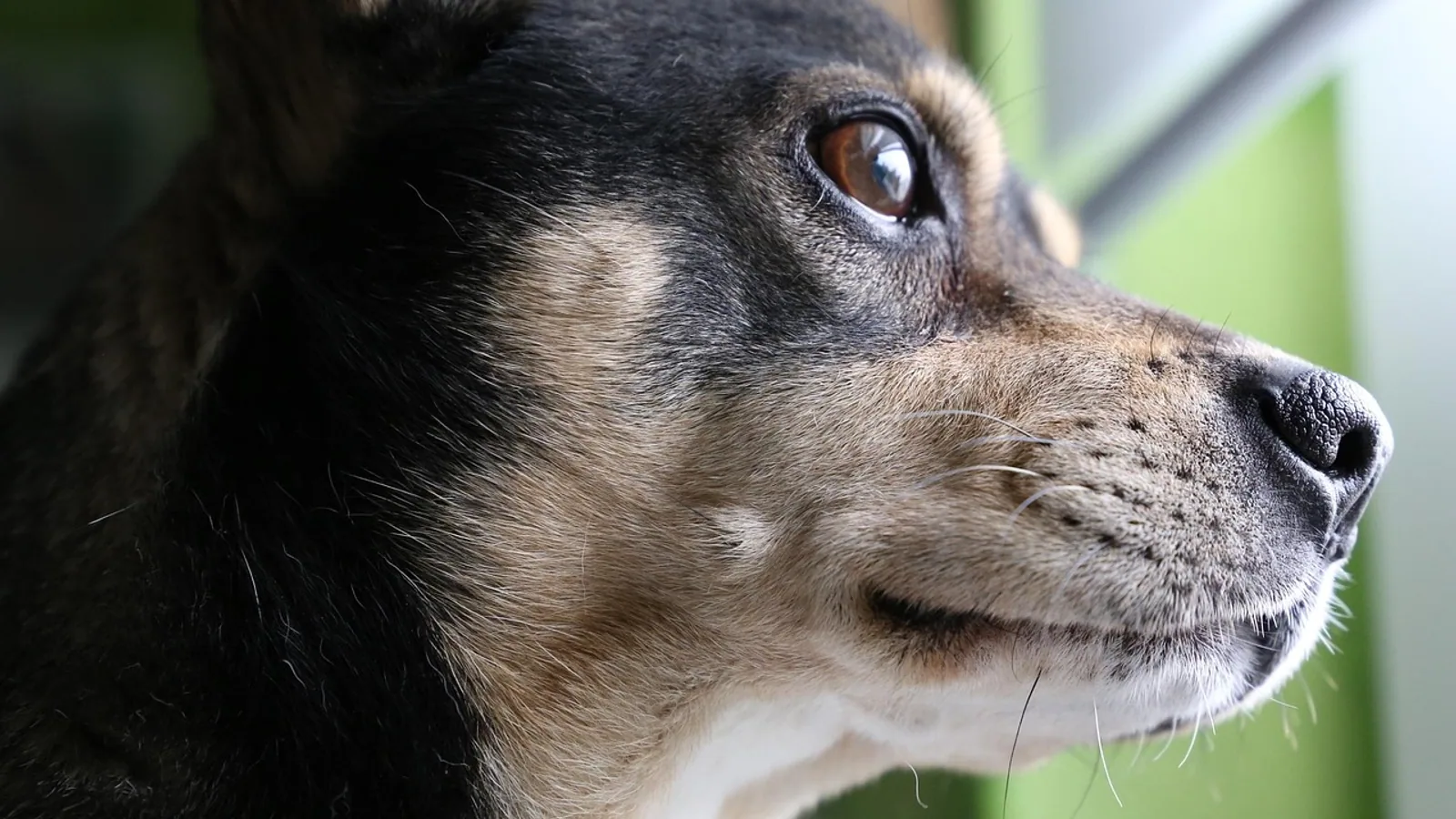
Border Collies usually top the list of the smartest dog breeds, followed closely by Poodles, German Shepherd Dogs, and Golden Retrievers. That ranking comes from Stanley Coren's influential work on working and obedience intelligence, and it measures one specific thing: how quickly a dog learns commands a trainer asks it to perform.
That is a useful measure. It is also a narrow one. Modern canine cognition research shows that intelligence in dogs is not a single scale with Border Collies at the top and everyone else lined up below. Different breeds excel at different mental tasks, and some of the most striking cognitive feats in dogs, such as learning the names of hundreds of toys, appear in individual dogs rather than whole breeds. This article explains what the classic dog intelligence ranking actually measured, what newer studies found, and why trainability and intelligence are not the same thing.
This article is educational and is not a substitute for veterinary diagnosis or treatment.
What the Classic Dog Intelligence Ranking Measured
Stanley Coren, a psychology professor and dog researcher, popularized the modern dog intelligence ranking in his 1994 book The Intelligence of Dogs. He surveyed obedience judges and asked them to rank breeds by how readily they learned and performed obedience commands. The result was a tiered list that has been reproduced in countless articles, breed profiles, and owner conversations ever since.
Coren separated intelligence into three categories. Instinctive intelligence refers to what a breed was originally bred to do, such as herding, retrieving, or guarding. Adaptive intelligence refers to what a dog learns on its own from experience. Working and obedience intelligence refers to how well a dog learns from humans, and that is the category the ranking is built on.
The ranking's top tier includes Border Collies, Poodles, German Shepherd Dogs, Golden Retrievers, Doberman Pinschers, Shetland Sheepdogs, and Labrador Retrievers. Coren's framework suggested that the most highly ranked breeds could learn a new simple command in fewer than five repetitions and obey on the first attempt roughly 95 percent of the time or better. Breeds in the lowest tier needed many more repetitions.
Those numbers are memorable, and they are also the source of most of the confusion around this topic. The ranking is a survey of expert opinion about obedience performance, not a laboratory measurement of problem-solving, memory, or reasoning. It tells you which breeds tend to be responsive to formal training. It does not tell you which breeds are best at figuring out a puzzle, remembering where food was hidden, or reading human gestures. The American Kennel Club's own breed education materials lean on this same obedience-centered framing when they discuss the smartest breeds [1][2].
Why the Ranking Is Still Useful
The ranking is not worthless. Trainability is a real, measurable, and highly practical trait. A dog that learns cues quickly and holds them reliably is easier to live with, easier to train for sports, and often easier to manage in a veterinary clinic. If your goal is a dog that will excel in obedience, rally, or agility competition, the classic ranking gives you genuinely relevant information.
The problem starts when owners treat the ranking as a complete map of canine cognition. It is one axis of a multidimensional trait.
Trainability Is Not the Same as Intelligence
This is the single most important correction in the modern literature. Trainability measures how efficiently a dog responds to human-directed instruction. Intelligence, in the broader cognitive sense, includes problem-solving, memory, inhibitory control, social cognition, and the ability to adjust behavior when circumstances change. These do not always move together.
A large standardized study tested 1,002 dogs from 13 breeds on a battery of cognitive tasks. The researchers found significant breed differences in understanding human communicative gestures, resisting a misleading human gesture, spatial problem-solving in a V-detour task, inhibitory control in a cylinder test, and persistence during an unsolvable task [3]. Critically, the study found no significant breed differences in tasks measuring memory or logical reasoning [3]. Breed differences clustered around social cognition, problem-solving, and self-control, not around every cognitive domain.
That finding reframes the whole question. When people ask which breeds are the smartest dogs, they are usually asking about trainability, because that is the trait they can see. The science says breed differences are real but domain-specific. A breed that is brilliant at following a human pointing gesture is not automatically brilliant at solving a mechanical puzzle, and vice versa.
The Detour Test Shows the Split
The V-detour task is a good illustration. A dog must walk around a transparent barrier to reach a reward it can see straight ahead. This requires the dog to inhibit the urge to push through the barrier and instead take an indirect route. In the 13-breed study, breeds differed significantly on this spatial problem-solving measure [3].
A separate study of 78 dogs from 16 cooperative breeds and 18 independent breeds used a similar detour setup with a twist. In one condition, a human demonstrated the correct route by walking around the fence and placing a reward. Cooperative breeds reached the target significantly faster after watching the demonstration. Independent breeds did not improve after watching the human [4]. The authors concluded that functional selection for particular working tasks, such as cooperating with a handler versus working alone, shaped a wide range of socio-cognitive traits [4].
This is the key insight. A herding breed that must read and respond to a shepherd's signals has been selected for social learning from humans. A livestock guardian breed that works independently, making decisions without a handler nearby, has been selected for a different cognitive profile. Neither is smarter in an absolute sense. They are tuned to different jobs.
What Newer Cognition Studies Found About Breed Differences
The last decade produced much larger and more rigorous datasets than Coren had access to. The picture that emerges is more complex and more interesting.
The Finnish smartDOG Dataset
The smartDOG study is one of the most comprehensive breed comparisons available, testing 1,002 dogs across 13 breeds with a standardized battery [3]. Several findings stand out.
Breeds differed significantly in how well they understood human communicative gestures, such as pointing. They also differed in how strongly they were influenced by a misleading gesture, meaning some breeds were more likely to follow a human's incorrect cue even when their own senses suggested otherwise [3]. Breeds differed in inhibitory control, measured by the cylinder test, in which a dog must detour around a transparent cylinder rather than try to walk straight through it. They differed in persistence and in how much they sought human help during an unsolvable task [3]. They also differed in behavior toward an unfamiliar person, general activity level, and exploration of a novel environment [3].
The absence of breed differences in memory and logical reasoning is just as important as the presence of differences elsewhere [3]. It suggests that some core cognitive abilities are broadly similar across breeds, while socially and ecologically relevant abilities were shaped by selective breeding.
The smartDOG Takeaway for Owners
If you own a breed that scored lower on gesture-following, that does not mean your dog is unintelligent. It may mean your dog was bred to solve problems independently rather than to take direction. If you own a breed that scored higher on inhibitory control, that is a genuine advantage for training and for living in a household with rules. These are profiles, not grades.
Breed Clades and Learning Tasks
Another line of research grouped dogs into breed clades, broad genetic groupings such as UK Rural, Retrievers, Asian Spitz, European Mastiff, and New World, and tested them on a virtual hand-touch learning task with phases for acquisition, discrimination, reversal learning, and extinction [5]. The study of 111 dogs found notable differences across clades in some learning and behavioral components, but the authors cautioned that the disparities may not be entirely attributable to inherent cognitive differences. Contextual factors, including the human-dog communication dynamics associated with a breed's cooperativeness, likely played a role [5].
A follow-up study tested 105 dogs across five breed clades twice on the same hand-touch task. Most of the breed-clade differences seen on the first test were no longer evident on the second test. Dogs showed limited change overall, with significant improvement only in reversal learning, and there was little evidence that clades differed in how much they improved [6]. The authors suggested that initial performance differences reflect breed-specific cognitive profiles that shape how dogs approach a novel task, but that these differences soften with repeated exposure [6].
That is a practical point for owners. First impressions of a breed's learning speed can be misleading. Experience with the task matters.
What the Studies Say About Food Motivation and Persistence
Motivation is a hidden variable in almost every intelligence test. A study comparing 24 Labrador Retrievers and 24 German Shepherd Dogs on food-maximizing tasks [7] found that Labradors reached significantly higher breakpoints on a progressive ratio task, meaning they were willing to work harder for food, and this difference persisted regardless of training level [7]. The two breeds are commonly characterized as highly food-responsive and highly toy-responsive respectively, and the results suggest that breed differences in motivation can look like breed differences in ability if the test uses the wrong reward.
This is a recurring theme. A dog that will not perform a task may be unmotivated, not incapable. A dog that performs brilliantly may be highly food-driven, not necessarily a faster thinker. Any honest dog intelligence ranking has to account for what the dog actually wants.
Nose Work Training and Executive Function
A pilot study of 26 dogs and their human companions examined whether nose work training is associated with better executive function. Dogs with more formal nose work training showed less giving up in an unsolvable task, suggesting that training quality may affect task persistence [8]. This is a small study, but it points in a direction that matters for owners: mental work changes the dog. Cognitive exercise is not just a way to burn energy. It appears to shape how a dog responds to frustration.
Gifted Word Learner Dogs: The Outliers
The most fascinating recent development in canine cognition is the study of Gifted Word Learner dogs, often called GWL dogs. These are rare individual dogs that can learn the names of dozens or even hundreds of objects, usually toys, and retrieve the correct one on request.
This is not a breed-wide trait. It is a rare individual capacity. A citizen science study recruited and tested 41 GWL dogs [9], the largest sample of its kind, and found shared characteristics: fast learning, large vocabulary, and spontaneous learning of toy names without explicit owner intent to teach them [9]. That study validated earlier anecdotal reports and supported the idea that these dogs represent a distinct group [9].
How Fast Do Gifted Word Learners Learn?
A study of six GWL dogs tested whether they could learn the names of six new toys in one week, then twelve new toys in one week, and whether they retained those names after one and two months without further exposure. The dogs typically learned the new object names and remembered them [10]. The authors proposed that dogs with object-name knowledge could serve as a model for studying word acquisition in a non-human species [10].
Do Gifted Word Learners Think Differently?
GWL dogs appear to form multisensory mental representations of objects. In one experiment, GWL dogs and typical dogs were tested on object discrimination in light and dark conditions. All dogs relied mostly on vision when they could, and switched to other senses, including smell, when searching in the dark. For the GWL dogs, hearing an object's name activated a memory of the object that held up under both light and dark conditions, indicating flexible use of different sensory modalities [11].
A comparison of personality traits found that gifted Border Collies were rated as more playful than typical Border Collies in matched samples [12]. The authors suggested that an extremely high level of playfulness is associated with giftedness in this specific cognitive trait [12].
What Gifted Word Learners Teach Us About Breed Rankings
Most GWL dogs are Border Collies, which is part of why Border Collies dominate intelligence discussions. But the existence of GWL dogs cuts against simple breed rankings in two ways. First, most Border Collies are not GWL dogs. The capacity is rare even within the breed. Second, GWL dogs are identified by an unusual skill that standard obedience testing does not measure at all. Coren's ranking would not have flagged these dogs as exceptional. Their gift sits outside the trait the ranking measures.
The Table: Commonly Top-Ranked Breeds and What the Science Adds
The table below summarizes the breeds most often named in popular rankings, along with the cognitive domains where research suggests they may have particular strengths. The strengths column reflects general patterns from the cited studies and should not be read as a guarantee about any individual dog.
| Breed | Classic ranking position | Cognitive domains with research support | Notes for owners |
|---|---|---|---|
| Border Collie | Top tier | Social learning from humans, gesture following, object label learning in gifted individuals [3][9][12][4] | High mental and physical needs. Overrepresented among gifted word learners, but most Border Collies are not gifted word learners [9] |
| Poodle | Top tier | Trainability, obedience responsiveness (classic ranking) | Often ranked high in obedience surveys. Popular in a wide range of sizes |
| German Shepherd Dog | Top tier | Trainability, working roles. Lower food motivation than Labradors in one study [7] | Bred for cooperative work with handlers [4] |
| Golden Retriever | Top tier | Trainability, social cognition. Retrievers showed longer sustained gaze in one study [13] | Bred for cooperative retrieving work [4] |
| Labrador Retriever | Top tier | High food motivation and persistence in one study [7] | Motivation can be mistaken for ability in food-reward tests [7] |
| Doberman Pinscher | Top tier | Trainability, obedience responsiveness (classic ranking) | Working breed with cooperative selection history |
| Shetland Sheepdog | Top tier | Trainability, obedience responsiveness (classic ranking) | Herding breed selected for handler responsiveness |
| Rottweiler | Second tier | Trainability, obedience responsiveness (classic ranking) | European Mastiff clade, tested in learning studies [5] |
| Australian Cattle Dog | Second tier | Trainability, independent problem-solving | Independent working lineage |
| Pembroke Welsh Corgi | Second tier | Trainability, obedience responsiveness (classic ranking) | Herding breed |
Are Border Collies the Smartest Dogs?
Border Collies have the strongest claim to the top of the classic ranking, and they also appear disproportionately among gifted word learners [9][12]. But the honest answer is that the question is not well formed.
Border Collies are exceptionally trainable and exceptionally responsive to human cues. Research on cooperative versus independent breeds supports the idea that herding breeds were selected for social learning from humans, and cooperative dogs in that study reached a target faster after watching a human demonstration while independent dogs did not [4]. That is a real cognitive specialization, and it is impressive.
At the same time, the 13-breed study found no breed differences in memory or logical reasoning [3]. If a breed that ranks lower on obedience is your benchmark for "smartest," you may be measuring the wrong thing. A Beagle that follows its nose with extraordinary persistence is displaying a cognitive profile shaped by scent work, not a deficiency. A livestock guardian breed that makes independent decisions without human input is displaying a different kind of intelligence.
The most defensible statement is this: Border Collies are among the most trainable and human-responsive breeds, and they are overrepresented in the rare population of dogs that learn object names. Whether that makes them the smartest dogs depends entirely on how you define smart.
Why Smart Breeds Need More Mental Work
High trainability comes with a cost. A dog bred to work alongside a human for hours, reading subtle cues and making rapid decisions, does not do well with nothing to do. The same cognitive machinery that makes a Border Collie easy to teach makes it prone to inventing its own activities when understimulated. Those activities are often things owners do not enjoy, such as barking, pacing, chewing, or herding household members.
The nose work pilot study offers a useful signal here. Dogs with more formal nose work training showed less giving up in an unsolvable task, implying that training quality may affect task persistence [8]. Mental work appears to build resilience as well as skill.
The practical implication is straightforward. If you choose one of the most intelligent dog breeds, budget time for training, problem-solving games, scent work, or structured sports. Mental exercise is not optional enrichment for these dogs. It is a core need, comparable to physical exercise.
Matching the Dog to the Job
The cooperative versus independent distinction is the most useful framework for owners choosing a breed. If you want a dog that looks to you for direction and learns quickly from your cues, a breed selected for cooperative work is a better fit [4]. If you want a dog that thinks for itself and works independently, a breed selected for that role will be more satisfying, even if it scores lower on obedience rankings. The mismatch between a dog's selection history and its daily life is a common source of behavior problems.
What Is Still Uncertain
Canine cognition research is young, and several important questions remain open.
Breed differences in many cognitive domains are real but modest, and the studies are often limited by sample size, breed representation, and the difficulty of designing tasks that are fair across body types and motivations. The 13-breed study itself noted that previous findings were often contradictory and inconsistent, which is part of why the researchers designed a standardized battery [3]. Even well-designed studies find that first-test breed differences can fade on retesting [6].
The role of motivation is not fully mapped. When a Labrador outperforms a German Shepherd Dog on a food-reward task, is that cognition or appetite [7]? When a dog fails a task, is that a cognitive limit or a motivational one? These questions do not have clean answers yet.
Judgment bias, a measure related to emotional state, showed no consistent breed differences in a study of 118 dogs from 10 breeds [13], though sustained gaze duration did differ markedly by breed, with retrievers showing longer gaze durations than Maltese and several other breeds [13]. This suggests that some apparent cognitive differences may actually be differences in attention or emotional reactivity.
Individual variation within breeds is large. The existence of gifted word learners among Border Collies, a capacity most Border Collies do not have, is the clearest demonstration that breed tells you about probabilities, not about your specific dog [9][10].
Practical Implications for Owners
If you are choosing a dog and intelligence is a priority, ask what kind of intelligence you want. A dog that learns commands fast is not the same as a dog that solves problems independently, and neither is the same as a dog that reads human emotion with unusual sensitivity.
If you already own a dog from a high-ranking breed, plan for mental work. Training sessions, puzzle feeders, scent games, and structured sports all count. The nose work findings suggest that the quality of the mental work matters, not just the quantity [8].
If you own a dog from a breed that ranks lower on obedience lists, do not read that as a verdict on your dog's mind. Breed differences in the research cluster around social cognition, problem-solving, and inhibitory control, and even there the effects are profiles rather than rankings [3]. Your dog's individual capacity is the thing you can actually observe and develop.
Limitations and When to Contact a Veterinarian
This article discusses population-level research on breed tendencies. It cannot tell you what your individual dog is capable of, and it cannot diagnose a cognitive or behavioral problem.
Contact your veterinarian if your dog shows a sudden change in behavior, learning, or responsiveness. A dog that was previously quick to learn and now seems confused, disoriented, or unable to follow familiar cues may have a medical problem rather than a training problem. Cognitive dysfunction is a recognized condition in aging dogs, and a large study of more than 15,000 dogs [14] found that the odds of cognitive dysfunction increased substantially with each additional year of age, and were much higher in inactive dogs compared to very active dogs [14]. If your older dog is showing signs such as staring at walls, getting stuck in corners, or losing house training, that warrants a veterinary evaluation.
Contact your veterinarian or a veterinary behaviorist if your dog's mental energy is turning into problem behavior, such as destructive chewing, excessive barking, or aggression. These are treatable issues, and early intervention works better than waiting.
For routine wellness and preventive care, follow the schedule your veterinarian recommends. Organizations such as the AVMA and AAHA publish owner-facing guidance on preventive care and behavior resources that can help you build a plan for a high-drive dog.
Frequently Asked Questions
What is the smartest dog breed?
Border Collies are most often named the smartest dog breed based on Stanley Coren's working and obedience intelligence ranking, which measures how quickly a dog learns commands from a trainer. However, modern cognition studies show that breed differences are domain-specific, so no single breed is smartest across all cognitive tasks [3].
Are Border Collies really the smartest dogs?
Border Collies are among the most trainable and human-responsive breeds, and they are overrepresented among rare gifted word learner dogs that can learn hundreds of object names [9][12]. But the largest standardized breed comparison found no breed differences in memory or logical reasoning, so the claim depends on how you define intelligence [3].
Is trainability the same as intelligence in dogs?
No. Trainability measures how efficiently a dog responds to human instruction. Intelligence in the broader sense includes problem-solving, memory, inhibitory control, and social cognition. Research shows these abilities do not always move together, and breed differences appear in some domains but not others [3].
What did Stanley Coren's dog intelligence ranking actually measure?
Coren's ranking was based on surveys of obedience judges about how readily breeds learned and performed obedience commands. It measures working and obedience intelligence, which is a breed's responsiveness to formal training, not its ability to solve novel problems or reason independently [1][2].
What are Gifted Word Learner dogs?
Gifted Word Learner dogs are rare individual dogs that can learn the names of dozens or hundreds of objects, usually toys, and retrieve the correct one on request. A citizen science study of 41 such dogs found they share fast learning, large vocabularies, and spontaneous learning without explicit owner teaching [9].
Do smart dog breeds need more exercise and mental work?
Yes. Breeds selected for cooperative work with humans have high cognitive needs, and understimulation commonly shows up as problem behavior. A pilot study found that dogs with more formal nose work training showed greater persistence in an unsolvable task, suggesting that quality mental work shapes how dogs handle frustration [8].
Can a mixed breed dog be as smart as a purebred?
Yes. Individual variation within breeds is large, and the most striking cognitive capacity documented in dogs, gifted word learning, appears in rare individuals rather than whole breeds [9][10]. Breed gives you a probability, not a prediction about your specific dog.
Does a lower obedience ranking mean a dog is less intelligent?
No. Breeds selected for independent work, such as livestock guardians, may score lower on obedience surveys while excelling at independent problem-solving. Research on cooperative versus independent breeds found that independent dogs did not improve after watching a human demonstration, which reflects a different selection history rather than a cognitive deficit [4].
Related Articles
- Most Common Dog Behavior Problems
- Shared-Caregiver Success for Border Collies: A Step-by-Step Plan for Harmonious Multi-Handler Dog Care
- Emotional Support Animals vs. Service Dogs: What the Law Actually Says
- Can You Give Your Dog Human Cough Medicine? What Vets Say
- Gentle Border Collie Care: Stress-Free Handling Strategies for Sensitive Dogs
- Border Collie Enrichment Guide: Vet-Approved Strategies for High-Energy Dogs
- Shock Collars for Dogs: What the Evidence Says and Alternatives
- Rabbit Binky: What It Means and Other Signs of a Happy Rabbit
- Dog Side Eye (Whale Eye): What It Means and What to Do
Sources
- Measuring Canine Intelligence: Ranking the Smartest Dog ... (akc.org)
- Smartest Breeds of Dogs (akc.org)
- Breed differences in social cognition, inhibitory control, and spatial problem-solving ability in the domestic dog (Canis familiaris).
- Would You Detour with Me? Association between Functional Breed Selection and Social Learning in Dogs Sheds Light on Elements of Dog-Human Cooperation.
- Exploring breed differences in discrimination, reversal learning, and resistance to extinction in the domestic dog (Canis familiaris).
- Changes in cognitive performance following repeated exposure to a hand-touch learning task across breed clades of domestic dogs (Canis familiaris).
- Variation in food-maximizing behaviour as a function of context, breed, and individual characteristics: A study of Labrador Retrievers and German Shepherd Dogs.
- Does Nose Work Training Affect Dog Executive Function and Physical Fitness in Humans and Dogs?
- A citizen science model turns anecdotes into evidence by revealing similar characteristics among Gifted Word Learner dogs.
- Acquisition and long-term memory of object names in a sample of Gifted Word Learner dogs.
- Multisensory mental representation of objects in typical and Gifted Word Learner dogs.
- A comparison of personality traits of gifted word learner and typical border collies.
- Investigation of breed-related variation in judgement bias, sustained gaze and cylinder task performance in healthy pet dogs.
- Evaluation of cognitive function in the Dog Aging Project: associations with baseline canine characteristics.