Why Does My Cat Want Attention When I'm on the Toilet?
By Dr. Zubair Khalid, DVM, MS, PhD ·
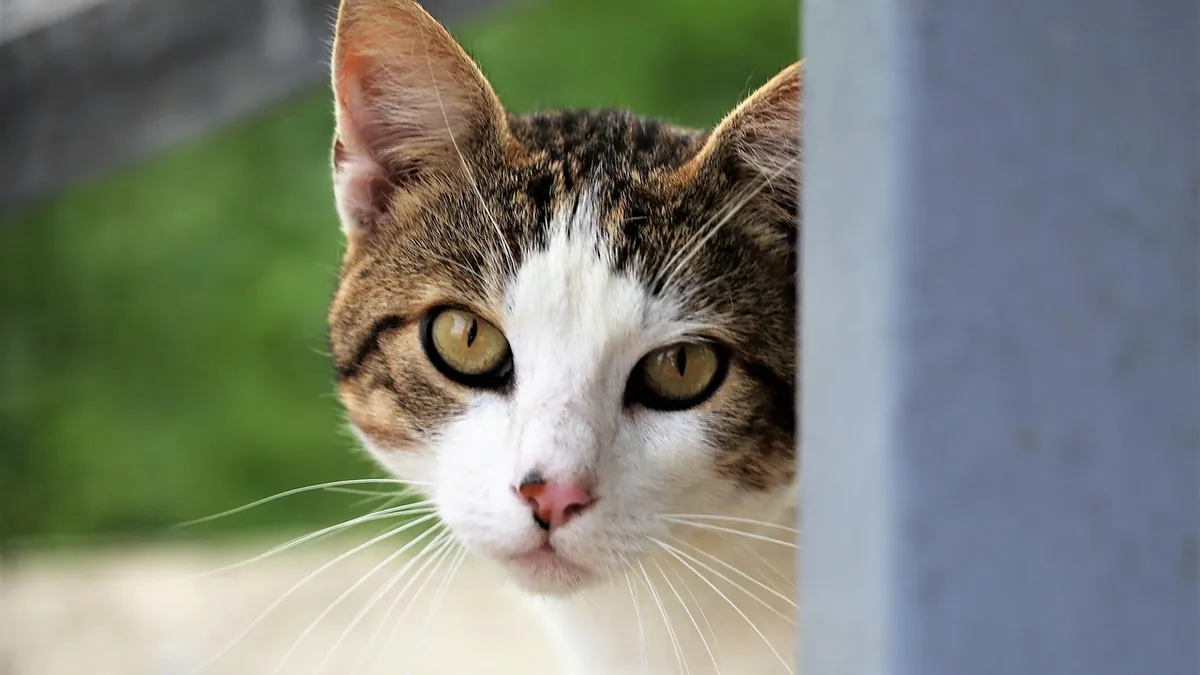
If your cat follows you into the bathroom and demands pets the moment you sit down, you are not alone. Cats often seek out a person who is stationary, quiet, and captive, which makes the toilet a prime spot for contact. The question "why does my cat want attention when I'm on the toilet" usually has a simple answer: you are available, predictable, and hard to ignore.
This article is educational and is not a substitute for veterinary diagnosis or treatment.
Quick Answer
- Your cat is likely seeking social contact with a preferred person, and a seated human is easy to reach.
- Bathroom visits happen at the same times each day, so many cats learn the routine and show up for it.
- A closed door can trigger curiosity and mild separation distress in cats who are strongly bonded to you.
- Sudden, intense clinginess that is new for your cat can signal pain, stress, or illness and deserves a veterinary check.
- Punishment and door spraying do not fix the behavior and can damage your bond. Redirection and enrichment work better.
Why Does My Cat Want Attention When I'm on the Toilet?
Cats are social, even when they act independent
Domestic cats have flexible social lives. They can live alone or in groups, and they read social signals from other cats closely. Research shows cats pay attention to emotional cues from other cats, including gazing longer at negative visual signals [1]. Your cat is wired to monitor the beings around it, including you.
Cats also form attachment relationships with their owners. In one study, cats from private homes showed more exploration and play after reuniting with their caregiver, which suggests the familiar person's presence acts as a secure base [2]. Following you to the bathroom is one small version of that same drive to stay near a safe person.
You are a captive audience
When you sit on the toilet, you stop moving. You cannot walk away, open a laptop, or start cooking. For a cat that wants contact, this is the best window of the day. The bathroom is also often small, warm, and quiet, which many cats find appealing.
Cat-human interaction is not constant even in cat-dense settings. In a study of a cat café, cats and humans were not interacting during 44.4% of observed time, and individual cats ranged from engaging to avoiding people [3]. Your cat may simply be one of the more people-oriented individuals, and it has learned exactly when you are easiest to catch.
Routine and habit
Most people use the bathroom at roughly the same times each morning and evening. Cats are excellent at learning daily patterns. If you have ever pet your cat during a bathroom visit, even once, the behavior got rewarded. From your cat's view, the bathroom is a reliable appointment.
Curiosity and closed doors
A closed bathroom door is a barrier in your cat's territory. Cats often want to know what is behind a door, especially if you are on the other side. Some cats also dislike being separated from their person by a door, even briefly. This is not spite. It is a mix of curiosity and social need.
Boredom and unmet enrichment
If your cat has limited play, climbing space, or window time, you become the main event. A cat with little to do will follow the most interesting moving object in the house, which is you. This is one reason enrichment matters so much for indoor cats.
Medical Causes to Rule Out
Clingy behavior is usually normal, but a sudden change in how much attention your cat demands can be a health signal.
Pain or discomfort
Cats in pain often become more attached to their owners and seek comfort. They may also pace, vocalize, or follow you room to room. Dental disease, arthritis, urinary problems, and gastrointestinal pain are common causes of behavior change in adult cats.
Hormonal and metabolic disease
Conditions such as hyperthyroidism, diabetes, and kidney disease can increase vocalization, restlessness, and attention-seeking. These are diagnosed with a physical exam and blood and urine testing. Your veterinarian sets the testing plan based on your cat's age and signs.
Cognitive changes in older cats
Senior cats can develop cognitive dysfunction, which may look like confusion, night vocalization, and clinginess. If your older cat's behavior has shifted, ask your veterinarian about screening.
Stress and anxiety
Cats with insecure attachment styles show different hormonal responses to human interaction than secure cats. In one study, secure cats had more positive hormonal responses to interactions with their owners, while insecure cats showed increased cortisol or limited hormonal benefit [4]. A cat that is anxious may cling more, not less.
If the clinginess comes with house soiling, hiding, or appetite changes, those are separate red flags. You can read more about litter box changes in Why Is My Cat Peeing on the Floor Right in Front of Me? and about withdrawal in Why Is My Cat Hiding?.
When Does Bathroom Attention-Seeking Become a Problem?
The behavior itself is not a problem. It becomes a problem when it disrupts your day, when your cat cannot settle without you, or when it comes with other signs of distress.
Watch for these patterns:
- Your cat cries, scratches, or panics at the door every time you close it.
- The clinginess started suddenly in an adult or senior cat with no obvious trigger.
- Your cat follows you constantly, not only to the bathroom, and seems unable to relax.
- Your cat stops eating, hides more, or uses the litter box differently.
- You feel frustrated enough that you are considering punishment.
Any of these is a reason to look deeper, either at your cat's health or at its environment.
What to Do Step by Step
Step 1: Get a health check if the behavior is new
For any sudden change in an adult or senior cat, start with your veterinarian. A physical exam and basic lab work can rule out pain and metabolic disease. This step comes first because behavior plans fail when an underlying medical problem is missed.
Step 2: Give your cat a predictable daily routine
Cats do better with structure. Feed, play, and groom at similar times each day. A cat that knows when its needs will be met is less likely to chase you into the bathroom for attention.
Step 3: Schedule real play sessions
Two short interactive play sessions per day, morning and evening, can drain energy and build your bond. Use a wand toy and let your cat catch and "kill" the toy at the end. This mimics a natural hunt sequence.
Step 4: Add enrichment to your home
Cats in group settings use vertical space heavily, especially when human activity is high [3]. Give your cat shelves, cat trees, window perches, and a few hiding spots. Puzzle feeders and food-dispensing toys also help. A busy cat is a less clingy cat.
Step 5: Make the bathroom less rewarding, gently
If you want privacy, close the door and give your cat something better to do on the other side. Set up a perch or a food puzzle nearby before you go in. Do not yell or spray water. A calm, boring door is better than a dramatic one.
Step 6: Reward calm, independent behavior
When your cat settles on its bed instead of pawing at the door, quietly praise it or toss a treat. You are teaching your cat that calm behavior earns attention too.
Step 7: Keep the litter box and resources separate
If your cat's clinginess comes with litter box issues, review the basics. You can find detailed guidance in Why Is My Cat Peeing on the Rug? Medical and Behavioral Reasons and Why Is My Cat Suddenly Peeing on the Carpet?.
What Not to Do
Do not punish your cat
Punishment does not teach a cat what to do instead. It increases fear and stress, and it can make clinginess worse. Cats with insecure attachment already show higher stress responses to some interactions [4]. Adding punishment makes that worse.
Do not spray water or use loud noises
These methods may stop the behavior in the moment, but they damage trust. Your cat may become more anxious and more attached in an unhealthy way.
Do not lock your cat in another room for long periods
Isolation is stressful for a social cat. Brief, calm separation with something to do is fine. Long confinement is not.
Do not assume it is "just attention-seeking"
Sometimes it is. Sometimes it is pain, anxiety, or early illness. If the behavior is new, get it checked.
Do not believe the myth that cats are solitary
Cats are socially flexible, and many form strong bonds with people. The idea that cats do not need company is outdated and does not match what we see in research on attachment behavior [2].
When to Involve a Veterinarian or Behavior Professional
Call your veterinarian if:
- The clinginess started suddenly, especially in a cat over 7 years old.
- Your cat is vocalizing more, pacing, or cannot settle.
- Your cat has lost weight, is eating less, or has changed its litter box habits.
- Your cat seems painful, stiff, or is hiding more.
- You see any of the red flags listed below.
Ask for a referral to a veterinary behaviorist or a certified behavior consultant if your cat's anxiety is severe, if the behavior is not improving with enrichment and routine, or if your cat is harming itself or your home. Your veterinarian can also discuss whether medication is appropriate. If medication is used, your veterinarian calculates the dose from your cat's weight and health.
Limitations and When to Contact a Veterinarian
This article covers common reasons for bathroom attention-seeking, but it cannot tell you what is happening with your specific cat. Individual cases need a veterinarian who can examine your cat and review its history.
Contact your veterinarian the same day if your cat:
- Stops eating or drinking.
- Vomits repeatedly or has diarrhea with blood.
- Strains to urinate, cries while urinating, or produces no urine.
- Is suddenly very lethargic or weak.
- Is breathing fast or with effort.
Go to an emergency clinic now if your cat:
- Cannot urinate at all, especially a male cat.
- Collapses, has a seizure, or is unresponsive.
- Has trouble breathing or has blue gums.
- Is bleeding heavily or has a suspected broken bone.
- Ate something toxic. Call poison control right away. In the United States, call the ASPCA Animal Poison Control Center at (888) 426-4435 or the Pet Poison Helpline at (855) 764-7661.
Schedule a routine visit within a few days if the behavior change is mild but persistent, or if you notice gradual weight loss, increased thirst, or new litter box habits.
Frequently Asked Questions
Why does my cat only want attention when I'm in the bathroom?
The bathroom puts you in one place, at a predictable time, with your hands free. Cats learn which moments get a response, so the behavior gets reinforced. It is usually social contact plus habit, not a sign of a problem.
Is my cat trying to protect me in the bathroom?
There is no strong evidence that cats guard people in the bathroom. A more likely explanation is that your cat wants to be near you and finds the small, quiet room comfortable. Some cats also dislike a closed door between them and their person.
Should I let my cat in the bathroom with me?
That is your choice. If you enjoy the company and your cat is calm, letting it in is fine. If you want privacy, close the door and give your cat a perch, toy, or food puzzle nearby so the separation is short and low-stress.
Can sudden clinginess mean my cat is sick?
Yes, it can. Cats in pain or with metabolic disease often become more attached and vocal. If the behavior is new, especially in an older cat, have your veterinarian examine your cat and run basic lab work.
Will my cat grow out of this behavior?
Some cats do become less clingy as they mature, but many keep the habit for life if it keeps working. You can shape the behavior with routine, play, and enrichment. If it gets worse instead of better, ask your veterinarian to rule out medical causes.
Related Articles
- Why Is My Cat Peeing on the Floor Right in Front of Me?
- Why Is My Cat Peeing on the Rug? Medical and Behavioral Reasons
- Why Is My Cat Suddenly Peeing on the Carpet?
- Why Is My Cat Peeing on the Couch? Medical and Behavioral Causes
- Why Is My Cat Hiding?
- Why Is My Cat Peeing on My Clothes? Causes and Solutions
- Why Does My Cat Follow Me to the Bathroom?
- Why Is My Cat Drinking Out of the Toilet?
- Why Does My Cat Stare at Me? What It Means
References
- Purr-ceiving feelings: domestic cats respond to intraspecific cues of emotion. PeerJ, 2026.
- Impact of Living Environment on Attachment Behaviour in Domestic Cats from Private Homes and Shelters. Animals : an open access journal from MDPI, 2025.
- Cats in a Cat Café: Individual Cat Behavior and Interactions with Humans. Animals : an open access journal from MDPI, 2025.
- EXPRESS: The hormonal effects of owner-cat interactions on pet cats of different potential attachment styles. Journal of feline medicine and surgery, 2026.