Are Cats Really Scared of Cucumbers? Why It Happens
By Dr. Zubair Khalid, DVM, MS, PhD ·
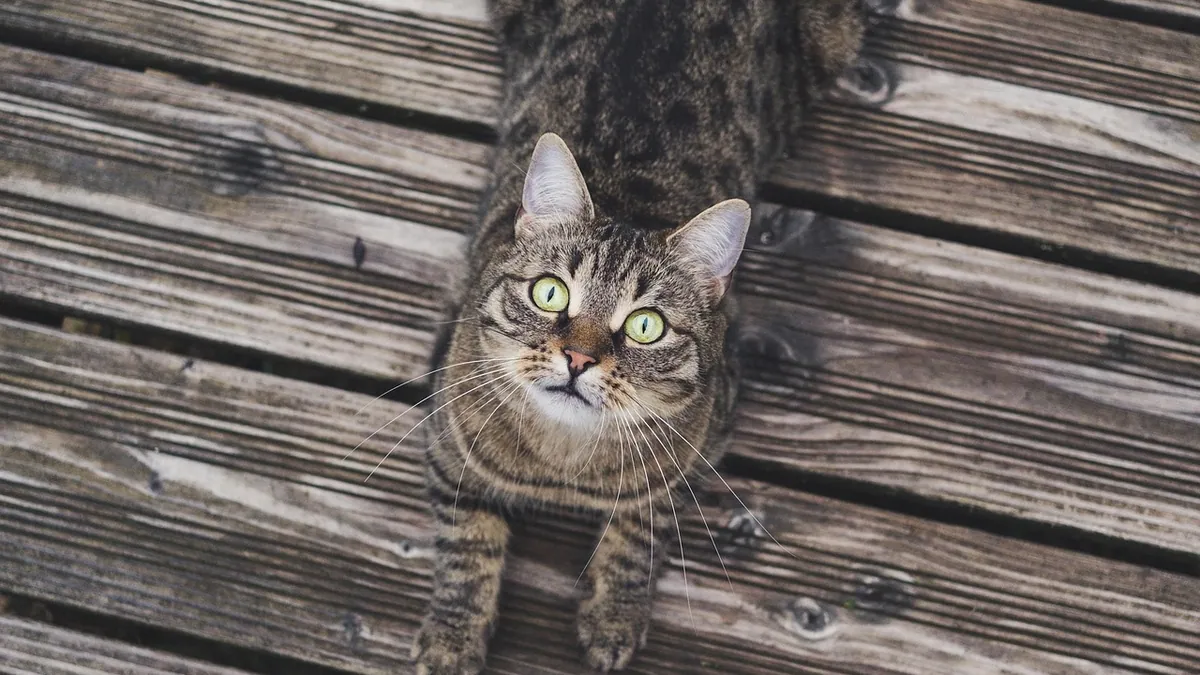
Are cats really scared of cucumbers? Yes, most cats who encounter a cucumber placed behind them while they eat show a genuine startle and fear response, not a funny reaction. The fear comes from the sudden appearance of an unexpected object, not from cucumbers themselves. This article is educational and is not a substitute for veterinary diagnosis or treatment.
Quick Answer
- The cucumber reaction is a real fear response triggered by a sudden, unexpected object appearing close to a cat while it is eating and feeling vulnerable.
- Cats are not naturally afraid of cucumbers. They are reacting to the surprise, not the vegetable.
- The viral videos are staged. Owners quietly place a cucumber behind the cat, then film the reaction.
- Repeating this prank can create lasting anxiety around food, feeding areas, and the people who set it up.
- If your cat shows sudden fear without any obvious trigger, that is a medical and behavioral question for your veterinarian, not a prank.
Why Are Cats Scared of Cucumbers? The Real Reason
The cucumber itself is not the problem. The setup is.
In the viral clips, a cat is eating with its head down. A cucumber appears silently behind it. When the cat turns and sees something new and close, it jumps, bolts, or freezes. That is a startle response, and it looks dramatic on camera.
It Is About Surprise, Not the Vegetable
Cats are wired to notice sudden changes in their environment. A new object that appears where nothing was a second ago can read as a threat. The cat has no time to investigate it calmly.
The shape matters too. A cucumber is long and curved, and a cat catching it in peripheral vision may briefly read it as a snake or another elongated threat. That idea is widely repeated, but it is not well established in veterinary research. What is well documented is that cats respond strongly to unexpected things in their space.
Eating Time Is a Vulnerable Time
Think about what your cat is doing when the cucumber appears. It is head down, focused on food, and not scanning for danger. Many cats prefer to eat in quiet spots for this reason.
A study of cats in a cat café found that cats used elevated structures and cat-only rooms more when human occupancy was high, which suggests they manage stress by seeking out safer positions [1]. Eating with your back turned is the opposite of that. A surprise in that moment hits harder.
Cats Read Emotion and Threat Cues
Cats are not blank slates. Research shows that domestic cats respond to emotional signals, gazing longer and more often at negatively valenced visual cues [2]. In plain terms, cats pay attention to things that look threatening.
A cucumber is not threatening on its own. But an object that appears suddenly, at close range, while the cat is distracted, fits the pattern of something worth reacting to.
The Owner's Behavior Adds to It
In most prank videos, the owner is tense, quiet, and waiting. Cats pick up on that. If your cat is already uneasy about you hovering near its food bowl, the prank confirms something is off.
If your cat has started acting fearful around you in general, that is a separate issue worth reading about in Why Is My Cat Suddenly Afraid of Me?.
Are Cats Scared of Cucumbers or Just Startled?
This is the question most owners really want answered. The honest answer is that both are happening at once.
A startle is the immediate flinch or jump. Fear is the emotion that follows, and it can last longer than the jump itself. A cat that bolts from a cucumber may stay jumpy near that spot for hours or days.
Fear responses in cats can be intense enough that researchers study them directly. Fear in cats is measurable, physical, and worth taking seriously.
So when someone asks whether cats are afraid of cucumbers, the accurate answer is that the cucumber is a trigger, and the fear is real.
Medical Causes to Rule Out
Sometimes a cat's fear has nothing to do with a cucumber or any prank. If your cat is suddenly skittish, hiding, or avoiding its food area, health problems belong on the list.
Pain is a common hidden cause of behavior change. Dental disease, arthritis, and gastrointestinal discomfort can all make a cat edgy, especially around eating. A cat with a sore mouth may approach food, then back away.
Vision changes matter too. A cat with declining eyesight may startle more easily at movement it cannot identify.
If your cat stops eating, that is a different level of concern. Cats can develop serious liver problems quickly when they do not eat, so read Cat Not Eating for One Day: Why Cats Are at Higher Risk and call your veterinarian.
Hiding plus not eating is another combination that needs prompt attention. See Cat Hiding and Not Eating: When to Worry.
When Cucumber Fear Becomes a Problem
A single startled jump is not a crisis. The problem starts when the fear sticks.
Watch for these signs that your cat's fear has moved beyond a one-time reaction:
- Avoiding the feeding area, even when no cucumber is present
- Eating faster, gulping, or walking away from food repeatedly
- Hiding more than usual, especially during meals
- Flinching when you approach while your cat eats
- Refusing food in a spot where the prank happened
- Increased vigilance, pacing, or scanning the room
Food-related fear is especially concerning because it can turn into food aversion. If your cat associates its bowl with a scare, it may eat less. That is a real welfare problem, not a funny video.
What to Do Step by Step
If your cat has been startled by a cucumber prank, or if you simply want to lower your cat's baseline stress, here is a practical plan.
1. Stop the prank immediately
Do not repeat it. Do not film it. Do not let guests try it. One scare is enough.
2. Give your cat control over its feeding space
Move the bowl to a quiet corner with a wall behind it, so your cat is not eating with its back exposed. Keep foot traffic low during meals.
3. Add vertical space
Cats feel safer when they can get up high. Cat trees, shelves, and window perches give your cat a place to retreat and watch. The cat café study found that elevated structures were important to cats, particularly when the space was busy [1].
4. Keep meals predictable
Feed at the same times in the same place. Predictability lowers arousal. If your cat is nervous, sit nearby quietly without reaching for it.
5. Pair the feeding spot with good things
Drop a treat near the bowl when your cat is calm. Keep sessions short. Let your cat choose whether to approach.
6. Use play to discharge tension
A few minutes of wand toy play before meals can help a nervous cat settle. End with a small meal or treat so the sequence feels complete.
7. Watch for food neophobia
Some cats are naturally cautious about new foods. Research on food neophobia describes it as the tendency to avoid unfamiliar foods, and it correlates strongly with disgust responses in people [3]. A similar wariness shows up in cats offered a new food. If your cat is already a picky eater, a food-time scare can make things worse.
8. Do not switch foods as a fix
Changing your cat's diet in response to fear usually adds another variable. If your cat is eating normally, keep the food the same and change the environment instead.
What Not to Do
Do not punish your cat
Punishment does not teach a cat that a cucumber is harmless. It teaches the cat that you are unpredictable. That can damage trust around food and handling.
Do not "desensitize" your cat by showing it cucumbers
There is no evidence that repeated exposure to a prank object helps. Flooding a scared cat with the thing it fears tends to make fear worse.
Do not assume the cat is being dramatic
The fear is real. Treat it that way.
Do not believe the snake theory as fact
The idea that cats mistake cucumbers for snakes is popular online but not well established in veterinary research. The surprise and the sudden appearance explain the reaction well enough.
Do not use food as a test
Never place a cucumber near a cat that is eating to see what happens. You already know what happens, and your cat pays the price.
When to Involve a Veterinarian or Behavior Professional
Call your veterinarian if your cat's fear is affecting eating, sleeping, grooming, or litter box use. Also call if the fear started suddenly with no trigger you can identify.
A veterinarian can check for pain, dental problems, vision issues, and other medical causes. If your cat is healthy, your veterinarian may refer you to a certified behavior professional who can build a structured plan.
Medication is sometimes part of that plan. That does not mean every scared cat needs medication. It means fear in cats is a legitimate medical concern with real options. Your veterinarian calculates any dose from your cat's weight and health.
Limitations and When to Contact a Veterinarian
This article covers the general picture. Your cat is an individual, and individual cases need a veterinarian who can examine your cat in person.
Contact your veterinarian the same day if your cat:
- Has not eaten for 24 hours
- Is hiding and refusing food
- Is vomiting, drooling, or having diarrhea along with the fear
- Shows pain when eating or when you touch its face
Go to an emergency clinic now if your cat:
- Is struggling to breathe
- Collapses or cannot stand
- Has a seizure
- Is bleeding or has a swollen, painful abdomen
Call for a routine visit if your cat:
- Has been jumpy or hiding for more than a few days
- Avoids the feeding area
- Flinches when you approach
- Has changed behavior in any way that concerns you
You can also call poison control if you think your cat ate something harmful. The ASPCA Animal Poison Control Center is (888) 426-4435, and the Pet Poison Helpline is (855) 764-7661.
Frequently Asked Questions
Are cats scared of cucumbers?
Yes, in the viral videos the fear is real, but the cucumber is not the cause. The sudden appearance of an unexpected object while the cat is eating and feeling exposed triggers the reaction. Take away the surprise and the cucumber is just a vegetable.
Do cats think cucumbers are snakes?
That explanation is popular but not well established in veterinary research. Cats react to sudden movement and unfamiliar objects in their space, and a long curved shape may add to the alarm. Surprise alone explains the response.
Is it cruel to scare a cat with a cucumber?
Yes, it is unkind and unnecessary. The cat experiences a genuine fear response, and repeated scares can create lasting anxiety around food and feeding areas. There is no benefit to the cat.
Will my cat forgive me after a cucumber prank?
Most cats recover if the prank was a one-time event and you stop immediately. Rebuild trust with predictable meals, quiet feeding spots, and gentle, low-pressure interaction. If your cat stays fearful for more than a few days, call your veterinarian.
Can I feed my cat cucumbers?
Cucumber is not toxic to cats, but it is not a needed part of a cat's diet. A small piece is generally harmless for most cats, though some may get an upset stomach. Treats should stay a small part of daily calories, and your veterinarian can tell you what fits your cat. If you are curious about other plant foods, see Can Cats Eat Strawberries? Nutritional Benefits and Risks.
Related Articles
- Why Is My Cat Suddenly Afraid of Me?
- Cat Not Eating for One Day: Why Cats Are at Higher Risk
- Can Cats Eat Strawberries? Nutritional Benefits and Risks
- Cat Hiding and Not Eating: When to Worry
- Can Dogs Eat Cucumbers
- Why Was My Cat Choking
- Why Is My Cat Scared of Loud Noises?
- Are Cats Scared of Thunder? Calming a Storm-Phobic Cat
- Can Cats Have Heart Attacks from Stress or Fear?
References
- Cats in a Cat Café: Individual Cat Behavior and Interactions with Humans. Animals : an open access journal from MDPI, 2025.
- Purr-ceiving feelings: domestic cats respond to intraspecific cues of emotion. PeerJ, 2026.
- Food Neophobia and Food Disgust: The Mediating Role of Perceived Vulnerability to Disease. Behavioral sciences (Basel, Switzerland), 2021.