What to Feed Ducklings: Age-Based Feeding Chart
By Dr. Zubair Khalid, DVM, MS, PhD ·
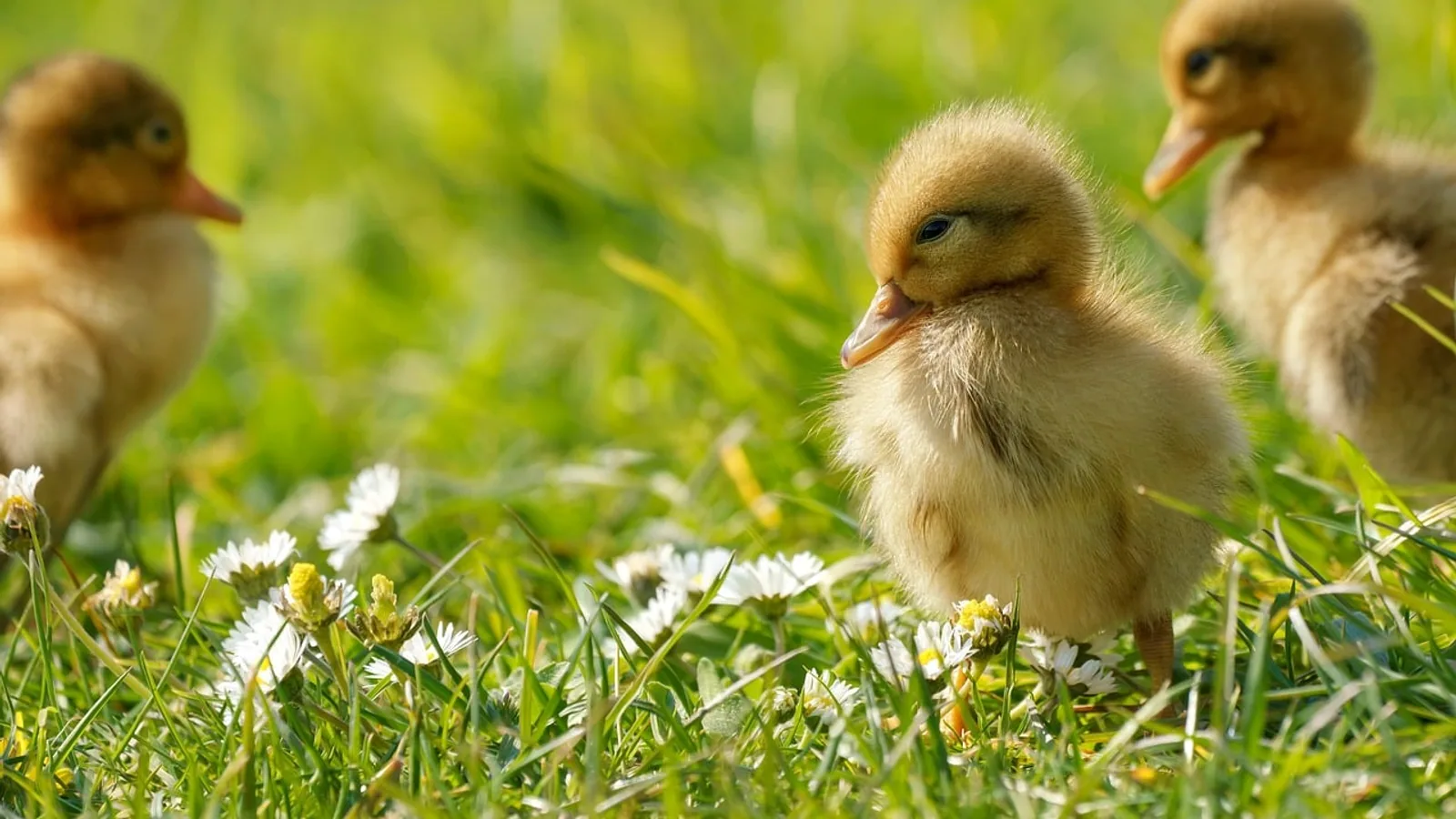
Feed ducklings a starter crumb with roughly 18 to 20 percent crude protein from day one through about two weeks of age, then move to a grower ration, then a finisher ration as they approach market or adult weight. The single most important nutrient difference between ducklings and chicks is niacin. Ducklings need far more of it, and a shortage produces the classic bowed-leg, waddling leg weakness that sends many backyard keepers looking for answers.
This guide gives you a week-by-week chart, explains why the protein and niacin numbers matter, covers water and grit, and walks through the mistakes that most often harm ducklings in backyard settings. This article is educational and is not a substitute for veterinary diagnosis or treatment.
The Short Answer: A Week-by-Week Feeding Chart
The table below summarizes the feeding phases used in controlled duck nutrition research. Commercial duck diets are typically formulated in three phases: starter, grower, and finisher [1]. A published duckling study used starter from 0 to 2 weeks, grower from 3 to 4 weeks, and finisher from 5 to 6 weeks [2]. Another used starter from 3 to 17 days, grower from 18 to 38 days, and finisher from 39 to 50 days [1].
| Age | Phase | Target crude protein | Niacin target | Feed form | Notes |
|---|---|---|---|---|---|
| Week 1 to 2 | Starter | 18 to 20 percent | 30 to 50 mg/kg of diet | Crumble or mash | Non-medicated. Never high-amprolium chick starter. |
| Week 3 to 4 | Grower | 16 to 18 percent | 30 to 50 mg/kg of diet | Crumble or small pellet | Introduce grit if feeding anything beyond the ration. |
| Week 5 to 6 | Finisher | 15 to 17 percent | 30 to 50 mg/kg of diet | Pellet or crumble | Continue until target weight or adult maintenance. |
| Week 7 onward | Maintenance or layer ration | Depends on purpose | Maintain supplement | Pellet | Breeders and layers need a calcium-appropriate ration. |
The niacin figure deserves emphasis. A controlled study of mule ducklings fed corn and soy based diets found a minimum dietary niacin requirement of 45 mg/kg of diet, and the same work showed that adequate niacin or tryptophan prevented bowed-leg disorder [3]. That is the scientific anchor for the 30 to 50 mg/kg range that appears in backyard guidance. Chicks need much less, which is exactly why chick starter alone is a poor match for a duckling.
Why Ducklings Are Not Small Chickens
Ducklings hatch at a high body weight relative to chicks and grow extremely fast. That growth rate drives their nutrient needs upward, especially for the B vitamin niacin, for amino acids, and for total protein.
The niacin problem in plain language
Niacin is used in energy metabolism and in the development of cartilage and bone. When a duckling does not get enough, the growth plates and long bones of the legs do not develop normally. The result is bowing of the legs, reluctance to walk, and a waddling gait. In the mule duckling study, adding sufficient niacin or tryptophan to the basal diet produced maximum growth and prevented bowed-leg disorder [3]. That study also found that excess tryptophan could spare the duckling's need for niacin, while excess niacin could not compensate for a tryptophan deficiency [3]. In practical terms, you cannot fix a niacin problem by dumping in more niacin if the protein quality of the ration is poor.
Protein and amino acids
Ducklings respond to protein level. A classic fattening trial in Muscovy ducks tested rations at 140 and 180 g crude protein per kg and found that high-protein feeding was superior to low-protein rations for live weight gain and meat yield [4]. That is why starter rations sit at the higher end of the protein range and finisher rations sit lower.
Amino acid quality matters as much as total protein. Methionine is a limiting amino acid in corn and soy based poultry diets, and a study in Peking ducks supplemented methionine at 0.05, 0.20, or 0.35 percent and measured stress and oxidative markers across a starter period (day 4 to 16) and a grower period (day 17 to 35) [5]. Threonine matters too. A study comparing broiler chicks and White Pekin ducklings fed graded threonine levels used a standard starter diet from 1 to 14 days of age before the experimental feeding period [6]. The takeaway for a keeper is simple. Buy a ration formulated for ducks or waterfowl rather than assuming any chick feed will do.
Starter Feed, Weeks 1 and 2
The first two weeks set the trajectory for the whole grow-out. Get this phase right and most of the rest follows.
What to look for
Choose a non-medicated starter crumb formulated for ducks or waterfowl. Crumble texture suits a small bill and reduces waste. The protein target is 18 to 20 percent. Niacin should be present at a level that delivers roughly 30 to 50 mg/kg of finished diet, whether from the base formula or from a supplement you add.
The amprolium warning
Many chick starters are medicated with amprolium, a coccidiostat. Amprolium works by interfering with thiamine metabolism in the parasite, and at the doses used in medicated chick feed it can interfere with thiamine in the bird as well. Ducklings are more sensitive to this than chicks. High-amprolium chick starter is a poor choice for ducklings, and it is one of the most common avoidable mistakes in backyard waterfowl. If the only starter you can find is medicated, look for a non-medicated alternative before you buy.
Adding niacin safely
Brewers' yeast is the traditional kitchen-level niacin source for ducklings. It is palatable and easy to sprinkle over the crumb. A dedicated niacin supplement formulated for poultry is another option. Whatever you use, aim to bring the total dietary niacin into the 30 to 50 mg/kg range rather than adding an arbitrary amount on top of an already adequate ration. Over-supplementation is not a substitute for a properly balanced starter, and the mule duckling work showed that niacin alone could not rescue a diet deficient in tryptophan [3].
Water in week 1 and 2
Ducklings need drinking water deep enough to submerge the bill. This is not a preference, it is anatomy. A duckling that cannot dip its bill cannot clear its nostrils and eyes properly, and it will make a mess trying. Use a shallow but deep-sided waterer that a duckling can reach into without climbing in and drowning. Refresh it often, because ducklings foul water quickly.
Grower Feed, Weeks 3 and 4
Around week three, shift from starter to grower. This is the phase where the skeleton is still developing and where niacin deficiency most often shows up as a gait problem.
Protein and energy
Grower rations typically sit at 16 to 18 percent crude protein. The Muscovy fattening work found that different energy levels did not change live weight development, but high-energy feed increased the feed required per kilogram of gain and produced carcasses with a higher fat proportion [4]. In other words, pushing energy does not buy you faster growth, it buys you a fatter bird and a worse feed conversion. Keep the ration moderate.
Fiber and alternative ingredients
Ducks tolerate fiber better than chickens, which is why some producers experiment with fibrous local ingredients. A study in Muscovy ducks tested the weed Asystasia gangetica at 0, 5, 10, and 20 percent in the starter phase and 0, 10, 20, and 30 percent in the grower phase. Ducks on the highest inclusion levels ate more crude fiber and ash, while control birds consumed more crude protein and ether extract. Overall body weight, weight gain, and feed conversion ratio were better in the control group than in the supplemented groups [7]. The practical lesson is that ducks can handle some fibrous material, but replacing quality protein with bulk costs you growth. Treat fibrous plants as a small accent, not a ration.
Insect protein is another area of active research. A study in Muscovy ducklings included partially defatted black soldier fly larva meal at 0, 3, 6, and 9 percent across starter (3 to 17 days), grower (18 to 38 days), and finisher (39 to 50 days) phases. Live weight and average daily gain showed a quadratic response during the grower period, with the minimum corresponding to the 6 percent group, and no effects were seen on daily feed intake or feed conversion ratio [1]. This tells you that insect meal is a viable partial protein source at low inclusion, not a replacement for a balanced ration.
Grit
Once a duckling is eating anything beyond a complete crumb or pellet, offer appropriate grit. Grit stays in the gizzard and helps grind coarse material. A duckling on nothing but commercial crumb does not need grit. A duckling getting grass, chopped greens, or other coarse treats does. Match grit size to the bird. Fine grit for young ducklings, larger grit as they grow.
Mycotoxin risk
Grain quality matters. A study in White Pekin ducklings fed grains naturally contaminated with Fusarium mycotoxins across starter (0 to 2 weeks), grower (3 to 4 weeks), and finisher (5 to 6 weeks) diets found that body weight gain, feed consumption, and feed efficiency were not affected. However, contaminated grain decreased plasma calcium after two weeks and plasma uric acid at the four-week assessment, and reduced mean corpuscular hemoglobin concentration and hematocrit after four and six weeks respectively [2]. The takeaway is that visibly moldy or damp-stored grain is not worth the risk. Store feed dry and use it promptly.
Finisher Feed, Weeks 5 and 6
Finisher rations bring protein down slightly, to roughly 15 to 17 percent, while keeping energy moderate. The goal is to complete frame and muscle development without laying down excess fat.
The same three-phase structure appears across the duck nutrition literature. One study used starter (3 to 17 days), grower (18 to 38 days), and finisher (39 to 50 days) [1], and another used starter (0 to 2 weeks), grower (3 to 4 weeks), and finisher (5 to 6 weeks) [2]. Exact week boundaries vary by breed and target weight, but the phase concept is consistent.
Keep the niacin target in place through the finisher phase. Leg problems that appear during rapid late growth are harder to correct than ones caught early.
Treats: The Ten Percent Rule
Treats should stay under about 10 percent of total daily intake. A complete ration is balanced. Every bite of something else dilutes that balance, and ducklings have small stomachs relative to their growth demands.
Safe treat categories include chopped dark leafy greens, small amounts of cooked or raw vegetables, and occasional bits of fruit. Avoid bread, which adds bulk and little nutrition. Avoid anything salty, anything fried, and anything with added sugar.
If you feed treats, feed grit alongside them. If you do not feed treats, you do not need grit.
Common Mistakes That Harm Ducklings
Using medicated chick starter
This is the most frequent and most serious error. High-amprolium chick starter is not appropriate for ducklings. Buy non-medicated starter formulated for waterfowl.
Assuming chick niacin levels are enough
Chick starter is formulated for chicks. Ducklings need substantially more niacin, and the mule duckling study put the minimum requirement at 45 mg/kg of diet [3]. If your starter does not clearly meet a duck-appropriate niacin level, supplement with brewers' yeast or a poultry niacin product.
Skipping the deep water
Ducklings need water deep enough to submerge the bill. Shallow chick waterers do not let them clear their nares and eyes. This is a welfare issue, not a convenience issue.
Feeding moldy or damp grain
Mycotoxin-contaminated grain altered calcium, uric acid, and hematologic parameters in ducklings even when growth looked normal [2]. If feed smells musty or has clumped from moisture, discard it.
Overloading on fibrous or low-quality fillers
Ducks digest fiber better than chickens, but replacing quality protein with fibrous bulk reduces growth performance [7]. Keep fibrous ingredients as a small fraction of the diet.
Ignoring the antibiotic-free trend
Antibiotic use in poultry production is a recognized driver of resistance, and research has compared probiotic starter supplements with antibiotic starter supplements in poultry including ducks. In that work, lyophilized probiotics in starter feed significantly increased body weight gain, feed intake, and feed conversion ratio compared with antibiotic groups, and produced favorable changes in serum calcium, serum protein, meat protein content, and serum cholesterol and triglycerides [8]. For a backyard keeper, this supports choosing a clean starter and good hygiene over reaching for medicated feed.
Water, Grit, and Housing Basics That Affect Feeding
Feeding does not happen in isolation. Water quality, floor condition, and bedding all interact with nutrition.
Provide water that is deep enough to submerge the bill but shallow enough that a duckling cannot climb in and become trapped. Refresh it at least twice daily in warm weather. Ducklings drink more than chicks and spill more, so bedding gets wet fast. Wet bedding plus spilled feed is a recipe for mold.
Provide grit in a small separate dish once treats or forage enter the diet. Do not mix grit into the main ration, because a duckling eating only crumb does not need it and excess grit displaces feed.
Keep feed off the floor where possible. A simple trough or tray reduces waste and keeps droppings out of the ration.
What Is Still Uncertain
Duck nutrition research is thinner than chicken nutrition research. Much of the duck-specific work uses Muscovy, Pekin, or mule ducklings under controlled conditions, and the results do not always translate directly to every backyard breed or every climate. The exact niacin requirement varies with diet composition, because tryptophan can spare niacin [3]. The optimal protein level varies with breed, sex, and target weight, as the Muscovy fattening work showed when high-protein rations outperformed low-protein ones across multiple energy levels [4]. The practical answer is to follow a duck-specific ration, supplement niacin to a reasonable target, and watch the birds. A duckling that walks normally, grows steadily, and has clean eyes and nares is being fed adequately.
Limitations and When to Contact a Veterinarian
This article is educational and is not a substitute for veterinary diagnosis or treatment. Contact a veterinarian promptly if a duckling shows any of the following.
- Sudden inability to stand or walk, or a new bow-legged stance that does not improve within a day or two of correcting the diet
- Swollen, hot, or visibly deformed leg joints
- Labored breathing, nasal discharge, or persistently closed or crusted eyes
- Refusal to eat for more than 12 hours, or a marked drop in water intake
- Diarrhea that persists beyond a day, or droppings with blood or unusual color
- A duckling that is being trampled, isolated, or losing weight relative to its hatchmates
- Any sudden death in a group, which warrants a veterinary assessment of the whole flock
Do not attempt to diagnose or treat a lame duckling with home remedies alone. Leg weakness has several causes, and niacin deficiency is only one of them.
Frequently Asked Questions
Can I feed ducklings medicated chick starter?
No. Medicated chick starter with high amprolium can be harmful to ducklings. Choose a non-medicated starter formulated for ducks or waterfowl.
How much niacin do ducklings need?
Aim for roughly 30 to 50 mg/kg of finished diet. Controlled research in mule ducklings found a minimum dietary niacin requirement of 45 mg/kg and showed that adequate niacin or tryptophan prevented bowed-leg disorder [3].
How do I add niacin to duckling feed?
Brewers' yeast sprinkled over the crumb is the traditional method. A poultry-specific niacin supplement is another option. Target the total dietary level rather than adding an arbitrary amount.
What protein level should duckling starter have?
Starter crumb for weeks 1 and 2 should be about 18 to 20 percent crude protein. High-protein feeding outperformed low-protein rations for weight gain and meat yield in Muscovy fattening trials [4].
When do I switch from starter to grower?
Most feeding programs move to grower around week 3. Research protocols have used starter from 0 to 2 weeks, grower from 3 to 4 weeks, and finisher from 5 to 6 weeks [2].
Do ducklings need grit?
Only if they are eating something beyond a complete crumb or pellet. A duckling on commercial ration alone does not need grit. Once you offer greens, forage, or other coarse treats, provide fine grit in a separate dish.
How deep should duckling water be?
Deep enough for the duckling to submerge its bill. This lets it clear its nostrils and eyes. Use a shallow but deep-sided waterer that the bird cannot climb into and drown.
What treats are safe for ducklings?
Chopped dark leafy greens and small amounts of vegetables are reasonable. Keep treats under about 10 percent of total daily intake so the balanced ration stays the foundation of the diet.
Related Articles
- Broiler Feed Intake Curves: Tracking Expected Consumption by Age
- Pet Parasite Prevention Schedule: Vet Chart for Dogs & Cats (By Age)
- Phase Feeding for Laying Hens: Adjusting Nutrition by Age
- Pasture-Based Feed Budgeting for Beef Cattle
- Pimobendan Vetmedin Cardiac Dose: Weight-Based CHF Dog Dosing Chart
- Creep Feeding Piglets and Feed Access
- Hog Feeding Guide: Rations, Stages, and Feed Conversion
Sources
- Nutritional effects of the dietary inclusion of partially defatted Hermetia illucens larva meal in Muscovy duck.
- Effects of feeding blends of grains naturally contaminated with Fusarium mycotoxins on performance, metabolism, hematology, and immunocompetence of ducklings.
- Niacin and tryptophan requirements of mule ducklings fed corn and soy-based diets.
- [[Requirements of Muscovy ducks (Cairina moschata domestica) for crude protein and energy levels of fattening diets].](https://pubmed.ncbi.nlm.nih.gov/603397/)
- A comparison of two sources of methionine supplemented at different levels on heat shock protein 70 expression and oxidative stress product of Peking ducks subjected to heat stress.
- Intestinal mucin dynamics: response of broiler chicks and White Pekin ducklings to dietary threonine.
- Effect of Asystasia gangetica inclusion in the diet on the feed intake, growth performance, and meat quality of Muscovy ducks.
- Comparative analysis between multi-strain probiotics and antibiotic as starter feed supplement of poultry on growth performance, serum metabolites and meat quality.