Laced Wyandotte Chickens: Breed Care Guide
By Dr. Zubair Khalid, DVM, MS, PhD ·
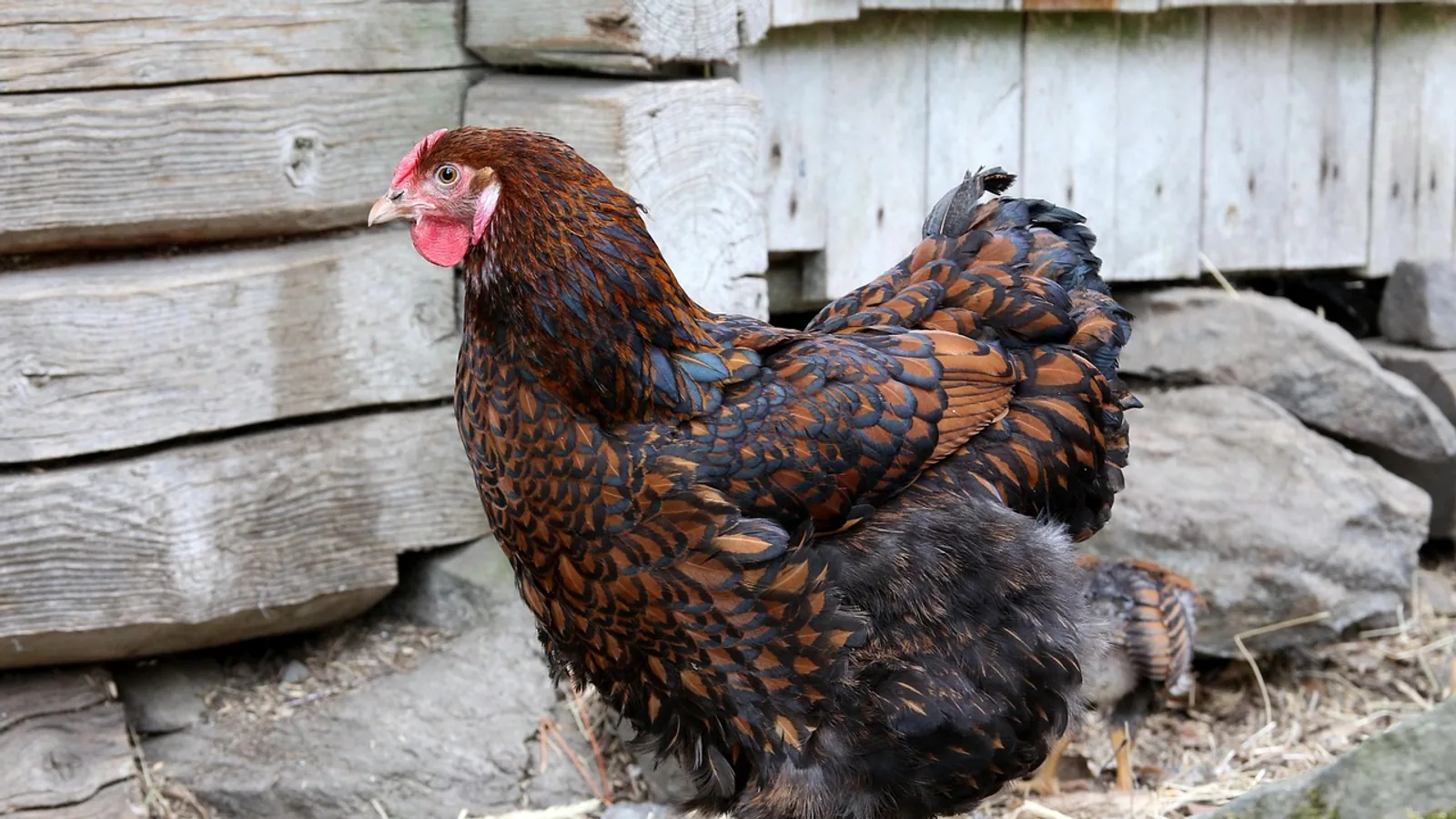
Laced Wyandotte chickens are a dual-purpose breed kept for both eggs and meat, recognized by the crisp dark border that outlines each feather. That border is called lacing, and it is a plumage pattern rather than a color. The same bird can be Silver Laced, Gold Laced, Blue Laced, or another variety, and the lacing itself is produced by the interaction of two specific genes. Wyandottes lay well for a heavy breed, tolerate cold weather because of a rose comb, and generally carry a calm, manageable temperament. They suit backyard keepers who want a steady supply of brown eggs, a bird that handles winter, and a flock that is not difficult to handle. They are less suited to keepers who want very high egg output or who cannot monitor a heavy hen for weight and reproductive problems.
This article covers the genetics behind lacing, what the breed produces, how to feed and house it, and which health problems deserve attention in heavy dual-purpose hens.
This article is educational and is not a substitute for veterinary diagnosis or treatment.
At a Glance
| Attribute | Detail |
|---|---|
| Primary use | Dual-purpose, eggs and meat |
| Egg production | 200 to 240 eggs per year |
| Egg color | Brown |
| Hen weight | 2.5 to 3.5 kg (about 5.5 to 7.7 lb) |
| Comb type | Rose comb, cold-hardy |
| Plumage pattern | Laced, produced by Pg and Ml interaction |
| Temperament | Calm and manageable |
| Climate tolerance | Good in cold weather |
| Main health concerns | Obesity, egg binding, external parasites |
| Space per bird | 0.3 to 0.4 m² in the coop |
| Feeder space | 10 cm per bird |
| Layer feed protein | 16 to 18 percent |
What Lacing Actually Is
Lacing is a secondary plumage pattern. In poultry genetics, the primary pattern describes how colored feathers are distributed across the body, while the secondary pattern describes how color is distributed on a single feather [1]. Lacing sits in the second category. On a laced feather, the center of the feather carries the ground color and the outer edge carries a band of dark pigment. When every feather on the body shows that band, the bird reads as laced from a distance.
The pattern is not a single gene. It depends on a pattern gene, written Pg, working together with a eumelanin intensifier called melanotic, written Ml. Carefoot's work on the Blue Andalusian bantam described the laced phenotype of the Gold-Laced Wyandotte as depending on homozygosity of a linkage between melanotic (Ml) and the pattern gene (Pg), in the presence of the eumelanin restrictor Columbian (Co) and the brown allele (eb) at the E locus [2]. In plain terms, you need the pattern gene to set up the feather-by-feather arrangement, melanotic to intensify the dark pigment at the edge, and a restricting gene to keep the body color from being overwhelmed by black.
This is why lacing is often described as fragile in a breeding sense. Remove one component and the pattern changes. Without the restricting gene, the bird tends toward self black rather than a defined edge. Campo and Alvarez showed that the melanotic gene modifies the birchen allele at the E locus and can produce a self black plumage pattern [3]. The same intensifier that creates a clean lace edge can, in a different genetic background, flood the whole feather with black.
The Blue Laced varieties add a third layer. Blue plumage in chickens comes from the Bl allele, which dilutes black pigment to a slate or blue-gray tone [4]. Campo and Alvarez found that with an E/E genotype, the blue dilution does not change black pigment to blue in the areas where melanotic or lacing genes produce black pigment, which is why a Blue Laced bird can show blue ground color with black lacing rather than blue lacing [5]. The lacing stays dark while the body color softens.
For a keeper, the practical takeaway is simple. Lacing is a genetic pattern, not a paint job. Two laced parents usually produce laced chicks, but the pattern can vary in sharpness, and crossing laced birds with non-laced breeds tends to blur or lose the edge. If you want to keep the pattern in your flock, breed laced to laced.
History and Purpose of the Wyandotte
The Wyandotte was developed as a dual-purpose farm bird, meaning it was expected to lay a useful number of eggs and also dress out as a table bird. That dual role shaped the breed's body. A dual-purpose hen is heavier than a layer breed and lighter than a broiler, and she carries enough muscle to make a real meal without becoming so heavy that she stops laying.
The laced varieties are the ones most associated with the breed name. Kimball's work on Laced Wyandottes examined the feather morphology and pattern genetics of the breed, including Silver-Laced and Golden-Laced strains [6]. The laced pattern was established in the breed early and became one of its defining features.
Because the breed was built for farm production rather than for a single purpose, it retains traits that matter to a backyard keeper. It forages reasonably well, handles confinement, and does not need the intensive management of a commercial layer. The rose comb is part of that farm-bird design. A rose comb sits low and close to the head, which reduces the surface area exposed to freezing air and makes the breed a better choice for cold climates than large single-comb breeds.
Appearance and the Laced Varieties


The most familiar laced Wyandotte is the Silver Laced, which pairs a white or silvery ground color with black lacing. The Gold Laced variety uses a rich golden ground with black lacing. Blue Laced varieties substitute a blue-gray ground color while keeping the dark lace edge.
The bird itself is compact and rounded. Wyandottes carry a broad body, a full breast, and a short, well-feathered back. The rose comb is small and low, sitting flat on top of the head. Wattles are present but modest. The legs are usually clean, without heavy feathering.
Feather quality matters more in this breed than in many others, because the lacing is the point. A bird with ragged or broken feathers loses the visual definition of the pattern. That is one reason external parasites deserve attention in laced birds. A heavy mite load damages plumage condition, and the damage shows up first on the feathers that carry the pattern. Schreiter and colleagues found that plumage damage in commercial laying flocks increased with increasing poultry red mite load, alongside hen age, housing system, and hybrid type [7]. In a backyard laced flock, a dulling or shredding of the lace edge can be an early sign that mites are present.
Temperament and Behavior
Wyandottes are generally calm. They are not an aggressive breed, and they are not a flighty one. A calm temperament makes them easier to handle for routine checks, which matters when you need to inspect a heavy hen for weight, vent condition, or parasites.
Calm does not mean inactive. These are still chickens, and they benefit from space to move, scratch, and dust bathe. A bird that is confined too tightly and fed too generously will gain weight, and weight gain in a heavy dual-purpose hen creates real problems.
Feather pecking is a behavior that can appear in any flock, and it is worth understanding because it damages the plumage that defines a laced bird. Plumage damage from severe feather pecking is a significant welfare and performance problem in laying flocks, and its causes are multifactorial, involving genetics, nutrition, and housing conditions [7]. In a backyard flock, crowding, poor nutrition, and boredom are the usual contributors. Give birds adequate space, a complete ration, and something to do, and the risk drops.
Housing and Space Requirements
Space is the foundation of backyard poultry care. The following parameters give a working baseline for a Wyandotte flock.
| Parameter | Target |
|---|---|
| Coop floor space | 0.3 to 0.4 m² per bird |
| Feeder space | 10 cm per bird |
| Waterer space | Enough that birds do not crowd |
| Layer feed protein | 16 to 18 percent |
The coop space figure of 0.3 to 0.4 m² per bird is a floor, not a target to squeeze under. Heavy breeds like Wyandottes need room to move because they are prone to weight gain. Crowding also increases the risk of feather pecking, and feather pecking damages the plumage pattern [7]. If your birds show bare patches, broken feathers, or pecked vents, the first thing to check is whether they have enough room.
Feeder space of 10 cm per bird prevents competition at the trough. When feeder space is short, dominant birds eat more and subordinate birds eat less, which produces uneven body condition across the flock. In a heavy breed, that unevenness is a problem in both directions. The birds that eat more get too heavy, and the birds that eat less may not get enough to lay well.
Ventilation matters more than insulation in most coops. Chickens tolerate cold well when they are dry and out of the wind. The rose comb helps with frostbite risk, but it does not make a damp, unventilated coop safe. Provide high vents so moisture and ammonia escape without creating a draft at bird level.
Perches should be wide enough for a heavy hen to grip and roost comfortably. A narrow perch forces birds to balance, and a bird that cannot settle on the perch may sleep on the floor, where she is more exposed to drafts and to droppings.
Nest boxes should be dark, quiet, and lined with clean bedding. A heavy hen needs a nest box she can enter and turn around in without difficulty. Boxes that are too small or too high can discourage laying in the box and encourage laying on the floor, which increases the risk of dirty or broken eggs.
Feeding and Nutrition
Feeding a Wyandotte is mostly about matching protein to life stage and avoiding overfeeding.
A laying hen needs a complete layer ration with 16 to 18 percent protein. This range supports egg production and maintains body condition in a hen that is laying regularly. Do not dilute the ration with large amounts of scratch grain, table scraps, or treats. Those additions lower the effective protein and nutrient density of the diet, and in a heavy breed they add calories that the hen does not need.
Chicks and growing birds need a higher-protein starter and grower ration, and pullets should be moved to layer feed as they approach lay. The exact transition timing depends on the bird and the product, so follow the feed label and your veterinarian's guidance.
Calcium is critical for laying hens. A hen pulls calcium from her skeleton to build eggshells, and if dietary calcium is short, she draws down bone reserves. Provide a separate source of calcium, such as crushed oyster shell, so hens can self-regulate. Do not add calcium to the feed of non-laying birds, because excess calcium in growing birds and roosters can cause problems.
Fresh, clean water must be available at all times. A hen that is laying heavily drinks a surprising amount of water, and a bird that is off water will drop production quickly. In cold weather, check waterers for ice. In hot weather, check that water stays cool and that birds have shade.
Obesity is the main nutritional risk in this breed. A Wyandotte hen that is fed free-choice scratch, kitchen scraps, and a full layer ration will gain fat. Fat hens lay poorly, and a fat hen has more trouble passing an egg. The fix is portion discipline, not starvation. Feed a measured ration, keep treats small and infrequent, and monitor body condition by feeling the breastbone. A hen in good condition has a breastbone you can feel but not see sharply protruding. A hen that is too fat has a breastbone buried under a thick layer of tissue.
Egg Production and Reproduction
Wyandotte hens produce 200 to 240 brown eggs per year under good management. That figure puts them in the productive range for a dual-purpose breed, below the output of a dedicated commercial layer but well above a purely ornamental breed.
Production depends on more than genetics. Nutrition, light, age, health, and stress all affect how many eggs a hen actually lays. A hen on a marginal ration, in a crowded coop, or under parasite pressure will not hit the breed's potential. The production figure is a target for a well-managed flock, not a guarantee for every individual bird.
Egg binding is a specific risk in heavy hens and deserves attention. Egg binding occurs when a hen cannot pass an egg. A heavy hen with excess fat around the reproductive tract, a very large egg, or a calcium or hydration problem is at higher risk. Signs include a hen that is straining, sitting hunched, off feed, or repeatedly visiting the nest box without producing an egg. Egg binding can become life-threatening, so a hen showing these signs needs veterinary attention rather than home remedies.
Broodiness varies among individual Wyandotte hens. Some will sit on a clutch, and some will not. If a hen goes broody, she stops laying and spends her time on the nest. You can either let her hatch chicks or break her broodiness by removing her from the nest repeatedly and keeping the coop cool and well-lit. A broody hen should still have access to food and water, because a long broody period costs her body condition.
Grooming and Routine Care
Chickens groom themselves through dust bathing and preening, and they do not need bathing under normal circumstances. Your job is to support their grooming and to inspect the results.
Dust bathing is how chickens control external parasites and keep their feathers in order. Provide a dry area with loose material, such as sand, dirt, or wood ash, where birds can bathe. A flock without a dust bath area is more likely to carry mites and lice.
Inspect your birds regularly. Pick up each bird at least monthly and check the following.
- Feather condition, looking for broken feathers, bare patches, or a dulled lace edge.
- Skin at the vent, under the wings, and around the tail base, looking for redness, scabs, or moving parasites.
- The vent itself, checking for discharge, swelling, or signs of prolapse.
- The feet and legs, checking for swelling, scabs, or scaly leg.
- Body condition, feeling the breastbone to judge whether the bird is too thin or too heavy.
External parasites are a major cause of plumage damage. The poultry red mite is the most severe ectoparasite of laying hens in cage-free housing systems, and mite load is associated with worsening plumage condition [7]. Mites hide in cracks and crevices during the day and feed on birds at night, so you may not see them on the bird. Check the coop structure, especially perch ends, nest box joints, and any wooden cracks. A clean coop with accessible surfaces is easier to inspect and treat.
Feather pecking is a separate problem from parasitism, though both damage plumage. Feather pecking is a behavior, and it has genetic, nutritional, and housing components [7]. If you see birds pecking at each other, review space, feeder access, protein level, and whether the flock has enough to do.
Health Problems to Watch For
Obesity
Obesity is the most predictable health problem in a heavy dual-purpose breed. A fat hen lays poorly and is at higher risk of reproductive complications. Prevention is straightforward. Feed a measured ration, keep treats minimal, and give birds enough space to move. Weigh or body-condition your birds periodically so you catch weight gain before it becomes a laying problem.
Egg Binding and Reproductive Problems
Egg binding is a medical emergency in any hen and a particular concern in heavy hens. A hen that is straining, hunched, off feed, or repeatedly on the nest without producing an egg should be examined by a veterinarian. Do not attempt to pull an egg out yourself. Improper manipulation can tear the oviduct and kill the bird.
External Parasites
Mites and lice cause plumage damage, skin irritation, and reduced production. Mite load is associated with worse plumage condition in laying flocks [7]. Treat the birds and the coop together, because parasites that live in the structure will reinfest birds after treatment. Follow your veterinarian's guidance on approved products and withdrawal times for eggs.
Feather Pecking and Plumage Damage
Feather pecking damages the feathers that carry the lacing pattern and can progress to skin injury and cannibalism. Its causes are multifactorial, involving genetics, nutrition, and housing [7]. Address space, nutrition, and enrichment first. If pecking continues, separate the affected bird and consult a veterinarian.
Respiratory and General Flock Disease
Chickens are susceptible to a range of respiratory and systemic diseases. Signs that warrant veterinary attention include labored breathing, swollen or watery eyes, nasal discharge, a drop in egg production, and a bird that separates itself from the flock. Because many flock diseases spread quickly, early veterinary involvement protects the whole flock.
Screening and Monitoring
There is no single screening test that covers backyard poultry health. Monitoring is the practical substitute. Build a routine that includes the following.
- Daily observation of behavior, appetite, and water intake.
- Weekly check of the coop for mites, damp bedding, and ammonia smell.
- Monthly hands-on examination of each bird, including feather condition, vent, feet, and body condition.
- Periodic review of egg production, because a drop in production is often the first sign of a flock problem.
- Regular review of the ration, including protein level and calcium availability.
If you keep a flock, establish a relationship with a veterinarian who sees poultry before you have an emergency. Finding a veterinarian during a crisis wastes time you may not have.
Lifespan and Long-Term Management
A well-managed Wyandotte hen can live for several years, though egg production declines with age. Many backyard keepers keep hens well past their peak laying years as part of a mixed flock.
Long-term management focuses on three things. Keep the ration appropriate to life stage, keep the coop clean and uncrowded, and monitor body condition as the bird ages. Older heavy hens are more prone to weight gain and reproductive problems, so the checks that matter in a young flock matter more in an aging one.
If you keep a rooster, plan for the behavior and space that a rooster requires. If you do not, plan for what happens to hens that stop laying. Deciding this in advance is part of responsible flock ownership.
Finding a Responsible Source
Whether you buy from a breeder or take birds from a rescue, ask questions before you commit.
Ask about the health history of the flock. Ask whether the birds have been treated for mites or lice and when. Ask what the birds have been eating so you can transition them to your ration gradually rather than abruptly. Ask whether the birds have been vaccinated and against what.
Inspect the birds before you buy. Look for bright eyes, clean vents, smooth feathers, and active behavior. A bird that is hunched, dull, or thin is a poor choice regardless of how good the lacing looks. Lacing is a pattern, and a beautiful pattern on a sick bird is still a sick bird.
For rescue birds, expect less history and more unknowns. Quarantine new birds away from your existing flock for a period your veterinarian recommends, and have them examined before introduction. Quarantine is the single most effective step for preventing a new bird from bringing disease into an established flock.
Who Should Not Get Laced Wyandottes
Laced Wyandottes are not the right choice for every keeper.
They are a poor fit if you want maximum egg output. A commercial layer hybrid will out-lay a Wyandotte, and if production is your only goal, a dual-purpose breed is the wrong tool.
They are a poor fit if you cannot monitor a heavy hen. Obesity and egg binding are real risks in this breed, and both require attention. A keeper who cannot check birds regularly or who will not seek veterinary care for a straining hen should choose a lighter breed with fewer reproductive complications.
They are a poor fit if you want a bird that stays small. Wyandottes are heavy. They eat more than a bantam, they need more coop space, and they produce more manure.
They are a poor fit if you cannot provide adequate space. Crowding a heavy breed increases feather pecking and weight problems. If your coop is small, choose a smaller breed or keep fewer birds.
They are a good fit if you want a calm, cold-hardy, dual-purpose bird with a distinctive look, and if you are willing to manage weight and monitor health.
Limitations and When to Contact a Veterinarian
This article describes general breed care. Individual birds vary, and a veterinarian who examines your bird can give advice that applies to that bird.
Contact a veterinarian promptly if you see any of the following.
- A hen straining, hunched, or repeatedly on the nest without producing an egg, which may indicate egg binding.
- A bird that has stopped eating or drinking.
- Labored breathing, nasal discharge, or swollen eyes.
- A sudden drop in egg production across the flock.
- A bird that separates itself from the flock and sits puffed up.
- Visible parasites on the bird or heavy mite evidence in the coop.
- Bleeding, a prolapsed vent, or a wound from pecking.
- A bird that is losing weight despite eating, or one that is so heavy it struggles to move.
Do not wait for a mild problem to become severe. Backyard poultry medicine is most effective when it starts early.
Frequently Asked Questions
What makes a Wyandotte laced?
Lacing comes from the pattern gene Pg working with the melanotic gene Ml, which together produce a dark edge on each feather. The pattern also depends on a restricting gene that keeps the body color from turning solid black [2].
How many eggs do Laced Wyandotte hens lay?
A well-managed hen lays 200 to 240 brown eggs per year. Actual production depends on nutrition, light, age, health, and stress.
Are Wyandottes good for cold weather?
Yes. The rose comb sits low on the head, which reduces frostbite risk compared with a large single comb. Dry, draft-free housing still matters.
How much space does a Wyandotte need?
Plan for 0.3 to 0.4 m² of coop floor space per bird and 10 cm of feeder space per bird. Heavy breeds do better with more room, not less.
What should I feed a Laced Wyandotte?
Feed a complete layer ration with 16 to 18 percent protein during lay, and provide a separate calcium source such as crushed oyster shell. Keep treats small.
Are Wyandottes prone to health problems?
They are prone to obesity and egg binding because of their heavy build. External parasites and feather pecking also affect plumage condition [7].
What does egg binding look like?
A hen that is straining, sitting hunched, off feed, or repeatedly visiting the nest without laying may be egg bound. This is an emergency. Contact a veterinarian.
Can I keep Wyandottes in a small backyard flock?
Yes, if you provide adequate space and a complete ration. Crowding increases feather pecking and weight problems, so keep the flock size matched to the coop.
Related Articles
- Raising Chickens for Eggs: Breed Selection, Care, and Egg Production
- Hairless Cat: Care, Health, and Breed Guide
- Silkie Chicken Care Guide
- Bantam Chicken Care Guide
- Australian Cattle Dog: Complete Care Guide for This Energetic Breed
- Norwegian Forest Cat: Complete Care Guide for This Majestic Breed
Sources
- Genetics of feather pigmentation and chicken plumage colouration.
- Inheritance of the laced plumage pattern of the blue Andalusian bantam.
- Genetics of the Birchen and Blue Plumage Patterns in Leonesa Chickens
- Comparative Genetics of Blue Plumage in Poultry
- Further study on the plumage pattern of the Blue Andalusian breed.
- Cock-Feathered Laced Wyandotte and White-Laced Red Cornish
- Effects of the poultry red mite (Dermanyssus gallinae) load on the plumage condition in commercial laying hen farms