Guinea Hen Coop: Design, Size, and Setup Guide
By Dr. Zubair Khalid, DVM, MS, PhD ·
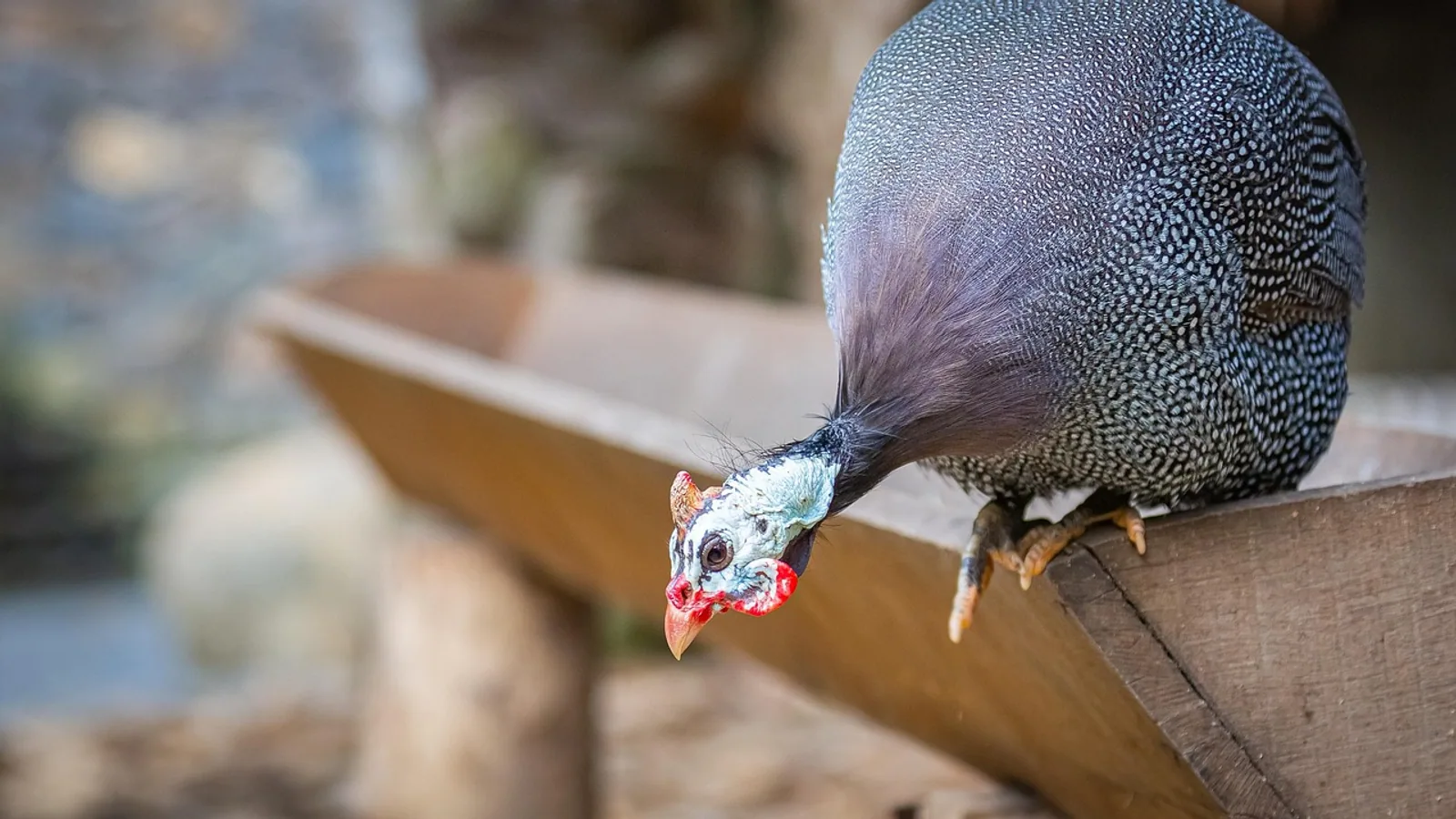
A guinea hen coop works best when it is built around one fact: guinea fowl are only partly domesticated. They forage like wild birds, they fly well, they roost high, and they are loud about anything that moves at night. A coop that suits chickens often fails guinea fowl because the roosts sit too low, the pop door is too small, and the run is too short for birds that want to walk several acres a day.
The practical answer is a shed-style or elevated coop with about 2 to 3 square feet of indoor floor space per bird, an attached run of 8 to 10 square feet per bird, roosts set 4 to 6 feet above the floor, and one nest box for every 4 to 5 hens. Confine new birds inside the coop and run for 4 to 6 weeks before you let them free-range, so they learn that this building is home. Then predator-proof the whole thing with 1/2-inch hardware cloth, a buried apron, and a pop door you lock every night.
This guide covers dimensions per bird, roost and nest box specifications, a step-by-step build and setup sequence, predator-proofing, coop style comparisons, common mistakes, and the health and welfare points that matter most for a semi-wild flock.
At a Glance: Guinea Hen Coop Specs
| Item | Specification | Notes |
|---|---|---|
| Indoor floor space | 2 to 3 sq ft per bird | More if birds are confined during bad weather |
| Run space | 8 to 10 sq ft per bird | Free-range access reduces reliance on the run |
| Roost height | 4 to 6 ft above the floor | Guinea fowl prefer the highest available perch |
| Roost length | 8 to 12 inches per bird | Flat 2x4 lumber is easier on feet than a round dowel |
| Nest boxes | 1 per 4 to 5 hens | 12 x 12 x 12 inches is a workable size |
| Pop door | 12 x 12 inches minimum | Locked every night |
| Ventilation | High openings, screened | Keep drafts off the roost area |
| Wire | 1/2-inch hardware cloth | Not chicken wire |
| Ground defense | Buried apron, 12 to 18 inches deep, outward | Stops digging predators |
| Acclimation period | 4 to 6 weeks of confinement | Before free-ranging |
| Litter | 3 to 4 inches of dry shavings or straw | Kept dry, topped up as needed |
Why Guinea Fowl Need a Different Coop Than Chickens
Guinea fowl are gallinaceous birds in the same broad family as chickens, turkeys, and pheasants, but their behavior sits closer to wild game birds. They spend most of the day walking and foraging, they fly strongly for short distances, and they prefer to sleep as high off the ground as they can get. A chicken coop with a low roost and a small covered run will hold guinea fowl physically, but it will not match how they want to live.
That mismatch shows up in three ways.
First, guinea fowl that cannot roost high will often try to roost on the coop roof, in trees, or on fence posts. Birds roosting outside your predator-proof structure are exposed every night.
Second, guinea fowl that are not trained to a specific building will not reliably return to it. They will pick a tree, a barn eave, or a neighbor's shed and stay there. Training them to a coop takes deliberate confinement, not a single night in a box.
Third, guinea fowl are noisy and alert. They call at disturbances, at dusk, and at anything unusual. This is part of their value as a flock alarm, but it also means the coop should sit away from bedroom windows and property lines where the noise will cause friction.
The research base on guinea fowl husbandry is thinner than the base on chickens, but the production studies that exist are consistent on one point: guinea fowl respond to space. In a study of Pearl Gray guinea fowl laying hens, feed consumption and hen-day egg production fell significantly as cage density increased, with the widest spacing producing the best results [1]. In a separate study of French guinea broilers raised on floor pens, birds given more floor area per bird consumed more feed and performed differently than birds packed more tightly [2]. Neither study was run in a backyard coop, but both point the same direction. Give guinea fowl room and they do better.
How Much Space Does a Guinea Hen Coop Need?
Use 2 to 3 square feet of indoor floor space per bird as your baseline. That figure assumes the birds spend most of the day outside and use the coop mainly for roosting, nesting, and shelter from weather. If your flock will be locked inside for full days during storms, deep snow, or predator pressure, plan on the upper end of that range or more.
The run should add 8 to 10 square feet per bird. Guinea fowl that free-range during the day need less run space because they are not confined to it. Guinea fowl kept in a run full time need more, and a run that is bare dirt will turn to mud quickly under a flock that walks constantly.
Here is how the numbers scale for a typical backyard flock:
| Flock size | Indoor space (2 to 3 sq ft/bird) | Run space (8 to 10 sq ft/bird) |
|---|---|---|
| 6 birds | 12 to 18 sq ft | 48 to 60 sq ft |
| 10 birds | 20 to 30 sq ft | 80 to 100 sq ft |
| 15 birds | 30 to 45 sq ft | 120 to 150 sq ft |
| 20 birds | 40 to 60 sq ft | 160 to 200 sq ft |
A few practical notes on these numbers.
Guinea fowl are active birds. They walk more than chickens and they flush upward when startled. A coop that meets the minimum square footage but has a low ceiling will cause injuries when birds launch off the roost or spook at night. Aim for at least 6 feet of interior height at the roost wall, and 7 to 8 feet if you can manage it.
Feeder and waterer space also matters. In the French guinea broiler study, birds were given feeder space ranging from 2.7 to 4 cm per bird and water space from 1.4 to 2.0 cm per bird, and the wider allocations were associated with higher feed consumption [2]. For a backyard flock, provide enough linear feeder space that all birds can eat at once without crowding, and keep waterers clean and unfrozen.
Coop Design: Key Features for Guinea Fowl
Height and Structure
Build tall. Guinea fowl want to get off the ground, and a coop with a low roof forces them into a crouch or pushes them onto the roof itself. A shed-style coop with a single-slope or gable roof and 7 to 8 feet of clearance at the high wall gives you room for high roosts, easy human access, and better air movement in summer.
The structure needs to be solid. Guinea fowl are strong fliers for their size and will hit walls and roofing when startled. Use framing that does not flex, and secure every panel. A flimsy coop will not survive a flock that spooks at 2 a.m.
Ventilation Without Drafts
Guinea fowl produce moisture and ammonia like any poultry, and a closed coop will get damp and smell. Put ventilation openings high on the walls, above the roost height, and cover them with 1/2-inch hardware cloth. High openings let warm, moist air escape without blowing across the birds. Low openings at roost level create drafts that chill birds in cold weather.
The goal is dry air, not warm air. Guinea fowl are hardy in cold temperatures if they are dry and out of the wind. They handle heat less well, so summer ventilation matters just as much.
Flooring and Litter
A solid floor is easier to keep dry and predator-proof than a dirt floor. Wood over a raised frame, or a concrete slab, both work. Cover the floor with 3 to 4 inches of dry shavings or straw, and add more as it packs down. Clean out wet spots promptly. Deep litter that stays dry and gets turned occasionally composts in place and produces some warmth, which helps in winter.
Do not use a wire floor. Guinea fowl spend hours standing and walking, and wire causes foot injuries.
Lighting
Guinea fowl are seasonal layers. In the Pearl Gray laying hen study, birds were kept on a 16-hour lighting regimen and fed a layer diet for the length of the trial [1]. For backyard flocks, natural daylight is usually enough, and many owners prefer to let the birds follow the season. If you want eggs through the short days of winter, supplemental light in the coop can extend the laying period, but it also increases feed demand and wear on the hens. Decide based on your goals.
Roosts: Height, Material, and Layout
Roost height is the single most important design detail in a guinea hen coop. Guinea fowl want the highest perch available. Set roosts 4 to 6 feet above the floor, and make sure nothing else in the coop is higher, or the birds will crowd onto that instead.
Use flat lumber, 2x4 or wider, with the wide face up. Flat roosts let guinea fowl settle their feet and cover their toes with their bodies in cold weather. Round dowels and narrow rails force birds to grip constantly and lead to foot problems.
Allow 8 to 12 inches of roost length per bird. Guinea fowl do not pack as tightly as chickens, and they will squabble over space if the roost is short. Provide more than one roost at the same height so birds can spread out, and space the roosts 12 to 15 inches apart so birds on the lower bar are not fouled by birds above.
Mount roosts so they can be removed for cleaning. A roost that is screwed into place becomes a permanent perch for mites and lice. Make it lift out.
Place the roosts away from the pop door and away from nest boxes. Guinea fowl coming in at dusk should be able to fly up to the roost without crossing the nest area, and hens going to nest boxes should not have to walk under a busy roost.
Nest Boxes: How Many and What Size
Provide one nest box for every 4 to 5 hens. A flock of 10 hens needs 2 to 3 boxes. A flock of 20 hens needs 4 to 5.
Boxes should be about 12 inches wide, 12 inches deep, and 12 inches high. Guinea hens are smaller than most standard chicken breeds, but they like a little room to turn around. Line each box with dry shavings or straw, and check it for broken eggs and soiled bedding.
Mount nest boxes low, at or near floor level, or on a raised platform no more than 18 to 24 inches off the floor. Guinea hens are ground nesters by instinct and will look for a quiet corner at floor level before they climb. Boxes mounted high on a wall often go unused.
Keep nest boxes in the darkest, quietest part of the coop, away from the pop door and away from the roost. Hens want privacy when they lay.
Guinea hens can be secretive layers. Some will lay in the coop, some will lay in a corner of the run, and some will hide a nest in tall grass if they free-range. Walk your property during the laying season and check for hidden nests, especially if egg numbers drop.
The Run: Size, Cover, and Ground Management
The run is where guinea fowl spend most of their daylight hours when they are not free-ranging. Give them 8 to 10 square feet per bird, and more if they will be confined.
Cover the run. Guinea fowl fly well, and an open-topped run will not hold them. A solid roof, or a roof of wire or netting, keeps birds in and keeps hawks out. If you use netting, use a heavy gauge that will not sag or tear.
Wire the run walls with 1/2-inch hardware cloth, not chicken wire. Chicken wire keeps chickens in. It does not keep raccoons, foxes, or weasels out. Raccoons can reach through chicken wire and pull a bird apart. Weasels go through gaps the size of a quarter.
Manage the ground. A run that is bare dirt will turn to mud and become a parasite problem. Add coarse wood chips or sand, and rotate the flock off the run when it gets wet. Guinea fowl are foragers, and a run with some vegetation, scratch areas, and cover will keep them busy and reduce feather pecking.
Provide shade and windbreak. A run with no shade in summer and no windbreak in winter is hard on birds. Plant or build accordingly.
Predator-Proofing a Guinea Hen Coop
Predator-proofing is not optional with guinea fowl. They roost high, they are noisy, and they are not aggressive defenders. A coop that is not secure will lose birds, usually at night.
Work through these steps in order.
- Use 1/2-inch hardware cloth everywhere. Cover every opening, every vent, every gap, and the full run. Fasten it with poultry staples or screws and washers, not with staples alone. Predators pull wire loose at the edges.
- Bury an apron. Dig a trench 12 to 18 inches deep around the entire perimeter and bend the hardware cloth outward into it, then backfill. This stops digging predators like foxes and dogs. An apron laid flat on the ground surface and pinned down also works and is easier to install, but it must be covered with soil or gravel so it does not become a trip hazard or a snag for mowers.
- Lock the pop door every night. A pop door that is open at night is an open invitation. Fit a solid door that closes flush, and use a latch that a raccoon cannot work. Raccoons open simple hooks and sliding bolts. Use a carabiner, a lock, or a latch with a positive catch.
- Secure the roof. Hawks, owls, and climbing predators come from above. A solid roof or a well-fastened wire roof closes that route. Check for gaps at the eaves.
- Close the gaps. Walk the coop and run with a flashlight at night and look for any opening wider than 1/2 inch. Mice and small snakes get through anything larger. Rats chew through wood and plastic.
- Manage the area around the coop. Tall grass, brush piles, and stored lumber give predators cover to approach. Keep a clear zone around the structure.
- Do a nightly close-up routine. Count birds on the roost, close and latch the pop door, and check the run gate. This takes two minutes and prevents most losses.
Guinea fowl are also vulnerable to predators during the day when they free-range. Hawks, dogs, and foxes take birds in open fields. Some owners keep a livestock guardian dog or run the flock with other animals for added protection. Others accept some loss as the cost of free-ranging. Decide what level of risk you can live with before you turn birds out.
Training Guinea Fowl to Return to the Coop
Guinea fowl do not automatically know that your coop is home. They learn it through confinement.
Keep new guinea fowl locked inside the coop and covered run for 4 to 6 weeks before you let them out. During this period, they eat, drink, roost, and lay in the coop. They learn the building as a safe place, and they learn the routine of going in at dusk.
After the confinement period, open the pop door in the late afternoon and let the birds out for a short period before dusk. Stay nearby. Most flocks will drift back toward the coop as the light fades. If birds do not go in, herd them gently toward the door. Do this for several days, extending the time out each day.
Once the flock is reliably returning at dusk, you can let them out in the morning. Keep the evening routine consistent. Guinea fowl are creatures of habit, and a flock that is fed and closed in at the same time each evening will return on its own.
If a bird refuses to go in, do not leave it outside. Guinea fowl roosting in trees are easy prey. Use a long-handled net or a soft broom to guide the bird down and into the coop. Do not chase it, because a panicked guinea fowl will fly farther away.
Keets, the young of guinea fowl, need a different approach. They are fragile and need warmth and protection for their first weeks. Brood them in a secure, draft-free area with heat, then move them to the coop once they are feathered out and the weather allows. Follow the same confinement and training routine as for adults.
Coop Style Comparison: A-Frame, Shed, and Tractor
The three coop styles most backyard owners consider are the A-frame, the shed, and the tractor. Each has tradeoffs in capacity, predator resistance, and cost.
| Style | Typical capacity | Predator resistance | Cost profile | Best use |
|---|---|---|---|---|
| A-frame | 4 to 8 birds | Moderate. Small footprint is easy to secure, but low interior height limits roost options. | Low to moderate. Simple materials and a small footprint. | Small flocks in mild climates with daily free-range access. |
| Shed | 10 to 30+ birds | High. Solid walls, tall interior, room for high roosts and a real door. | Moderate to high. More materials and more labor. | Permanent flocks, cold winters, owners who want high roosts and easy access. |
| Tractor | 6 to 12 birds | Moderate to high if fully wired and moved regularly. Ground contact is a weak point. | Low to moderate. Often built from salvaged materials. | Rotational grazing on pasture, small flocks, movable setups. |
A-frame coops are the simplest to build and the easiest to move. They suit small flocks in mild climates where birds are out most of the day. The main drawback is height. An A-frame rarely gives you the 4 to 6 feet of roost clearance guinea fowl want, so birds may end up roosting on the frame itself or on the roof.
Shed-style coops are the best match for guinea fowl. They give you height for high roosts, room for nest boxes at floor level, space for feeders and waterers, and a solid structure that is straightforward to predator-proof. They cost more and take longer to build. For a permanent flock, the extra investment pays off in bird health and your own convenience.
Tractors are movable pens with an open or wire floor. They work well for rotational grazing and for keeping birds on fresh ground. The weakness is the floor. A tractor sitting on the ground is vulnerable to digging predators, and moving it daily is labor. If you use a tractor, add a wire skirt or an electric fence around the perimeter, and move it before the ground underneath turns to mud.
A hybrid approach works well for many owners: a permanent shed-style coop with high roosts and nest boxes, paired with a movable run or a fenced pasture area for daytime foraging. The birds get the security of a solid coop at night and the freedom to range during the day.
Step-by-Step Setup Sequence
This is the order that works. Adjust to your site and climate.
- Pick the site. Choose a spot on high, well-drained ground. Face the coop away from prevailing winter winds and away from bedrooms and property lines. Leave room to work around the coop and to park a wheelbarrow.
- Size the coop and run. Use 2 to 3 square feet per bird indoors and 8 to 10 square feet per bird in the run. Round up rather than down.
- Build or place the structure. Set the coop on a solid base, either a raised wood floor or a concrete slab. Make sure the structure is square and rigid.
- Install ventilation. Cut high openings on at least two walls and cover them with 1/2-inch hardware cloth.
- Install the roosts. Set flat 2x4 roosts 4 to 6 feet above the floor, 8 to 12 inches per bird, mounted so they lift out for cleaning.
- Install the nest boxes. Place one box per 4 to 5 hens at or near floor level, in the darkest corner of the coop.
- Wire the run. Cover the walls and roof with 1/2-inch hardware cloth. Fasten with screws and washers or poultry staples.
- Bury the apron. Dig a 12 to 18 inch trench around the perimeter and bend the hardware cloth outward into it. Backfill and tamp.
- Fit the pop door. Install a solid door that closes flush, with a latch a raccoon cannot open. Add a second latch or a lock if you want extra security.
- Add feeders and waterers. Provide enough linear space that all birds can eat at once. Keep water clean and unfrozen.
- Add litter. Put down 3 to 4 inches of dry shavings or straw.
- Confine new birds for 4 to 6 weeks. Let them learn the coop as home before you open the door.
- Start the evening routine. Open the pop door in the late afternoon, let birds out briefly, and close them in at dusk. Repeat until the flock returns on its own.
- Check the coop at night. Walk the perimeter with a flashlight, look for gaps, and confirm the pop door is latched.
Nutrition and Health Notes for Cooped Guinea Fowl
Housing and nutrition are linked. Birds that are confined to a coop and run cannot meet their nutritional needs from forage alone, and they depend entirely on the feed you provide.
Guinea fowl have specific nutrient requirements that change with age. A study of the Pearl Gray guinea fowl found that lysine, an essential amino acid, is the second limiting amino acid in poultry diets after methionine, and that the lysine requirement of the Pearl Gray guinea fowl was not well established before that work [3]. The same study used diets with 23% crude protein from 0 to 4 weeks, 21% from 5 to 10 weeks, and 17% from 11 to 12 weeks, with metabolizable energy around 3,100 to 3,150 kcal/kg [3].
An earlier study of growing guinea fowl concluded that the diet should contain about 12.6 MJ of metabolizable energy per kg, with protein dropping from 24 to 26% in the first 4 weeks to 19 to 20% from 4 to 8 weeks and to 16% or less from 8 to 12 weeks [4]. That is a useful reference for anyone raising keets, because protein needs fall as birds grow.
For laying hens, the Pearl Gray study used a diet with 2,800 kcal of metabolizable energy per kg and 16% crude protein from 28 to 59 weeks of age, then 14% crude protein from 60 to 76 weeks [1]. Those figures are a reasonable starting point for a backyard layer ration, though commercial guinea fowl feeds are not always available and many owners use a game bird or turkey ration.
Water matters as much as feed. Guinea fowl drink frequently, and a waterer that freezes or runs dry in summer will hurt the flock quickly. Check water at least twice a day in extreme weather.
Watch for the common problems of confined poultry: foot injuries from wet litter or wire floors, external parasites like mites and lice, respiratory disease in damp coops, and feather pecking in crowded or boring environments. Dry litter, good ventilation, adequate space, and something to do (foraging areas, scratch, cover in the run) prevent most of these.
Common Mistakes in Guinea Hen Coop Design
Building too small. The most common mistake. Owners estimate space based on chickens and end up with a coop that is too short and too tight for guinea fowl. Use the 2 to 3 square foot indoor figure and the 8 to 10 square foot run figure, and round up.
Setting roosts too low. A roost at 2 feet is a chicken roost. Guinea fowl want 4 to 6 feet. Low roosts lead to birds roosting on the roof, in the nest boxes, or on the floor.
Skipping the buried apron. A run that is wired on the walls but not on the ground is open to digging predators. The apron is the step most owners skip and the one that matters most.
Using chicken wire. Chicken wire keeps birds in. It does not keep predators out. Use 1/2-inch hardware cloth.
Leaving the pop door open at night. A single open night can cost you the flock. Make closing the door part of your evening routine.
Releasing birds too soon. Guinea fowl that are turned out before they learn the coop will scatter and roost in trees. Confine them for 4 to 6 weeks first.
Ignoring noise. Guinea fowl are loud. Place the coop away from neighbors and bedrooms, and talk to your neighbors before you bring birds home.
Forgetting shade and windbreak. A run with no shade in summer and no windbreak in winter is hard on birds. Plan for both.
Welfare and Safety Points
Guinea fowl are semi-wild birds. They have strong instincts to forage, to fly, and to roost high. A coop that lets them express those instincts produces healthier birds. A coop that blocks them produces stressed birds that are more prone to disease and injury.
Space is the foundation of welfare. The laying hen study found that feed consumption and egg production fell as cage density increased, with the widest spacing giving the best results [1]. The broiler study found differences in feed consumption and performance across floor densities [2]. Both point to the same conclusion: guinea fowl do better with room.
Enrichment matters too. A bare run with nothing to do leads to feather pecking and boredom. Add cover, scratch areas, and things to investigate. Guinea fowl are curious birds and will use whatever you provide.
Handle birds calmly. Guinea fowl are easily startled and will flush into walls or ceilings. Move slowly around the coop, especially at night when birds are on the roost. A panicked flock in a dark coop can injure itself.
Keep records. Note when birds start laying, when you see signs of illness, and when you treat for parasites. Records help you spot problems early and give your veterinarian useful information if you need to call.
This article is educational and is not a substitute for veterinary diagnosis or treatment.
Limitations and When to Contact a Veterinarian
This guide covers coop design, sizing, and setup. It does not cover the diagnosis or treatment of disease, and it does not replace an examination by a veterinarian who works with poultry.
Contact a veterinarian if you see any of the following:
- Sudden deaths in the flock, especially more than one bird in a short period
- Respiratory signs such as gasping, sneezing, swollen eyes, or discharge from the nostrils
- Diarrhea, bloody droppings, or a sudden drop in feed or water intake
- Birds that are reluctant to stand, limping, or showing swollen joints or foot pads
- A sharp drop in egg production that is not explained by season, molt, or age
- External parasites you cannot control with routine cleaning
- Any wound from a predator, even if it looks minor
- Neurological signs such as twisting of the head, circling, or paralysis
Guinea fowl hide illness well because they are prey animals. By the time a bird looks sick, the problem is often advanced. Call early rather than waiting.
If you are new to guinea fowl, find a veterinarian who sees poultry before you need one. Establish the relationship while your flock is healthy, so you have someone to call when something goes wrong.
Frequently Asked Questions
How much space does a guinea hen need in a coop?
Plan on 2 to 3 square feet of indoor floor space per bird and 8 to 10 square feet in the run. Birds that are confined during bad weather need more. Round up rather than down.
How high should roosts be in a guinea hen coop?
Set roosts 4 to 6 feet above the floor. Guinea fowl want the highest perch available, so make sure nothing else in the coop is higher than the roost.
How many nest boxes do guinea hens need?
Provide one nest box for every 4 to 5 hens. A flock of 10 hens needs 2 to 3 boxes. Place them at or near floor level in the darkest, quietest part of the coop.
How long should I keep new guinea fowl in the coop before letting them out?
Confine new birds in the coop and covered run for 4 to 6 weeks. This teaches them that the coop is home so they return to roost at dusk.
What kind of wire should I use for a guinea hen coop?
Use 1/2-inch hardware cloth on all openings, walls, and the roof. Chicken wire keeps birds in but does not keep predators out.
Do guinea fowl need a buried apron around the coop?
Yes. Bury hardware cloth 12 to 18 inches deep around the perimeter, bent outward, or lay an apron flat on the ground and cover it. This stops digging predators.
Can guinea fowl live with chickens?
They can share space, but guinea fowl are more active, noisier, and more likely to fly. They also have different space and roost needs. If you keep them together, size the coop for the combined flock and provide high roosts.
Why won't my guinea fowl go into the coop at night?
They were likely released before they learned the coop as home. Confine them again for several weeks, then open the pop door in the late afternoon and guide them in at dusk until the routine sticks.
Related Articles
- Hamster Cage Size Setup
- Feed Particle Size and Form for Laying Hens
- Cockatiel Cage Size and Setup: A Practical Guide
- Choosing the Right Chicken Coop Size and Space Requirements
- Tarantula Enclosure Setup: Choosing the Right Size and Substrate
- Perch Design and Placement for Laying Hen Welfare
- Silkie Eggs: Size, Color, Laying and Fertility
- Ember Tetra Care: Tank Setup and Water Parameters
Further Reading
Sources
- Laying performance of pearl gray guinea fowl hens as affected by caging density.
- The effect of floor density on growth performance and carcass characteristics of French guinea broilers.
- Effect of varying dietary concentrations of lysine on growth performance of the Pearl Grey guinea fowl.
- Studies of the energy and protein requirements of the growing guinea-fowl.